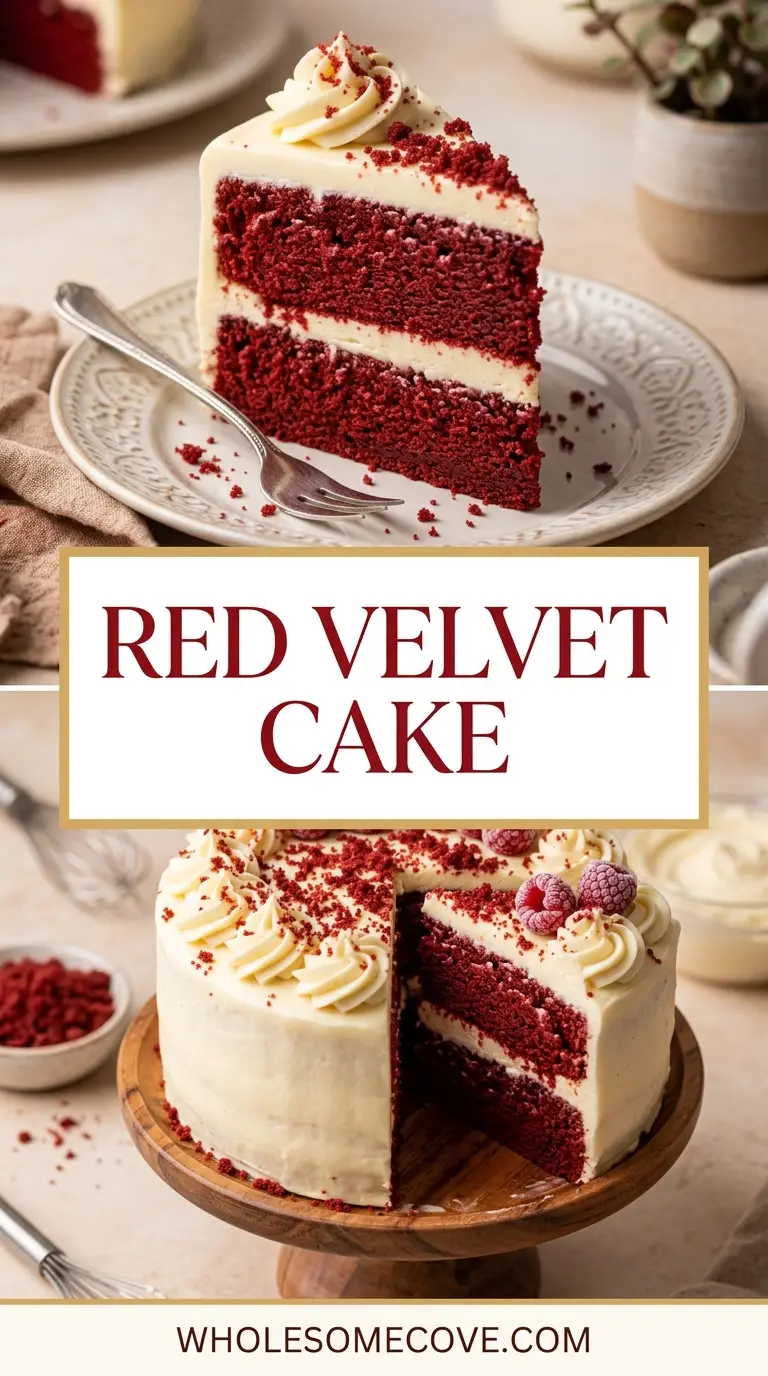
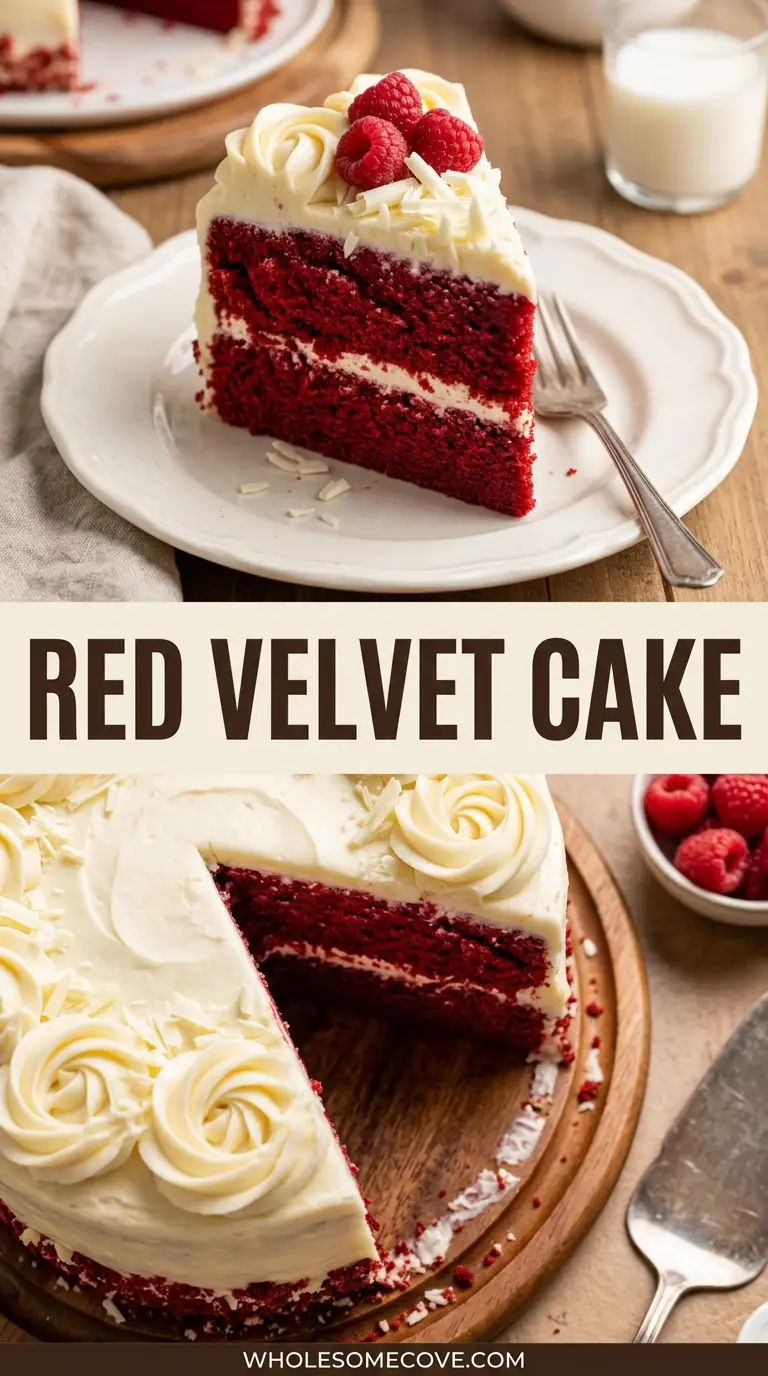
This red velvet cake recipe leans on buttermilk, a single tablespoon of cocoa, and a splash of vinegar to build that signature soft crumb and faint tang. The color comes from gel food coloring, not chocolate, which is exactly why so many homemade versions miss the mark.
Most red velvet turns out muddy brown because bakers treat it like a chocolate cake and pour in too much cocoa. Here the cocoa is measured in a single tablespoon, just enough for a whisper of flavor and a warm undertone without dulling the red.
The batter fills two 9-inch layers and comes together from eleven ingredients in the bowl. Cream cheese frosting, tangy and thick, is the classic finish that keeps the sweetness in check.
| Quick Recipe Summary | |
|---|---|
| Prep Time | 30 minutes |
| Cook Time | 30 minutes |
| Total Time | 2 hours (includes cooling) |
| Servings | 16 slices |
| Difficulty Level | Intermediate |
For a faster shortcut version, see Red Velvet Cake with Cake Mix.
Why You’ll Love This Red Velvet Cake Recipe
Red velvet has a reputation for being fussy, but the method here is forgiving and the results are consistent. The oil-based batter stays tender for days, which matters for a cake most people frost and serve the next day.
Here is what sets this version apart:
- A true red color that holds through baking, thanks to gel coloring and a controlled amount of cocoa.
- A soft, plush crumb from vegetable oil rather than butter, so it never dries out on the counter.
- The right tang built from buttermilk and vinegar, balancing the sweet cream cheese frosting.
- No special equipment required beyond two cake pans and a mixer.
- Make-ahead friendly, since the layers freeze well and the flavor deepens overnight.
- Reliable rise using the classic baking soda and acid reaction for an even, level bake.
You might also enjoy: Velvet Cake Recipes
Ingredients
Gather everything before you start, and pull the eggs, buttermilk, cream cheese, and butter out ahead so they reach room temperature. Cold cream cheese is the main reason frosting turns lumpy.
For the cake:
- 2½ cups (300g) all-purpose flour
- 1½ cups (300g) granulated sugar
- 1 teaspoon baking soda
- 1 tablespoon (7g) unsweetened cocoa powder
- 1 teaspoon salt
- 1½ cups (360ml) vegetable oil
- 1 cup (240ml) buttermilk, room temperature
- 2 large eggs, room temperature
- 2 tablespoons (30ml) red gel food coloring
- 1 teaspoon white vinegar
- 1 teaspoon pure vanilla extract
For the cream cheese frosting:
- 16 oz (450g) full-fat cream cheese, softened
- 1 cup (226g) unsalted butter, softened
- 4 cups (480g) powdered sugar
- 2 teaspoons vanilla extract
- Pinch of salt
I’ve found gel coloring gives a far deeper, truer red than the liquid kind, and because it does not add extra liquid, the batter keeps its thickness and bakes up level.
A related recipe worth bookmarking is Red Velvet Cheesecake Cake.
Kitchen Equipment Needed
Nothing here is exotic, but a few pieces make the difference between a level, cleanly frosted cake and a lopsided one. Good pans and a way to level the layers matter most.
- Two 9-inch round cake pans
- A stand mixer or hand mixer
- Large mixing bowls
- Fine mesh sieve for sifting cocoa and flour
- Parchment paper rounds
- Wire cooling rack
- Offset spatula for frosting
- Cake turntable for even sides
- Serrated cake leveler or long serrated knife
For a paler cousin worth trying, see White Velvet Cake.
Recommended Products for This Recipe
These are the specific items I reach for when I want the color and texture to come out right every time. Each one solves a problem I ran into more than once.
1. Americolor Super Red Gel Food Coloring
Grocery-store liquid dye fades in the oven and can leave a cake looking dull pink. This concentrated gel holds its color through baking and needs less product, so the batter never turns runny.
2. Fat Daddio’s Anodized Aluminum Cake Pans
Dark nonstick pans brown the edges before the center sets, which is a real issue with a cake meant to stay red and soft. These light aluminum pans bake evenly and release layers cleanly.
3. Nielsen-Massey Pure Vanilla Extract
Vanilla is doing quiet but important work in both the cake and the frosting. A good pure extract rounds out the tang and keeps the frosting from tasting flatly sweet.
4. Ateco Offset Spatula
A small offset spatula is the tool that turned my frosting from patchy to smooth. The bent blade lets you spread the frosting flat without dragging crumbs into it.
For a bolder variation on the theme, see Blue Velvet Cake.
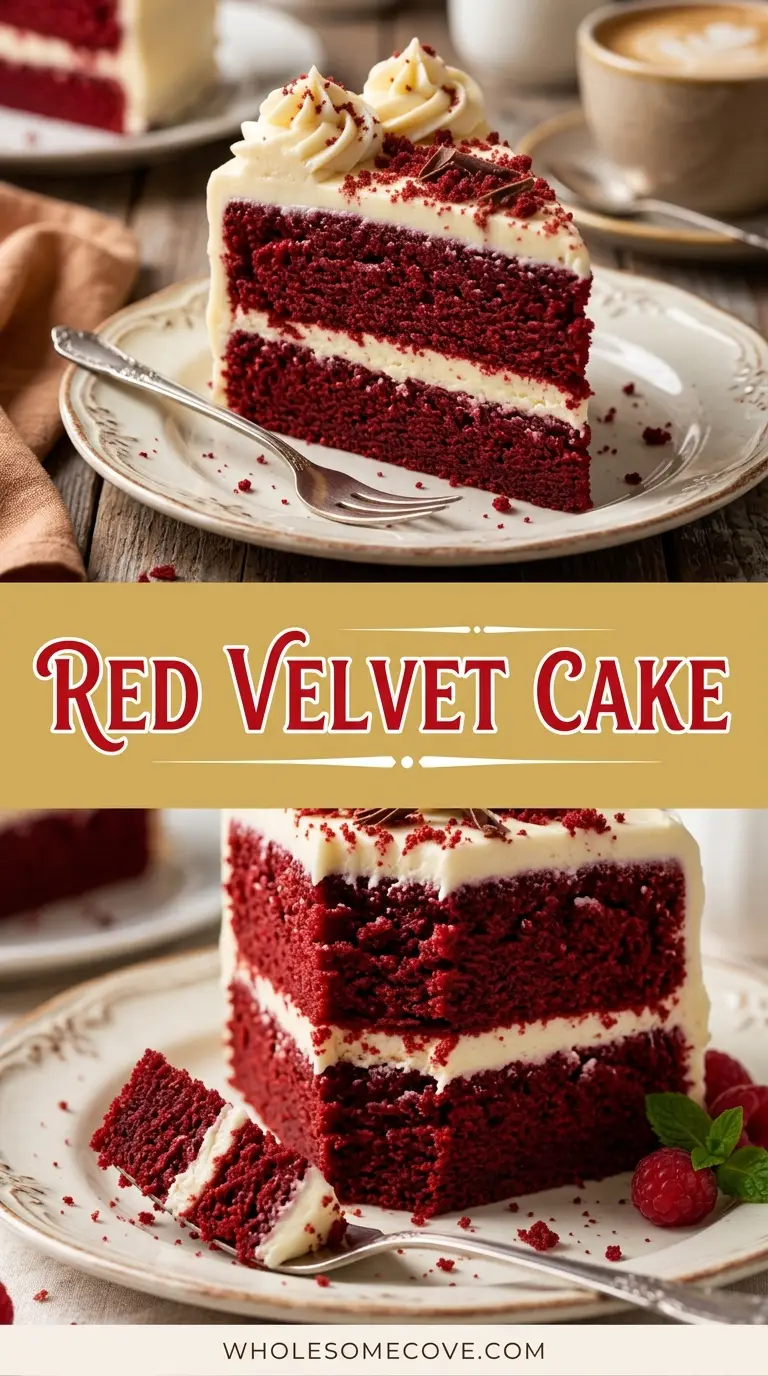
Step-by-Step Instructions: How to Make Red Velvet Cake
Follow these steps in order and you’ll have two level, deeply red layers ready to frost.
Step 1: Prep the pans and oven
- Preheat your oven to 350°F (175°C).
- Grease both 9-inch pans, line the bottoms with parchment rounds, then grease the parchment too.
- Set the pans aside while you mix.
Step 2: Whisk the dry ingredients
- In a large bowl, sift together the flour, cocoa powder, baking soda, and salt.
- Add the granulated sugar and whisk until fully combined.
- Sifting the cocoa here prevents dark specks in the finished crumb.
Step 3: Combine the wet ingredients
- In a separate bowl, whisk the vegetable oil, eggs, and buttermilk until smooth.
- Add the red gel food coloring, vanilla extract, and white vinegar.
- Whisk again until the color is fully even, with no pale streaks.
Step 4: Bring the batter together
- Pour the wet mixture into the dry ingredients.
- Mix on low speed just until no dry flour remains, scraping the bowl once.
- Stop mixing as soon as the batter is smooth, since overmixing toughens the crumb.
Step 5: Divide and bake
- Split the batter evenly between the two prepared pans.
- Bake for 28 to 32 minutes, until a toothpick inserted in the center comes out with a few moist crumbs.
- Avoid opening the oven before the 25-minute mark to protect the rise.
Step 6: Cool completely
- Let the layers rest in the pans for 10 minutes.
- Run a knife around the edge, then turn the cakes out onto a wire rack.
- Cool fully, about 1 hour, before frosting so the frosting does not melt.
Step 7: Make the cream cheese frosting
- Beat the softened cream cheese and butter together until completely smooth, about 2 minutes.
- Add the powdered sugar one cup at a time, mixing on low so it does not fly out of the bowl.
- Beat in the vanilla and a pinch of salt until light and spreadable.
Step 8: Level, fill, and frost
- Trim any dome off the layers with a serrated knife so they stack flat.
- Set the first layer on your plate, spread frosting over the top, then add the second layer.
- Frost the top and sides, using an offset spatula for smooth edges.
I keep the cream cheese and butter on the counter for a full hour before making the frosting, because even slightly cold cream cheese leaves stubborn lumps that no amount of beating fully smooths out.
For another color in the family, see Black Velvet Cake.
Tips for The Best Red Velvet Cake
A few small habits keep this cake reliably red, moist, and tidy. These are the points where homemade red velvet most often goes sideways.
- Measure the cocoa precisely. One level tablespoon is the ceiling, since more mutes the red into brown.
- Use gel, not liquid dye, for a saturated color that survives the oven.
- Bring dairy and eggs to room temperature so the batter emulsifies and bakes evenly.
- Do not skip the vinegar. It reacts with the baking soda for lift and sharpens the buttermilk tang.
- Weigh the flour if you can, because too much flour is the usual cause of a dry crumb.
- Chill the frosted cake for 20 minutes before slicing for clean, sharp edges.
- Save cake scraps from leveling to make crumbs for decorating the top.
I ruined my first red velvet by dumping in the heaping spoonful of cocoa I assumed a chocolate-looking cake needed, and it baked up the color of a brownie. Cutting it back to one level tablespoon was the fix.
Read Also: Pink Velvet Cake
What to Serve with Red Velvet Cake
Red velvet is rich, so it shines next to warm drinks and light, bright accompaniments that cut through the cream cheese frosting. These pairings work for everything from a holiday table to a casual afternoon slice.
- A hot cup of coffee or hot chocolate to match the cake’s cozy warmth.
- A seasonal pumpkin spice latte for fall gatherings.
- A drizzle of strawberry sauce and fresh berries alongside each slice.
- A spoonful of caramel sauce for anyone who wants extra indulgence.
- A scoop of vanilla ice cream to contrast the tangy frosting.
- Fresh raspberries or sliced strawberries for a tart, colorful plate.
- A glass of cold milk, still the simplest and best match.
You might also enjoy: Cannoli Poke Cake
Variations of Red Velvet Cake
The base recipe adapts easily once you understand what gives red velvet its character. Here are the versions worth trying.
- Red velvet cupcakes: Divide the batter into lined tins and bake for 18 to 20 minutes.
- Sheet cake: Pour the batter into a 9×13-inch pan and bake for 35 to 40 minutes for an easy, no-stacking option.
- Ermine frosting: Swap the cream cheese frosting for the traditional cooked flour frosting for a less sweet, old-fashioned finish.
- Bundt version: Bake in a well-greased bundt pan and top with a simple cream cheese glaze.
- Beet-colored red velvet: Use beet puree in place of some dye for a natural, earthier red.
- Extra-tangy: Increase the vinegar slightly and add a spoonful of sour cream for more depth.
For a citrus twist on velvet cake, see Lemon Velvet Cake.
Storage and Reheating
Red velvet keeps beautifully, which is part of why it works so well for events. Because of the cream cheese frosting, storage does need refrigeration.
- Room temperature: An unfrosted layer keeps, well wrapped, for up to 2 days.
- Refrigerator: Store the frosted cake covered for up to 5 days.
- Bring to room temperature for about 30 minutes before serving, since cold cake tastes flat and the crumb firms up.
- Freezing layers: Wrap cooled, unfrosted layers tightly and freeze for up to 3 months.
- Freezing slices: Freeze individual frosted slices on a tray, then wrap once solid.
- Thawing: Move frozen cake to the fridge overnight before serving.
For an orange-hued take, see Orange Velvet Cake.
Nutritional Facts
Values are approximate and based on 16 slices, including cream cheese frosting.
| Nutrient | Per Slice |
|---|---|
| Calories | 480 |
| Total Fat | 28g |
| Saturated Fat | 10g |
| Carbohydrates | 54g |
| Sugar | 42g |
| Protein | 5g |
| Sodium | 320mg |
You might also enjoy: Purple Velvet Cake
Health Benefits of Key Ingredients
A slice of red velvet is a treat, but a few of its core ingredients do carry real nutritional value. Here is what each key component brings to the table.
- Buttermilk: Provides calcium and probiotics, and its acidity tenderizes the crumb while supporting digestion.
- Eggs: Offer complete protein plus vitamin B12 and choline, which supports brain function.
- Cocoa powder: Contains flavanol antioxidants linked to heart and circulatory health, even in this small amount.
- Cream cheese: Contributes calcium and vitamin A along with its signature tang.
- Vanilla extract: Carries trace antioxidant compounds and deepens flavor without added sugar.
Read Also: Healthy Carrot Cake
FAQs About Red Velvet Cake
1. Why is my red velvet cake brown instead of red?
The most common culprit is too much cocoa powder, which overpowers the dye and shifts the color toward brown. Using more than one tablespoon, or relying on weak liquid coloring, will leave you with a chocolate-looking cake.
Switch to a concentrated gel dye and measure the cocoa precisely. That combination keeps the red bright through baking.
2. What does red velvet cake actually taste like?
Red velvet is not a chocolate cake, though people often expect it to be. It has a mild cocoa note layered under a gentle tang from buttermilk and vinegar.
The cream cheese frosting is essential to the flavor, balancing the sweetness with its own sharpness. Together they create the distinctive taste red velvet is known for.
3. Can I make red velvet cake without food coloring?
Yes, though the color will be muted rather than vivid. Beet puree or beetroot powder can add a natural reddish tint while keeping the cake moist.
Keep in mind that natural coloring fades more in the oven than gel dye does. The flavor stays the same regardless of the coloring you choose.
4. What frosting is traditional for red velvet cake?
Cream cheese frosting is the modern classic and the pairing most people expect. Its tang cuts the richness and complements the buttermilk in the cake.
The older, traditional choice is ermine or cooked flour frosting, which is fluffy and far less sweet. Both work, so it comes down to personal preference.
5. Can I make red velvet cake ahead of time?
Absolutely, and it often tastes better the next day as the flavors settle. You can bake the layers up to two days ahead and wrap them tightly at room temperature.
The fully frosted cake keeps in the fridge for up to five days. Let it sit out for about half an hour before serving for the best texture.
6. Why does red velvet cake use vinegar and buttermilk?
Both add acidity, which reacts with the baking soda to give the cake its lift and tender crumb. This reaction is what makes the texture so soft and plush.
The acid also brings the subtle tang that defines red velvet’s flavor. Skipping either ingredient changes both the rise and the taste.
For a decadent finish worth trying next, see Pumpkin Cheesecake.
Red Velvet Cake
Ingredients
- 2½ cups all-purpose flour - 300g
- 1½ cups granulated sugar - 300g
- 1 teaspoon baking soda
- 1 tablespoon unsweetened cocoa powder - 7g
- 1 teaspoon salt
- 1½ cups vegetable oil - 360ml
- 1 cup buttermilk - 240ml, room temperature
- 2 large eggs - room temperature
- 2 tablespoons red gel food coloring - 30ml
- 1 teaspoon white vinegar
- 1 teaspoon pure vanilla extract
- 16 oz full-fat cream cheese - 450g, softened
- 1 cup unsalted butter - 226g, softened
- 4 cups powdered sugar - 480g
- 2 teaspoons vanilla extract
- salt - pinch
Equipment
- Two 9-inch round cake pans
- Fine mesh sieve - for sifting cocoa and flour
- Parchment paper rounds
- Offset spatula - for frosting
- Cake turntable - for even sides
- Serrated cake leveler or long serrated knife
Method
- Preheat oven to 350°F (175°C). Grease both 9-inch pans, line the bottoms with parchment rounds, then grease the parchment too. Set aside.
- In a large bowl, sift together the flour, cocoa powder, baking soda, and salt. Add the granulated sugar and whisk until fully combined.
- In a separate bowl, whisk the vegetable oil, eggs, and buttermilk until smooth. Add the red gel food coloring, vanilla extract, and white vinegar. Whisk again until the color is fully even.
- Pour the wet mixture into the dry ingredients. Mix on low speed just until no dry flour remains, scraping the bowl once. Stop as soon as the batter is smooth.
- Split the batter evenly between the two prepared pans. Bake for 28 to 32 minutes, until a toothpick inserted in the center comes out with a few moist crumbs.
- Let the layers rest in the pans for 10 minutes. Run a knife around the edge, then turn the cakes out onto a wire rack. Cool fully, about 1 hour.
- Beat the softened cream cheese and butter together until completely smooth, about 2 minutes. Add the powdered sugar one cup at a time, mixing on low. Beat in the vanilla and a pinch of salt.
- Trim any dome off the layers with a serrated knife. Set the first layer on your plate, spread frosting over the top, then add the second layer. Frost the top and sides.
Nutrition
Notes
- Measure the cocoa precisely. One level tablespoon is the ceiling, since more mutes the red into brown.
- Use gel, not liquid dye, for a saturated color that survives the oven.
- Bring dairy and eggs to room temperature so the batter emulsifies and bakes evenly.
- Do not skip the vinegar. It reacts with the baking soda for lift and sharpens the buttermilk tang.
- Weigh the flour if you can, because too much flour is the usual cause of a dry crumb.
- Chill the frosted cake for 20 minutes before slicing for clean, sharp edges.
- Save cake scraps from leveling to make crumbs for decorating the top.
- Make ahead: Bake layers up to 2 days ahead and wrap tightly at room temperature. Frosted cake keeps in the fridge up to 5 days.
- Freezing: Wrap cooled unfrosted layers tightly and freeze up to 3 months. Thaw in the fridge overnight.
- Variations: Make cupcakes (18-20 min), sheet cake (35-40 min), or swap cream cheese frosting for ermine frosting.
Private Notes
Tried this recipe?
Let us know how it was!Final Thoughts
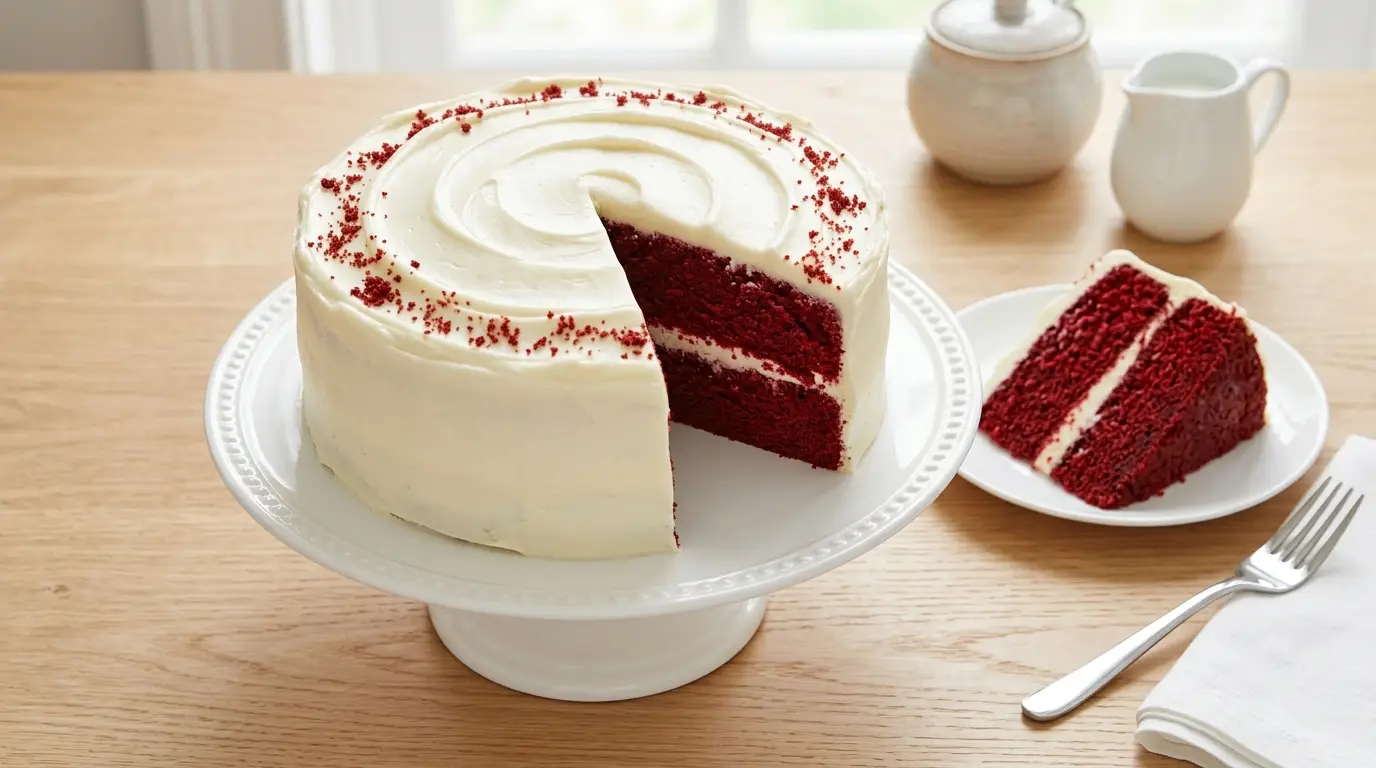
Red velvet earns its place at celebrations for good reason, with its striking color and that soft, tangy crumb under a swoop of cream cheese frosting. Once you nail the cocoa-to-dye balance, it becomes one of the most dependable cakes you can bake.
Give this one a try for your next birthday or holiday table. It looks like you fussed far more than you did.
If you bake it, I’d love to hear how it turned out. Leave a comment below and share it with someone who loves a classic slice.
Recommended:
- Easy Carrot Cake
- Coffee Cake Using Cake Mix
- Eggnog Cake
- Creme Brulee Cheesecake
- Sugar Cookies
- Chocolate Chip Cookies
- Fruit Cocktail Cake
- Amish Apple Cake
- Mastro’s Butter Cake