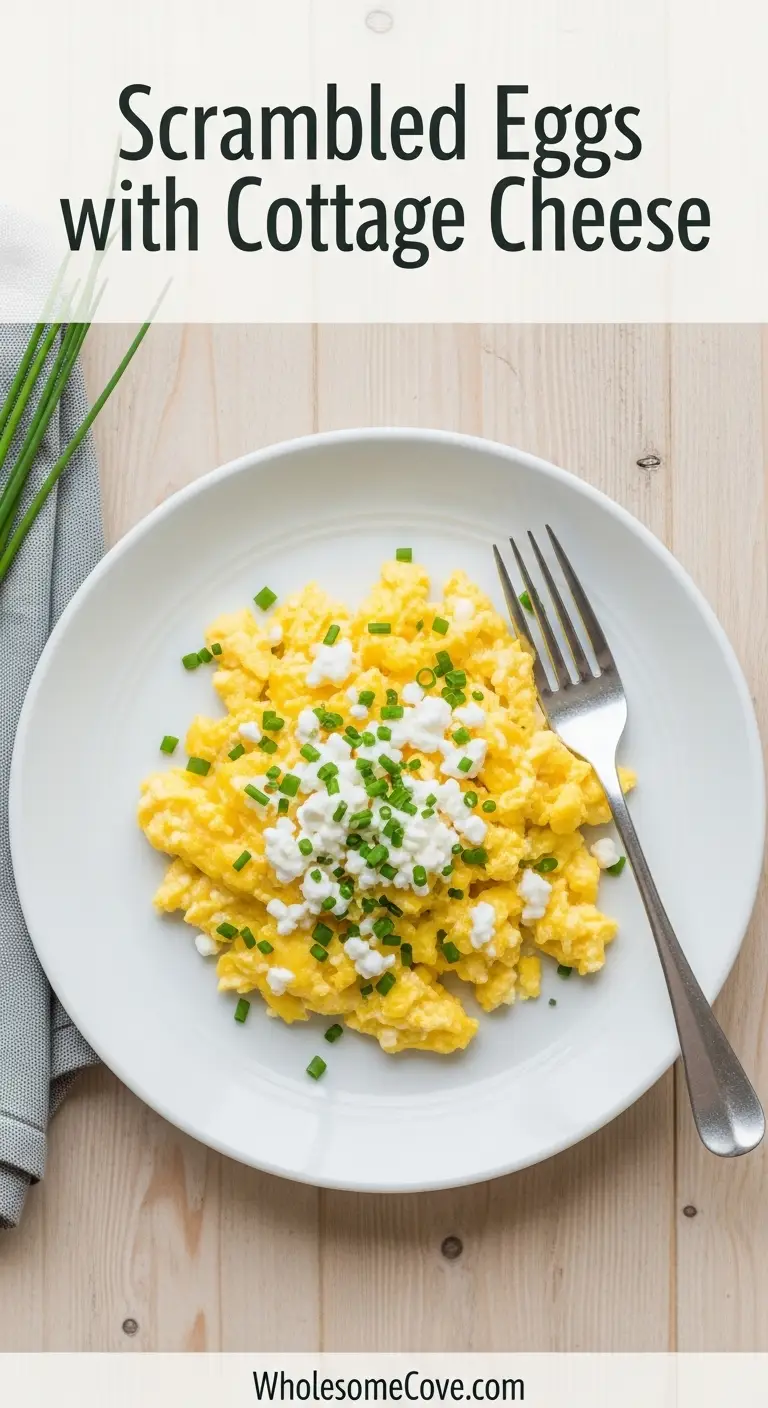
I started making scrambled eggs with cottage cheese about six months ago when I was trying to find ways to sneak more protein into my mornings without resorting to shakes. My sister mentioned it casually during a phone call, and I honestly thought she was joking at first.
But I tried it the next morning, and I haven’t looked back since. The cottage cheese transforms ordinary scrambled eggs into something incredibly fluffy and creamy, and you’d never guess there’s cottage cheese in there if no one told you. It’s become my go-to breakfast on busy mornings, and I’ve probably made this Scrambled Eggs with Cottage Cheese Recipe at least a hundred times by now.
| Quick Recipe Summary | |
|---|---|
| Prep Time | 2 minutes |
| Cook Time | 5 minutes |
| Total Time | 7 minutes |
| Servings | 2 servings |
| Difficulty Level | Easy |
If you’re looking for more protein-packed breakfast ideas, try my Scrambled Eggs with Cheese Recipe for another delicious twist on classic scrambled eggs.
Why You’ll Love This Scrambled Eggs with Cottage Cheese Recipe
This recipe has genuinely changed my mornings. I used to skip breakfast all the time because I didn’t have the energy to cook something filling, but these eggs come together in less than 10 minutes and keep me satisfied until lunch.
The protein content is incredible, with around 17-20 grams per serving depending on the size of your eggs. I’ve noticed I don’t get that mid-morning crash anymore, and I’m not reaching for snacks by 10 AM.
Here’s what makes this recipe special:
- Incredibly fluffy texture: The cottage cheese adds moisture and air, creating the lightest scrambled eggs you’ve ever tasted
- High protein content: Perfect for muscle recovery, weight management, or just staying full longer
- Budget-friendly: Both eggs and cottage cheese are relatively inexpensive, especially compared to other high-protein breakfast options
- Foolproof: I’ve made this on autopilot at 6 AM and it still turns out perfectly every time
- No cottage cheese taste: Seriously, even my kids who claim to hate cottage cheese devour these eggs without knowing the secret ingredient
- Quick cleanup: Just one bowl, one pan, and you’re done
Another favorite morning recipe: Breakfast Potatoes Recipe.
Ingredients
The beauty of this recipe is its simplicity. I keep all these ingredients stocked in my kitchen at all times, so I can whip up these eggs whenever the mood strikes.
- 4 large eggs: I prefer pasture-raised eggs because the yolks are so much richer and more orange, but any fresh eggs will work beautifully
- 1/2 cup (120g) cottage cheese: Full-fat creates the richest flavor, but low-fat works too if you’re watching calories
- 1 tablespoon (14g) butter or cooking oil: I usually use butter for the flavor, but olive oil or avocado oil are great substitutes
- Salt and black pepper to taste: Freshly cracked black pepper makes a noticeable difference
- Optional: 1 tablespoon chopped fresh chives or herbs: I add these when I want to feel fancy
You might also enjoy: Deviled Eggs Recipe.
Kitchen Equipment Needed
You don’t need anything special for this recipe, just basic kitchen tools. I actually make these eggs when I’m camping because the equipment is so minimal.
- Non-stick skillet: This is non-negotiable. I tried making these in a stainless steel pan once and spent 20 minutes scrubbing stuck eggs. Medium size (8-10 inches) works perfectly for this recipe.
- Medium mixing bowl: For whisking the eggs and cottage cheese together
- Whisk or fork: Either works fine, though a whisk incorporates the cottage cheese more smoothly
- Rubber spatula: Essential for gently folding the eggs as they cook. The soft edge won’t scratch your non-stick pan.
- Measuring cups and spoons: For accuracy, especially with the cottage cheese
- Small plate: Have this ready beside the stove so you can transfer the eggs immediately when they’re done
Recommended Products for This Recipe
Over the months of making this recipe regularly, I’ve found that a few specific products make a real difference in how these eggs turn out. These aren’t just random recommendations; they’re items I actually use in my own kitchen.
1. Good Culture Cottage Cheese
This is the cottage cheese brand I swear by for this recipe. The curds are small and creamy, and it doesn’t have that watery liquid that some brands have. When it melts into the eggs, it creates this velvety texture that’s just unmatched. I’ve tried at least a dozen different brands, and this one consistently produces the fluffiest results.
2. Lodge Pre-Seasoned Cast Iron Skillet
While any non-stick pan works, I’ve found that a well-seasoned cast iron skillet gives these eggs the most even heat distribution. The eggs cook gently and evenly without any hot spots. Plus, cast iron is naturally non-stick when properly seasoned, and it lasts forever.
3. OXO Good Grips Silicone Spatula
I cannot stress enough how important a good spatula is for this recipe. This OXO spatula has the perfect balance of flexibility and stiffness to gently fold the eggs without breaking them into tiny pieces. The silicone edge gets right into the corners of the pan, and it’s heat-resistant up to 600°F (315°C), so you never have to worry about it melting.
4. Vital Farms Pasture-Raised Eggs
The quality of your eggs makes a huge difference in this recipe. Vital Farms eggs have bright orange yolks that create these gorgeous golden scrambled eggs. They’re from pasture-raised hens, and you can really taste the difference. Yes, they’re pricier than conventional eggs, but when eggs are the star of the dish, it’s worth splurging.
Read Also: Air Fryer Turkey Scotch Eggs Recipe
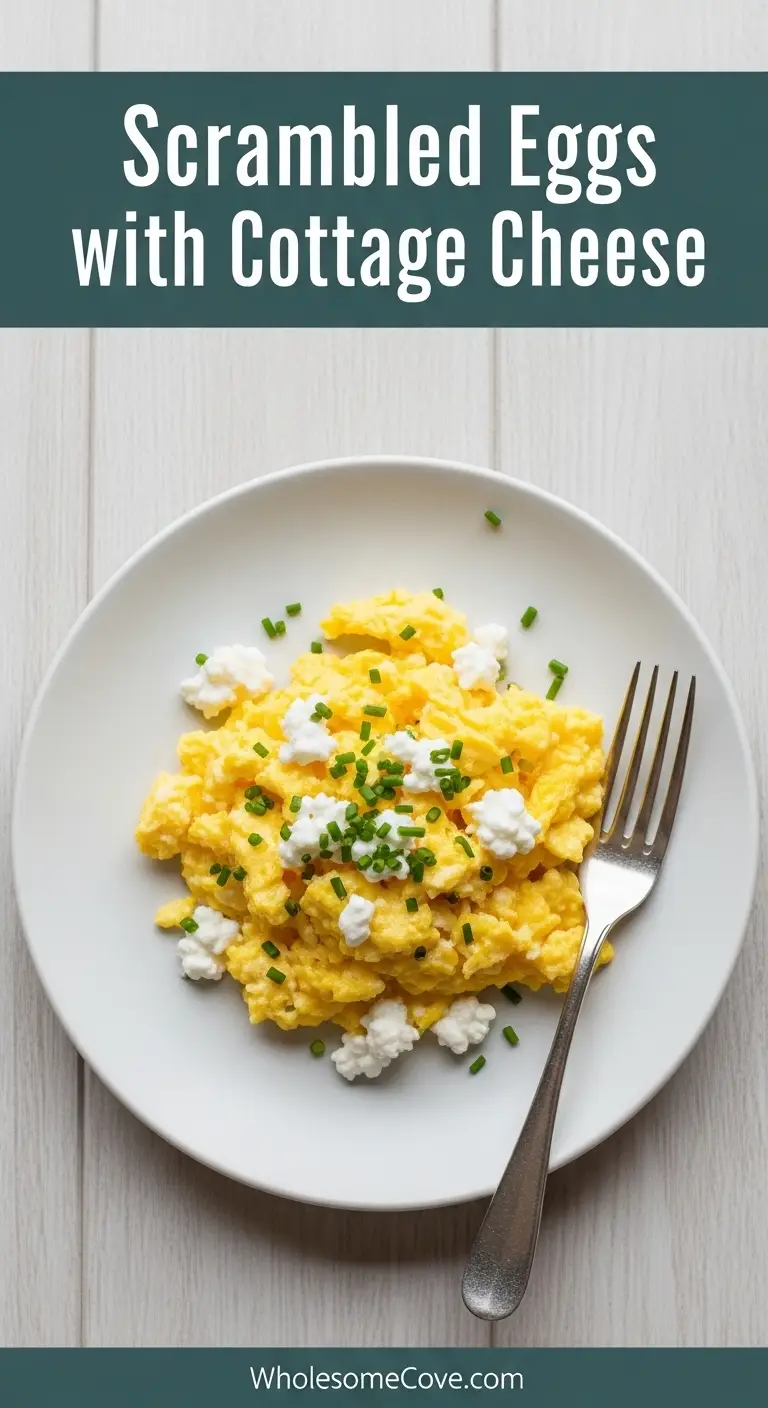
Step-by-Step Instructions: How to Make Scrambled Eggs with Cottage Cheese
The key to perfect scrambled eggs with cottage cheese is patience. I used to rush this recipe when I first started making it, cranking up the heat to save a minute or two, and the eggs would come out rubbery and watery. Low and slow is the way to go.
1. Prepare Your Ingredients
- Crack the 4 eggs into your mixing bowl
- Add the 1/2 cup (120g) cottage cheese directly to the bowl with the eggs
- Season with a pinch of salt (I use about 1/4 teaspoon) and freshly cracked black pepper (about 1/8 teaspoon, or to taste)
- If you’re adding fresh herbs, chop them now and set them aside
2. Whisk Everything Together
- Use your whisk or fork to beat the eggs and cottage cheese together until fully combined
- You want to break up most of the cottage cheese curds, though some small chunks are fine and actually add nice texture
- The mixture should look pale yellow and slightly frothy
- This usually takes about 30-45 seconds of vigorous whisking
- Don’t skip this step; properly incorporating the cottage cheese is what creates that signature fluffy texture
3. Heat Your Pan
- Place your non-stick skillet over medium-low heat
- Add the 1 tablespoon of butter and let it melt completely, swirling the pan to coat the bottom evenly
- Wait until the butter is fully melted and just starting to foam, but not browning
- The pan should feel warm when you hold your hand about 6 inches (15cm) above it, but not hot
- This gentle heat is crucial; if the pan is too hot, the eggs will cook too fast and become rubbery
4. Pour and Wait
- Pour the egg and cottage cheese mixture into the center of the pan
- Let it sit completely undisturbed for about 20-30 seconds
- You’ll see the edges just starting to set and become slightly opaque
- Resist the urge to stir immediately; this initial wait helps create those beautiful soft curds
5. Gently Scramble
- Using your rubber spatula, start gently pushing the cooked eggs from the outer edges toward the center of the pan
- Tilt the pan slightly to allow the uncooked egg mixture to flow to the edges
- Continue this gentle folding motion, scraping the bottom and sides of the pan
- The eggs should form large, soft curds
- This process takes about 2-3 minutes total
- The cottage cheese will start to melt and create pockets of creamy goodness throughout
6. Watch for Doneness
- The eggs are done when they’re still slightly glossy and just barely wet-looking
- They should be soft and creamy, not dry or rubbery
- Remember, eggs continue cooking from residual heat even after you remove them from the pan
- I usually take mine off the heat when they look about 85% done
- They’ll finish cooking in the 30 seconds it takes to plate them
7. Serve Immediately
- Transfer the scrambled eggs to your warmed plate right away
- If you’re adding fresh herbs, sprinkle them on top now
- Serve with your favorite breakfast sides
- These eggs are best eaten immediately while they’re hot and fluffy
For another egg variation, check out my Air Fryer Avocado Egg Rolls Recipe.
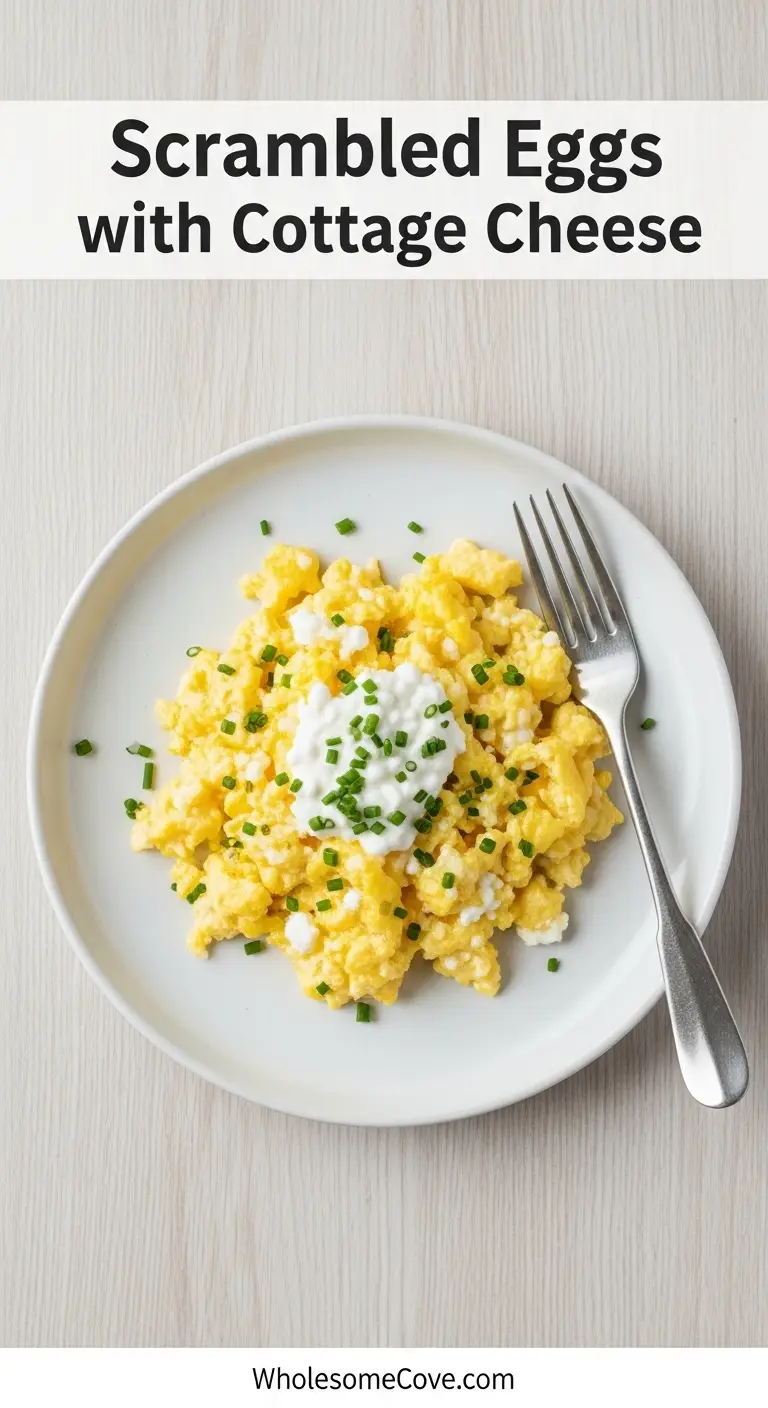
Tips for The Best Scrambled Eggs with Cottage Cheese
I’ve learned these tips through trial and error, and they’ve made a huge difference in the quality of my scrambled eggs.
- Don’t skip draining watery cottage cheese: If your cottage cheese has a lot of liquid pooling on top, drain it off before measuring. Otherwise, your eggs will be watery. I learned this the hard way when I first started making this recipe.
- Use fresh eggs: The fresher your eggs, the better the texture. I can always tell when I’ve used eggs that are nearing their expiration date; they just don’t fluff up as nicely.
- Keep the heat low: This is the number one mistake I see people make. High heat creates rubbery eggs. If you’re in a rush, make something else; these eggs need gentle, low heat to reach their full fluffy potential.
- Don’t overcook: Remove the eggs from heat when they still look slightly undercooked. They’ll continue cooking from residual heat, and you’ll end up with perfectly creamy eggs instead of dry, overcooked ones.
- Warm your plate: I run my serving plate under hot water for 30 seconds before plating. It keeps the eggs warm longer and prevents them from cooling too quickly.
- Use a blender for ultra-smooth eggs: If you or someone in your family is really put off by cottage cheese texture, pulse the egg and cottage cheese mixture in a blender for 10 seconds before cooking. The eggs will be incredibly smooth and silky.
- Season lightly at first: The cottage cheese already contains salt, so start with less seasoning than you think you need. You can always add more at the table.
- Prep everything before you start cooking: Once you pour the eggs into the pan, things move quickly. Have your spatula ready, your plate nearby, and any toppings prepared.
- Clean the pan immediately: Scrambled eggs are notorious for sticking if you let them sit. Fill the pan with warm soapy water right after serving to make cleanup easier.
You might also like: Chicken and Egg Salad Recipe.
What to Serve with Scrambled Eggs with Cottage Cheese
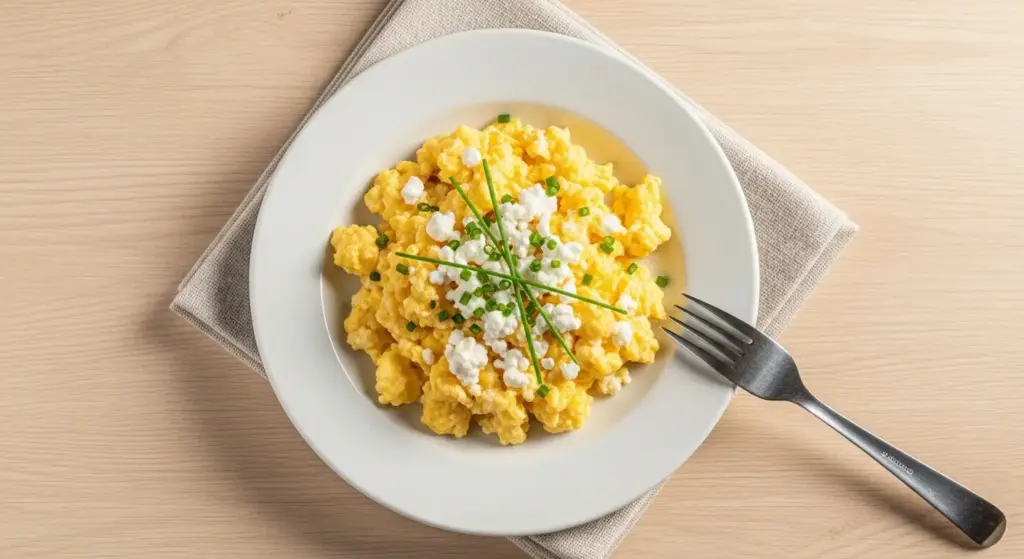
These eggs are so protein-rich that you don’t need much else to make a complete breakfast, but I have my favorite combinations that I rotate through.
My usual go-to is a slice of toasted whole grain bread with a smear of avocado. The healthy fats from the avocado complement the protein in the eggs perfectly, and the crunch of the toast adds textural contrast.
Here are some of my favorite pairings:
- Fresh fruit: Berries, sliced melon, or orange segments add natural sweetness and vitamins
- Breakfast Potatoes: Crispy breakfast potatoes or hash browns make this feel like a diner breakfast
- Whole grain toast: My favorite is sourdough or multigrain with a bit of butter or avocado
- Sautéed vegetables: Spinach, mushrooms, or tomatoes cooked in a separate pan
- Turkey bacon or sausage: If you want even more protein
- Greek yogurt parfait: Sometimes I’ll have a small yogurt parfait on the side for an extra protein boost
- Sliced avocado: Just plain slices with a sprinkle of salt and red pepper flakes
- Salsa or hot sauce: For when I want a little kick
Another breakfast favorite: Belgian Waffle Recipe.
Variations of Scrambled Eggs with Cottage Cheese
Once you’ve mastered the basic recipe, these variations keep things interesting. I cycle through different versions depending on what I have in my fridge and what I’m craving.
- Veggie-loaded: Sauté chopped bell peppers, mushrooms, and spinach in the pan before adding the eggs. I usually use about 1 cup of mixed vegetables per batch of eggs.
- Extra cheesy: Add 1/4 cup of shredded cheddar, mozzarella, or gruyere cheese in the last 30 seconds of cooking. The cheese melts into the eggs and creates these amazing strings when you pull them apart with your fork.
- Mediterranean style: Mix in sun-dried tomatoes, feta cheese, and fresh basil. Top with a drizzle of olive oil. This is my weekend fancy breakfast version.
- Mexican-inspired: Add diced jalapeños, shredded pepper jack cheese, and top with salsa and cilantro. Serve with warm tortillas.
- Herb garden: Use a combination of fresh chives, parsley, dill, and tarragon. The fresh herbs make these eggs taste like they came from a restaurant.
- Smoked salmon: Fold in pieces of smoked salmon in the last minute of cooking and top with capers and fresh dill. This is my go-to when I’m feeling bougie.
- Mushroom and thyme: Sauté sliced mushrooms with fresh thyme before adding the eggs. The earthy flavor is incredible.
- Protein-packed: Add an extra 1/4 cup of cottage cheese and use 2 whole eggs plus 2 egg whites for an ultra-high-protein version with fewer calories.
- Spicy scramble: Mix in sriracha or your favorite hot sauce with the eggs before cooking. Start with 1/2 teaspoon and adjust to your heat tolerance.
For more breakfast ideas, try: Buttermilk Waffle Recipe.
Storage and Reheating
I’ll be honest: scrambled eggs are always best eaten fresh. But life happens, and sometimes you need to make these ahead or deal with leftovers.
Storing:
- Let the eggs cool to room temperature before storing
- Transfer to an airtight container
- Store in the refrigerator for up to 3 days maximum
- I don’t recommend freezing these eggs; the texture becomes grainy and watery when thawed
Reheating:
- The microwave is your best friend here, despite what food snobs might tell you
- Place the eggs in a microwave-safe dish and heat in 15-20 second intervals, stirring between each interval
- Stop when they’re just heated through; overheating will make them rubbery
- Alternatively, reheat gently in a non-stick pan over low heat with a tiny splash of milk or water to restore moisture
- Add a small pat of butter while reheating to refresh the flavor
Make-ahead tip:
- You can whisk the eggs and cottage cheese together the night before and store the mixture in a covered bowl in the fridge
- In the morning, give it a quick stir and cook as directed
- This saves about 2 minutes on busy mornings
Meal prep note:
- If you’re meal prepping breakfast, I’d honestly recommend making these fresh each morning rather than in a big batch
- The 7-minute cook time is so minimal that the quality difference is worth it
- However, if you must meal prep, undercook them slightly so they don’t dry out when reheated
Looking for more make-ahead breakfast options? Check out: Air Fryer Banana Bread Recipe.
Nutritional Facts
Here’s the nutritional breakdown per serving (based on 2 servings total, made with full-fat cottage cheese and butter):
- Calories: 220
- Protein: 18g
- Fat: 15g
- Saturated Fat: 6g
- Carbohydrates: 3g
- Fiber: 0g
- Sugar: 2g
- Cholesterol: 385mg
- Sodium: 380mg
- Potassium: 180mg
- Calcium: 10% DV
- Iron: 8% DV
- Vitamin A: 15% DV
- Vitamin D: 20% DV
Notes on nutrition:
- Using low-fat cottage cheese reduces the calorie count by about 20-30 calories per serving
- Swapping butter for cooking spray saves another 50-60 calories
- The protein content is impressive, making this recipe excellent for muscle building, recovery, or weight management
- The fat content is primarily from healthy sources (eggs and dairy)
- This recipe is naturally low in carbohydrates, making it suitable for low-carb or keto diets
Read Also: Healthy Guacamole Recipe
Health Benefits of Key Ingredients
Every time I make these eggs, I feel good knowing I’m fueling my body with genuinely nutritious ingredients. Here’s why this simple breakfast is so good for you.
Eggs: Eggs are one of nature’s most perfect proteins. They contain all nine essential amino acids that your body needs but can’t produce on its own. The yolks are packed with choline, which supports brain health and memory, and they’re rich in vitamin D, which is hard to get from food sources. I used to avoid egg yolks because of cholesterol concerns, but research has shown that dietary cholesterol doesn’t affect blood cholesterol as much as we once thought.
Cottage cheese: Cottage cheese is a powerhouse of slow-digesting casein protein, which keeps you full for hours. It’s also an excellent source of calcium for bone health, B vitamins for energy metabolism, and phosphorus for healthy teeth and bones. The probiotics in cultured cottage cheese support gut health, though the amount varies by brand.
Benefits of this combination:
- High-quality complete protein: Both eggs and cottage cheese provide all essential amino acids
- Supports muscle maintenance and growth: Perfect post-workout breakfast or for anyone looking to build muscle
- Promotes satiety: The protein and fat combination keeps hunger at bay for hours
- Bone health: High calcium and vitamin D content from both ingredients
- Brain function: Choline from eggs supports cognitive health and memory
- Energy: B vitamins in both ingredients help convert food into energy
- Weight management: High protein, low carb, and very filling without excessive calories
Another healthy breakfast option: Healthy Banana Bread Recipe.
FAQs About Scrambled Eggs with Cottage Cheese
1. Can you taste the cottage cheese in scrambled eggs?
No, you really can’t. This is the question everyone asks me, and I promise the cottage cheese melts completely into the eggs as they cook. It creates creaminess and texture without any noticeable cottage cheese flavor.
My kids are the pickiest eaters on the planet, and they have no idea there’s cottage cheese in these eggs. The mild flavor of cottage cheese just blends seamlessly with the eggs.
2. What’s the best type of cottage cheese to use?
Full-fat cottage cheese produces the richest, creamiest results, but low-fat works perfectly fine if you’re watching calories. I’ve tried both, and while full-fat tastes slightly better, the difference is minimal.
The brand matters more than the fat content. Look for cottage cheese with small curds and minimal liquid, like Good Culture or Daisy brand.
3. Why are my scrambled eggs with cottage cheese watery?
This usually happens for one of two reasons: either your cottage cheese had too much liquid, or you cooked the eggs on too high heat. Always drain excess liquid from the cottage cheese before measuring it.
Also, make sure you’re cooking on medium-low heat and removing the eggs from the pan while they still look slightly wet. They’ll finish cooking from residual heat.
4. Can I make this recipe with egg whites only?
Yes, but the texture won’t be quite as rich and fluffy. I’d recommend using 6-8 egg whites to replace the 4 whole eggs in this recipe. You’ll get a lighter, slightly less creamy result, but it’s still delicious and even higher in protein with less fat.
If you do this, consider adding an extra tablespoon of cottage cheese to compensate for the richness you lose from the egg yolks.
5. How do I prevent scrambled eggs from sticking to the pan?
Use a good non-stick pan and make sure it’s properly heated with butter or oil before adding the eggs. The pan should be warm, not screaming hot. I also recommend using a rubber spatula to gently fold the eggs rather than metal utensils that might scratch the non-stick surface.
If eggs still stick, your pan might be past its prime and need replacing.
For more egg recipes, try: Egg Drop Soup Recipe.
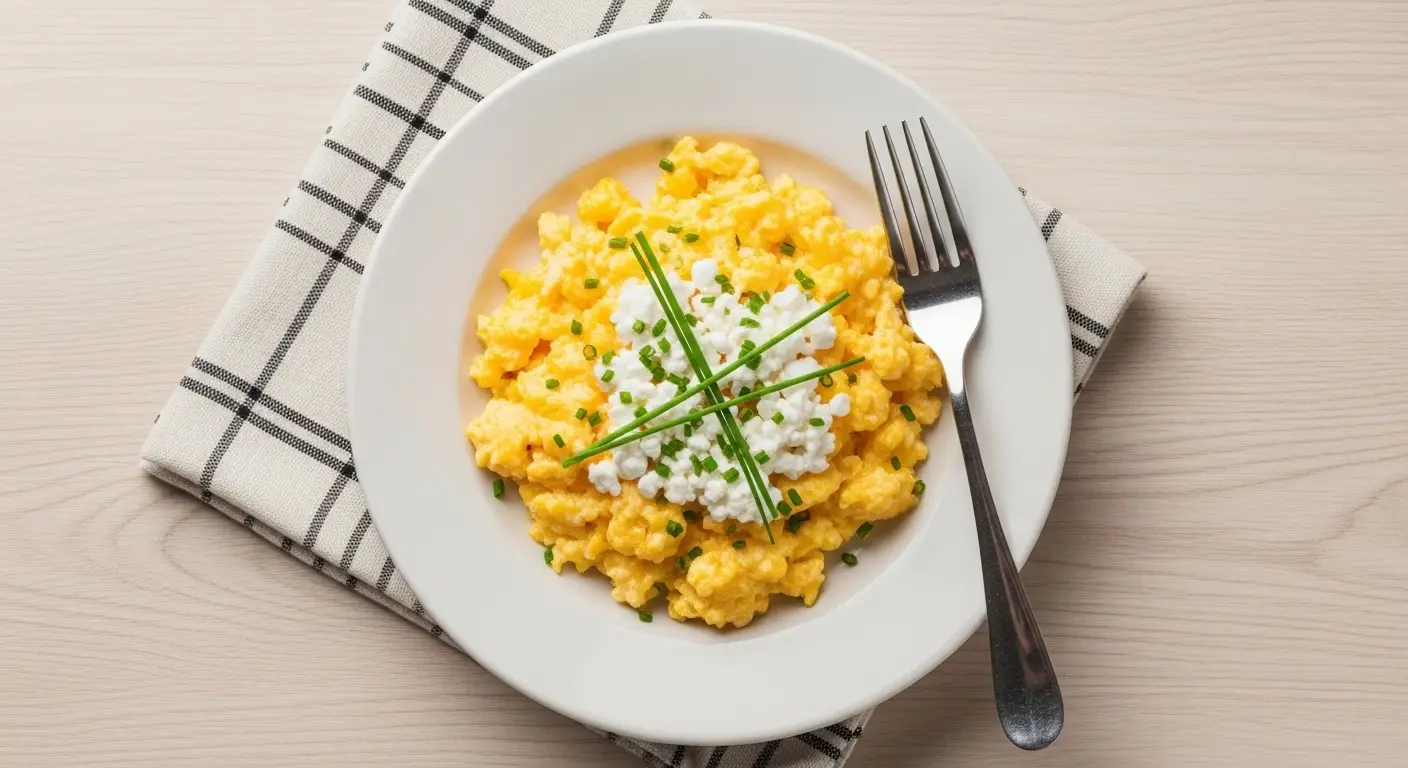
Scrambled Eggs with Cottage Cheese
Ingredients
- 4 large eggs
- 1/2 cup cottage cheese - 120g, full-fat or low-fat
- 1 tablespoon butter or cooking oil - 14g
- salt - to taste, about 1/4 teaspoon
- black pepper - to taste, freshly cracked, about 1/8 teaspoon
- 1 tablespoon fresh chives or herbs - optional, chopped
Equipment
- Non-stick skillet - 8-10 inches, medium size
- Medium mixing bowl - For whisking eggs
- Whisk or fork
- Rubber spatula
- Measuring cups and spoons
- Small plate - For serving
Method
- Crack the 4 eggs into a mixing bowl, add the cottage cheese, salt, and pepper. Whisk vigorously for 30-45 seconds until fully combined and slightly frothy.
- Place the non-stick skillet over medium-low heat and add the butter. Let it melt completely and foam slightly but not brown.
- Pour the egg mixture into the pan and let it sit undisturbed for 20-30 seconds until the edges just start to set.
- Using a rubber spatula, gently push the cooked eggs from the edges toward the center, tilting the pan to let uncooked egg flow to the edges. Continue folding gently for 2-3 minutes until large, soft curds form.
- Remove from heat when eggs are still slightly glossy and just barely wet-looking (about 85% done). They’ll continue cooking from residual heat.
- Transfer immediately to a warmed plate and top with fresh herbs if using. Serve hot.
Nutrition
Notes
- Drain excess liquid from cottage cheese before measuring to prevent watery eggs.
- Use fresh eggs for the best texture and fluffiness.
- Keep heat on medium-low throughout cooking – high heat creates rubbery eggs.
- Remove eggs from heat when they look slightly undercooked; they continue cooking from residual heat.
- For ultra-smooth eggs, blend the egg and cottage cheese mixture in a blender for 10 seconds before cooking.
- Cottage cheese already contains salt, so season lightly at first and adjust to taste.
- Store leftovers in an airtight container in the refrigerator for up to 3 days.
- Reheat gently in the microwave in 15-20 second intervals, stirring between each, or in a pan over low heat with a splash of milk.
- You can whisk the eggs and cottage cheese together the night before and store in the fridge to save time in the morning.
- Using low-fat cottage cheese reduces calories by 20-30 per serving without significantly affecting texture.
Private Notes
Tried this recipe?
Let us know how it was!Final Thoughts
Making Scrambled Eggs with Cottage Cheese has become such a natural part of my morning routine that I don’t even think about it anymore. It’s muscle memory at this point: crack the eggs, add the cottage cheese, whisk, cook low and slow, and enjoy. Some mornings when I’m rushed, I’m tempted to skip breakfast altogether, but these eggs are so quick that there’s really no excuse.
I hope this recipe becomes a staple in your kitchen like it has in mine. The protein boost alone is worth it, but the fluffy, creamy texture makes it feel like a treat rather than just another healthy breakfast. Try it tomorrow morning and see for yourself.
Give this recipe a try and let me know how it turns out! Drop a comment below with any questions or share a photo of your creation. I love seeing your versions of these eggs.
Recommended:
- Waffle Recipe
- Easy Pancake Recipe
- Air Fryer Pancake Recipe
- Protein Waffle Recipe
- Vegan Waffle Recipe
- Sourdough Waffle Recipe
- Pumpkin Waffle Recipe
- Mochi Waffle Recipe
- Healthy Hummus Recipe
- Healthy Bruschetta Recipe