I learned to make pancakes from my grandmother on lazy Saturday mornings, standing on a stool by the stove while she flipped golden circles with practiced ease. Back then, I thought pancakes were complicated magic, but it turns out they’re one of the simplest breakfasts you can master.
This easy pancake recipe changed everything for me when I finally figured out the secret: don’t overmix the batter, and let it rest.
I spent years making dense, rubbery pancakes before a friend pointed out I was beating the batter like it owed me money. Once I learned to stop when there were still a few lumps, my pancakes transformed into fluffy, tender perfection. The texture became so light and airy that my kids started requesting them for dinner, not just breakfast.
What I love most about this recipe is how forgiving it is. You probably have all the ingredients in your pantry right now, and you can have a stack of warm pancakes on the table in under 30 minutes from start to finish.
| Quick Recipe Summary | |
|---|---|
| Prep Time | 5 minutes |
| Cook Time | 15 minutes |
| Total Time | 20 minutes |
| Servings | 8 pancakes (4 servings) |
| Difficulty Level | Easy |
_result.jpg "Easy Pancake Recipe - Breakfast for Dinner Fun Idea")
Why You’ll Love This Easy Pancake Recipe
These pancakes are everything a great breakfast should be: quick, delicious, and impossible to mess up. I’ve made them countless times for weekend brunches, weekday breakfasts when we’re running late, and even camping trips with a portable griddle.
The batter comes together in one bowl with no fancy equipment required. You don’t need a stand mixer or even an electric whisk, just a regular mixing bowl and a wooden spoon will do the job perfectly.
Here’s why this recipe stands out:
- Fluffy texture every single time – The combination of baking powder and buttermilk creates the perfect rise and tender crumb
- Customizable base – Add chocolate chips, blueberries, or bananas without adjusting any other measurements
- Budget-friendly – Basic pantry staples mean you’re not spending a fortune on specialty ingredients
- Kid-approved – Even my pickiest eater devours these without complaint
- Make-ahead friendly – The batter keeps in the fridge for up to 24 hours, so you can prep the night before
- Freezer-safe – Make a double batch and freeze extras for quick breakfasts throughout the week
You might also enjoy: Homemade Biscuit Recipe
Ingredients
This easy pancake recipe uses simple ingredients you probably already have on hand. I’ve kept the ingredient list intentionally short because breakfast should never require a special trip to the grocery store.
Dry Ingredients:
- 2 cups (250g) all-purpose flour – Regular all-purpose works perfectly; no need for cake flour or specialty blends
- 2 tablespoons (25g) granulated sugar – Just enough sweetness to complement syrup without making them taste like dessert
- 2 teaspoons (8g) baking powder – The leavening agent that creates those beautiful air pockets
- 1 teaspoon (5g) baking soda – Works with the buttermilk to give extra lift and a tender texture
- ½ teaspoon (3g) salt – Enhances all the other flavors and balances the sweetness
Wet Ingredients:
- 2 cups (480ml) buttermilk – The secret to incredibly tender pancakes; you can make a substitute with regular milk and lemon juice if needed
- 2 large eggs – Adds structure and richness to the batter
- ¼ cup (60ml) melted butter, cooled slightly – Keeps the pancakes moist and adds flavor
- 1 teaspoon (5ml) vanilla extract – A touch of warmth that makes everything taste better
Optional Add-ins:
- Fresh blueberries, chocolate chips, or sliced bananas – Add about ½ cup per batch directly to the batter or sprinkle on each pancake as it cooks
This pairs beautifully with my French Toast Recipe for a complete brunch spread.
Kitchen Equipment Needed
You don’t need a fancy kitchen to make perfect pancakes. Here’s what I reach for every time I make this recipe, and I promise none of it is complicated or expensive.
Essential Equipment:
- Large mixing bowl – For combining your dry ingredients
- Medium mixing bowl – For whisking together the wet ingredients
- Whisk – A balloon whisk works best for getting the eggs and buttermilk nice and smooth
- Measuring cups and spoons – Accuracy matters for fluffy pancakes
- Large griddle or non-stick skillet – I use a 12-inch griddle so I can cook multiple pancakes at once
- Spatula – A wide, thin spatula makes flipping so much easier
- Ladle or ¼ cup measuring cup – For portioning out consistent-sized pancakes
Nice to Have:
- Electric griddle – Maintains even temperature better than a stovetop pan
- Cooling rack – Keeps finished pancakes warm in the oven without getting soggy
- Batter dispenser – Makes pouring perfectly round pancakes much easier
Another favorite: Air Fryer Pancake Recipe
Recommended Products for This Recipe
After making hundreds of batches of pancakes over the years, I’ve found a few products that genuinely make the process easier and the results better. These aren’t necessary, but they’re worth considering if you make pancakes regularly.
1. Lodge Pre-Seasoned Cast Iron Griddle
I switched to this cast iron griddle three years ago and haven’t looked back. It distributes heat incredibly evenly, so you don’t get hot spots that burn some pancakes while others stay pale. The large cooking surface means I can make six pancakes at once for my family of four, cutting breakfast time in half.
2. King Arthur Baking Unbleached All-Purpose Flour
Not all flour is created equal, and I noticed a real difference when I upgraded to this premium flour. It creates lighter, fluffier pancakes with better structure. The consistent protein content means you’ll get the same results every time you make this recipe.
3. OXO Good Grips Silicone Flexible Turner
This flexible spatula changed my pancake flipping game entirely. The thin, flexible edge slides under pancakes without tearing them, and the angled handle gives you perfect leverage for a clean flip. I haven’t had a broken pancake since I started using it.
4. Nielsen-Massey Madagascar Bourbon Pure Vanilla Extract
This might seem like a splurge, but high-quality vanilla extract makes a noticeable difference in flavor. A little goes a long way, and the rich, complex vanilla notes elevate these pancakes from good to outstanding. One bottle lasts me about six months of regular baking.
_result.jpg "Easy Pancake Recipe - Weekend Breakfast Recipes to Savor")
Step-by-Step Instructions: How to Make Pancakes
Making perfect pancakes is all about the technique, not complicated skills. I’ll walk you through exactly what I do every time, with all the little details that make the difference between okay pancakes and extraordinary ones.
1. Prepare Your Ingredients and Workspace
- Pull out all your ingredients and let them come to room temperature for about 15 minutes
- Room temperature ingredients mix together more easily and create a smoother batter
- Measure everything before you start mixing so you can work quickly once the batter comes together
- Set up your griddle or skillet next to your mixing area so you can start cooking as soon as the batter is ready
2. Mix the Dry Ingredients
- In your large mixing bowl, combine the flour, sugar, baking powder, baking soda, and salt
- Use your whisk to blend everything together thoroughly for at least 30 seconds
- Make sure you break up any lumps in the flour or baking powder
- Create a well in the center of the dry ingredients by pushing them toward the sides of the bowl
- This well is where you’ll pour your wet ingredients in the next step
3. Combine the Wet Ingredients
- In your medium bowl, crack the eggs and whisk them until the yolks and whites are completely combined
- Add the buttermilk, melted butter, and vanilla extract to the eggs
- Whisk everything together until you have a uniform yellow mixture with no streaks of egg
- Make sure your melted butter has cooled for at least 5 minutes before adding it so it doesn’t scramble the eggs
- If you see little bits of solidified butter, that’s fine; they’ll melt into the pancakes as they cook
4. Combine Wet and Dry Ingredients
- Pour the wet ingredients into the well you created in the dry ingredients
- Using a wooden spoon or rubber spatula, gently fold the mixture together with broad strokes
- Stir just until the flour is moistened and you can no longer see dry pockets
- The batter should look lumpy with streaks of flour still visible, and that’s exactly what you want
- Stop mixing as soon as everything is barely combined, even if it looks messy
- Overmixing develops gluten in the flour, which creates tough, rubbery pancakes instead of tender, fluffy ones
- Let the batter rest for 5 minutes while you heat your griddle; this allows the flour to hydrate and the gluten to relax
Read Also: Breakfast Burrito Recipe
5. Heat Your Cooking Surface
- Place your griddle or skillet over medium heat and let it preheat for 3-4 minutes
- Test if it’s ready by sprinkling a few drops of water on the surface
- The water should sizzle and evaporate within 2-3 seconds; if it just sits there, the pan isn’t hot enough yet
- If the water bounces around violently and disappears instantly, turn the heat down slightly
- Lightly grease the cooking surface with a small pat of butter or a quick spray of cooking oil
- Use a paper towel to spread it around and wipe off any excess; you want just a thin film, not pools of fat
6. Pour the Batter
- Use a ¼ cup measuring cup or ladle to scoop batter for each pancake
- Hold the cup about 2 inches above the griddle and pour the batter in one smooth motion
- Let the batter spread naturally into a circle; don’t try to spread it with your spoon
- Leave about 2 inches between each pancake so you have room to flip them
- The batter should be thick enough that it holds its shape and doesn’t run all over the griddle
- If the batter seems too thick and doesn’t pour easily, add a tablespoon of buttermilk at a time until it’s pourable but still thick
7. Watch for Bubbles
- Let the pancakes cook undisturbed for 2-3 minutes on the first side
- Watch the surface carefully as small bubbles start to form all over the top
- When bubbles begin to pop and leave small holes that don’t fill back in, the pancakes are almost ready to flip
- The edges should look set and slightly dry, not wet and glossy
- You’ll see the color change from shiny and wet to matte as the batter cooks through
- If you peek under the edge with your spatula, the bottom should be golden brown
- Don’t flip too early or the pancakes will be fragile and might break; wait for those bubbles
8. Flip the Pancakes
- Slide your spatula completely under each pancake, getting it centered
- In one confident motion, flip the pancake over
- Don’t hesitate or do a half-flip; commit to the movement and the pancake will land perfectly
- The pancake should make a soft “flop” sound when it lands
- Let the second side cook for 1-2 minutes; this side cooks faster than the first
- The second side will never get as brown as the first side, and that’s completely normal
- You’ll know they’re done when the pancake feels firm when you press the center gently with your spatula
9. Keep Pancakes Warm
- Transfer cooked pancakes to a plate or baking sheet
- If you’re making multiple batches, keep finished pancakes warm in a 200°F (95°C) oven
- Place them on a cooling rack set over a baking sheet so air can circulate and they don’t get soggy
- Don’t stack them directly on a plate or they’ll steam each other and lose their fluffy texture
- Cover loosely with aluminum foil to prevent them from drying out
- They’ll stay perfectly warm for up to 30 minutes this way
10. Continue Cooking
- Wipe your griddle clean with a paper towel between batches if there’s any browned butter
- Add a tiny bit more butter or oil before each new batch
- Adjust your heat if needed; if pancakes are browning too quickly, turn it down slightly
- If they’re taking forever to brown, increase the heat a bit
- The first batch is always a test to get your temperature right
- Continue until all the batter is used; this recipe makes about 8 pancakes that are 5-6 inches in diameter
I learned this technique while perfecting my Healthy Waffle Recipe.
_result.jpg "Easy Pancake Recipe - Kid-Friendly Breakfast You’ll Enjoy")
Tips for The Best Pancakes
After years of making pancakes every weekend, I’ve learned all the tricks that separate good pancakes from great ones. These tips come from real experience and plenty of mistakes along the way.
Essential Technique Tips:
- Don’t overmix the batter – This is the number one mistake people make; lumpy batter actually produces fluffier pancakes because you haven’t overdeveloped the gluten
- Let the batter rest – Those 5 minutes of resting time allow the flour to fully hydrate and the baking powder to start working, which creates lighter pancakes
- Test your pan temperature – A properly heated griddle is crucial; too hot and the outside burns before the inside cooks, too cool and you get pale, dense pancakes
- Use fresh leavening agents – Baking powder and baking soda lose potency over time; if yours are more than 6 months old, replace them for the best rise
- Flip only once – Resist the urge to flip multiple times; each flip releases steam and air pockets, making the pancakes denser
- Wait for the bubbles – Those bubbles on the surface are your signal that it’s time to flip; trust them instead of guessing
- Measure flour correctly – Spoon flour into your measuring cup and level it off with a knife; scooping directly from the bag packs in too much flour and makes dense pancakes
- Keep butter melted but cool – If butter is too hot when added to the batter, it can partially cook the eggs; let it cool for 5 minutes after melting
- Don’t press down with your spatula – I used to think pressing helped them cook, but it actually squeezes out all those lovely air pockets
- Make a buttermilk substitute if needed – Add 2 tablespoons of lemon juice or white vinegar to 2 cups of regular milk and let it sit for 5 minutes
The same cheese blend works wonderfully in Hashbrown Casserole Recipe too.
Serving Suggestions

I’ve served these pancakes dozens of different ways depending on the occasion and what I have on hand. The beauty of a good basic pancake is how well it pairs with both sweet and savory toppings.
Classic Sweet Toppings:
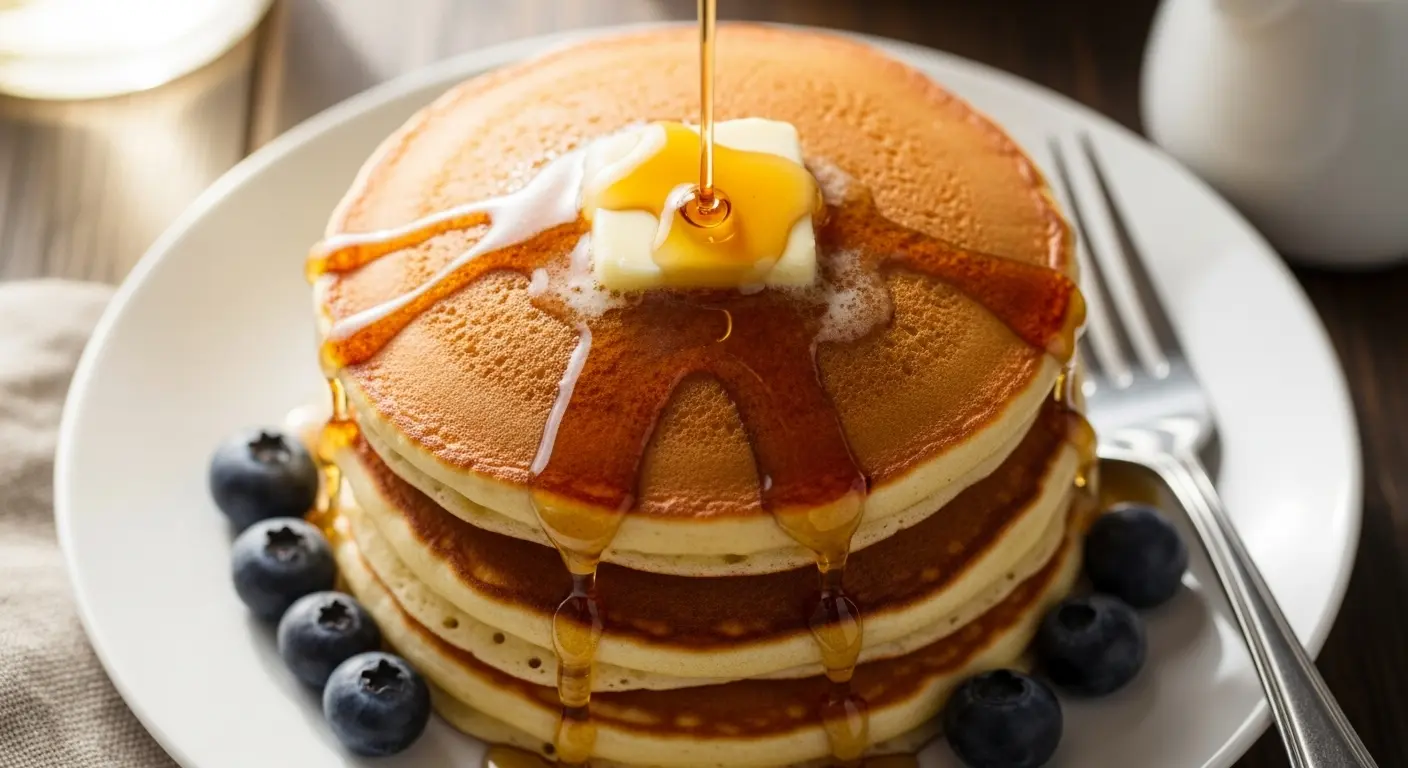
Fresh pancakes taste incredible with traditional breakfast toppings. Drizzle them with pure maple syrup and add a pat of butter that melts into every fluffy layer. Fresh berries like blueberries, strawberries, or raspberries add brightness and cut through the richness. Sliced bananas with a sprinkle of cinnamon create a comforting flavor combination that my kids request constantly.
- Pure maple syrup and butter – The classic for a reason
- Fresh berry compote – Simmer berries with a little sugar for 5 minutes
- Whipped cream and sliced strawberries – Feels fancy but takes no extra effort
- Honey and toasted pecans – A Southern-inspired combination that’s absolutely delicious
- Nutella and sliced bananas – Turns breakfast into dessert
- Apple cinnamon topping – Sauté diced apples with butter, brown sugar, and cinnamon
- Lemon curd and powdered sugar – Bright and tangy
- Caramel sauce and sea salt – Sweet and salty perfection
Savory Options:
Pancakes aren’t just for sweet breakfasts. Try them with scrambled eggs and crispy bacon on the side for a complete meal. I’ve even used them as a base for breakfast sandwiches with eggs and cheese in the middle. They pair wonderfully with Deviled Eggs at a brunch buffet.
For a heartier meal, serve alongside Air Fryer Bacon Wrapped Chicken Breasts or with a side of Healthy Egg Salad.
Variations of Pancakes
This basic recipe is incredibly versatile and accepts add-ins beautifully. I’ve tested all these variations multiple times, and they all work perfectly without any adjustments to the original recipe.
Fruit and Nut Variations:
Add your mix-ins after you’ve combined the wet and dry ingredients but before cooking. This way they get evenly distributed without overmixing the batter.
- Blueberry pancakes – Fold in 1 cup of fresh or frozen blueberries (don’t thaw frozen ones first or they’ll bleed into the batter)
- Chocolate chip pancakes – Stir in ¾ cup of chocolate chips; mini chips distribute more evenly than regular-sized
- Banana pancakes – Mash 1 ripe banana and fold it into the batter, or place thin banana slices directly on each pancake as it cooks
- Strawberry pancakes – Dice 1 cup of fresh strawberries into small pieces so they cook through
- Pecan pancakes – Add ½ cup of chopped toasted pecans for a nutty crunch
- Apple cinnamon pancakes – Fold in 1 cup of diced apples and add 1 teaspoon of cinnamon to the dry ingredients
- Lemon poppy seed pancakes – Add 2 tablespoons of poppy seeds and 1 tablespoon of lemon zest to the dry ingredients
Flavor Variations:
These changes require tiny tweaks to the original recipe but are worth trying once you’ve mastered the basic version.
- Buttermilk chocolate pancakes – Replace 2 tablespoons of flour with unsweetened cocoa powder
- Pumpkin spice pancakes – Add ½ cup of pumpkin puree to the wet ingredients and 1 teaspoon of pumpkin pie spice to the dry ingredients
- Cinnamon sugar pancakes – Add 1 tablespoon of cinnamon to the dry ingredients and increase sugar to 3 tablespoons
- Lemon ricotta pancakes – Reduce buttermilk to 1½ cups and add ½ cup of ricotta cheese and 2 tablespoons of lemon zest
- Gingerbread pancakes – Add 1 teaspoon each of ground ginger and cinnamon, ½ teaspoon of ground cloves, and 2 tablespoons of molasses to the wet ingredients
- Coconut pancakes – Fold in ½ cup of shredded sweetened coconut and replace vanilla with coconut extract
Read Also: Shakshuka Recipe
Storage and Reheating
One of the best things about this recipe is how well these pancakes keep. I often make a double batch on Sunday and have quick breakfasts ready for the entire week.
Storing Leftover Pancakes:
Let cooked pancakes cool completely before storing them. I spread them out on a cooling rack for about 20 minutes until they’re room temperature.
- Refrigerator storage – Stack cooled pancakes with small pieces of parchment paper between each one to prevent sticking, then store in an airtight container for up to 5 days
- Freezer storage – Place cooled pancakes in a single layer on a baking sheet and freeze until solid (about 1 hour), then transfer to a freezer bag and store for up to 3 months
- Unbaked batter – The batter keeps in an airtight container in the refrigerator for up to 24 hours; give it a gentle stir before using
Reheating Methods:
I’ve tried every reheating method possible, and here are the best options depending on how much time you have.
- Microwave – Place 1-2 pancakes on a microwave-safe plate, cover with a damp paper towel, and heat for 20-30 seconds until warmed through
- Toaster – This is my favorite method for frozen pancakes; toast on a medium setting until heated through and slightly crispy on the edges
- Oven – Preheat to 350°F (175°C), arrange pancakes in a single layer on a baking sheet, cover with foil, and heat for 10 minutes
- Stovetop – Heat a lightly greased skillet over medium-low heat and warm pancakes for 1-2 minutes per side
- Air fryer – Place pancakes in a single layer in the basket and heat at 350°F (175°C) for 3-4 minutes
This pairs beautifully with my Pumpkin French Toast for a complete fall breakfast.
Nutritional Facts
Here’s the approximate nutritional information per serving (2 pancakes):
Calories: 320 Total Fat: 10g Saturated Fat: 6g Cholesterol: 110mg Sodium: 680mg Total Carbohydrates: 48g Dietary Fiber: 1g Sugars: 10g Protein: 10g
These values are estimates based on the basic recipe without any toppings or add-ins. Adding butter, syrup, fruit, or other toppings will increase the calorie count accordingly.
Health Benefits of Key Ingredients
While pancakes are definitely a treat rather than health food, several ingredients in this recipe do provide some nutritional value.
Buttermilk Benefits:
Buttermilk is more than just a flavor enhancer. It contains probiotics that support digestive health and gut bacteria balance. The lactic acid in buttermilk also helps your body absorb minerals like calcium more efficiently, and it’s actually lower in fat than regular whole milk despite its rich taste.
- Rich in calcium – Supports bone health and muscle function
- Contains probiotics – Aids in digestion and supports gut health
- Lower in lactose – Often easier to digest than regular milk for people with mild lactose sensitivity
- B vitamins – Provides riboflavin and B12 for energy metabolism
Eggs:
The eggs in this recipe provide high-quality protein and essential nutrients. They contain all nine essential amino acids your body needs, making them a complete protein source.
- High-quality protein – Keeps you feeling full and satisfied
- Choline – Supports brain health and memory
- Vitamin D – Important for bone health and immune function
- Lutein and zeaxanthin – Antioxidants that support eye health
Whole Grain Option:
If you want to boost the nutritional value, you can replace up to half of the all-purpose flour with whole wheat flour. This adds fiber, B vitamins, and minerals while still maintaining a good texture.
For a lighter option, try: Healthy Crepe Recipe
FAQs About Pancakes
1. Why are my pancakes flat and dense instead of fluffy?
The most common culprit is overmixing the batter. When you stir too much, you develop the gluten in the flour, which creates a tough, dense texture instead of light and airy pancakes.
Old or expired baking powder and baking soda can also cause flat pancakes since they lose their leavening power over time. Test your baking powder by adding a teaspoon to hot water; if it doesn’t fizz vigorously, it’s time to replace it.
2. Can I make these pancakes dairy-free?
Yes, you can substitute the buttermilk with a dairy-free version. Mix 2 cups of unsweetened almond milk or oat milk with 2 tablespoons of lemon juice or apple cider vinegar, then let it sit for 5 minutes to curdle.
Replace the butter with melted coconut oil or a neutral vegetable oil. The texture will be slightly different but still delicious.
3. How do I know when to flip the pancakes?
Wait until you see bubbles forming all over the surface of the pancake and the edges look set and slightly dry. When those bubbles start to pop and leave holes that don’t fill back in, that’s your signal to flip.
The first side takes longer than the second side, usually 2-3 minutes versus 1-2 minutes. Don’t flip too early or the uncooked batter will run everywhere.
4. Can I use regular milk instead of buttermilk?
Buttermilk creates the most tender, flavorful pancakes, but you can make a quick substitute if you don’t have any on hand. Add 2 tablespoons of white vinegar or lemon juice to a measuring cup, then fill with regular milk to the 2-cup mark.
Let it sit for 5 minutes until it looks slightly curdled, then use it exactly as you would buttermilk. The acid helps activate the baking soda and creates a similar tender texture.
5. Why are my pancakes burning on the outside but raw in the middle?
Your griddle is too hot. Pancakes need medium heat to cook evenly all the way through.
Lower your burner temperature and give the pan a minute to adjust before cooking another batch. The first pancake is always a test to get your temperature right, so don’t worry if it doesn’t come out perfect.
You might also enjoy: Easy Banana Bread Recipe
Easy Pancake Recipe
Ingredients
- 2 cups all-purpose flour - 250g; spoon and level for accuracy
- 2 tablespoons granulated sugar - 25g
- 2 teaspoons baking powder - 8g; use fresh
- 1 teaspoon baking soda - 5g; use fresh
- ½ teaspoon salt - 3g
- 2 cups buttermilk - 480ml; or substitute with milk + lemon juice/vinegar
- 2 large eggs - room temperature
- ¼ cup melted butter - 60ml, cooled slightly
- 1 teaspoon vanilla extract - 5ml
- ½ cup fresh blueberries - or frozen (unthawed), chocolate chips, or sliced bananas
- pure maple syrup
- butter - for topping
- fresh berries - strawberries, raspberries, etc.
- sliced bananas
- whipped cream
- Nutella
Equipment
- Large mixing bowl - For dry ingredients
- Medium mixing bowl - For wet ingredients
- Whisk - Balloon whisk preferred
- Measuring cups and spoons
- Large griddle or non-stick skillet - 12-inch recommended
- Spatula - Wide, thin flexible turner
- Ladle or ¼ cup measuring cup - For portioning batter
- Electric griddle - (optional) for even temperature
- Cooling rack - (optional) for keeping warm
- Batter dispenser - (optional)
Method
- Prepare ingredients and let them come to room temperature. Measure everything and set up your griddle.
- In a large bowl, whisk together the flour, sugar, baking powder, baking soda, and salt. Create a well in the center.
- In a medium bowl, whisk the eggs, then add buttermilk, cooled melted butter, and vanilla until smooth.
- Pour wet ingredients into the well of dry ingredients. Gently fold with a spoon or spatula just until combined—batter should be lumpy. Rest for 5 minutes.
- Preheat griddle or skillet over medium heat. Test with water drops—it should sizzle and evaporate quickly. Lightly grease with butter or oil.
- Pour ¼ cup batter per pancake onto the griddle, leaving space between them. Cook undisturbed until bubbles form and pop on top and edges look set.
- Flip pancakes confidently with a spatula and cook the second side for 1-2 minutes until golden and firm. Keep warm in a 200°F oven if needed.
- Wipe griddle between batches if needed and adjust heat. Repeat until all batter is used.
Nutrition
Notes
- Don’t overmix the batter—lumps are good for fluffy texture as they prevent gluten development.
- Let the batter rest 5 minutes to hydrate the flour and activate leavening.
- Use fresh baking powder and baking soda for maximum rise.
- Buttermilk substitute: Add 2 tbsp lemon juice or vinegar to 2 cups milk and let sit 5 minutes.
- Store leftovers in the fridge up to 5 days or freeze up to 3 months.
- Reheat in toaster, microwave, or oven—avoid stacking to prevent sogginess.
- Customize with add-ins like blueberries, chocolate chips, or bananas after mixing.
- Test pan temperature: Water should sizzle and evaporate in 2-3 seconds.
- Flip only once and don’t press down to keep air pockets intact.
- Batter can be made ahead and refrigerated up to 24 hours.
Private Notes
Tried this recipe?
Let us know how it was!Final Thoughts
There’s nothing quite like sitting down to a stack of warm, fluffy pancakes on a weekend morning. This easy pancake recipe has become such a staple in my house that I can practically make it with my eyes closed now.
I hope this recipe brings as much joy to your breakfast table as it has to mine. Don’t be afraid to experiment with different add-ins and toppings to make it your own.
Give these pancakes a try this weekend, and let me know how they turn out! I’d love to hear about any creative variations you come up with or what your family’s favorite toppings are. Drop a comment below or share a photo of your beautiful stack.
Recommended:
- Air Fryer French Toast Recipe
- Healthy Waffle Recipe
- Pumpkin French Toast Recipe
- Homemade Biscuit Recipe
- Breakfast Burrito Recipe
- Shakshuka Recipe
- Air Fryer Morning Frittata Recipe
- Healthy Banana Bread Recipe
- Air Fryer Cheddar Hash Browns Recipe
- Easy Banana Bread Recipe