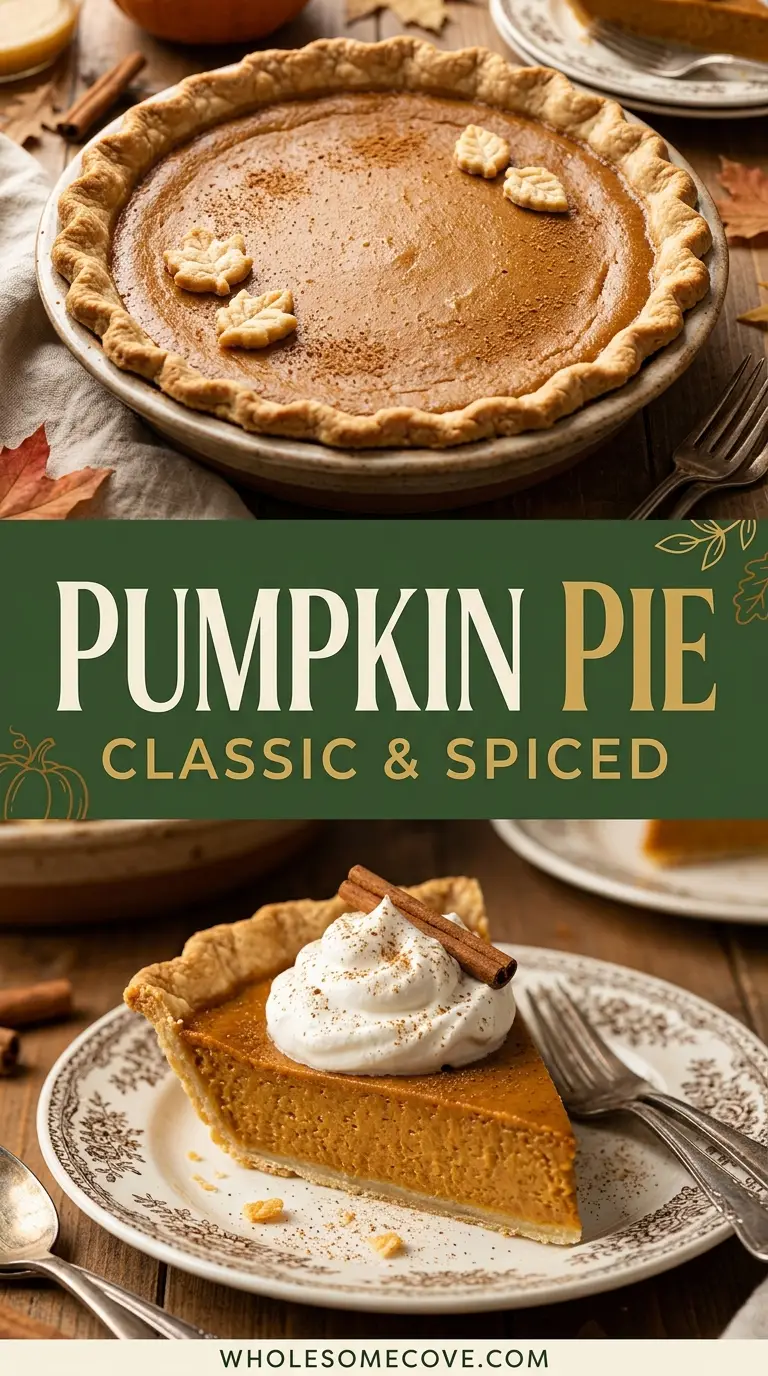
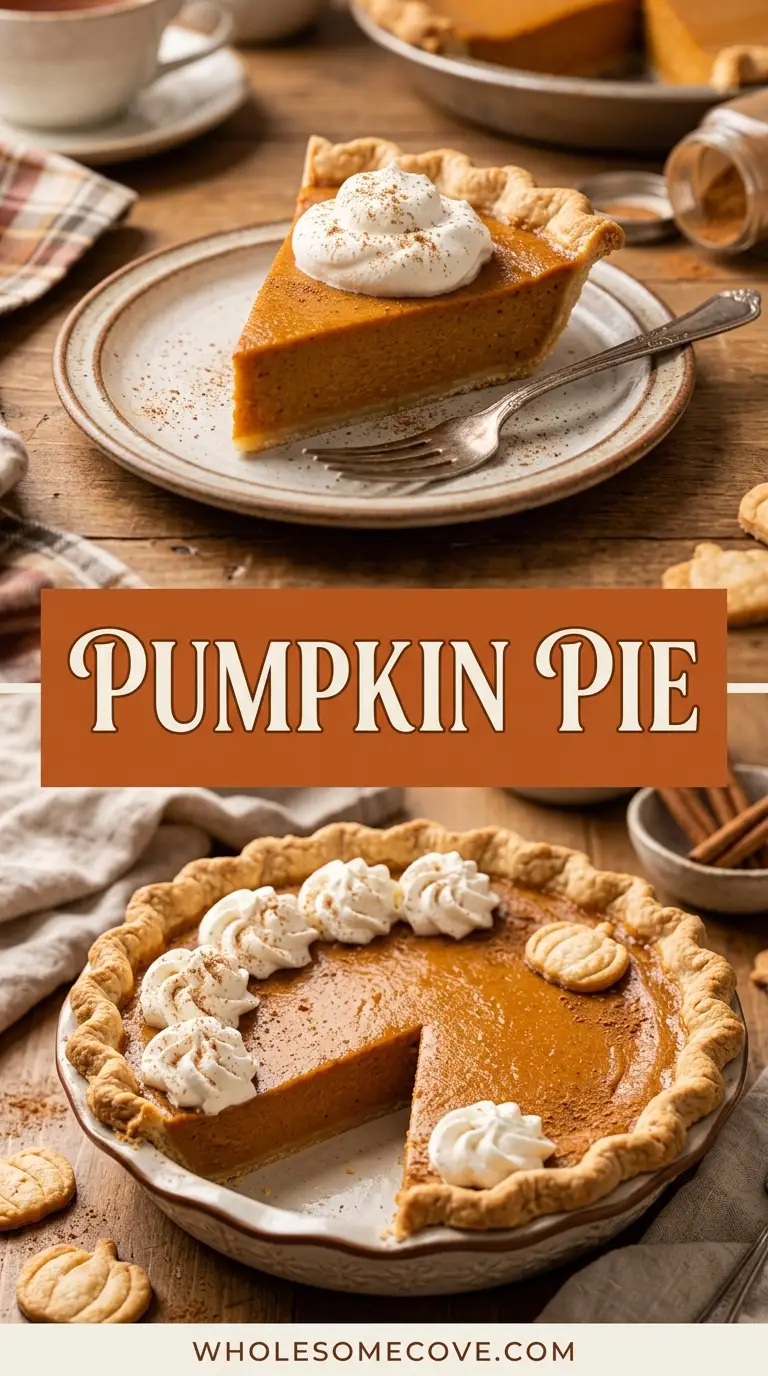
This pumpkin pie recipe leans on one 15-ounce can of pure pumpkin and four warm spices to build a custard that sets silky and slices clean. It skips the guesswork that trips up most bakers, so you get a smooth top and a crisp bottom instead of the usual cracks and sog.
The filling bakes in about an hour and turns a deep amber, with a center that should still wobble like set jelly when you pull it from the oven. That gentle jiggle is the whole secret, and it is where most pies go wrong.
Two things make this version reliable. Evaporated milk gives a denser, cleaner slice than regular milk, which tends to leave the filling loose and weepy.
Par-baking the crust for a few minutes keeps the bottom from turning gummy under all that wet custard. Do those two steps and the pie serves eight neat wedges every time.
| Quick Recipe Summary | |
|---|---|
| Prep Time | 20 minutes |
| Cook Time | 1 hour |
| Cool Time | 3 hours |
| Total Time | 4 hours 20 minutes |
| Servings | 8 slices |
| Difficulty Level | Easy |
For a lighter take on the same classic, see Healthy Pumpkin Pie.
Why You’ll Love This Pumpkin Pie Recipe
This is the pie people expect at the end of a fall meal, made without any fuss or hard-to-find ingredients. The method fixes the two most common failures, cracking and a soggy base, so beginners get bakery results on the first try.
Here is what sets it apart:
- Silky, sliceable custard. Evaporated milk and two eggs set into a firm but tender filling that holds its shape when cut.
- A crisp bottom crust. A quick par-bake means the shell stays crisp instead of going gummy under the wet filling.
- Balanced, warm spice. Cinnamon, ginger, nutmeg, and cloves land in the right proportions, so no single spice overpowers the pumpkin.
- One can, no shortcuts skipped. A single 15-ounce can of pure pumpkin does the heavy lifting, with pantry staples rounding it out.
- Make-ahead friendly. The pie holds beautifully overnight, which makes it a stress-free choice for a holiday spread.
- Foolproof doneness cue. A slight jiggle in the center tells you exactly when to stop, no toothpick guessing required.
A related recipe worth bookmarking is Pumpkin Cheesecake.
Ingredients
Reach for pure pumpkin, not pumpkin pie filling, which already contains sugar and spices and will throw off the balance here. Everything else is standard baking-aisle fare, and both imperial and metric amounts are listed below.
- 1 (15 oz / 425 g) can pure pumpkin puree
- 1 (12 fl oz / 354 ml) can evaporated milk
- 2 large eggs, at room temperature
- 3/4 cup (150 g) granulated sugar
- 1/4 cup (55 g) packed light brown sugar
- 2 tsp ground cinnamon
- 1 tsp ground ginger
- 1/2 tsp ground nutmeg
- 1/4 tsp ground cloves
- 1/2 tsp fine salt
- 1 tsp pure vanilla extract
- 1 single 9-inch (23 cm) pie crust, unbaked (store-bought or homemade)
I tested this side by side with regular whole milk, and the evaporated milk version sliced firm and clean while the whole-milk one stayed loose and wept liquid onto the plate.
For a nutty cousin to this pie, try: Pecan Pie
Kitchen Equipment Needed
None of this is specialty gear, and most of it is already in a basic baking kit. Having the right pie dish and a good whisk makes the difference between a smooth filling and a lumpy one.
- 1 9-inch pie dish (glass or ceramic works best for even browning)
- 1 large mixing bowl
- 1 balloon whisk
- 1 rolling pin (if using homemade crust)
- 1 rimmed baking sheet
- Measuring cups and spoons
- Aluminum foil or a pie crust shield
- A wire cooling rack
For another fall bake to keep on hand, see Apple Pie.
Recommended Products for This Recipe
These are the items I keep reaching for when I make this pie, chosen because each one solved a specific problem in my own kitchen. They are worth the small upgrade if you bake more than once a season.
1. Libby’s 100% Pure Pumpkin
Cheaper store-brand purees can run watery or stringy, which thins the custard and leaves a grainy texture. This one is thick and smooth straight from the can, so the filling sets dense without any extra draining or straining.
2. Ceramic Deep-Dish Pie Plate
Thin metal tins heat unevenly and can leave the center underbaked while the edges scorch. A heavier ceramic plate holds steady heat, so the custard cooks through at the same rate the crust browns.
3. Adjustable Pie Crust Shield
The crust edge always cooks faster than the filling, and it burns while you wait for the center to set. A reusable shield covers just the rim, so the edge stays golden instead of turning dark and bitter.
4. Instant-Read Thermometer
Guessing at doneness is what cracks a pie, since firm-looking centers are usually overbaked. A quick read of 175°F (79°C) at the center tells you the custard is set without leaving anything to chance.
5. Pumpkin Pie Spice Blend
Measuring four separate spices is easy to get wrong, and an off ratio muddies the flavor. A ready-made blend keeps the balance consistent, and you can swap in 1 tablespoon of it for the individual spices in this recipe.
You might also enjoy: Pumpkin Roll
Step-by-Step Instructions: How to Make Pumpkin Pie
Follow these steps in order and you’ll have a smooth, crack-free pumpkin pie cooling on the rack before you know it.
1. Prep the oven and crust
- Position a rack in the lower third of the oven and preheat to 425°F (220°C).
- If using a homemade crust, roll it out on a lightly floured surface and fit it into your 9-inch pie dish, then crimp the edges.
- Prick the base all over with a fork, line it with parchment, and fill with pie weights or dried beans.
- Par-bake the crust for 10 minutes, then remove the weights and parchment and set the shell aside. This short bake is what keeps the bottom crisp under the wet filling.
2. Mix the dry ingredients
- In a large mixing bowl, whisk together the granulated sugar, brown sugar, cinnamon, ginger, nutmeg, cloves, and salt.
- Break up any lumps of brown sugar with the back of a spoon so the spice blend is even.
- Combining the dry ingredients first means the spices distribute evenly instead of clumping in the wet filling.
3. Add the eggs and pumpkin
- Crack in the 2 room-temperature eggs and whisk until the mixture looks glossy and slightly loose.
- Add the full 15-ounce can of pure pumpkin puree and the vanilla extract.
- Whisk until the pumpkin is fully blended with the sugar and eggs, with no dry streaks remaining.
4. Stream in the evaporated milk
- Pour in the evaporated milk gradually while whisking, rather than all at once.
- Keep whisking until the filling is completely smooth and pourable, about 30 seconds.
- The filling will look thin at this stage, which is exactly right; it thickens as it bakes.
5. Fill and bake
- Set the par-baked crust on a rimmed baking sheet to catch any drips and make transfer easier.
- Pour the filling into the shell, stopping just below the rim to avoid overflow.
- Bake at 425°F (220°C) for 15 minutes to set the edges quickly.
- Reduce the oven to 350°F (175°C), cover the crust edge with foil or a shield, and bake for 40 to 45 minutes more.
6. Check for doneness
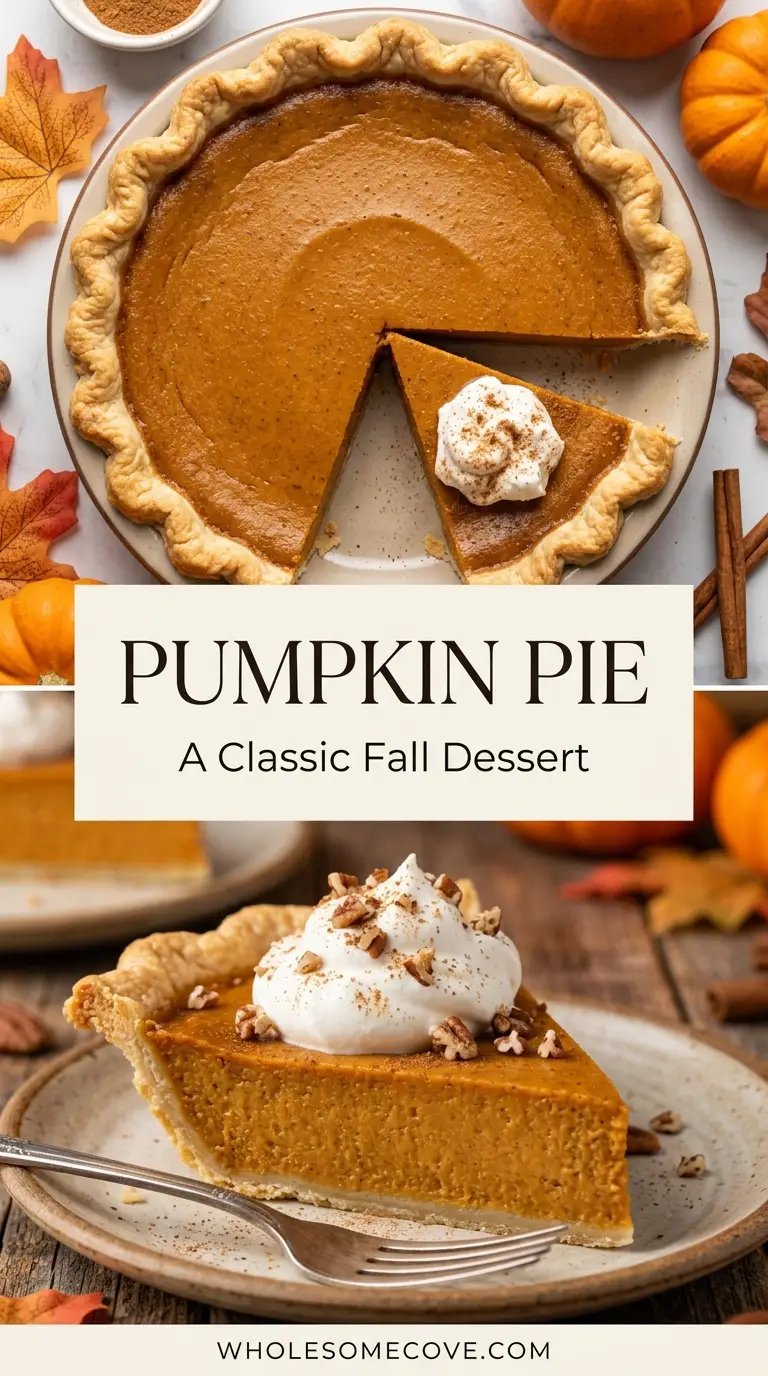
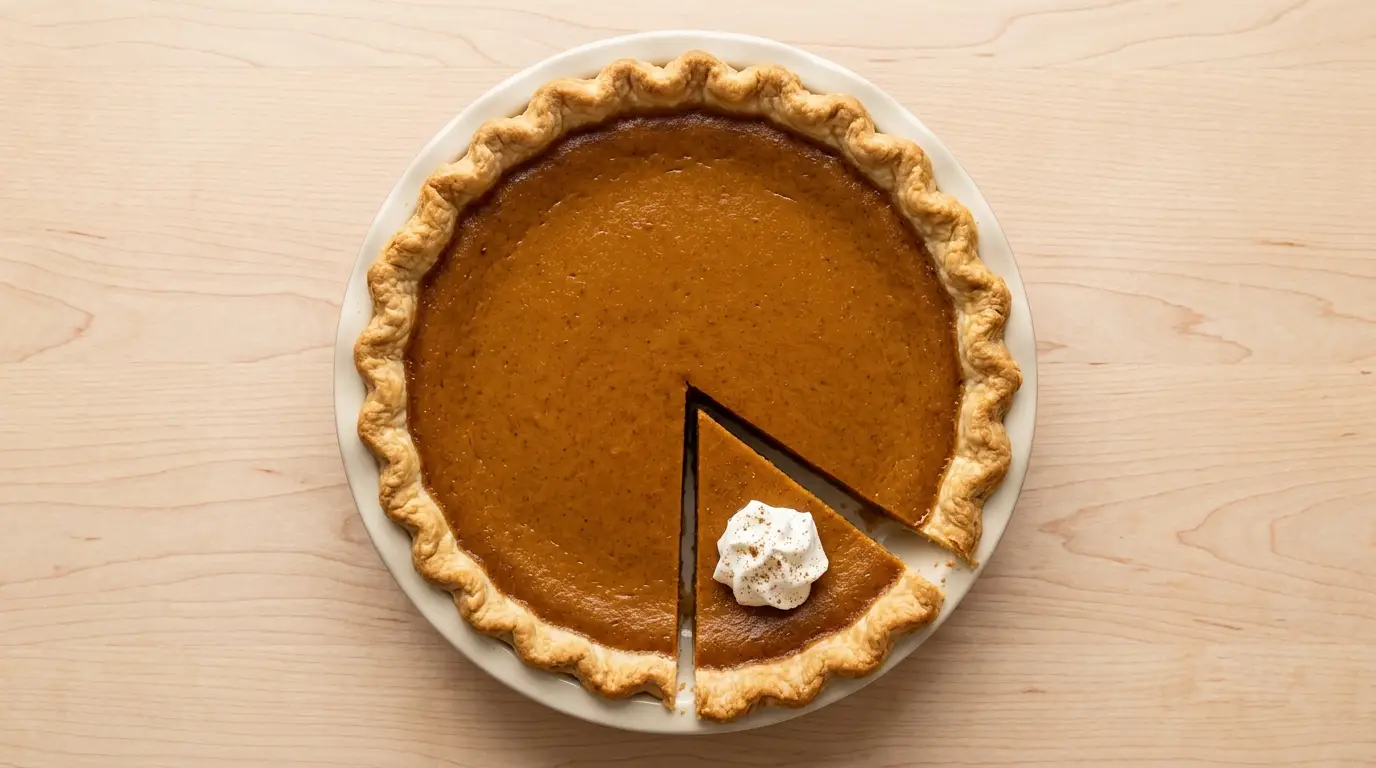
- The pie is done when the edges are set but the center still jiggles slightly, like set jelly, when you nudge the dish.
- For certainty, an instant-read thermometer inserted an inch from the center should read about 175°F (79°C).
- Avoid baking until the middle is firm, since that means it is already overcooked and will crack as it cools.
7. Cool completely
- Transfer the pie to a wire rack and let it cool at room temperature for at least 3 hours.
- The custard continues to set as it cools, which is why patience here matters more than oven time.
- Once fully cooled, slice into 8 wedges and serve, or chill before serving for cleaner cuts.
For a different pie custard to master, see Sweet Potato Pie.
Tips for The Best Pumpkin Pie
A few small habits separate a good pumpkin pie from a great one. These are the details that fixed my own repeat mistakes.
- Pull it while it jiggles. I ruined an early pie by baking until the center looked firm, and it cracked straight down the middle as it cooled. Stopping while the middle still wobbles fixed that for good.
- Bring the wet ingredients to room temperature. I set the eggs and evaporated milk on the counter about an hour ahead, since a room-temperature filling bakes more evenly than one poured in cold.
- Always par-bake the crust. A par-baked shell holds up far better than a raw one here, because the wet filling turns an unbaked base gummy on the bottom.
- Shield the edges early. Cover the crust rim with foil before it darkens, not after, to keep it golden instead of bitter.
- Do not overmix once the milk is in. Whisk just until smooth, since beating too much air into the custard can cause it to puff and then sink and crack.
- Use pure pumpkin, never pumpkin pie filling. The pre-seasoned filling adds its own sugar and spice and will unbalance the recipe.
- Cool on a rack, not on the stovetop. Air needs to circulate underneath so the bottom crust does not steam and soften.
You might also enjoy: Pumpkin Bars
What to Serve with Pumpkin Pie
Pumpkin pie is the classic finish to a fall or holiday meal, so it pairs naturally with a whole table of seasonal favorites. Whipped cream is the obvious topping, but the pie also holds its own alongside savory mains and warm drinks.
- A slather of freshly whipped cream or a scoop of vanilla ice cream on each slice
- A traditional Thanksgiving Turkey as the centerpiece of the meal
- Savory Thanksgiving Stuffing to round out the plate
- Creamy Mashed Potatoes with a ladle of Turkey Gravy
- A classic Green Bean Casserole for the vegetable side
- Sweet Sweet Potato Casserole that echoes the pie’s warm spices
- Tangy Cranberry Sauce to cut the richness
- Warm Dinner Rolls fresh from the oven
- A glazed Honey Baked Ham for a second main
- A mug of Mulled Apple Cider or rich Hot Chocolate for the after-dinner slice
For a related custard pie, try: Coconut Cream Pie
Variations of Pumpkin Pie
Once you have the base method down, the pie takes well to small tweaks. Each of these keeps the classic texture while changing the flavor or the format.
- Brown butter pumpkin pie. Brown 2 tablespoons of butter and whisk it into the filling for a deeper, nuttier flavor.
- Maple pumpkin pie. Replace the brown sugar with 1/4 cup (60 ml) pure maple syrup for a softer sweetness.
- Bourbon pumpkin pie. Stir in 1 tablespoon of bourbon with the vanilla for a warm, grown-up note.
- Gingersnap crust. Swap the pastry shell for a crushed gingersnap crust for extra spice and crunch.
- Mini pumpkin pies. Divide the filling among a muffin tin lined with crust rounds and bake for about 20 minutes.
- Extra-spiced version. Bump the cinnamon to 1 tablespoon and add a pinch of cardamom for a bolder profile.
- Crustless pumpkin pie. Pour the filling straight into a greased dish for a lighter, gluten-free custard.
A similar seasonal bake is Old-Fashioned Pumpkin Bread.
Storage and Reheating
Pumpkin pie is a custard pie, so it needs the fridge after cooling rather than the counter. Handled right, it keeps well and even improves overnight as the spices settle.
- Refrigerate promptly. Once cooled, cover the pie loosely and refrigerate within 2 hours of baking.
- Fridge life. It keeps for up to 4 days, covered, in the refrigerator.
- Make ahead. Bake it a full day before serving; the flavor deepens and the custard firms overnight.
- Freezing. Wrap a fully cooled pie tightly in plastic and foil, then freeze for up to 1 month.
- Thawing. Move a frozen pie to the fridge overnight before serving.
- Serving temperature. Serve chilled or let slices sit out for 20 minutes to take off the fridge chill.
- Reheating. For a warm slice, heat individual pieces in a 300°F (150°C) oven for about 10 minutes rather than microwaving, which can weep liquid.
For another custard sweet to keep on hand, try: Pecan Pie Dump Cake
Nutritional Facts
Values below are estimates per slice, based on the pie cut into 8 servings with a standard pastry crust. Actual numbers vary with your crust and toppings.
| Nutrient | Per Slice (1 of 8) |
|---|---|
| Calories | 320 kcal |
| Total Fat | 13 g |
| Saturated Fat | 5 g |
| Cholesterol | 60 mg |
| Sodium | 310 mg |
| Total Carbohydrates | 45 g |
| Sugars | 28 g |
| Protein | 6 g |
| Vitamin A | 145% DV |
For a lighter dessert option, try: Pumpkin Chocolate Chip Cookies
Health Benefits of Key Ingredients
Beyond being the flavor of the season, several ingredients in this pie carry real nutritional value. Here is what the standout components bring to the table.
- Pumpkin. It is exceptionally rich in beta-carotene, which the body converts to vitamin A for eye and immune health, and it delivers fiber with very few calories.
- Eggs. They provide complete protein along with choline, which supports brain function, and they give the custard its structure.
- Evaporated milk. A concentrated source of calcium and protein, it lends creaminess without the extra water of regular milk.
- Cinnamon. This warm spice contains antioxidants and has been studied for its role in supporting steady blood sugar.
- Ginger. Long used to ease digestion, ginger adds anti-inflammatory compounds along with its bright, peppery warmth.
- Cloves. Tiny but potent, cloves rank among the most antioxidant-dense spices you can add to a dish.
- Nutmeg. It brings trace minerals and a cozy aroma that rounds out the spice blend.
For another spiced seasonal favorite, see Pumpkin Spice Latte.
FAQs About Pumpkin Pie
1. Can I use fresh pumpkin instead of canned?
Yes, though it takes more effort and the results can vary. Roast and puree a sugar pie pumpkin, then drain the puree well, since fresh pumpkin holds more water than canned and can leave the filling loose.
2. Why did my pumpkin pie crack?
Cracks almost always come from overbaking, which causes the custard to overset and split as it cools. Pull the pie while the center still jiggles slightly, and let it finish setting on the counter rather than in the oven.
3. How do I know when the pie is done?
The edges should look set while the center still wobbles like soft jelly when you gently shake the dish. For a sure sign, an instant-read thermometer should register about 175°F (79°C) an inch from the center.
4. Do I need to par-bake the crust?
It is strongly recommended for this recipe. A quick par-bake keeps the bottom crisp, because the wet custard tends to soak into a fully raw shell and leave it gummy.
5. Can I make pumpkin pie ahead of time?
Absolutely, and it is one of the best desserts to prep early. Bake it up to a day in advance, cool it fully, then cover and refrigerate; the flavor actually deepens overnight.
6. Can I use pumpkin pie filling instead of pure pumpkin?
No, the two are not interchangeable here. Pumpkin pie filling already contains sugar and spices, so using it would double up on sweetener and throw off the whole balance of this recipe.
For a cozy fall dessert to bake next, try: Apple Crisp
Classic Pumpkin Pie
Ingredients
- 1 can pure pumpkin puree - 15 oz / 425 g; not pumpkin pie filling
- 1 can evaporated milk - 12 fl oz / 354 ml
- 2 large eggs - at room temperature
- 3/4 cup granulated sugar - 150 g
- 1/4 cup light brown sugar - 55 g, packed
- 2 tsp ground cinnamon
- 1 tsp ground ginger
- 1/2 tsp ground nutmeg
- 1/4 tsp ground cloves
- 1/2 tsp fine salt
- 1 tsp pure vanilla extract
- 1 single pie crust - 9-inch / 23 cm, unbaked; store-bought or homemade
Equipment
- 9-inch pie dish - glass or ceramic works best for even browning
- Balloon whisk
- Rolling Pin - if using homemade crust
- Aluminum foil or pie crust shield
Method
- Position a rack in the lower third of the oven and preheat to 425°F (220°C). Roll out homemade crust and fit into a 9-inch pie dish, then crimp the edges.
- Prick the crust base all over with a fork, line with parchment, and fill with pie weights or dried beans. Par-bake for 10 minutes, then remove weights and parchment and set aside.
- In a large mixing bowl, whisk together granulated sugar, brown sugar, cinnamon, ginger, nutmeg, cloves, and salt. Break up any brown sugar lumps.
- Crack in the room-temperature eggs and whisk until glossy and slightly loose. Add the full can of pumpkin puree and vanilla, whisking until fully blended with no dry streaks.
- Pour in the evaporated milk gradually while whisking until the filling is completely smooth and pourable, about 30 seconds. The filling will look thin at this stage.
- Set the par-baked crust on a rimmed baking sheet. Pour the filling into the shell, stopping just below the rim to avoid overflow.
- Bake at 425°F (220°C) for 15 minutes. Reduce oven to 350°F (175°C), cover the crust edge with foil or a shield, and bake for 40 to 45 minutes more.
- The pie is done when the edges are set but the center still jiggles slightly like set jelly. An instant-read thermometer inserted an inch from the center should read about 175°F (79°C).
- Transfer the pie to a wire rack and let it cool at room temperature for at least 3 hours. The custard continues to set as it cools. Slice into 8 wedges and serve.
Nutrition
Notes
- Pull it while it jiggles. Overbaking causes cracks; stop when the center still wobbles like set jelly.
- Bring wet ingredients to room temperature. Set eggs and evaporated milk on the counter about an hour ahead for even baking.
- Always par-bake the crust. A par-baked shell stays crisp; a raw one turns gummy under the wet custard.
- Shield the edges early. Cover the crust rim with foil before it darkens to keep it golden, not bitter.
- Do not overmix once the milk is in. Whisk just until smooth; excess air can cause puffing, sinking, and cracking.
- Use pure pumpkin, never pumpkin pie filling. Pre-seasoned filling adds sugar and spice that unbalance the recipe.
- Cool on a rack, not on the stovetop. Air needs to circulate underneath so the bottom crust does not steam and soften.
- Make ahead. Bake up to a day in advance; flavor deepens and custard firms overnight in the fridge.
- Storage. Refrigerate within 2 hours of baking; keeps up to 4 days covered. Freeze tightly wrapped for up to 1 month.
- Substitutions. Swap brown sugar with 1/4 cup maple syrup, add 1 tbsp bourbon, or use a gingersnap crust for variation.
Private Notes
Tried this recipe?
Let us know how it was!Final Thoughts
A good pumpkin pie is less about fancy technique and more about knowing when to stop. Trust the jiggle, par-bake the crust, and give it time to cool, and you will slice into a smooth, crack-free pie every single time.
This is the recipe that earns a permanent spot on the fall table. Once you nail it, the whole holiday spread feels a little easier.
Give it a bake this season and let it cool completely before that first slice. If you try it, drop a comment to share how it turned out, and pass the recipe along to anyone hosting this year.
Recommended:
- Pumpkin Cookies
- Pumpkin Snickerdoodle Cookies
- Pumpkin Oatmeal Cookies
- Pumpkin French Toast
- Pumpkin Waffles
- Pumpkin Overnight Oats
- Pumpkin Sage Pasta
- Apple Crumble
- Eggnog
- Fall Dinner Recipes