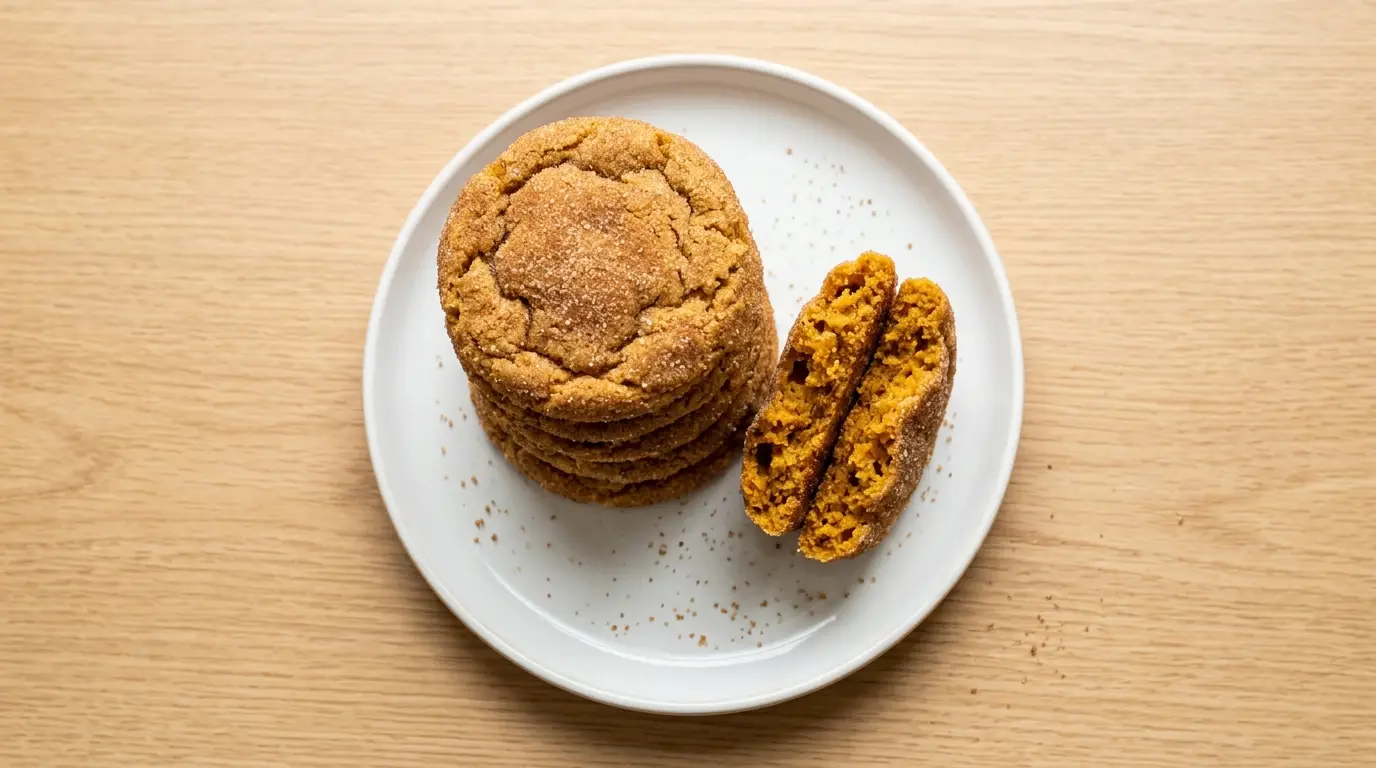
This pumpkin snickerdoodle cookies recipe uses just eleven ingredients in the dough, plus a simple cinnamon sugar coating for that classic crackled top.
The pumpkin puree gets blotted dry with a paper towel before it goes into the batter, which is the detail that keeps these cookies chewy instead of cakey. Melted butter and a single egg yolk replace the usual whole eggs found in traditional snickerdoodles, giving the dough a denser, fudgier bite once it bakes.
The dough needs about an hour in the fridge before it firms up enough to scoop and roll. After that, twelve minutes in a 350°F oven is all it takes for the edges to set while the centers stay soft.
| Quick Recipe Summary | |
|---|---|
| Prep Time | 20 minutes |
| Chill Time | 1 hour |
| Cook Time | 12 minutes |
| Total Time | 1 hour 32 minutes |
| Servings | 24 cookies |
| Difficulty Level | Easy |
For another fall cookie built the same way, see Pumpkin Cookies.

Why You’ll Love This Pumpkin Snickerdoodle Cookies Recipe
These cookies hit that specific spot between a snickerdoodle’s tangy cinnamon sugar shell and a soft pumpkin cookie’s dense middle. Blotting the pumpkin puree before mixing keeps the dough from turning gummy, so the texture stays close to a real snickerdoodle instead of drifting into muffin-top territory.
Here’s what makes this one worth keeping in the regular rotation:
- Only one bowl of wet ingredients to clean. The melted butter, sugars, pumpkin, egg yolk, and vanilla all get whisked together in a single bowl before the dry ingredients go in.
- No stand mixer required. A whisk and a wooden spoon or spatula handle this dough from start to finish.
- True snickerdoodle tang. Cream of tartar is doing the same job here that it does in the original recipe, so these don’t taste like a plain pumpkin cookie with cinnamon sprinkled on top.
- Freezer-friendly dough. The scooped balls freeze well before rolling in cinnamon sugar, so a fresh batch is never more than fifteen minutes away.
- Consistent spread. Chilling the dough for an hour keeps the cookies from thinning out into crisp discs, so every batch comes out the same thickness.
- Beginner-friendly technique. There’s no creaming butter and sugar with a mixer, no tempering eggs, and no piping. It’s mix, chill, scoop, roll, bake.
You might also like this Pumpkin Chocolate Chip Cookies recipe if you want a version with melted chocolate running through the dough.
Ingredients
Gather everything below before starting so the mixing goes quickly once the wet ingredients are combined. All measurements are listed in both cups and grams.
For the cookie dough:
- 2 ¼ cups (280g) all-purpose flour
- 1 teaspoon cream of tartar
- 1 teaspoon baking soda
- ½ teaspoon salt
- 2 teaspoons pumpkin pie spice
- ½ cup (113g) unsalted butter, melted and cooled for 5 minutes
- ¾ cup (150g) packed light brown sugar
- ¼ cup (50g) granulated sugar
- ⅓ cup (80g) pure pumpkin puree (not pumpkin pie filling), pressed dry between paper towels
- 1 large egg yolk
- 1 teaspoon pure vanilla extract
For the cinnamon sugar coating:
- ¼ cup (50g) granulated sugar
- 1 tablespoon ground cinnamon
I ruined my first batch of these by skipping the step where you blot the pumpkin puree. The extra moisture left the cookies dense and slightly gummy in the center, and blotting it for even thirty seconds with a paper towel fixed the problem completely.
A related option worth trying is Snickerdoodle Banana Bread, which uses the same cinnamon sugar topping in loaf form.
Kitchen Equipment Needed
None of this requires specialty bakeware, but a few specific tools make the process smoother and help the cookies bake evenly.
- Large mixing bowl (for wet ingredients)
- Medium mixing bowl (for dry ingredients)
- Whisk
- Rubber spatula or wooden spoon
- Dry and liquid measuring cups
- Measuring spoons
- Small bowl (for the cinnamon sugar coating)
- Medium cookie scoop (about 1.5 tablespoons)
- Rimmed baking sheets
- Parchment paper
- Wire cooling rack
- Plastic wrap or an airtight container (for chilling the dough)
You might also enjoy: Chocolate Chip Cookies
Recommended Products for This Recipe
These are the specific products I reach for when I make this recipe, based on what actually solved problems in my own kitchen rather than a generic list of baking gear.
1. Libby’s 100% Pure Pumpkin
Some canned pumpkin blends are watery enough that blotting barely helps, and that extra liquid is exactly what turns snickerdoodles cakey. Libby’s runs thicker straight out of the can, so less moisture needs to be pressed out before it goes into the dough.
2. OXO Good Grips Cookie Scoop
Uneven scoops mean uneven baking, and a few oversized cookies on a tray of smaller ones will burn at the edges before the big one sets in the middle. This scoop releases the dough cleanly with one squeeze, so every ball ends up close to the same size without extra shaping.
3. Rodelle Pumpkin Pie Spice
Pre-mixed spice blends vary a lot in how much clove and allspice they include, and a blend that’s too heavy on clove can overpower the pumpkin flavor in a small-batch cookie recipe. This one leans on cinnamon and ginger as the dominant notes, which keeps the balance closer to a classic snickerdoodle.
4. USA Pan Nonstick Baking Sheet
Thin, dark baking sheets run hot at the edges, which is why cookies baked on cheap trays often brown around the rim before the centers finish. The heavier gauge aluminized steel in this pan distributes heat more evenly, so the bottoms brown at a consistent rate across the whole tray.
For a different approach, see Oatmeal Cookies.

Step-by-Step Instructions: How to Make Pumpkin Snickerdoodle Cookies
Follow these steps in order and the dough will come together with no special equipment beyond a whisk and a spatula.
1. Whisk the dry ingredients
- In a medium bowl, whisk together the flour, cream of tartar, baking soda, salt, and pumpkin pie spice.
- Make sure the cream of tartar and baking soda are fully distributed so the cookies rise evenly instead of puffing unevenly in spots.
- Set the bowl aside while you prepare the wet ingredients.
2. Blot the pumpkin puree
- Spoon the pumpkin puree onto a few layers of paper towel.
- Fold the paper towel over the puree and press gently for about 30 seconds to pull out excess moisture.
- Scrape the blotted puree into a small bowl and set it aside. This step is what keeps the finished cookies chewy rather than cakey.
3. Combine the wet ingredients
- In a large bowl, whisk the melted butter, brown sugar, and granulated sugar together until no lumps of brown sugar remain.
- Add the blotted pumpkin puree, egg yolk, and vanilla extract.
- Whisk until the mixture looks smooth and uniform in color, about 30 seconds.
4. Mix the dough
- Pour the dry ingredients into the wet ingredients.
- Fold everything together with a rubber spatula just until no streaks of flour remain.
- Stop mixing as soon as the dough comes together. Overmixing at this stage is one of the most common reasons snickerdoodles turn out tough.
5. Chill the dough
- Cover the bowl with plastic wrap and refrigerate for at least 1 hour.
- Chilling firms up the melted butter again, which prevents the cookies from spreading too thin in the oven.
- The dough can chill for up to 24 hours if it works better to prepare it the night before.
6. Preheat the oven and prep the coating
- When ready to bake, preheat the oven to 350°F (176°C).
- Line two baking sheets with parchment paper.
- In a small shallow bowl, stir together the granulated sugar and ground cinnamon for the coating.
7. Scoop and roll the dough
- Using a medium cookie scoop, portion the chilled dough into balls of about 1.5 tablespoons each.
- Roll each ball briefly between your palms to smooth it out.
- Drop each ball into the cinnamon sugar mixture and roll it around until fully coated on all sides.
8. Arrange and bake
- Place the coated dough balls on the prepared baking sheets, spacing them about 2 inches (5 cm) apart.
- Bake for 10 to 12 minutes, until the edges look set but the centers still appear slightly underbaked.
- The cookies will continue cooking on the hot pan after they come out of the oven, so pulling them a touch early keeps them soft.
9. Cool the cookies
- Let the cookies rest on the baking sheet for 5 minutes before moving them.
- Transfer them to a wire cooling rack to finish cooling completely.
- Repeat the scooping and baking process with any remaining dough, re-using the same parchment-lined sheets once they’ve cooled.
A similar approach works in this Sugar Cookies recipe if you want to compare rolling and coating techniques side by side.

Tips for The Best Pumpkin Snickerdoodle Cookies
A handful of small details separate a soft, evenly shaped batch from one that spreads too thin or bakes unevenly.
- Don’t skip blotting the pumpkin. Even a small amount of extra liquid changes the texture from chewy to cakey.
- Measure flour by weight if possible. Scooping flour directly from the bag packs it down and can add up to an extra ¼ cup, which makes the dough dry and crumbly.
- Chill the full hour. Cutting the chill time short is the most common reason these spread into thin, flat cookies.
- Use a kitchen scale for the cookie scoop portions. Consistent sizing means consistent bake times across the whole tray.
- Rotate the baking sheet halfway through baking if your oven runs hot on one side.
- Slightly underbake rather than overbake. The centers should look a little soft when the cookies come out; they firm up as they cool on the pan.
- Use fresh cream of tartar. It loses potency after about a year in the pantry, and that tang is a defining flavor in this recipe.
- Let the butter cool before mixing it with the eggs. Butter that’s too hot when it meets the egg yolk can start to cook it slightly, leaving streaks in the dough.
I’ve found that rolling the dough balls slightly smaller than a standard snickerdoodle, closer to 1.5 tablespoons instead of 2, keeps the ratio of crisp edge to soft center more balanced given how dense the pumpkin makes the dough.
Read Also: Oatmeal Raisin Cookie
What to Serve with Pumpkin Snickerdoodle Cookies
These cookies pair well with warm drinks and other fall desserts, especially when serving a crowd around the holidays. A few of these also work as gifts when packaged together in a tin.
- A mug of Mulled Apple Cider for a warm, spiced pairing
- A Pumpkin Spice Latte if you want two pumpkin flavors in one sitting
- A cup of Hot Chocolate for a sweeter, richer contrast
- Plain black coffee to balance out the sweetness of the cinnamon sugar coating
- A scoop of vanilla ice cream sandwiched between two cookies for an easy ice cream sandwich
- A dessert board alongside Apple Crisp for a fall gathering
- Gingerbread Cookies on the same platter for a mixed holiday cookie tray
- A cup of chai tea for a spiced, caffeinated option that echoes the cinnamon in the coating
For another cinnamon-forward baked good, see Snickerdoodle Banana Bread.
Variations of Pumpkin Snickerdoodle Cookies
The base dough is flexible enough to adjust for different textures and flavor add-ins without changing the core method.
- White chocolate chips: Fold in ½ cup of white chocolate chips after mixing the dough for a sweeter, creamier bite.
- Browned butter version: Brown the butter instead of just melting it for a nuttier, deeper flavor in the finished cookie.
- Extra spiced: Add an additional ½ teaspoon of ground cinnamon and a pinch of ground cloves directly into the dry ingredients for a bolder spice profile.
- Maple glaze: Drizzle cooled cookies with a simple maple glaze made from powdered sugar and maple syrup instead of the cinnamon sugar coating.
- Cream cheese filling: Flatten each dough ball slightly, add a small dollop of sweetened cream cheese in the center, and fold the dough back around it before rolling in cinnamon sugar.
- Smaller bite-size version: Use a 1-tablespoon scoop instead of 1.5 tablespoons and reduce the bake time to 8 to 9 minutes.
- Gluten-free adaptation: Substitute a 1:1 gluten-free flour blend for the all-purpose flour, keeping all other measurements the same.
Another option worth trying is Pumpkin Bar if you’d rather bake this flavor combination as a bar instead of individual cookies.
Storage and Reheating
These cookies hold their texture well for several days when stored properly, and the raw dough freezes even better than the baked cookies do.
- Room temperature: Store baked cookies in an airtight container for up to 5 days.
- Refrigerator: Cookies can be refrigerated for up to 10 days, though the texture is slightly firmer straight from the fridge.
- Freezing baked cookies: Freeze in a single layer on a tray, then transfer to a freezer bag once solid. They’ll keep for up to 3 months.
- Freezing raw dough balls: Scoop and roll the dough into balls (without the cinnamon sugar coating), freeze on a tray until solid, then store in a freezer bag for up to 3 months.
- Baking from frozen: Roll frozen dough balls in cinnamon sugar and bake straight from the freezer, adding 1 to 2 minutes to the bake time.
- Reheating: Warm cookies in a 300°F oven for 3 to 4 minutes to soften the centers back up, or microwave individually for 8 to 10 seconds.
- Avoid airtight storage while still warm. Trapped steam will make the cinnamon sugar coating go soft and sticky faster.
I keep a stash of frozen dough balls specifically for this recipe because a fresh, warm cookie is only about fifteen minutes away once the oven is preheated.
For another cinnamon dessert, see Cinnamon Roll Peach Cobbler.
Nutritional Facts
Values below are approximate per cookie, based on a batch of 24, and will vary slightly depending on the exact brands used.
| Nutrition (Per Cookie) | |
|---|---|
| Calories | 95 |
| Total Fat | 3.5g |
| Saturated Fat | 2g |
| Cholesterol | 16mg |
| Sodium | 90mg |
| Total Carbohydrates | 15g |
| Dietary Fiber | 0.5g |
| Sugars | 9g |
| Protein | 1g |
For a comparison, check the nutrition profile on Pumpkin Chocolate Chip Cookies.
Health Benefits of Key Ingredients
While this is a dessert first, a few of the ingredients contribute more than just flavor.
- Pumpkin puree: A good source of vitamin A in the form of beta-carotene, along with fiber that plain butter-and-sugar cookies don’t provide.
- Cinnamon: Contains compounds that have been studied for their effect on blood sugar regulation, though the amount in a single cookie is small.
- Ginger and cloves (in pumpkin pie spice): Both have a long history of use for settling digestion, which is part of why warming spice blends are traditional in fall baking.
- Egg yolk: Provides choline, a nutrient involved in brain and liver function, along with fat-soluble vitamins A, D, and E.
- Butter: Supplies vitamin A and short-chain fatty acids, though it should still be enjoyed in moderation given the saturated fat content.
A related option worth trying is Pumpkin Cheesecake for another pumpkin dessert with a similar spice profile.
FAQs About Pumpkin Snickerdoodle Cookies
1. Why did my pumpkin snickerdoodle cookies turn out cakey instead of chewy?
Cakey texture almost always comes down to excess moisture from the pumpkin puree. Blotting the puree with paper towels before mixing removes enough liquid to keep the texture closer to a traditional snickerdoodle.
2. Can I use pumpkin pie filling instead of pure pumpkin puree?
Pumpkin pie filling already contains added sugar and spices, which throws off both the sweetness and the moisture balance of this recipe. Pure pumpkin puree is the correct choice, since it lets the recipe control exactly how much sugar and spice goes into the dough.
3. Do I really need to chill the dough for a full hour?
Yes, because the melted butter needs time to firm back up before baking. Skipping or shortening the chill time is the most common reason these cookies spread too thin and lose their shape.
4. Can I make the dough ahead of time?
The dough can be refrigerated for up to 24 hours before baking, and it can also be frozen as scooped balls for up to 3 months. Either method works well, and the flavor actually deepens slightly after resting overnight.
5. Why is cream of tartar necessary in this recipe?
Cream of tartar is what gives snickerdoodles their signature tang, and it also reacts with the baking soda to help the cookies rise and then settle into their classic crackled top. Leaving it out changes both the flavor and the texture significantly.
6. Can I substitute whole eggs for the egg yolk?
A whole egg adds extra moisture from the egg white, which can push these cookies toward a cakier texture given how much liquid is already in the pumpkin. Sticking with just the yolk keeps the dough denser and chewier.
7. How do I know when the cookies are done baking?
The edges should look set and just barely start to turn golden, while the centers still look slightly soft and underbaked. They finish setting up as they cool on the hot baking sheet.
For a comparison with a plain cinnamon cookie, see Snickerdoodle Banana Bread.
Pumpkin Snickerdoodle Cookies
Ingredients
- 2 ¼ cups all-purpose flour - 280g
- 1 teaspoon cream of tartar
- 1 teaspoon baking soda
- ½ teaspoon salt
- 2 teaspoons pumpkin pie spice
- ½ cup unsalted butter - 113g, melted and cooled for 5 minutes
- ¾ cup packed light brown sugar - 150g
- ¼ cup granulated sugar - 50g
- ⅓ cup pure pumpkin puree - 80g, not pumpkin pie filling; pressed dry between paper towels
- 1 large egg yolk
- 1 teaspoon pure vanilla extract
- ¼ cup granulated sugar - 50g
- 1 tablespoon ground cinnamon
Equipment
- Large mixing bowl - for wet ingredients
- Medium mixing bowl - for dry ingredients
- Dry and liquid measuring cups
- Small bowl - for the cinnamon sugar coating
- Medium cookie scoop - about 1.5 tablespoons
- Rimmed baking sheets
- Plastic wrap or an airtight container - for chilling the dough
- Paper towels - for blotting the pumpkin puree
Method
- In a medium bowl, whisk together the flour, cream of tartar, baking soda, salt, and pumpkin pie spice until fully distributed, then set aside.
- Spoon the pumpkin puree onto a few layers of paper towel, fold the towel over, and press gently for about 30 seconds to remove excess moisture; scrape the blotted puree into a small bowl.
- In a large bowl, whisk the melted butter, brown sugar, and granulated sugar until no lumps remain, then add the blotted pumpkin puree, egg yolk, and vanilla and whisk until smooth, about 30 seconds.
- Pour the dry ingredients into the wet ingredients and fold with a rubber spatula just until no streaks of flour remain, stopping as soon as the dough comes together.
- Cover the bowl with plastic wrap and refrigerate for at least 1 hour, or up to 24 hours, to firm up the melted butter and prevent spreading.
- Preheat the oven to 350°F (176°C), line two baking sheets with parchment paper, and stir together the granulated sugar and ground cinnamon in a small shallow bowl.
- Using a medium cookie scoop, portion the chilled dough into balls of about 1.5 tablespoons, roll each briefly between your palms to smooth, then roll each ball in the cinnamon sugar until fully coated.
- Place the coated dough balls about 2 inches (5 cm) apart on the prepared baking sheets and bake for 10 to 12 minutes, until the edges look set but the centers still appear slightly underbaked.
- Let the cookies rest on the baking sheet for 5 minutes, then transfer to a wire cooling rack to cool completely; repeat with any remaining dough, reusing cooled parchment-lined sheets.
Nutrition
Notes
- Don’t skip blotting the pumpkin. Even a small amount of extra liquid changes the texture from chewy to cakey.
- Measure flour by weight if possible. Scooping flour directly from the bag packs it down and can add up to an extra ¼ cup, making the dough dry and crumbly.
- Chill the full hour. Cutting the chill time short is the most common reason these spread into thin, flat cookies.
- Use a kitchen scale for the cookie scoop portions. Consistent sizing means consistent bake times across the whole tray.
- Rotate the baking sheet halfway through baking if your oven runs hot on one side.
- Slightly underbake rather than overbake. The centers should look a little soft when the cookies come out; they firm up as they cool on the pan.
- Use fresh cream of tartar. It loses potency after about a year in the pantry, and that tang is a defining flavor in this recipe.
- Let the butter cool before mixing it with the eggs. Butter that’s too hot when it meets the egg yolk can start to cook it slightly, leaving streaks in the dough.
- Storage: Store baked cookies in an airtight container at room temperature for up to 5 days, or refrigerate for up to 10 days; freeze baked cookies for up to 3 months.
- Make-ahead: Scoop and roll dough balls without the cinnamon sugar coating, freeze on a tray until solid, then store in a freezer bag for up to 3 months; roll frozen dough balls in cinnamon sugar and bake straight from the freezer, adding 1 to 2 minutes to the bake time.
- Reheating: Warm cookies in a 300°F oven for 3 to 4 minutes, or microwave individually for 8 to 10 seconds.
- Variations: Fold in ½ cup white chocolate chips, brown the butter instead of melting it, add extra cinnamon and a pinch of cloves, drizzle with a maple glaze, add a cream cheese filling, make a smaller 1-tablespoon version baked 8 to 9 minutes, or substitute a 1:1 gluten-free flour blend.
Private Notes
Tried this recipe?
Let us know how it was!Final Thoughts
Pumpkin snickerdoodle cookies bring together two fall baking staples into one cookie that holds up well from the first batch to the last.
The blotted pumpkin puree and the hour of chilling are the two details that make the biggest difference in the final texture.
Give this recipe a try during your next round of fall baking, and let me know in the comments how your batch turns out.
If you make any changes or add-ins, share them below so other readers can try your version too.
Recommended:
- Creme Brulee Cookies
- No Bake Cookies
- Pumpkin Roll
- Hot Chocolate Bombs
- Eggnog Cookies
- Fudge
- Peanut Butter Fudge
- Apple Pie
- Pecan Pie