Most mashed potatoes go wrong at the mashing stage, when too much mixing releases starch and turns them gluey. This mashed potatoes recipe avoids that with Yukon Gold potatoes, a gentle masher or ricer, and warm dairy.
Three pounds of potatoes and one stick of butter make six generous servings in about 40 minutes.
Yukon Golds bring a naturally buttery flavor and a smooth texture that mashes without turning grainy.
Warm milk and cream go in after the butter, so the mash stays thick enough to hold a pool of gravy.
| Quick Recipe Summary | |
|---|---|
| Prep Time | 15 minutes |
| Cook Time | 25 minutes |
| Total Time | 40 minutes |
| Servings | 6 servings (about 6 cups) |
| Difficulty Level | Easy |
For a lighter option, try: Healthy Mashed Potatoes
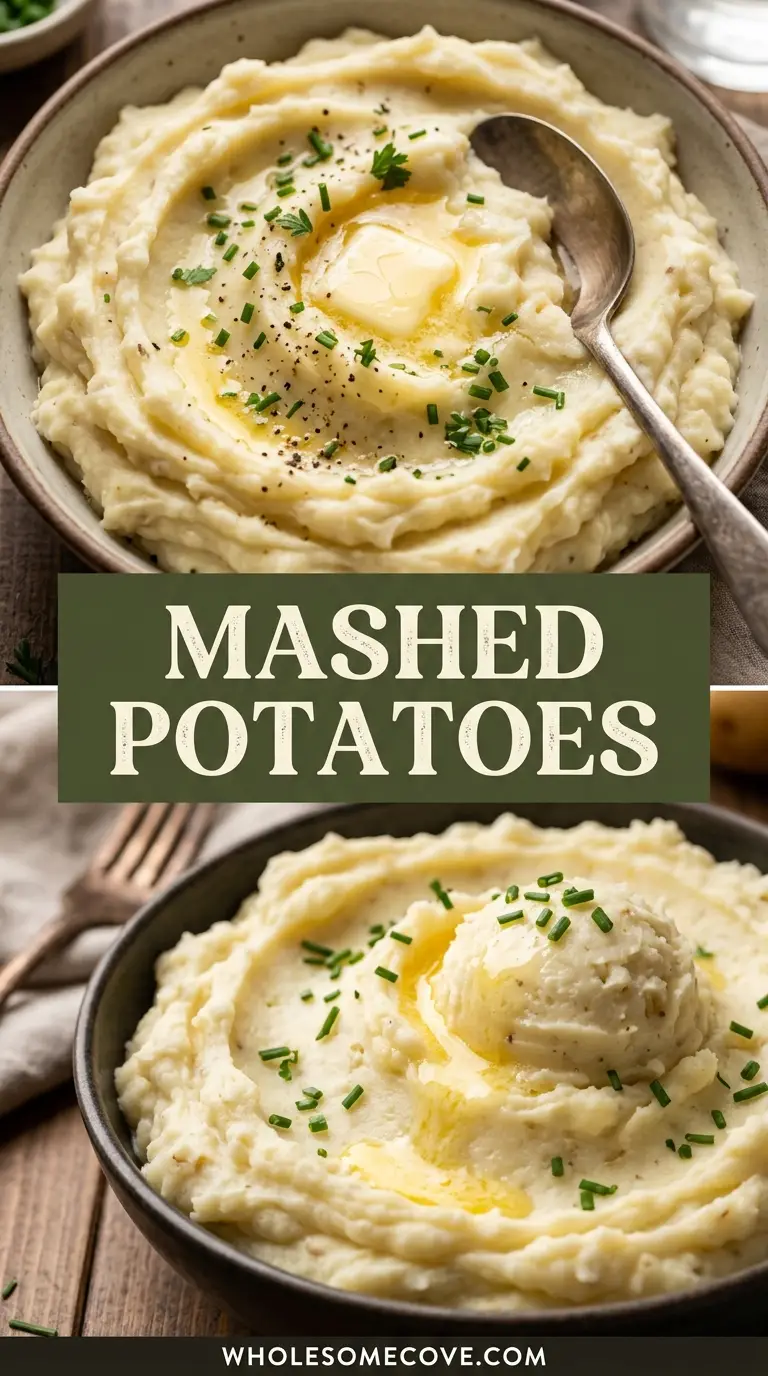
Why You’ll Love This Mashed Potatoes Recipe
This version follows the classic method: boil, steam-dry, mash, then fold in butter and warm dairy. Every step has a reason, which makes the result easy to repeat.
- Ready in 40 minutes: Prep takes 15 minutes and cooking takes 25, so it fits a weeknight as easily as a holiday spread.
- Simple ingredients: Potatoes, butter, milk, cream, salt, and pepper do all the work, with chives as an optional garnish.
- Fluffy, never gluey: A ricer or hand masher plus warm dairy keeps the starch intact, so the texture stays light and smooth.
- Rich without being heavy: One stick of butter spread across three pounds of potatoes gives full flavor in every bite.
- Easy to scale: Double the batch in a larger pot, or halve it for a small dinner.
- Holds well: The potatoes stay hot and creamy in a covered bowl set over simmering water for up to an hour.
- Beginner friendly: No special technique is needed beyond a fork to test doneness and a gentle hand while mashing.
For a sweeter take on the same mashing technique, see Mashed Sweet Potato.
Ingredients
Mashed potatoes depend on very few ingredients, so the quality of each one shows. Here is everything you need, with imperial and metric amounts.
- 3 pounds (1.4 kg) Yukon Gold potatoes, peeled and cut into 1.5-inch (4 cm) chunks
- Cold water, enough to cover the potatoes by 1 inch (2.5 cm), about 2 quarts (2 liters)
- 1 tablespoon kosher salt, for the cooking water
- 8 tablespoons (1 stick, 113 g) unsalted butter, cut into small pieces and softened
- 3/4 cup (180 ml) whole milk, warmed
- 1/4 cup (60 ml) heavy cream, warmed
- 1 teaspoon fine sea salt, plus more to taste, for seasoning the finished potatoes
- 1/4 teaspoon freshly ground black pepper
- 1 tablespoon fresh chives, finely chopped, for garnish (optional)
Read Also: Potato Side Dish Recipes
Kitchen Equipment Needed
Good tools make mashed potatoes faster and keep you from overworking the starch. Most of this is already in a standard kitchen.
- Large pot or Dutch oven (5 to 6 quarts): Holds the potatoes and water without boiling over, and the heavy base holds heat while you steam-dry the potatoes.
- Potato ricer: Presses cooked potatoes into fine, even strands for the smoothest result.
- Potato masher: A good alternative if you prefer a slightly chunkier, more textured mash.
- Colander: Drains the potatoes quickly so they do not sit in water and turn soggy.
- Vegetable peeler: Peels 3 pounds of potatoes in a few minutes without wasting much flesh.
- Small saucepan: For warming the milk and cream while the potatoes simmer.
- Silicone spatula: Folds in butter and dairy gently without beating air and starch into the mash.
- Digital kitchen scale: Confirms the 3-pound weight, since potato sizes vary a lot.
- Serving bowl: Warm it with hot tap water first so the potatoes stay hot at the table.
- Chef’s knife and cutting board: For cutting the potatoes into even chunks and chopping chives.
- Measuring cups and spoons: For the milk, cream, salt, and pepper.
You might also enjoy: Smashed Potatoes
Recommended Products for This Recipe
These are the tools and ingredients I recommend for this recipe, and each one is here because it fixes a specific problem. None of them are required, but they make the potatoes easier to get right.
1. OXO Good Grips Potato Ricer
A masher leaves small lumps, and chasing those lumps is how potatoes end up overworked and gluey. A ricer turns each chunk into fine strands in a single press, so the potatoes only need a gentle fold with butter and dairy afterward. The long handles give enough leverage to work through a full pot in a few minutes.
2. Lodge Enameled Cast Iron Dutch Oven
Thin pots scorch on the bottom when you steam-dry the potatoes over heat, and they often boil over when filled with 3 pounds of chunks. The thick walls here spread heat evenly, and the enamel wipes clean without scrubbing. One pot handles boiling, drying, and mashing, which means less to wash.
3. Kerrygold Pure Irish Unsalted Butter
Butter is the main flavor in this dish, so a stick that tastes flat shows up in every bite. Kerrygold has slightly more butterfat than standard American butter, which gives a richer, rounder flavor once it melts into the potatoes. Choosing unsalted lets you control the seasoning at the end.
4. Escali Primo Digital Kitchen Scale
Six medium potatoes can weigh anywhere from 2 to 4 pounds, which throws off the ratio of potatoes to butter and dairy. Weighing the peeled potatoes keeps the texture consistent from batch to batch. It also makes scaling up for a crowd simple, since you only need to multiply the weight.
A richer, stuffed version of the same idea is Twice Baked Potatoes.
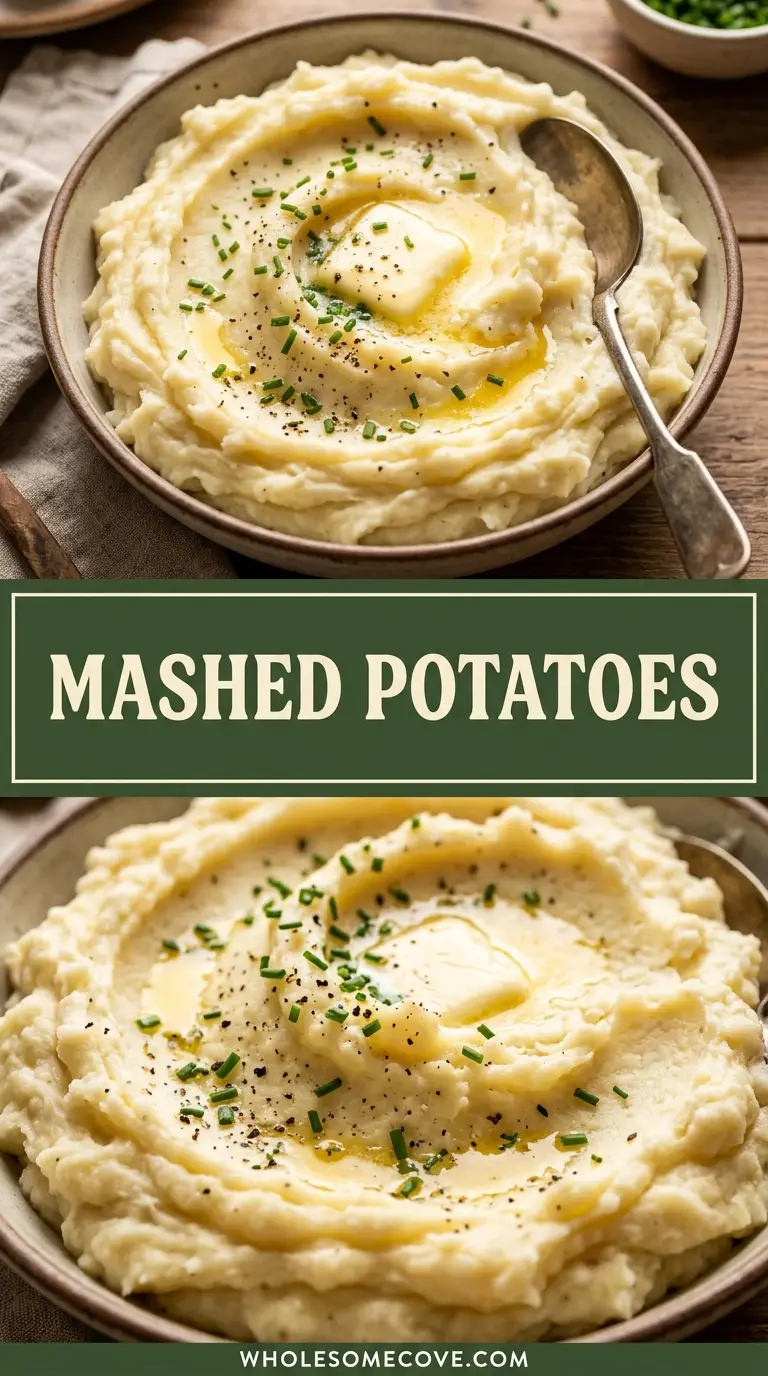
Step-by-Step Instructions: How to Make Mashed Potatoes
Follow these steps and you will have creamy mashed potatoes on the table in about 40 minutes.
1. Prep the Potatoes
- Scrub the potatoes under cold running water to remove any dirt.
- Peel the potatoes with a vegetable peeler, removing any green spots or deep eyes with the tip of the peeler.
- Weigh the peeled potatoes on a kitchen scale to confirm you have 3 pounds (1.4 kg).
- Cut the potatoes into even 1.5-inch (4 cm) chunks so they cook at the same rate. Smaller pieces cook faster but absorb more water, so avoid cutting them much smaller than this.
- Place the chunks in a large pot or Dutch oven as you cut them.
- Add cold water until the potatoes are covered by 1 inch (2.5 cm), then stir in 1 tablespoon of kosher salt.
- Cold water gives me evenly cooked centers every time, while dropping chunks into boiling water leaves the edges mushy before the middles soften.
2. Boil Until Fork-Tender
- Set the pot over high heat, uncovered, and bring the water to a boil. This takes about 8 minutes.
- Reduce the heat to medium-low so the water holds a steady simmer. A hard, rolling boil can break the outsides of the potatoes apart.
- Simmer for 12 to 15 minutes, until a fork or paring knife slides into the center of a chunk with no resistance.
- Test a piece near the middle of the pot, since pieces at the edge often cook first.
- Drain the potatoes in a colander, shaking it gently to remove surface water.
3. Warm the Milk and Cream
- While the potatoes simmer, pour 3/4 cup (180 ml) of whole milk and 1/4 cup (60 ml) of heavy cream into a small saucepan.
- Heat over low heat for about 3 minutes, until the surface begins to steam and tiny bubbles form at the edge. Do not let it boil.
- Remove the saucepan from the heat and cover it to keep the dairy warm.
- I keep a small saucepan on the back burner for this, because cold dairy cools the potatoes and stiffens the butter so it never blends in smoothly.
4. Steam-Dry the Potatoes
- Return the drained potatoes to the empty pot and place it over low heat.
- Stir gently for 1 to 2 minutes, until the steam stops rising and a thin white film forms on the bottom of the pot.
- Remove the pot from the heat. Dry potatoes soak up butter and cream instead of watering the mash down.
5. Mash the Potatoes
- Press the potatoes through a ricer back into the pot, working in two or three batches. If you are using a masher, mash with firm downward presses until no large lumps remain.
- Stop as soon as the lumps are gone. Every extra press releases more starch.
- Do not use a blender or food processor, because the blades rupture the starch granules and the mash turns sticky.
6. Fold in the Butter
- Add all 8 tablespoons (113 g) of softened butter pieces to the hot potatoes.
- Fold gently with a silicone spatula until the butter melts completely and the potatoes look glossy.
- Adding the butter before the dairy coats the starch in fat, which helps keep the potatoes smooth instead of gummy.
7. Add the Warm Dairy and Season
- Pour in the warm milk and cream mixture in four additions, folding gently after each one.
- Stop folding as soon as the dairy is absorbed and the potatoes look creamy and hold a soft peak.
- Sprinkle in 1 teaspoon of fine sea salt and 1/4 teaspoon of black pepper.
- Taste and add more salt, 1/4 teaspoon at a time, until the flavor tastes full. Potatoes need more salt than most people expect.
8. Garnish and Serve
- Transfer the potatoes to a warmed serving bowl.
- Use the back of a spoon to make a shallow well in the center.
- Sprinkle 1 tablespoon of chopped chives over the top if using.
- Serve right away while hot, with gravy spooned into the well if you like.
Read Also: Scalloped Potatoes
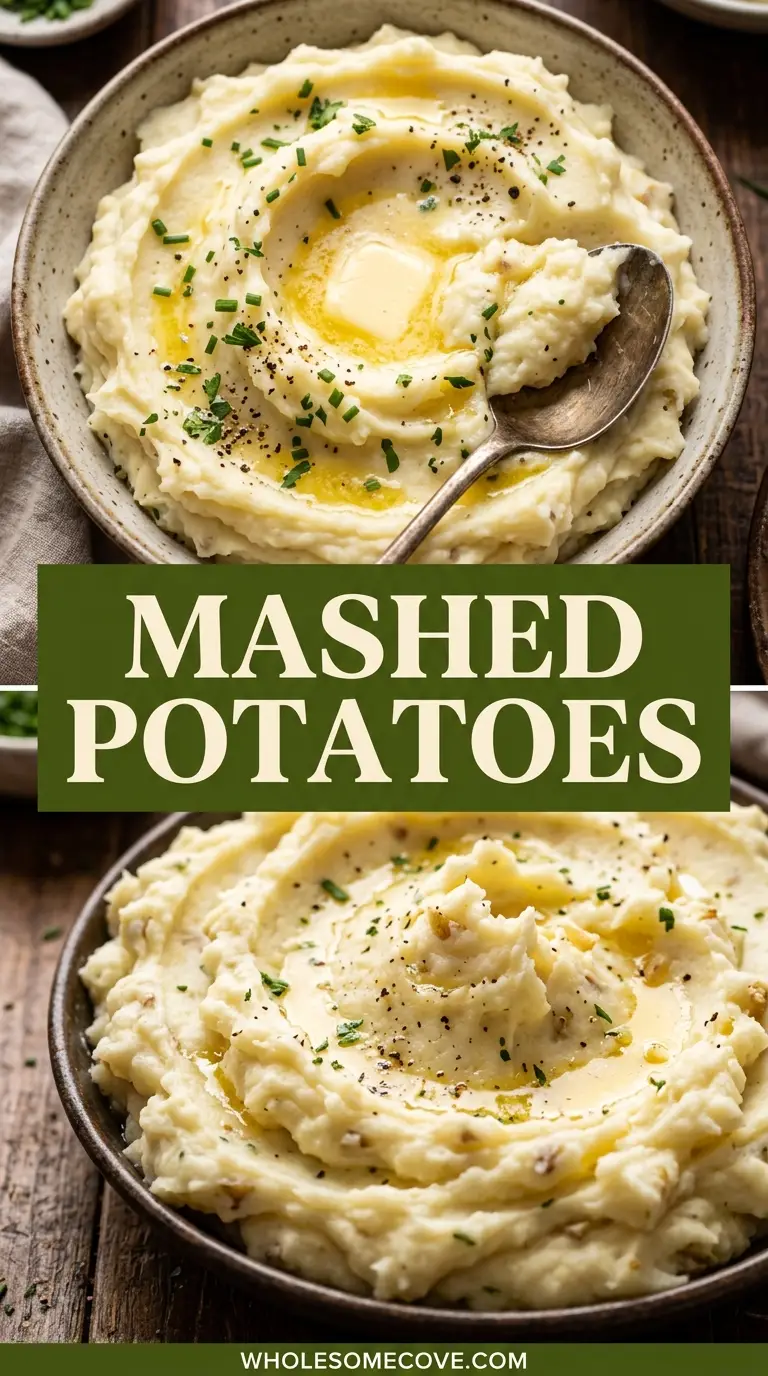
Tips for The Best Mashed Potatoes
Small decisions make the difference between creamy mashed potatoes and a pot of paste. These are the habits that matter most.
- Choose the right potato: Yukon Golds give a creamy, buttery mash, while russets give a lighter, fluffier one. Avoid waxy red potatoes, which do not break down well and absorb dairy poorly.
- Cut evenly: Chunks of different sizes cook unevenly, which leaves some pieces hard and others waterlogged.
- Salt the water: Potatoes boiled in unsalted water taste flat, and I have never been able to fix that by adding extra salt at the end.
- Do not overcook: Potatoes that boil past tender absorb extra water and turn loose and bland. Check at 12 minutes.
- Steam-dry every time: This short step removes surface moisture and is the easiest way to prevent watery mashed potatoes.
- Warm the dairy: Cold milk and cream cool the potatoes and make the butter seize into streaks.
- Use a gentle tool: A ricer or hand masher protects the starch, and a food processor ruins it.
- Learn from my mistake: I ruined my first batch by running the potatoes through a hand mixer on high, which left a sticky paste that no amount of butter could fix.
- Add dairy gradually: You can always loosen the potatoes, but you cannot thicken them again. Fold in the liquid in four additions and stop when the texture looks right.
- Season at the end: Salt added once the potatoes are mashed is easier to measure and taste.
- Keep them hot: Cover the pot with a lid and a folded kitchen towel to hold heat for 20 to 30 minutes while the rest of dinner finishes.
- Hold them over water: For longer holds, place a covered bowl of potatoes over a pot of simmering water, and stir in a splash of warm milk before serving.
For more potato ideas, browse: Best Potato Recipes
What to Serve with Mashed Potatoes
Mashed potatoes are a soft, mild base that works with almost any main dish, especially anything with a sauce or gravy to pour over the top. The pairings below cover roasts, comfort food classics, and vegetable sides.
- Thanksgiving Turkey: The classic holiday pairing, with pan juices and gravy spooned over the potatoes.
- Roast Chicken: Crisp skin and savory drippings suit a creamy mash on a simple Sunday dinner.
- Meatloaf: A tangy glaze against buttery potatoes is a diner favorite.
- Slow Cooker Pot Roast: The rich cooking liquid soaks into the mash like gravy.
- Prime Rib: A holiday centerpiece that needs a soft side to balance the rich beef.
- Swedish Meatballs: Creamy sauce over creamy potatoes is a traditional pairing.
- Honey Baked Ham: Sweet, salty slices stand up well next to buttery mash.
- Southern fried chicken: Crisp, salty chicken and soft potatoes make a classic plate, especially with a ladle of gravy.
- Bangers and mash: Pork sausages with onion gravy turn mashed potatoes into a full pub-style dinner.
- Green Bean Casserole: A holiday table staple that adds crunch from the fried onion topping.
- Maple Glazed Carrots: Their light sweetness brightens a plate of mild potatoes.
- Roasted Brussels Sprouts with Bacon: Smoky, crisp edges add contrast to the soft texture.
- Creamed Spinach: A steakhouse pairing that works best when the mashed potatoes are on the thicker side.
- Brown Gravy: A ladle over the well in the center is the simplest upgrade.
- Beef Tips and Gravy: Tender beef in rich sauce turns a bowl of mash into a full meal.
- Dinner Rolls: Useful for wiping up every last bit of gravy.
- Cranberry Sauce: A tart spoonful cuts through the butter and cream.
- Pinot Noir or sparkling apple cider: Light, acidic drinks balance a plate of rich roast meat and buttery potatoes.
For a savory topping that suits a spoonful of mash, a related recipe is Mushroom Gravy.
Variations of Mashed Potatoes
The base recipe is a blank canvas, and a few simple add-ins change the flavor completely. Add any of these during Step 7, after the dairy has been folded in.
- Roasted garlic mashed potatoes: Roast 1 whole head of garlic at 400°F (200°C) for 35 to 40 minutes, squeeze the soft cloves into the potatoes, and fold in gently.
- Boursin mashed potatoes: Fold in one 5.2-ounce (150 g) package of Boursin garlic and herb cheese for instant garlic and herb flavor.
- Sour cream and chive: Stir in 1/2 cup (120 g) of sour cream and 2 tablespoons of extra chives for a tangy finish.
- Cheddar and bacon: Fold in 1 cup (100 g) of shredded sharp cheddar and 4 slices of crumbled cooked bacon for a loaded version.
- Brown butter mashed potatoes: Cook the butter in a small pan until it smells nutty and turns golden, then use it in place of the softened butter.
- Cream cheese mashed potatoes: Add 4 ounces (115 g) of softened cream cheese for a thicker, tangier mash that holds well for make-ahead meals.
- Fluffy russet version: Swap the Yukon Golds for russets, which absorb more dairy and give a lighter, more airy texture.
- Dairy-free: Replace the butter with 1/3 cup (80 ml) of olive oil and the milk and cream with 1 cup (240 ml) of warm vegetable broth.
- Skin-on: Scrub the potatoes instead of peeling them for a chunkier mash with more texture and fiber.
Read Also: Au Gratin Potatoes
Storage and Reheating
Leftover mashed potatoes keep well and often taste even better the next day with a little extra butter. The main trick is cooling them quickly and reheating with a splash of liquid.
- Refrigerator: Cool the potatoes within 2 hours of cooking, then store them in an airtight glass container for up to 4 days.
- Freezer: Portion the mash into freezer-safe containers, press out the air, and freeze for up to 1 month. Thaw overnight in the refrigerator before reheating.
- Stovetop reheating: Warm the potatoes in a saucepan over low heat with a splash of milk or cream, stirring often, until hot throughout.
- Oven reheating: Spread the potatoes in a baking dish, dot with butter, add a splash of cream, cover with foil, and bake at 350°F (175°C) for 20 to 30 minutes.
- Microwave reheating: Heat in 1-minute bursts, stirring between each, and add a tablespoon of milk if the potatoes look dry.
- Restore the texture: Cold mashed potatoes firm up as the starch tightens, so stir vigorously while reheating to bring back the creamy texture.
- Make-ahead tip: Mash the potatoes up to 1 hour before serving and hold them in a covered bowl over simmering water, then stir in an extra pat of butter.
- Leftover ideas: Use cold mash for potato cakes, as a topping for shepherd’s pie, or to thicken soup.
To use up leftovers, try: Shepherd’s Pie
Nutritional Facts
The numbers below are estimates for one serving, which is about one cup, based on six servings per batch. Actual values vary by brand and by how much dairy you use.
| Nutrition per Serving (about 1 cup) | |
|---|---|
| Calories | 345 kcal |
| Total Fat | 20 g |
| Saturated Fat | 12 g |
| Cholesterol | 60 mg |
| Sodium | 430 mg |
| Total Carbohydrates | 37 g |
| Dietary Fiber | 3 g |
| Sugars | 3 g |
| Protein | 5 g |
| Potassium | 840 mg |
For a different cooking method with a similar ingredient profile, see Roasted Potatoes.
Health Benefits of Key Ingredients
Mashed potatoes get a reputation as pure indulgence, but the main ingredients bring real nutrients. Here is what each one contributes.
- Potatoes: A good source of potassium, which supports normal muscle and nerve function. They also provide vitamin C and vitamin B6, and the carbohydrates give steady energy.
- Yukon Gold skin: Leaving the skin on adds fiber, since much of a potato’s fiber sits in and just under the skin.
- Butter: Provides vitamin A and a small amount of vitamin E, both fat-soluble nutrients that the body absorbs best alongside fat.
- Whole milk: Adds calcium and protein, and fortified milk also supplies vitamin D.
- Heavy cream: Contributes richness along with a modest amount of vitamin A, which is why a quarter cup goes a long way.
- Chives: Add vitamin K and a mild onion flavor, with almost no calories.
- Black pepper: Contributes flavor without extra sodium or calories, so it lets you use less salt at the table.
Read Also: Potato Soup
FAQs About Mashed Potatoes
1. What are the best potatoes for mashed potatoes?
Yukon Gold and russet potatoes are the two most popular choices. Each has its own strengths.
Yukon Golds give a buttery, creamy mash with a dense texture. Russets give a lighter, fluffier mash that absorbs a lot of dairy.
Many cooks blend the two. Waxy red or new potatoes are better kept for roasting and salads.
2. Why are my mashed potatoes gluey?
Gluey mashed potatoes come from overworking. Mashing or mixing too hard breaks open the starch granules and releases sticky starch into the mash.
Blenders, food processors, and electric mixers are the usual culprits. Use a ricer or hand masher, and fold in the butter and dairy gently.
3. Can I make mashed potatoes ahead of time?
Yes, and they hold up well. You can mash them up to an hour before serving and keep them hot in a covered bowl over simmering water.
For a longer make-ahead plan, refrigerate them for up to 4 days. Reheat with a splash of milk and an extra pat of butter.
4. How do I fix watery or lumpy mashed potatoes?
Watery mash usually means the potatoes absorbed too much water or were not dried after draining. Return them to the pot over low heat and stir until the extra moisture evaporates.
Lumpy mash usually means the potatoes were undercooked. Cook the chunks a few more minutes, then mash again with a ricer.
5. Can I freeze mashed potatoes?
You can freeze them for up to 1 month. Portion them into freezer-safe containers and press out the air before sealing.
Thaw them overnight in the refrigerator. Reheat gently with a splash of milk, stirring until smooth.
6. Should I peel potatoes for mashed potatoes?
Peeling gives the smoothest, most traditional texture. It is the better choice for holiday dinners and anything served with gravy.
Skin-on mash is fine for weeknights. Scrub the potatoes well and expect a slightly chunkier result with a more earthy flavor.
7. How many potatoes do I need per person?
A good rule is about 1/2 pound (225 g) of raw potatoes per person for a generous portion. This recipe uses 3 pounds for six servings, which works out to the same amount.
For a holiday table with many other sides, plan on 1/3 pound (150 g) per person. Scale the butter and dairy in proportion.
8. Why should I start potatoes in cold water?
Cold water heats the potatoes gradually, so the outside and the center finish cooking together. Dropping chunks into boiling water cooks the outside much faster than the middle.
The result is softer edges and a firmer center. Starting cold avoids that problem.
Still hungry for potatoes? Try: Cheesy Potatoes
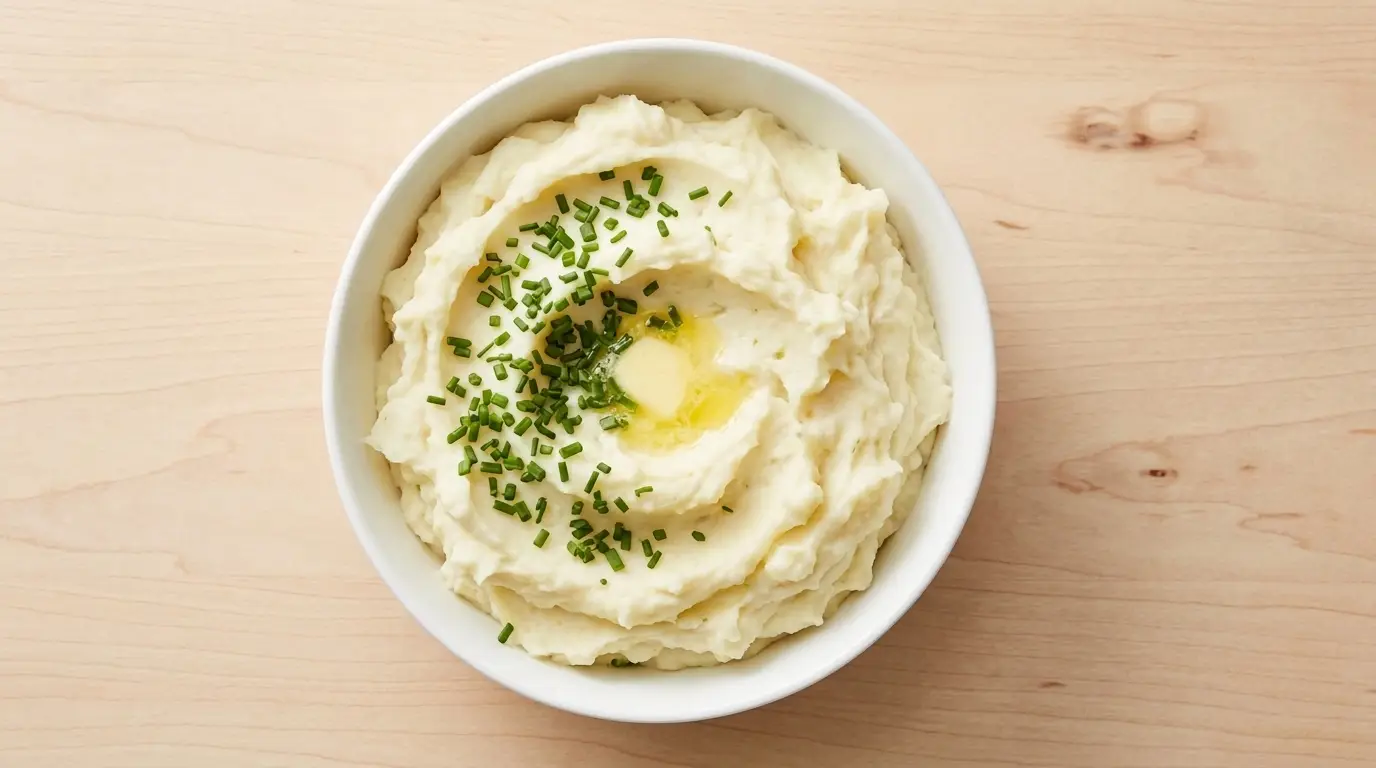
Mashed Potatoes
Ingredients
- 3 pounds Yukon Gold potatoes - 1.4 kg, peeled and cut into 1.5-inch (4 cm) chunks
- 2 quarts cold water - 2 liters, enough to cover the potatoes by 1 inch (2.5 cm)
- 1 tablespoon kosher salt - for the cooking water
- 8 tablespoons unsalted butter - 1 stick or 113 g, cut into small pieces and softened
- 3/4 cup whole milk - 180 ml, warmed
- 1/4 cup heavy cream - 60 ml, warmed
- 1 teaspoon fine sea salt - plus more to taste, for seasoning the finished potatoes
- 1/4 teaspoon freshly ground black pepper
- 1 tablespoon fresh chives - finely chopped, for garnish (optional)
Equipment
- Large pot or Dutch oven - 5 to 6 quarts
- Potato ricer - or potato masher as an alternative
- Potato masher - (optional) for a chunkier texture
- Colander - stainless steel
- Vegetable peeler - Y-peeler works well
- Small saucepan - for warming milk and cream
- Silicone spatula - for gentle folding
- Digital kitchen scale - to confirm 3 pounds of potatoes
- Serving bowl - warm it first so potatoes stay hot
- Chef’s knife and cutting board - for cutting potatoes and chopping chives
- Measuring cups and spoons - for milk, cream, salt, and pepper
Method
- Scrub, peel, and weigh the potatoes to confirm 3 pounds, then cut into even 1.5-inch chunks and place in a large pot. Cover with cold water by 1 inch and stir in 1 tablespoon kosher salt.
- Bring the pot to a boil over high heat, about 8 minutes, then reduce to medium-low and simmer 12 to 15 minutes until fork-tender. Drain in a colander and shake gently to remove surface water.
- While the potatoes simmer, warm the milk and cream in a small saucepan over low heat for about 3 minutes until steaming, then remove from heat and cover.
- Return the drained potatoes to the empty pot over low heat and stir gently for 1 to 2 minutes until steam stops rising and a thin white film forms on the bottom. Remove from heat.
- Press the potatoes through a ricer back into the pot in batches, or mash with firm downward presses until no large lumps remain. Stop as soon as the lumps are gone and never use a blender or food processor.
- Add all 8 tablespoons of softened butter and fold gently with a silicone spatula until melted and glossy.
- Pour in the warm milk and cream in four additions, folding gently after each until absorbed and the potatoes hold a soft peak. Season with 1 teaspoon fine sea salt and 1/4 teaspoon black pepper, tasting and adding more salt as needed.
- Transfer to a warmed serving bowl, make a shallow well in the center with the back of a spoon, sprinkle with chives if using, and serve hot.
Nutrition
Notes
- Choose Yukon Golds for a creamy, buttery mash or russets for a lighter, fluffier one; avoid waxy red potatoes, which absorb dairy poorly.
- Salt the cooking water — potatoes boiled in unsalted water taste flat and cannot be fixed with salt at the end.
- Steam-dry the potatoes after draining to remove surface moisture and prevent watery mash.
- Always warm the dairy; cold milk and cream cool the potatoes and make the butter seize into streaks.
- Use a ricer or hand masher and fold gently — blenders, food processors, and electric mixers rupture starch and turn the mash gluey.
- Add dairy gradually in four additions; you can always loosen the potatoes but cannot thicken them again.
- Keep potatoes hot by covering the pot with a lid and folded kitchen towel for 20 to 30 minutes, or hold a covered bowl over simmering water for up to an hour.
- Store leftovers in an airtight container in the refrigerator for up to 4 days, or freeze for up to 1 month; reheat with a splash of milk and extra butter.
- Variations: fold in roasted garlic, Boursin, sour cream and chives, cheddar and bacon, brown butter, or cream cheese after the dairy.
- For dairy-free, replace butter with 1/3 cup olive oil and the milk and cream with 1 cup warm vegetable broth.
Private Notes
Tried this recipe?
Let us know how it was!Final Thoughts
A great pot of mashed potatoes comes down to a few small habits. Cook the potatoes evenly, dry them well, and keep the mixing gentle.
Warm dairy and a good stick of butter do the rest. Once you have the method down, the base recipe is easy to adapt with roasted garlic, cheese, or fresh herbs.
Try this mashed potatoes recipe at your next dinner and see how it compares to your usual version. Leave a comment below with your favorite add-ins, and share it with anyone who loves a good bowl of comfort food.
Recommended:
- Loaded Baked Potato Soup
- Potato Leek Soup
- Potato Salad
- Hashbrown Casserole
- Funeral Potatoes
- Breakfast Potatoes
- Sweet Potato Casserole
- Turkey Gravy
- Thanksgiving Stuffing