My mom made this scalloped potatoes and ham recipe every Easter without fail, and for good reason. It disappeared faster than anything else on the table, including the ham itself.
I still remember the first time I tried to make it on my own. I burned the roux. I added the milk too fast, ended up with lumpy sauce, and the potatoes were still crunchy in the middle after an hour in the oven.
That disaster batch taught me more about this dish than any recipe card ever could. The cream sauce needs patience. The potatoes need to be sliced thin and even. And the whole casserole needs enough time in the oven to properly bubble, set, and develop that gorgeous golden top.
After making this probably thirty-something times, I’ve got it down to a reliable, foolproof method that produces creamy, tender layers of potato every single time. If you’ve got leftover holiday ham in the fridge, this is exactly where it belongs.
| Quick Recipe Summary | |
|---|---|
| Prep Time | 20 minutes |
| Cook Time | 1 hour 30 minutes |
| Total Time | 1 hour 50 minutes |
| Servings | 8 servings |
| Difficulty Level | Easy |
If you love potato casseroles, you’ll also want to bookmark my Scalloped Potatoes Recipe for a classic, ham-free version that’s just as comforting.
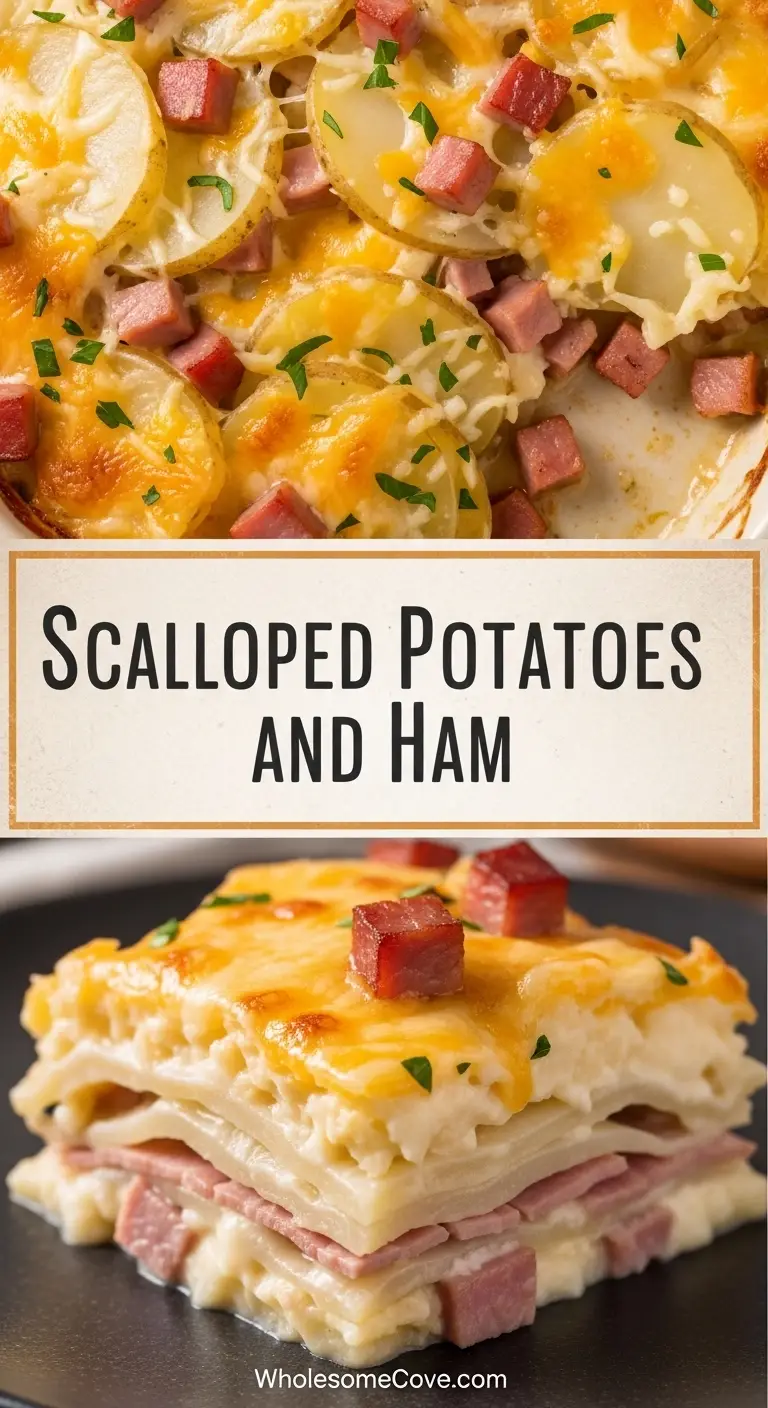
Why You’ll Love This Scalloped Potatoes and Ham Recipe
This dish is the definition of stick-to-your-ribs comfort food. It’s rich, creamy, and filling in the best possible way.
It’s also one of the most practical recipes you’ll find. It transforms leftover holiday ham into something that feels totally intentional and special.
The white sauce is made completely from scratch, but it’s simpler than it sounds. Butter, flour, milk, and a few seasonings are all you need to pull it together.
It feeds a crowd without any fuss. One big casserole dish handles eight generous servings with minimal effort on your part.
The layered structure locks in flavor at every level. Each forkful has potato, ham, and creamy sauce all working together in every bite.
And that bubbling, golden top? Absolutely irresistible. It develops naturally as the casserole bakes uncovered in the final stretch of cook time.
Read Also: Au Gratin Potatoes Recipe
Ingredients
You only need simple, familiar ingredients for this recipe. The magic is all in the technique and the layering.
- 3 lbs (1.36 kg) Yukon Gold or russet potatoes, peeled and sliced 1/8 to 1/4 inch (3-6 mm) thick
- 2 cups (300 g) cooked ham, diced into 1/2-inch (1.3 cm) cubes
- 4 tablespoons (57 g) unsalted butter
- 1 medium yellow onion, finely diced (about 1 cup / 150 g)
- 3 cloves garlic, minced
- 1/3 cup (40 g) all-purpose flour
- 2 1/2 cups (590 ml) whole milk, warmed
- 1 cup (240 ml) low-sodium chicken broth
- 1 1/2 teaspoons kosher salt, plus more to taste
- 1/2 teaspoon black pepper
- 1/2 teaspoon dry mustard powder
- 1/4 teaspoon dried thyme
- 1/4 teaspoon onion powder
- 2 cups (225 g) sharp cheddar cheese, freshly shredded, divided
- 1/4 cup (25 g) grated Parmesan cheese (for topping)
- Cooking spray or extra butter for greasing the baking dish
- Fresh parsley (optional, for garnish)
For this recipe, I highly recommend using Yukon Gold potatoes over russets when possible. They have a naturally buttery, creamy texture that makes the whole dish more rich and satisfying. Russets work perfectly well though, especially if that’s what you have on hand.
Another thing I won’t compromise on: shredding the cheddar yourself from a block. Pre-shredded cheese has a coating that prevents it from melting smoothly into the sauce, and you’ll end up with a grainier texture. It takes an extra two minutes and it’s absolutely worth it.
You might also enjoy: Ham and Potato Soup
Kitchen Equipment Needed
You don’t need any special equipment for this recipe. Most of it is standard kitchen gear you likely already own.
- 9×13-inch (23×33 cm) baking dish (ceramic or glass preferred)
- Mandoline slicer or sharp chef’s knife for slicing potatoes
- Large saucepan or deep skillet (at least 3-quart capacity)
- Whisk
- Wooden spoon or silicone spatula
- Measuring cups and spoons
- Box grater for shredding cheese
- Cutting board and knife
- Aluminum foil for covering the casserole during baking
- Wire rack for resting the casserole after baking
A mandoline slicer is genuinely worth using here if you have one. Consistent, thin slices mean all the potato layers cook evenly, which is the difference between a perfectly tender casserole and one with crunchy spots in the middle. Just use the hand guard.
Read Also: Potato Side Dish Recipes
Recommended Products for This Recipe
These are products I personally use and reach for every time I make this casserole. Each one makes a real, noticeable difference in the final result.
1. OXO Good Grips Mandoline Slicer
Evenly sliced potatoes are the single biggest factor in whether your scalloped potatoes turn out perfectly tender all the way through. This mandoline makes it fast and consistent, and the non-slip handle keeps things safe. I use it almost weekly for casseroles and gratins.
2. Emile Henry Ceramic Baking Dish
A heavy ceramic baking dish distributes heat gently and evenly, which helps the cream sauce cook without scorching. It also goes from oven to table beautifully. The glaze means the cheesy, bubbly bits lift right off without leaving a mess behind.
3. Cabot Sharp Cheddar Cheese Block
Fresh-grated cheddar melts into the sauce so much more smoothly than pre-shredded, and Cabot’s sharp cheddar has a depth of flavor that really elevates the whole casserole. It’s widely available and consistently great.
4. Gruyère Cheese Block
If you want to take this recipe to the next level, swap half the cheddar for Gruyère. It melts beautifully, has a slightly nutty flavor, and pairs perfectly with ham. It’s worth having on hand for any cheesy potato dish.
If you love baked ham recipes that create great leftovers for this dish, my Baked Ham Recipe is a solid starting point.
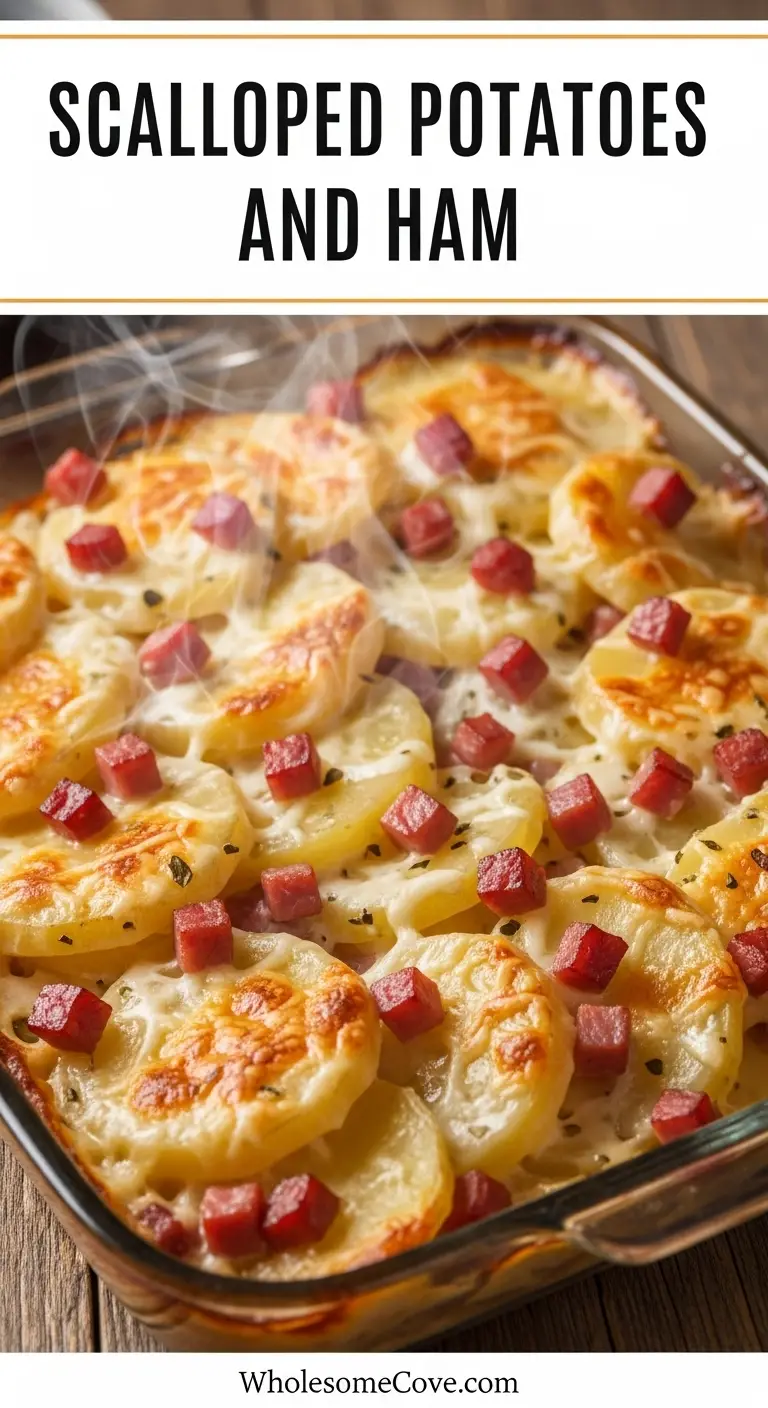
Step-by-Step Instructions: How to Make Scalloped Potatoes and Ham
1. Preheat the Oven and Prepare the Baking Dish
- Set your oven rack to the middle position.
- Preheat the oven to 375°F (190°C). Give it a full 15-20 minutes to come to temperature before you slide the casserole in.
- Spray a 9×13-inch (23×33 cm) baking dish generously with cooking spray, or rub it with a thin layer of softened butter. Make sure to coat the sides as well as the bottom.
- Set the prepared dish aside on the counter.
2. Slice the Potatoes
- Peel the potatoes using a vegetable peeler, then rinse them under cool running water.
- Using a mandoline slicer set to 1/8-inch (3 mm) or a very sharp chef’s knife, slice the potatoes into thin, uniform rounds. Aim for consistency so they cook evenly.
- If using a knife, work slowly and carefully to keep each slice close to the same thickness.
- Place the sliced potatoes in a large bowl of cold water as you go. This prevents them from browning and removes some surface starch, which helps the sauce cling better.
- Once all potatoes are sliced, drain them and pat them thoroughly dry with clean kitchen towels or paper towels. Wet potatoes will thin out your cream sauce.
3. Dice the Ham
- If using leftover ham from a whole or spiral ham, cut it into 1/2-inch (1.3 cm) cubes. You want chunky pieces rather than thin slices so you get a real bite of ham in each serving.
- If your ham has a sugary glaze on the outside, give those pieces a quick rinse under cold water and pat dry. Too much sugar can make the sauce taste slightly off.
- Measure out 2 cups (300 g) of diced ham and set aside.
4. Make the Cream Sauce (Roux Method)
- In a large, heavy-bottomed saucepan or deep skillet, melt 4 tablespoons (57 g) of butter over medium heat.
- Once the butter is melted and beginning to foam slightly, add the finely diced onion. Cook for 4-5 minutes, stirring occasionally, until the onion is soft and translucent. Don’t rush this step: soft onion builds the flavor base.
- Add the minced garlic and cook for another 60 seconds, stirring constantly, until fragrant.
- Sprinkle the flour over the onion-garlic mixture and stir to coat. Use a wooden spoon or silicone spatula and cook the flour mixture for 2 full minutes, stirring constantly. This step cooks out the raw flour taste.
- The mixture will look clumpy and paste-like. That’s exactly right. Don’t panic.
- Begin adding the warmed milk in a slow, steady stream while whisking constantly. Add just a splash at first, whisk until smooth, then continue gradually. Adding all the milk at once causes lumps.
- Once the milk is fully incorporated, pour in the chicken broth and whisk to combine.
- Add the salt, black pepper, dry mustard powder, thyme, and onion powder. Stir everything together.
- Increase the heat slightly and bring the sauce to a gentle boil, whisking frequently. Let it boil for 1 full minute while stirring. This activates the starch and thickens the sauce to the right consistency.
- Remove the saucepan from the heat. Stir in 1 cup (113 g) of the shredded sharp cheddar cheese until it melts completely into the sauce. The sauce should be smooth, creamy, and pourable but not watery.
5. Layer the Casserole
- Spread a thin layer of the cream sauce across the bottom of the prepared baking dish. This prevents the first layer of potatoes from sticking.
- Arrange one-third of the dried potato slices in an even, overlapping layer across the bottom of the dish. Don’t stress about perfect placement, just try to cover the base completely.
- Scatter one-third of the diced ham evenly over the potato layer.
- Pour one-third of the cream sauce evenly over the potatoes and ham, spreading it to the edges with a spatula.
- Repeat this process two more times: potatoes, ham, sauce. You should end with the final third of sauce on the very top.
- Sprinkle the remaining 1 cup (113 g) of shredded cheddar cheese evenly over the top.
- Finish with the grated Parmesan, which will help form a beautiful golden crust.
6. Bake Covered
- Tear off a piece of aluminum foil large enough to cover the baking dish. Spray the underside of the foil lightly with cooking spray so the cheese doesn’t stick to it.
- Cover the baking dish tightly with the foil.
- Place the casserole in the preheated oven and bake covered for 50-60 minutes. The foil traps steam, which helps the potatoes cook through and soften properly.
- At the 45-minute mark, carefully lift a corner of the foil and test a potato slice with the tip of a knife. It should slide through with just a little resistance. If it feels very firm, recover and continue baking for another 10-15 minutes.
7. Bake Uncovered for a Golden Top
- Remove the foil from the casserole.
- Return the dish to the oven and bake uncovered for another 20-30 minutes, until the top is deeply golden brown and bubbling around the edges.
- Watch it during the last 10 minutes. Every oven is slightly different, and you want golden, not burnt.
8. Rest Before Serving
- Remove the casserole from the oven and transfer it to a wire rack.
- Allow it to rest for at least 15 minutes before cutting or scooping. This step is non-negotiable. The sauce will still look a little loose when it comes out of the oven, but it sets beautifully as it cools.
- Scatter fresh chopped parsley over the top if you like a little color.
- Serve warm and enjoy every cheesy, creamy bite.
Another great ham recipe to try once the leftovers run out: Honey Glazed Ham Recipe
Tips for The Best Scalloped Potatoes and Ham
These are the lessons I’ve learned through years of making this dish, some from happy accidents and some from spectacular failures.
- Dry your potato slices thoroughly. Wet potatoes release excess moisture during baking, which dilutes your sauce and makes it watery. Draining them in cold water is great for preventing browning, but always pat them bone dry before layering.
- Warm your milk before adding it to the roux. Cold milk hitting a hot roux is the number one cause of lumpy cream sauce. Microwave the milk for 60-90 seconds or warm it gently on the stove first.
- Whisk, don’t stir, when making the sauce. A whisk breaks up any lumps as you add the milk, giving you a silky, smooth sauce every time.
- Use a mandoline slicer for even slices. Consistent thickness is the key to even cooking. Thick slices on one end and thin slices on the other means some will be mushy while others are still firm.
- Shred cheese from a block. Pre-shredded cheese is coated in anti-caking agents that prevent it from melting smoothly. Block cheese shredded fresh melts into liquid silk.
- Don’t skip the rest time. I know it smells incredible and waiting is hard. But 15 minutes of resting is what transforms a loose, saucy casserole into a sliceable, perfectly set dish.
- Season in layers. Add salt and pepper to each layer of potatoes as you build the casserole, not just in the sauce. This ensures every bite is well seasoned all the way through.
- Cover tightly with foil. The foil creates a steaming effect that cooks the potatoes through. If your foil has gaps, the top can overbrown before the middle is done.
- Let the casserole come to room temperature before baking if possible. Baking a very cold casserole straight from the fridge adds significant time to the cook. If you assembled it ahead, let it sit out for 20-30 minutes before putting it in the oven.
- Taste the sauce before layering. Your ham adds salt, your cheese adds salt, but the sauce itself should be properly seasoned going in. Adjust with salt and pepper before you assemble.
For another hearty, crowd-pleasing potato bake, you’ll love my Funeral Potatoes Recipe.
What to Serve with Scalloped Potatoes and Ham

This casserole is rich and filling, so it pairs best with fresh, lighter sides that balance out all that creamy goodness.
- Green Bean Casserole — a classic pairing for holiday meals that adds a savory, crunchy contrast
- Broccoli Salad — the crisp freshness cuts right through the richness of the casserole
- Coleslaw — creamy or vinegar-based, both work beautifully alongside this dish
- Dinner Rolls — soft, pillowy rolls are perfect for scooping up extra sauce from the plate
- Mashed Potatoes — if you’re feeding a true crowd and want to stretch the meal
- Simple steamed broccoli — just tossed with olive oil, salt, and lemon juice is all you need
- A crisp green salad — something with a bright vinaigrette to cut through the cream sauce
- Roasted asparagus — the slightly bitter, earthy flavor complements the salty ham beautifully
- Crusty bread — essential for mopping up every last bit of that cream sauce from the dish
You might also enjoy: Deviled Eggs as a starter before this meal
Variations of Scalloped Potatoes and Ham
Once you’ve nailed the base recipe, there’s plenty of room to play around. These are all tested variations that work really well.
- Extra cheesy version: Add a layer of shredded cheese between each potato and ham layer rather than only on top. Use a combination of cheddar and Gruyère for a more complex flavor. My Cheesy Potatoes Recipe uses a similar layering technique if you want a simpler starting point.
- Slow cooker method: Layer everything in a large slow cooker and cook on low for 6-8 hours or high for 3-4 hours. The potatoes will be incredibly tender and the sauce will thicken naturally. Top with cheese, cover, and let it melt in the last 20 minutes of cooking.
- Cream-based sauce: Swap the milk for heavy cream and reduce the chicken broth for an ultra-luxurious version. It’s richer but absolutely worth it for special occasions.
- Add vegetables: Diced onions layered with the potatoes add texture and sweetness. Thinly sliced mushrooms or leeks also work beautifully and add depth.
- Smoked ham version: Use smoked ham or smoked turkey for a different flavor profile. The smokiness plays incredibly well against the cream sauce.
- Spicy kick: Add a pinch of cayenne pepper or a teaspoon of hot sauce to the cream sauce for gentle heat that sneaks up on you in the best way.
- Gruyère and Swiss version: Replace cheddar entirely with a mix of Gruyère and Swiss cheese for a more classical French-style gratin flavor.
- Make it lighter: Use 2% milk instead of whole milk, reduce the butter by half, and skip the Parmesan on top. It won’t be quite as rich, but it still delivers great flavor.
Storage and Reheating
This casserole stores really well, which makes it a great dish to make ahead or batch cook. Leftovers are honestly some of the best bites of this meal.
- Refrigerator: Let the casserole cool completely to room temperature before covering. Transfer leftovers to an airtight container or cover the baking dish tightly with plastic wrap or foil. Store in the refrigerator for up to 3-4 days.
- Freezer: Freeze tightly wrapped portions for up to 2 months. Note that cream-based sauces can sometimes separate slightly after freezing. The texture may be slightly different once thawed, but the flavor stays great. Thaw overnight in the refrigerator before reheating.
- Reheating in the oven: Cover the dish with foil and bake at 350°F (175°C) for 20-25 minutes, or until heated through. Remove the foil for the last 5 minutes to re-crisp the top.
- Reheating in the microwave: Transfer a portion to a microwave-safe dish and heat on 70% power for 2-3 minutes, stirring halfway through. This prevents the edges from drying out while the center heats.
- Make-ahead tip: Assemble the entire casserole, cover tightly with foil, and refrigerate for up to 24 hours before baking. Add an extra 10-15 minutes of covered bake time if going straight from a cold fridge.
Read Also: Split Pea and Ham Soup Recipe
Nutritional Facts
The following is an approximate nutritional breakdown per serving, based on 8 servings from one full casserole. Exact values will vary depending on the specific brand of ham, cheese, and milk you use.
| Nutrient | Per Serving |
|---|---|
| Calories | 390 kcal |
| Total Fat | 20g |
| Saturated Fat | 11g |
| Cholesterol | 70mg |
| Sodium | 780mg |
| Total Carbohydrates | 34g |
| Dietary Fiber | 3g |
| Total Sugars | 5g |
| Protein | 20g |
| Calcium | 280mg |
| Potassium | 810mg |
This is a hearty dish best enjoyed as part of a balanced meal. Pairing it with a green vegetable or salad helps round out the nutrition profile nicely.
For another classic that uses up leftover ham beautifully, try my Honey Baked Ham Recipe as inspiration for your next holiday cook.
Health Benefits of Key Ingredients
This is comfort food, not a health food dish, but the main ingredients do bring some genuine nutritional value to the table.
Each of the core ingredients contributes in its own way to make this a nourishing, satisfying meal when enjoyed as part of a balanced diet.
- Potatoes: A great source of potassium, vitamin C, and vitamin B6. They provide complex carbohydrates for sustained energy and, when eaten with the skin, deliver a solid dose of dietary fiber.
- Ham (cooked, lean): A good source of complete protein, zinc, selenium, and B vitamins, particularly B12 and niacin. It supports muscle maintenance and immune function.
- Cheddar cheese: Provides calcium, phosphorus, and vitamin K2, all of which support bone health. It also contributes protein and fat that help with satiety.
- Milk: Rich in calcium, vitamin D (when fortified), and protein. It forms the base of the cream sauce and contributes to the overall nutritional profile.
- Garlic: Contains allicin and other sulfur compounds known for their anti-inflammatory and immune-supportive properties.
- Onion: A good source of quercetin, a plant compound with antioxidant properties. Onions also add prebiotic fiber that supports gut health.
- Dry mustard: Adds flavor without calories and contains small amounts of selenium and omega-3 fatty acids.
- Thyme: A fragrant herb rich in vitamin C and vitamin A, with compounds that have antimicrobial properties.
Read Also: Hashbrown Casserole Recipe
FAQs About Scalloped Potatoes and Ham
1. What’s the difference between scalloped potatoes and au gratin potatoes?
The traditional difference comes down to cheese. Classic scalloped potatoes are made with a cream or white sauce and no cheese, while au gratin potatoes always include cheese either in the sauce, between layers, or both. In practice, most modern recipes for scalloped potatoes include cheese, which is why the terms often get used interchangeably in home cooking.
2. Why are my scalloped potatoes still hard after an hour?
A few things can cause this. The most common is slicing the potatoes too thick, which means the heat can’t penetrate to the center before the outside sauce is done. Other causes include using too small a baking dish, starting from a very cold casserole straight out of the fridge, or not covering tightly enough with foil during the first phase of baking. If your potatoes are still firm, cover again and bake in 15-minute increments until a knife slides through cleanly.
3. Can I make this ahead of time?
Absolutely, and it actually benefits from it. Assemble the full casserole as directed, cover it tightly with foil, and refrigerate for up to 24 hours before baking. When you’re ready to cook, let it sit on the counter for 20-30 minutes to take the chill off, then bake as directed, adding about 10-15 extra minutes of covered bake time.
4. What type of potato works best for this recipe?
Yukon Gold potatoes are my personal favorite because they have a naturally buttery flavor and a creamy texture that holds up well in casseroles. Russet potatoes are the traditional choice and work beautifully too. Red potatoes work as well and don’t need peeling. Avoid waxy potatoes like fingerlings, which don’t absorb the cream sauce in the same way.
5. Can I use canned cream of mushroom soup instead of making a white sauce?
You can, and plenty of people do for a quicker version. Combine one can of cream of mushroom soup with 1/2 cup of milk, stir until smooth, and use it in place of the homemade sauce. The flavor and texture won’t be quite the same, but it’s a perfectly acceptable shortcut on a busy weeknight. The homemade roux version is genuinely worth the extra 10 minutes when you have time though.
For a comforting potato casserole with a slightly different vibe, try this Twice Baked Potatoes Recipe.
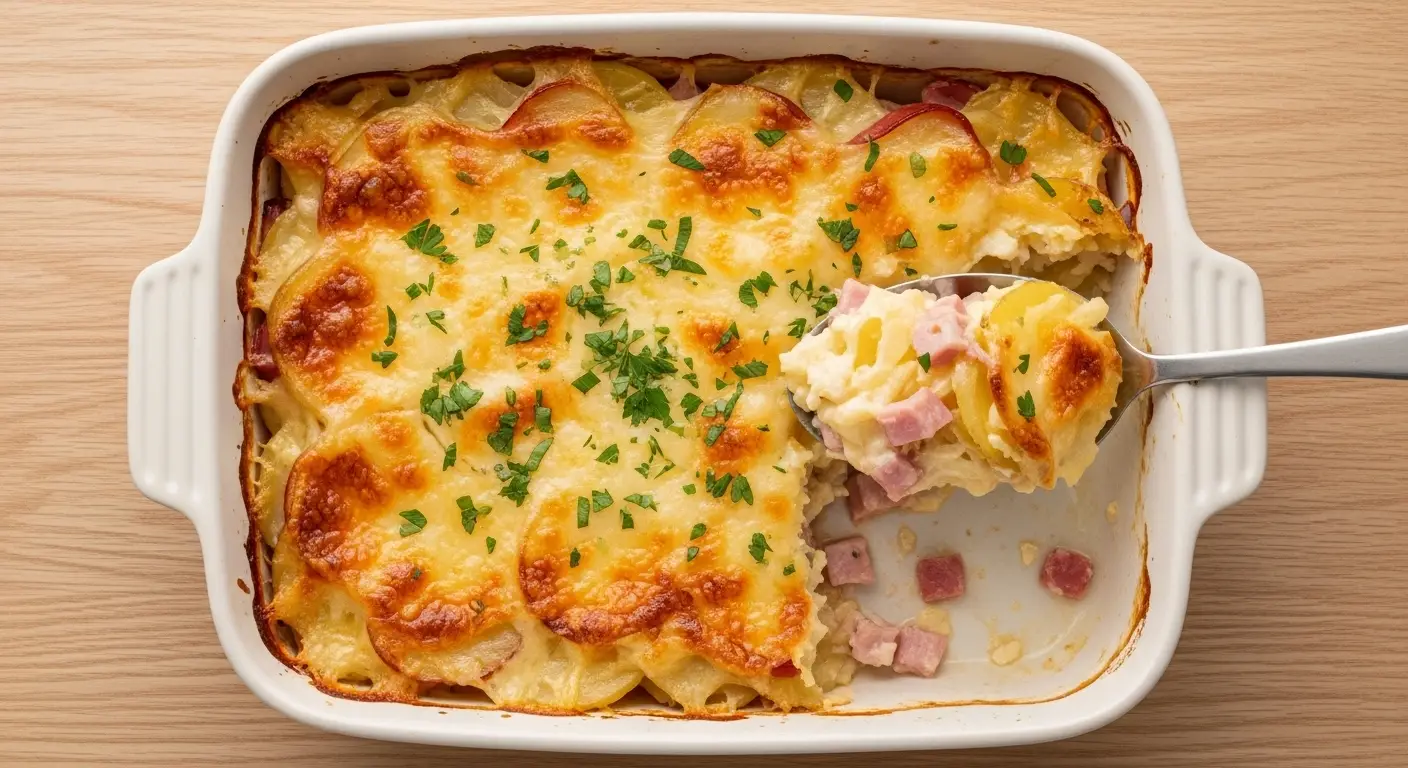
Scalloped Potatoes and Ham
Ingredients
- 3 lbs Yukon Gold or russet potatoes - 1.36 kg, peeled and sliced 1/8 to 1/4 inch (3-6 mm) thick
- 2 cups cooked ham - 300 g, diced into 1/2-inch (1.3 cm) cubes
- 4 tbsp unsalted butter - 57 g
- 1 medium yellow onion - finely diced, about 1 cup or 150 g
- 3 cloves garlic - minced
- 1/3 cup all-purpose flour - 40 g
- 2 1/2 cups whole milk - 590 ml, warmed before use
- 1 cup low-sodium chicken broth - 240 ml
- 1 1/2 tsp kosher salt - plus more to taste
- 1/2 tsp black pepper
- 1/2 tsp dry mustard powder
- 1/4 tsp dried thyme
- 1/4 tsp onion powder
- 2 cups sharp cheddar cheese - 225 g, freshly shredded from a block, divided (1 cup for sauce, 1 cup for topping)
- 1/4 cup grated Parmesan cheese - 25 g, for topping
- cooking spray or softened butter - for greasing the baking dish
- fresh parsley - optional, chopped, for garnish
Equipment
- 9×13 inch baking dish - 23×33 cm, ceramic or glass preferred
- Mandoline slicer - optional, for even 1/8-inch potato slices
- Large saucepan or deep skillet - at least 3-quart capacity for the cream sauce
- Whisk - essential for a lump-free cream sauce
- Wooden spoon or silicone spatula - for stirring the roux
- Box grater - for shredding cheese fresh from a block
- Aluminum foil - for covering the casserole during the first phase of baking
- Wire rack - for resting the casserole after baking
Method
- Preheat the oven to 375°F (190°C) with the rack in the middle position. Grease a 9×13-inch (23×33 cm) baking dish with cooking spray or softened butter, coating the sides and bottom thoroughly.
- Peel and rinse the potatoes, then slice into thin, uniform 1/8-inch (3 mm) rounds using a mandoline or sharp knife. Soak in cold water to prevent browning, then drain and pat completely dry before layering.
- Cut the cooked ham into 1/2-inch (1.3 cm) cubes and measure out 2 cups (300 g). If the ham has a sugary glaze, rinse and pat dry before using.
- Melt 4 tablespoons butter in a large saucepan over medium heat. Add the diced onion and cook for 4-5 minutes until soft and translucent, then add the minced garlic and stir for 60 seconds until fragrant.
- Sprinkle the flour over the onion and garlic mixture and stir constantly for 2 full minutes to cook out the raw flour taste. The mixture will look clumpy and paste-like.
- Gradually whisk in the warmed milk in a slow, steady stream, then pour in the chicken broth and whisk to combine. Add the salt, pepper, dry mustard, thyme, and onion powder, then bring to a gentle boil, whisking frequently, and cook for 1 full minute until thickened.
- Remove the saucepan from the heat and stir in 1 cup (113 g) of the shredded cheddar until completely melted and smooth. Taste the sauce and adjust seasoning with salt and pepper as needed.
- Spread a thin layer of cream sauce across the bottom of the prepared baking dish, then layer one-third of the potato slices, one-third of the diced ham, and one-third of the sauce. Repeat two more times, ending with the final layer of sauce on top.
- Scatter the remaining 1 cup (113 g) of shredded cheddar evenly over the top of the casserole, then finish with the grated Parmesan for a golden crust.
- Cover the dish tightly with foil (lightly sprayed on the underside) and bake for 50-60 minutes, until the potatoes are nearly tender when tested with the tip of a knife.
- Remove the foil and bake for an additional 20-30 minutes, until the top is deeply golden brown and bubbling around the edges. Watch closely during the last 10 minutes to avoid overbrowning.
- Transfer the casserole to a wire rack and rest for at least 15 minutes before serving so the sauce sets properly. Garnish with fresh chopped parsley if desired and serve warm.
Nutrition
Notes
- Always pat potato slices completely dry after soaking in cold water. Excess moisture dilutes the cream sauce and results in a watery casserole.
- Warm the milk before adding it to the roux. Cold milk hitting a hot roux is the most common cause of a lumpy cream sauce.
- Shred cheese fresh from a block rather than using pre-shredded. The anti-caking coating on bagged cheese prevents it from melting smoothly into the sauce.
- Use a mandoline slicer for even, consistent potato slices. Uneven thickness leads to some slices being mushy while others remain underdone.
- Season in layers: add a small pinch of salt and pepper to each potato layer as you build the casserole, not just in the sauce, so every bite is well seasoned.
- Make-ahead tip: assemble the full casserole, cover with foil, and refrigerate up to 24 hours before baking. Let it sit at room temperature for 20-30 minutes before putting it in the oven, and add 10-15 extra minutes of covered bake time.
- Leftovers keep well covered in the refrigerator for up to 3-4 days. Reheat in a 350°F (175°C) oven covered with foil for 20-25 minutes, or microwave individual portions on 70% power.
- Yukon Gold potatoes are preferred for their naturally buttery flavor and creamy texture, but russet potatoes work equally well as the traditional choice.
- For a richer version, substitute heavy cream for the whole milk and reduce the chicken broth by half.
- To freeze, wrap portions tightly and freeze for up to 2 months. Note that cream-based sauces may separate slightly upon thawing; the flavor remains excellent. Thaw overnight in the refrigerator before reheating.
Private Notes
Tried this recipe?
Let us know how it was!Final Thoughts
Scalloped potatoes and ham is one of those recipes that never goes out of style. It’s reliable, deeply satisfying, and always gets requested again.
If you have leftover holiday ham sitting in the fridge, this is the absolute best thing you can do with it. Better than a sandwich, better than soup, better than almost anything else.
The beauty of this dish is how simple it really is once you understand the steps. A good cream sauce, thinly sliced potatoes, and a long, patient bake are all it takes.
I genuinely hope this becomes a regular in your household the way it is in mine. Give it a try this week and let me know how it turns out!
Drop a comment below with how yours came out, or share a photo if you tried a fun variation. I’d love to hear from you.
Recommended:
- Slow Cooker Ham Recipe
- Roasted Potatoes Recipe
- Smashed Potatoes Recipe
- Ham and Bean Soup Recipe
- Shepherd’s Pie Recipe
- Healthy Shepherd’s Pie Recipe
- Slow Cooker Potato Soup Recipe
- Pork Chop Supreme Recipe
- Spiral Ham Recipe
- Best Potato Recipes