This ham and bean soup recipe turns a leftover ham bone and a bag of dried navy beans into a thick, gently smoky pot that thickens itself as it simmers. The beans soften just enough to give the broth real body, so you never reach for flour or cream to make it feel substantial.
Most versions hit the same snag: they finish too salty, because the ham already carries plenty of salt and cooks keep seasoning on top of it. Here the salt goes in at the very end, after the ham has flavored the pot, so you stay in control of the final taste.
The whole thing comes together in one pot with about 20 minutes of hands-on work. A low simmer, two bay leaves, and a meaty ham bone do the heavy lifting while you get on with your day.
It makes roughly 8 bowls, which means lunch for the week or dinner with leftovers. The flavor deepens overnight, so day two is arguably the best part.
| Quick Recipe Summary | |
|---|---|
| Prep Time | 20 minutes |
| Cook Time | 1 hour 30 minutes |
| Total Time | 1 hour 50 minutes |
| Servings | 8 bowls |
| Difficulty Level | Easy |
Read Also: Ham Bone Soup
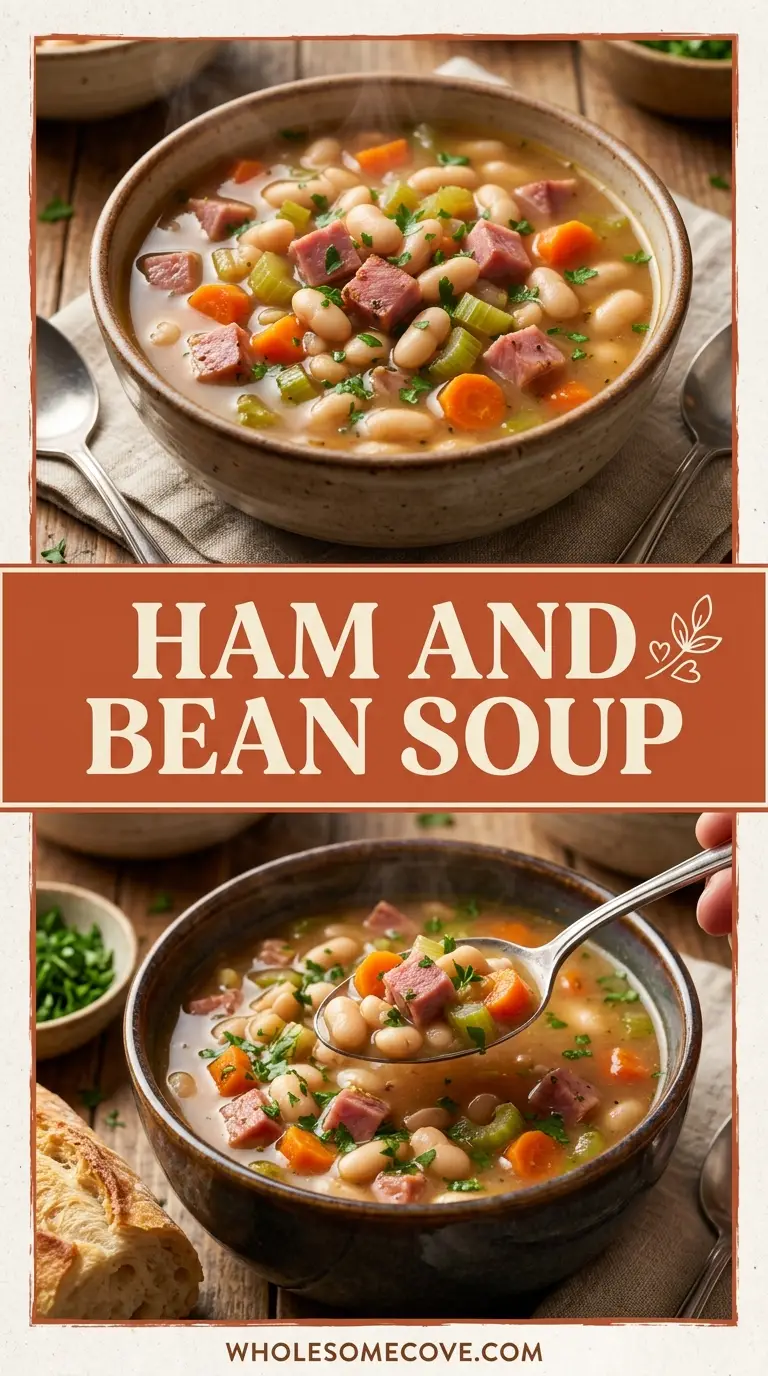
Why You’ll Love This Ham and Bean Soup Recipe
This is the kind of pot that stretches one ham bone into a full week of meals, using ingredients you likely already keep on hand. It rewards patience without demanding attention, which makes it ideal for a lazy Sunday on the stove.
Here is what sets it apart:
- It thickens on its own. As the navy beans simmer, some break down and release starch, turning the broth silky without any thickener.
- It uses up leftover ham. A holiday ham bone that would otherwise get tossed becomes the backbone of the whole dish.
- It is genuinely one pot. Everything from the sautéed aromatics to the final simmer happens in a single Dutch oven, so cleanup is minimal.
- It is budget-friendly. Dried beans and a leftover bone cost very little and feed a crowd.
- It freezes beautifully. The texture holds up for months, so a double batch means dinner on the worst weeknights.
- It is naturally hearty. Between the beans, the ham, and the vegetables, a single bowl is a complete meal with protein and fiber built in.
You might also enjoy: Split Pea and Ham Soup
Ingredients
The list below leans on pantry staples and one good ham bone. Everything is easy to find, and the measurements are given in both imperial and metric so the recipe works no matter where you cook.
- 1 lb (450 g) dried navy beans (about 2 cups), rinsed, picked over, and soaked overnight
- 1 meaty ham bone or 2 smoked ham hocks (about 1.5 lb / 680 g), or substitute with smoked ham hocks if you have no leftover bone
- 2 cups (280 g) diced cooked ham, plus any meat pulled from the bone
- 2 tbsp (30 ml) olive oil or butter
- 1 large yellow onion, diced (about 1.5 cups / 200 g)
- 2 medium carrots, peeled and diced (about 1 cup / 130 g)
- 2 celery stalks, diced (about 1 cup / 100 g)
- 4 garlic cloves, minced
- 8 cups (1.9 L) chicken broth or ham stock
- 2 bay leaves
- 1 tsp dried thyme
- 1/2 tsp smoked paprika (optional, for extra depth)
- 1/2 tsp black pepper
- 1/4 tsp salt, plus more to taste at the end
- 1 tbsp (15 ml) apple cider vinegar, added at the finish
- 2 tbsp chopped fresh parsley, for garnish
For another way to use that bone, see Best Ham Recipes.
Kitchen Equipment Needed
You do not need anything specialized here. A heavy pot and a sharp knife cover almost everything.
- A large Dutch oven or heavy-bottomed soup pot (6 quart / 5.7 L or larger)
- A sturdy cutting board
- A sharp chef’s knife
- A wooden spoon for stirring and mashing beans
- A soup ladle
- A colander for draining the soaked beans
- Tongs or a slotted spoon for pulling out the bone
For a related one-pot meal, try: Ham and Potato Soup
Recommended Products for This Recipe
These are the tools and ingredients I reach for when I want this soup to turn out right the first time. Each one solves a specific problem I ran into while testing.
1. Enameled Dutch Oven
Thin pots scorch beans and ham on the bottom before the soup ever gets going. A heavy enameled Dutch oven holds a slow, even simmer for well over an hour, and the enamel wipes clean even after starchy beans cook down against the sides.
2. Better Than Bouillon Ham Base
If your ham bone is a little lean or you are working with diced ham alone, the broth can taste flat. A spoonful of concentrated ham base rebuilds that deep, smoky backbone without adding a pile of extra salt, since you control how much goes in.
3. Heirloom Dried Navy Beans
Old supermarket beans can simmer for two hours and still stay chalky in the center. Fresher heirloom navy beans cook more evenly and creamier, which is the difference between a thin soup and a naturally thick one.
4. Immersion Blender
When I want a thicker, more velvety pot without losing all the whole beans, I give the soup two or three quick pulses right in the pan. An immersion blender does that in seconds with nothing to transfer or wash.
5. Glass Storage Containers
This soup keeps improving for days, so airtight glass containers earn their place. They stack neatly, do not stain from the paprika, and go straight from fridge to microwave.
A related recipe is Honey Baked Ham.

Step-by-Step Instructions: How to Make Ham and Bean Soup
Follow these simple steps and you’ll have a comforting pot of ham and bean soup on the table with very little fuss.
Step 1: Drain the Soaked Beans
- Pour your overnight-soaked navy beans into a colander and drain off the soaking water.
- Rinse them under cool running water for a few seconds, then set aside.
- Discard any beans that look shriveled, discolored, or cracked, along with any small stones you spot.
Step 2: Sauté the Aromatics
- Set the Dutch oven over medium heat and add the 2 tablespoons (30 ml) of olive oil or butter.
- Once it shimmers, add the diced onion, carrots, and celery.
- Cook, stirring occasionally, for 6 to 8 minutes until the onion turns translucent and the vegetables soften.
- Add the minced garlic and cook for 1 more minute, just until fragrant, so it does not brown or turn bitter.
Step 3: Add the Ham Bone, Beans, and Liquid
- Nestle the ham bone or ham hocks into the pot among the vegetables.
- Add the drained navy beans, then pour in all 8 cups (1.9 L) of chicken broth.
- Stir in the bay leaves, dried thyme, smoked paprika, black pepper, and just 1/4 teaspoon of salt. Hold the rest of the salt for the end, since the ham will release plenty as it cooks.
Step 4: Simmer Low and Slow
- Bring the pot to a gentle boil over medium-high heat, then reduce to low.
- Cover partially, leaving a small gap for steam to escape, and let it simmer for 1 hour 15 minutes to 1 hour 30 minutes.
- Stir every 20 minutes or so, scraping the bottom to keep beans from sticking.
- The soup is ready when the beans are fully tender and creamy in the center, not chalky.
Step 5: Pull and Shred the Ham
- Use tongs to lift the ham bone or hocks out onto a cutting board and let them cool for a couple of minutes.
- Pull off any tender meat, chop it into bite-sized pieces, and discard the bone, fat, and skin.
- Return that pulled meat to the pot along with the 2 cups (280 g) of diced cooked ham.
Step 6: Thicken and Finish
- For a thicker soup, press a ladleful of beans against the side of the pot with your wooden spoon and stir them back in, or give the pot two quick pulses with an immersion blender.
- Fish out and discard the bay leaves.
- Stir in the 1 tablespoon (15 ml) of apple cider vinegar, then taste and add the remaining salt only if it needs it.
Step 7: Serve
- Ladle the soup into bowls while hot.
- Scatter chopped fresh parsley over the top for color and a little brightness.
- Serve with crusty bread or cornbread alongside.
For more in this style, see Baked Ham.

Tips for The Best Ham and Bean Soup
A few small habits make the difference between a good pot and a great one. These are the ones that consistently paid off in testing.
- Salt at the very end. Ham bones vary wildly in how salty they are. I ruined an early batch by seasoning up front, then finding the finished soup almost inedibly salty once the bone had done its work.
- Do not skip the acid. That final splash of apple cider vinegar cuts through the richness and makes every other flavor pop. Without it, the soup can taste heavy and one-note.
- Keep the simmer gentle. A hard boil breaks the beans apart into mush and can toughen their skins. A lazy simmer keeps most beans intact while still releasing enough starch to thicken.
- Mash for body, do not purée. I’ve found that mashing just one ladle of beans gives a creamier broth while leaving plenty of whole beans for texture. Blending the whole pot turns it into a flat purée.
- Use low-sodium broth. Between the ham and the beans, there is enough going on. Low-sodium broth gives you room to season at the end.
- Save the tough bits of ham for the pot. Drier end pieces and the meat clinging to the bone soften beautifully during the long simmer, so they are perfect here even when they are too dry to eat on their own.
- Let it rest. If you have time, cool and refrigerate overnight. The flavors marry and the soup thickens even further.
You might also enjoy: Lentil Soup
What to Serve with Ham and Bean Soup
This soup is filling enough to stand alone, but the right side turns it into a proper meal. Think of anything that can mop up the broth or add a fresh, crunchy contrast to the soft beans.
- Cornbread for a slightly sweet, crumbly partner that soaks up the broth. A wedge of cornbread is the classic pairing here.
- Warm dinner rolls for tearing and dipping. Soft dinner rolls are hard to beat straight from the oven.
- Flaky biscuits for a Southern-style plate. Split a couple of homemade biscuits and butter them while warm.
- A crisp coleslaw for cool crunch against the rich soup. A tangy coleslaw balances every spoonful.
- A fresh broccoli salad for something bright and a little sweet. This broccoli salad adds welcome texture.
- A simple green salad with a sharp vinaigrette to lighten the meal.
- Crusty sourdough for the serious bread lovers who want a sturdy dipper.
- Pickled onions or jalapeños on the side for anyone who likes a sharp, acidic bite.
For a different comfort bowl, see Potato Soup.
Variations of Ham and Bean Soup
Once you have the basic pot down, it bends easily to what you have on hand. These are the swaps that hold up best.
- Different beans. Great northern, cannellini, or pinto beans all work in place of navy beans. Each brings a slightly different size and creaminess.
- Smoky heat. Add a diced chipotle in adobo or a pinch of cayenne for a warm, smoky kick.
- Extra vegetables. Stir in diced potatoes, kale, spinach, or green beans during the last 20 minutes for more heft and color.
- Tomato-forward. Add a 14 oz (400 g) can of diced tomatoes for a brighter, slightly tangy broth.
- Slow cooker version. Combine everything except the vinegar and diced ham, then cook on low for 7 to 8 hours. Stir in the ham and vinegar at the end.
- Instant Pot version. Use unsoaked beans, pressure cook on high for 35 minutes, and let the pressure release naturally.
- Sausage swap. No ham bone? Brown a smoked sausage or kielbasa and use it as the meaty base instead.
For more soups in this family, browse Best Lentil Soup Recipes.
Storage and Reheating
This is a soup that genuinely gets better with time, which makes it a strong candidate for batch cooking. Store it properly and it will reward you for days.
- Refrigerator: Cool the soup, then store it in airtight containers for up to 4 days. It will thicken as it chills, which is normal.
- Freezer: Freeze in portion-sized containers for up to 3 months. Leave a little headspace, since the soup expands as it freezes.
- Thawing: Move a container to the fridge the night before, or defrost gently in the microwave if you are short on time.
- Reheating on the stove: Warm over medium-low heat, stirring often, and add a splash of broth or water to loosen it to your preferred thickness.
- Reheating in the microwave: Heat in 60-second bursts, stirring between each, until steaming throughout.
- Refreshing the flavor: After reheating, a tiny splash of vinegar or a fresh grind of pepper wakes it right back up.
A related option is Chicken Soup.
Nutritional Facts
Values below are approximate, per serving, based on 8 servings. Actual numbers will vary with the specific ham and broth you use.
| Nutrient | Amount per Serving |
|---|---|
| Calories | 310 kcal |
| Protein | 24 g |
| Carbohydrates | 34 g |
| Dietary Fiber | 12 g |
| Sugars | 4 g |
| Fat | 8 g |
| Saturated Fat | 2 g |
| Sodium | 780 mg |
| Potassium | 720 mg |
| Iron | 3.5 mg |
For another ham-based main, see Scalloped Potatoes and Ham.
Health Benefits of Key Ingredients
Beyond being satisfying, this soup packs real nutritional value into an inexpensive bowl. Most of that comes from the beans and vegetables doing quiet work in the background.
- Navy beans are rich in soluble fiber and plant protein, which support steady digestion and help you feel full for longer.
- Ham contributes high-quality protein along with B vitamins that help the body convert food into energy.
- Carrots bring beta-carotene, which the body converts to vitamin A for eye and immune health.
- Celery adds water, fiber, and a dose of vitamin K with very few calories.
- Onions and garlic contain sulfur compounds and antioxidants that have long been associated with immune support.
- Parsley is more than a garnish, offering vitamin C and vitamin K in a small, fresh handful.
- Homemade broth made with a ham bone provides minerals and collagen that store-bought versions often lack.
For a leaner ham dish, see Spiral Ham.
FAQs About Ham and Bean Soup
1. Do I have to soak the beans overnight?
Soaking is not strictly required, but it helps the beans cook more evenly and can make them easier to digest. If you forget, use the quick-soak method: cover the beans with water, boil for 2 minutes, then let them sit off the heat for 1 hour before draining.
2. Can I use canned beans instead of dried?
Yes, canned beans work well when you are short on time. Drain and rinse three 15 oz (425 g) cans, then add them in the last 20 to 30 minutes of simmering so they warm through without turning to mush.
3. Why are my beans still hard after cooking?
The usual culprits are old dried beans or adding salt and acid too early, both of which can keep beans firm. Use fresh beans, hold the salt and vinegar until the end, and simply keep simmering, since stubborn beans often soften with more time.
4. Can I make this in a slow cooker or Instant Pot?
Both work beautifully. For a slow cooker, cook on low for 7 to 8 hours; for an Instant Pot, pressure cook unsoaked beans on high for 35 minutes with a natural release, then stir in the diced ham and vinegar at the end.
5. How do I make the soup thicker?
The easiest way is to mash a ladleful of the cooked beans against the side of the pot and stir them back in. For an even creamier texture, use an immersion blender to pulse the soup two or three times, leaving plenty of whole beans intact.
6. What kind of ham is best for this soup?
A leftover bone-in ham with some meat still attached gives the deepest flavor. Smoked ham hocks are a great substitute, and diced leftover ham steak works in a pinch, though you may want to add a little ham base for extra depth.
For a hands-off approach, try: Slow Cooker Ham
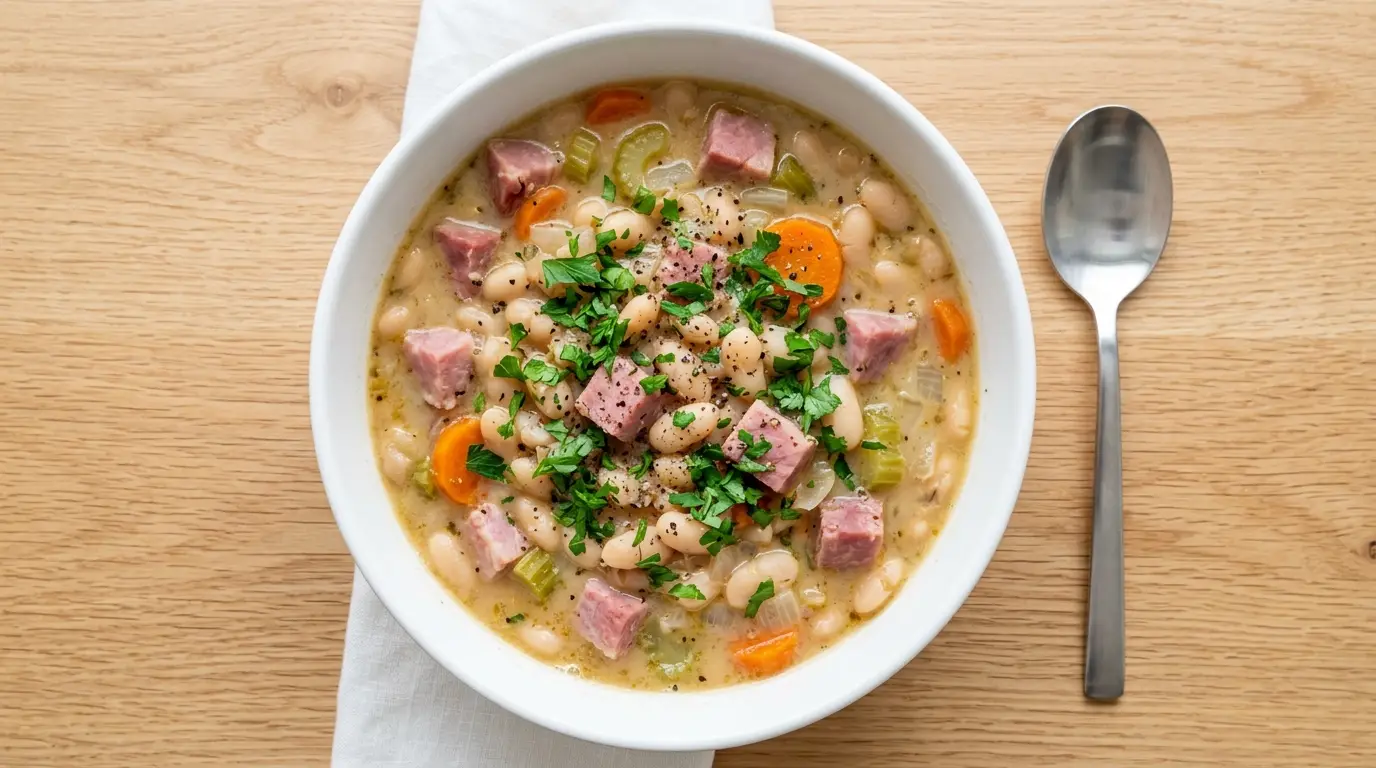
Ham and Bean Soup
Ingredients
- 1 lb dried navy beans - 450g, about 2 cups, rinsed, picked over, and soaked overnight
- 1 meaty ham bone - or 2 smoked ham hocks, about 1.5 lb / 680g; substitute smoked ham hocks if you have no leftover bone
- 2 cups diced cooked ham - 280g, plus any meat pulled from the bone
- 2 tbsp olive oil - 30ml, or butter
- 1 large yellow onion - about 1.5 cups / 200g, diced
- 2 medium carrots - about 1 cup / 130g, peeled and diced
- 2 stalks celery - about 1 cup / 100g, diced
- 4 cloves garlic - minced
- 8 cups chicken broth - 1.9L, or ham stock; low-sodium recommended
- 2 bay leaves
- 1 tsp dried thyme
- 1/2 tsp smoked paprika - optional, for extra depth
- 1/2 tsp black pepper
- 1/4 tsp salt - plus more to taste at the end
- 1 tbsp apple cider vinegar - 15ml, added at the finish
- 2 tbsp fresh parsley - chopped, for garnish
Equipment
- Large Dutch oven or heavy bottomed soup pot - 6 quart / 5.7 L or larger
- Sturdy cutting board
- Wooden spoon - for stirring and mashing beans
- Soup Ladle
- Colander - for draining the soaked beans
- Tongs or slotted spoon - for pulling out the bone
- Immersion blender - (optional) for a thicker, more velvety texture
Method
- Pour the overnight-soaked navy beans into a colander, drain off the soaking water, and rinse under cool running water. Discard any shriveled, discolored, or cracked beans along with any small stones.
- Set the Dutch oven over medium heat and add the olive oil or butter. Once it shimmers, add the diced onion, carrots, and celery and cook, stirring occasionally, for 6 to 8 minutes until softened. Add the minced garlic and cook for 1 more minute until fragrant.
- Nestle the ham bone or ham hocks into the pot among the vegetables. Add the drained navy beans, pour in all 8 cups of chicken broth, and stir in the bay leaves, dried thyme, smoked paprika, black pepper, and just 1/4 teaspoon of salt.
- Bring the pot to a gentle boil over medium-high heat, then reduce to low. Cover partially and simmer for 1 hour 15 minutes to 1 hour 30 minutes, stirring every 20 minutes, until the beans are fully tender and creamy in the center.
- Use tongs to lift the ham bone or hocks out onto a cutting board and let them cool for a couple of minutes. Pull off any tender meat, chop it into bite-sized pieces, and return it to the pot along with the 2 cups of diced cooked ham. Discard the bone, fat, and skin.
- For a thicker soup, press a ladleful of beans against the side of the pot with a wooden spoon and stir them back in, or give the pot two quick pulses with an immersion blender. Fish out and discard the bay leaves, then stir in the apple cider vinegar and add remaining salt only if needed.
- Ladle the soup into bowls while hot and scatter chopped fresh parsley over the top. Serve with crusty bread or cornbread alongside.
Nutrition
Notes
- Salt at the very end. Ham bones vary wildly in saltiness, so season up front with only 1/4 teaspoon and adjust after the ham has flavored the pot.
- Do not skip the acid. The final splash of apple cider vinegar cuts through the richness and makes every other flavor pop.
- Keep the simmer gentle. A hard boil breaks the beans apart into mush and can toughen their skins; a lazy simmer keeps most beans intact while releasing enough starch to thicken.
- Mash for body, do not purée. Mashing just one ladle of beans gives a creamier broth while leaving plenty of whole beans for texture.
- Use low-sodium broth. Between the ham and the beans there is enough salt going on; low-sodium broth gives you room to season at the end.
- Soaking shortcut: If you forget to soak overnight, cover the beans with water, boil for 2 minutes, then let them sit off the heat for 1 hour before draining.
- Canned bean swap: Drain and rinse three 15 oz (425 g) cans of beans and add them in the last 20 to 30 minutes of simmering.
- Slow cooker: Combine everything except the vinegar and diced ham, cook on low for 7 to 8 hours, then stir in the ham and vinegar at the end.
- Instant Pot: Use unsoaked beans, pressure cook on high for 35 minutes, and let the pressure release naturally before stirring in the ham and vinegar.
- Storage: Refrigerate in airtight containers for up to 4 days or freeze for up to 3 months; the soup thickens as it chills, so loosen with a splash of broth when reheating.
Private Notes
Tried this recipe?
Let us know how it was!Final Thoughts
There is a reason ham and bean soup has stayed on family tables for generations. It costs almost nothing, uses up what you already have, and delivers a bowl that feels like a warm blanket.
Give it a slow simmer and remember the two rules that matter most: salt at the end, and finish with a splash of vinegar. Those small moves turn a humble pot into something you will want on repeat all season.
If you make this one, I would love to hear how it turned out. Leave a comment with your favorite variation, and share it with anyone who has a lonely ham bone waiting in the freezer.
Recommended:
- Honey Glazed Ham
- Ham Glaze
- Pulled Ham
- Deviled Ham
- Ham Salad
- Ham and Cheese Sliders
- Smoked Ham
- Loaded Baked Potato Soup
- Best Chicken Soup Recipes