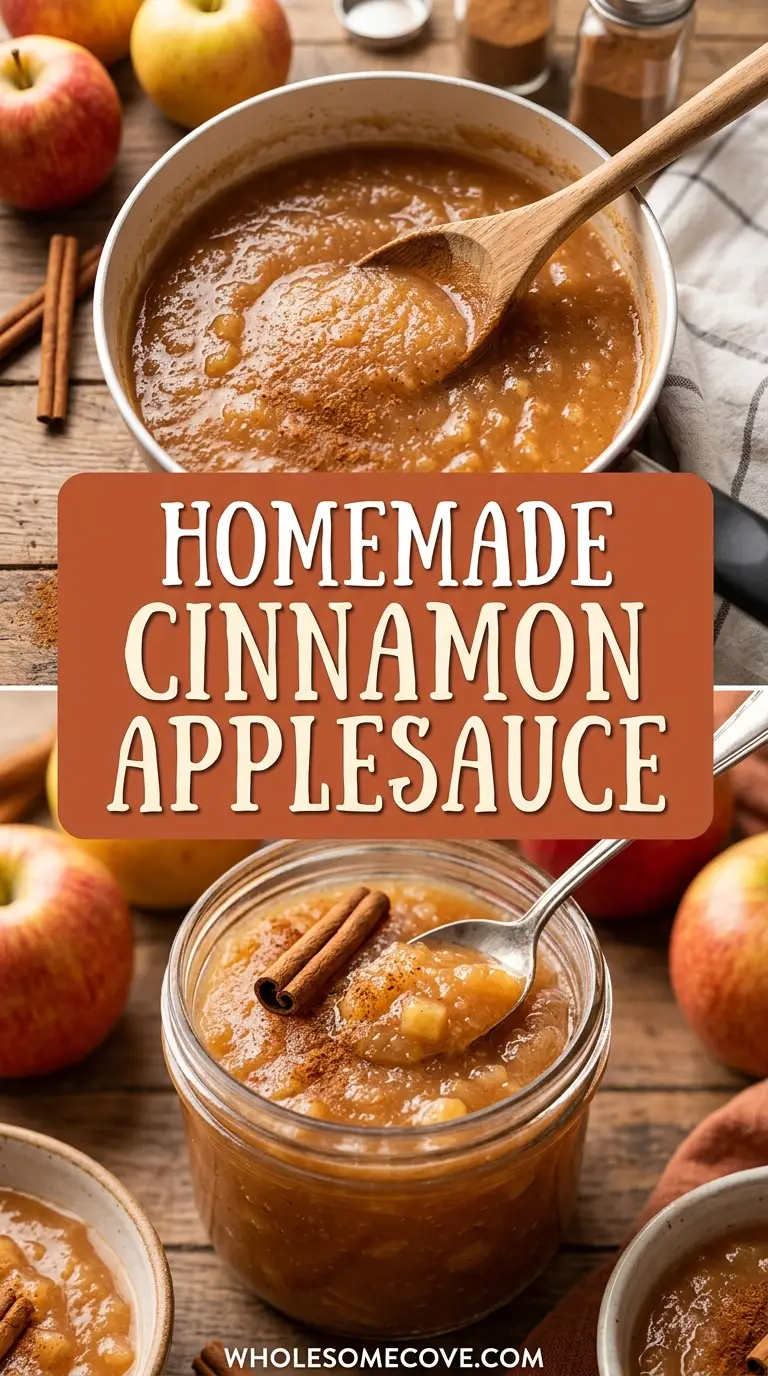
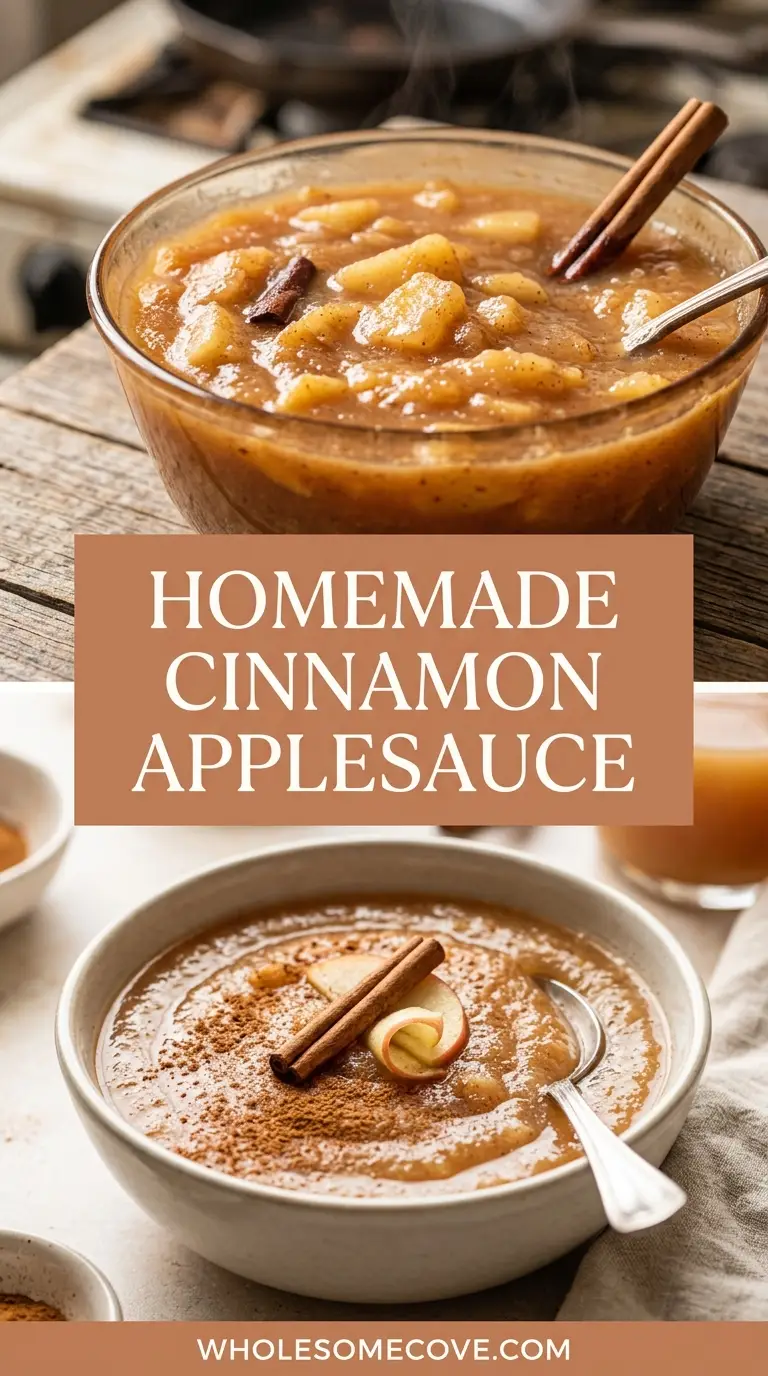
This Homemade Cinnamon Applesauce Recipe turns a pound and a half of apples into a warm, spiced sauce in about half an hour, using six simple ingredients you likely already have.
Most versions come out watery because the apples are drowned in liquid. This one uses just half a cup of water, so the fruit steams in its own juices and cooks down thick.
A mix of sweet and tart apples does the heavy lifting here. Sweet Fuji or Gala brings the natural sugar, while a couple of Granny Smith apples keep it from tasting flat.
The cinnamon goes in near the end rather than at the start. That small timing change keeps the spice bright instead of dull and muddy after a long simmer.
You control the texture completely. Leave it chunky with a potato masher, or run an immersion blender through for something smooth enough to spoon into a baby’s bowl.
| Quick Recipe Summary | |
|---|---|
| Prep Time | 15 minutes |
| Cook Time | 25 minutes |
| Total Time | 40 minutes |
| Servings | 6 (about 4 cups) |
| Difficulty Level | Easy |
For a warm apple dessert to make with the same fruit, see Apple Crisp.
Why You’ll Love This Homemade Cinnamon Applesauce Recipe
Store-bought applesauce is fine, but it can’t compete with a batch that fills your kitchen with the smell of simmering apples and cinnamon. Once you taste the homemade version, the jarred stuff starts to seem flat.
Here is why this recipe earns a spot in your regular rotation:
- Six ingredients, all recognizable. Apples, water, lemon juice, sugar, cinnamon, and a pinch of salt. Nothing you can’t pronounce.
- You decide how sweet. Taste before adding sugar. Ripe apples often need very little, and you can skip it entirely with sweeter varieties.
- You decide the texture. Chunky for spooning over oatmeal, smooth for babies and toddlers, or somewhere in between.
- Ready in 40 minutes. Most of that is hands-off simmering while you do something else.
- Freezer friendly. It keeps for months, so one afternoon of cooking stocks you up through the season.
- Naturally gluten-free and dairy-free. It fits most eating styles without any special swaps.
- Cheaper than the jars. A bag of apples on sale makes far more sauce than the same money spent at the store.
You might also enjoy: Poached Pears
Ingredients
The ingredient list is short, which means each item matters. Use apples that actually taste good raw, since cooking concentrates whatever flavor you start with.
- 1.5 lb (about 680 g), roughly 4 to 5 medium apples: Use a mix of sweet and tart. I like 3 sweet apples such as Fuji, Gala, Honeycrisp, or Golden Delicious, plus 2 tart Granny Smith.
- 1/2 cup (120 ml) water: Just enough to keep the apples from sticking while they cook down.
- 1 tablespoon (15 ml) fresh lemon juice: Brightens the flavor and keeps the color from turning brown.
- 2 tablespoons (25 g) granulated sugar, optional: Adjust to taste, or leave it out if your apples are sweet.
- 1 teaspoon ground cinnamon: The star spice. Ceylon cinnamon is milder and more fragrant if you have it.
- 1 pinch fine salt: A small amount sharpens the apple flavor and balances the sweetness.
Optional add-ins for extra warmth: a pinch of ground nutmeg, a small pinch of ground cloves, or a splash of maple syrup in place of the sugar.
Read Also: Pumpkin French Toast
Kitchen Equipment Needed
You do not need anything fancy. A pot and something to mash with will get you there, though a few tools make the prep faster.
- Large saucepan or Dutch oven: A heavy-bottomed pot heats evenly and helps prevent scorching.
- Vegetable peeler: For peeling the apples quickly if you want a smooth sauce.
- Apple peeler and corer: Worth it if you make applesauce in big batches, since it peels, cores, and slices in one pass.
- Cutting board and paring knife: For coring and chopping.
- Potato masher: For a chunky, rustic texture.
- Immersion blender: For a silky smooth finish right in the pot.
- Wooden spoon: For stirring as the apples break down.
- Storage containers or freezer jars: For keeping leftovers in the fridge or freezer.
For a different way to use your peeler and paring knife this season, try: Homemade Apple Pie
Recommended Products for This Recipe
These are the tools and ingredients I reach for whenever I make a batch. Each one solved a specific annoyance, so they earn their place in my kitchen.
1. Ceylon Cinnamon
The cinnamon in most grocery stores is cassia, which turns harsh and slightly bitter when you use enough to actually taste it. Ceylon cinnamon stays sweet and floral even at a full teaspoon, which is why applesauce made with it tastes rounder and less sharp.
2. Apple Peeler Corer
Peeling four apples by hand is fine. Peeling twenty for a freezer batch is where a clamp-on peeler corer earns its keep, since it strips, cores, and spiral-slices in a single crank.
3. Immersion Blender
Transferring hot apples to a countertop blender is messy and risky. An immersion blender goes straight into the pot, so you get a smooth sauce with one less bowl to wash and no splashes of scalding purée.
4. Heavy-Bottomed Dutch Oven
Thin pots create hot spots that scorch the bottom layer of apples before the rest soften. A heavy Dutch oven spreads heat evenly, which means you can walk away and stir only occasionally without ending up with a burnt taste running through the whole batch.
5. Wide-Mouth Freezer Jars
Applesauce expands as it freezes, and narrow jars crack at the shoulder. Wide-mouth straight-sided jars give the sauce room to expand and thaw without breaking, and they stack neatly in the freezer.
For a cozy drink to sip while the apples simmer, see Pumpkin Spice Latte.
Step-by-Step Instructions: How to Make Homemade Cinnamon Applesauce
Follow these simple steps and you’ll have a warm batch of homemade cinnamon applesauce ready in about 40 minutes.
Step 1: Prep the Apples
- Wash all the apples under cool running water and pat them dry.
- Peel the apples if you want a smooth sauce. You can leave the peels on about half of them for extra color and fiber if you prefer a more rustic result.
- Core each apple and cut it into rough 1-inch (2.5 cm) chunks. Even sizing helps them cook at the same rate.
- Aim for about 5 to 6 cups of chopped apples from your 1.5 lb (680 g).
Step 2: Combine in the Pot
- Add the chopped apples to your large saucepan or Dutch oven.
- Pour in the 1/2 cup (120 ml) of water and the 1 tablespoon (15 ml) of lemon juice.
- Add the pinch of salt. Do not add the cinnamon or sugar yet, they go in later.
- Stir once to coat the apples in the liquid.
Step 3: Simmer Until Tender
- Cover the pot and set it over medium heat until you hear it start to bubble.
- Once it reaches a gentle boil, reduce the heat to medium-low and leave the lid slightly askew so a little steam can escape.
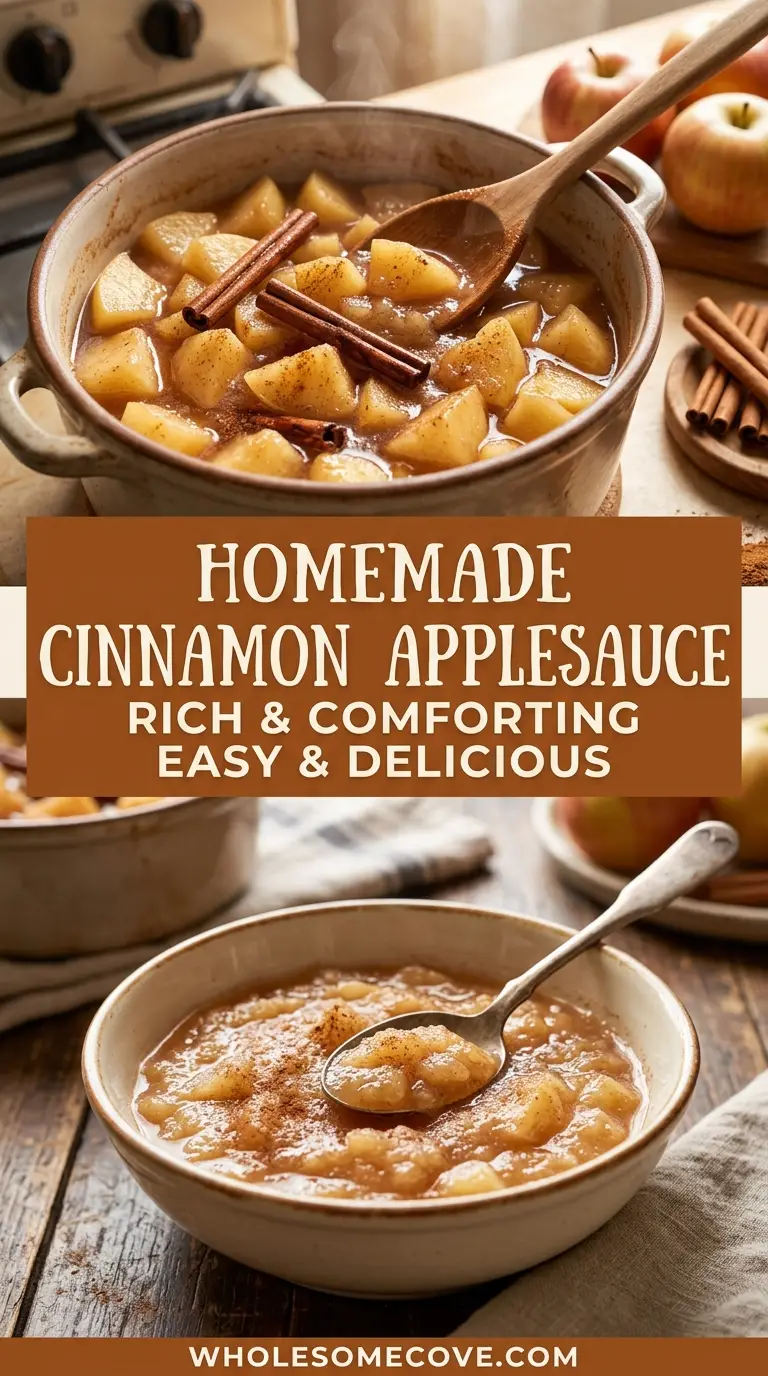
- Simmer for 20 to 25 minutes, stirring every 5 minutes or so to keep the bottom from sticking.
- The apples are ready when they are very soft and collapse easily when pressed with a fork.
- If the pot looks dry before the apples soften, add a splash more water.
Step 4: Add the Cinnamon and Sugar
- Remove the pot from the heat.
- Stir in the 1 teaspoon of ground cinnamon and the pinch of nutmeg or cloves if using.
- Taste the apples first, then add the 2 tablespoons (25 g) of sugar only if you want it sweeter. Stir until dissolved.
Step 5: Mash or Blend
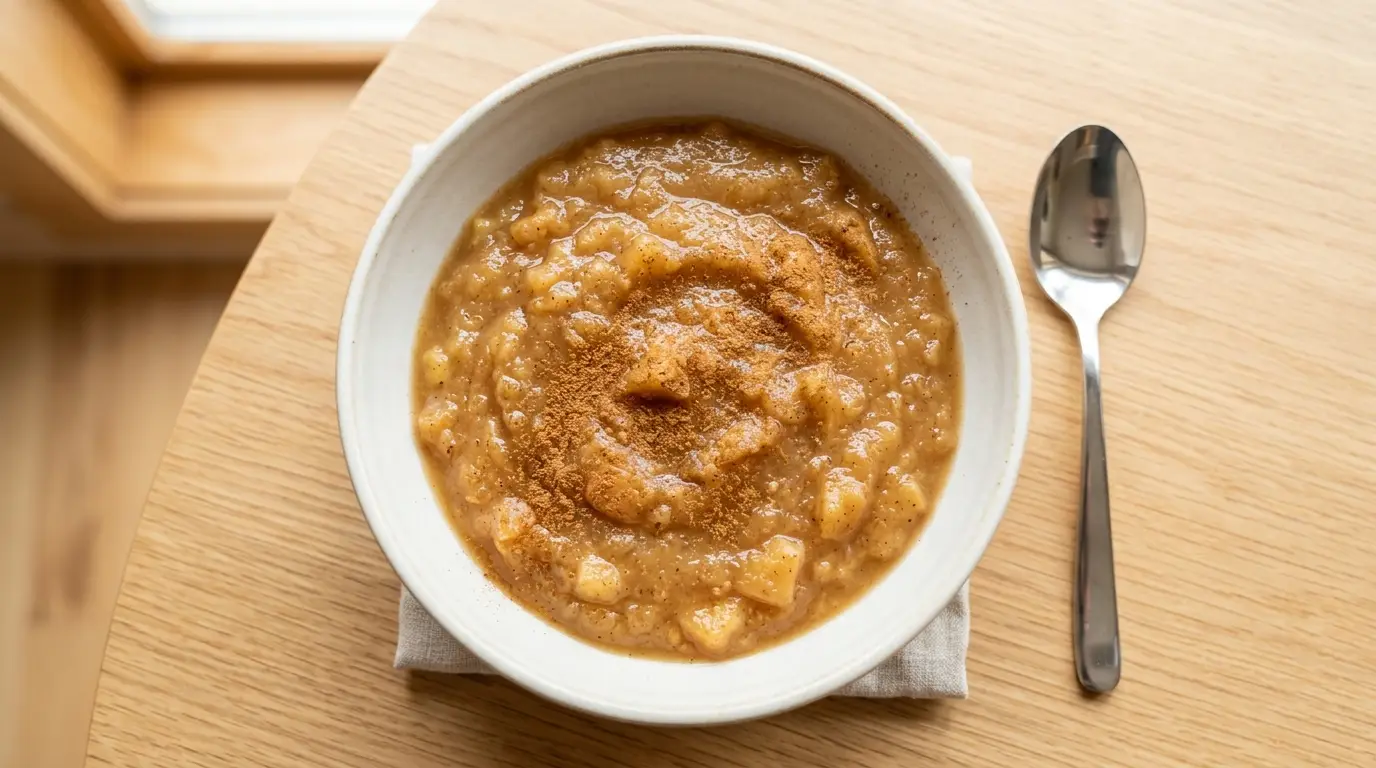
- For chunky applesauce, use a potato masher and work the apples to your preferred texture.
- For smooth applesauce, use an immersion blender directly in the pot until silky, about 30 to 60 seconds.
- If you left peels on and want it smooth, blend a little longer to break them down fully.
Step 6: Cool and Serve
- Taste one more time and adjust the cinnamon or sugar if needed.
- Serve warm right away, or let it cool to room temperature before transferring to storage containers.
- Applesauce thickens slightly as it cools, so do not worry if it looks a touch loose in the pot.
For a hands-off main course to cook while the sauce simmers, try: Mississippi Pot Roast
Tips for The Best Homemade Cinnamon Applesauce
A few small choices make the difference between good applesauce and the kind you keep sneaking spoonfuls of. These are the habits that have improved my batches the most.
- Mix at least two apple varieties. A blend of sweet and tart gives depth that a single type can’t. All-sweet tastes one-note, all-tart needs too much sugar.
- Add cinnamon at the end. I used to stir it in at the start, but a long simmer dulls the spice. Adding it off the heat keeps the flavor lively.
- Go easy on the water. Too much liquid gives you thin, runny sauce. Half a cup is enough because the apples release their own juice as they cook.
- Taste before sweetening. Ripe and overripe apples are naturally sweet, and I’ve found most batches need far less sugar than the recipe suggests, sometimes none.
- Use a heavy pot. A thin pan scorches the bottom layer. I learned this the hard way when a whole batch picked up a burnt undertone from one thin saucepan.
- Leave some peel on for color. Red apple skins tint the sauce a pretty rosy pink if you blend them in, and they add fiber too.
- Don’t over-blend if you want chunks. A potato masher gives you control that a blender doesn’t.
Read Also: Overnight Oats
What to Serve with Homemade Cinnamon Applesauce
Applesauce plays well in both sweet and savory settings. It works as a snack straight from the bowl, a breakfast topping, a side dish for rich meats, and even a baking swap for oil. Here are the pairings I reach for most.
- Pork chops: The classic pairing. The sweet-tart sauce cuts through rich pork beautifully. Try it with Apple Cider Glazed Pork Chops or Pork Chop Supreme.
- Oatmeal: Spoon it warm over a bowl of Baked Oatmeal for natural sweetness.
- Yogurt and granola: Swirl it into plain yogurt or a Greek Yogurt Smoothie for a quick breakfast.
- Pancakes and French toast: Use it as a topping instead of syrup on French Toast.
- Roast chicken or turkey: A cool spoonful alongside Roast Chicken or Thanksgiving Turkey balances the savory plate.
- Potato pancakes and latkes: Traditional and delicious with crisp fried potatoes.
- Biscuits: Spread it on warm Homemade Biscuits with a little butter.
- As a baking swap: Use it in place of oil or butter in muffins and quick breads for a lighter crumb.
You might also enjoy: Mulled Apple Cider
Variations of Homemade Cinnamon Applesauce
Once you have the base method down, it’s easy to change the flavor and texture to suit your mood. Here are the variations worth trying.
- Slow cooker applesauce: Add everything except cinnamon to a slow cooker and cook on low for 6 to 8 hours, then stir in the spice and mash.
- No sugar: Skip the sugar entirely and rely on sweet apples like Fuji or Honeycrisp for natural sweetness.
- Maple sweetened: Replace the granulated sugar with 1 to 2 tablespoons of pure maple syrup for a deeper flavor.
- Extra spiced: Add a pinch of nutmeg, cloves, and a small piece of fresh grated ginger for a chai-like warmth.
- Cinnamon stick infusion: Simmer with 1 or 2 whole cinnamon sticks instead of ground cinnamon, then remove before mashing for a subtler taste.
- Pink applesauce: Use red-skinned apples, leave the peels on, and blend for a naturally rosy color.
- Chunky style: Mash lightly with a fork for a texture with real apple pieces throughout.
- Pear apple sauce: Swap in a couple of ripe pears for part of the apples for a softer, floral note.
For more recipes in this style, check out Amish Apple Cake.
Storage and Reheating
Homemade applesauce stores beautifully, which is part of why it’s worth making a big batch. Here’s how to keep it fresh and how to warm it back up.
- Refrigerator: Cool completely, then store in an airtight container for up to 1 week.
- Freezer: Pack cooled applesauce into freezer-safe jars or zip-top bags, leaving about 1 inch of headspace for expansion. It keeps for up to 6 months.
- Freezing in portions: I keep a tray of applesauce frozen in silicone muffin cups just for single servings, then pop them into a bag once solid.
- Thawing: Move frozen applesauce to the fridge overnight, or run a sealed bag under cold water to speed it up.
- Reheating: Warm gently in a saucepan over low heat, stirring often, or microwave in 30-second bursts, stirring between each.
- Canning: For long-term pantry storage, process in a water bath canner following tested canning guidelines for safe acidity.
For another make-ahead breakfast staple you can batch, see Fall Muffins.
Nutritional Facts
Values are estimates for one serving, based on 6 servings per batch with 2 tablespoons of added sugar. Actual numbers vary with apple type and how much sugar you use.
| Nutrient | Amount per Serving |
|---|---|
| Calories | 95 |
| Total Fat | 0.3 g |
| Sodium | 25 mg |
| Total Carbohydrates | 25 g |
| Dietary Fiber | 3 g |
| Sugars | 20 g |
| Protein | 0.4 g |
| Vitamin C | 6 mg |
For a naturally sweet spread to pair with your morning toast, see Honey Butter.
Health Benefits of Key Ingredients
Beyond tasting good, the handful of ingredients in this applesauce bring real nutritional value. Here’s what the main players contribute.
- Apples: High in dietary fiber, especially pectin, which supports digestion and helps you feel full. They also provide vitamin C and a range of antioxidants.
- Apple peels: When you leave them on, the skins add extra fiber and polyphenols, which are plant compounds linked to heart health.
- Cinnamon: Contains antioxidant compounds and has been studied for its role in helping regulate blood sugar.
- Lemon juice: Adds a small dose of vitamin C and helps preserve the color and freshness of the sauce.
- Low fat and no dairy: The recipe is naturally free of fat and dairy, making it gentle on the stomach and suitable for many diets.
- Less sugar than store-bought: Making it at home lets you control the sugar, often using far less than commercial brands.
For another wholesome side built on a single vegetable, try: Maple Glazed Carrots
FAQs About Homemade Cinnamon Applesauce
1. What are the best apples for applesauce?
A blend of sweet and tart apples gives the most balanced flavor. Sweet varieties like Fuji, Gala, Honeycrisp, and Golden Delicious pair well with tart Granny Smith.
Softer apples such as McIntosh and Cortland break down faster, so they’re great if you want a smooth sauce quickly.
2. Do I need to peel the apples?
No, peeling is optional and comes down to the texture you want. Peeled apples give a smoother, more uniform sauce.
Leaving the peels on adds fiber, nutrients, and a rosy color if you use red apples, though you’ll want to blend well to break them down.
3. Can I make applesauce without sugar?
Absolutely. Ripe and naturally sweet apples often need no added sugar at all.
Taste the apples after they soften and decide from there, since the sweetness varies a lot by variety and ripeness.
4. How long does homemade applesauce last?
Stored in an airtight container in the fridge, it keeps for about a week. For longer storage, freeze it for up to 6 months in freezer-safe containers.
Leave a little headspace in the container since applesauce expands as it freezes.
5. Why is my applesauce watery?
The most common cause is too much water at the start. This recipe uses only half a cup because the apples release plenty of their own juice.
If your sauce turns out thin, simmer it uncovered for a few extra minutes to cook off the excess liquid.
6. Can I make this in a slow cooker?
Yes. Add the apples, water, lemon juice, and salt to the slow cooker and cook on low for 6 to 8 hours.
Stir in the cinnamon at the end, then mash or blend to your preferred texture.
For a naturally sweet dessert that leans on apples too, see Healthy Apple Pie.
Homemade Cinnamon Applesauce
Ingredients
- 1.5 lb apples - about 680g, roughly 4 to 5 medium; use a mix of sweet and tart, such as 3 sweet Fuji, Gala, Honeycrisp, or Golden Delicious plus 2 tart Granny Smith
- 1/2 cup water - 120 ml; just enough to keep the apples from sticking while they cook down
- 1 tablespoon fresh lemon juice - 15 ml; brightens the flavor and keeps the color from turning brown
- 2 tablespoons granulated sugar - 25 g, optional; adjust to taste, or leave it out if your apples are sweet
- 1 teaspoon ground cinnamon - The star spice; Ceylon cinnamon is milder and more fragrant if you have it
- 1 pinch fine salt - A small amount sharpens the apple flavor and balances the sweetness
- ground nutmeg - Optional add-in; a pinch for extra warmth
- ground cloves - Optional add-in; a small pinch for extra warmth
- maple syrup - Optional add-in; a splash in place of the sugar
Equipment
- Large saucepan or Dutch oven - A heavy-bottomed pot heats evenly and helps prevent scorching
- Vegetable peeler - For peeling the apples quickly if you want a smooth sauce
- Apple peeler and corer - Optional; worth it if you make applesauce in big batches
- Cutting board and paring knife - For coring and chopping
- Potato masher - For a chunky, rustic texture
- Immersion blender - For a silky smooth finish right in the pot
- Wooden spoon - For stirring as the apples break down
- Storage containers or freezer jars - For keeping leftovers in the fridge or freezer
Method
- Wash, peel (if desired), core, and cut the apples into rough 1-inch chunks. Aim for about 5 to 6 cups of chopped apples.
- Add the chopped apples, water, lemon juice, and salt to a large saucepan or Dutch oven. Stir once to coat. Do not add the cinnamon or sugar yet.
- Cover and bring to a gentle boil over medium heat, then reduce heat to medium-low with the lid slightly askew. Simmer 20 to 25 minutes, stirring every 5 minutes, until the apples collapse easily when pressed with a fork.
- Remove from heat and stir in the ground cinnamon and optional nutmeg or cloves. Taste first, then add sugar only if desired, stirring until dissolved.
- For chunky applesauce, mash with a potato masher to your preferred texture. For smooth applesauce, blend with an immersion blender directly in the pot for 30 to 60 seconds until silky.
- Taste and adjust cinnamon or sugar if needed. Serve warm right away, or cool to room temperature before transferring to storage containers.
Nutrition
Notes
- Mix at least two apple varieties. A blend of sweet and tart gives depth that a single type can’t. All-sweet tastes one-note, all-tart needs too much sugar.
- Add cinnamon at the end. A long simmer dulls the spice; adding it off the heat keeps the flavor lively.
- Go easy on the water. Too much liquid gives you thin, runny sauce. Half a cup is enough because the apples release their own juice as they cook.
- Taste before sweetening. Ripe and overripe apples are naturally sweet, and most batches need far less sugar than the recipe suggests, sometimes none.
- Use a heavy pot. A thin pan scorches the bottom layer and can give the whole batch a burnt undertone.
- Leave some peel on for color. Red apple skins tint the sauce a pretty rosy pink if you blend them in, and they add fiber too.
- Don’t over-blend if you want chunks. A potato masher gives you control that a blender doesn’t.
- Storage: Cool completely, then refrigerate in an airtight container for up to 1 week, or freeze for up to 6 months with about 1 inch of headspace.
- Thawing and reheating: Thaw frozen applesauce in the fridge overnight, then warm gently in a saucepan over low heat or microwave in 30-second bursts, stirring between each.
- Slow cooker variation: Add everything except cinnamon to a slow cooker and cook on low for 6 to 8 hours, then stir in the spice and mash.
Private Notes
Tried this recipe?
Let us know how it was!Final Thoughts
There’s a reason a pot of apples and cinnamon on the stove feels like the start of fall. This applesauce is humble, but it turns a bag of ordinary apples into something you’ll want to eat by the spoonful.
Make a batch this weekend and taste the difference from the jarred kind. Once you do, you may never buy it again.
If you try this recipe, I’d love to hear how it turned out. Leave a comment below and share it with a friend who loves apple season as much as you do.
Recommended:
- Pork and Apple Skillet
- Roasted Butternut Squash Soup
- Pumpkin Bread
- Roasted Brussels Sprouts with Bacon
- Mashed Potatoes
- Healthy Pumpkin Pie
- Stuffed Acorn Squash
- Carrot Ginger Soup
- Easy Banana Bread