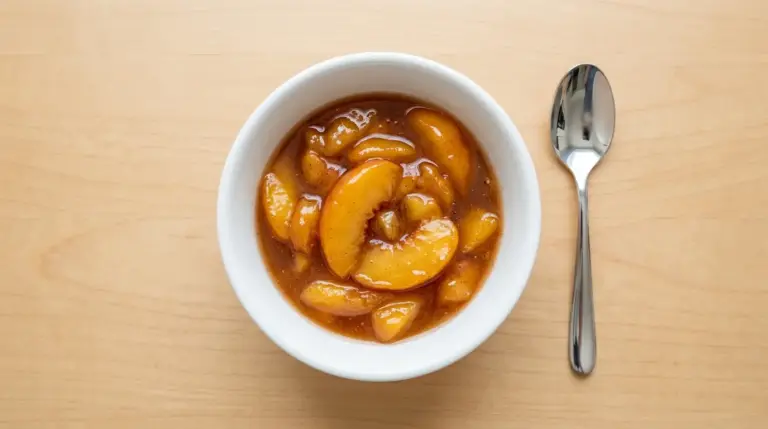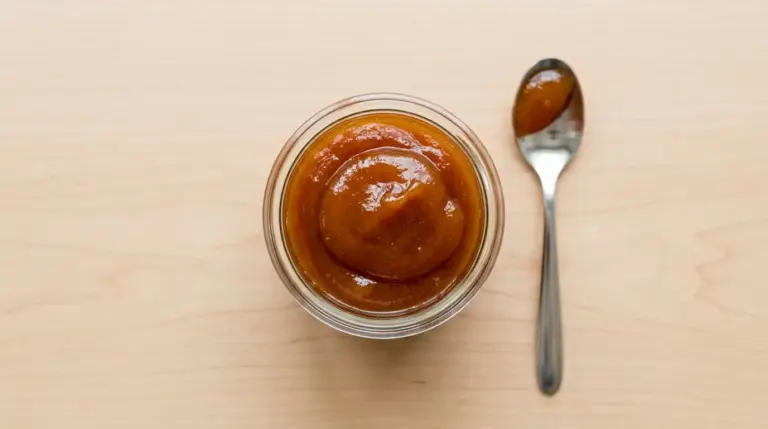
This pork and apple skillet recipe turns four seared pork chops and two crisp apples into a glossy fall dinner cooked entirely in one pan. The apples soften into jammy wedges while a cider and Dijon sauce reduces around the meat.
Most versions of this dish go wrong in the same place, which is dry, chalky pork from leaving the chops on the heat too long. Pulling them at 145°F (63°C) and letting the pan sauce finish the job keeps every bite juicy.
Apple cider does the heavy lifting here, giving the sauce a tart backbone that plain broth cannot match. A spoon of Dijon and a little maple round it out without turning the plate sweet.
Start to finish it runs about 40 minutes and feeds four, with nothing more unusual than apples, an onion, and a few pantry staples.
| Quick Recipe Summary | |
|---|---|
| Prep Time | 15 minutes |
| Cook Time | 25 minutes |
| Total Time | 40 minutes |
| Servings | 4 servings |
| Difficulty Level | Easy |
For another take on the same cider-and-pork pairing, see Apple Cider Glazed Pork Chops.

Why You’ll Love This Pork and Apple Skillet Recipe
This is the kind of one-pan dinner that tastes like it took effort but really just asks you to sear, sauté, and simmer. Everything happens in a single skillet, so the browned bits from the pork end up flavoring the apples and the sauce.
Here is what makes it worth putting on your fall rotation:
- One pan, one cleanup. The chops, the apples, the onions, and the sauce all cook in the same skillet, which means the fond from searing goes straight into the sauce instead of down the drain.
- Ready in about 40 minutes. Fifteen minutes of prep and twenty-five on the stove puts a full dinner on the table on a weeknight.
- Sweet and savory in balance. Tart apples and a splash of vinegar cut through the richness of the pork so the plate never tips into dessert territory.
- Flexible with what you have. Bone-in or boneless chops both work, and the apple variety is yours to choose as long as it holds its shape.
- Naturally gluten-free. With a cornstarch slurry instead of a flour roux, the whole dish stays gluten-free.
- Great for company. It plates up looking rustic and generous, so it holds its own at a dinner party next to nicer sides.
You might also enjoy: Pork Chop Supreme
Ingredients
Everything here is easy to find, and most of it is likely in your kitchen already. The short list below covers the pork, the apple-onion layer, and the pan sauce that ties them together.
For the pork:
- 4 boneless pork chops, about 1 inch (2.5 cm) thick, roughly 6 oz (170 g) each
- 1 teaspoon kosher salt
- 1/2 teaspoon black pepper
- 1 teaspoon dried thyme, or 1 tablespoon fresh thyme leaves
- 2 tablespoons (30 ml) extra virgin olive oil
For the apples and onions:
- 2 large firm apples such as Honeycrisp, Gala, or Fuji, cored and sliced into 1/2-inch (1.25 cm) wedges
- 1 large yellow onion, halved and thinly sliced
- 2 tablespoons (28 g) unsalted butter
- 3 garlic cloves, minced
- 1 tablespoon chopped fresh sage, or 1 teaspoon dried
For the pan sauce:
- 3/4 cup (180 ml) apple cider
- 1/2 cup (120 ml) chicken broth
- 1 tablespoon (15 ml) Dijon mustard
- 1 tablespoon (15 ml) pure maple syrup
- 1 tablespoon (15 ml) apple cider vinegar
- 1 teaspoon cornstarch mixed with 1 tablespoon (15 ml) cold water, optional for a thicker sauce
Read Also: Pork Tenderloin With Roasted Root Vegetables Recipe
Kitchen Equipment Needed
You do not need anything fancy, but a heavy skillet makes a real difference in how well the pork browns. A thin, lightweight pan tends to steam the meat instead of searing it.
Here is the full list of what you’ll want on hand:
- A large heavy cast iron skillet or stainless steel pan, at least 12 inches (30 cm)
- An instant-read meat thermometer for checking doneness
- A pair of sturdy kitchen tongs for turning the chops
- A sharp chef’s knife for the apples and onion
- A cutting board
- Measuring cups and spoons
- A wooden spoon for scraping up the browned bits
- A plate and foil for resting the pork
For a comforting one-pan meal on a colder night, a related recipe is Roast Chicken.
Recommended Products for This Recipe
These are the tools I reach for every time I make this dish, chosen because each one solved a specific problem I ran into while testing. They are worth the small upgrade if you cook pork often.
1. Lodge Cast Iron Skillet
A cheap thin skillet gave me a pale, steamed sear no matter how hot I got the burner, which is why I switched to heavy cast iron for this recipe. It holds high heat long enough to build a real crust on the chops, and it moves straight from stovetop searing to a low simmer without any fuss.
2. ThermoPro Instant-Read Thermometer
Guessing at doneness is how pork ends up dry, and eyeballing a chop simply does not work once it is nestled in sauce. A fast instant-read thermometer lets you pull the meat at exactly 145°F (63°C), which is the single biggest thing standing between you and tender chops.
3. OXO Apple Corer and Slicer
Slicing apples evenly matters more than it sounds, because uneven wedges cook at different rates and some turn to mush. A corer and slicer gives you consistent pieces in seconds and keeps the prep from dragging.
4. OXO Good Grips Tongs
Turning seared chops with a fork punctures them and lets the juices run out. A good spring-loaded pair of tongs grips the meat and the apple wedges gently, so nothing tears while you work.
For a hands-off dinner on a busy evening, you’ll find more inspiration in Pork Stew.

Step-by-Step Instructions: How to Make Pork and Apple Skillet
Follow these steps in order and you’ll have a juicy pork and apple skillet on the table in about 40 minutes.
Step 1: Season and rest the pork
- Pat the pork chops completely dry on both sides with paper towels. Dry meat browns far better than damp meat.
- Season each chop all over with the kosher salt, black pepper, and dried thyme.
- Let the seasoned chops sit at room temperature for about 15 minutes while you slice the apples and onion. This short rest helps them cook more evenly.
Step 2: Prep the apples and onion
- Core the apples and slice them into 1/2-inch (1.25 cm) wedges. Leave the skin on for color and to help the pieces hold together.
- Halve the onion and slice it thinly into half-moons.
- Mince the garlic and chop the sage, then set everything within reach of the stove.
Step 3: Sear the pork chops
- Heat the olive oil in your large skillet over medium-high heat until it shimmers.
- Add the chops and sear without moving them for 3 to 4 minutes, until a deep golden crust forms.
- Flip once with tongs and sear the second side for another 3 minutes. The pork will not be fully cooked yet.
- Transfer the chops to a plate and tent loosely with foil.
Step 4: Cook the onions and apples
- Lower the heat to medium and add the butter to the same skillet.
- Add the sliced onion and cook for 4 to 5 minutes, stirring often, until it softens and turns golden.
- Add the apple wedges and cook for another 4 minutes, until they start to caramelize at the edges but still hold their shape.
- Stir in the minced garlic and sage and cook for 30 seconds, just until fragrant.
Step 5: Build the pan sauce
- Pour in the apple cider and chicken broth, scraping the bottom of the pan with a wooden spoon to lift all the browned bits.
- Stir in the Dijon mustard, maple syrup, and apple cider vinegar.
- Bring the sauce to a gentle simmer and let it cook for 2 to 3 minutes to blend the flavors.
- If you want a thicker, glossier sauce, stir in the cornstarch slurry now and simmer for another minute until it coats the back of a spoon.
Step 6: Finish the pork in the sauce
- Nestle the seared chops back into the skillet, spooning some apples and sauce over the top.
- Simmer gently for 4 to 6 minutes, until the pork reaches an internal temperature of 145°F (63°C) on an instant-read thermometer.
- Turn off the heat and let everything rest in the pan for 3 minutes so the juices settle.
- Spoon the apples and sauce generously over each chop and serve warm.
For a sweet way to use up the rest of your apples, a similar approach works in Homemade Cinnamon Applesauce.

Tips for The Best Pork and Apple Skillet
A few small habits make the difference between a good skillet and a great one. Most of them come down to controlling moisture and heat.
- Dry the pork thoroughly. Any surface moisture steams the meat and blocks a good crust, so paper towels are your first step every time.
- Do not overcrowd the pan. If your skillet is small, sear the chops in two batches so they brown instead of stewing in their own juices.
- Pull the pork at 145°F (63°C). I ruined my first skillet of this by cooking the chops until they hit 160°F, and they came out tight and dry; a thermometer fixed that permanently.
- Choose firm apples. Honeycrisp held up far better than the softer Galas I tried early on, which turned to mush by the time the sauce reduced.
- Slice apples evenly. I keep to steady half-inch wedges because thin slices collapse into applesauce before the pork is done.
- Deglaze properly. Those browned bits stuck to the pan are pure flavor, so scrape them loose the moment the cider hits the skillet.
- Balance at the end. I keep apple cider vinegar next to the stove for this dish, since a final splash cuts the richness better than adding more salt does.
- Let it rest. A three-minute rest in the pan keeps the chops juicy when you cut into them.
For a different pork dinner with cozy fall flavors, another option worth trying is Pork And Sweet Potato Stew.
What to Serve with Pork and Apple Skillet
This skillet is rich and a little sweet, so it pairs best with sides that are creamy, starchy, or green enough to balance the plate. The pan sauce also begs for something to soak it up.
Here are the pairings that work best:
- Creamy Mashed Potatoes to catch every bit of the cider sauce
- Crispy Roasted Brussels Sprouts with Bacon for a savory, salty contrast
- Sweet Maple Glazed Carrots that echo the maple in the sauce
- Warm Dinner Rolls for mopping up the skillet
- Classic Green Bean Casserole for a comforting holiday-style spread
- Simple Roasted Sweet Potato wedges that lean into the fall flavors
- Rich Creamed Spinach for a steakhouse-style side
- A crunchy Coleslaw for a fresh, tangy bite
- Tender Scalloped Potatoes for an extra-cozy dinner
- A mug of warm Mulled Apple Cider to round out the whole meal
For a lighter option, try: Apple Crisp
Variations of Pork and Apple Skillet
Once you have the basic method down, the dish is easy to bend to your taste or your pantry. Each of these swaps keeps the same one-pan structure.
- Pork tenderloin version. Swap the chops for a sliced tenderloin, searing the medallions the same way and adjusting the simmer time down slightly.
- Creamy skillet. Stir a splash of heavy cream into the finished sauce for a richer, more velvety finish.
- Cinnamon and sage. Add a pinch of ground cinnamon or nutmeg to the apples for a warmer, spiced profile.
- Onion-heavy. Double the onions and caramelize them longer for a deeper, jammy base.
- Pancetta boost. Crisp a handful of chopped pancetta or bacon first, then cook the apples in the rendered fat.
- Hard cider swap. Use a dry hard cider in place of the apple cider for a slightly more adult, less sweet sauce.
- Herb switch. Rosemary in place of sage gives the dish a piney, more savory edge.
- Brown sugar finish. Replace the maple syrup with light brown sugar for a more caramel-forward glaze.
For another cozy fall main to keep in your back pocket, a related recipe is Butternut Squash Risotto.
Storage and Reheating
Leftovers keep well and the flavor actually deepens overnight as the pork soaks up more of the sauce. Store the chops and apples together so the meat stays moist.
Here is how to handle it:
- Refrigerate: Cool the skillet to room temperature, then store the pork and apples in an airtight container for up to 3 days.
- Freeze: Freeze the cooked pork and sauce in a freezer-safe container for up to 2 months. The apples will soften further once thawed.
- Thaw: Move frozen portions to the refrigerator overnight before reheating.
- Reheat on the stove: Warm gently in a covered skillet over medium-low heat with a splash of broth or cider until heated through, which keeps the pork from drying out.
- Reheat in the oven: Cover and warm at 325°F (160°C) for about 15 minutes.
- Avoid high heat: Blasting the leftovers in the microwave on full power tends to toughen the pork, so use short intervals at half power if you must.
For a make-ahead soup that stores just as easily, a similar batch-cook approach works in Carrot Ginger Soup.
Nutritional Facts
The values below are estimates per serving, based on four servings and boneless pork chops. Your exact numbers will vary with the cut of pork and apple variety you use.
| Nutrient | Amount per Serving |
|---|---|
| Calories | 425 kcal |
| Protein | 38 g |
| Total Fat | 20 g |
| Saturated Fat | 7 g |
| Carbohydrates | 23 g |
| Fiber | 3 g |
| Sugar | 16 g |
| Sodium | 640 mg |
For a nourishing bowl that fits a lighter week, another option worth trying is Kale And Sweet Potato Soup.
Health Benefits of Key Ingredients
Beyond tasting good together, the main ingredients in this skillet bring real nutritional value to the plate. Here is what each one contributes.
- Pork chops are an excellent source of complete protein, delivering roughly 38 grams per serving to support muscle and keep you full. They also provide thiamine, selenium, and vitamin B6.
- Apples add dietary fiber, mostly in the form of pectin, along with vitamin C and a range of antioxidants. The acidity in apples is also thought to help balance the richness of fatty meats.
- Onions contribute quercetin, a plant compound studied for its anti-inflammatory properties, plus prebiotic fiber that supports gut health.
- Garlic brings allicin, a sulfur compound linked to heart and immune support.
- Sage is rich in antioxidants and has been used traditionally to aid digestion.
- Olive oil supplies heart-healthy monounsaturated fats in place of heavier cooking fats.
For a naturally sweet dessert that keeps the fruit theme going, a related recipe is Poached Pear.
FAQs About Pork and Apple Skillet
1. What are the best apples for a pork and apple skillet?
Firm, sweet-tart apples like Honeycrisp, Fuji, and Gala are ideal because they hold their shape through cooking. Softer varieties tend to break down into a sauce before the pork finishes.
If you want a sharper, more tart bite, Granny Smith also works well. Avoid very mealy apples like Red Delicious, which turn grainy when heated.
2. Should I use bone-in or boneless pork chops?
Both work, and the choice mostly comes down to what you prefer. Bone-in chops carry a little more flavor and stay slightly juicier, while boneless chops are quicker to cook and easier to eat.
Whichever you pick, aim for chops about 1 inch (2.5 cm) thick. Very thin chops overcook fast and dry out in this method.
3. How do I keep the pork chops from drying out?
The most reliable trick is to pull the pork at 145°F (63°C) using an instant-read thermometer, then let it rest. Overcooking is by far the most common reason chops turn tough.
Searing first and finishing gently in the sauce also helps lock in moisture. A short 15-minute salt rest before cooking makes them juicier still.
4. Can I make this with pork tenderloin instead of chops?
Yes, sliced pork tenderloin works nicely in this skillet. Cut it into medallions about 1 inch (2.5 cm) thick and sear them the same way you would the chops.
Tenderloin is leaner, so watch the temperature closely. It reaches 145°F (63°C) faster than a thick chop.
5. Do I need to peel the apples?
No, leaving the skin on is both easier and better for the dish. The peel helps the wedges hold their shape and adds color to the finished skillet.
It also keeps more fiber in the meal. Peel them only if you strongly prefer a softer texture.
6. What can I use instead of apple cider?
Apple juice is the closest swap, though you may want to add an extra splash of vinegar to balance the added sweetness. Chicken broth with a spoon of extra maple works in a pinch too.
For a less sweet result, dry hard cider is a great substitute. Just simmer it a minute longer to cook off the alcohol.
For a full lineup of cozy mains to cook all season, you’ll find more inspiration in Fall Dinner Recipes.
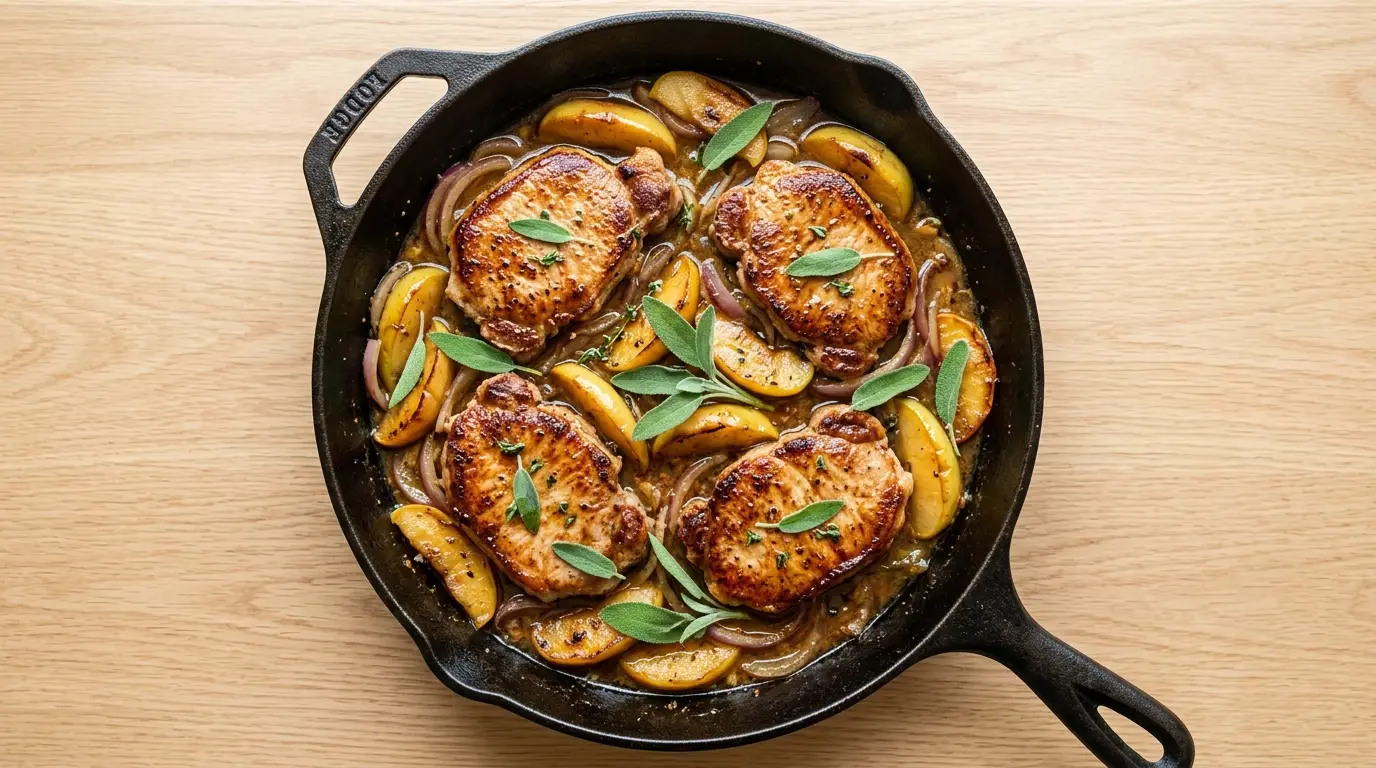
Pork and Apple Skillet
Ingredients
- 4 boneless pork chops - about 1 inch (2.5 cm) thick, roughly 6 oz (170 g) each
- 1 teaspoon kosher salt
- 1/2 teaspoon black pepper
- 1 teaspoon dried thyme - or 1 tablespoon fresh thyme leaves
- 2 tablespoons extra virgin olive oil - 30 ml
- 2 large firm apples - such as Honeycrisp, Gala, or Fuji, cored and sliced into 1/2-inch (1.25 cm) wedges
- 1 large yellow onion - halved and thinly sliced
- 2 tablespoons unsalted butter - 28 g
- 3 cloves garlic - minced
- 1 tablespoon fresh sage - chopped, or 1 teaspoon dried
- 3/4 cup apple cider - 180 ml
- 1/2 cup chicken broth - 120 ml
- 1 tablespoon Dijon mustard - 15 ml
- 1 tablespoon pure maple syrup - 15 ml
- 1 tablespoon apple cider vinegar - 15 ml
- 1 teaspoon cornstarch - mixed with 1 tablespoon (15 ml) cold water, optional for a thicker sauce
Equipment
- Large heavy cast iron skillet or stainless steel pan - at least 12 inches (30 cm)
- Instant-read meat thermometer - for checking pork doneness
- Kitchen tongs - for turning the chops
- Sharp chef’s knife - for the apples and onion
- Wooden spoon - for scraping up the browned bits
- Plate and foil - for resting the pork
Method
- Pat the pork chops completely dry on both sides with paper towels. Season each chop all over with the kosher salt, black pepper, and dried thyme.
- Let the seasoned chops sit at room temperature for about 15 minutes while you slice the apples and onion.
- Core the apples and slice them into 1/2-inch (1.25 cm) wedges, leaving the skin on. Halve the onion and slice it thinly into half-moons. Mince the garlic and chop the sage.
- Heat the olive oil in your large skillet over medium-high heat until it shimmers. Add the chops and sear without moving them for 3 to 4 minutes, until a deep golden crust forms.
- Flip once with tongs and sear the second side for another 3 minutes. Transfer the chops to a plate and tent loosely with foil; the pork will not be fully cooked yet.
- Lower the heat to medium and add the butter to the same skillet. Add the sliced onion and cook for 4 to 5 minutes, stirring often, until it softens and turns golden.
- Add the apple wedges and cook for another 4 minutes, until they start to caramelize at the edges but still hold their shape. Stir in the minced garlic and sage and cook for 30 seconds, just until fragrant.
- Pour in the apple cider and chicken broth, scraping the bottom of the pan with a wooden spoon to lift all the browned bits. Stir in the Dijon mustard, maple syrup, and apple cider vinegar.
- Bring the sauce to a gentle simmer and let it cook for 2 to 3 minutes to blend the flavors. If you want a thicker sauce, stir in the cornstarch slurry now and simmer for another minute until it coats the back of a spoon.
- Nestle the seared chops back into the skillet, spooning some apples and sauce over the top. Simmer gently for 4 to 6 minutes, until the pork reaches 145°F (63°C) on an instant-read thermometer.
- Turn off the heat and let everything rest in the pan for 3 minutes so the juices settle. Spoon the apples and sauce generously over each chop and serve warm.
Nutrition
Notes
- Dry the pork thoroughly with paper towels before seasoning; any surface moisture steams the meat and blocks a good crust.
- Do not overcrowd the pan. If your skillet is small, sear the chops in two batches so they brown instead of stewing.
- Pull the pork at 145°F (63°C) using an instant-read thermometer to keep the chops juicy and tender.
- Choose firm apples like Honeycrisp, Fuji, or Gala; softer varieties turn to mush by the time the sauce reduces.
- Slice apples into even half-inch wedges so they cook at the same rate and hold their shape.
- Deglaze properly by scraping up the browned bits the moment the cider hits the skillet for maximum flavor.
- Balance at the end with a final splash of apple cider vinegar to cut the richness instead of adding more salt.
- Store leftovers in an airtight container in the refrigerator for up to 3 days, keeping the pork and apples together so the meat stays moist.
- Freeze cooked pork and sauce in a freezer-safe container for up to 2 months; thaw overnight in the refrigerator before reheating.
- Reheat gently on the stove in a covered skillet over medium-low heat with a splash of broth or cider, or in the oven covered at 325°F (160°C) for about 15 minutes.
Private Notes
Tried this recipe?
Let us know how it was!Final Thoughts
This pork and apple skillet is proof that a memorable fall dinner does not need a long ingredient list or a sink full of pans. One skillet, a couple of apples, and forty minutes get you juicy pork in a glossy cider sauce.
It is the kind of meal that feels special enough for guests but simple enough for a Tuesday. Once you make it, the method sticks with you for the whole apple season.
Give it a try the next time the weather turns and you have a few apples to use up. If you make it, leave a comment below to let me know how it turned out, and share it with someone who loves a cozy one-pan dinner.
Recommended:
- Apple Pie Recipe
- Roasted Butternut Squash Soup Recipe
- Stuffed Acorn Squash Recipe
- Healthy Mashed Potatoes Recipe
- Roasted Potatoes Recipe
- Mashed Sweet Potato Recipe
- Easy Healthy Dinner Recipes for Family
- Crockpot Fall Recipes
- Homemade Sausage Seasoning Recipe