This French toast recipe gives you golden slices with crisp edges and a soft, custardy middle. It comes from one good loaf and a well-balanced egg custard.
Most versions turn out soggy because the bread soaks too long. A quick dip and steady medium heat keep the center set, not wet.
Day-old bread does more here than any special ingredient. Drier bread drinks up the custard, while fresh brioche slides around and leaves the inside raw.
Start to finish, it runs about 25 minutes and feeds four. You need four eggs, one cup of milk, and eight thick slices of bread.
| Quick Recipe Summary | |
|---|---|
| Prep Time | 10 minutes |
| Cook Time | 15 minutes |
| Total Time | 25 minutes |
| Servings | 4 servings (8 slices) |
| Difficulty Level | Easy |
For a hands-off version that skips the stovetop, see Air Fryer French Toast.

Why You’ll Love This French Toast Recipe
This is the kind of breakfast you can pull together on a slow Saturday or a rushed Tuesday without changing a thing. It uses ingredients most kitchens already have, and it scales up or down in minutes.
Here is what makes it worth keeping on hand:
- It comes together in about 25 minutes. Ten minutes of prep, fifteen at the stove, and breakfast is on the table.
- The texture is right. Crisp, caramelized edges give way to a soft, set center with no raw or eggy middle.
- It uses pantry staples. Eggs, milk, sugar, vanilla, and cinnamon do the heavy lifting, plus one loaf of good bread.
- It fixes the two usual failures. A short dip stops sogginess, and medium heat stops a wet interior.
- It welcomes swaps. Brioche, challah, Texas toast, or thick white bread all work, and dairy-free milk slots in easily.
- It feeds a group. Eight slices serve four, and the custard doubles cleanly for a bigger batch.
- It reheats well. Leftovers crisp back up in a toaster or oven instead of going limp.
You might also enjoy: Creme Brulee French Toast
Ingredients
Each item earns its place in the custard or on the plate. Measurements are given in both imperial and metric so the recipe works wherever you are cooking.
- 8 thick slices of bread (about 3/4 inch / 2 cm thick), slightly stale: brioche bread or challah bread give the richest result. I’ve found day-old brioche holds the custard far better than a fresh loaf, which goes limp before it hits the pan.
- 4 large eggs: the base of the custard and the reason the slices set up firm.
- 1 cup (240 ml) whole milk: full-fat gives the creamiest custard, though any milk works.
- 2 tablespoons (25 g) granulated sugar: just enough sweetness to help the edges caramelize.
- 1 teaspoon pure vanilla extract: rounds out the custard with warm, floral depth.
- 1 teaspoon ground cinnamon: the classic warm spice for French toast.
- 1/4 teaspoon ground nutmeg, optional: a small lift that makes the flavor harder to pin down.
- 1/8 teaspoon salt: sharpens every other flavor in the custard.
- 2 tablespoons (28 g) unsalted butter, plus more as needed: for cooking, and for that nutty browned flavor on the crust.
For serving:
- Pure maple syrup: the traditional finish, poured generously.
- Powdered sugar: a light dusting for looks and a touch more sweetness.
- Fresh berries, optional: strawberries, blueberries, or raspberries add color and a tart contrast.
Read Also: Pumpkin French Toast
Kitchen Equipment Needed
Nothing here is specialized, and most of it is already in a standard kitchen. A few good basics make the process smoother and the results more even.
- Large mixing bowl: for whisking the custard before transferring it.
- Balloon whisk: to blend the eggs fully so there are no streaks of white.
- Shallow baking dish or pie plate: wide and flat so a whole slice can lie down in the custard.
- Nonstick griddle or large skillet: for even browning and easy flipping.
- A spatula: thin and sturdy, to turn each slice without tearing it.
- Wire cooling rack: to rest the cooked slices so the crust stays crisp.
- Rimmed baking sheet: set the rack on this to keep finished slices warm in the oven.
- Measuring cups and spoons: for the custard ratios that keep the texture right.
A fruit-forward spin on the same custard is Peach French Toast.
Recommended Products for This Recipe
These are the tools and ingredients I reach for when I want this to come out right every time. Each one solved a specific problem in my own kitchen, so I keep them on the counter or in the pantry.
1. Lodge Cast Iron Griddle
Thin, cheap pans gave me pale, blotchy slices because the surface temperature crashed the moment cold bread landed on it. A heavy cast iron griddle holds its heat, so every slice browns evenly and you can cook three or four at once without crowding.
2. Nielsen-Massey Pure Vanilla Extract
Imitation vanilla tastes flat and slightly chemical once it hits the warm custard. A real extract comes through clearly against the eggs and cinnamon, and you only need a teaspoon, so one bottle lasts a long time.
3. OXO Fish Spatula
A thick, stiff spatula drags across the custard-soaked crust and tears the slice. The thin, flexible edge of a fish spatula slides right under each piece, so you can flip without leaving half the golden crust stuck to the pan.
4. Saigon Cinnamon
Standard supermarket cinnamon can be mild to the point of disappearing. Saigon cinnamon is bolder and sweeter, and it gives the custard a stronger warm backbone without any bitterness.
For a crisp, pocketed breakfast, try: Belgian Waffles

Step-by-Step Instructions: How to Make French Toast
Follow these simple steps and you’ll have golden French toast on the table in under half an hour.
Step 1: Whisk the Custard
- Crack the 4 large eggs into a large mixing bowl.
- Add the 1 cup (240 ml) whole milk, 2 tablespoons (25 g) granulated sugar, 1 teaspoon vanilla extract, 1 teaspoon ground cinnamon, 1/4 teaspoon ground nutmeg, and 1/8 teaspoon salt.
- Whisk hard for about 30 seconds, until the mixture is smooth and you no longer see any streaks of egg white.
- Pour the custard into a shallow baking dish or pie plate wide enough to hold a full slice of bread flat.
Step 2: Soak the Bread
- Lay one slice of bread into the custard and let it sit for about 20 seconds.
- Flip it and soak the other side for another 20 seconds, so both sides take on custard but the slice stays intact.
- Lift the slice and let the extra custard drip back into the dish for a second or two.
- I ruined my first batch by leaving the slices in the custard while I answered the door, and the centers came out like wet sponge, so keep the dip short and steady.
Step 3: Heat the Pan
- Set a nonstick griddle or large skillet over medium heat and let it warm for a minute or two.
- Add about 1/2 tablespoon of the butter and swirl it so it melts and coats the surface.
- The butter should foam gently without browning instantly, which tells you the heat is right.
Step 4: Cook Until Golden
- Place the soaked slices on the hot, buttered surface, leaving a little space between each one.
- Cook for 2 to 3 minutes, until the underside is deep golden brown.
- Flip each slice and cook the second side for another 2 to 3 minutes, until it matches.
- Wipe the pan if any butter darkens, then add fresh butter before each new batch.
Step 5: Keep Warm and Serve
- Transfer the cooked slices to a wire rack set on a baking sheet.
- Hold them in a 200°F (95°C) oven while you finish the rest, so they stay crisp instead of steaming on a plate.
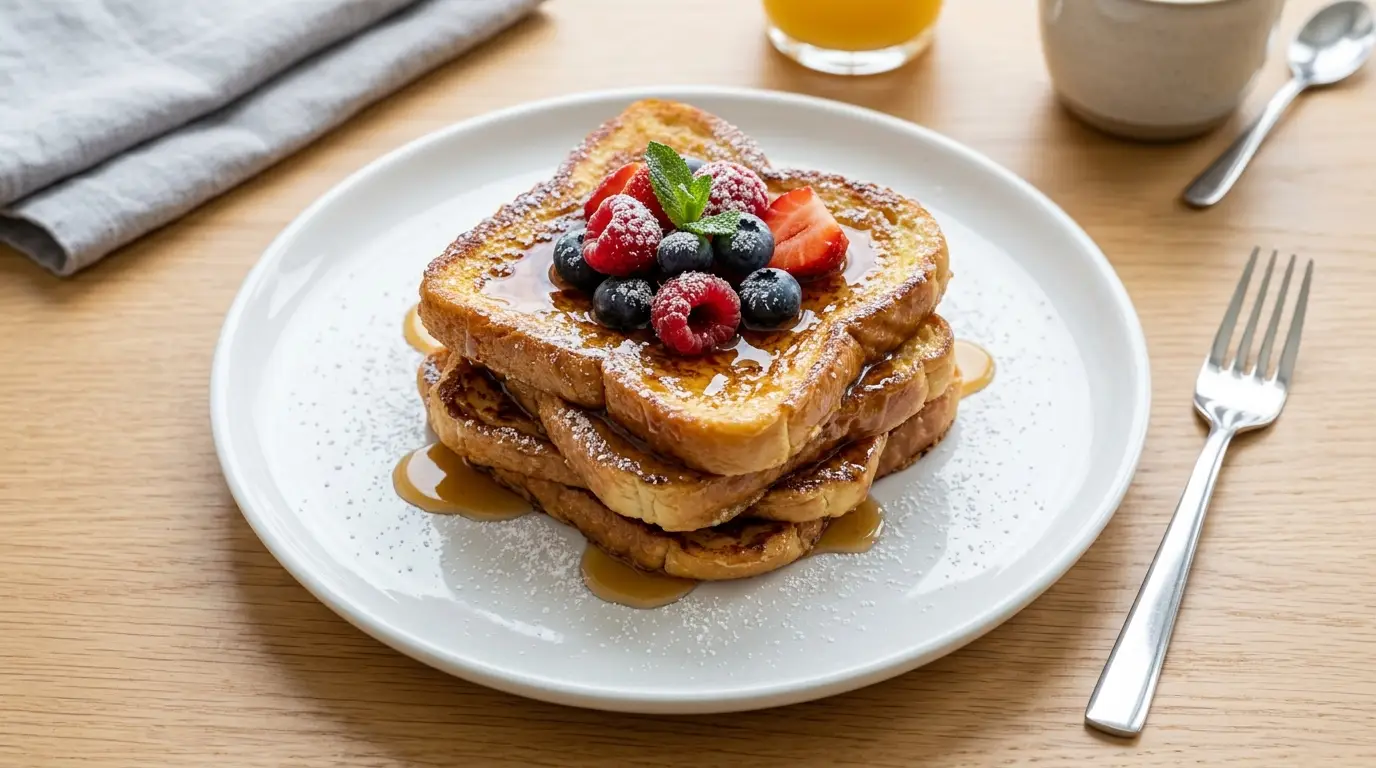
- Serve warm with pure maple syrup, a dusting of powdered sugar, and fresh berries if you like.
Another easy griddle breakfast worth keeping in rotation is Easy Pancakes.

Tips for The Best French Toast
Small habits are the difference between pale, wet slices and golden ones with a custardy center. These are the details that matter most once you have the basics down.
- Use slightly stale bread. Leave slices out uncovered for a few hours or overnight, or dry them in a low oven for 10 minutes if your bread is fresh.
- Keep the dip short. About 20 seconds per side is enough for sturdy bread, and longer soaking is the number one cause of a soggy middle.
- Cook on medium, not high. High heat browns the outside before the custard sets inside, which leaves a wet center.
- Rest slices on a wire rack. I keep the finished slices on a wire rack in a 200°F oven instead of stacking them, since stacking traps steam and softens the crust.
- Add a pinch of nutmeg. A pinch of nutmeg does more for this custard than the cinnamon does, adding a warm note people can never quite place.
- Whisk the eggs fully. Streaks of unbeaten white cook into ribbons of scrambled egg on the surface.
- Butter plus a little oil. A touch of neutral oil with the butter raises the smoke point, so you get browned flavor without burnt specks.
You might also like: Buttermilk Waffles
What to Serve with French Toast
French toast is the center of the plate, so the best companions balance its sweetness with something savory, fresh, or warm. A few sides turn it from a quick breakfast into a full brunch spread.
- Crispy bacon or breakfast sausage: the salty, savory contrast is the classic match for sweet, custardy toast.
- Scrambled Eggs with Cheese: soft, cheesy eggs round out the plate with protein.
- Breakfast Potatoes: crispy, seasoned potatoes add a savory, hearty side.
- Fresh berries and sliced fruit: bright acidity cuts through the richness of the custard.
- Strawberry Sauce: a glossy fruit topping to spoon over each slice.
- Honey Butter: melts into the warm crust and adds gentle floral sweetness.
- Caramel Sauce: a drizzle for anyone who wants to lean into dessert territory.
- Hot Chocolate: a rich, warm drink for a cozy weekend breakfast.
- Pumpkin Spice Latte: a spiced coffee that echoes the cinnamon in the toast.
Read Also: Homemade Biscuits
Variations of French Toast
Once the method is second nature, the custard and the bread are easy to change up. Each of these keeps the same simple technique while shifting the flavor.
- Cinnamon sugar French toast: press cooked slices into a mix of cinnamon and sugar for a crunchy, churro-like coat.
- Stuffed French toast: sandwich cream cheese and jam between two slices before dipping and cooking.
- Vanilla bean version: swap the extract for the seeds of half a vanilla bean for deeper flavor.
- Dairy-free French toast: use oat, almond, or coconut milk in place of dairy, with results nearly identical in texture.
- Eggnog French toast: replace the milk and spices with eggnog during the holidays.
- Orange zest French toast: whisk a teaspoon of fresh orange zest into the custard for a bright, citrus lift.
- Savory French toast: drop the sugar and cinnamon, add black pepper and a little grated cheese, and top with a fried egg.
For a make-ahead option that feeds a crowd, see Creme Brulee French Toast Casserole.
Storage and Reheating
French toast keeps well, which makes it a smart choice for batch cooking on a quiet morning. Store it properly and it reheats to nearly fresh.
- Refrigerator: cool the slices completely, then store in an airtight container for up to 4 days.
- Freezer: freeze slices in a single layer on a tray, then transfer to a freezer bag for up to 2 months.
- Reheat in a toaster: the fastest way to bring back crisp edges on refrigerated or frozen slices.
- Reheat in the oven: spread slices on a baking sheet at 350°F (175°C) for 8 to 10 minutes.
- Reheat in a skillet: warm over medium heat with a little butter for a freshly cooked texture.
- Skip the microwave: it warms the slices but leaves them soft and limp instead of crisp.
- Make-ahead note: you can whisk the custard the night before and keep it covered in the fridge, then dip and cook in the morning.
For a no-cook morning option: Overnight Oats
Nutritional Facts
Values are approximate and based on two slices per serving, made with whole milk and cooked in butter. Toppings such as syrup and powdered sugar are not included.
| Nutrient | Amount per Serving |
|---|---|
| Calories | 340 kcal |
| Total Fat | 14 g |
| Saturated Fat | 7 g |
| Cholesterol | 160 mg |
| Sodium | 380 mg |
| Total Carbohydrates | 40 g |
| Sugars | 12 g |
| Protein | 13 g |
| Calcium | 120 mg |
| Iron | 2.5 mg |
A warm, spoonable breakfast in the same comfort lane is Baked Oatmeal.
Health Benefits of Key Ingredients
The everyday ingredients in French toast carry real nutritional value when you look at them one by one. Here is what the main components bring to the plate.
- Eggs: a complete protein source with all nine essential amino acids, plus choline for brain and liver function.
- Milk: supplies calcium and vitamin D for bone health, along with extra protein in the custard.
- Whole grain or enriched bread: provides carbohydrates for energy, and whole grain versions add fiber.
- Cinnamon: contains antioxidant compounds and may help support steady blood sugar.
- Nutmeg: adds small amounts of antioxidants and warming aromatic compounds.
- Vanilla: contributes antioxidant compounds along with its flavor.
- Fresh berries, when served: rich in vitamin C, fiber, and plant antioxidants that balance the meal.
Read Also: Air Fryer Pancakes
FAQs About French Toast
1. What is the best bread for French toast?
Sturdy, slightly sweet breads work best because they soak up custard without falling apart. Brioche and challah are the top choices, though Texas toast and thick-cut white bread also work well.
Thin sandwich bread is the one to avoid. It lacks the structure to hold the custard and turns to mush.
2. Why is my French toast soggy?
The most common cause is soaking the bread too long, which floods the center with custard. A dip of about 20 seconds per side is usually enough.
The second cause is heat that is too low. Cooking on steady medium heat lets the custard set while the outside browns.
3. Why does my French toast taste eggy?
An eggy flavor usually means the custard has too many eggs for the amount of milk. This recipe uses four eggs to one cup of milk, which sets firmly without tasting like an omelet.
Whisking the eggs thoroughly also helps. Fully blended custard cooks evenly instead of leaving cooked egg on the surface.
4. Can I use stale bread for French toast?
Stale bread is actually preferred, not a compromise. Drier bread absorbs the custard more fully and holds its shape better than a fresh loaf.
If your bread is fresh, you can dry it out. Leave slices uncovered overnight or warm them in a low oven for about 10 minutes.
5. Can I make French toast ahead of time?
Yes, and it stores well. Cooked slices keep in the fridge for up to 4 days or in the freezer for up to 2 months.
Reheat in a toaster or oven rather than a microwave. Dry heat brings the crisp edges back, while the microwave leaves them soft.
6. Can I make French toast without dairy?
You can swap the milk for a plant-based version with almost no change in texture. Oat, almond, and coconut milk all work well in the custard.
Full-fat plant milks give the creamiest result. The eggs still do the work of setting the slices as they cook.
You might also enjoy: Waffles
French Toast
Ingredients
- 8 slices bread - about 3/4 inch / 2 cm thick, slightly stale; brioche or challah give the richest result
- 4 large eggs - the base of the custard
- 1 cup whole milk - 240 ml; full-fat gives the creamiest custard, though any milk works
- 2 tablespoons granulated sugar - 25 g; just enough sweetness to help the edges caramelize
- 1 teaspoon pure vanilla extract - rounds out the custard with warm, floral depth
- 1 teaspoon ground cinnamon - the classic warm spice for French toast
- 1/4 teaspoon ground nutmeg - optional; a small lift that makes the flavor harder to pin down
- 1/8 teaspoon salt - sharpens every other flavor in the custard
- 2 tablespoons unsalted butter - 28 g, plus more as needed; for cooking and nutty browned flavor
- pure maple syrup - the traditional finish, poured generously
- powdered sugar - a light dusting for looks and a touch more sweetness
- fresh berries - optional; strawberries, blueberries, or raspberries add color and a tart contrast
Equipment
- Large mixing bowl - For whisking the custard
- Balloon whisk - To blend the eggs fully
- Shallow baking dish or pie plate - Wide and flat so a whole slice can lie down
- Nonstick griddle or large skillet - For even browning
- Spatula - Thin and sturdy, to turn each slice without tearing
- Wire cooling rack - To rest the cooked slices so the crust stays crisp
- Rimmed baking sheet - Set the rack on this to keep finished slices warm in the oven
- Measuring cups and spoons - For the custard ratios
Method
- Crack the eggs into a large mixing bowl. Add the milk, sugar, vanilla extract, cinnamon, nutmeg, and salt. Whisk hard for about 30 seconds, until smooth with no streaks of egg white. Pour the custard into a shallow baking dish or pie plate wide enough to hold a full slice of bread flat.
- Lay one slice of bread into the custard and let it sit for about 20 seconds. Flip it and soak the other side for another 20 seconds. Lift the slice and let the extra custard drip back into the dish for a second or two.
- Set a nonstick griddle or large skillet over medium heat and let it warm for a minute or two. Add about 1/2 tablespoon of butter and swirl it so it melts and coats the surface. The butter should foam gently without browning instantly.
- Place the soaked slices on the hot, buttered surface, leaving a little space between each one. Cook for 2 to 3 minutes, until the underside is deep golden brown. Flip each slice and cook the second side for another 2 to 3 minutes, until it matches. Wipe the pan if any butter darkens, then add fresh butter before each new batch.
- Transfer the cooked slices to a wire rack set on a baking sheet. Hold them in a 200°F (95°C) oven while you finish the rest, so they stay crisp instead of steaming on a plate. Serve warm with pure maple syrup, a dusting of powdered sugar, and fresh berries if you like.
Nutrition
Notes
- Use slightly stale bread. Leave slices out uncovered for a few hours or overnight, or dry them in a low oven for 10 minutes if your bread is fresh.
- Keep the dip short. About 20 seconds per side is enough for sturdy bread, and longer soaking is the number one cause of a soggy middle.
- Cook on medium, not high. High heat browns the outside before the custard sets inside, which leaves a wet center.
- Rest slices on a wire rack. Keep finished slices on a wire rack in a 200°F oven instead of stacking them, since stacking traps steam and softens the crust.
- Add a pinch of nutmeg. A pinch of nutmeg does more for this custard than the cinnamon does, adding a warm note people can never quite place.
- Whisk the eggs fully. Streaks of unbeaten white cook into ribbons of scrambled egg on the surface.
- Butter plus a little oil. A touch of neutral oil with the butter raises the smoke point, so you get browned flavor without burnt specks.
- Storage: Cool slices completely, then store in an airtight container in the refrigerator for up to 4 days. Freeze in a single layer on a tray, then transfer to a freezer bag for up to 2 months.
- Reheating: Reheat in a toaster for the fastest crisp edges, or in the oven at 350°F (175°C) for 8 to 10 minutes. Skip the microwave, which leaves them soft and limp.
- Make-ahead: Whisk the custard the night before and keep it covered in the fridge, then dip and cook in the morning.
Private Notes
Tried this recipe?
Let us know how it was!Final Thoughts
Good French toast is less about a secret ingredient and more about a few small choices. Stale bread, a short dip, and steady medium heat carry you to golden, custardy slices every time.
Keep this one in your back pocket for slow weekends and busy mornings alike. It rewards you far beyond the ten minutes of real effort it asks for.
Give it a try this week and make it your own with your favorite bread and toppings. If you do, leave a comment to share how it turned out, and pass the recipe along to someone who loves breakfast.
Recommended:
- Apple Cinnamon Bread
- Easy Banana Bread
- Avocado Toast
- Breakfast Burrito
- Biscuits and Gravy
- Sausage Gravy
- Hashbrown Casserole
- Homemade Cinnamon Applesauce
- Air Fryer Cheddar Hash Browns
- Apple Crisp