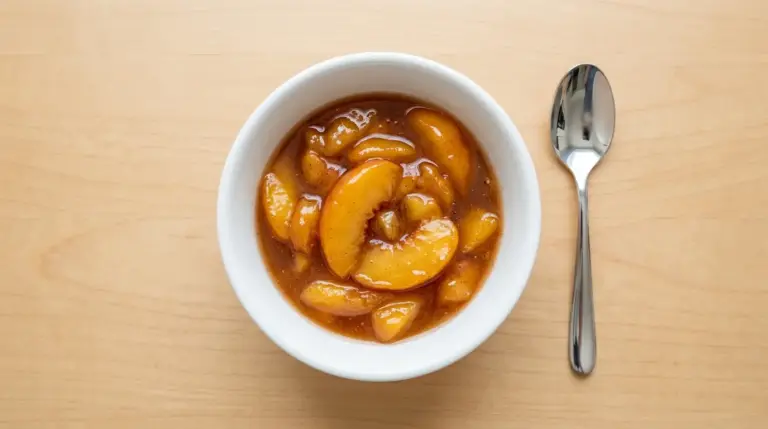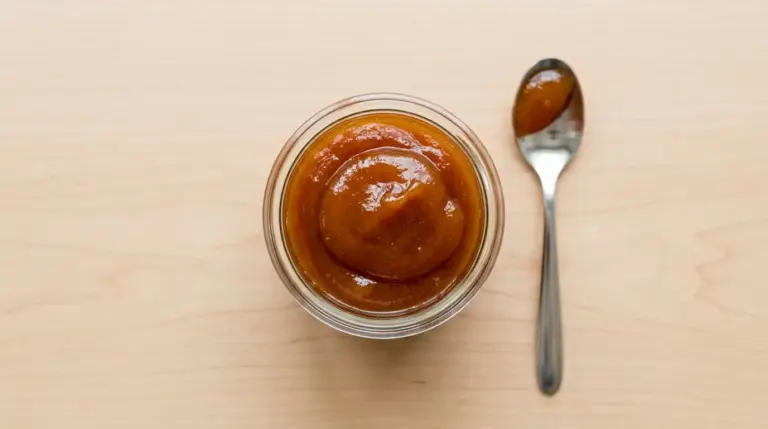
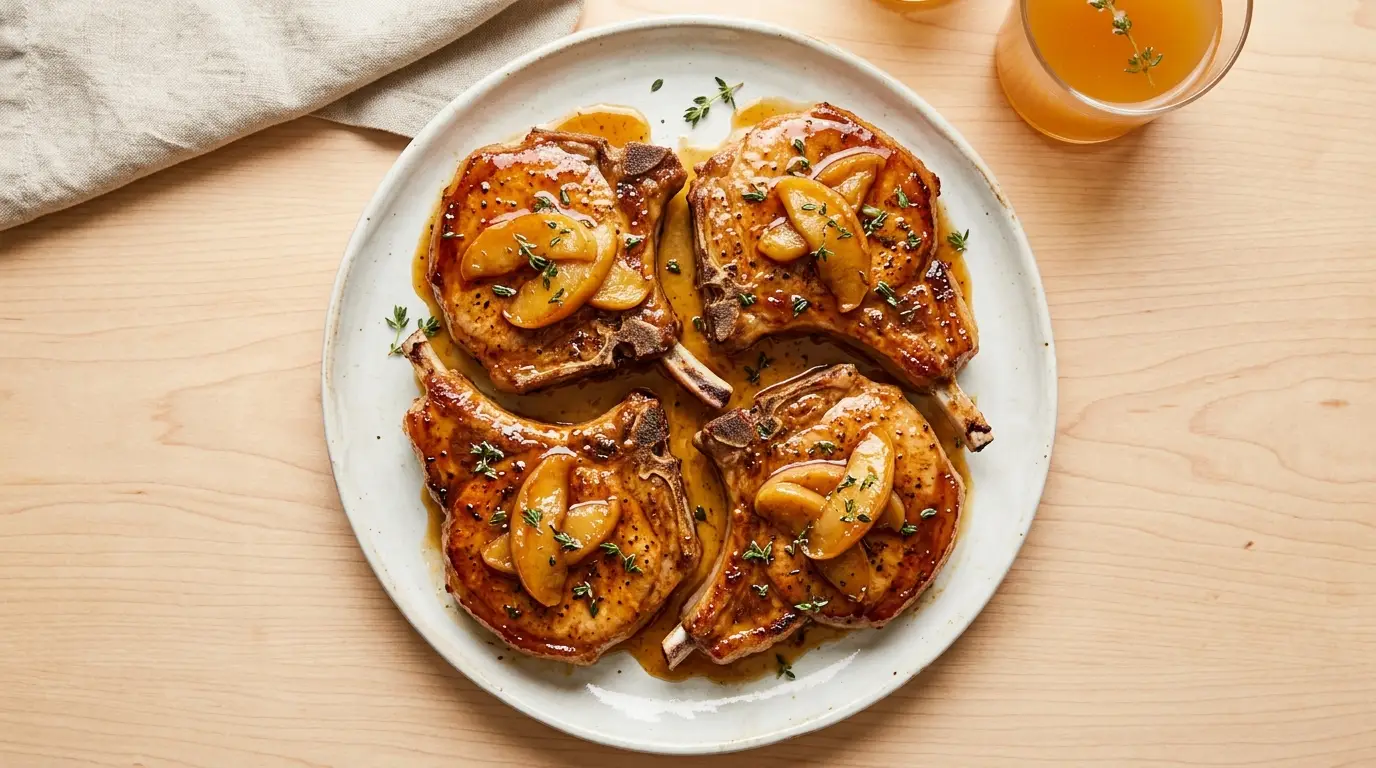
Thick, center-cut chops get a fast sear, then finish in a glossy reduction of apple cider, cider vinegar, and Dijon that turns syrupy without a speck of flour or cornstarch. This apple cider glazed pork chops recipe leans on the natural sugars in the cider to build that sticky coating, so every bite tastes bright and savory at once.
The most common way this dish goes wrong is overcooked, dry pork, a holdover from the old habit of cooking chops to 160°F. Pull them at 145°F with a short rest and they stay juicy and just barely blush-pink in the center.
Five core ingredients carry the glaze, and the whole thing lands on the table in about 30 minutes. Thin apple slices soften right in the pan, adding little pockets of fruit that catch the sauce.
| Quick Recipe Summary | |
|---|---|
| Prep Time | 10 minutes |
| Cook Time | 20 minutes |
| Total Time | 30 minutes |
| Servings | 4 pork chops |
| Difficulty Level | Easy |
For a different fall main that leans on the same sweet-savory pairing, see Pork and Apple Skillet.

Why You’ll Love This Apple Cider Glazed Pork Chops Recipe
This is a one-skillet dinner that looks like you fussed over it but really came together in half an hour. The glaze does most of the heavy lifting, reducing on its own into something glossy and restaurant-worthy.
Here is what makes it worth keeping in rotation:
- One pan, start to finish. The chops sear and the glaze reduces in the same skillet, so cleanup is minimal and every brown bit from searing ends up in the sauce.
- No thickener needed. The apple cider reduces down to a natural syrup on its own, which means no lumpy cornstarch slurry and no floury aftertaste.
- Ready in about 30 minutes. From patting the chops dry to spooning glaze over the top, this fits a busy weeknight without cutting corners.
- Sweet meets savory. Dijon and cider vinegar keep the maple and apple from tipping into dessert territory, so the flavor stays balanced.
- Naturally gluten-friendly. With no flour dredge in this version, the recipe works as written for anyone avoiding gluten.
- Flexible with what you have. Apple juice stands in for cider, and honey swaps for maple syrup without throwing off the balance.
You might also enjoy: Maple Glazed Carrots
Ingredients
Everything here is easy to find, and most of it likely already lives in your pantry. Use fresh apple cider if it is in season, since it carries more depth than bottled juice, though either works.
- 4 boneless center-cut pork chops (about 6 oz / 170 g each, 1 inch / 2.5 cm thick)
- 1 teaspoon kosher salt, plus more to taste
- ½ teaspoon black pepper, freshly ground
- 1 tablespoon olive oil
- 1 tablespoon unsalted butter
- 1 cup (240 ml) apple cider (not hard cider)
- 2 tablespoons apple cider vinegar
- 2 tablespoons pure maple syrup
- 1 tablespoon Dijon mustard
- 2 cloves garlic, minced
- 1 large apple (Honeycrisp or Gala), cored and thinly sliced
- 2 sprigs fresh thyme (optional)
Read Also: Homemade Cinnamon Applesauce
Kitchen Equipment Needed
You do not need anything specialized here, but a heavy skillet makes a real difference for even browning. A thin pan will scorch the glaze before the chops brown.
- A large heavy skillet (cast iron or stainless steel), 12 inch / 30 cm
- Instant-read meat thermometer for checking doneness
- Tongs for turning the chops
- A whisk for combining the glaze
- Cutting board and a sharp knife
- Measuring cups and spoons
- A plate and foil for resting the chops
For a related one-skillet main worth bookmarking, try Chicken Caprese Skillet.
Recommended Products for This Recipe
These are the tools and ingredients I reach for whenever I make this dish. Each one solves a specific problem I ran into while testing, and they genuinely make the results more reliable.
1. Instant-Read Meat Thermometer
Pork chops go from juicy to dry in the span of about ten degrees, so guessing by eye almost always leads to overcooking. A fast digital thermometer lets you pull the chops at exactly 145°F, which is the single biggest factor in whether they turn out tender.
2. Enameled Cast Iron Skillet
A thin pan cooks the glaze unevenly and can burn the sugars before the chops develop color. A heavy enameled skillet holds steady heat, so the sear is even and the cider reduces into a smooth syrup instead of scorching in hot spots.
3. Pure Maple Syrup
Pancake syrup made with corn syrup tastes flat and one-note in this glaze. Real maple syrup adds a rounder caramel depth that plays off the tart cider vinegar, and a little goes a long way.
4. Dijon Mustard
Skip the yellow mustard here. Dijon brings a sharper, wine-like tang that cuts the sweetness of the cider and keeps the glaze from tasting like dessert.
5. Stainless Steel Tongs
Flipping chops with a fork pierces the meat and lets juices escape. A sturdy pair of tongs gives you control for searing and for turning the chops in the glaze at the end without tearing them.
A related recipe worth a look is Poached Pear.

Step-by-Step Instructions: How to Make Apple Cider Glazed Pork Chops
Follow these steps and you’ll have tender, glazed chops on the table in about half an hour.
Step 1: Season and Prep the Chops
- Pat the pork chops completely dry on both sides with paper towels. Dry meat browns far better than damp meat.
- Season both sides evenly with the kosher salt and black pepper.
- Let the chops sit at room temperature for about 10 minutes while you measure the glaze ingredients. This helps them cook more evenly.
Step 2: Mix the Glaze Base
- In a measuring cup or small bowl, whisk together the apple cider, apple cider vinegar, maple syrup, and Dijon mustard until smooth.
- Set the mixture aside within arm’s reach of the stove. The glaze comes together fast once the pan is hot, so you want it ready to pour.
Step 3: Sear the Pork Chops
- Place the skillet over medium-high heat and add the olive oil and butter.
- Once the butter stops foaming, lay the chops in the pan without crowding them. Work in two batches if your pan is small.
- Sear undisturbed for 3 to 4 minutes until a deep golden crust forms, then flip.
- Cook the second side another 3 to 4 minutes, until the internal temperature reaches 145°F (63°C) on an instant-read thermometer.
- Transfer the chops to a plate and tent loosely with foil. They will rest while you build the glaze.
Step 4: Build the Glaze
- Lower the heat to medium and add the minced garlic to the same skillet. Stir for about 30 seconds until fragrant, being careful not to let it burn.
- Pour in the cider mixture, whisking and scraping the bottom of the pan to lift all the browned bits into the sauce.
- Add the sliced apple and the thyme sprigs if using.
Step 5: Reduce Until Syrupy
- Bring the glaze to a boil, then let it bubble rapidly for 6 to 8 minutes.
- Stir occasionally until the liquid reduces by more than half and coats the back of a spoon like a loose syrup.
- The apple slices should be soft and glossy by this point. Taste and adjust with a pinch of salt and pepper.
Step 6: Coat and Serve
- Remove the thyme sprigs. Return the rested chops to the skillet along with any juices that pooled on the plate.
- Turn each chop to coat it in the glaze, spooning the apples and sauce over the top.
- Serve right away while the glaze is warm and glossy.
For another cozy skillet dinner in this style, check out Filet Mignon.

Tips for The Best Apple Cider Glazed Pork Chops
Small details make the gap between a good chop and a great one. The two that matter most are drying the meat before searing and watching the temperature closely at the end.
- Dry the chops thoroughly. Surface moisture steams the meat instead of searing it, so paper towels are not optional if you want a real crust.
- Do not skip the thermometer. I ruined my first batch of these by eyeballing doneness and pulling them late, which left the chops chewy. Pulling at 145°F fixed it completely.
- Let them rest. A three-minute rest lets the juices redistribute and carryover heat finish the cooking safely.
- Choose a firm apple. I’ve found Honeycrisp holds its shape in the glaze far better than a softer McIntosh, which turns to mush by the time the sauce reduces.
- Reduce with patience. If the glaze looks thin, keep it boiling another minute or two. It thickens more as it cools, so stop just before it looks perfect.
- Deglaze fully. Those browned bits stuck to the pan after searing are pure flavor, so scrape every one of them into the cider.
- Watch the garlic. Thirty seconds is enough. Burnt garlic turns the whole glaze bitter.
For a lighter option, try: Grilled Lemon Herb Chicken
What to Serve with Apple Cider Glazed Pork Chops
These chops want sides that soak up the extra glaze or balance its sweetness with something earthy or green. I keep a batch of mashed potatoes going specifically because the leftover sauce is too good to waste on the plate.
- Creamy mashed potatoes. A pillowy pile catches every drop of glaze. Try Mashed Potatoes.
- Roasted vegetables. Caramelized edges echo the sweetness of the cider. A tray of Roasted Brussels Sprouts with Bacon works beautifully.
- Glazed carrots. Their natural sugar plays right into the fall flavors of Maple Glazed Carrots.
- A crisp green salad. Something sharp and acidic cuts the richness.
- Warm dinner rolls. Perfect for mopping up glaze. Bake a batch of Dinner Rolls.
- Creamy soup starter. A small bowl of Roasted Butternut Squash Soup sets a cozy autumn table.
- Sautéed greens. Bitter greens like kale or chard balance the sweet glaze.
- A glass of cold cider or a dry white wine to tie the meal together.
Read Also: Scalloped Potatoes
Variations of Apple Cider Glazed Pork Chops
Once you have the base technique down, the glaze takes well to small tweaks. These are easy ways to change the character of the dish without starting over.
- Bone-in chops. Swap in bone-in chops for extra flavor, adding a couple of minutes to the cook time since the bone slows heat.
- Add a flour dredge. For a thicker crust that grips more glaze, dust the seasoned chops in flour before searing. Note this makes the dish no longer gluten-free.
- Spice it up. A pinch of crushed red pepper flakes in the glaze adds gentle heat against the sweetness.
- Herb swap. Fresh sage or rosemary in place of thyme leans the dish more toward Thanksgiving flavors.
- Onion and apple. Add thin-sliced onion with the apples for a more savory, jammy sauce.
- Honey version. Replace maple syrup with honey for a floral sweetness.
- Extra tang. Stir in a splash more cider vinegar at the end if you like a sharper glaze.
You might also enjoy: Poached Pear is already linked above, so for something new here try Stuffed Acorn Squash
Storage and Reheating
Leftover chops keep well and the glaze reheats without breaking, which makes this a solid candidate for next-day lunches. Store the chops and glaze together so the meat stays moist.
- Refrigerate: Cool completely, then store in an airtight container for up to 3 days.
- Freeze: Wrap chops individually and freeze for up to 2 months. Thaw overnight in the fridge before reheating.
- Reheat on the stove: Warm gently in a covered skillet over low heat with a splash of cider or water to loosen the glaze.
- Reheat in the microwave: Use short 30-second bursts at reduced power to avoid toughening the meat.
- Make-ahead glaze: The cider glaze can be made up to 2 days ahead and reheated, though it is best over freshly seared chops.
- Avoid high heat: Blasting leftovers on high dries the pork out fast, so keep reheating low and slow.
For a make-ahead friendly main to round out the week, see Mississippi Pot Roast.
Nutritional Facts
| Nutrition Per Serving (1 glazed pork chop) | |
|---|---|
| Calories | 360 kcal |
| Protein | 34 g |
| Carbohydrates | 18 g |
| Sugars | 14 g |
| Fat | 16 g |
| Saturated Fat | 5 g |
| Fiber | 2 g |
| Sodium | 640 mg |
Values are estimates and will shift with the exact cut and brands you use.
For another protein-forward dinner, take a look at Beef Tenderloin Steak.
Health Benefits of Key Ingredients
Beyond tasting good, several of the core ingredients bring real nutritional value to the plate. Here is what the main players contribute.
- Pork chops: A lean, complete protein rich in thiamine, a B vitamin pork carries in higher amounts than most other meats, plus selenium and zinc for immune support.
- Apples: Provide dietary fiber, especially pectin, along with vitamin C and antioxidants that support digestion and heart health.
- Apple cider vinegar: Adds acetic acid, which some studies link to steadier blood sugar response after meals.
- Garlic: Contains allicin, a compound studied for its anti-inflammatory and immune-supporting properties.
- Thyme: A source of vitamin C and manganese, and it delivers big aromatic flavor for almost no calories.
- Maple syrup: While still a sugar, it carries trace minerals like manganese and zinc that refined white sugar lacks.
For more wholesome dinner inspiration, see Pork Tenderloin with Roasted Root Vegetables.
FAQs About Apple Cider Glazed Pork Chops
1. Can I use apple juice instead of apple cider?
Yes, apple juice works in a pinch. Cider has a deeper, more complex flavor, so if you use juice, consider adding an extra splash of cider vinegar to keep the glaze from tasting flat.
2. What internal temperature should pork chops reach?
Cook them to 145°F (63°C) followed by a three-minute rest, per current USDA guidance. This leaves the center juicy and just slightly pink, which is safe and far better than the old dry 160°F standard.
3. Why did my glaze turn out too thin?
It most likely needed more time to reduce. Keep the glaze at a rapid boil until it coats the back of a spoon, and remember it thickens further as it cools.
4. Can I make this with bone-in pork chops?
Absolutely. Bone-in chops bring extra flavor and stay a touch juicier, but they need a few more minutes in the pan since the bone slows the heat transfer.
5. What kind of apple is best for this recipe?
Firm, sweet-tart apples like Honeycrisp or Gala hold their shape best in the glaze. Softer varieties tend to break down into mush before the sauce finishes reducing.
6. Is this recipe gluten-free?
As written, yes, since there is no flour dredge in this version. Always double-check that your Dijon mustard and cider are certified gluten-free if you are cooking for someone with celiac disease.
For another crowd-pleasing skillet dinner, try Marry Me Chicken Pasta.
Apple Cider Glazed Pork Chops
Ingredients
- 4 boneless center-cut pork chops - about 6 oz / 170 g each, 1 inch / 2.5 cm thick
- 1 teaspoon kosher salt - plus more to taste
- ½ teaspoon black pepper - freshly ground
- 1 tablespoon olive oil - extra virgin
- 1 tablespoon unsalted butter
- 1 cup apple cider - 240 ml, not hard cider
- 2 tablespoons apple cider vinegar
- 2 tablespoons pure maple syrup - honey can be substituted
- 1 tablespoon Dijon mustard
- 2 cloves garlic - minced
- 1 large apple - Honeycrisp or Gala, cored and thinly sliced
- 2 sprigs fresh thyme - optional
Equipment
- Large heavy skillet - 12 inch / 30 cm, cast iron or stainless steel
- Instant-read meat thermometer - for checking doneness
- Tongs - for turning the chops
- Whisk - for combining the glaze
- Cutting board - and a sharp knife
- Plate and foil - for resting the chops
Method
- Pat the pork chops completely dry on both sides with paper towels, then season evenly with the kosher salt and black pepper. Let them sit at room temperature for about 10 minutes while you measure the glaze ingredients.
- In a measuring cup or small bowl, whisk together the apple cider, apple cider vinegar, maple syrup, and Dijon mustard until smooth. Set aside within arm’s reach of the stove.
- Heat the skillet over medium-high heat and add the olive oil and butter. Once the butter stops foaming, lay the chops in the pan without crowding and sear undisturbed for 3 to 4 minutes until a deep golden crust forms, then flip and cook another 3 to 4 minutes until the internal temperature reaches 145°F (63°C). Transfer to a plate and tent loosely with foil.
- Lower the heat to medium and add the minced garlic to the same skillet, stirring for about 30 seconds until fragrant. Pour in the cider mixture, whisking and scraping the bottom of the pan to lift all the browned bits, then add the sliced apple and thyme sprigs if using.
- Bring the glaze to a boil and let it bubble rapidly for 6 to 8 minutes, stirring occasionally, until the liquid reduces by more than half and coats the back of a spoon like a loose syrup. The apple slices should be soft and glossy; taste and adjust with a pinch of salt and pepper.
- Remove the thyme sprigs, then return the rested chops to the skillet along with any juices that pooled on the plate. Turn each chop to coat in the glaze, spooning the apples and sauce over the top, and serve right away while warm and glossy.
Nutrition
Notes
- Dry the chops thoroughly. Surface moisture steams the meat instead of searing it, so paper towels are not optional if you want a real crust.
- Do not skip the thermometer. Pull the chops at 145°F (63°C); eyeballing doneness almost always leads to overcooking and chewy meat.
- Let them rest. A three-minute rest lets the juices redistribute and carryover heat finish the cooking safely.
- Choose a firm apple. Honeycrisp or Gala hold their shape in the glaze far better than softer varieties like McIntosh, which turn to mush.
- Reduce with patience. If the glaze looks thin, keep it boiling another minute or two; it thickens more as it cools, so stop just before it looks perfect.
- Deglaze fully. Those browned bits stuck to the pan after searing are pure flavor, so scrape every one of them into the cider.
- Watch the garlic. Thirty seconds is enough; burnt garlic turns the whole glaze bitter.
- Substitutions: Apple juice can stand in for cider (add an extra splash of cider vinegar), and honey can replace maple syrup. Bone-in chops work too, but need a few extra minutes of cook time.
- Storage: Refrigerate leftovers in an airtight container for up to 3 days, or freeze individually for up to 2 months. Reheat gently on the stove or in short 30-second microwave bursts at reduced power.
- Gluten-free: As written this recipe is gluten-free since there is no flour dredge, but always check that your Dijon mustard and cider are certified gluten-free if cooking for someone with celiac disease.
Private Notes
Tried this recipe?
Let us know how it was!Final Thoughts
There is a reason pork and apple have been paired for generations, and this glaze shows off exactly why. The sweet cider, sharp Dijon, and tangy vinegar wrap around a well-seared chop in a way that feels special without any real effort.
Give this one a try the next time you want a cozy dinner that comes together fast. Once you nail the 145°F pull, it will earn a permanent spot in your fall rotation.
If you make these chops, I’d love to hear how they turned out. Leave a comment below and share the recipe with anyone who needs an easy weeknight win.
Recommended:
- Butternut Squash Risotto
- Apple Crisp
- Creamy Tomato Basil Soup
- Honey Butter
- Beef Barley Soup
- Mulled Apple Cider
- Pumpkin Sage Pasta
- Carrot Ginger Soup
- Slow Cooker Chili
SE