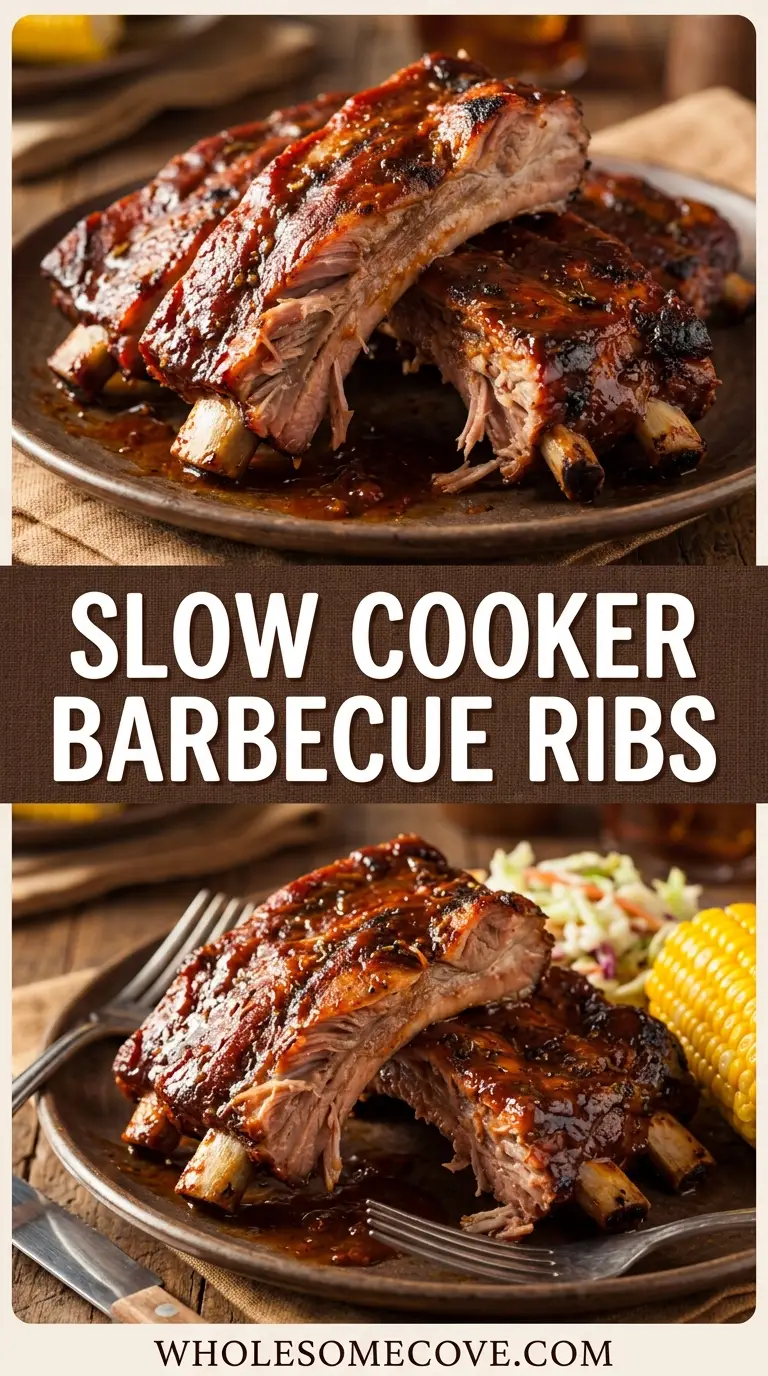
Tender, fall-off-the-bone ribs usually mean a smoker, a long afternoon, and a lot of fuss over temperature. This slow cooker barbecue ribs recipe skips all of that and still delivers the deep, sticky, smoky result most people want.
The trick is letting the collagen in pork ribs melt slowly over 7 hours on low, which is what turns tough connective tissue silky instead of chewy. Most rushed versions miss this because they crank the heat and pull the ribs before the connective tissue has a chance to break down.
A dry rub goes on first, then the ribs braise in a quick sauce mixture while you go about your day. About 15 minutes of hands-on work gives you a rack that feeds 4 to 6 people.
The one step that takes these from good to great is a short pass under the broiler at the end. That caramelizes the sauce into a lacquered, slightly charred crust the slow cooker alone can’t produce.
| Quick Recipe Summary | |
|---|---|
| Prep Time | 15 minutes |
| Cook Time | 7 hours 15 minutes |
| Total Time | 7 hours 30 minutes |
| Servings | 4 to 6 |
| Difficulty Level | Easy |
Read Also: BBQ Sauce Recipe
Why You’ll Love This Slow Cooker Barbecue Ribs Recipe
These ribs give you barbecue-joint texture without the equipment, the fire-tending, or the weather dependence. Everything happens in one appliance on your counter.
Here’s what makes this version worth saving:
- Hands-off cooking. You spend about 15 minutes seasoning and layering, then the slow cooker does the next 7 hours unattended.
- Reliable tenderness. Low, moist heat breaks down tough collagen every time, so you avoid the dry, chewy ribs that come from guessing on a grill.
- No special gear. A standard 6-quart (5.7-liter) slow cooker is all you need, with no smoker or grill required.
- Year-round cooking. You can make these in January just as easily as July since nothing depends on outdoor conditions.
- Built-in flavor layers. A dry rub seasons the meat directly while the braising sauce keeps everything moist and seasoned from the outside in.
- Crowd-friendly. One batch comfortably serves 4 to 6, and the recipe doubles well if your slow cooker is large enough.
For a similar low-and-slow approach with pork, Slow Cooker Pork Stew uses the same forgiving method.
Ingredients
The ingredient list splits into three simple groups: the ribs, a dry rub, and a quick braising sauce. Everything is pantry-friendly, and most of it you likely already have.
For the ribs:
- 2 racks pork baby back ribs, about 4 lb (1.8 kg) total, membrane removed
For the dry rub:
- 1/4 cup (50 g) brown sugar, packed
- 1 tablespoon (7 g) smoked paprika
- 2 teaspoons garlic powder
- 2 teaspoons onion powder
- 1 teaspoon chili powder
- 1 teaspoon ground cumin
- 1 1/2 teaspoons fine salt
- 1 teaspoon black pepper
For the braising sauce:
- 1 1/2 cups (360 ml) barbecue sauce, divided
- 2 tablespoons (30 ml) apple cider vinegar
- 1 tablespoon (15 ml) Worcestershire sauce
- 1 tablespoon (15 ml) yellow mustard
- 2 tablespoons (40 g) honey
- 1 teaspoon (5 ml) liquid smoke, optional
For a tangy, mayo-based sauce to serve alongside instead of a sweet tomato one, Alabama White Sauce is a southern classic.
Kitchen Equipment Needed
Nothing here is specialized. A slow cooker and a baking sheet cover almost the entire recipe.
- A 6-quart (5.7-liter) slow cooker with a lid
- A rimmed baking sheet for the broiler step
- Heavy-duty aluminum foil for lining and for building a sling
- A silicone basting brush for the final sauce coat
- A pair of sturdy kitchen tongs for lifting cooked ribs without tearing them
- An instant-read meat thermometer to confirm doneness
- A small mixing bowl for the rub and another for the sauce
- A paper towel for gripping and removing the membrane
For another set-and-forget main that uses the same slow cooker, a similar technique drives Mississippi Pot Roast.
Recommended Products for This Recipe
These are the tools I reach for because each one solved a specific problem that kept coming up while testing this recipe.
1. Crock-Pot Programmable 7-Quart Slow Cooker
A programmable model switches itself to warm once the timer ends, which matters because ribs left on high heat past the finish line dry out fast. The 7-quart (6.6-liter) size also fits two full racks laid in a curve without crowding, so the sauce coats every surface.
2. ThermoPro Instant-Read Thermometer
Ribs are done by texture, not just time, and an instant-read thermometer takes the guesswork out of it. Checking for 195°F to 203°F (90°C to 95°C) tells you the collagen has melted before you commit to the broiler step.
3. Premium Smoked Paprika
Since there’s no actual smoke in a slow cooker, the smoky note has to come from the rub. A good smoked paprika carries far more depth than the generic kind and does most of the heavy lifting on flavor.
4. OXO Silicone Basting Brush
A silicone brush lays the final sauce on in an even coat without shedding bristles into your glaze. It also wipes clean in seconds, which a natural-bristle brush never quite does with sticky barbecue sauce.
For a different slow cooker classic to rotate in on another night, try Read Also: Slow Cooker Pot Roast
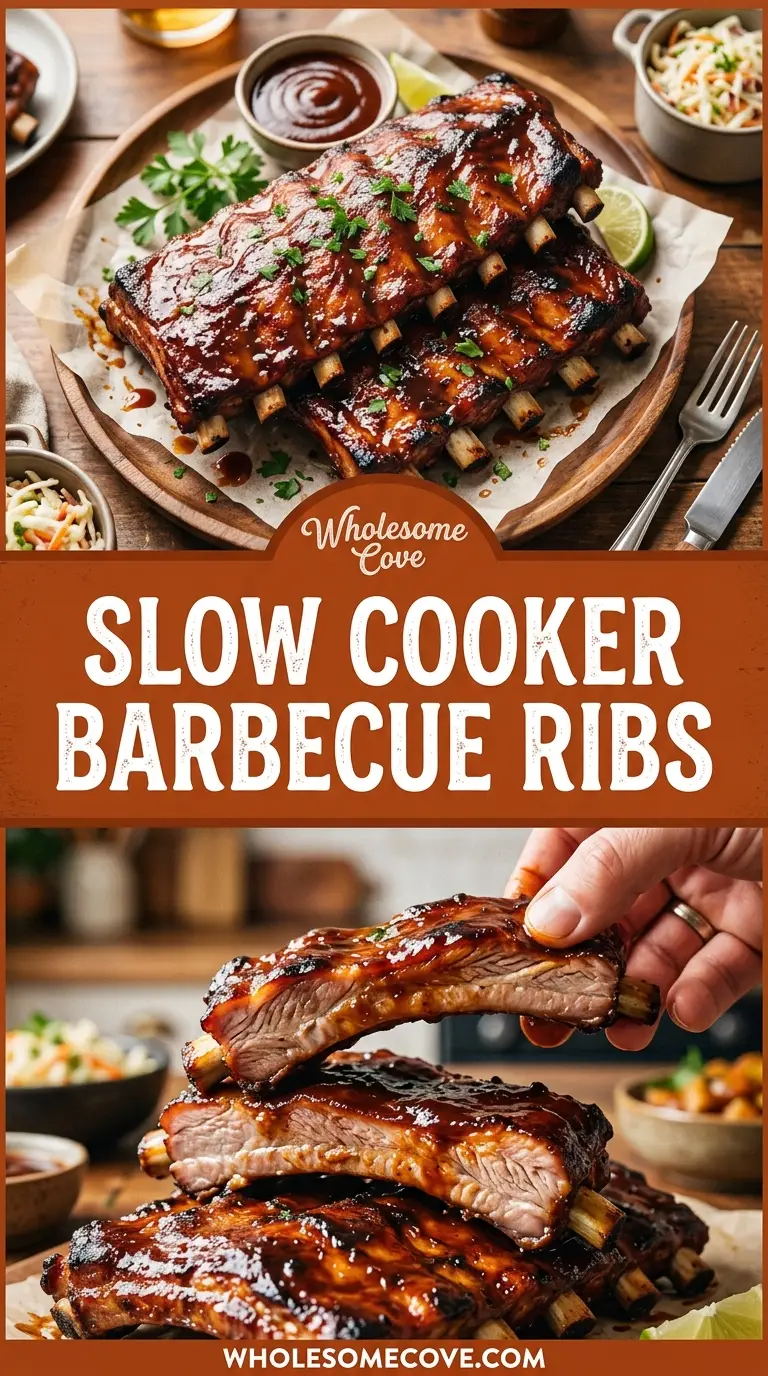
Step-by-Step Instructions: How to Make Slow Cooker Barbecue Ribs
Follow these simple steps and you’ll have fork-tender slow cooker barbecue ribs ready with almost no active effort.
Step 1: Prep the ribs
- Pat both racks dry with paper towels so the rub sticks instead of sliding off.
- Flip the ribs bone-side up to find the thin, shiny membrane running across the back.
- Slide a butter knife under one corner of the membrane, grip it with a paper towel, and peel it off in one piece. Removing it lets the seasoning and sauce reach the meat and keeps the ribs from turning rubbery.
- If the racks are too long to fit your slow cooker, cut each one in half.
Step 2: Mix and apply the dry rub
- In a small bowl, stir together the brown sugar, smoked paprika, garlic powder, onion powder, chili powder, cumin, salt, and black pepper until evenly combined.
- Rub the mixture over both sides of the ribs, pressing it into the meat so it adheres.
- Use all of the rub across both racks for full coverage.
Step 3: Make the braising sauce
- In a separate bowl, whisk together 1 cup (240 ml) of the barbecue sauce, the apple cider vinegar, Worcestershire sauce, yellow mustard, honey, and liquid smoke if using.
- Reserve the remaining 1/2 cup (120 ml) of barbecue sauce for the broiler step later.
Step 4: Layer the ribs in the slow cooker
- Line the slow cooker with a foil sling or lightly grease it for easier cleanup.
- Stand the racks on their edge and curl them around the inside wall of the slow cooker, meaty side facing out.
- Pour the braising sauce over the ribs, using a spoon or brush to coat the exposed surfaces.
Step 5: Cook low and slow
- Cover and cook on low for 7 hours, or on high for 3 1/2 to 4 hours.
- Avoid lifting the lid during cooking, since each peek releases heat and adds time.
- The ribs are ready when they are fork-tender and register 195°F to 203°F (90°C to 95°C) at the thickest point.
Step 6: Sauce and broil
- Set an oven rack about 6 inches (15 cm) below the broiler and heat the broiler to high, around 500°F (260°C).
- Carefully transfer the ribs to a foil-lined baking sheet using tongs, since they will be very tender.
- Brush the reserved 1/2 cup (120 ml) barbecue sauce over the tops.
- Broil for 3 to 5 minutes, watching closely, until the sauce bubbles and chars at the edges.
Step 7: Rest and serve
- Let the ribs rest for 5 minutes so the juices settle.
- Cut between the bones into individual ribs and serve with any extra sauce on the side.
After the ribs come out, those same braising juices inspire sandwiches like BBQ Pulled Pork Sandwiches.
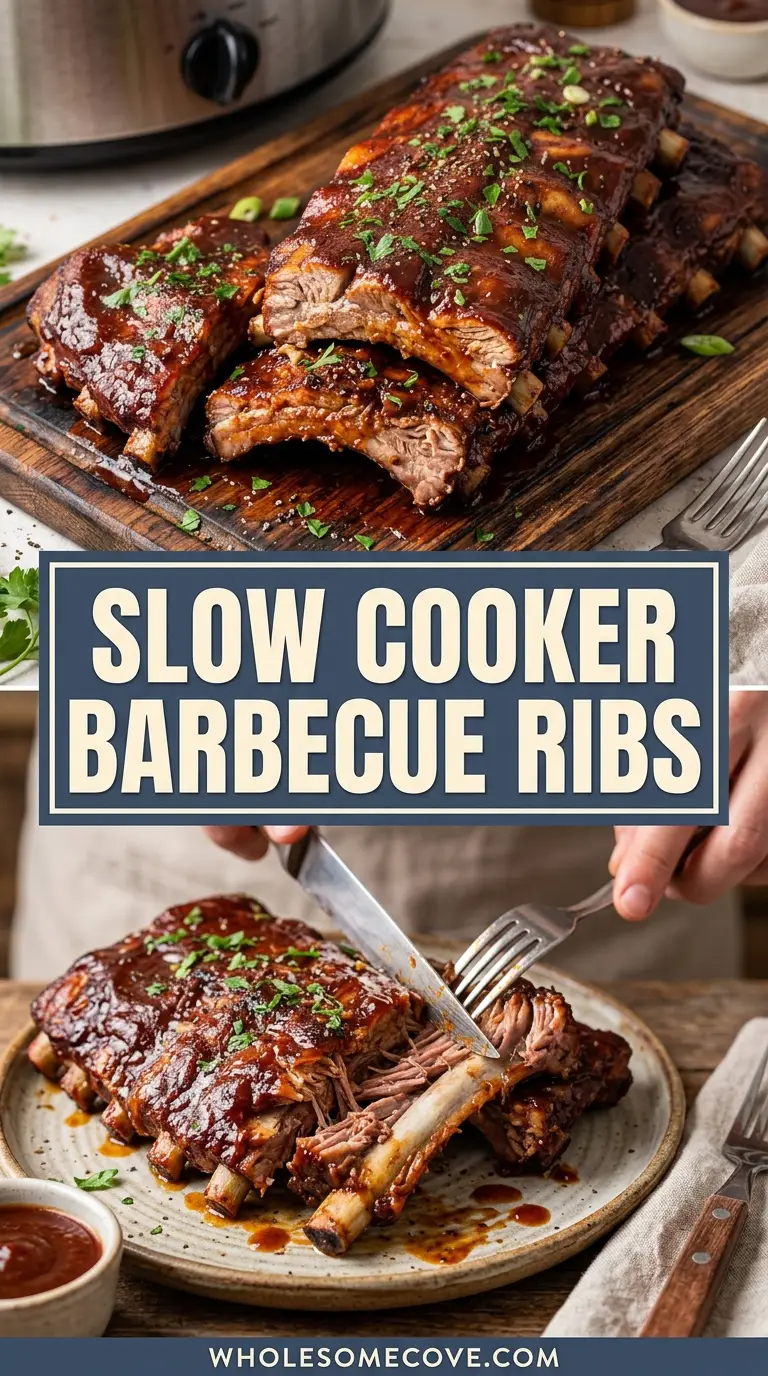
Tips for The Best Slow Cooker Barbecue Ribs
Small details make the difference between good ribs and the kind people ask you to make again. These are the ones that matter most.
- Always remove the membrane. I ruined my first slow cooker batch by leaving it on, and the ribs came out tender underneath but wrapped in a chewy, papery layer that wouldn’t soften no matter how long they cooked.
- Choose low over high when you have time. Testing both settings side by side, the low-and-slow racks pulled cleaner off the bone while the high-setting ones were slightly firmer and more prone to drying at the thin ends.
- Don’t skip the broiler. The slow cooker produces tender meat but pale, loose sauce, and three minutes under direct heat is what sets the glaze into a sticky crust.
- Keep a foil sling in place from the start. Lining the slow cooker with a long strip of foil before adding the ribs gives you handles to lift the delicate racks out without them breaking apart.
- Hold back some sauce. Reserving a portion of barbecue sauce for the broiler step gives you a fresh, glossy coat rather than one that has thinned out during hours of cooking.
- Let them rest before cutting. A short 5-minute rest keeps the juices in the meat instead of on the cutting board.
For another saucy pork dish with a similar sweet-tangy balance, you might also enjoy: Pork Chop Supreme
What to Serve with Slow Cooker Barbecue Ribs
Barbecue ribs are rich and sticky, so the best sides bring crunch, acidity, and starch to balance the plate. A classic barbecue spread usually mixes a cool salad, something creamy, and something fresh off the cob.
- Coleslaw for a crisp, tangy contrast to the sweet sauce
- Potato Salad as the creamy, cookout-staple side
- Baked Mac and Cheese for a rich, comforting pairing
- Cornbread to soak up extra sauce
- Mexican Street Corn for a smoky, zesty vegetable side
- Corn on the Cob as a simple, sweet classic
- Dinner Rolls for building quick rib sandwiches
- Broccoli Salad for crunch and a little sweetness
- Pasta Salad to round out a bigger cookout
- Baked beans for the traditional smoky-sweet side
- A pile of pickles to cut through the richness
For a lighter main to serve another night, try: Apple Cider Glazed Pork Chops
Variations of Slow Cooker Barbecue Ribs
The base method stays the same no matter how you flavor the ribs, so it’s easy to adapt to what you have or what you’re craving. Swap the rub, the sauce, or the cut and you get a new rib entirely.
- Spare ribs or St. Louis cut. Use meatier spare ribs instead of baby backs, and add about 1 hour to the low-setting cook time.
- Spicy ribs. Add 1/2 teaspoon cayenne to the rub and use a hot barbecue sauce for a build of heat.
- Dry-rub only. Skip the barbecue sauce and braise in 1/2 cup (120 ml) of apple juice for ribs seasoned by the rub alone.
- Honey garlic. Replace the barbecue sauce with a mix of honey, soy sauce, and minced garlic for a sticky Asian-inspired glaze.
- Country-style ribs. Use boneless country-style ribs for a meatier, less bony option that cooks in the same window.
- Extra smoky. Double the liquid smoke and add 1/2 teaspoon chipotle powder for a deeper, barbecue-pit flavor.
For a comforting, saucy option in a totally different direction, you might also enjoy: Crockpot Beef Stew
Storage and Reheating
Ribs keep well and reheat beautifully, which makes them a smart make-ahead or leftover meal. The key is trapping moisture so they don’t dry out the second time around.
- Refrigerate: Store cooled ribs in an airtight container for up to 4 days.
- Freeze: Wrap tightly in foil, then place in a freezer bag and freeze for up to 3 months.
- Thaw: Move frozen ribs to the refrigerator overnight before reheating.
- Reheat in the oven: Wrap in foil with a splash of sauce and warm at 300°F (150°C) for 20 to 25 minutes.
- Reheat in the microwave: Cover loosely and heat in 60-second bursts, though the oven keeps the texture better.
- Make ahead: Cook the ribs fully, refrigerate, then do the sauce-and-broil step just before serving for a fresh glaze.
For another dish that reheats well on a busy weeknight, try: Slow Cooker Chili
Nutritional Facts
Values are approximate and based on one serving when the recipe yields 5 servings. Actual numbers vary with the cut of ribs and the barbecue sauce used.
| Nutrient | Amount per Serving |
|---|---|
| Calories | 560 kcal |
| Protein | 34 g |
| Total Fat | 34 g |
| Saturated Fat | 12 g |
| Carbohydrates | 29 g |
| Sugars | 24 g |
| Fiber | 1 g |
| Sodium | 880 mg |
For a leaner pork main with vegetables built in, a related option is Pork and Apple Skillet.
Health Benefits of Key Ingredients
Beyond tasting good, several of the core ingredients bring real nutritional value to the plate. Here’s what the main components contribute.
- Pork ribs: A strong source of complete protein plus B vitamins like thiamine and B12, which support energy metabolism.
- Smoked paprika: Contains antioxidants from the dried peppers, including carotenoids linked to eye and skin health.
- Garlic powder: Carries compounds associated with immune support and heart health, in a concentrated, shelf-stable form.
- Apple cider vinegar: Adds acidity that may help balance the richness of the pork and contributes a trace of beneficial compounds.
- Onion powder: Provides the same sulfur compounds found in fresh onions, which are tied to anti-inflammatory benefits.
- Chili powder: The capsaicin in chilies has been studied for its role in metabolism and circulation.
For another protein-forward main built around vegetables, a related recipe is Pork Tenderloin with Roasted Root Vegetables.
FAQs About Slow Cooker Barbecue Ribs
1. Do I need to remove the membrane from the ribs?
Yes, peeling off the thin membrane on the bone side is worth the extra minute. It never fully softens and otherwise leaves a chewy layer that blocks seasoning from reaching the meat.
2. Should I cook ribs on low or high in the slow cooker?
Low is the better choice when you have the time, since gentle heat breaks down the collagen more evenly. High works in a pinch at 3 1/2 to 4 hours, but the texture is slightly firmer.
3. Can you overcook ribs in a slow cooker?
You can, even with moist heat. Once the meat passes fully tender it starts to turn mushy and shreds apart, so a programmable cooker that switches to warm helps a lot.
4. Do I have to brown or boil the ribs first?
No, there’s no need to boil or sear them beforehand. The dry rub plus the short broil at the end give you all the color and crust you want without the extra step.
5. Why broil the ribs at the end?
The slow cooker makes the meat tender but leaves the sauce pale and loose. A few minutes under the broiler caramelizes that sauce into the sticky, slightly charred glaze people expect from barbecue.
6. What kind of ribs work best for this recipe?
Baby back ribs are the most popular choice and cook reliably in this window. Spare ribs and St. Louis cut also work well, though they are meatier and need about an hour longer.
For a handheld way to use up leftover sauced meat, a related recipe is BBQ Chicken Wrap.
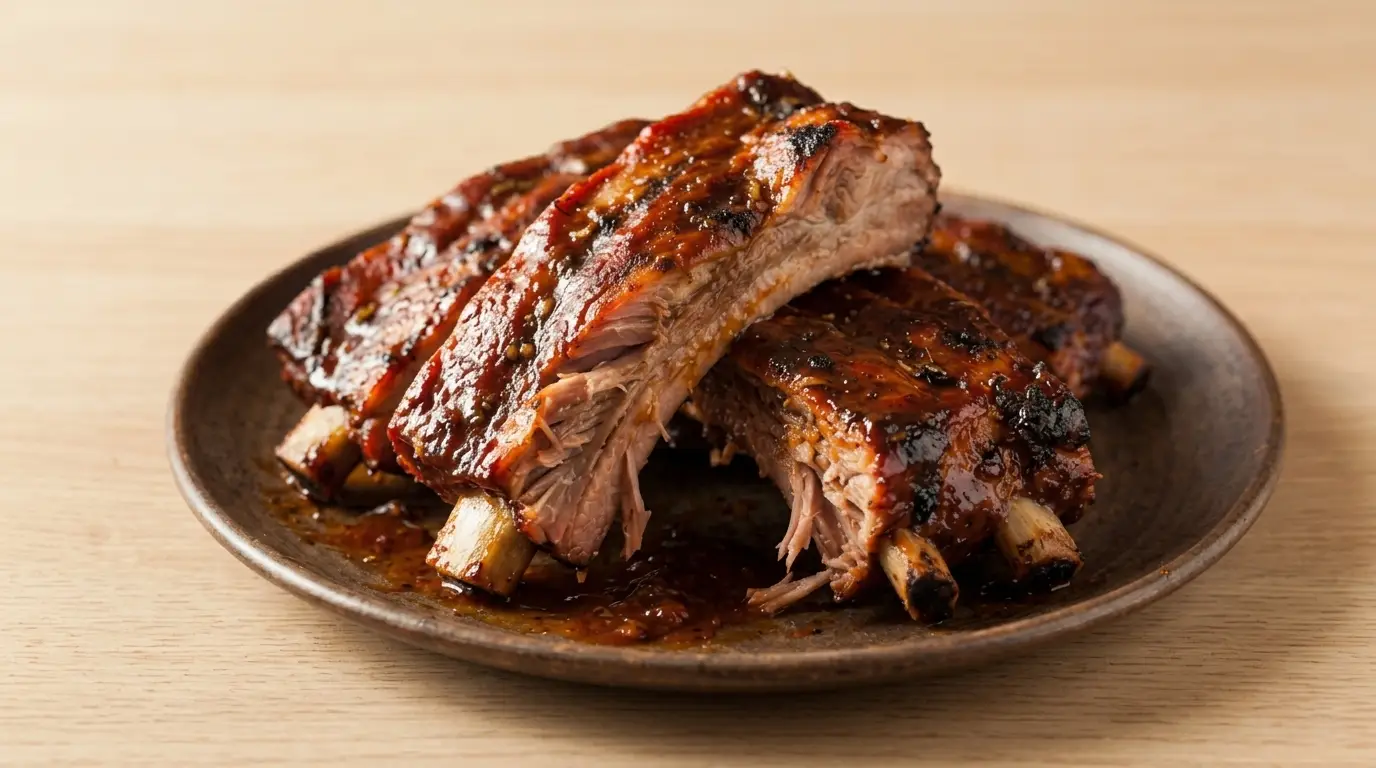
Slow Cooker Barbecue Ribs
Ingredients
- 2 racks pork baby back ribs - about 4 lb or 1.8 kg total, membrane removed
- 1/4 cup brown sugar - 50 g, packed
- 1 tablespoon smoked paprika - 7 g
- 2 teaspoons garlic powder
- 2 teaspoons onion powder
- 1 teaspoon chili powder
- 1 teaspoon ground cumin
- 1 1/2 teaspoons fine salt
- 1 teaspoon black pepper
- 1 1/2 cups barbecue sauce - 360 ml, divided
- 2 tablespoons apple cider vinegar - 30 ml
- 1 tablespoon Worcestershire sauce - 15 ml
- 1 tablespoon yellow mustard - 15 ml
- 2 tablespoons honey - 40 g
- 1 teaspoon liquid smoke - 5 ml, optional
Equipment
- 6-quart (5.7-liter) slow cooker - with a lid
- Rimmed baking sheet - for the broiler step
- Heavy-duty aluminum foil - for lining and for building a sling
- Silicone basting brush - for the final sauce coat
- Kitchen tongs - for lifting cooked ribs without tearing them
- Instant-read meat thermometer - to confirm doneness
- Small mixing bowl - for the rub
- Small mixing bowl - for the sauce
- Paper towel - for gripping and removing the membrane
Method
- Pat both racks dry with paper towels so the rub sticks instead of sliding off.
- Flip the ribs bone-side up to find the thin, shiny membrane running across the back.
- Slide a butter knife under one corner of the membrane, grip it with a paper towel, and peel it off in one piece; removing it lets the seasoning and sauce reach the meat and keeps the ribs from turning rubbery.
- If the racks are too long to fit your slow cooker, cut each one in half.
- In a small bowl, stir together the brown sugar, smoked paprika, garlic powder, onion powder, chili powder, cumin, salt, and black pepper until evenly combined.
- Rub the mixture over both sides of the ribs, pressing it into the meat so it adheres; use all of the rub across both racks for full coverage.
- In a separate bowl, whisk together 1 cup (240 ml) of the barbecue sauce, the apple cider vinegar, Worcestershire sauce, yellow mustard, honey, and liquid smoke if using.
- Reserve the remaining 1/2 cup (120 ml) of barbecue sauce for the broiler step later.
- Line the slow cooker with a foil sling or lightly grease it for easier cleanup.
- Stand the racks on their edge and curl them around the inside wall of the slow cooker, meaty side facing out.
- Pour the braising sauce over the ribs, using a spoon or brush to coat the exposed surfaces.
- Cover and cook on low for 7 hours, or on high for 3 1/2 to 4 hours.
- Avoid lifting the lid during cooking, since each peek releases heat and adds time.
- The ribs are ready when they are fork-tender and register 195°F to 203°F (90°C to 95°C) at the thickest point.
- Set an oven rack about 6 inches (15 cm) below the broiler and heat the broiler to high, around 500°F (260°C).
- Carefully transfer the ribs to a foil-lined baking sheet using tongs, since they will be very tender.
- Brush the reserved 1/2 cup (120 ml) barbecue sauce over the tops.
- Broil for 3 to 5 minutes, watching closely, until the sauce bubbles and chars at the edges.
- Let the ribs rest for 5 minutes so the juices settle.
- Cut between the bones into individual ribs and serve with any extra sauce on the side.
Nutrition
Notes
- Always remove the membrane. Leaving it on results in tender meat wrapped in a chewy, papery layer that won’t soften no matter how long it cooks.
- Choose low over high when you have time. Low-and-slow racks pull cleaner off the bone, while high-setting ribs are slightly firmer and more prone to drying at the thin ends.
- Don’t skip the broiler. The slow cooker produces tender meat but pale, loose sauce; a few minutes under direct heat sets the glaze into a sticky crust.
- Use a foil sling. Lining the slow cooker with a long strip of foil before adding the ribs gives you handles to lift the delicate racks out without them breaking apart.
- Hold back some sauce. Reserving 1/2 cup of barbecue sauce for the broiler step gives you a fresh, glossy coat rather than one that has thinned out during hours of cooking.
- Let them rest before cutting. A short 5-minute rest keeps the juices in the meat instead of on the cutting board.
- Spare ribs or St. Louis cut. Use meatier spare ribs instead of baby backs, and add about 1 hour to the low-setting cook time.
- Storage: Refrigerate cooled ribs in an airtight container for up to 4 days, or wrap tightly in foil, place in a freezer bag, and freeze for up to 3 months.
- Reheating: Wrap in foil with a splash of sauce and warm at 300°F (150°C) for 20 to 25 minutes; the oven keeps the texture better than the microwave.
- Make ahead: Cook the ribs fully, refrigerate, then do the sauce-and-broil step just before serving for a fresh glaze.
Private Notes
Tried this recipe?
Let us know how it was!Final Thoughts
Slow cooker barbecue ribs prove you don’t need a smoker or a free afternoon to get tender, sticky, deeply flavored results. The appliance does the patient work while you do almost nothing.
Set them going in the morning, finish them under the broiler at dinner, and you have a plate that tastes like it took far more effort than it did. The method is forgiving enough for a first attempt and good enough to keep in the regular rotation.
Give this one a try the next time you want barbecue without the fuss. If you make it, leave a comment with how it turned out, and share the recipe with anyone who loves ribs as much as you do.
Recommended:
- Au Gratin Potatoes
- Scalloped Potatoes
- Cheesy Potatoes
- Roasted Potatoes
- Southern Mac and Cheese
- Healthy Coleslaw
- Peach BBQ Sauce
- Teriyaki Sauce
- Honey Mustard Sauce
- Pork Stew