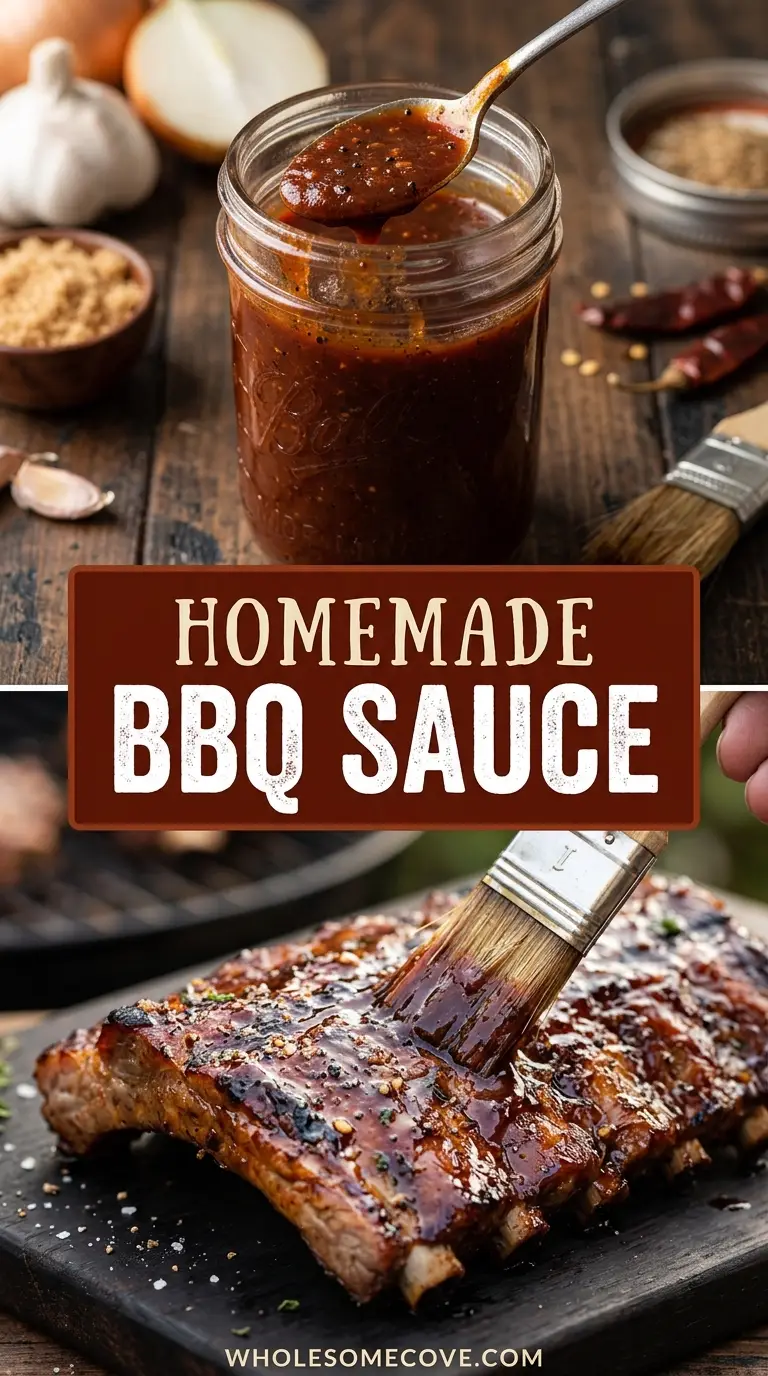
This BBQ sauce recipe turns a cup and a half of ketchup into a dark, glossy glaze in about 20 minutes on the stove.
Brown sugar and molasses build the caramel sweetness, while apple cider vinegar and Worcestershire sauce keep it from tasting like sweetened ketchup.
Smoked paprika adds a grill-side note without a grill. Everything cooks in one saucepan and makes about 2 cups.
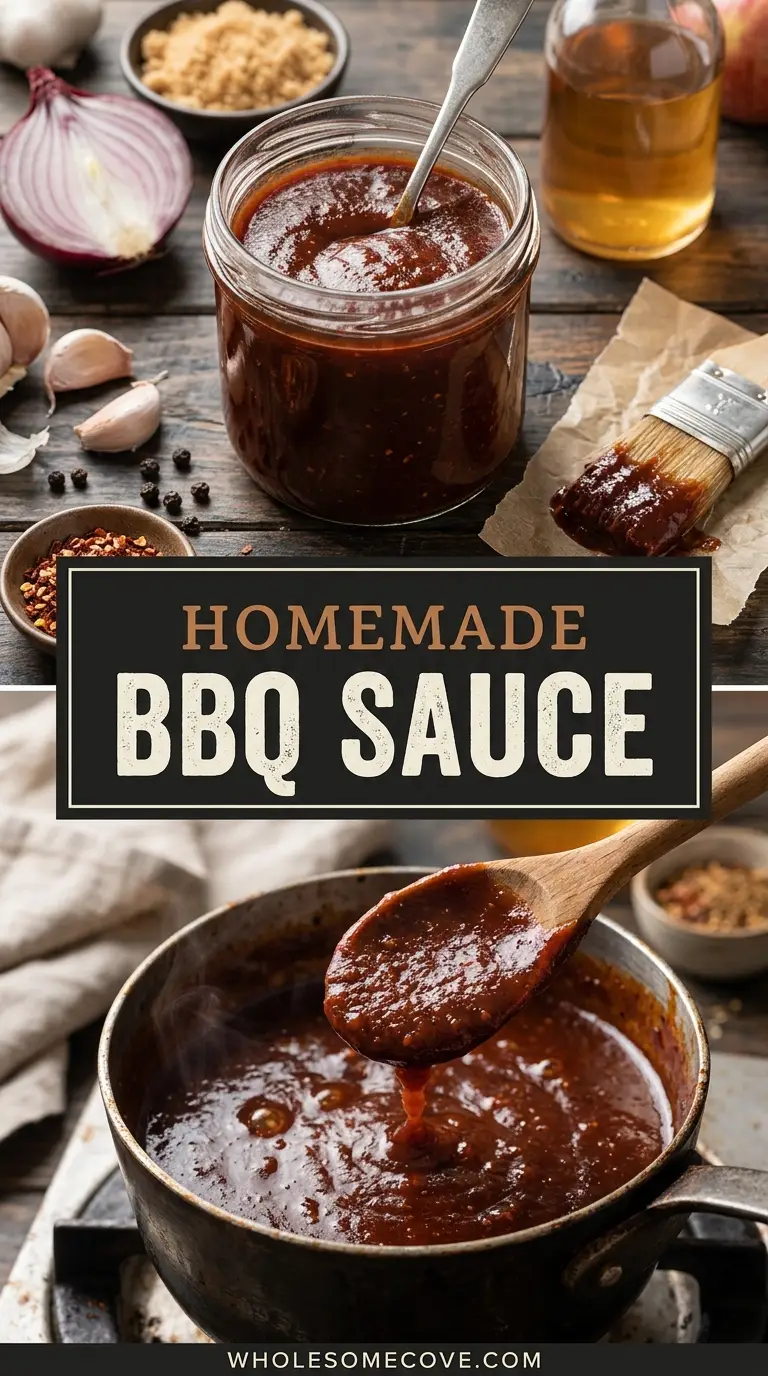
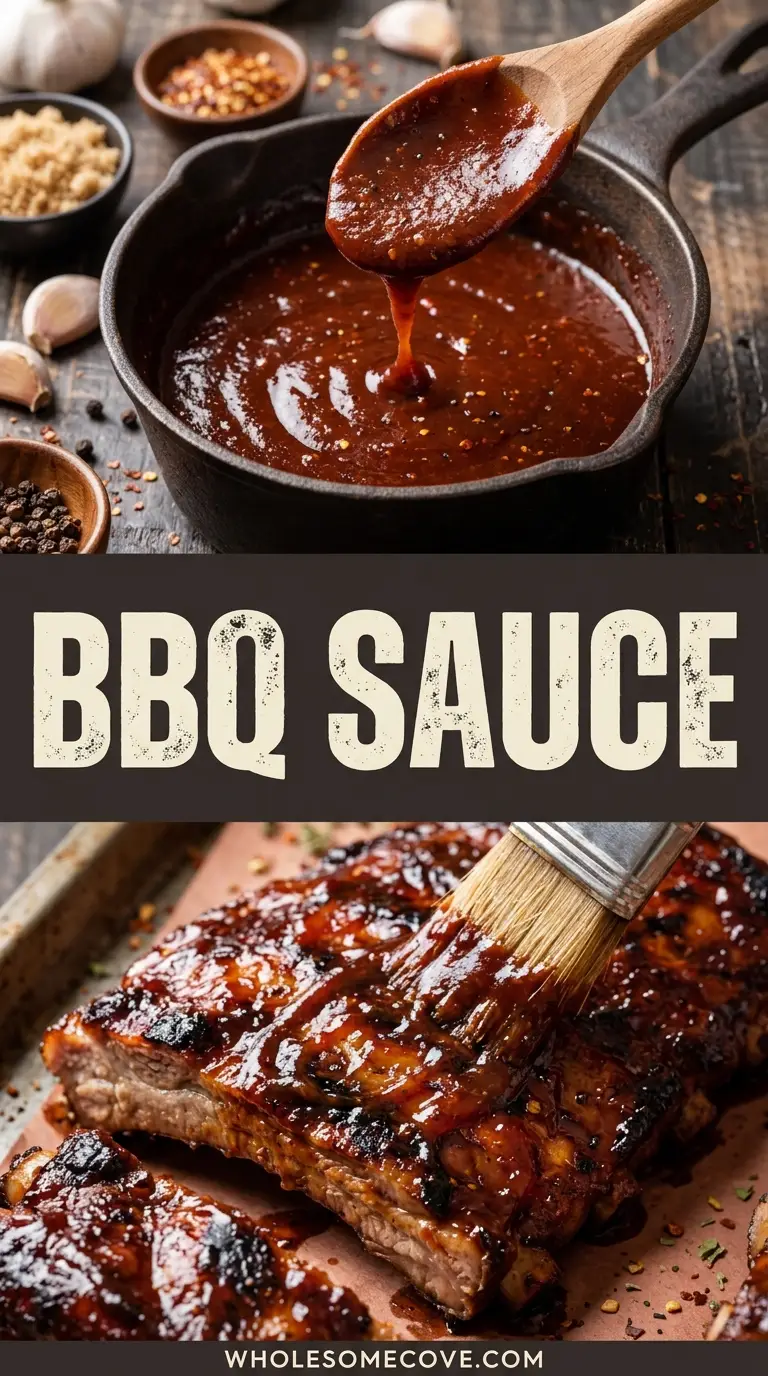
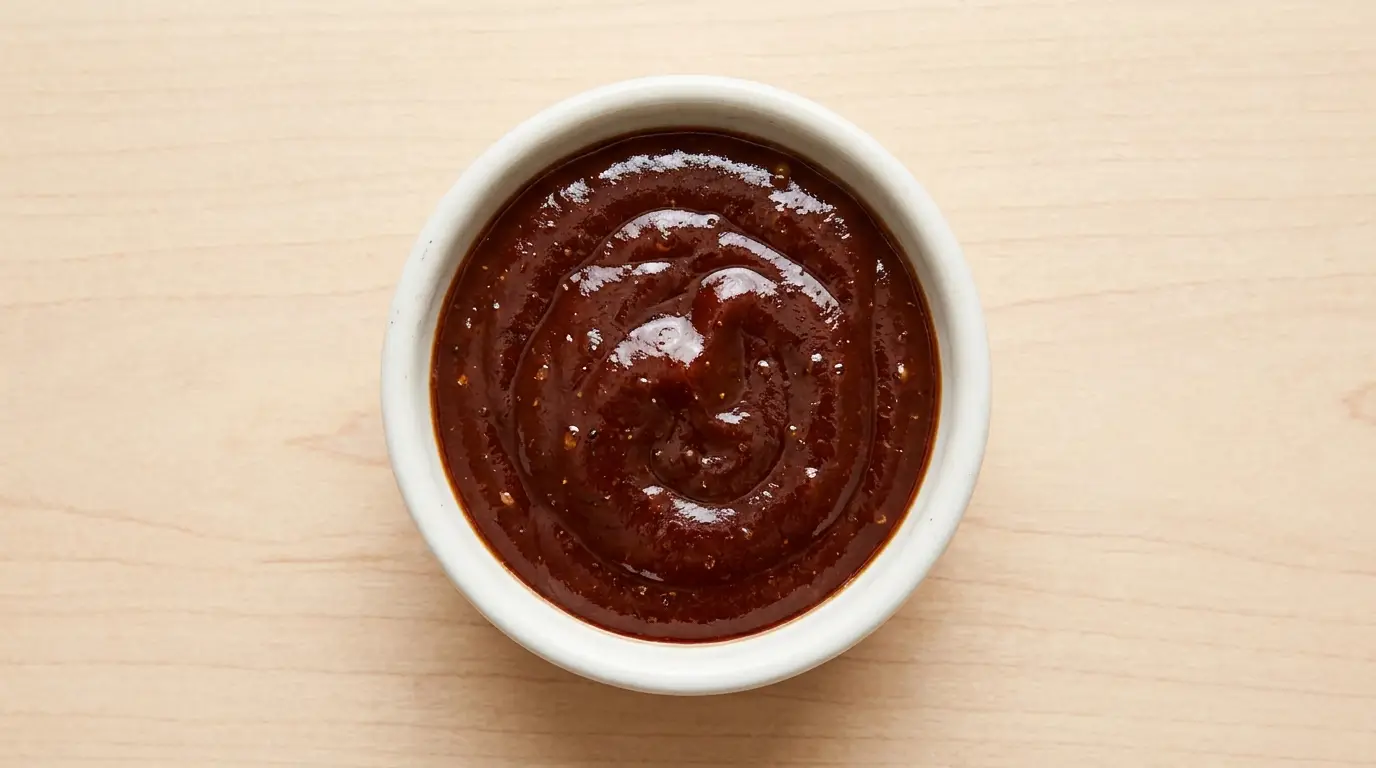
The sauce is done when it coats the back of a spoon and holds a clean line when you drag a finger through it.
Total time is 25 minutes, and the sauce keeps in the fridge for up to 2 weeks.
| Quick Recipe Summary | |
|---|---|
| Prep Time | 5 minutes |
| Cook Time | 20 minutes |
| Total Time | 25 minutes |
| Servings | About 2 cups (16 servings of 2 tablespoons) |
| Difficulty Level | Easy |
Read Also: Peach BBQ Sauce Recipe
Why You’ll Love This BBQ Sauce Recipe
Homemade BBQ sauce lets you control the sweetness, the smoke, and the heat. It also relies on ingredients most kitchens already have.
- Ready in 25 minutes: Five minutes of prep and 20 minutes of simmering is all it takes.
- One saucepan: You need a pan and a whisk, so cleanup takes about two minutes.
- Makes about 2 cups: That is enough to sauce a full rack of ribs and still fill a jar for later.
- Balanced flavor: Brown sugar and molasses bring sweetness, vinegar and Worcestershire bring tang, and smoked paprika brings depth.
- Easy to adjust: A pinch of cayenne makes it hot, and an extra spoon of vinegar makes it sharper.
- Works on almost any protein: Ribs, chicken, pulled pork, burgers, meatballs, and sausages all take to it.
- Keeps well: It stays good in the fridge for up to 2 weeks and in the freezer for up to 3 months.
- You pick the ketchup: That means you decide whether the sauce contains high fructose corn syrup.
A similar approach to pantry-staple sauces is collected in Best Sauce Recipes.
Ingredients
Classic BBQ sauce starts with a ketchup base, which is the most common starting point across established recipes. Use a thick ketchup, since a watery one takes much longer to reduce.
- 1 1/2 cups (360 g) Heinz ketchup
- 1/2 cup (110 g) packed dark brown sugar
- 1/3 cup (80 ml) apple cider vinegar
- 1/2 cup (120 ml) water
- 2 tablespoons (40 g) unsulphured molasses
- 2 tablespoons (30 ml) Worcestershire sauce
- 1 tablespoon (15 g) yellow mustard
- 1 teaspoon smoked paprika
- 1 teaspoon garlic powder
- 1 teaspoon onion powder
- 1/2 teaspoon freshly ground black pepper
- 1/2 teaspoon fine salt
- 1/4 teaspoon cayenne pepper (optional, whisked in with the dry seasonings in step 2)
- 1/2 teaspoon liquid smoke (optional, stirred in off the heat in step 5)
You might also enjoy: Worcestershire Sauce
Kitchen Equipment Needed
This sauce needs very little gear. A heavy pan matters most, because sugar-based sauces scorch easily in thin pans.
- 2-quart heavy-bottomed saucepan for even heat
- Silicone whisk that reaches the corners of the pan
- Measuring cups and spoons for the dry and wet ingredients
- Heat-resistant spatula for scraping the bottom as the sauce thickens
- Glass mason jars for storing the finished sauce
- Silicone basting brush for glazing meat
- Small funnel for filling jars without drips (optional)
- Fine-mesh strainer if you want a perfectly smooth sauce (optional)
For another sauce that comes together in a single saucepan, see Sweet and Sour Sauce.
Recommended Products for This Recipe
These are my personal recommendations, chosen for the specific problems they solve when making BBQ sauce at home. None of them are required, but each one improves the result in a noticeable way.
1. Lea & Perrins Worcestershire Sauce
Worcestershire provides the savory, slightly fermented backbone that separates BBQ sauce from sweet ketchup. Lea & Perrins has a balanced, tangy flavor that does not turn harsh when simmered.
2. Grandma’s Original Molasses
Molasses is the ingredient that gives homemade sauce its deep, dark color. A mild, unsulphured molasses adds richness without the bitter edge that blackstrap can bring to a small batch.
3. La Chinata Smoked Paprika
Cheap paprika tastes dusty and flat after a 20-minute simmer. Smoked Spanish paprika keeps its aroma, so the sauce tastes like it spent time near a fire pit.
4. All-Clad Stainless Steel Saucepan
Thin pans create hot spots, and sugar burns in those spots within seconds. A thick, fully clad pan spreads heat evenly, which makes scorching far less likely and cleanup much easier.
5. Ball Wide Mouth Pint Jars
A wide mouth makes it easy to spoon thick sauce in and scrape every bit out. The glass does not stain or hold onto odors the way plastic tubs do, which matters with a tomato-based sauce.
Read Also: Teriyaki Sauce Recipe
Step-by-Step Instructions: How to Make BBQ Sauce
Follow these steps and a thick, glossy BBQ sauce will be ready in about 25 minutes.
1. Combine the Wet Ingredients
- Measure 1 1/2 cups of ketchup into a 2-quart heavy-bottomed saucepan.
- Add 1/2 cup of dark brown sugar, 1/3 cup of apple cider vinegar, and 1/2 cup of water.
- Add 2 tablespoons of molasses, 2 tablespoons of Worcestershire sauce, and 1 tablespoon of yellow mustard.
- Whisk everything together off the heat until the mixture looks mostly smooth. Small sugar clumps are fine at this stage because they dissolve as the pan warms.
2. Add the Dry Seasonings
- Add 1 teaspoon of smoked paprika, 1 teaspoon of garlic powder, and 1 teaspoon of onion powder.
- Add 1/2 teaspoon of black pepper and 1/2 teaspoon of fine salt.
- Add 1/4 teaspoon of cayenne pepper now if you want a gentle kick. Skip it for a milder sauce.
- Whisk for about 30 seconds so the spices disperse instead of floating in clumps on the surface.
3. Bring to a Gentle Simmer
- Place the pan over medium heat and stir every minute or so.
- After 3 to 4 minutes, small bubbles should form around the edge of the pan and the sugar should be fully dissolved.
- Reduce the heat to medium-low as soon as you see steady bubbling. A hard boil splatters ketchup across the stove and can scorch the sugar.
4. Simmer Until Thick
- Cook at a gentle simmer for 15 to 16 minutes, stirring every 2 to 3 minutes.
- Scrape the bottom and corners each time you stir so nothing sticks and darkens.
- Set the lid on the pan slightly ajar if the sauce starts to spit.
- The sauce is ready when it coats the back of a spoon and a finger dragged across the spoon leaves a clean line.
5. Taste and Adjust
- Remove the pan from the heat.
- Stir in 1/2 teaspoon of liquid smoke if you want a stronger smoky flavor.
- Taste a small spoonful once it cools for a minute. Add a splash of vinegar if it tastes too sweet, a teaspoon of brown sugar if it tastes too sharp, or a pinch of salt if it tastes flat.
6. Cool and Store
- Let the sauce cool in the pan for about 15 minutes. It will thicken noticeably as it cools.
- Pour the sauce into clean glass jars using a funnel.
- Seal the jars, label them with the date, and refrigerate.
You might also enjoy: Tomato Sauce
Tips for The Best BBQ Sauce
A few small habits make the difference between a sauce that tastes balanced and one that tastes like hot ketchup. Most of them come down to heat control and tasting at the right moment.
- Keep the heat at medium-low. My first batch scorched because I left the burner on medium-high, and black flecks of burnt sugar ended up through the whole pan.
- Use dark brown sugar. Dark brown sugar gives a deeper, almost toffee-like flavor than light brown sugar because it contains more molasses.
- Start with thick ketchup. A thin, watery ketchup needs several more minutes of simmering to reach the same body.
- Add the vinegar at the start. Simmering mellows the sharpness of the vinegar, and adding it at the end tastes harsher.
- Stir the corners. Sugar collects where the pan walls meet the bottom, and that is the first place it burns.
- Judge thickness when the sauce is warm. The sauce looks thinner in the pan than it will in the jar, so stop cooking when it coats a spoon.
- Taste after it cools slightly. Hot sauce tastes sweeter than warm sauce, and judging too early leads to over-seasoning.
- Season with salt last. Ketchup and Worcestershire already contain salt, so taste before adding more.
- Whisk in water to thin. If the sauce gets too thick, add one tablespoon of water at a time and reheat gently.
- Keep a squeeze bottle handy. A small squeeze bottle beats a jar for portioning sauce onto ribs, burgers, and sandwiches without drips.
For a spicier direction, see Buffalo Sauce.
What to Make with BBQ Sauce
BBQ sauce works as a glaze, a marinade finisher, a dipping sauce, and a sandwich spread. The ideas below cover the most common ways to use a batch.
- Slow Cooker Barbecue Ribs finished under the broiler with a thick coat of sauce
- BBQ Pulled Pork Sandwiches with sauce stirred through the shredded meat
- BBQ Chicken Wrap with shredded chicken tossed in a few spoonfuls of sauce
- Air Fryer Chicken Drumsticks brushed with sauce in the last few minutes of cooking
- Meatloaf with a sweet and tangy BBQ glaze spread over the top before baking
- Turkey Burger topped with sauce, a slice of cheddar, and crisp onion
- Pigs in a Blanket served with a small bowl of sauce for dipping
- Onion Rings dunked in cold BBQ sauce
- Air Fryer French Fries with sauce on the side instead of ketchup
- Coleslaw piled on a pulled pork sandwich for crunch against the sweet sauce
- Smoked brisket, sliced and served with warm sauce on the side
- Grilled chicken thighs brushed with sauce during the last 10 minutes
- Baked beans stirred with a few tablespoons of sauce for smoky sweetness
- Homemade BBQ chicken pizza with red onion and cilantro
Another option worth trying is Grilled Lemon Herb Chicken.
Variations of BBQ Sauce
The base recipe is a classic Kansas City style sauce, which is sweet, tangy, and thick. Small changes shift it toward spicy, smoky, fruity, or sharp.
- Spicy chipotle BBQ sauce: Stir in 1 to 2 teaspoons of chipotle powder or 1 tablespoon of minced chipotle in adobo with the dry seasonings.
- Honey BBQ sauce: Replace the molasses with 2 tablespoons of honey for a lighter, floral sweetness.
- Bourbon BBQ sauce: Add 2 tablespoons of bourbon with the vinegar and simmer an extra 2 minutes to cook off the alcohol.
- Pineapple BBQ sauce: Swap the 1/2 cup of water for 1/2 cup of pineapple juice for a tropical tang that suits pork and chicken.
- Mustard-forward BBQ sauce: Increase the yellow mustard to 3 tablespoons for a sharper, South Carolina style flavor.
- Smooth BBQ sauce: Blend the cooled sauce with an immersion blender or strain it for a texture closer to bottled sauce.
- Vegan BBQ sauce: Use a vegan Worcestershire sauce, since traditional versions contain anchovies.
- Lower sugar BBQ sauce: Reduce the brown sugar to 1/4 cup and taste, adding more only if needed. The sauce will be slightly thinner and tangier.
- Smoky maple BBQ sauce: Replace the molasses with 2 tablespoons of maple syrup and double the liquid smoke.
A tangy, mayonnaise-based alternative from the same barbecue tradition is Alabama White Sauce.
Storage and Reheating
Homemade BBQ sauce contains a lot of vinegar and sugar, which helps it keep. Proper storage still matters, because the sauce can pick up bacteria from used spoons or brushes.
- Refrigerator: Store the sauce in an airtight glass jar for up to 2 weeks.
- Use clean utensils: Spoon out only what you need with a clean spoon each time.
- Fill jars nearly full: Less trapped air means fresher sauce, so smaller jars work better than one large container.
- Freezer: Pour cooled sauce into freezer-safe containers, leaving 1/2 inch of space at the top, and freeze for up to 3 months.
- Ice cube trays: Freeze the sauce in trays, then move the cubes to a freezer bag for small single-use portions.
- Thawing: Thaw frozen sauce overnight in the fridge before using it.
- Reheating: Warm the sauce in a small saucepan over low heat, adding a splash of water if it has thickened too much.
- Microwave option: Heat in 20 to 30 second bursts, stirring between each one.
- Discard rules: Throw away any sauce that smells sour or shows mold, and never save sauce that has touched raw meat.
For another condiment that keeps well in the fridge, try: Cocktail Sauce
Nutritional Facts
The values below are estimates for one 2-tablespoon serving. Actual numbers vary with the brands of ketchup and Worcestershire you use.
| Nutrition per Serving (2 tablespoons) | |
|---|---|
| Calories | 65 kcal |
| Carbohydrates | 16 g |
| Sugar | 15 g |
| Protein | 0.4 g |
| Fat | 0.1 g |
| Fiber | 0.3 g |
| Sodium | 340 mg |
Read Also: Healthy Sloppy Joe Recipe
Tips for Using BBQ Sauce Like a Pro
How and when you apply BBQ sauce matters as much as the sauce itself. Sugar burns quickly, so timing and temperature decide whether the glaze turns sticky and lacquered or black and bitter.
- Brush late. Apply the sauce during the last 10 to 15 minutes of grilling, baking, or smoking so the sugar caramelizes without burning.
- Use thin layers. Two or three thin coats, each left to set for a few minutes, build a better glaze than one heavy coat.
- Keep a separate dipping portion. Pour out what you need for the table before brushing, so the sauce that touches raw meat never goes back in the jar.
- Cook pulled pork first. Cook the meat until tender, shred it, then stir in the sauce so it coats the strands instead of burning on the surface.
- Watch high heat. Direct flame above about 300 degrees F (150 degrees C) can scorch sugar-based sauces, so move food to indirect heat when glazing.
- Warm the sauce before serving. Warm sauce spreads more easily and its flavors taste rounder than they do straight from the fridge.
- Judge thickness warm. Cold sauce from the fridge always looks thicker than it behaves on hot meat, so test the consistency while warm.
- Thin with the right liquid. Water works, but apple cider vinegar or apple juice adds flavor while thinning.
- Thicken with more simmering. Return the sauce to low heat for 5 more minutes rather than adding starch, which can dull the flavor.
- Fix too much sweetness. Add vinegar one teaspoon at a time, tasting after each addition.
- Fix too much tang. Add brown sugar one teaspoon at a time and simmer for a minute.
- Rescue a scorched sauce. If only the bottom caught, pour the sauce into a new pan without scraping and keep going. If the whole batch tastes burnt, start over.
For a burger-friendly condiment, see Burger Sauce.
FAQs About BBQ Sauce
1. What is BBQ sauce made of?
Most BBQ sauces combine a tomato base, a sweetener, and an acid. Ketchup, brown sugar, and vinegar are the usual starting point.
Spices such as paprika, garlic powder, and black pepper add depth. Worcestershire sauce and mustard add savory tang.
2. How do I thicken BBQ sauce?
Simmer it longer over low heat, stirring often, until it coats the back of a spoon. Most sauces reduce by about a fifth before they reach the right body.
Avoid cornstarch unless you have no other option. It can make the sauce taste muted and slightly gummy.
3. How long does homemade BBQ sauce last?
Stored in an airtight jar, it keeps for up to 2 weeks in the fridge. Some cooks report longer, but 2 weeks is the safe, conservative window.
Always use a clean spoon. Cross-contamination shortens the life of any sauce.
4. Can you freeze BBQ sauce?
Yes, it freezes very well for up to 3 months. Cool it fully first, then use a freezer-safe container with a little room at the top.
Ice cube trays help with small portions. Thaw overnight in the fridge before reheating.
5. Why does my BBQ sauce taste too sweet or too sharp?
Sweetness and tang depend on your ketchup and vinegar. Taste near the end of cooking, because the flavors concentrate as the sauce reduces.
Fix too much sweetness with a splash of vinegar. Fix too much tang with a teaspoon of brown sugar.
6. Can I make BBQ sauce without molasses?
Yes, you can replace the molasses with extra brown sugar, honey, or maple syrup. The sauce will be slightly lighter in color and less deep in flavor.
Dark brown sugar is the best substitute, since it already contains molasses. Use 2 extra tablespoons.
7. Is homemade BBQ sauce gluten-free?
It can be, but check your labels. Ketchup and Worcestershire sauce vary by brand and country, and some contain malt vinegar.
Choose products labeled gluten-free if this matters for your household. The spices and sugar in the recipe are naturally gluten-free.
8. Can I use this sauce for slow cooker recipes?
Yes, it works well for pulled pork, chicken, and meatballs. Stir it in during the last 30 minutes so the flavor stays bright.
Adding it at the start works too. The flavor just becomes deeper and less tangy.
You might also enjoy: Marinara Sauce
BBQ Sauce
Ingredients
- 1 1/2 cups Heinz ketchup - 360 g; use a thick ketchup
- 1/2 cup dark brown sugar - 110 g, packed
- 1/3 cup apple cider vinegar - 80 ml
- 1/2 cup water - 120 ml
- 2 tablespoons unsulphured molasses - 40 g
- 2 tablespoons Worcestershire sauce - 30 ml
- 1 tablespoon yellow mustard - 15 g
- 1 teaspoon smoked paprika
- 1 teaspoon garlic powder
- 1 teaspoon onion powder
- 1/2 teaspoon freshly ground black pepper
- 1/2 teaspoon fine salt
- 1/4 teaspoon cayenne pepper - optional; whisked in with the dry seasonings in step 2
- 1/2 teaspoon liquid smoke - optional; stirred in off the heat in step 5
Equipment
- 2-quart heavy-bottomed saucepan - for even heat
- Silicone whisk - that reaches the corners of the pan
- Measuring cups and spoons - for the dry and wet ingredients
- Heat-resistant spatula - for scraping the bottom as the sauce thickens
- Glass mason jars - for storing the finished sauce
- Silicone basting brush - for glazing meat
- Small funnel - (optional) for filling jars without drips
- Fine-mesh strainer - (optional) if you want a perfectly smooth sauce
Method
- Measure the ketchup into a 2-quart heavy-bottomed saucepan, then add the dark brown sugar, apple cider vinegar, water, molasses, Worcestershire sauce, and yellow mustard. Whisk off the heat until mostly smooth; small sugar clumps are fine.
- Add the smoked paprika, garlic powder, onion powder, black pepper, and fine salt, plus the cayenne if using. Whisk for about 30 seconds so the spices disperse instead of floating in clumps.
- Place the pan over medium heat and stir every minute or so. After 3 to 4 minutes, small bubbles should form around the edge and the sugar should be fully dissolved; reduce the heat to medium-low as soon as you see steady bubbling.
- Cook at a gentle simmer for 15 to 16 minutes, stirring every 2 to 3 minutes and scraping the bottom and corners. The sauce is ready when it coats the back of a spoon and a finger dragged across the spoon leaves a clean line.
- Remove the pan from the heat and stir in the liquid smoke if using. Taste a small spoonful once it cools for a minute, then adjust with a splash of vinegar, a teaspoon of brown sugar, or a pinch of salt as needed.
- Let the sauce cool in the pan for about 15 minutes; it will thicken noticeably as it cools. Pour into clean glass jars using a funnel, then seal, label with the date, and refrigerate.
Nutrition
Notes
- Keep the heat at medium-low. Sugar-based sauces scorch easily, and black flecks of burnt sugar will ruin the whole batch.
- Use dark brown sugar for a deeper, almost toffee-like flavor than light brown sugar because it contains more molasses.
- Start with thick ketchup. A thin, watery ketchup needs several more minutes of simmering to reach the same body.
- Add the vinegar at the start. Simmering mellows the sharpness, and adding it at the end tastes harsher.
- Stir the corners of the pan, where sugar collects and burns first.
- Judge thickness when the sauce is warm; it looks thinner in the pan than it will in the jar.
- Season with salt last, since ketchup and Worcestershire already contain salt.
- Store in an airtight glass jar in the fridge for up to 2 weeks, or freeze for up to 3 months (ice cube trays work well for small portions).
- Never save sauce that has touched raw meat, and discard any sauce that smells sour or shows mold.
- Variations: add chipotle for spicy, swap molasses for honey, add bourbon, swap water for pineapple juice, increase mustard to 3 tablespoons, or use vegan Worcestershire.
Private Notes
Tried this recipe?
Let us know how it was!Final Thoughts
This BBQ sauce recipe proves that a few pantry staples and 25 minutes can beat most bottles on the shelf. Once you taste the difference, a jar of this sauce in the fridge becomes a habit.
Try it on ribs, chicken, or a burger this week. Leave a comment with your favorite way to use it, and share the recipe with someone who loves backyard cooking.
Recommended:
- Bang Bang Sauce
- Yum Yum Sauce
- Stir Fry Sauce
- Peanut Sauce
- Garlic Parmesan Sauce
- Pizza Sauce
- Spaghetti Sauce
- Enchilada Sauce
- Hoisin Sauce