I’ll be honest with you: for a long time, I thought giving up dairy meant giving up mac and cheese forever. Then I stumbled onto a cashew-based vegan mac and cheese recipe that changed everything. It was creamy, cheesy, deeply satisfying, and made entirely from plants.
The secret to this dish is a silky cashew cream sauce spiked with nutritional yeast, which gives it that unmistakably cheesy, savory depth you’d expect from the real thing.
I’ve made this dozens of times now, tweaking the spice ratios and experimenting with different pasta shapes, and this version is the one I keep coming back to. It comes together in under 30 minutes, requires no fancy equipment, and pleases even the most skeptical dairy lovers at the table.
Read on and I’ll walk you through every step so you get it right on the first try.
| Quick Recipe Summary | |
|---|---|
| Prep Time | 10 minutes (plus 30 minutes soaking time for cashews) |
| Cook Time | 20 minutes |
| Total Time | 30 minutes (active time) |
| Servings | 4 servings |
| Difficulty Level | Easy |
Read Also: Air Fryer Mac and Cheese Recipe
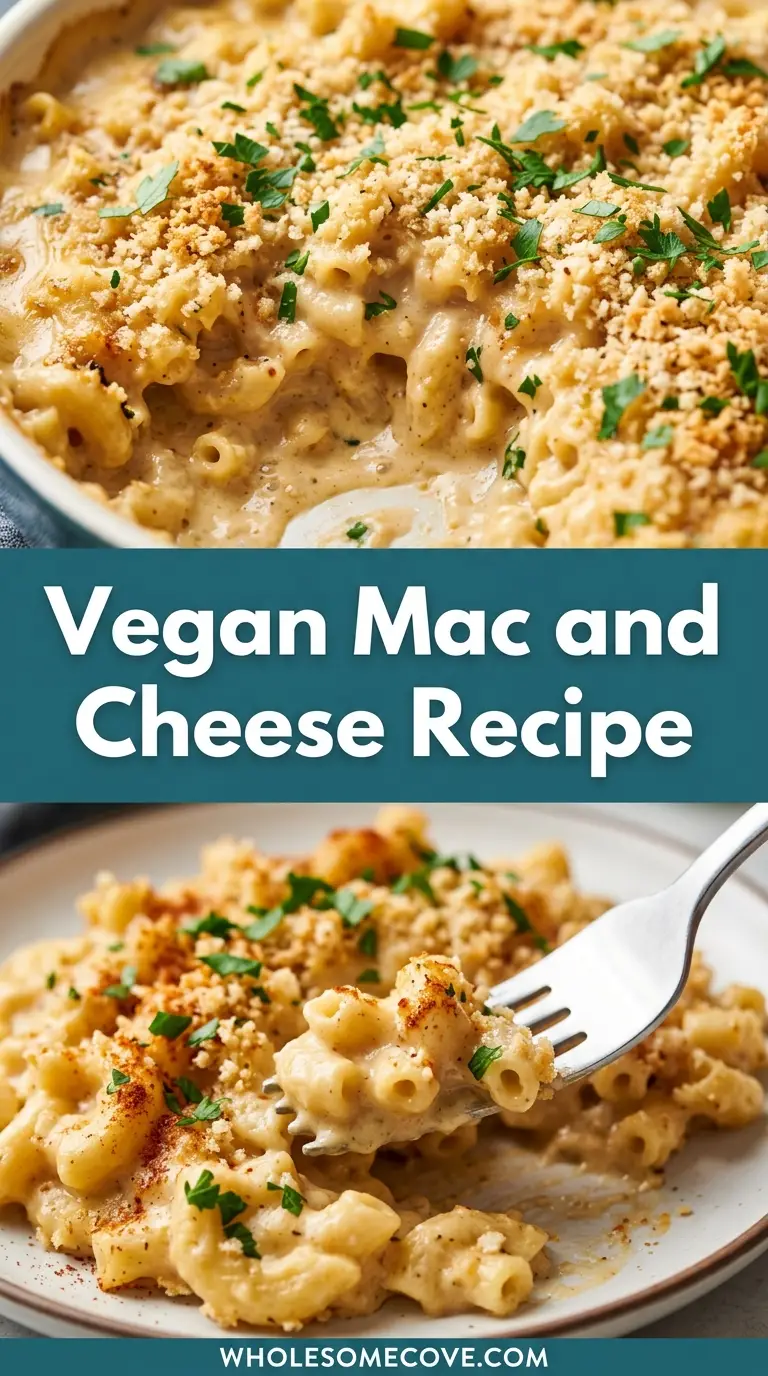
Why You’ll Love This Vegan Mac and Cheese Recipe
This recipe checks every box: comfort food flavor, weeknight speed, and a completely plant-based ingredient list.
It does not taste like a compromise. The cashew cream sauce is genuinely rich, and the nutritional yeast brings a savory umami kick that mimics cheese beautifully.
- Ready in 30 minutes: Even with soaking the cashews, you can have this on the table fast. On nights when I forget to soak them ahead of time, I use a 15-minute hot water soak and it works just fine.
- Completely dairy-free and vegan: No butter, no cheese, no milk. Every ingredient is 100% plant-based, making this safe for anyone avoiding dairy, eggs, or animal products.
- Kid-approved: My nephew, a committed mac and cheese purist, ate two bowls without knowing it was vegan. That was the moment I knew this recipe was a keeper.
- Nut-free swap is easy: If you have a cashew allergy, silken tofu or sunflower seeds work beautifully in their place. The flavor shifts slightly but the creaminess is still there.
- Customizable heat level: The base recipe is mild enough for kids, but a pinch of cayenne or a dash of hot sauce takes it straight to flavor-town for adults.
- Better than boxed vegan mac: Store-bought vegan mac can taste powdery or artificial. This homemade version is fresher, creamier, and so much more satisfying.
- Great for meal prep: The sauce keeps well in the fridge for up to five days, so you can make a big batch and use it across multiple meals throughout the week.
If you love creamy, classic stovetop mac and cheese, you’ll also want to check out my Creamy Mac and Cheese Recipe for a traditional dairy-based version that uses a similar technique.
Ingredients
The ingredient list here is simple, but each item plays a specific role in building that creamy, cheesy flavor. Don’t skip the nutritional yeast or the mustard powder: those two are the backbone of the sauce.
- Elbow macaroni – 12 oz (340g). You can use any short pasta shape, but elbows hold the sauce in all those little curves. Gluten-free pasta works perfectly here too.
- Raw cashews – 1 cup (140g), soaked. Soaking softens them so they blend into a perfectly smooth cream. Do not use roasted or salted cashews as the flavor will be off.
- Unsweetened plant-based milk – 1 cup (240ml). I use oat milk because it is neutral and slightly creamy. Almond milk works too, but avoid anything sweetened or flavored.
- Water (for blending) – ½ cup (120ml). This helps thin the sauce to a silky, pourable consistency without making it watery.
- Nutritional yeast – ¼ cup (20g). This is the “cheese” flavor hero. Look for the flaked variety, which blends more smoothly than the powdered kind.
- Garlic powder – 1 teaspoon. Adds savory depth without the harshness of raw garlic.
- Onion powder – ½ teaspoon. Rounds out the flavor and adds subtle sweetness.
- Mustard powder (dry mustard) – ½ teaspoon. This is my secret weapon. It sharpens the cheesy flavor and makes the sauce taste more complex without tasting like mustard.
- Smoked paprika – ½ teaspoon. Brings a subtle smoky warmth that balances the richness of the cashew cream.
- Turmeric – ¼ teaspoon. Gives the sauce its gorgeous golden-yellow color and adds a mild earthy note.
- Lemon juice – 1 tablespoon (15ml), freshly squeezed. Adds brightness and tang that cuts through the richness of the sauce.
- White miso paste – 1 tablespoon. This adds umami depth and a slight fermented complexity that makes the sauce taste aged and cheese-like. Do not skip this!
- Salt and black pepper – to taste. Season generously at the end, as the flavors deepen once everything is combined.
- Olive oil – 1 tablespoon (15ml), optional for finishing. Drizzling a little over the finished dish adds richness and a beautiful sheen.
You might also enjoy: Vegan Waffle Recipe
Kitchen Equipment Needed
You don’t need any specialty gadgets for this recipe. The most important tool is a high-powered blender: it is what turns a cup of soaked cashews into a sauce so smooth it is indistinguishable from a cream-based cheese sauce.
- High-powered blender – Essential for blending cashews into a completely smooth, lump-free sauce. A standard blender can work if you blend for a longer time, but a high-powered model gives the silkiest result.
- Large pot – For cooking the pasta. Use one that holds at least 4 quarts (3.8L) so the pasta has room to cook evenly.
- Colander – For draining the pasta after cooking.
- Medium saucepan – For warming and finishing the sauce before tossing it with the pasta.
- Measuring cups and spoons – Precision matters here, especially for the nutritional yeast, mustard powder, and miso paste.
- Wooden spoon or silicone spatula – For stirring the sauce as it warms and for tossing everything together.
- Small bowl – For soaking the cashews.
- Chef’s knife and cutting board – If you plan to add any toppings like fresh herbs or vegetables.
- Fine mesh strainer – For draining the soaked cashews before blending.
I also love making other mac and cheese variations, and the same simple equipment is all you need for my One Pot Mac and Cheese Recipe, which cuts down on dishes even further.
Recommended Products for This Recipe
After making this vegan mac and cheese recipe more times than I can count, these are the specific products I keep reaching for. They make a noticeable difference in the final result.
1. Vitamix Blender
A high-powered blender is the single most important tool in this recipe, and the Vitamix consistently delivers the smoothest cashew cream I have ever made. Lower-powered blenders often leave tiny bits of cashew in the sauce, which gives it a grainy texture. The Vitamix eliminates that problem entirely. It is an investment, but it transforms plant-based cooking across the board.
2. Anthony’s Premium Nutritional Yeast
I have tried several brands of nutritional yeast and this one consistently delivers the best flavor, with a rich, cheesy, slightly nutty taste that cheaper brands don’t quite match. It blends smoothly and does not leave any powdery residue in the sauce. The resealable bag keeps it fresh for months.
3. Raw Organic Cashews (Bulk)
Quality cashews make a real difference in the creaminess of the sauce. I buy raw, organic cashews in bulk because they are fresher and soak up water more efficiently than older stock from a regular grocery store. Fresher cashews blend into a creamier, more neutral-tasting base.
4. White Miso Paste
White miso paste is the umami secret in this recipe, and a good-quality one makes the sauce taste genuinely complex and cheese-like. Look for a brand with a clean fermented flavor and no added starches. It keeps in the fridge for months, so one container goes a long way.
5. Smoked Paprika (Spanish Style)
Regular paprika and smoked paprika are not interchangeable here. The smoky depth from good Spanish-style smoked paprika is what makes this sauce taste like something you slow-cooked all day, even though it comes together in minutes. It is one of those small upgrades with an outsized impact.
Read Also: Baked Mac and Cheese Recipe
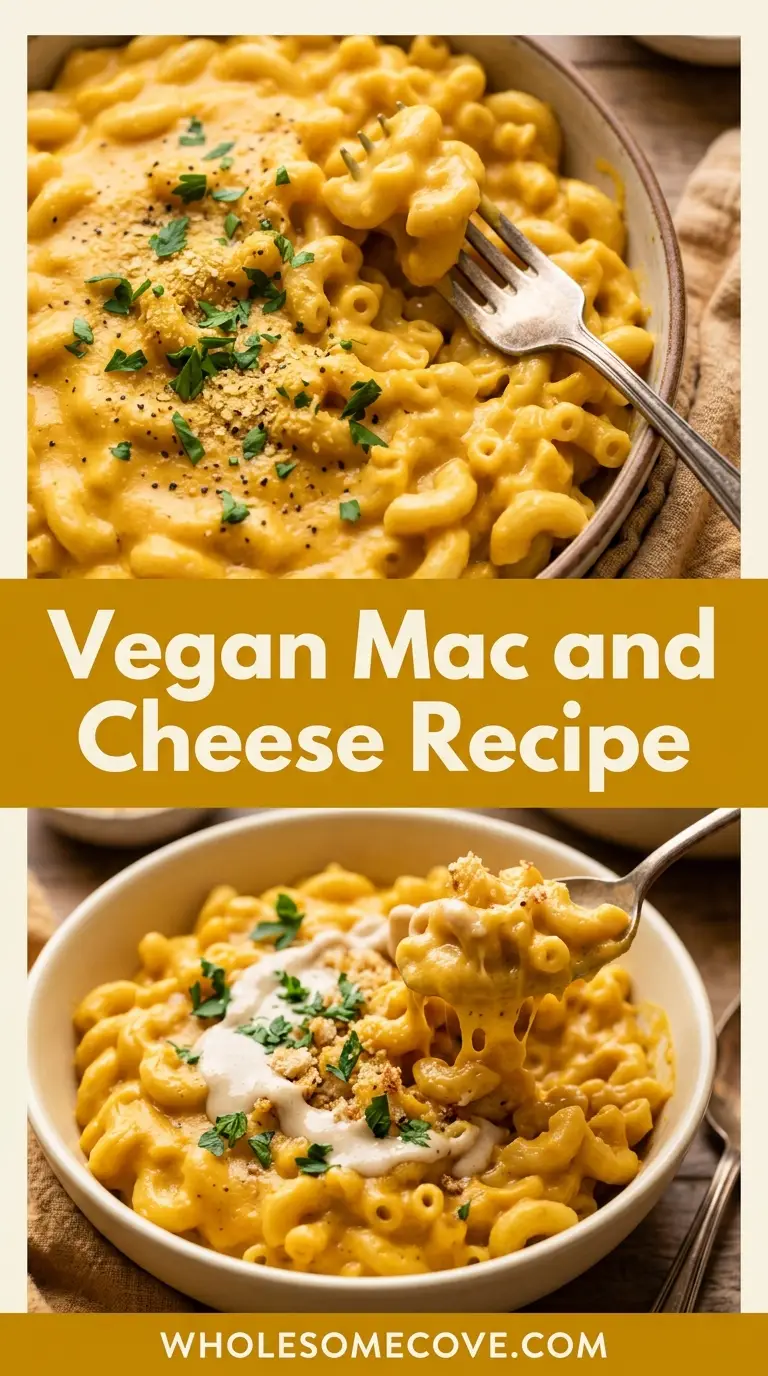
Step-by-Step Instructions: How to Make Vegan Mac and Cheese
Step 1: Soak the Cashews
- Place 1 cup (140g) of raw cashews in a small bowl.
- Pour enough room-temperature water over them to fully submerge. They will absorb water and expand, so make sure the water level sits at least an inch above the cashews.
- Let them soak for at least 30 minutes at room temperature. For the creamiest result, soak for 2 to 4 hours, or overnight in the fridge.
- If you are short on time, cover the cashews with boiling water and let them soak for 15 minutes. The hot water method works well and the texture difference is minimal.
- Once soaked, drain the cashews through a fine mesh strainer and rinse them briefly under cold water. Discard the soaking water, as it can be slightly bitter.
Step 2: Cook the Pasta
- Fill your large pot with plenty of water, at least 4 quarts (3.8L). More water means the pasta cooks more evenly and doesn’t stick together.
- Bring the water to a rolling boil over high heat. This takes several minutes, so start this while your cashews are soaking to save time.
- Once boiling, add a generous amount of salt to the water. The water should taste pleasantly salty, like mild seawater. This is your one chance to season the pasta itself.
- Add 12 oz (340g) of elbow macaroni to the boiling salted water.
- Cook according to the package directions, but check it 1 to 2 minutes before the suggested time. You want the pasta to be al dente: cooked through but still with a slight firmness when you bite into it. It will absorb a little more sauce later, so don’t overcook it now.
- Reserve about ½ cup (120ml) of pasta cooking water before draining. This starchy water is liquid gold for loosening the sauce later if it thickens too much.
- Drain the pasta through a colander and set it aside. Do not rinse the pasta: the surface starch helps the sauce cling to it.
Step 3: Blend the Cashew Cheese Sauce
- Add the drained and rinsed cashews to your blender.
- Pour in 1 cup (240ml) of unsweetened plant-based milk and ½ cup (120ml) of water.
- Add ¼ cup (20g) nutritional yeast, 1 teaspoon garlic powder, ½ teaspoon onion powder, ½ teaspoon dry mustard powder, ½ teaspoon smoked paprika, and ¼ teaspoon turmeric.
- Add 1 tablespoon white miso paste and 1 tablespoon freshly squeezed lemon juice.
- Add a generous pinch of salt and a few turns of black pepper to start. You will adjust seasoning again at the end.
- Secure the blender lid tightly. If your blender has a hot liquids vent, make sure to use it or leave it slightly ajar to allow steam to escape.
- Blend on high speed for 60 to 90 seconds until the sauce is completely smooth and creamy. Stop and scrape down the sides with a spatula halfway through if needed.
- Taste the sauce before adding it to the pan. Adjust salt, lemon juice, or nutritional yeast as needed. The sauce should taste boldly savory and slightly tangy, as the flavors will mellow slightly once mixed with the pasta.
Step 4: Warm and Finish the Sauce
- Pour the blended cashew sauce into your medium saucepan.
- Warm it over medium-low heat, stirring frequently with a wooden spoon or silicone spatula.
- Do not let it boil. You just want it to become hot and slightly thickened, which takes about 3 to 4 minutes. High heat can cause the sauce to break and become grainy.
- If the sauce looks too thick, add a splash of the reserved pasta cooking water and stir until it loosens to your desired consistency. Add a tablespoon at a time so you don’t over-thin it.
- Taste again and make any final seasoning adjustments at this stage.
Step 5: Combine the Pasta and Sauce
- Add the drained pasta directly to the saucepan with the warm cashew cheese sauce.
- Toss everything together using your spatula or a large spoon, making sure every piece of pasta is coated evenly in the sauce.
- If the mixture looks too thick or clumpy, add another splash of reserved pasta water and toss again.
- Let it sit in the pan for about 1 minute over very low heat. This helps the sauce absorb slightly into the pasta and everything comes together beautifully.
- Give the pot one final taste and add a pinch of salt or extra black pepper if needed.
Step 6: Serve and Garnish
- Scoop the vegan mac and cheese into bowls or onto plates immediately. This dish is best enjoyed right off the stovetop when the sauce is at peak creaminess.
- Optional garnishes that I love: a drizzle of olive oil, a sprinkle of smoked paprika, freshly ground black pepper, chopped fresh parsley or chives, toasted breadcrumbs for crunch, or a pinch of red pepper flakes for heat.
- Serve immediately and enjoy while it’s hot. The sauce thickens as it sits, so leftovers will need a splash of plant milk or water when reheating.
You might also enjoy: Crock Pot Mac and Cheese Recipe
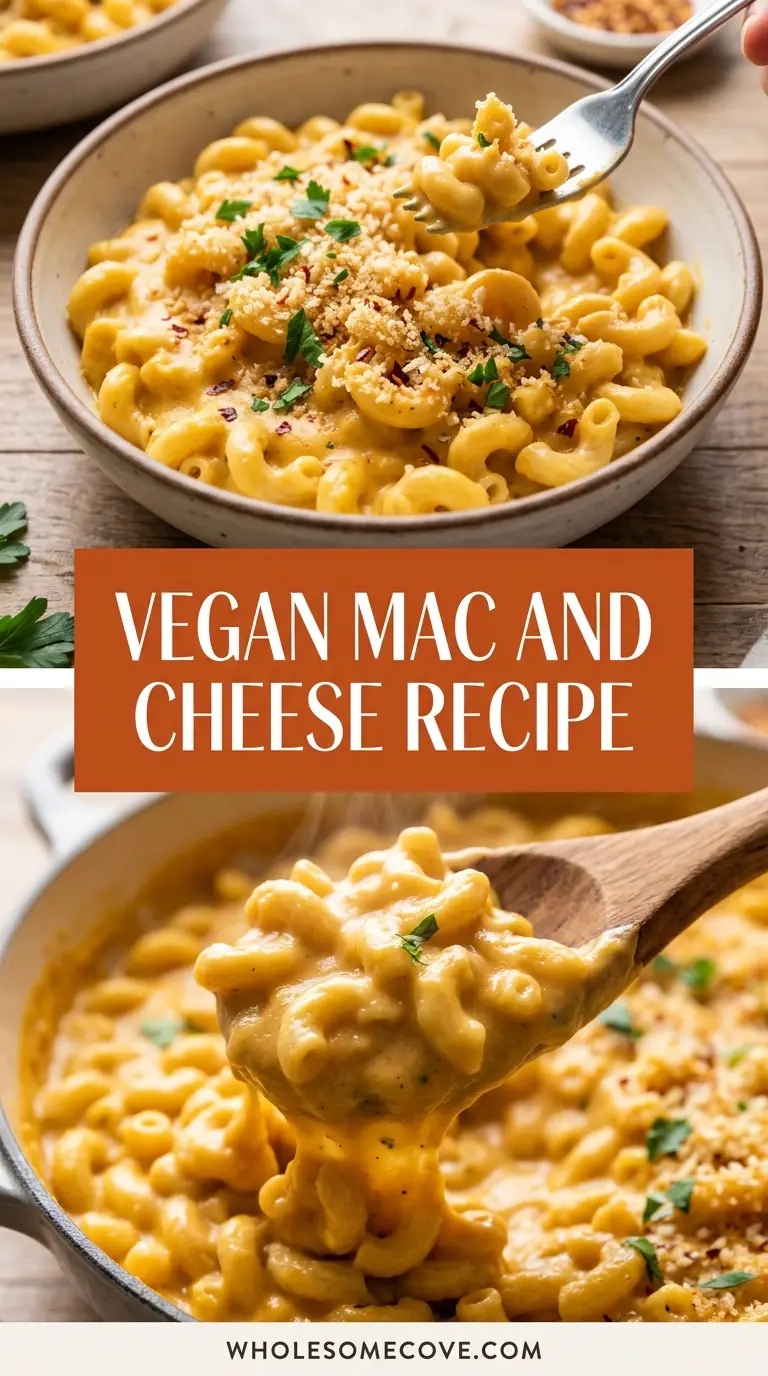
Tips for The Best Vegan Mac and Cheese
These are the lessons I learned the hard way so you don’t have to. Small details make a big difference between a sauce that is merely good and one that is genuinely excellent.
- Soak your cashews long enough: The longer you soak them, the smoother the sauce. Rushing this step and blending under-soaked cashews is the number one reason for a grainy sauce. When in doubt, use hot water to speed up the process.
- Don’t skip the miso paste: This is the ingredient that most people overlook, but it adds a fermented, savory depth that makes the sauce taste genuinely cheese-like. White miso is milder than red or yellow, which is why I prefer it here.
- Use dry mustard, not regular mustard: Prepared mustard has vinegar and other flavors that can throw off the sauce. Dry mustard powder adds that sharp, tangy note that mimics the bite of real cheese without altering the color or texture.
- Salt the pasta water generously: Under-salted pasta tastes flat no matter how good the sauce is. Season the water well and your whole dish will taste more alive and balanced.
- Reserve pasta water before draining: Starchy pasta water is the best tool for loosening a too-thick sauce. It integrates seamlessly and doesn’t dilute the flavor the way plain water would.
- Warm the sauce gently: High heat can cause the cashew cream to separate or become grainy. Keep it at medium-low and stir frequently for a consistently silky result.
- Taste and adjust at every stage: The sauce, the pasta water, and the final dish all need tasting. Nutritional yeast brands vary in potency, and some plant milks are slightly sweeter than others, so trust your palate over the recipe.
- Add toasted breadcrumbs for texture: If you love a little crunch, toss a handful of panko breadcrumbs in a dry pan with a drizzle of olive oil until golden, then scatter them on top just before serving. It transforms the dish into something special.
- Let soaked cashews come to room temperature: If you soaked them in the fridge overnight, let them sit out for 10 minutes before blending. Cold cashews don’t blend quite as smoothly as room-temperature ones.
The same gentle approach to sauce-making works beautifully in my Healthy Alfredo Sauce Recipe, which uses a similar light, creamy base without the heavy cream.
What to Serve with Vegan Mac and Cheese
This dish is hearty enough to stand alone as a main, but it also pairs wonderfully with fresh, bright sides that balance out the richness of the sauce.
- Broccoli Salad: A crunchy, tangy broccoli salad is a classic pairing with mac and cheese. The acidity cuts right through the creaminess of the sauce and the contrasting textures make each bite more interesting.
- Healthy Coleslaw: A light, vinegar-dressed coleslaw brings freshness and crunch. I make mine with a simple apple cider vinegar dressing that brightens up the whole plate.
- Grilled Vegetable Skewers: Smoky grilled zucchini, bell peppers, and mushrooms on skewers make this a complete, colorful, and satisfying meal.
- Roasted Sweet Potato: Caramelized roasted sweet potato wedges are a brilliant pairing. The natural sweetness of the potato complements the savory, cheesy sauce perfectly.
- Tomato Soup: Mac and cheese and tomato soup is a timeless combination. A bowl of smooth, herby tomato soup alongside this vegan version is pure cozy comfort.
- Air Fryer Corn on the Cob: Sweet, slightly charred corn is an easy and crowd-pleasing side. It takes just minutes in the air fryer and tastes incredible alongside this dish.
- Healthy Bruschetta: Crispy toasted bread topped with fresh tomatoes and basil makes a vibrant starter or side that adds a lovely freshness before the richer main course.
Another favorite: Broccoli Salad Recipe
Variations of Vegan Mac and Cheese
Once you’ve nailed the base recipe, it is incredibly easy to riff on it. Here are the variations I make most often, depending on my mood and what’s in the fridge.
- Baked Vegan Mac and Cheese: Transfer the finished mac and cheese to a greased baking dish, top with a generous layer of panko breadcrumbs tossed in olive oil, and bake at 375°F (190°C) for 20 to 25 minutes until the top is golden and crispy. It feels much more indulgent and celebratory.
- Spicy Chipotle Mac: Blend one canned chipotle pepper in adobo sauce into the cashew cream for a smoky, spicy kick that is incredibly addictive. Start with half a pepper if you’re not sure about your heat tolerance.
- Broccoli Mac: Steam or roast a large head of broccoli, cut into small florets, and fold it into the finished mac and cheese. It adds color, nutrition, and a satisfying bite that balances the richness of the sauce.
- Butternut Squash Mac: Blend ½ cup (120g) of roasted butternut squash into the cashew sauce for a sweeter, more complex flavor with an even deeper golden color. This is my favorite autumn version of this recipe.
- Truffle Mac: Add a teaspoon of truffle oil to the finished sauce and finish with a sprinkle of fresh chives. It instantly transforms this weeknight staple into a dinner party showstopper.
- Nut-Free Version: Replace the cashews with 1 cup (240g) of silken tofu, drained. The sauce will be slightly lighter and less rich, but still creamy and delicious. It is also much lower in fat.
- Gluten-Free Version: Simply swap the elbow macaroni for your favorite gluten-free pasta. Brown rice pasta and chickpea pasta both work well and hold their shape nicely under the sauce.
- Mac and “Cheeze” Soup: Thin the finished sauce with an extra cup of vegetable broth, add the pasta and a handful of spinach or kale, and serve it as a thick, creamy pasta soup. It is comforting and filling in a completely different way.
For another stovetop mac variation with even less hands-on time, check out my Instant Pot Mac and Cheese Recipe — the same comfort food concept with minimal stirring required.
Storage and Reheating
This recipe stores well, though the sauce does thicken significantly as it sits in the fridge. A little liquid on reheating brings it right back to its original creaminess.
- Refrigerator storage: Transfer leftover vegan mac and cheese to an airtight container and refrigerate for up to 4 days. The sauce will thicken and the pasta will absorb some of the moisture overnight, which is completely normal.
- Freezer storage: This recipe can be frozen, though the texture of the cashew cream may change slightly on thawing. For best results, freeze just the sauce (without the pasta) in a sealed container for up to 2 months. Thaw in the fridge overnight before using.
- Reheating on the stovetop (recommended): Place the leftover mac and cheese in a small saucepan over medium-low heat. Add a splash of plant milk or water (start with 2 tablespoons and add more as needed) and stir continuously until the sauce loosens and everything is hot and creamy again. This method gives the best results.
- Reheating in the microwave: Transfer a portion to a microwave-safe bowl and add a splash of plant milk. Cover loosely and microwave in 30-second intervals, stirring between each, until heated through. Stir well before eating to redistribute the sauce evenly.
- Make-ahead sauce: The cashew cheese sauce can be made up to 5 days ahead and stored separately in the fridge. When ready to serve, cook fresh pasta and warm the sauce on the stovetop. This is my favorite meal prep trick for busy weeknights.
- Don’t reheat at high heat: High heat causes the cashew cream to break down and become grainy. Always reheat gently on low to medium-low heat for the best texture.
Read Also: Southern Mac and Cheese Recipe
Nutritional Facts
The values below are approximate and based on one serving (one quarter of the full recipe). Exact figures will vary depending on the pasta brand, plant milk used, and any additional toppings.
| Nutritional Facts (Per Serving) | |
|---|---|
| Calories | 480 kcal |
| Total Fat | 16g |
| Saturated Fat | 2.5g |
| Trans Fat | 0g |
| Cholesterol | 0mg |
| Sodium | 410mg |
| Total Carbohydrates | 68g |
| Dietary Fiber | 4g |
| Total Sugars | 4g |
| Protein | 16g |
| Vitamin D | 0mcg |
| Calcium | 60mg |
| Iron | 3.5mg |
| Potassium | 480mg |
| Vitamin B12 | 4mcg (167% DV, from nutritional yeast) |
| Zinc | 3mg |
You might also enjoy: Chickpea and Spinach Curry Recipe
Health Benefits of Key Ingredients
This dish doesn’t just taste great: every major ingredient brings real nutritional value to the table, making it one of the most nourishing comfort food recipes in my rotation.
- Cashews: Raw cashews are packed with heart-healthy monounsaturated fats, magnesium for muscle function, and zinc for immune support. They are also a good source of plant-based protein. The soaking process makes their nutrients more bioavailable and easier to digest.
- Nutritional yeast: This is a nutritional powerhouse for anyone eating plant-based. It is one of the few non-animal sources of complete protein and is typically fortified with Vitamin B12, a nutrient that vegans often need to supplement. It also provides zinc, selenium, and B vitamins like thiamine and riboflavin.
- Turmeric: The active compound in turmeric, curcumin, has been widely studied for its anti-inflammatory and antioxidant properties. Even the small amount used in this recipe contributes a meaningful dose of this beneficial compound.
- Smoked paprika: Rich in antioxidants, particularly carotenoids like beta-carotene and capsanthin, paprika supports eye health and has mild anti-inflammatory effects. It also adds flavor without adding any sodium.
- White miso paste: As a fermented food, miso contains beneficial probiotics that support gut health. It also provides essential amino acids and is a source of copper, manganese, and zinc. Use it moderately as it does contribute to sodium intake.
- Lemon juice: A tablespoon of fresh lemon juice adds Vitamin C, which not only brightens the flavor of the dish but also helps your body absorb non-heme (plant-based) iron from other ingredients more efficiently.
- Elbow macaroni: When made from whole wheat or legume-based pasta, this provides additional fiber and protein. Even regular pasta provides complex carbohydrates for sustained energy.
If you love nutrient-dense plant-based meals, my Lentil and Vegetable Soup Recipe is another fantastic option packed with plant protein and fiber.
FAQs About Vegan Mac and Cheese
1. Can I make this recipe nut-free?
Yes, absolutely. Replace the cashews with 1 cup (240g) of silken tofu, well drained, or with ½ cup (70g) of raw sunflower seeds that have been soaked in water for 2 to 4 hours.
The flavor will be slightly different, but the sauce will still be creamy and delicious. Silken tofu gives the closest texture to the cashew version.
2. What if my sauce turns out grainy?
Grainy sauce is almost always caused by under-soaked cashews or a blender that is not powerful enough to fully break them down.
If this happens, try blending for longer on the highest speed setting, adding a little more liquid, and then passing the sauce through a fine mesh strainer to catch any remaining pieces.
3. Can I use a different type of pasta?
Any short pasta shape works great here. Shells, penne, rotini, cavatappi, and fusilli all hold the sauce beautifully.
Just make sure to cook it al dente as directed on the package, since it will continue to absorb sauce after being tossed.
4. Does this taste like “real” mac and cheese?
It doesn’t taste identical to traditional dairy-based mac and cheese, but it is genuinely rich, cheesy, and satisfying in its own right.
Many people who eat both dairy and plant-based foods love this version just as much. The nutritional yeast and miso combination gets remarkably close to that savory, umami-rich cheese flavor.
5. Can I make this ahead of time for a party or meal prep?
Yes. The sauce can be made up to 5 days ahead and stored in an airtight container in the fridge.
Cook the pasta fresh just before serving and warm the sauce gently on the stovetop with a splash of plant milk for a perfect, party-ready result every time.
Read Also: Vegan Fall Recipes
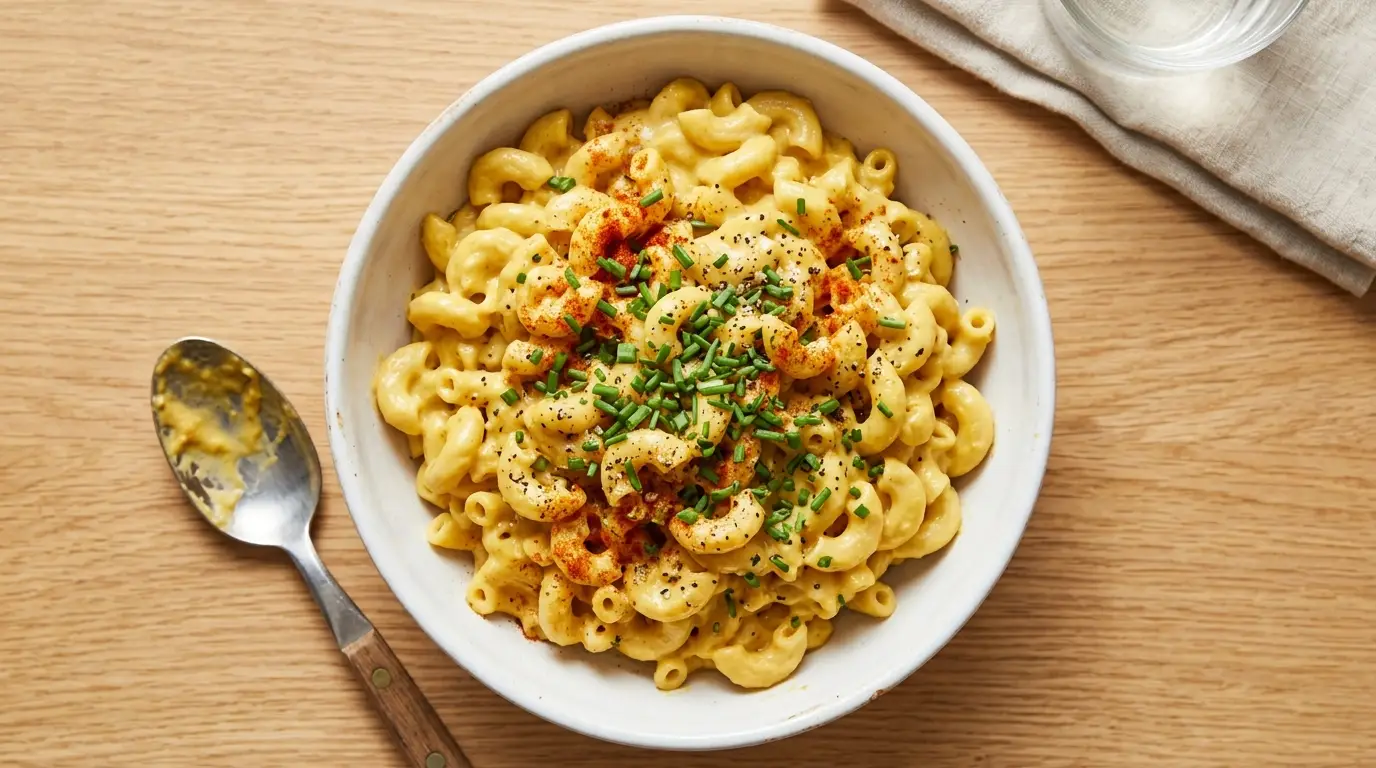
Vegan Mac and Cheese
Ingredients
- 12 oz elbow macaroni - 340g; any short pasta shape works — shells, penne, or rotini; use gluten-free pasta if needed
- 1 cup raw cashews - 140g; soaked in water for at least 30 minutes (or 15 minutes in boiling water), then drained and rinsed; do not use roasted or salted
- 1 cup unsweetened plant-based milk - 240ml; oat milk or almond milk recommended; do not use sweetened or flavored varieties
- 1/2 cup water - 120ml; for blending
- 1/4 cup nutritional yeast - 20g; flaked variety blends more smoothly than powdered
- 1 tsp garlic powder
- 1/2 tsp onion powder
- 1/2 tsp dry mustard powder - also called mustard powder or ground mustard; do not substitute with prepared mustard
- 1/2 tsp smoked paprika - Spanish-style preferred for best smoky depth
- 1/4 tsp turmeric - for color and mild earthiness
- 1 tbsp lemon juice - 15ml; freshly squeezed
- 1 tbsp white miso paste - do not substitute with red or yellow miso; adds umami depth
- salt - to taste, plus more for pasta water
- black pepper - to taste
- 1 tbsp olive oil - 15ml; for drizzling over finished dish
- smoked paprika - extra, for garnish
- fresh parsley or chives - chopped, for garnish
- panko breadcrumbs - toasted in olive oil until golden, for crunch topping (optional)
- red pepper flakes - for heat, optional
Equipment
- Small bowl - For soaking cashews
- Fine-mesh strainer - For draining soaked cashews
- Large pot - At least 4-quart capacity for cooking pasta
- Colander - For draining cooked pasta
- High-powered blender - Essential for a perfectly smooth, lump-free cashew cream sauce
- Medium saucepan - For warming and finishing the sauce
- Wooden spoon or silicone spatula - For stirring sauce and tossing pasta
- Chef’s knife and cutting board - Optional, for preparing garnishes
Method
- Place raw cashews in a small bowl, cover with room-temperature water by at least 1 inch, and soak for 30 minutes to 4 hours (or 15 minutes in boiling water if short on time). Drain through a fine mesh strainer, rinse under cold water, and discard the soaking liquid.
- Bring a large pot of generously salted water to a rolling boil, add the elbow macaroni, and cook until al dente according to package directions. Before draining, reserve ½ cup (120ml) of starchy pasta water, then drain through a colander without rinsing.
- Add drained cashews, plant-based milk, water, nutritional yeast, garlic powder, onion powder, dry mustard, smoked paprika, turmeric, lemon juice, white miso paste, salt, and black pepper to a high-powered blender. Blend on high for 60 to 90 seconds until completely smooth and creamy, scraping down the sides as needed.
- Pour the blended cashew sauce into a medium saucepan and warm over medium-low heat, stirring frequently, for 3 to 4 minutes until hot and slightly thickened. Do not let it boil; if the sauce is too thick, stir in reserved pasta water one tablespoon at a time.
- Add the drained pasta to the saucepan and toss to coat every piece evenly in the sauce. Let sit over very low heat for 1 minute, then taste and adjust salt and pepper as needed.
- Serve immediately in bowls, drizzled with olive oil and garnished with a sprinkle of smoked paprika, fresh parsley or chives, toasted panko breadcrumbs, and red pepper flakes as desired. Enjoy right away for peak creaminess.
Nutrition
Notes
- Soak cashews long enough: Under-soaked cashews are the most common cause of a grainy sauce. When in doubt, use the 15-minute hot water soak method.
- Don’t skip the miso paste: White miso adds fermented umami depth that makes the sauce taste genuinely cheese-like. Red or yellow miso is too strong and will overpower the other flavors.
- Use dry mustard, not prepared mustard: Prepared mustard contains vinegar and additives that alter the flavor and texture of the sauce. Dry mustard powder is the right call here.
- Salt the pasta water generously: The water should taste pleasantly salty like mild seawater. This is your only chance to season the pasta itself.
- Always reserve pasta water: Starchy pasta water is the best tool for loosening a too-thick sauce. It blends seamlessly without diluting the flavor.
- Nut-free substitution: Replace cashews with 1 cup (240g) of well-drained silken tofu or ½ cup (70g) of raw sunflower seeds (soaked 2 to 4 hours). The texture is slightly lighter but still creamy.
- Baked version: Transfer finished mac and cheese to a greased baking dish, top with panko breadcrumbs tossed in olive oil, and bake at 375°F (190°C) for 20 to 25 minutes until golden and crispy on top.
- Make-ahead tip: The cashew cheese sauce keeps in an airtight container in the fridge for up to 5 days. Cook fresh pasta just before serving and warm the sauce gently with a splash of plant milk.
- Storage: Leftover mac and cheese keeps refrigerated in an airtight container for up to 4 days. Reheat on the stovetop over medium-low heat with a splash of plant milk, stirring frequently. Avoid high heat to prevent the sauce from becoming grainy.
- Freezing: Freeze only the sauce (without pasta) in a sealed container for up to 2 months. Thaw overnight in the fridge and reheat gently on the stovetop before tossing with freshly cooked pasta.
Private Notes
Tried this recipe?
Let us know how it was!Final Thoughts
This vegan mac and cheese recipe is proof that plant-based comfort food doesn’t have to feel like a sacrifice.
The cashew cream sauce is genuinely creamy, the nutritional yeast delivers real cheesy depth, and the whole thing comes together in about 30 minutes.
I really hope you give this one a try, especially if you’ve been skeptical about vegan mac and cheese in the past.
When you make it, I’d love to hear how it turned out! Drop a comment below, share a photo on social media and tag me, or let me know what variation you tried.
Your feedback genuinely helps me make the recipes on this site better for everyone.
Recommended:
- Velveeta Mac and Cheese Recipe
- Tini’s Mac and Cheese Recipe
- Best Lobster Mac and Cheese Recipe
- Best Bacon Mac and Cheese Recipe
- Cauliflower Fried Rice with Tofu Recipe
- Tofu and Veggie Stir Fry with Brown Rice Recipe
- Sweet Potato and Black Bean Bowls Recipe
- Healthy Fried Rice Recipe
- Creamy Avocado Pasta Recipe
- Summer Vegetable Stir Fry Recipe