I started making this Healthy Fried Rice Recipe on a whim one weeknight when the fridge held exactly two sad carrots, a handful of frozen peas, some leftover brown rice, and a couple of eggs.
I honestly expected something bland and forgettable. What came out was so satisfying and full of flavor that my partner asked me to make it again the very next day.
This has become one of those meals I default to when I want something quick, filling, and genuinely good for me. It tastes like takeout, but with none of the guilt.
The trick is using day-old rice, cooking everything on high heat, and not skimping on the sesame oil at the end.
| Quick Recipe Summary | |
|---|---|
| Prep Time | 10 minutes |
| Cook Time | 15 minutes |
| Total Time | 25 minutes |
| Servings | 4 servings |
| Difficulty Level | Easy |
If you love rice-based dishes packed with vegetables, you’ll also want to check out this Cauliflower Fried Rice with Tofu for a low-carb twist on the classic.
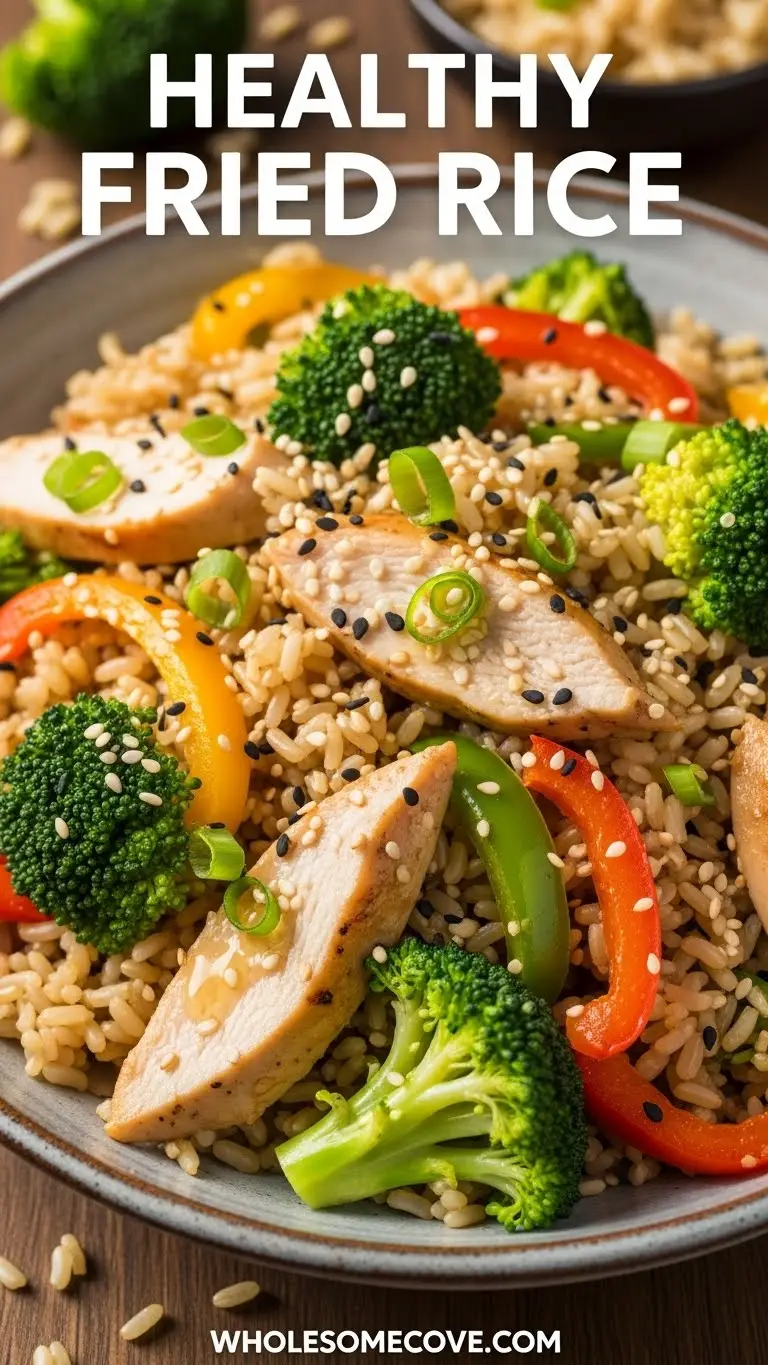
Why You’ll Love This Healthy Fried Rice Recipe
This recipe checks every box for a satisfying weeknight meal. It comes together in under 30 minutes, uses ingredients you likely already have on hand, and tastes genuinely restaurant-quality.
It’s also incredibly flexible. You can add chicken, shrimp, tofu, or keep it purely vegetarian depending on what’s in your fridge.
The combination of brown rice and egg makes it filling and protein-rich without feeling heavy. Every bite has a wonderful mix of textures, from the chewy rice to the tender vegetables to those fluffy scrambled egg pieces.
It’s also a fantastic way to use up leftover rice. In fact, day-old rice is what makes this recipe work so beautifully.
- Budget-friendly: The core ingredients are pantry staples, making this one of the most affordable homemade meals you can put on the table.
- Faster than takeout: From start to finish, you’re done in 25 minutes, which is faster than most delivery apps.
- Highly customizable: Swap in your favorite vegetables, add a protein, or adjust the soy sauce to your taste.
- Meal-prep friendly: It stores and reheats beautifully, making it perfect for packed lunches or busy weeknight dinners.
- Naturally wholesome: Using brown rice, a small amount of healthy oil, and loads of vegetables keeps the calorie count reasonable while maximizing nutrition.
- Kid-approved: Even picky eaters tend to enjoy this dish because the flavors are mild, savory, and familiar.
Read Also: Summer Vegetable Stir Fry Recipe
Ingredients
I kept the ingredient list tight and focused here. Every single item pulls its weight in flavor or nutrition, and nothing feels unnecessary.
- 3 cups (550g) cooked brown rice, day-old and chilled (cold, dry rice is the key to non-mushy fried rice)
- 2 tablespoons (30ml) avocado oil (or any neutral high-heat oil like refined coconut oil), divided
- 1 teaspoon (5ml) toasted sesame oil (added at the end for depth and aroma)
- 3 large eggs, lightly beaten
- 1 medium yellow onion, finely diced (about 1 cup / 150g)
- 3 cloves garlic, minced
- 1 teaspoon (5g) fresh ginger, grated (or ½ teaspoon ground ginger)
- 2 medium carrots, peeled and diced small (about 1 cup / 130g)
- 1 cup (145g) frozen peas, thawed
- 3 green onions (scallions), sliced, whites and greens separated
- 3 tablespoons (45ml) low-sodium soy sauce (or tamari for gluten-free)
- 1 tablespoon (15ml) oyster sauce (optional but highly recommended for umami depth; omit for vegetarian)
- ½ teaspoon white pepper (or black pepper to taste)
- Salt, to taste
You might also enjoy: Stir Fry Sauce Recipe
Kitchen Equipment Needed
You don’t need a professional kitchen setup to nail this recipe. However, the right pan makes a huge difference in achieving that slightly smoky, restaurant-style result.
- Large wok or large non-stick skillet (12-inch / 30cm minimum; the wider the better for even heat)
- Wooden spatula or wok spatula (for tossing the rice without breaking the grains)
- Sharp chef’s knife and cutting board (for prepping vegetables)
- Grater or microplane (for the fresh ginger)
- Small bowls (for keeping prepped ingredients separate before cooking)
- Measuring spoons and cups
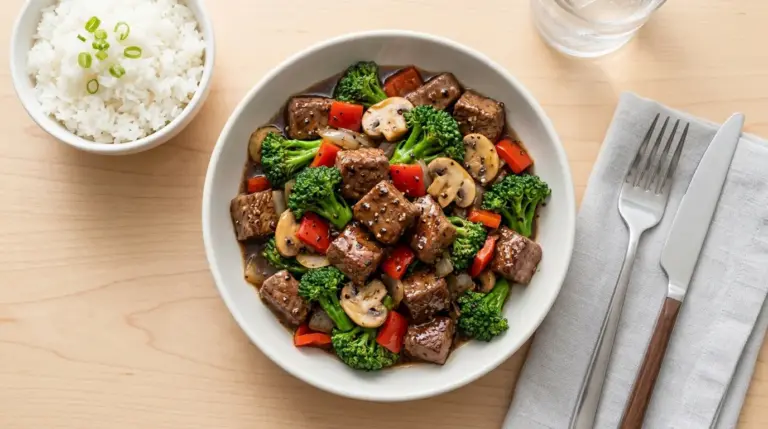
Read Also: Beef and Broccoli Stir Fry Recipe
Recommended Products for This Recipe
These are products I personally rely on to make this healthy fried rice come out perfectly every single time.
1. Carbon Steel Wok
A carbon steel wok heats up faster and more evenly than a regular pan, which is essential for getting that signature smoky “wok hei” flavor in fried rice. I’ve tried making this recipe in a standard saucepan and the results were nowhere near as good. It’s a kitchen investment that pays off every single time you make a stir-fry.
2. Premium Toasted Sesame Oil
Not all sesame oils are created equal. A high-quality toasted sesame oil has a deep, nutty aroma that elevates the entire dish. It’s the finishing touch that makes this healthy fried rice taste like it came from your favorite Asian restaurant.
3. Low-Sodium Tamari (Gluten-Free Soy Sauce)
Using low-sodium tamari instead of regular soy sauce keeps this recipe healthier without sacrificing any of the savory, umami-packed flavor. It’s also naturally gluten-free, making this dish accessible for more people at your table.
4. Microplane Zester/Grater
Grating fresh ginger with a microplane gives you the most flavor with the least effort. The fine grating distributes ginger more evenly throughout the dish compared to mincing, which means every bite gets that warm, aromatic kick.
Another weeknight favorite you might love is this Tofu and Veggie Stir Fry with Brown Rice for a completely plant-based option.
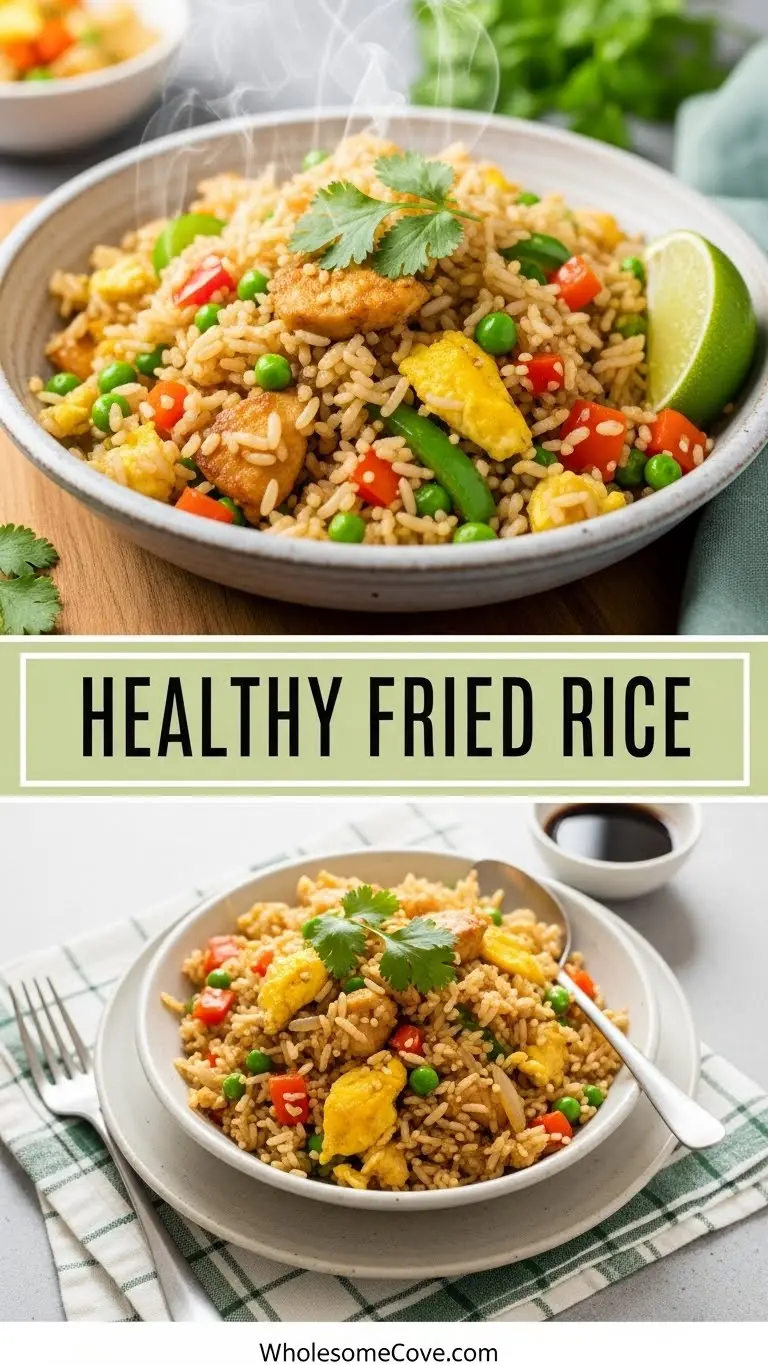
Step-by-Step Instructions: How to Make Healthy Fried Rice
Step 1: Prepare All Ingredients Before You Start Cooking
- Take your day-old brown rice out of the refrigerator and break up any large clumps with your hands or a fork. The rice should feel dry and individual grains should separate easily.
- Dice the yellow onion into small, even pieces about ¼ inch (6mm) in size so they cook quickly and evenly.
- Peel the carrots and dice them similarly small, around ¼ inch (6mm). Smaller pieces mean faster cooking and a more pleasant texture in the finished dish.
- Mince the garlic cloves finely. You want these to be very small so they don’t overpower any single bite.
- Grate the fresh ginger using a microplane or the fine side of a box grater. Set aside with the garlic.
- Separate the green onions by slicing them crosswise. Keep the white and light green parts in one small bowl, and the darker green tops in another, as these will be added at different times.
- Lightly beat the eggs in a small bowl with a pinch of salt. Set aside within reach of the stove.
- Measure out your soy sauce, oyster sauce (if using), and sesame oil into small bowls so they’re ready to pour immediately when needed.
Step 2: Cook the Eggs First
- Place your large wok or non-stick skillet over medium-high heat and let it preheat for about 60 seconds until it feels hot when you hover your hand about 2 inches (5cm) above the surface.
- Add 1 tablespoon (15ml) of avocado oil and swirl to coat the bottom and lower sides of the pan.
- Pour in the beaten eggs and let them sit for about 10 to 15 seconds without stirring, just until the edges start to set.
- Use your spatula to gently scramble them into large, soft curds. You want them slightly underdone at this stage, as they’ll continue cooking when added back to the rice.
- Once the eggs are just set but still slightly glossy, transfer them to a clean plate and set aside. Do not overcook them here; they should look soft and pillowy.
Step 3: Sauté the Aromatics and Vegetables
- Without cleaning the pan, add the remaining 1 tablespoon (15ml) of avocado oil to the same wok or skillet over medium-high heat.
- Once the oil shimmers, add the diced yellow onion and the white parts of the green onions. Stir frequently and cook for 2 to 3 minutes until the onion becomes translucent and starts to soften.
- Add the minced garlic and grated ginger to the pan. Stir constantly for about 30 to 45 seconds, just until fragrant. Be careful not to let the garlic burn, as it will turn bitter quickly at this heat.
- Add the diced carrots to the pan. Spread them out in an even layer and let them cook, stirring every 30 seconds or so, for about 3 to 4 minutes until they begin to soften but still have a slight bite.
- Add the thawed frozen peas and stir everything together. Cook for another 1 to 2 minutes until the peas are heated through and bright green.
Step 4: Add the Rice and Season
- Increase the heat to high if it isn’t already there. High heat is critical for preventing the rice from steaming and turning mushy.
- Add the chilled brown rice to the pan, breaking up any remaining clumps with your spatula as you go.
- Spread the rice out into an even layer across the pan and let it sit undisturbed for about 60 seconds. This allows the bottom layer to get a little toasty and slightly crisp, which adds incredible texture.
- Toss everything together thoroughly, making sure the rice and vegetables are well combined.
- Pour the low-sodium soy sauce evenly over the rice and toss to coat. Add the oyster sauce if using, and stir to distribute it throughout the dish.
- Season with white pepper and taste the rice. Adjust salt or soy sauce as needed at this stage.
- Continue stir-frying everything together over high heat for another 2 to 3 minutes, tossing regularly to prevent sticking and to ensure even seasoning.
Step 5: Fold in the Eggs and Finish
- Add the reserved scrambled eggs back to the pan, breaking them into smaller pieces as you fold them in with the spatula.
- Stir everything together so the egg pieces are evenly distributed throughout the rice.
- Remove the pan from heat and immediately drizzle the toasted sesame oil over the top. Toss once more to coat everything evenly. The sesame oil should be added off the heat or at the very end to preserve its nutty aroma, which diminishes quickly at high heat.
- Scatter the reserved dark green parts of the sliced green onions over the top.
- Taste once more and adjust seasoning if needed. Serve immediately while hot.
This dish pairs beautifully with Teriyaki Grilled Chicken for a complete, protein-packed dinner spread.
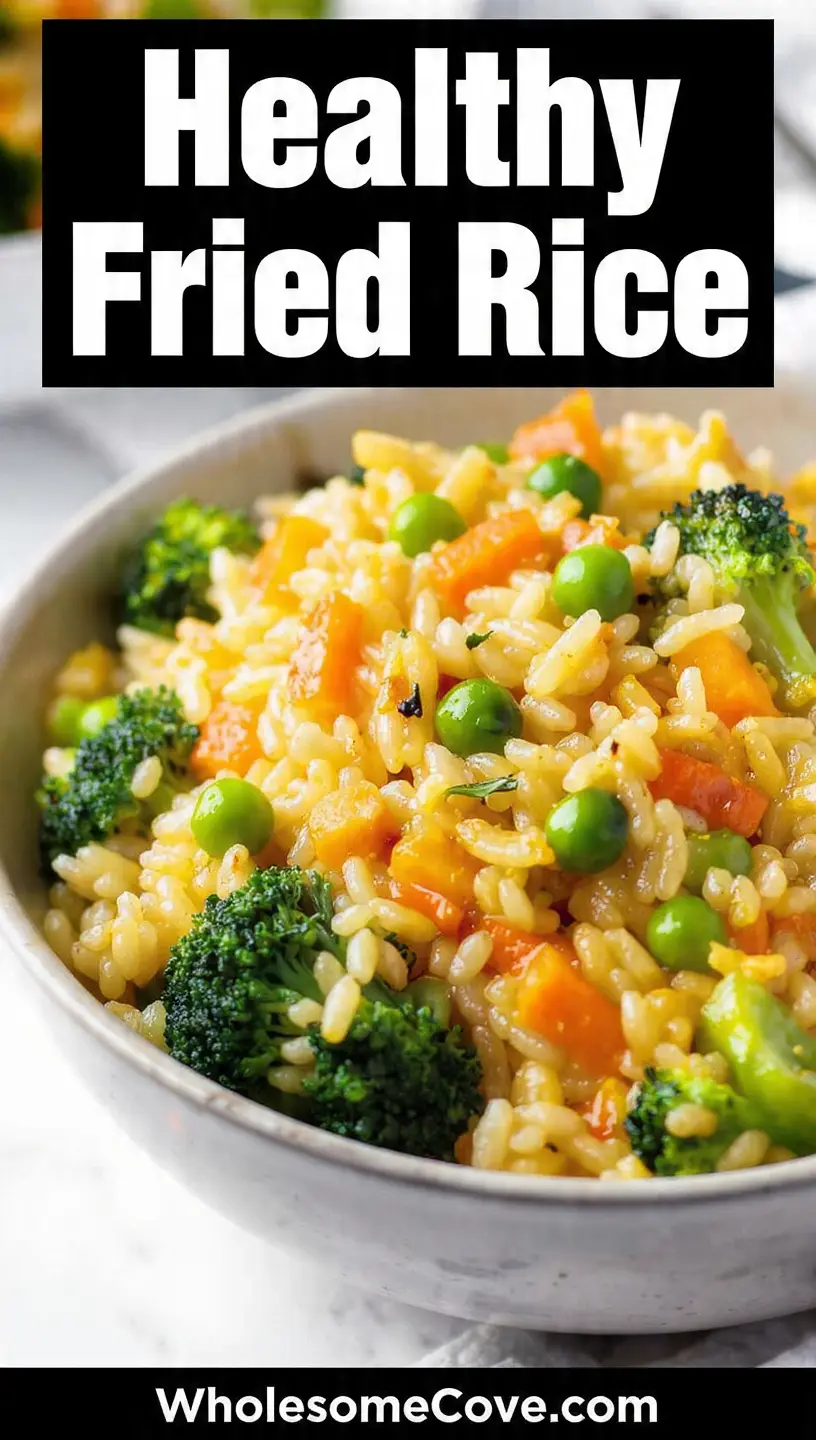
Tips for The Best Healthy Fried Rice
Getting fried rice right comes down to a few key techniques. Once you understand these principles, the recipe practically makes itself.
- Use day-old rice, always. Freshly cooked rice contains too much moisture and will steam instead of fry, resulting in a mushy, clumped texture. Cold, dry, leftover rice is the single most important factor in getting the right result.
- Cook everything in stages. Adding eggs, aromatics, vegetables, and rice all at once causes everything to steam together instead of sear. Cooking in stages and combining at the end gives you better texture and flavor in every component.
- High heat is non-negotiable. Low or medium heat causes ingredients to release moisture and steam, which leads to soggy rice. Keep the temperature cranked up high and work quickly.
- Don’t crowd the pan. Use the largest pan you own. A crowded pan drops the temperature and causes steaming instead of frying. If your pan feels full, cook in two batches.
- Prep everything before you start. Fried rice moves fast. Have every ingredient measured, chopped, and within arm’s reach before the pan goes on the heat.
- Let the rice sit undisturbed for a minute. After adding rice to the pan, resist the urge to immediately stir. Letting it sit for 60 seconds allows the bottom layer to get slightly toasty and golden, adding a wonderful texture contrast.
- Add sesame oil at the very end. Toasted sesame oil is a finishing oil, not a cooking oil. Adding it while the pan is on high heat burns off its aroma. Stir it in right before serving for maximum flavor impact.
- Slightly undercook the eggs. When scrambling the eggs at the beginning, pull them when they’re just barely set. They’ll finish cooking when folded back in with the hot rice.
- Taste and adjust. Every brand of soy sauce has a different sodium level. Always taste the finished dish before serving and add more soy sauce or a pinch of salt as needed.
You might also enjoy: Healthy Orange Chicken Recipe
What to Serve with Healthy Fried Rice
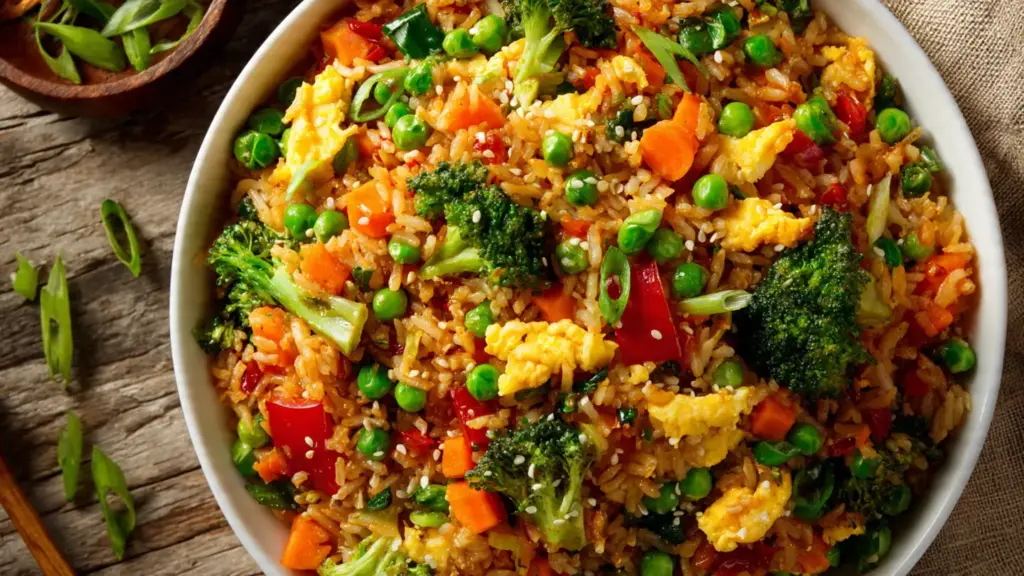
Healthy fried rice is substantial enough to stand alone as a complete meal, but it also works wonderfully alongside lighter proteins and simple sides.
Pairing this rice with something grilled or baked keeps the overall meal feeling balanced and satisfying.
- Asian Chicken Lettuce Cups: The crunch and freshness of lettuce wraps are a wonderful contrast to the warm, savory rice.
- Grilled Salmon with Dill Sauce: A light, flaky salmon fillet alongside this fried rice makes for an incredibly well-rounded dinner.
- Egg Drop Soup: A light, warming bowl of egg drop soup is the perfect starter before serving this rice.
- Baked Salmon with Asparagus and Lemon: The lemon and herbs in this baked salmon complement the savory, umami notes in the fried rice beautifully.
- Grilled Vegetable Skewers: Fire up some colorful vegetable skewers to serve alongside for a completely plant-forward meal.
- Healthy Coleslaw: A crisp, lightly dressed coleslaw adds a refreshing, crunchy element to the plate.
- Deviled Eggs: Serve these as a simple, protein-rich appetizer before the main event.
Read Also: Easy Healthy Dinner Recipes for Family
Variations of Healthy Fried Rice
One of the best things about this recipe is how endlessly adaptable it is. The base technique stays the same; only the add-ins change.
- Chicken Fried Rice: Cook 1 pound (450g) of diced boneless, skinless chicken breast or thighs in a separate pan with a little oil, garlic, and a splash of soy sauce until cooked through. Add the cooked chicken to the rice at the same time you fold in the eggs.
- Shrimp Fried Rice: Sauté 1 pound (450g) of peeled and deveined shrimp in the pan first for about 2 minutes per side until pink. Remove and set aside, then follow the recipe as written, adding the shrimp back in with the eggs at the end.
- Cauliflower Fried Rice: Swap the brown rice for the same volume of riced cauliflower for a lower-carb version. Reduce cooking time slightly since cauliflower cooks faster than rice.
- Pork Fried Rice: Dice leftover pork tenderloin or a cooked pork chop and stir it in along with the rice in Step 4.
- Tofu Fried Rice: Press and cube extra-firm tofu, then pan-fry it separately until golden on all sides before adding to the rice. This is a great high-protein plant-based option.
- Kimchi Fried Rice: Add ½ cup (120g) of chopped kimchi along with the vegetables. Reduce the soy sauce slightly since kimchi adds its own savory saltiness, and finish with a drizzle of gochujang for a spicy kick.
- Pineapple Fried Rice: Stir in ½ cup (85g) of diced fresh pineapple, 2 tablespoons of cashews, and a teaspoon of curry powder for a Thai-inspired twist that’s sweet, savory, and slightly tropical.
Another fantastic option in this category is this Healthy Cabbage Skillet with Quinoa and Chickpeas if you love wholesome grain-based skillet meals.
Storage and Reheating
Healthy fried rice is one of those dishes that holds up beautifully as leftovers, which makes it ideal for meal prepping at the start of the week.
- Refrigerator: Store cooled fried rice in an airtight container in the fridge for up to 4 days. Make sure the rice has cooled completely before sealing and storing to prevent condensation.
- Freezer: Transfer cooled fried rice to a freezer-safe container or zip-top bag, removing as much air as possible. Freeze for up to 2 months. Thaw overnight in the refrigerator before reheating.
- Reheating on the stovetop (recommended): Add a splash of water or soy sauce to a hot skillet, then add the leftover rice. Stir-fry over medium-high heat for 3 to 5 minutes until heated through. This method restores the texture better than any other.
- Reheating in the microwave: Place the rice in a microwave-safe bowl and add a tablespoon of water. Cover loosely with a damp paper towel and microwave in 60-second intervals, stirring between each interval, until steaming hot throughout.
- Food safety reminder: Do not leave cooked rice at room temperature for more than 2 hours. Rice can harbor bacteria if left out too long, so refrigerate it promptly after serving.
- Do not reheat more than once. Reheating rice multiple times increases the risk of foodborne illness. Portion out only what you plan to eat.
Read Also: Chickpea and Spinach Curry Recipe
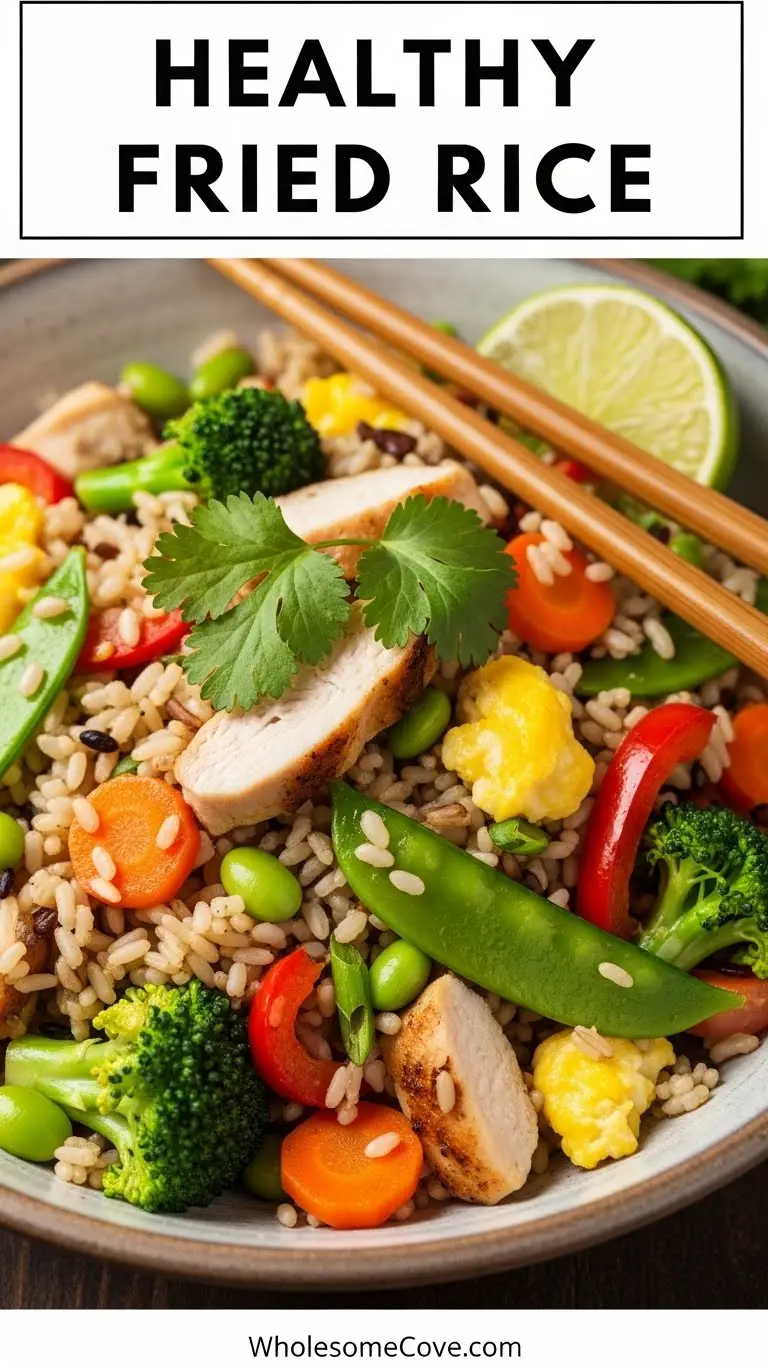
Nutritional Facts
The following values are approximate per serving (1 of 4 servings) based on the ingredients listed. Values may vary depending on specific brands used.
| Nutrient | Per Serving |
|---|---|
| Calories | ~320 kcal |
| Total Fat | 10g |
| Saturated Fat | 1.5g |
| Cholesterol | 140mg |
| Sodium | 560mg |
| Total Carbohydrates | 45g |
| Dietary Fiber | 5g |
| Total Sugars | 4g |
| Protein | 12g |
| Iron | 2mg |
| Vitamin A | 3200 IU |
Using brown rice instead of white rice increases fiber content by approximately 2g per serving. Using tamari or coconut aminos instead of regular soy sauce can reduce sodium by 200-300mg per serving.
You might also enjoy: Lentil and Vegetable Soup Recipe
Health Benefits of Key Ingredients
This recipe isn’t just good; it’s genuinely nourishing, and each core ingredient brings something meaningful to the table.
The combination of whole grains, vegetables, healthy fats, and protein in this dish makes it a well-rounded meal that supports energy, digestion, and overall wellness.
- Brown rice: A whole grain rich in dietary fiber, B vitamins, and magnesium. The fiber slows digestion, keeping you fuller for longer and helping to stabilize blood sugar compared to white rice.
- Eggs: One of the most complete protein sources available, eggs provide all nine essential amino acids along with choline, which supports brain health and liver function. Two eggs provide roughly 12 grams of high-quality protein.
- Carrots: Loaded with beta-carotene, which the body converts to vitamin A. Vitamin A supports eye health, immune function, and skin cell turnover. Carrots also add natural sweetness without any added sugar.
- Peas: A surprisingly good source of plant-based protein (roughly 4g per half cup) and also rich in vitamin K, manganese, and folate. They add a satisfying pop of sweetness and a boost of fiber.
- Garlic: Contains allicin, a compound with well-documented anti-inflammatory and antimicrobial properties. Regular garlic consumption has been associated with improved cardiovascular health.
- Fresh ginger: A natural anti-inflammatory that also aids digestion and can help reduce nausea. Ginger contains gingerols and shogaols, compounds that have been studied for their antioxidant effects.
- Avocado oil: A heart-healthy fat high in oleic acid (the same monounsaturated fat found in olive oil). It has a high smoke point, making it ideal for high-heat cooking without producing harmful compounds.
- Toasted sesame oil: Rich in antioxidants including sesamol and sesamin, which have been studied for their anti-inflammatory properties. Used in small amounts, it adds significant flavor with minimal calories.
- Low-sodium soy sauce: Provides umami depth and adds essential flavor without the high sodium load of regular soy sauce. Fermented soy products also contain beneficial compounds that support gut health.
Read Also: Healthy Shepherds Pie Recipe
FAQs About Healthy Fried Rice
1. Can I use freshly cooked rice instead of day-old rice?
You can, but the texture will be noticeably different. Freshly cooked rice contains a lot of steam and moisture, which causes it to clump and become mushy when fried at high heat. If you must use freshly cooked rice, spread it out on a baking sheet in a thin layer and let it cool in the refrigerator for at least 1 to 2 hours before using.
2. What’s the healthiest oil to use for fried rice?
Avocado oil is my top pick because of its high smoke point (around 500°F / 260°C) and its healthy monounsaturated fat content. Refined coconut oil is another good option. Avoid extra-virgin olive oil for this recipe, as its lower smoke point makes it unsuitable for the high heat required.
3. Can I make this recipe gluten-free?
Absolutely. Simply swap the soy sauce for tamari or coconut aminos, and omit the oyster sauce or replace it with a gluten-free oyster sauce alternative. All other ingredients in this recipe are naturally gluten-free.
4. Can I add more protein to this recipe?
Yes, and there are so many great options. Diced chicken breast, shrimp, tofu, edamame, or even leftover pork all work beautifully. Cook the protein separately in the pan before starting the recipe, set it aside, and fold it back in along with the eggs in Step 5 so it doesn’t overcook.
5. Why does my fried rice turn out mushy?
The three most common reasons are: using freshly cooked rice that hasn’t dried out, cooking on too low a heat, or overcrowding the pan. Make sure your rice is at least one day old and cold, your heat is set to high, and your pan is large enough so the rice can fry rather than steam.
For more rice-based meal inspiration, try: Sweet Potato and Black Bean Bowls Recipe
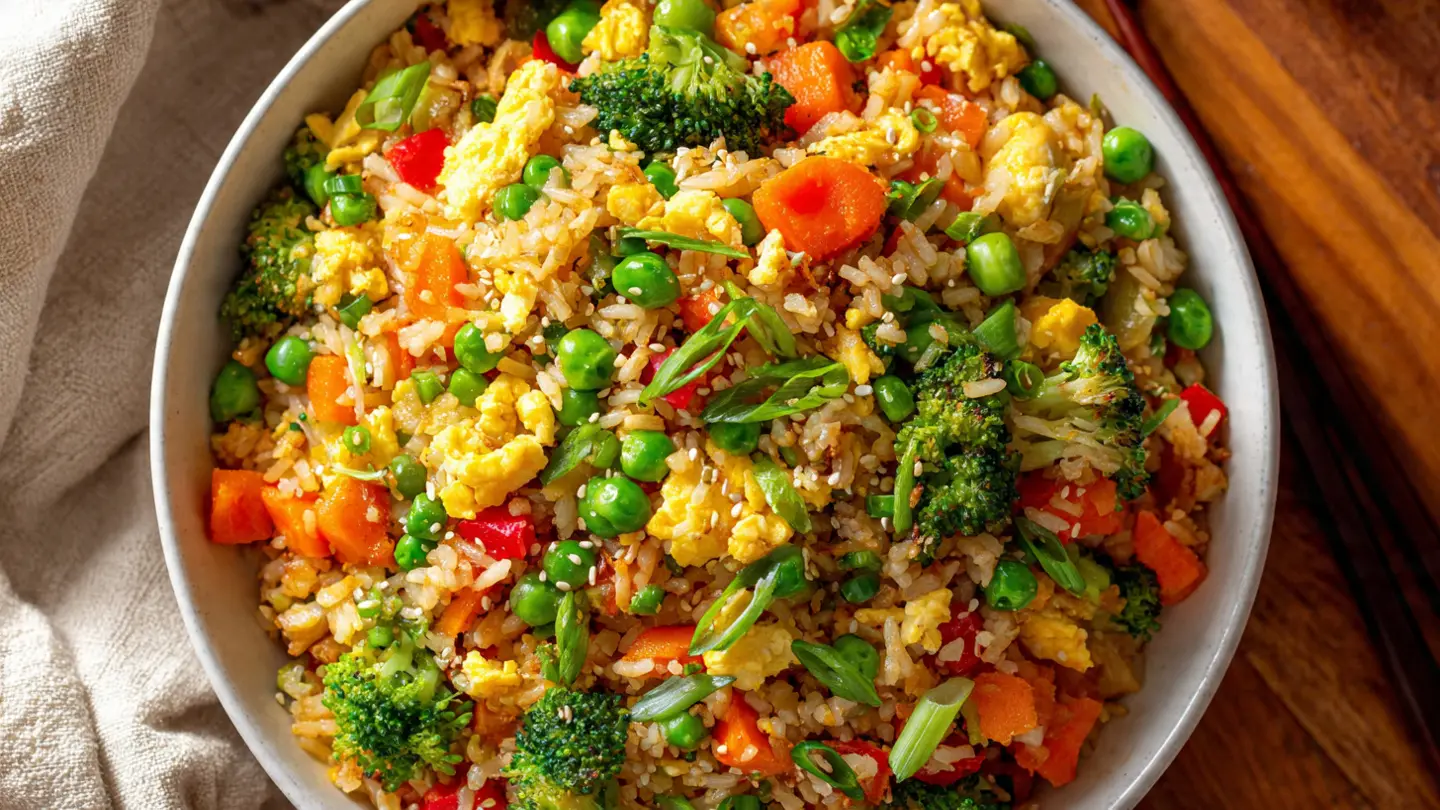
Healthy Fried Rice
Ingredients
- 3 cups cooked brown rice - about 550g; day-old and chilled — cold, dry rice is essential for non-mushy fried rice
- 2 tablespoons avocado oil - 30ml, divided; or any neutral high-heat oil such as refined coconut oil
- 1 teaspoon toasted sesame oil - 5ml; added at the end only — this is a finishing oil, not a cooking oil
- 3 large eggs - lightly beaten with a pinch of salt
- 1 medium yellow onion - finely diced, about 1 cup or 150g
- 3 cloves garlic - minced
- 1 teaspoon fresh ginger - 5g, grated; or substitute ½ teaspoon ground ginger
- 2 medium carrots - peeled and diced small, about 1 cup or 130g
- 1 cup frozen peas - 145g, thawed
- 3 green onions (scallions) - sliced; keep whites and greens separated — whites added with aromatics, greens used as garnish
- 3 tablespoons low-sodium soy sauce - 45ml; substitute tamari for a gluten-free option
- 1 tablespoon oyster sauce - 15ml; optional but highly recommended for umami depth — omit for vegetarian
- ½ teaspoon white pepper - or substitute black pepper to taste
- salt - to taste
Equipment
- Large wok or large non-stick skillet - 12-inch (30cm) minimum; carbon steel wok recommended for best results
- Wooden spatula or wok spatula - For tossing rice without breaking grains
- Chef’s knife and cutting board - For prepping vegetables
- Microplane or box grater - For grating fresh ginger
- Small bowls - For keeping prepped ingredients separate before cooking
Method
- Break up any clumps in the day-old brown rice, then dice the onion and carrots into small ¼-inch (6mm) pieces, mince the garlic, grate the ginger, and separate the green onion whites and greens into two small bowls. Lightly beat the eggs with a pinch of salt, and pre-measure the soy sauce, oyster sauce, and sesame oil so everything is ready before the pan goes on the heat.
- Heat 1 tablespoon (15ml) of avocado oil in a large wok or skillet over medium-high heat, then pour in the beaten eggs and cook, stirring gently, until just set but still slightly glossy. Transfer the soft scrambled eggs to a plate and set aside.
- Add the remaining 1 tablespoon (15ml) of avocado oil to the same pan over medium-high heat, then add the diced yellow onion and the white parts of the green onions and cook for 2 to 3 minutes until softened. Add the minced garlic and grated ginger and stir constantly for 30 to 45 seconds until fragrant.
- Add the diced carrots to the pan and cook, stirring every 30 seconds, for 3 to 4 minutes until beginning to soften. Stir in the thawed peas and cook for 1 to 2 minutes more until bright green and heated through.
- Increase heat to high, add the chilled brown rice, breaking up any remaining clumps, and let it sit undisturbed for 60 seconds to allow the bottom to lightly toast. Drizzle the soy sauce and oyster sauce (if using) over the rice, season with white pepper, and stir-fry everything together for 2 to 3 minutes, tossing regularly.
- Fold the reserved scrambled eggs back into the rice, breaking them into smaller pieces as you stir. Remove from heat, drizzle the toasted sesame oil over the top, toss to combine, and garnish with the reserved green onion tops before serving immediately.
Nutrition
Notes
- Day-old rice is non-negotiable: freshly cooked rice contains too much moisture and will turn mushy. If you only have fresh rice, spread it on a baking sheet and refrigerate for at least 1 to 2 hours before using.
- Always cook on high heat. Medium or low heat causes the ingredients to release moisture and steam, which leads to soft, clumped rice instead of the desired slightly-crispy texture.
- Prep everything before the pan goes on the heat. Fried rice moves fast, so have all ingredients measured and within arm’s reach before you start cooking.
- Add sesame oil at the very end, off the heat. It’s a finishing oil — adding it during cooking burns off its nutty aroma and flavor.
- For gluten-free: swap soy sauce for tamari or coconut aminos and use a gluten-free oyster sauce or omit it entirely.
- To add protein: cook diced chicken, shrimp, or tofu separately, set aside, and fold in with the eggs in the final step. About 1 pound (450g) of protein works well for 4 servings.
- To make it vegetarian or vegan: omit the oyster sauce (or use a vegan oyster sauce alternative) and replace eggs with scrambled firm tofu.
- Storage: refrigerate cooled leftovers in an airtight container for up to 4 days, or freeze for up to 2 months. Reheat in a hot skillet with a splash of soy sauce or water for best results.
- For extra flavor: let the rice sit undisturbed in the pan for a full 60 seconds before stirring — this creates a lightly toasted bottom layer with incredible texture.
- Don’t crowd the pan: if your skillet feels full, cook in two batches to maintain high heat and prevent steaming.
Private Notes
Tried this recipe?
Let us know how it was!Final Thoughts
This Healthy Fried Rice Recipe has honestly changed the way I think about weeknight cooking. It proves that simple ingredients and a little technique can produce something genuinely wonderful.
Once you make it a couple of times, you’ll find yourself eyeing leftover rice with excitement rather than indifference.
I love how it brings so many flavors and textures together in one pan with minimal cleanup. It feels like a treat, but it’s actually a meal you can feel good about putting on the table.
I’d love to hear how yours turned out! Drop a comment below and let me know what protein or vegetables you added, and don’t forget to share this recipe with a friend who could use a go-to weeknight win.
Recommended:
- Cauliflower Fried Rice with Tofu
- Tofu and Veggie Stir Fry with Brown Rice
- Beef and Broccoli Stir Fry
- Healthy Orange Chicken
- Teriyaki Sauce Recipe
- Hoisin Sauce Recipe
- Grilled Chicken and Veggie Skewers
- Mediterranean Quinoa Salad with Grilled Chicken
- Healthy Nachos Recipe
- Easy Healthy Homemade Granola