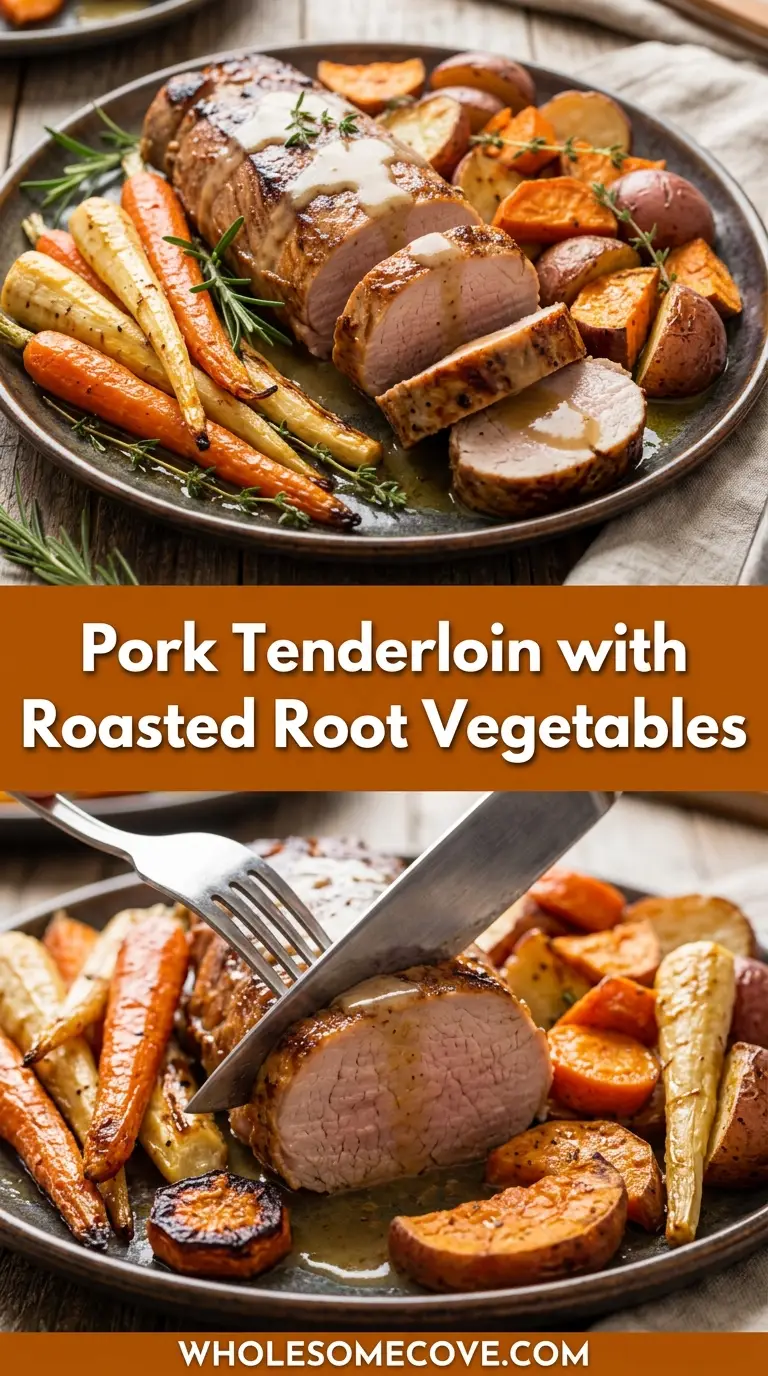
I’ll be honest: this Pork Tenderloin with Roasted Root Vegetables Recipe didn’t start as something fancy. It started as a Tuesday-night panic where I had a pork tenderloin in the fridge and a bunch of root vegetables that were getting a little too close to their expiration date. I threw it all on a sheet pan, crossed my fingers, and that meal became one of the most-requested dinners in my house.
The magic here is in the simplicity. A well-seasoned tenderloin roasted alongside caramelized carrots, parsnips, turnips, and potatoes is just one of those combinations where everything belongs together.
The pork stays juicy and tender on the inside with a gorgeous golden crust on the outside, and the vegetables soak up all those savory pan drippings. It tastes like something you’d order at a cozy bistro, but it comes together with minimal effort and one pan to wash.
I’ve made this dozens of times and I’ve learned a lot along the way. I overcooked the tenderloin on my second attempt and the whole thing turned dry and rubbery. Now I rely on a meat thermometer every single time, and it has never let me down since. Let me walk you through exactly how to get this right.
| Quick Recipe Summary | |
|---|---|
| Prep Time | 20 minutes |
| Cook Time | 35 minutes |
| Total Time | 55 minutes |
| Servings | 4 servings |
| Difficulty Level | Easy |
If you love one-pan dinners with bold flavors, you’ll also enjoy this Pork and Apple Skillet for another weeknight-friendly pork dish that practically cooks itself.
Why You’ll Love This Pork Tenderloin with Roasted Root Vegetables Recipe
This is genuinely one of those recipes that does almost all the work for you. You just season, arrange, and roast.
- One-pan cleanup: Everything roasts on a single sheet pan, which means fewer dishes and more time to actually enjoy dinner with your family.
- Incredibly fast for a roast: Unlike a pork shoulder or a beef roast that needs hours, pork tenderloin is fully cooked in under 40 minutes. That makes it totally doable on a weeknight.
- Budget-friendly: Pork tenderloin is one of the leanest and most affordable cuts at the grocery store. Paired with inexpensive root vegetables, this dinner costs very little to make.
- Crowd-pleasing flavors: The combination of savory herbs, sweet roasted vegetables, and juicy pork appeals to just about everyone at the table, including picky eaters.
- Naturally gluten-free: The whole recipe is naturally gluten-free as written, making it a great option when you’re cooking for guests with dietary restrictions.
- Great for meal prep: The leftovers reheat beautifully and taste just as good the next day, making this an excellent recipe to make ahead for the week.
- Deeply satisfying: The combination of protein and hearty roasted vegetables is genuinely filling. This is a dinner that actually sticks with you.
Another favorite pork dinner in my rotation is this Pork Stew — especially comforting on cold nights when you want something rich and hearty.
Ingredients
The key to this recipe is keeping things simple and letting quality ingredients shine. I always reach for fresh herbs and a good olive oil, because those two things make a noticeable difference in the final flavor. Here’s everything you’ll need:
- 1 pork tenderloin (about 1–1.25 lbs / 450–565g) — look for a well-trimmed tenderloin with the silver skin already removed, or remove it yourself before cooking
- 2 tablespoons olive oil, divided — one for the pork, one for the vegetables
- 1 teaspoon garlic powder
- 1 teaspoon smoked paprika — this adds a subtle depth and beautiful color to the pork crust
- 1 teaspoon dried thyme (or 1 tablespoon fresh thyme leaves)
- 1 teaspoon dried rosemary, roughly chopped (or 1 tablespoon fresh rosemary, minced)
- 1 teaspoon kosher salt, plus more to taste
- ½ teaspoon black pepper, freshly ground
- 2 medium carrots (about 200g), peeled and cut into 1-inch (2.5cm) pieces
- 2 medium parsnips (about 200g), peeled and cut into 1-inch (2.5cm) pieces
- 1 medium turnip (about 200g), peeled and cut into 1-inch (2.5cm) cubes
- 2 medium Yukon Gold potatoes (about 300g), cut into 1-inch (2.5cm) cubes — Yukon Golds hold their shape better than russets during roasting
- 1 medium red onion, cut into wedges
- 4 garlic cloves, smashed and left in the skin
- 1 tablespoon balsamic vinegar — drizzled over the vegetables before roasting for a slight sweetness and caramelization
- Fresh parsley, chopped, for garnish
The roasted potatoes in this dish are some of my favorites. If you want to make a dedicated batch on the side, check out this guide to perfect Roasted Sweet Potatoes — the technique is very similar and works beautifully as an alternative.
Kitchen Equipment Needed
You don’t need any special equipment for this recipe, but a few key tools make the process noticeably smoother. Here’s what I use every single time I make this:
- Large Rimmed Baking Sheet (18×13 inches / 46x33cm) — the rimmed edge is essential to prevent any drippings from spilling over. Make sure it’s large enough to spread the vegetables in a single layer.
- Instant-Read Meat Thermometer — this is the single most important tool for this recipe. Pork tenderloin goes from perfectly cooked to overdone in just a few minutes, so a thermometer takes all the guesswork out of it.
- Cast Iron Skillet or Oven-Safe Skillet — optional but helpful if you want to sear the tenderloin before roasting for an even better crust. A 10 or 12-inch skillet works best.
- Wire Rack — placing the tenderloin on a wire rack set over the baking sheet allows hot air to circulate all around the meat for a more evenly browned exterior.
- Large Mixing Bowl — for tossing the vegetables with olive oil and seasonings before spreading them on the pan.
- Sharp Chef’s Knife — for peeling and cutting the root vegetables into even pieces, which ensures they all cook at the same rate.
- Cutting Board — use a separate cutting board for the raw pork to avoid cross-contamination.
- Aluminum Foil — for tenting the pork while it rests after cooking. This step keeps it juicy and is non-negotiable.
- Vegetable Peeler — for quickly peeling the carrots, parsnips, and turnip.
Read Also: Roasted Potatoes Recipe
Recommended Products for This Recipe
Over the years I’ve tested this recipe with all kinds of tools and ingredients, and a few specific products have made a real difference in the results. Here are my personal picks:
1. ThermoWorks Thermapen Instant-Read Thermometer
This is genuinely the tool that transformed how I cook pork. Because tenderloin is so lean, it goes from perfect to dry incredibly fast, and a reliable thermometer is the only way to nail the 145°F / 63°C sweet spot every time. The Thermapen reads in under two seconds and is accurate to within 0.7°F — it’s the one I reach for every single time I roast meat.
2. Nordic Ware Natural Aluminum Commercial Baker’s Half Sheet
I’ve gone through several cheaper sheet pans that warped in the oven and caused uneven roasting. This one stays completely flat at high heat, and the heavier gauge aluminum distributes heat so evenly that the vegetables brown beautifully without burning. I own three of these and use them constantly.
3. California Olive Ranch Extra Virgin Olive Oil
A good olive oil does more work in this recipe than you’d think. It helps the herb rub stick to the pork, promotes browning on the vegetables, and adds a clean, slightly peppery flavor that ties everything together. I’ve tried cheaper oils and they just don’t deliver the same result.
4. Lodge 12-Inch Cast Iron Skillet
If you want the best possible sear on your pork tenderloin before it goes into the oven, nothing beats cast iron. It holds heat exceptionally well and creates that deep, caramelized crust that makes the pork look and taste restaurant-quality. Lodge’s pre-seasoned skillet is a workhorse that will last for decades.
One of the vegetables in this recipe I can’t get enough of is glazed carrots. If you want to make them as a standalone side, my Maple Glazed Carrots are absolutely worth making on their own.

Step-by-Step Instructions: How to Make Pork Tenderloin with Roasted Root Vegetables
Step 1: Prep the Oven and Pan
- Preheat your oven to 425°F (220°C). A hot oven is key — it’s what gives the vegetables their caramelized edges and gives the pork a nicely browned exterior.
- Line your large rimmed baking sheet with aluminum foil for easy cleanup, then place a wire rack over it if you have one. If not, that’s okay — you can roast everything directly on the pan.
- Set the pan aside while you prep everything else.
Step 2: Remove the Silver Skin from the Pork Tenderloin
- Place the pork tenderloin on a clean cutting board and look for the silver skin — it’s the shiny, thin, grayish membrane that runs along one side of the meat.
- Slide the tip of a sharp knife just under the silver skin at one end, angling it slightly upward. Grip the loose end with a paper towel for a better hold.
- Using a gentle sawing motion, run the knife along the length of the silver skin, pulling it away as you go. Remove as much as you can without cutting away too much of the meat. This step is important because silver skin doesn’t break down during cooking and will make the tenderloin tough and chewy if left on.
- Pat the tenderloin completely dry with paper towels. This is critical for getting a good sear or browned exterior in the oven — moisture is the enemy of browning.
Step 3: Make the Herb Rub and Season the Pork
- In a small bowl, combine the garlic powder, smoked paprika, dried thyme, dried rosemary, kosher salt, and black pepper. Mix well.
- Drizzle 1 tablespoon of the olive oil over the tenderloin and rub it all over with your hands to coat evenly.
- Sprinkle the herb rub all over the oiled tenderloin, pressing it gently with your fingers so it adheres to the meat on all sides — the top, bottom, and both ends.
- Set the seasoned tenderloin aside at room temperature while you prep the vegetables. Letting it sit for 10–15 minutes allows the seasoning to penetrate slightly and helps the pork cook more evenly since it’s not going cold from the fridge straight into a hot oven.
Step 4: Prep and Season the Root Vegetables
- Peel the carrots, parsnips, and turnip. Cut all the root vegetables — carrots, parsnips, turnip, and potatoes — into 1-inch (2.5cm) pieces, trying to keep them as uniform in size as possible. Even pieces are important: if some are much larger than others, you’ll end up with some undercooked and some overcooked vegetables.
- Cut the red onion into wedges, keeping the root end intact so the layers stay together during roasting.
- Smash the garlic cloves with the flat side of your knife. Leave them in their skins — they’ll roast gently and become sweet and creamy inside. You can squeeze them out of the skin to eat them, or discard if preferred.
- Add all the prepared vegetables, onion wedges, and garlic to a large mixing bowl. Drizzle over the remaining 1 tablespoon of olive oil and the balsamic vinegar. Toss well to coat every piece evenly.
- Season the vegetables with a generous pinch of salt and several grinds of black pepper, then toss again to distribute the seasoning.
Step 5: Arrange on the Pan
- Spread the seasoned vegetables out in a single, even layer on the prepared baking sheet. This is the most important thing you can do for proper roasting: if the vegetables are crowded and piled on top of each other, they’ll steam instead of roast. Use two pans if necessary to avoid overcrowding.
- If you’re using a wire rack, position the seasoned pork tenderloin in the center of the rack over the vegetables. If you’re roasting everything directly on the pan, push the vegetables to the edges and place the tenderloin in the center.
- Make sure there’s at least an inch of space between the tenderloin and the vegetables so hot air can circulate properly.
Step 6: Roast in the Oven
- Transfer the pan to the preheated oven and roast at 425°F (220°C) for about 25–30 minutes. The exact time will depend on the thickness of your tenderloin and the size of your vegetable pieces.
- At the 20-minute mark, use tongs to gently turn the pork tenderloin over for even browning. Also give the vegetables a stir with a spatula to expose any unbrowned sides to the pan.
- Continue roasting until the internal temperature of the pork reads 145°F (63°C) on an instant-read thermometer inserted into the thickest part. Start checking at 25 minutes to avoid overcooking.
- The vegetables are done when they are golden brown on the edges and easily pierced with a fork. If the pork is done before the vegetables, remove the tenderloin to rest (see next step) and return the pan with vegetables to the oven for an additional 5–10 minutes.
Step 7: Rest the Pork Before Slicing
- Remove the tenderloin from the oven and transfer it to a clean cutting board. Do not cut into it yet. This is one of the most common mistakes home cooks make — skipping the rest.
- Tent the tenderloin loosely with a piece of aluminum foil. The loose tent allows steam to escape so the crust doesn’t go soggy, while still trapping enough heat to let the meat finish cooking internally.
- Let the pork rest for at least 5–10 minutes. During this time the internal temperature will rise a few more degrees (this is called carryover cooking) and the juices will redistribute back through the meat. Cutting too early causes all those juices to pour out onto the cutting board instead of staying in your pork.
Step 8: Slice and Serve
- After resting, remove the foil tent and slice the pork tenderloin into medallions about ½ inch (1.25cm) thick. The center should be slightly pale pink — that’s perfectly safe and means the meat is at its juiciest.
- Arrange the sliced pork and the roasted root vegetables on a large serving platter or divide directly onto plates.
- Squeeze the roasted garlic out of the skins and scatter over the dish if desired.
- Finish with a generous sprinkle of fresh chopped parsley over the top for color and a bit of fresh herby brightness.
- Serve immediately and enjoy.
Another pork dinner you might enjoy: Pork Chop Supreme Recipe

Tips for The Best Pork Tenderloin with Roasted Root Vegetables
After making this recipe many times, including a few embarrassing failures, here are the tips I’d go back and tell myself before my first attempt:
- Always use a meat thermometer: The single biggest upgrade you can make to this recipe. Pork tenderloin is done at 145°F (63°C) — not 160°F like older guidelines stated. Pull it at 145°F and it will be slightly pink, juicy, and incredibly tender. If you cook it to 160°F you’ll have dry, chalky pork every time.
- Dry the pork thoroughly before seasoning: Moisture on the surface of the meat is the enemy of browning. Pat it completely dry with paper towels before rubbing with oil and seasoning. This step alone dramatically improves the crust.
- Cut vegetables uniformly: Uneven cuts mean some pieces finish cooking long before others. Take an extra few minutes to cut everything close to the same 1-inch size, and you’ll thank yourself when everything comes out of the oven perfectly roasted at the same time.
- Don’t crowd the pan: This is the rule that makes or breaks roasted vegetables. If vegetables are touching and stacked, they produce steam and become soft instead of caramelizing. Give everything breathing room on the pan, even if it means using two pans.
- Let the pork come closer to room temperature before roasting: Taking the tenderloin out of the fridge 20 minutes before cooking helps it cook more evenly from edge to center, reducing the risk of an overcooked exterior before the center reaches temperature.
- Add the balsamic vinegar to the vegetables: That tablespoon of balsamic vinegar does something magical in the oven — it caramelizes on the vegetables and gives them a beautiful sweet-savory depth that plain olive oil alone can’t achieve. Don’t skip it.
- Don’t skip the rest: I know it’s tempting to cut into the pork the second it comes out of the oven, but resting for 5–10 minutes truly matters. The juices redistribute and you end up with a much more flavorful, moist result.
- Use an optional sear for an even better crust: If you have time, quickly sear the seasoned tenderloin in a hot cast iron skillet with a little oil for 2 minutes per side before transferring to the oven. It’s not required, but it adds an incredible golden crust.
- Choose root vegetables that roast at a similar rate: Denser vegetables like turnips and potatoes take longer than carrots. Cutting denser vegetables slightly smaller helps everything finish at the same time. Alternatively, add faster-cooking vegetables like carrots slightly later in the roasting process.
If you love apple and pork combinations, my Apple Cider Glazed Pork Chops use a similar herb-forward approach and make for another excellent weeknight dinner.
What to Serve with Pork Tenderloin with Roasted Root Vegetables
This dish is hearty enough to stand on its own as a complete meal, but these sides pair with it beautifully when you want to round out the table.
- Mashed Potatoes: Creamy mashed potatoes are a natural companion here, especially when you ladle any pan drippings over the top like a simple jus.
- Green Bean Casserole: The creamy, savory flavors in a green bean casserole balance nicely against the herbed pork and the earthy sweetness of the root vegetables.
- Healthy Mashed Potatoes: A lighter mashed potato option that still delivers on creaminess without feeling heavy alongside the roasted vegetables.
- Dinner Rolls: Warm, fluffy dinner rolls are perfect for soaking up any drippings on the plate. They round this dinner out into something truly comforting.
- Cranberry Sauce: A spoonful of tart cranberry sauce alongside the savory pork is a pairing that works brilliantly, especially around the fall and holiday months.
- Broccoli Salad: The bright, crunchy freshness of a broccoli salad cuts through the richness of the roasted meat and vegetables beautifully.
- Creamed Spinach: Rich and velvety, creamed spinach is a classic steakhouse side that pairs just as well with pork tenderloin.
- Roasted Brussels Sprouts with Bacon: The smoky bacon and slightly bitter sprouts add wonderful contrast to the sweet roasted root vegetables on the plate.
- Simple Mixed Green Salad: A light salad with a lemon vinaigrette is a refreshing, no-fuss counterpoint to this hearty main dish.
Read Also: Mashed Potatoes Recipe
Variations of Pork Tenderloin with Roasted Root Vegetables
Once you’ve made the base recipe, it’s incredibly easy to adapt with different flavors and vegetables depending on what’s in season or what you have on hand.
- Honey Mustard Glaze: Swap the herb rub for a mixture of 2 tablespoons Dijon mustard, 1 tablespoon honey, 1 teaspoon olive oil, and a pinch of garlic powder. Brush it over the tenderloin before roasting for a tangy, slightly sweet crust that pairs wonderfully with the earthy root vegetables.
- Balsamic Herb Marinade: Marinate the pork in 2 tablespoons balsamic vinegar, 2 tablespoons olive oil, minced garlic, and fresh rosemary for at least 30 minutes (or overnight). It creates a deeply savory, caramelized finish.
- Fall Harvest Version: Replace the turnip with cubed butternut squash and add a peeled, diced apple to the vegetable mix. The apple caramelizes beautifully alongside the pork and adds a seasonal sweetness.
- Mediterranean Style: Use a seasoning blend of oregano, lemon zest, garlic, and a touch of cumin. Swap the root vegetables for zucchini, cherry tomatoes, and red bell pepper. Finish with crumbled feta cheese after roasting.
- Garlic Herb Butter Finish: Make a quick compound butter with softened butter, minced garlic, fresh thyme, and a squeeze of lemon. After slicing the rested tenderloin, lay a slice of the compound butter on top and let it melt over the meat. It’s incredibly indulgent and only takes 5 minutes to make.
- Spicy Chipotle Rub: Add 1 teaspoon chipotle powder and a pinch of cayenne to the rub for a smoky, spicy kick. Pair with sweet potatoes and red onion in the vegetable mix to balance the heat.
- Sheet Pan Version with Gravy: After the pork and vegetables roast, remove them from the pan and deglaze the sheet pan on the stovetop with a splash of chicken broth. Scrape up all the browned bits, add a pat of butter, and let it reduce for a simple, flavorful pan sauce to drizzle over everything.
If you love heartier pork dinners, you’ll find this Pork and Sweet Potato Stew is a cozy variation worth trying when the weather turns cold.
Storage and Reheating
This dish keeps well and the leftovers taste just as good as the original — sometimes even better once everything has had time to sit together. Here’s how to store and reheat it properly:
- Refrigerator storage: Allow the pork and vegetables to cool to room temperature, then transfer to an airtight container. Store in the refrigerator for up to 3–4 days. Keep the sliced pork and the vegetables together — the moisture from the vegetables actually helps keep the pork from drying out during storage.
- Freezer storage: This dish freezes reasonably well, though the texture of the root vegetables may soften slightly after thawing. Freeze in an airtight, freezer-safe container for up to 2 months. Thaw overnight in the refrigerator before reheating.
- Reheating in the oven (best method): Spread the leftovers on a baking sheet and cover loosely with foil. Reheat at 350°F (175°C) for about 10–12 minutes, or until warmed through. Remove the foil for the last 2–3 minutes to re-crisp the vegetables. This method keeps the vegetables from going mushy.
- Reheating on the stovetop: Add the leftovers to a skillet over medium heat with a small splash of water or chicken broth. Cover and heat for 5–7 minutes, stirring occasionally, until warmed through. The added liquid prevents the pork from drying out.
- Microwave reheating: Place leftovers in a microwave-safe dish and cover loosely. Heat in 60-second increments on medium power, stirring between intervals, until heated through. Be careful not to overheat the pork — it will become dry quickly in the microwave.
- Do not refreeze: Once you’ve thawed frozen leftovers, do not refreeze them. Reheat only what you plan to eat.
- Using leftovers creatively: Sliced leftover pork makes an excellent sandwich filling with a smear of Dijon mustard and some pickles. The roasted root vegetables can be tossed into a frittata, added to a grain bowl, or stirred into a broth for a quick soup.
For another satisfying meal that uses simple ingredients and reheats beautifully, try this Healthy Shepherd’s Pie — it’s a wonderful make-ahead dinner.
Nutritional Facts
The following nutritional information is an estimate per serving, based on 4 servings. Exact values will vary based on the specific size of the tenderloin and the exact vegetables used.
| Nutritional Facts (Per Serving) | |
|---|---|
| Calories | 360 kcal |
| Total Fat | 11g |
| Saturated Fat | 2.5g |
| Cholesterol | 83mg |
| Sodium | 490mg |
| Total Carbohydrates | 34g |
| Dietary Fiber | 6g |
| Total Sugars | 8g |
| Protein | 32g |
| Vitamin A | 120% DV |
| Vitamin C | 28% DV |
| Calcium | 6% DV |
| Iron | 15% DV |
| Potassium | 880mg |
For more balanced, wholesome dinner ideas the whole family will love, browse these Easy Healthy Dinner Recipes for Family — there are so many good ones in there.
Health Benefits of Key Ingredients
This recipe isn’t just delicious — it’s genuinely nutritious. Every major ingredient brings something meaningful to the table, making this one of those rare dinners that truly works for both your taste buds and your health.
- Pork Tenderloin: Pork tenderloin is one of the leanest cuts of pork available, comparable in fat content to a skinless chicken breast. It’s an excellent source of high-quality protein, B vitamins (especially B1/thiamine, B6, and B12), zinc, and selenium — all essential for energy production and immune support.
- Carrots: Rich in beta-carotene, which the body converts to vitamin A — a critical nutrient for eye health, immune function, and skin integrity. Carrots also provide a good dose of fiber and antioxidants.
- Parsnips: Often overlooked, parsnips are a good source of folate, vitamin C, and potassium. They also contain inulin, a prebiotic fiber that supports healthy gut bacteria and digestive wellness.
- Turnips: Low in calories and high in fiber, turnips are a great source of glucosinolates — compounds associated with anti-inflammatory and cancer-protective properties. They also contribute vitamin C and folate to the dish.
- Yukon Gold Potatoes: Contrary to their reputation, potatoes are a nutrient-dense food when prepared without excessive fat. They’re high in potassium (more than a banana), vitamin B6, and vitamin C, and the skin is a good source of fiber.
- Garlic: Garlic contains allicin, a compound with well-documented antimicrobial and heart-health benefits. Regular consumption of garlic is associated with reduced blood pressure and improved cholesterol levels.
- Olive Oil: The foundation of the Mediterranean diet, extra virgin olive oil is rich in monounsaturated fats and powerful antioxidants like oleocanthal, which has natural anti-inflammatory properties similar to ibuprofen.
- Red Onion: Red onions are high in quercetin, a flavonoid antioxidant linked to reduced inflammation and improved cardiovascular health. They also add prebiotic fiber that supports gut health.
- Fresh Herbs (Thyme and Rosemary): Both thyme and rosemary are packed with antioxidants and have antimicrobial properties. Rosemary in particular is associated with improved memory and cognitive function, and both herbs add significant flavor without adding sodium or calories.
For another dinner that’s packed with roasted vegetable goodness, try these Roasted Brussels Sprouts with Bacon — a fantastic fiber-rich side dish.
FAQs About Pork Tenderloin with Roasted Root Vegetables
1. What is the correct internal temperature for pork tenderloin?
The USDA recommends cooking pork tenderloin to an internal temperature of 145°F (63°C), followed by a 3-minute rest. This produces pork that is slightly pink in the center, which is completely safe and results in the juiciest texture possible.
If you cook it to 160°F (71°C) or beyond, the pork will be fully gray inside and noticeably drier. For the best results every time, use an instant-read meat thermometer rather than relying on time alone.
2. Should I sear the pork tenderloin before roasting?
Searing is optional but highly recommended if you want a deeply golden crust. To sear, heat a tablespoon of oil in a cast iron or oven-safe skillet over medium-high heat until shimmering. Add the seasoned tenderloin and cook for about 2 minutes per side until browned, then transfer the pan directly to the oven to finish cooking.
If you’re short on time or don’t want to dirty an extra pan, roasting at a high temperature (425°F/220°C) without searing still produces excellent results.
3. Can I use different vegetables in this recipe?
Absolutely — this recipe is very flexible. Great alternatives or additions include butternut squash, sweet potatoes, beets, celeriac (celery root), fennel, or rutabaga. The key is to keep the vegetable pieces uniform in size (about 1 inch / 2.5cm) so everything cooks at the same rate.
Avoid very high-moisture vegetables like zucchini or tomatoes for this particular recipe — they release too much water at high heat and can make the pan steamy rather than roasty.
4. Can I make this recipe ahead of time?
You can absolutely prep everything ahead of time. Season the pork tenderloin with the herb rub and refrigerate it (covered) up to 24 hours before cooking — the longer it sits, the more the flavors penetrate. You can also peel and cut all the vegetables a day ahead and store them in a container in the fridge.
When you’re ready to cook, just pull everything out of the fridge 20 minutes before roasting, arrange on the pan, and proceed with the recipe as written. The actual cooking time will be the same.
5. Why is my pork tenderloin tough and dry?
Overcooking is almost always the culprit. Pork tenderloin has very little fat or connective tissue to keep it moist, so it dries out quickly when overcooked. The solution is simple: use a meat thermometer and pull the pork from the oven the moment it hits 145°F (63°C).
The other common cause of dry pork is skipping the rest period. If you cut into it immediately after cooking, all the juices flow out onto the cutting board. Resting for 5–10 minutes under a loose foil tent makes an enormous difference in the final texture.
Read Also: Fall Dinner Recipes
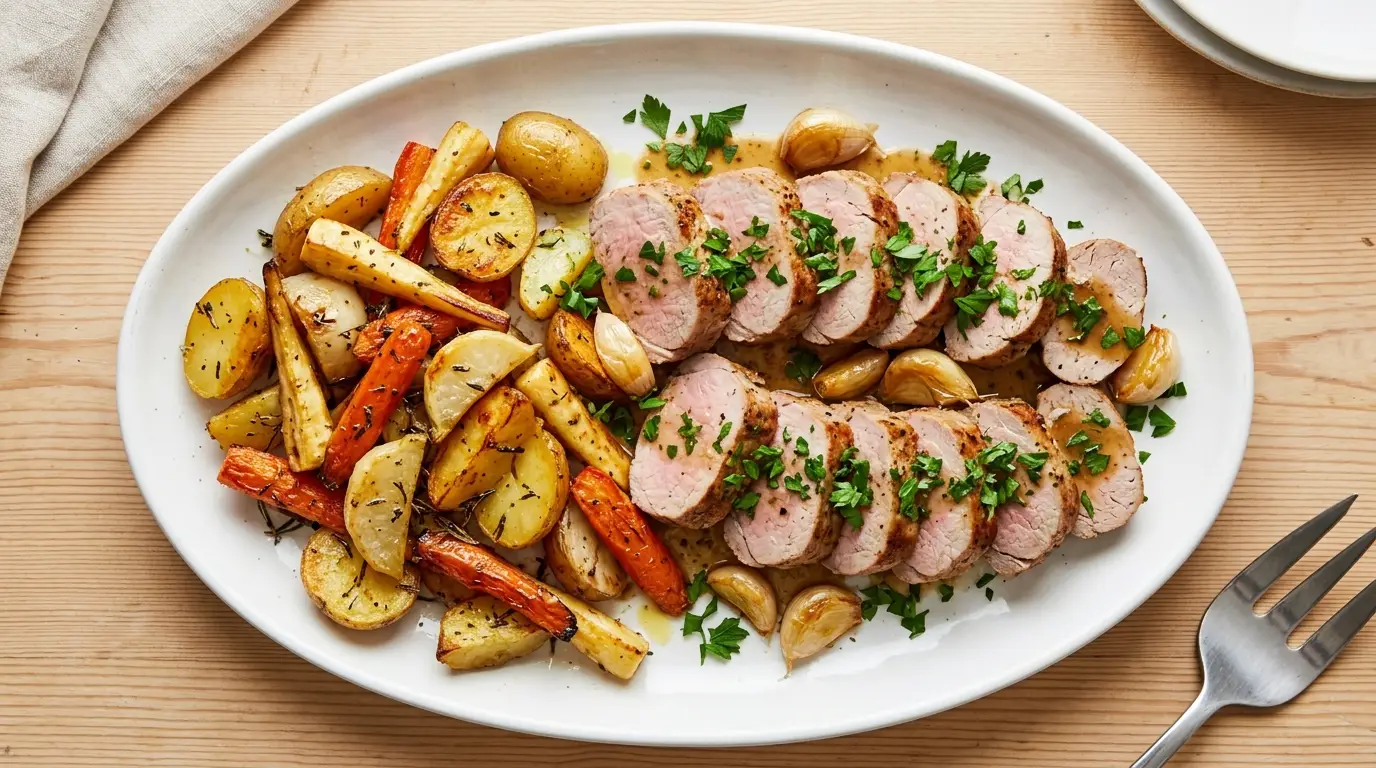
Pork Tenderloin with Roasted Root Vegetables
Ingredients
- 1 pork tenderloin - about 1–1.25 lbs / 450–565g, well-trimmed with silver skin removed
- 2 tablespoons olive oil - divided; 1 for pork, 1 for vegetables
- 1 teaspoon garlic powder
- 1 teaspoon smoked paprika
- 1 teaspoon dried thyme - or 1 tablespoon fresh thyme leaves
- 1 teaspoon dried rosemary - roughly chopped, or 1 tablespoon fresh rosemary, minced
- 1 teaspoon kosher salt - plus more to taste
- ½ teaspoon black pepper - freshly ground
- 2 medium carrots - about 200g, peeled and cut into 1-inch (2.5cm) pieces
- 2 medium parsnips - about 200g, peeled and cut into 1-inch (2.5cm) pieces
- 1 medium turnip - about 200g, peeled and cut into 1-inch (2.5cm) cubes
- 2 medium Yukon Gold potatoes - about 300g, cut into 1-inch (2.5cm) cubes
- 1 medium red onion - cut into wedges
- 4 cloves garlic - smashed and left in the skin
- 1 tablespoon balsamic vinegar - drizzled over vegetables
- fresh parsley - chopped, for garnish
Equipment
- Large Rimmed Baking Sheet (18×13 inches / 46x33cm) - Essential to prevent drippings from spilling over; large enough for single layer
- Instant-read meat thermometer - Critical for checking internal temperature of pork
- Cast Iron Skillet or Oven-Safe Skillet - Optional but helpful for searing the tenderloin
- Wire rack - Optional; for placing tenderloin over vegetables to allow air circulation
- Large mixing bowl - For tossing vegetables with oil and seasonings
- Sharp chef’s knife - For peeling and cutting vegetables evenly
- Cutting board - Use separate one for raw pork to avoid cross-contamination
- Aluminum foil - For lining pan and tenting pork during rest
- Vegetable peeler - For peeling carrots, parsnips, and turnip
Method
- Preheat oven to 425°F (220°C). Line a large rimmed baking sheet with foil and set a wire rack over it if using.
- Remove silver skin from the pork tenderloin using a sharp knife and paper towel grip. Pat the tenderloin completely dry.
- Mix garlic powder, smoked paprika, thyme, rosemary, salt, and pepper. Rub pork with 1 tablespoon olive oil then apply the herb rub. Let sit 10–15 minutes.
- Peel and cut carrots, parsnips, turnip, and potatoes into uniform 1-inch pieces. Cut onion into wedges and smash garlic cloves. Toss vegetables with remaining olive oil, balsamic vinegar, salt, and pepper.
- Spread vegetables in a single even layer on the baking sheet. Place seasoned pork in the center on the rack or directly on the pan with space around it.
- Roast at 425°F for 25–30 minutes, turning pork and stirring vegetables at 20 minutes. Cook until pork reaches 145°F internally and vegetables are golden and tender.
- Transfer pork to a cutting board, tent loosely with foil, and rest for 5–10 minutes.
- Slice pork into ½-inch medallions. Arrange with roasted vegetables on a platter, squeeze roasted garlic if desired, and garnish with chopped parsley.
Nutrition
Notes
- Always use a meat thermometer and pull pork at 145°F (63°C) for juicy results; resting is essential for carryover cooking and juice redistribution.
- Pat pork completely dry before seasoning to ensure a good crust.
- Cut all vegetables uniformly into 1-inch pieces so they cook evenly.
- Do not crowd the pan—use two pans if needed to allow proper roasting instead of steaming.
- Let pork come to room temperature for 20 minutes before cooking for more even results.
- The balsamic vinegar adds magical caramelization to the vegetables—do not skip it.
- Optional sear in hot cast iron skillet for 2 minutes per side before roasting for superior crust.
- Store leftovers in airtight container in refrigerator up to 3–4 days; reheat in oven at 350°F to maintain crispness.
- Freezes up to 2 months; thaw overnight in fridge before reheating.
- Great for meal prep—leftovers make excellent sandwiches or additions to frittatas and grain bowls.
Private Notes
Tried this recipe?
Let us know how it was!Final Thoughts
This Pork Tenderloin with Roasted Root Vegetables Recipe is proof that a genuinely impressive dinner doesn’t require complicated techniques or hours in the kitchen.
A little seasoning, a hot oven, and a meat thermometer are really all you need to pull off something that tastes like it took far more effort than it did.
I hope this recipe becomes a regular in your dinner rotation the way it has in mine — especially in the fall and winter months when root vegetables are at their very best.
Give it a try and let me know how it turns out! Drop your experience in the comments below, or tag me if you share a photo. I’d love to see your version of this dish on the table.
Recommended:
- Pork Stew Recipe
- Slow Cooker Pork Stew Recipe
- BBQ Pulled Pork Sandwiches
- Pork Chop Supreme Recipe
- Roast Chicken Recipe
- Sweet Potato Casserole Recipe
- Beef Stew Recipe
- Stuffed Acorn Squash Recipe
- Crockpot Fall Recipes
- Healthy Chicken Pot Pie Recipe