My love affair with a good mango smoothie recipe started on a sweltering afternoon when I had three very ripe mangoes sitting on the counter and zero plans for dinner.
I threw them into the blender with some yogurt, a splash of orange juice, and a handful of ice, and what came out was so thick, so creamy, and so packed with tropical flavor that I stood over the kitchen sink drinking the whole thing in one go.
I was hooked. Since then, I’ve made this smoothie dozens of times, tweaking the ratios until I landed on a version that’s perfectly balanced, not too sweet, and absolutely refreshing every single time.
The secret, I’ve learned, is in the mango. Using frozen mango gives you that milkshake-thick consistency without needing to load up on ice, which can water things down. I’ve tested it with fresh, canned, and frozen mango, and frozen wins every time for texture.
A little banana adds natural sweetness and body, and Greek yogurt brings a creamy tang that makes the whole thing feel more like a treat than a health drink.
| Quick Recipe Summary | |
|---|---|
| Prep Time | 5 minutes |
| Cook Time | 0 minutes |
| Total Time | 5 minutes |
| Servings | 2 smoothies |
| Difficulty Level | Easy |
If you love tropical flavors as much as I do, you’ll also get a kick out of my Shrimp Tacos with Mango Salsa — that sweet-spicy mango pairing is seriously addictive.
Why You’ll Love This Mango Smoothie Recipe
This smoothie is genuinely one of the easiest things I make, and somehow it always impresses people.
I’ve served it at brunch and had guests ask if I bought it from a juice bar. The fact that it comes together in under five minutes is a personal victory every time.
It’s naturally sweet from the mango and banana, so there’s no need to add refined sugar. My kids drink this without complaint, which is saying something.
The texture is thick enough to eat with a spoon if you reduce the liquid slightly. That makes it versatile: a sippable smoothie or a smoothie bowl base, depending on the morning.
You only need a handful of ingredients, most of which you probably already have. No fancy add-ins, no protein powder required (unless you want it).
It’s packed with vitamins and antioxidants without tasting “healthy” in a sad, cardboard way. This one genuinely tastes like a vacation.
- Incredibly fast: Five minutes from freezer to glass, no cooking required
- Kid-friendly: Naturally sweet and creamy without added sugar
- Customizable: Easily made dairy-free, higher in protein, or turned into a smoothie bowl
- Nutrient-dense: A great source of vitamin C, potassium, and fiber
- Meal prep friendly: You can freeze smoothie packs in advance for grab-and-blend mornings
- Budget-friendly: Frozen mango is far cheaper than fresh, and the results are just as good
Read Also: Strawberry Smoothie Recipe
Ingredients
The ingredients in this mango smoothie are simple, but each one plays a specific role. The frozen mango is the star, the banana adds creaminess and sweetness, Greek yogurt provides protein and tang, and orange juice gives it that bright citrusy lift. I tested versions with milk instead of orange juice and found the OJ version far more vibrant. Here’s everything you need:
- 2 cups (300 g) frozen mango chunks – The backbone of the smoothie. Frozen gives you thick, cold texture without diluting with ice. Frozen Mango Chunks are widely available and incredibly convenient.
- 1 medium ripe banana – Fresh or frozen both work. A frozen banana makes it even thicker and colder.
- 1/2 cup (120 g) plain Greek yogurt – Full-fat Greek yogurt makes it creamier. Use non-dairy yogurt for a vegan version.
- 1/2 cup (120 ml) orange juice – Freshly squeezed is best. Store-bought 100% orange juice works fine too.
- 1/4 cup (60 ml) coconut milk – Adds tropical richness and a light coconut flavor that pairs beautifully with mango. Coconut Milk from a can (the creamy kind) is my preference.
- 1 tablespoon honey or maple syrup (optional) – Taste the smoothie first before adding. Very ripe mangoes may need no extra sweetener at all.
- 1/2 teaspoon vanilla extract – A small amount rounds out all the flavors and makes it taste more like a dessert.
- Pinch of ground turmeric (optional) – This is my secret weapon. It deepens the golden color and adds a subtle earthy warmth without being detectable.
- Ice cubes (optional) – Only needed if your mango is fresh rather than frozen.
Another summer favorite that celebrates tropical flavor: Baked Cod with Mango Salsa.
Kitchen Equipment Needed
You don’t need much for a smoothie, but having the right blender makes a genuine difference. A weak blender will leave chunks of frozen mango unblended, and nobody wants that. Here’s what I use:
- High-speed blender – This is the most important piece of equipment. A high-speed blender (like a Vitamix or Ninja) will give you a silky-smooth result with frozen fruit. A regular blender can work but may require more liquid and extra blending time.
- Measuring cups and spoons – For accuracy, especially if you’re making this for the first time.
- Spatula or tamper – Useful for scraping down the sides of the blender if the mixture gets stuck.
- Two tall glasses – For serving. Wide-mouth glasses or mason jars work beautifully.
- Reusable straws – Optional but recommended for a thick smoothie. Reusable straws with a wide diameter handle thick smoothies much better than standard straws.
- Citrus juicer – If you’re squeezing fresh orange juice. A simple handheld citrus juicer gets the job done quickly.
You might also enjoy: Mulled Apple Cider Recipe
Recommended Products for This Recipe
These are tools and ingredients I genuinely use and love. They’ve made a real difference in how my smoothies turn out.
1. Vitamix 5200 Blender
This blender is the reason my smoothies went from “pretty good” to “restaurant quality.” It pulverizes frozen mango in seconds, leaving zero chunks or icy bits. The self-cleaning function is also a huge bonus for a recipe you make every day.
2. Frozen Organic Mango Chunks
I’ve tried every brand, and the difference in sweetness between a good-quality frozen mango and a mediocre one is massive. Look for IQF (individually quick frozen) mango that’s bright orange-yellow, not pale. Organic options tend to have better flavor concentration.
3. Full-Fat Coconut Milk (Canned)
Regular light coconut milk gives you a watery result. Full-fat canned coconut milk, especially the brand Thai Kitchen, gives the smoothie that lush, creamy body that makes it feel indulgent without being heavy.
4. Wide-Mouth Mason Jars (16 oz)
I serve my smoothies in these every time. They’re practical, easy to clean, and make even a simple smoothie look gorgeous. They also double as storage containers if you make extra.
5. Handheld Citrus Juicer
Fresh-squeezed orange juice makes a noticeable difference in this recipe. A simple handheld juicer means you can squeeze two oranges in under a minute and skip the bottled juice entirely.
Read Also: Fruit Tart Recipe
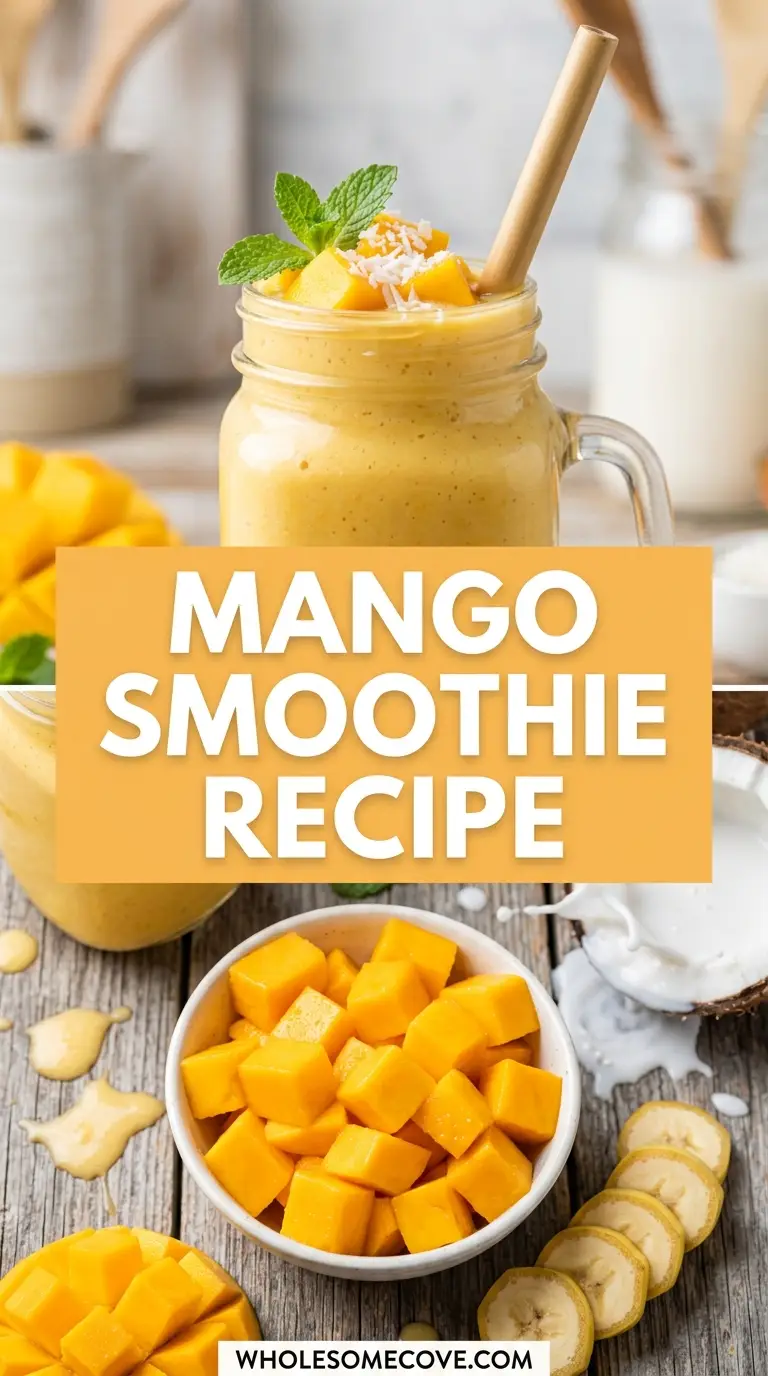
Step-by-Step Instructions: How to Make Mango Smoothie
Step 1: Prep Your Ingredients
- Remove the frozen mango chunks from the freezer and measure out 2 cups (300 g). There is no need to thaw them; keeping them fully frozen ensures the smoothie stays thick and cold.
- Peel and break the banana into three or four pieces. If you’re using a frozen banana, remove it from the freezer and let it sit for just 60 seconds to make it easier to break apart.
- Measure out the Greek yogurt, orange juice, and coconut milk. If you’re using fresh oranges, cut them in half and juice them now, straining out any seeds.
- Gather your optional add-ins: honey or maple syrup, vanilla extract, and turmeric if using.
Step 2: Add the Liquid First
- Pour the orange juice (1/2 cup / 120 ml) into the blender first. Starting with liquid prevents the blender from struggling to get the frozen fruit moving.
- Add the coconut milk (1/4 cup / 60 ml) on top of the orange juice.
- This layering technique makes a huge difference, especially if you have a standard blender that doesn’t have a tamper. Liquid at the bottom creates a vortex that pulls the frozen ingredients down into the blades.
Step 3: Add the Yogurt and Banana
- Spoon the Greek yogurt (1/2 cup / 120 g) directly into the blender on top of the liquids.
- Add the banana pieces. If you want an extra thick, frosty result, use a fully frozen banana here.
- The yogurt and banana will help cushion the frozen mango as you add it next, preventing the blender from seizing up.
Step 4: Add the Frozen Mango
- Pour in the frozen mango chunks (2 cups / 300 g) last. Frozen fruit should always go in after the liquids and softer ingredients.
- If you’re using fresh mango instead of frozen, add 1 cup of ice cubes at this stage to compensate for the lack of chill and to achieve a thicker texture.
- Secure the blender lid tightly. If your blender has a tamper hole in the lid, insert the tamper now.
Step 5: Blend Until Smooth
- Start blending on the lowest speed setting for about 10 seconds to break up the larger mango chunks. This prevents splashing and reduces strain on the motor.
- Gradually increase to the highest speed and blend for 45 to 60 seconds, until completely smooth with no visible chunks.
- If the mixture is too thick to blend properly, stop the blender, remove the lid, and add a splash more orange juice (1 to 2 tablespoons at a time). Replace the lid and continue blending.
- If you have a high-speed blender with a tamper, use it to push the ingredients toward the blades while blending on high. This gives you the thickest, creamiest result.
Step 6: Taste and Adjust
- Stop the blender and use a spatula to scrape down the sides. Taste the smoothie directly from the blender.
- If it needs more sweetness, add honey or maple syrup (start with 1 teaspoon and taste again before adding more). Very ripe mangoes are naturally sweet enough on their own.
- If it tastes flat or needs brightness, add another small squeeze of fresh orange juice.
- If you want a more pronounced coconut flavor, add an extra tablespoon of coconut milk.
- Add the vanilla extract (1/2 teaspoon) now if using, blend for 5 more seconds to incorporate.
Step 7: Add the Optional Turmeric
- If using turmeric, add a small pinch (no more than 1/8 teaspoon) and blend for another 5 to 10 seconds. Turmeric is potent, so a little goes a very long way.
- The turmeric deepens the golden color of the smoothie beautifully without affecting the flavor noticeably at this small amount.
Step 8: Pour and Serve Immediately
- Pour the smoothie into two tall glasses or wide-mouth mason jars. Pour slowly and use a spatula to get every last drop out of the blender.
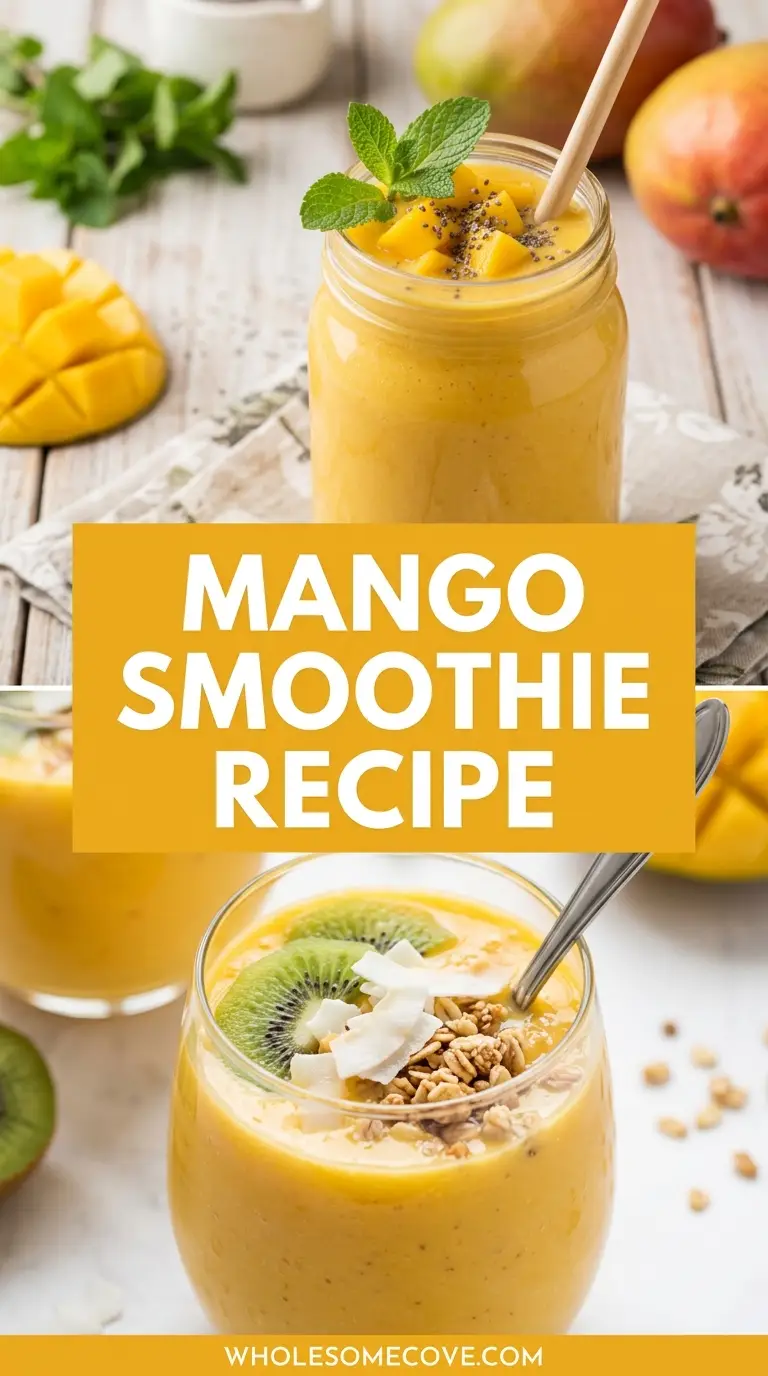
- Top with your choice of garnishes: a few fresh mango slices balanced on the rim, a sprig of mint, a sprinkle of toasted coconut flakes, or a light drizzle of honey.
- Serve immediately for the coldest, thickest texture. If you let it sit too long, it will warm up and thin out slightly.
I stumbled onto the magic of frozen mango after one too many watery, disappointing smoothies. Reading about blender techniques in the process of perfecting my Fruit Chaat Recipe actually taught me a lot about handling ripe tropical fruit.
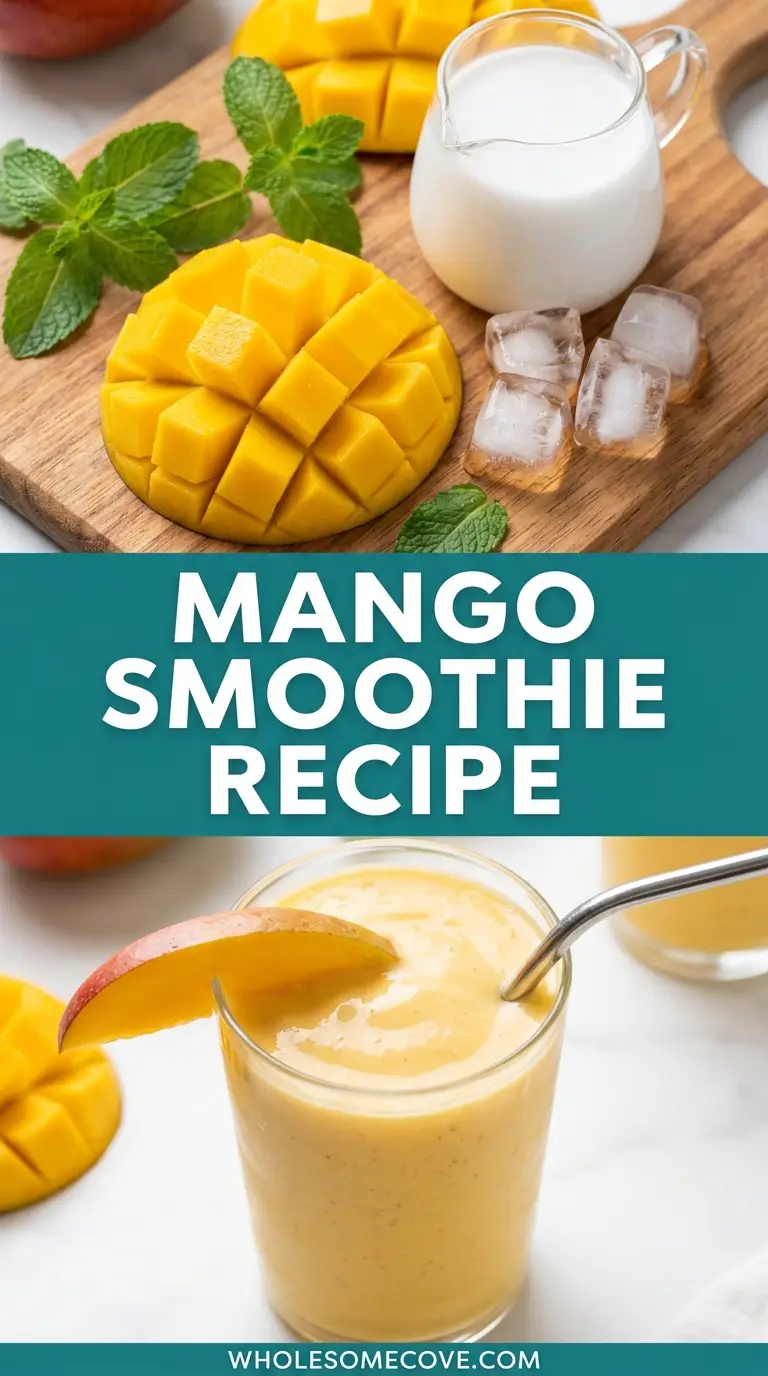
Tips for The Best Mango Smoothie
Getting a mango smoothie right comes down to a few details that most recipes skip over. After making this more times than I can count, these are the tips that actually moved the needle.
- Always use frozen mango: Fresh mango makes a thinner, less creamy smoothie unless you add a lot of ice. Frozen mango acts as the thickener, the chiller, and the flavor base all at once.
- Freeze your banana: Freezing a ripe banana before using it adds an extra layer of thickness and creaminess. Peel and freeze bananas when they get very ripe; they’re perfect for smoothies.
- Add liquids first: This is blender 101 but it genuinely matters. Liquids at the bottom create a vortex that pulls frozen fruit into the blades. Adding frozen fruit first often causes blender strain or chunks of unblended mango.
- Use full-fat yogurt and coconut milk: Low-fat versions give you a thinner, less satisfying smoothie. The fat in these ingredients makes a huge difference to the body and creaminess.
- Don’t add too much liquid: It’s tempting to add more juice when the blender struggles, but too much thins out the texture significantly. Add liquid one tablespoon at a time and only if truly necessary.
- Taste before sweetening: Depending on the ripeness of your mango and banana, you may not need any honey at all. Always taste first.
- Blend on high for at least 45 seconds: A short blend leaves tiny bits of ice or mango fiber. A full minute on high gives you that silky, pourable texture.
- Clean your blender immediately: Smoothie residue dries fast and becomes surprisingly difficult to clean. Fill the blender with warm water and a drop of dish soap, blend for 30 seconds, and rinse right after serving.
- Chill your glasses: Pop your glasses in the freezer for 5 minutes before pouring. It keeps the smoothie colder longer, especially helpful in warm weather.
- Balance sweetness with acid: If the smoothie tastes too sweet, a squeeze of fresh lime juice cuts right through it and brightens all the flavors.
Read Also: Overnight Oats Recipe
What to Serve with Mango Smoothie
A mango smoothie works beautifully as a standalone breakfast, but it really shines as part of a bigger spread.
Pairing it with something savory or slightly hearty balances the natural sweetness of the mango and makes the meal feel more complete.
- Avocado Toast – The creamy richness of avocado toast is the perfect contrast to a bright, sweet smoothie.
- Easy Pancake – Fluffy pancakes alongside a cold mango smoothie is a brunch combination that never gets old.
- French Toast – The custardy sweetness of French toast and tropical mango flavors are a natural match.
- Healthy Granola – Sprinkle some granola over a thick mango smoothie bowl for crunch and substance.
- Waffle – Pour a slightly thicker smoothie into a bowl and top with waffle pieces for a fun twist.
- Breakfast Quesadilla – A savory breakfast quesadilla pairs brilliantly with a cold, sweet smoothie on the side.
- Healthy Bruschetta – For a light brunch, bruschetta with fresh tomatoes alongside a mango smoothie is lovely.
- Baked Oatmeal – A warm, hearty baked oatmeal with a cold mango smoothie on the side covers all your nutritional bases.
You might also enjoy: Watermelon Feta Salad with Mint
Variations of Mango Smoothie
The base recipe is fantastic as-is, but there are so many easy ways to change it up depending on your mood, dietary needs, or whatever you have on hand. Here’s a quick overview of my favorite variations before the detailed list:
The core ratio stays the same in most of these, so feel free to experiment without worrying about ruining the texture.
- Mango Banana Smoothie: Increase the banana to 1.5 bananas and reduce coconut milk to 2 tablespoons. The result is a thicker, more banana-forward smoothie that’s especially great for kids.
- Mango Pineapple Smoothie: Replace half the mango (1 cup) with frozen pineapple chunks. This adds extra tropical tang and makes it taste like a piña colada in smoothie form.
- Mango Lassi Smoothie: Use 1 cup of plain yogurt instead of 1/2 cup and replace the coconut milk with 1/4 cup of whole milk. Add a pinch of cardamom. This version is directly inspired by the classic Indian mango lassi.
- Vegan Mango Smoothie: Swap Greek yogurt for coconut yogurt or any non-dairy yogurt, use maple syrup instead of honey, and you have a fully plant-based version that’s just as creamy.
- Mango Protein Smoothie: Add one scoop of vanilla protein powder or a tablespoon of hemp seeds to the base recipe. This turns it into a post-workout meal replacement.
- Mango Ginger Smoothie: Add 1/2 teaspoon of freshly grated ginger before blending. Ginger adds a spicy kick that works surprisingly well with the sweetness of the mango.
- Mango Coconut Smoothie Bowl: Reduce the orange juice to 1/4 cup to make the smoothie much thicker, then pour into a bowl and top with coconut flakes, fresh mango slices, granola, and chia seeds.
- Green Mango Smoothie: Add a large handful of fresh baby spinach to the base recipe. The spinach disappears completely in both flavor and texture, and you get a smoothie that’s even more nutrient-dense.
Read Also: Fruit Cocktail Cake Recipe
Storage and Reheating
A mango smoothie is genuinely best consumed right after blending when it’s at peak coldness and thickness, but there are times when you want to prep ahead. Here’s how to store it properly without losing too much quality.
- Refrigerator storage: Pour leftover smoothie into an airtight jar or container with a lid. Refrigerate for up to 24 hours. Separation is normal; simply shake or stir vigorously before drinking.
- Freezer storage: Pour the smoothie into a freezer-safe container or ice cube tray and freeze for up to 1 month. To use, thaw in the fridge overnight or blend frozen smoothie cubes with a splash of orange juice.
- Smoothie packs: Measure and portion the mango, banana, and other solid ingredients into ziplock bags and freeze them flat. Each morning, dump one bag into the blender, add the liquids, and blend. This is my favorite time-saving method.
- Do not reheat: This smoothie is meant to be served cold. There is no reheating involved.
- Glass vs. plastic containers: Glass jars with tight lids (like mason jars) work best for storing smoothies in the fridge. They don’t absorb odors and keep the smoothie fresher than plastic.
- Stir, don’t shake: If stored overnight, the smoothie will separate and the top layer may look slightly brown from the banana oxidizing. Stir it well with a long spoon rather than shaking, which can warm it up too quickly.
- Add fresh toppings after storing: If you prepped a smoothie bowl, store the base without toppings and add granola, fruit, and coconut flakes fresh when ready to eat. This keeps everything from getting soggy.
Another make-ahead breakfast I love is this Peanut Butter Overnight Oats Recipe.
Nutritional Facts
| Nutritional Facts (Per Serving, 1 of 2) | |
|---|---|
| Calories | 220 kcal |
| Total Fat | 5 g |
| Saturated Fat | 4 g |
| Cholesterol | 3 mg |
| Sodium | 35 mg |
| Total Carbohydrates | 42 g |
| Dietary Fiber | 4 g |
| Total Sugars | 32 g |
| Protein | 7 g |
| Vitamin C | 65 mg (72% DV) |
| Vitamin A | 1,260 IU (25% DV) |
| Potassium | 520 mg (15% DV) |
| Calcium | 110 mg (11% DV) |
| Iron | 0.5 mg (3% DV) |
Nutritional values are estimates and may vary based on specific ingredients and brands used.
Read Also: Healthy Guacamole Recipe
Health Benefits of Key Ingredients
This mango smoothie recipe isn’t just delicious; it’s genuinely good for you. Each ingredient brings something meaningful to the nutritional table, and together they make a drink that supports your body in real, tangible ways.
Here’s a closer look at what you’re getting in every sip.
- Mango: One of the richest fruit sources of vitamin C, a single cup of mango provides nearly 67% of the daily recommended intake. Mango also contains mangiferin, a unique antioxidant that has been studied for its anti-inflammatory properties. It’s high in folate, vitamin B6, and vitamin A, supporting immune function, eye health, and cell growth.
- Banana: Bananas are one of the best natural sources of potassium, which is essential for heart health, muscle function, and blood pressure regulation. They also provide vitamin B6 and a good amount of dietary fiber, which supports gut health and keeps you feeling fuller for longer.
- Greek Yogurt: Greek yogurt is a protein powerhouse, providing 15 to 20 grams of protein per cup. It’s rich in calcium, phosphorus, and B vitamins. The live cultures in Greek yogurt are probiotics that support a healthy gut microbiome and can improve digestion over time.
- Orange Juice: Fresh orange juice is loaded with vitamin C and flavonoids, particularly hesperidin, which has been studied for its cardiovascular benefits. Vitamin C also significantly increases the absorption of non-heme iron from other foods in your meal.
- Coconut Milk: While coconut milk is higher in saturated fat, the fats are medium-chain triglycerides (MCTs), which the body metabolizes differently from long-chain fats. MCTs are rapidly absorbed and converted to energy, making them a useful quick fuel source.
- Honey (optional): Raw honey contains trace amounts of antioxidants, enzymes, and minerals. It has a lower glycemic index than refined sugar, meaning it causes a slower, more moderate blood sugar response.
- Turmeric (optional): The active compound in turmeric, curcumin, is one of the most studied anti-inflammatory compounds in nutrition science. Even small amounts used regularly have been associated with reduced inflammation and improved joint health.
You might also enjoy: Healthy Orange Chicken Recipe
FAQs About Mango Smoothie
1. Can I use fresh mango instead of frozen?
Yes, absolutely. Fresh mango works well, though the smoothie will be thinner and less cold. To compensate, add 1 cup of ice cubes to the blender when using fresh mango.
Fresh mango can also vary significantly in sweetness depending on ripeness, so taste and adjust accordingly.
2. How do I make this smoothie thicker?
The easiest way is to increase the frozen mango and reduce the liquid. Use less orange juice, around 1/3 cup instead of 1/2 cup, and add a frozen banana rather than a fresh one.
You can also add 1 tablespoon of chia seeds before blending, which thickens the smoothie noticeably as they absorb liquid.
3. Can I make this mango smoothie dairy-free?
Yes, and it’s simple. Swap the Greek yogurt for coconut yogurt, oat milk yogurt, or almond milk yogurt.
The rest of the ingredients are already dairy-free, and the coconut milk ensures the smoothie still has a rich, creamy body.
4. How long can I store a mango smoothie in the fridge?
Up to 24 hours in an airtight container. Separation will happen, which is completely normal.
Give it a good stir or a brief shake before drinking to bring it back together.
5. Can I add protein powder to this smoothie?
Definitely. One scoop of vanilla protein powder blends in seamlessly without affecting the flavor much. Add it at the same stage as the yogurt before blending.
Unflavored or vanilla are the best choices; chocolate or other flavors tend to overpower the mango.
Read Also: Caprese Stuffed Avocados Recipe
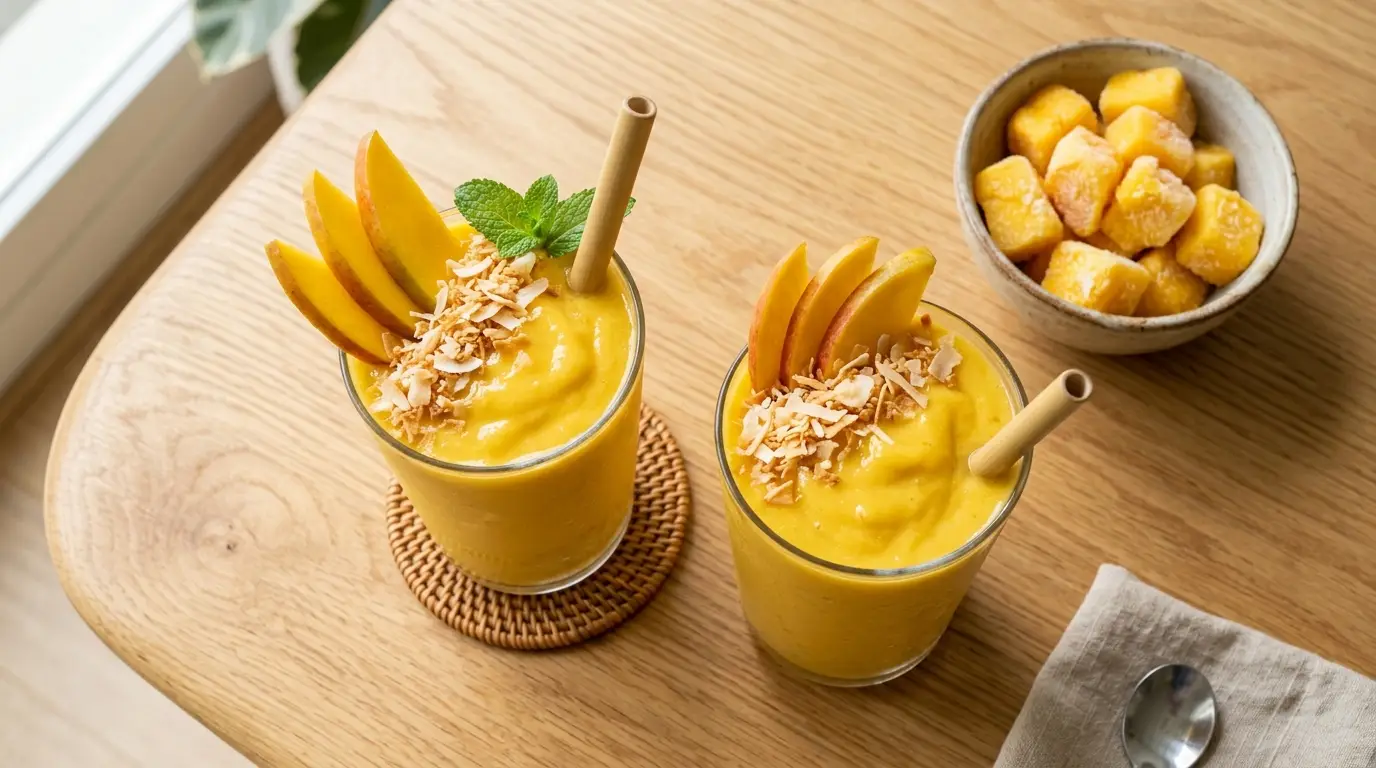
Mango Smoothie
Ingredients
- 2 cups frozen mango chunks - 300g; keep fully frozen for best thickness
- 1 medium ripe banana - Fresh or frozen; a frozen banana makes it thicker and colder
- 1/2 cup plain Greek yogurt - 120g; full-fat preferred; use coconut yogurt for vegan version
- 1/2 cup orange juice - 120ml; freshly squeezed preferred, or 100% store-bought
- 1/4 cup coconut milk - 60ml; full-fat canned coconut milk for best creaminess
- 1/2 tsp vanilla extract
- 1 tbsp honey or maple syrup - Taste first; very ripe mangoes may need no added sweetener
- 1/8 tsp ground turmeric - Deepens golden color and adds subtle warmth; use sparingly
- 1 cup ice cubes - Only needed if using fresh mango instead of frozen
- fresh mango slices - For garnishing the rim of the glass
- toasted coconut flakes - Sprinkle on top before serving
- fresh mint sprigs - Optional garnish
- honey - Optional light drizzle over the top
Equipment
- High-speed blender - Such as a Vitamix or Ninja; a standard blender works but may need extra liquid
- Spatula or tamper - For scraping down blender sides or pushing ingredients toward blades
- Two tall glasses or mason jars - 16 oz wide-mouth mason jars work great
- Reusable wide straws - Optional; wide-diameter straws handle thick smoothies better
- Handheld citrus juicer - Optional; only needed if squeezing fresh oranges
Method
- Measure out 2 cups (300g) of frozen mango chunks directly from the freezer — do not thaw. Peel and break the banana into 3–4 pieces, and juice the oranges if using fresh.
- Pour the orange juice and coconut milk into the blender first. Starting with liquids creates a vortex that pulls frozen ingredients down into the blades.
- Spoon the Greek yogurt into the blender, then add the banana pieces on top of the liquids. These softer ingredients help cushion the frozen mango.
- Add the frozen mango chunks last and secure the blender lid tightly. If using fresh mango, add 1 cup of ice cubes at this stage.
- Start blending on low for 10 seconds, then increase to high and blend for 45–60 seconds until completely smooth. Add liquid one tablespoon at a time only if the blender is struggling.
- Taste the smoothie and add honey or maple syrup if more sweetness is needed, then add vanilla extract. Blend for 5 more seconds to incorporate any additions.
- If using turmeric, add a small pinch (no more than 1/8 tsp) and blend for another 5–10 seconds to deepen the golden color.
- Pour into two tall glasses or mason jars, add optional garnishes like fresh mango slices, toasted coconut flakes, or a mint sprig, and serve immediately for the coldest, thickest texture.
Nutrition
Notes
- Always use frozen mango for the best thick, creamy texture — fresh mango makes a thinner smoothie unless you compensate with plenty of ice.
- Add liquids to the blender first; this is the single most effective trick for getting smooth results without stressing the motor.
- For an extra thick result, use a frozen banana instead of fresh. Peel and freeze ripe bananas ahead of time for smoothies.
- Full-fat Greek yogurt and full-fat canned coconut milk make the smoothie noticeably richer and creamier than low-fat versions.
- To make this vegan, swap Greek yogurt for coconut yogurt and use maple syrup instead of honey — all other ingredients are already plant-based.
- To make a smoothie bowl, reduce the orange juice to 1/4 cup (60ml) for a much thicker consistency, then pour into a bowl and top with granola, fresh mango, and toasted coconut.
- Store leftover smoothie in an airtight jar in the refrigerator for up to 24 hours. Separation is normal — stir or shake well before drinking.
- Freeze smoothie packs ahead of time: portion the mango, banana, and solid ingredients into zip-lock bags and freeze flat. Dump one bag into the blender with liquids each morning for an instant smoothie.
- If the smoothie tastes too sweet, a small squeeze of fresh lime juice cuts through the sweetness and brightens all the flavors.
- Blend on high for at least 45 seconds — a shorter blend time can leave tiny icy or fibrous bits from the mango.
Private Notes
Tried this recipe?
Let us know how it was!Final Thoughts
A mango smoothie this good deserves a permanent spot in your weekly rotation. It’s the kind of recipe that starts as a quick breakfast and gradually becomes the thing you look forward to every single morning.
The fact that it takes less than five minutes and requires almost no skill is the best part.
I hope you give this a try and love it as much as my family does. If you make any fun variations or add something unexpected that works brilliantly, I’d genuinely love to hear about it in the comments below.
Tag me or share the recipe with a friend who could use more sunshine in their mornings.
Recommended:
- Shrimp Tacos with Mango Salsa
- Summer Dinner Recipes
- Hot Chocolate Recipe
- Fall Punch Recipes
- Orange Dreamsicle Salad Recipe
- Grilled Peach and Burrata Salad Recipe
- Blackened Fish with Pineapple Salsa Recipe
- Eggnog Recipe
- Bloody Molly Recipe
- Costa Rican Tea Recipe