If you’ve been searching for the perfect roast chicken recipe, you’ve landed in the right place. I still remember the first Sunday I attempted a whole bird on my own — butter-slicked fingers, a slightly too-small pan, and absolutely zero confidence that the skin would ever turn golden.
What came out of the oven changed everything. The skin crackled, the juices ran clear, and the whole kitchen smelled like something out of a French countryside farmhouse. That experience sent me down a roast chicken rabbit hole I never fully climbed out of, and honestly? I don’t want to.
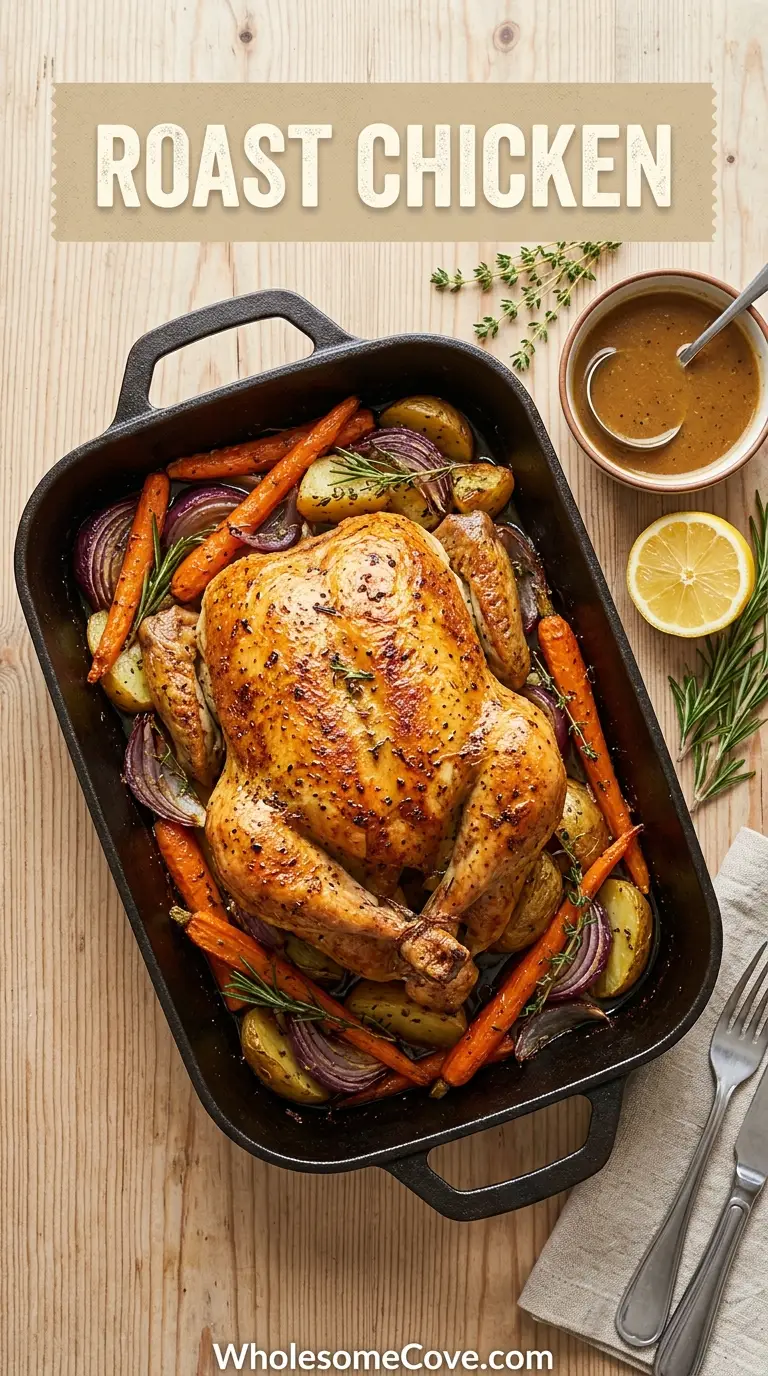
This recipe is the version I’ve made dozens of times now, tweaked batch by batch until it felt just right. It’s built on the classic method: a whole bird seasoned generously inside and out, packed with aromatics, slathered in herb butter, and roasted hot and fast until the skin goes deeply golden and the meat stays tender and juicy. No fancy equipment required.
It’s the kind of meal that feels impressive but secretly takes about 15 minutes of hands-on work.
| Quick Recipe Summary | |
|---|---|
| Prep Time | 15 minutes |
| Cook Time | 1 hour 20 minutes |
| Rest Time | 15 minutes |
| Total Time | 1 hour 50 minutes |
| Servings | 4–5 people |
| Difficulty Level | Easy |
The pan drippings from this bird make an absolutely incredible base for Chicken Gravy — don’t you dare throw them away.
Why You’ll Love This Roast Chicken Recipe
Roasting a whole chicken is one of those fundamental kitchen skills that pays you back a hundredfold. Once you nail it, you’ll reach for it every single week.
- The skin gets genuinely crispy. Patting the chicken dry and using a high oven temperature are the two moves that make all the difference — no soggy skin here.
- It’s endlessly versatile. Serve it as a Sunday showstopper, or carve it up for weeknight meals throughout the week.
- The herb butter goes under the skin. This is the move that separates a good roast chicken from a great one — the butter bastes the breast meat from the inside as it cooks.
- The aromatics do the heavy lifting. Stuffing the cavity with lemon, garlic, and fresh herbs creates fragrant steam that flavors every bite of the meat.
- One pan, minimal cleanup. Everything roasts together in a single pan, and the vegetables that cook underneath soak up all those golden juices.
- It makes incredible leftovers. Leftover roast chicken turns into soups, salads, sandwiches, and so much more — it’s meal prep disguised as a dinner.
- It’s budget-friendly. A whole chicken costs significantly less per pound than boneless breasts or thighs, and you get far more flavor.
- The resting step is non-negotiable. Fifteen minutes under foil after it comes out of the oven is what keeps every last drop of juice inside the meat where it belongs.
You might also enjoy: Chicken Stew
Ingredients
You don’t need a long shopping list for this recipe. The magic here is in the quality of the bird and the technique — not a complicated array of ingredients. I always try to buy the best whole chicken I can find, because it truly makes a difference in flavor and juiciness.
- 1 whole chicken (4.5–5 lbs / 2–2.3 kg), giblets removed, patted completely dry with paper towels
- 4 tablespoons (57g) unsalted butter, softened to room temperature
- 4 cloves garlic, 2 minced (for the herb butter), 2 left whole (for the cavity)
- 1 tablespoon fresh thyme leaves (or 1 teaspoon dried thyme)
- 1 tablespoon fresh rosemary, finely chopped (or 1 teaspoon dried rosemary)
- 1 tablespoon fresh flat-leaf parsley, finely chopped
- 1 lemon, halved
- 1½ teaspoons kosher salt (for the outside of the bird), plus extra for the cavity
- ½ teaspoon black pepper, freshly ground
- 1 tablespoon extra virgin olive oil
- 1 medium yellow onion, cut into thick rounds
- 2 medium carrots, roughly chopped into 2-inch pieces
- 2 celery stalks, roughly chopped into 2-inch pieces
- ½ cup (120ml) low-sodium chicken broth (or water), for the bottom of the pan
Read Also: Thanksgiving Turkey Recipe
Kitchen Equipment Needed
The good news is that you don’t need anything unusual to roast a great chicken. Most of these items are probably already in your kitchen, though a quality roasting pan and an instant-read thermometer will take the stress out of the process entirely.
- Roasting pan with a rack (a rack keeps the bird elevated so heat circulates underneath for even cooking and crispier skin)
- Instant-read meat thermometer (this is the only reliable way to know the chicken is perfectly done — no guesswork)
- Cast iron skillet (optional alternative to a roasting pan — cast iron retains and distributes heat brilliantly)
- Small mixing bowl (for mixing the herb butter)
- Paper towels (for thoroughly drying the chicken — this step is crucial for crispy skin)
- Kitchen twine (for trussing the legs together — keeps the bird compact and cooks more evenly)
- Sharp carving knife and fork (or a carving set) for serving
- Aluminum foil (for tenting the chicken during its rest)
- Cutting board (large enough to rest and carve the whole bird)
Another favorite: Healthy Chicken Pot Pie
Recommended Products for This Recipe
These are the products I personally reach for when I make this roast chicken recipe. They make a noticeable difference in the final result.
1. Roasting Pan with Rack
A good-quality roasting pan with a sturdy rack is worth every penny for this recipe. Elevating the chicken off the pan bottom allows hot air to circulate underneath the bird, which is what gives you that uniformly crispy, golden skin all the way around. Without a rack, the underside of the chicken sits in its own drippings and steams instead of roasting.
2. Instant-Read Meat Thermometer
Guessing whether a whole chicken is done is the number one source of dry, overcooked results. An instant-read thermometer removes all the guesswork in about two seconds. I slide mine into the thickest part of the thigh (without touching bone), and when it reads 165°F (74°C), I know dinner is ready.
3. High-Quality Fresh Herb Bundle
Fresh thyme, rosemary, and parsley are really the soul of this recipe. If you can find a fresh herb bundle at your grocery store or farmers market rather than reaching for dried, the difference in aroma and flavor is remarkable — especially in the herb butter that goes under the skin.
4. Lodge Cast Iron Skillet (12-inch)
If you don’t have a roasting pan, a 12-inch cast iron skillet is genuinely one of the best surfaces to roast a whole chicken on. The seasoned iron retains heat intensely and transfers it evenly to the bird, giving you exceptional browning on the underside of the thighs and a fantastically stable cooking surface.
Read Also: Giblet Gravy Recipe
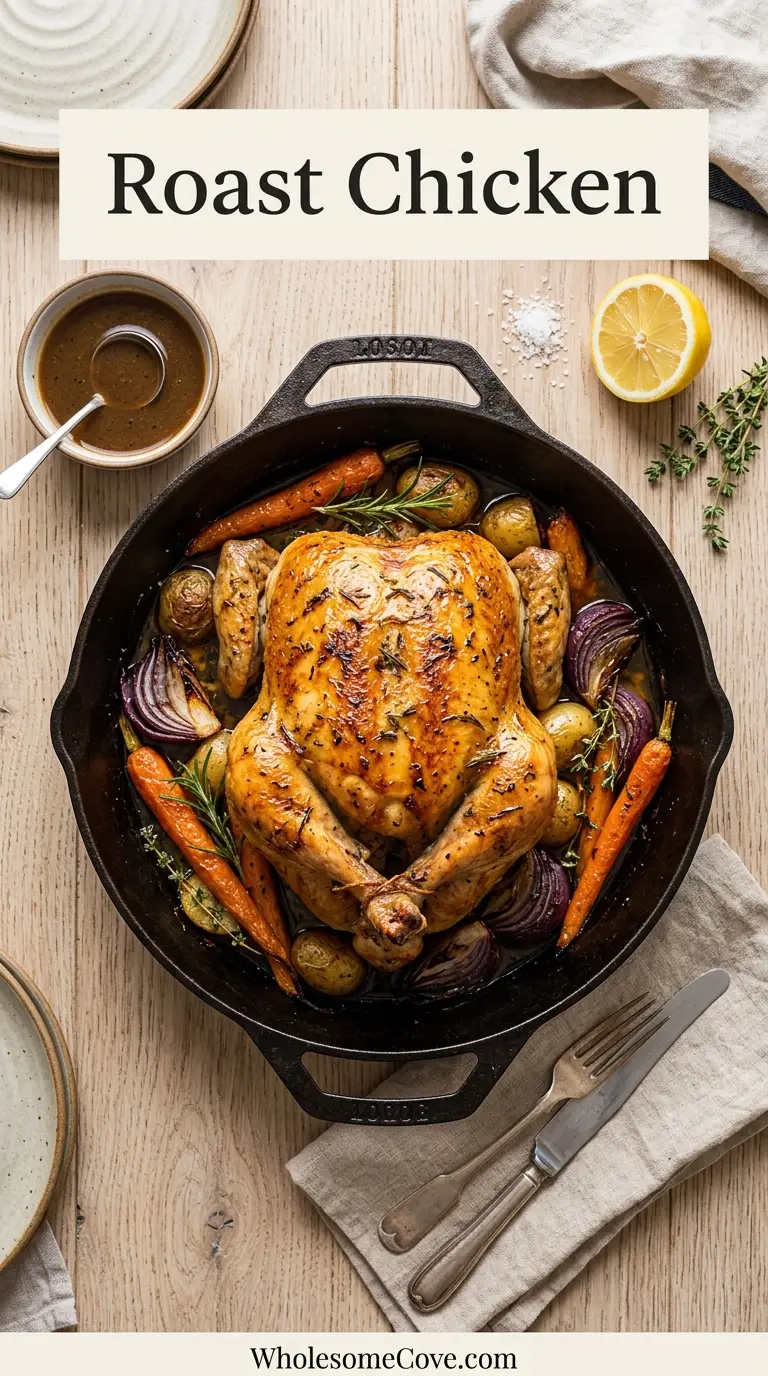
Step-by-Step Instructions: How to Make Roast Chicken
Step 1: Bring the Chicken to Room Temperature and Preheat the Oven
- Remove the whole chicken from the refrigerator at least 30 minutes before you plan to cook it. A cold chicken straight from the fridge takes longer to cook and tends to result in unevenly cooked meat — the breast dries out before the thighs are fully cooked.
- While the chicken is coming to room temperature, preheat your oven to 425°F (220°C). This high heat is what gives you that gorgeous golden-brown, crispy skin right from the start.
- Position your oven rack in the center of the oven to ensure the heat circulates evenly around the bird.
- If your roasting pan has a rack, place the rack inside the pan and set it aside — you’ll add the vegetables and broth directly to the pan bottom shortly.
Step 2: Make the Herb Butter
- In a small mixing bowl, combine the 4 tablespoons (57g) of softened unsalted butter with the 2 minced garlic cloves, 1 tablespoon fresh thyme leaves, 1 tablespoon finely chopped fresh rosemary, and 1 tablespoon finely chopped fresh parsley.
- Use a fork or small spoon to mash and mix everything together thoroughly until the herbs and garlic are evenly distributed throughout the butter.
- Squeeze in the juice of one half of the lemon and mix again. The lemon brightens the herb butter and keeps the breast meat moist and flavorful as it melts through the skin.
- Taste a tiny bit of the butter — it should smell incredible and be well-seasoned. Set aside.
Step 3: Prepare the Chicken
- Remove the giblets from inside the chicken cavity if they are still there (they are often packaged in a small bag inside the cavity). Discard or reserve for making stock.
- Pat the entire chicken completely dry with paper towels — all over the outside, inside the cavity, and under the wings. This is the single most important step for crispy skin. Any moisture left on the surface will create steam in the oven and prevent browning.
- Season the inside of the cavity generously with a pinch of kosher salt and a few cracks of black pepper.
- Stuff the cavity with the 2 whole garlic cloves, the squeezed lemon half (now well-used), and the remaining unused lemon half (cut-side in). The heat inside the cavity will gently steam these aromatics, infusing the meat from the inside out.
Step 4: Apply the Herb Butter Under and Over the Skin
- Using your fingers, gently loosen the skin away from the breast meat by carefully sliding your fingers between the skin and the flesh, starting from the cavity end of the breast. Work slowly so the skin doesn’t tear — you’re creating a pocket.
- Do the same over the top of the drumsticks if you can reach them.
- Scoop about two-thirds of the herb butter and push it under the loosened skin directly onto the breast meat and as far down to the drumsticks as you can reach. Use your fingers to press the butter from outside the skin to spread it out evenly.
- Rub the remaining herb butter all over the outside of the chicken — legs, thighs, wings, and back. Make sure the skin is evenly coated.
- Drizzle the 1 tablespoon of olive oil over the top and rub it in as well. The oil helps the skin get even more golden and adds a subtle richness.
- Season the outside of the chicken generously with 1½ teaspoons of kosher salt and ½ teaspoon of black pepper. Don’t be shy with the salt — the skin needs it for flavor and to help draw out moisture for crispiness.
Step 5: Truss the Chicken
- Trussing (tying the legs together) keeps the chicken in a compact shape, which helps it cook more evenly and look beautiful on the table.
- Cut a piece of kitchen twine about 18 inches (45cm) long.
- Cross the legs at the ankle joint and tie them together snugly with the twine. Tuck the wing tips under the body of the chicken to prevent them from burning.
- If you don’t have kitchen twine, you can still proceed — the chicken will taste just as good, though it may look a little more rustic.
Step 6: Prepare the Pan and Add the Vegetables
- Scatter the roughly chopped onion rounds, carrots, and celery across the bottom of the roasting pan.
- Pour the ½ cup (120ml) of chicken broth over the vegetables. This serves two purposes: it prevents the drippings from burning on the pan bottom, and the steam it creates helps keep the lower portions of the chicken moist.
- Place the rack over the vegetables (if using one) and set the chicken breast-side up on top of the rack. If you don’t have a rack, rest the chicken directly on top of the bed of vegetables — they’ll elevate the bird slightly and absorb all those wonderful drippings.
Step 7: Roast the Chicken
- Slide the roasting pan into the preheated 425°F (220°C) oven on the center rack.
- Roast for 1 hour to 1 hour and 20 minutes, depending on the size of your bird. A general guideline is 15–18 minutes per pound (450g) at this temperature.
- At the 45-minute mark, open the oven and use a spoon or baster to baste the chicken with the pan drippings and juices that have accumulated. This adds an extra layer of flavor and encourages deeper browning.
- Do not cover the chicken with foil during roasting — you want that skin to get fully exposed to the oven heat and turn deeply golden.
- The chicken is done when an instant-read thermometer inserted into the thickest part of the thigh (not touching the bone) registers 165°F (74°C). The juices should run completely clear (not pink) when you pierce the thigh.
- If the skin is browning too quickly before the internal temperature is reached, you can loosely tent a piece of foil over the breast for the remaining cooking time.
Step 8: Rest the Chicken
- Remove the chicken from the oven and transfer it to a large cutting board.
- Tent it loosely with aluminum foil and let it rest for a minimum of 15 minutes before carving. This is non-negotiable — resting allows the juices that have rushed to the surface during cooking to redistribute back into the meat, so every bite stays juicy.
- While the chicken rests, you can strain the pan drippings to make a quick gravy if desired.
Step 9: Carve and Serve
- After resting, remove the twine and discard the lemon and garlic from the cavity.
- To carve: start by removing the legs (cut through the joint where the thigh meets the body), then separate the drumstick from the thigh. Remove the wings by cutting through the shoulder joint. Slice the breasts by cutting along the breastbone and slicing downward.
- Arrange the pieces on a platter and spoon a little of the pan juices over the top before serving.
The pan drippings make a deeply flavorful broth — try using them in Chicken Soup the next day.
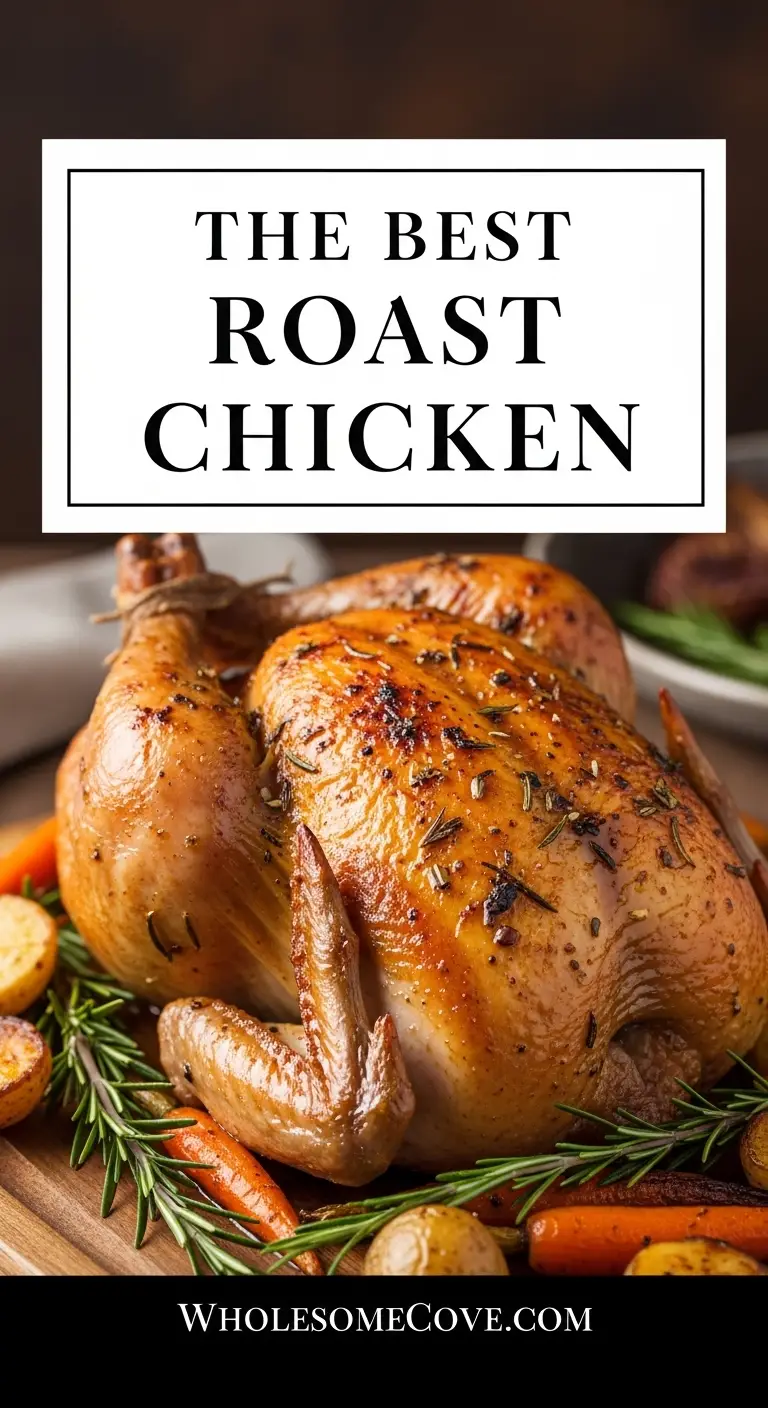
Tips for The Best Roast Chicken
Getting a great roast chicken comes down to a few key techniques. These are the ones that made the biggest difference in my own results once I started paying attention to them.
- Dry the chicken obsessively. Paper towels are your best friend here. Any moisture left on the skin will steam rather than roast, and you’ll get pale, soft skin instead of that crackling golden crust. If you have time, let the bird air-dry uncovered in the fridge for a few hours or even overnight after patting it dry.
- Don’t skip bringing it to room temperature. Thirty minutes out of the fridge before cooking lets the bird cook more evenly, reducing the risk of dry breast meat and undercooked thighs.
- Season generously. Chicken is a relatively mild protein, and it needs salt to shine. Season inside the cavity, under the skin with the butter, and all over the outside. If it feels like too much salt, it’s probably just right.
- Use a thermometer, not a timer. Every oven runs differently, and every chicken is a different size. A thermometer reading of 165°F (74°C) in the thickest part of the thigh is the only truly reliable indicator of doneness.
- High oven temperature is key. Roasting at 425°F (220°C) creates a hot, dry environment that crisps the skin quickly. Lower temperatures will cook the bird but won’t develop the same deeply browned exterior.
- Let it rest properly. I know it’s hard when the whole kitchen smells incredible, but cutting into the chicken too soon means all the juices run out onto the cutting board instead of staying in the meat. Fifteen minutes minimum — no exceptions.
- Save the carcass. After dinner, put the bones and carcass in a pot with cold water, onion, celery, and carrot. Simmer for 2–3 hours and you have homemade chicken stock that’s richer than anything you’ll find in a carton.
- Use a roasting rack when possible. Elevating the bird means the heat circulates under the thighs and legs, helping the dark meat cook through without drying out the breast.
Read Also: Maple Glazed Carrots Recipe
What to Serve with Roast Chicken
Roast chicken is one of those meals that gets along with virtually everything, which is part of why it’s such a beloved Sunday dinner. Pair it with a few classics and you have a genuinely satisfying spread.
A great roast chicken dinner is as much about the sides as the bird itself — here’s what works beautifully alongside it.
- Mashed Potatoes — The classic pairing, especially when you make them buttery and smooth to soak up those incredible pan drippings.
- Roasted Potatoes — If you want something with a little more texture, crispy roasted potatoes cooked in the same oven are perfect.
- Green Bean Casserole — A comforting, crowd-pleasing side that pairs wonderfully with the herby butter flavors in the chicken.
- Thanksgiving Stuffing — This pairing isn’t just for Thanksgiving — herby stuffing alongside roast chicken is one of the great dinner combinations.
- Roasted Brussels Sprouts with Bacon — The slight bitterness of the sprouts and the savory bacon balance the richness of the buttery chicken perfectly.
- Creamed Spinach — A silky, elegant side that feels restaurant-worthy and takes almost no effort to pull together.
- Scalloped Potatoes — Rich, creamy, and deeply savory — this is the kind of side that turns a simple dinner into a celebration.
- Cranberry Sauce — A little sweet, a little tart, and absolutely lovely alongside a well-seasoned bird.
- Dinner Rolls — Soft, fluffy rolls are perfect for mopping up every last drop of those golden pan juices.
- Coleslaw — A cool, crunchy coleslaw provides a refreshing contrast to the warm, rich chicken and is especially great in the summer months.
- Broccoli Salad — The tangy dressing on a good broccoli salad cuts right through the richness of the butter-roasted bird.
Read Also: Sweet Potato Casserole Recipe
Variations of Roast Chicken
The classic herb butter version is my go-to, but roast chicken is one of the most adaptable recipes in existence. Here are some of my favorite ways to change it up.
The beauty of a whole roasted chicken is that the basic method stays the same — only the flavors shift depending on what you’re in the mood for.
- Lemon Herb Roast Chicken: Double the lemon by adding extra lemon zest to the herb butter and slipping a few additional lemon slices under the skin along with the butter. Bright, citrusy, and incredibly fresh-tasting.
- Garlic Butter Roast Chicken: Increase the garlic in the herb butter to 4–5 minced cloves and rub an entire head of halved garlic into the pan drippings. The garlic softens and caramelizes, becoming sweet and almost spreadable.
- Paprika Roast Chicken: Replace the fresh herbs in the butter with a blend of smoked paprika, garlic powder, and a pinch of cayenne. The skin takes on a beautiful deep red color and a subtle smoky heat.
- Provençal Roast Chicken: Add Herbes de Provence to the butter along with a splash of white wine in the pan. Stuff the cavity with a few sprigs of lavender and thyme for a distinctly southern French character.
- Mediterranean Roast Chicken: Mix the herb butter with a tablespoon of Worcestershire sauce, sun-dried tomatoes, and za’atar. Serve with olives and pita for a completely different feel.
- Tandoori-Spiced Roast Chicken: Swap the herb butter for a marinade of yogurt, tandoori spice blend, and lemon. Marinate overnight for the most stunning orange-tinged roast chicken that borrows from Indian flavors — similar to a Tandoori Chicken you might make separately.
- Honey and Soy Glazed Roast Chicken: In the final 20 minutes of roasting, brush the bird with a mixture of 2 tablespoons honey, 1 tablespoon soy sauce, and a teaspoon of sesame oil. The glaze caramelizes into a sticky, lacquered finish.
- Herb and Mustard Roast Chicken: Mix Dijon mustard into the herb butter for a tangy, sharp flavor that pairs especially well with thyme and tarragon.
For another fantastic chicken dinner option, try my Chicken Parmesan — it’s a completely different preparation but equally satisfying.
Storage and Reheating
Roast chicken stores beautifully, making it one of the most practical dinners you can make for busy weeks ahead. Proper storage is simple and keeps the meat tasting great for days.
- Refrigerator storage: Let the chicken cool completely before storing. Carve the remaining meat off the bones (this saves fridge space and makes reheating easier), place it in an airtight container, and refrigerate for up to 4 days.
- Freezer storage: Carved chicken freezes well in airtight containers or freezer bags for up to 3 months. Press out as much air as possible before sealing to prevent freezer burn. Label with the date.
- Reheating in the oven: Place the chicken pieces in a baking dish, add a splash of chicken broth or water to create a little steam, cover tightly with foil, and reheat at 325°F (165°C) for 15–20 minutes until warmed through. This method keeps the meat from drying out.
- Reheating on the stovetop: Add a small knob of butter to a skillet over medium-low heat. Add the chicken pieces with a tablespoon of broth, cover, and gently warm for 5–8 minutes. This is my preferred method for smaller amounts of leftover chicken.
- Using leftovers creatively: Leftover roast chicken is endlessly useful. Shred it into soups, stir it into pasta, layer it onto sandwiches, or fold it into a quick fried rice. Even the bones and carcass can be simmered into a rich homemade stock.
- Do not microwave if you can avoid it: The microwave tends to dry out chicken meat quickly. If you must use it, use a lower power setting (50%) and add a splash of broth before covering.
Another favorite: Chicken and Sweet Potato Recipe
Nutritional Facts
The following nutritional values are approximate per serving (based on 5 servings from a 5 lb / 2.3 kg whole chicken, including skin).
| Nutrient | Amount Per Serving | ||| | Calories | 420 kcal | | Total Fat | 28g | | Saturated Fat | 9g | | Cholesterol | 155mg | | Sodium | 580mg | | Total Carbohydrates | 3g | | Dietary Fiber | 0.5g | | Sugars | 1g | | Protein | 38g | | Vitamin A | 12% DV | | Vitamin C | 8% DV | | Calcium | 4% DV | | Iron | 10% DV |
Note: Nutritional values are estimates and may vary based on the exact size of your chicken, specific products used, and the amount of skin consumed.
Read Also: Roasted Potatoes Recipe
Health Benefits of Key Ingredients
Roast chicken isn’t just delicious — the core ingredients in this recipe each bring something genuinely valuable to your diet. This is real, nourishing food at its most straightforward.
Here’s a closer look at why the key players in this recipe are so good for you.
- Whole chicken (with bone): Chicken is an excellent source of complete protein, providing all essential amino acids needed for muscle maintenance and repair. Dark meat in particular is rich in iron and zinc, while the collagen from the bones and skin contributes to joint and skin health.
- Garlic: Fresh garlic contains allicin, a sulfur compound with well-documented antimicrobial and anti-inflammatory properties. Regular consumption has been associated with improved cardiovascular health and immune function.
- Lemon: The lemon used in this recipe provides a meaningful dose of vitamin C, which supports immune function and helps the body absorb the iron from the chicken more efficiently. Lemon juice also aids in the digestion of proteins.
- Fresh herbs (thyme, rosemary, parsley): These herbs are more than just flavor agents. Thyme and rosemary are rich in antioxidants and have traditionally been used for their antimicrobial properties. Parsley is a surprisingly good source of vitamin K, which plays a role in bone health.
- Olive oil: Extra virgin olive oil is rich in monounsaturated fats and oleocanthal, a natural compound with anti-inflammatory properties. It supports heart health and helps the body absorb fat-soluble vitamins from the other vegetables in the pan.
- Carrots: The carrots in the roasting pan provide beta-carotene, the precursor to vitamin A, which supports vision, immune function, and skin health. Cooking them in the chicken drippings actually increases the bioavailability of beta-carotene.
- Celery: Low in calories but rich in vitamin K, potassium, and antioxidants, celery adds a subtle background flavor to the pan juices while contributing to the overall nutritional profile of the dish.
- Unsalted butter: While used in moderation here, butter provides fat-soluble vitamins A, D, E, and K2. The small amount per serving contributes flavor and helps carry the herb and garlic aromatics throughout the meat.
For a lighter twist on comforting chicken dishes, check out my Healthy Chicken Pot Pie.
FAQs About Roast Chicken
1. How long does it take to roast a chicken at 425°F (220°C)?
At 425°F (220°C), a 5 lb (2.3 kg) chicken takes approximately 1 hour to 1 hour and 20 minutes. The most accurate method is to use an instant-read thermometer — when it reads 165°F (74°C) in the thickest part of the thigh (without touching the bone), your chicken is done.
2. Should I cover the chicken while it roasts?
No — roasting uncovered is essential for getting crispy, golden skin. If you cover the chicken with foil, you trap steam around the bird and essentially braise rather than roast it, which results in pale, soft skin. If the skin starts to get too dark before the internal temperature is reached, you can loosely tent just the breast with a small piece of foil for the last 15–20 minutes.
3. Do I need to baste the chicken, and how often?
Basting helps develop flavor and color, but it’s not strictly mandatory. I recommend basting once at the 45-minute mark using a large spoon or baster to scoop up the pan drippings and pour them over the skin. More frequent basting can actually lower the oven temperature and extend cooking time, so once is usually enough.
4. Why is my roast chicken skin not crispy?
There are usually two reasons for this. First, the chicken wasn’t dried thoroughly enough before roasting — moisture on the skin creates steam, which prevents browning. Second, the oven temperature may be too low. Make sure you’re roasting at 425°F (220°C) and that your oven has fully preheated before the bird goes in. Also, avoid covering the pan.
5. Can I roast a frozen chicken without thawing it first?
It’s not recommended. Cooking a frozen or partially frozen chicken leads to uneven cooking — the outside can overcook before the center reaches a safe temperature. Always thaw your chicken completely in the refrigerator (this takes 24 hours for a 5 lb bird) before roasting for the best and safest results.
For a hearty dinner option using leftover chicken, try this Chicken Stew Recipe.
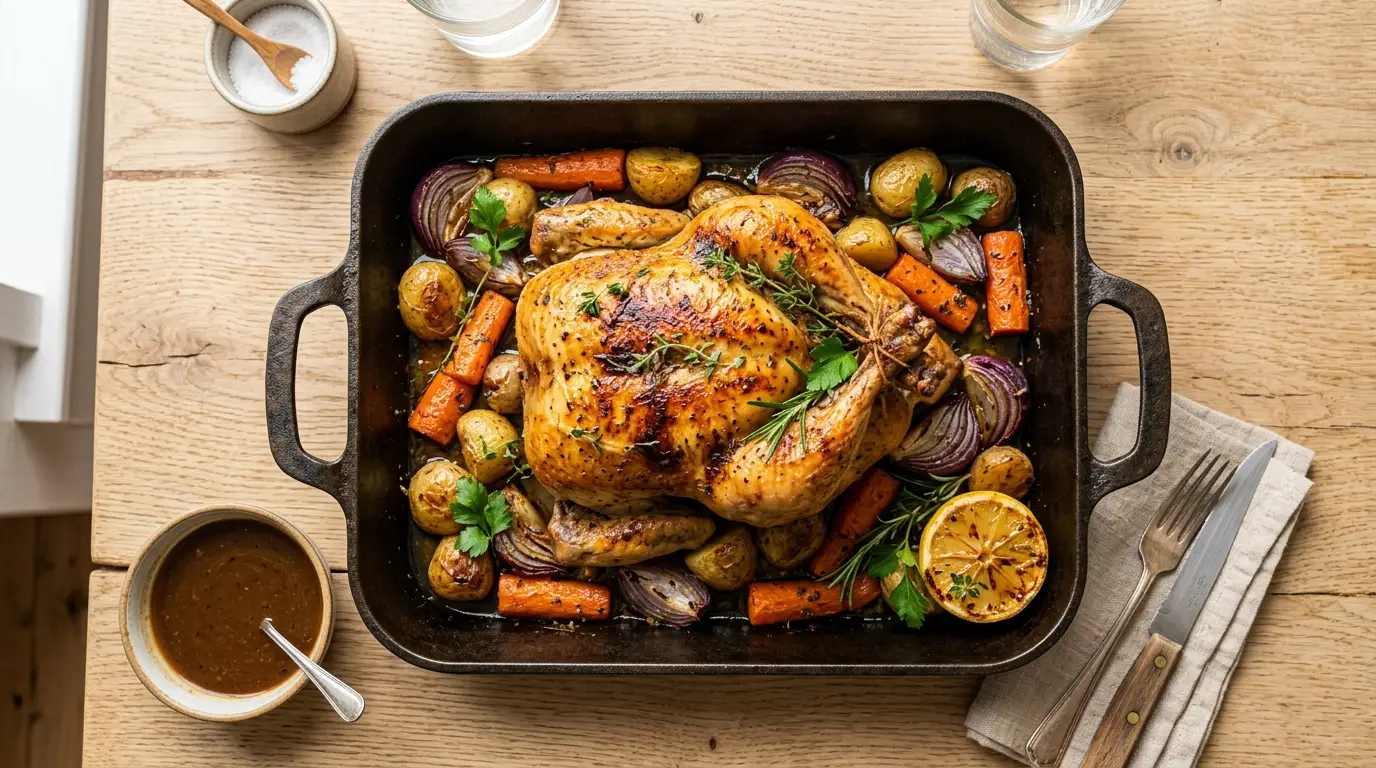
Roast Chicken
Ingredients
- 1 whole chicken - 4.5–5 lbs (2–2.3 kg), giblets removed, patted completely dry with paper towels
- 1 tbsp extra virgin olive oil - 15ml
- 1½ tsp kosher salt - for the outside of the bird, plus extra for the cavity
- ½ tsp black pepper - freshly ground
- 4 tbsp unsalted butter - 57g, softened to room temperature
- 2 cloves garlic - minced, for the herb butter
- 1 tbsp fresh thyme leaves - or 1 tsp dried thyme
- 1 tbsp fresh rosemary - finely chopped; or 1 tsp dried rosemary
- 1 tbsp fresh flat-leaf parsley - finely chopped
- ½ lemon - juiced into the herb butter; reserve the other half for the cavity
- 2 cloves garlic - left whole
- ½ lemon - the squeezed half from the herb butter plus the remaining unused half, stuffed cut-side in
- 1 medium yellow onion - cut into thick rounds
- 2 medium carrots - roughly chopped into 2-inch (5cm) pieces
- 2 stalks celery - roughly chopped into 2-inch (5cm) pieces
- ½ cup low-sodium chicken broth - 120ml; or water
Equipment
- Roasting pan with rack - A rack keeps the bird elevated for even heat circulation and crispier skin
- Instant-read meat thermometer - Essential for confirming doneness at 165°F (74°C)
- Cast iron skillet (12-inch) - (optional) Alternative to a roasting pan; retains and distributes heat exceptionally well
- Small mixing bowl - For mixing the herb butter
- Paper towels - For thoroughly drying the chicken before roasting
- Kitchen twine - For trussing the legs together for even cooking
- Carving knife and fork - Sharp carving set for slicing and serving the finished bird
- Aluminum foil - For tenting the chicken during its 15-minute rest
- Cutting board - Large enough to rest and carve a whole chicken
Method
- Remove the chicken from the refrigerator at least 30 minutes before cooking. Preheat your oven to 425°F (220°C) and position the rack in the center.
- In a small bowl, mash together the softened butter, 2 minced garlic cloves, thyme, rosemary, parsley, and the juice of half the lemon until fully combined and smooth.
- Remove the giblets, then pat the entire chicken completely dry inside and out with paper towels. Season the cavity generously with salt and pepper, then stuff it with the 2 whole garlic cloves and both lemon halves.
- Gently loosen the skin from the breast meat with your fingers and push two-thirds of the herb butter directly underneath the skin, spreading it evenly. Rub the remaining butter all over the outside of the bird, then drizzle with olive oil and season generously with salt and pepper.
- Tie the legs together snugly with kitchen twine and tuck the wing tips under the body to prevent burning.
- Scatter the onion, carrots, and celery across the bottom of the roasting pan and pour in the chicken broth. Place the rack over the vegetables and set the chicken breast-side up on top.
- Roast uncovered at 425°F (220°C) for 1 hour to 1 hour 20 minutes, basting once at the 45-minute mark with the pan drippings. The chicken is done when an instant-read thermometer inserted in the thickest part of the thigh reads 165°F (74°C).
- Transfer the chicken to a cutting board, tent loosely with aluminum foil, and rest for a minimum of 15 minutes before carving to allow the juices to redistribute.
- Remove the twine and discard the cavity aromatics. Carve by removing the legs, separating drumsticks from thighs, removing the wings, and slicing the breasts. Spoon pan juices over the top before serving.
Nutrition
Notes
- Dry the chicken thoroughly — patting it completely dry with paper towels is the single most important step for achieving crispy, golden skin. For best results, let it air-dry uncovered in the fridge for a few hours or overnight after patting dry.
- Always bring the chicken to room temperature before roasting. Thirty minutes out of the fridge ensures even cooking and reduces the risk of dry breast meat.
- Use an instant-read thermometer, not a timer. Oven temperatures vary and chicken sizes differ — 165°F (74°C) in the thickest part of the thigh (without touching bone) is the only reliable indicator of doneness.
- Do not cover the chicken during roasting. Covering traps steam and prevents the skin from crisping. If the breast skin darkens too quickly, loosely tent just the breast with a small piece of foil for the final 15–20 minutes.
- Baste once at the 45-minute mark. More frequent basting lowers the oven temperature and extends cook time — one baste is enough to develop great color and flavor.
- The 15-minute rest is non-negotiable. Slicing too early causes the juices to run onto the cutting board instead of staying in the meat. Tent with foil and be patient.
- Save the pan drippings. Strain them through a fine-mesh sieve and use as the base for a quick pan gravy, or refrigerate and skim the fat for use in soups and sauces.
- Save the carcass for stock. After dinner, simmer the bones with water, onion, carrot, and celery for 2–3 hours to make rich homemade chicken stock.
- Leftovers keep well refrigerated in an airtight container for up to 4 days, or frozen for up to 3 months. Reheat in a covered baking dish at 325°F (165°C) with a splash of broth to retain moisture.
- Herb butter variations: Try swapping the fresh herbs for smoked paprika and garlic powder for a Spanish-inspired bird, or use Dijon mustard and tarragon for a French-style roast chicken.
Private Notes
Tried this recipe?
Let us know how it was!Final Thoughts
A really good roast chicken recipe is the kind of thing that never gets old. It fills the kitchen with a smell that immediately makes everyone feel at home.
I hope this recipe gives you the same confidence in the kitchen that making it gave me. Once you’ve done it a couple of times, it becomes completely intuitive.
Give it a try this weekend — and when that skin comes out golden and crackling and the whole table goes quiet on the first bite, you’ll know exactly what I mean.
I’d love to hear how it turned out for you! Drop a comment below or share a photo — it genuinely makes my day to see these recipes being made in kitchens all over the world.
Recommended:
- Chicken Gravy Recipe
- Mashed Potatoes Recipe
- Turkey Gravy Recipe
- Green Bean Casserole Recipe
- Roasted Sweet Potato Recipe
- Potato Salad Recipe
- Chicken Soup Recipe
- Dinner Rolls Recipe
- Chicken Parmesan Recipe
- Cranberry Sauce Recipe