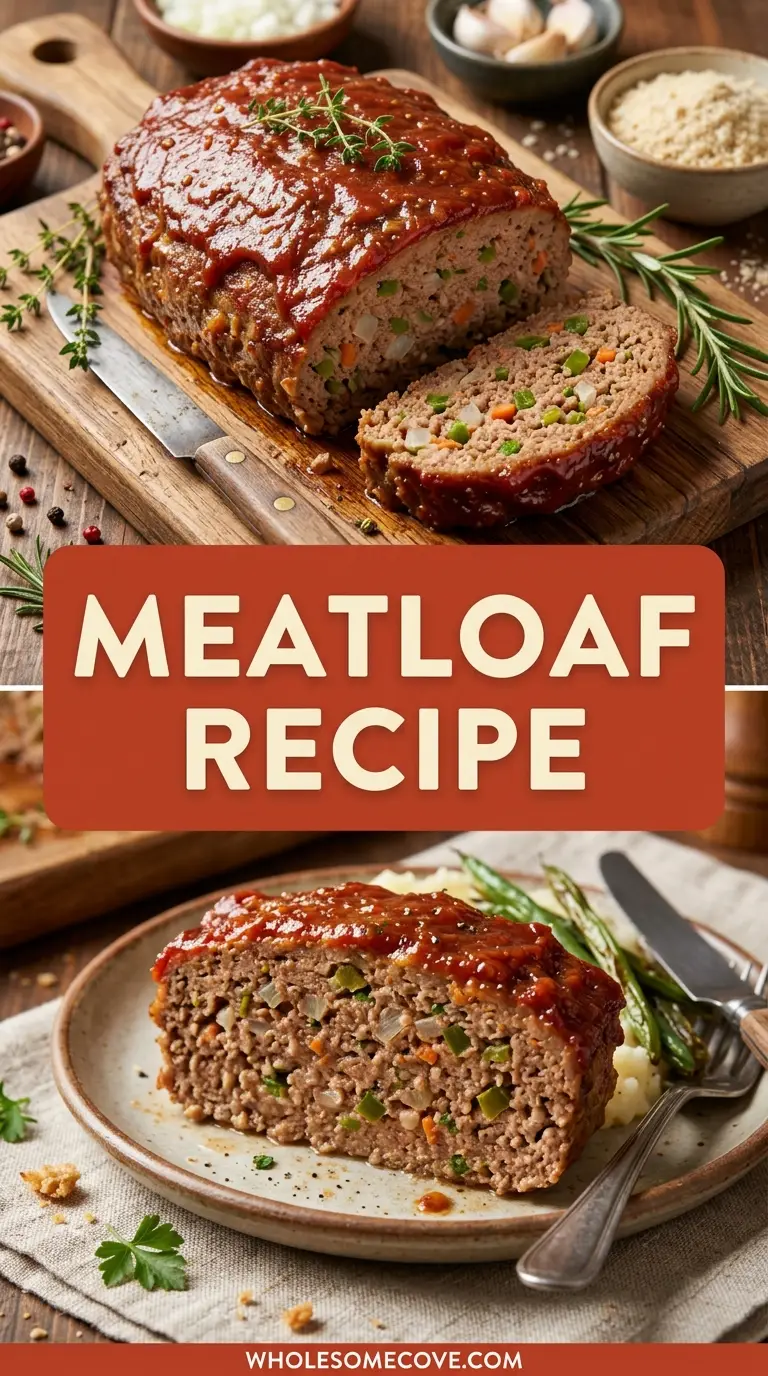
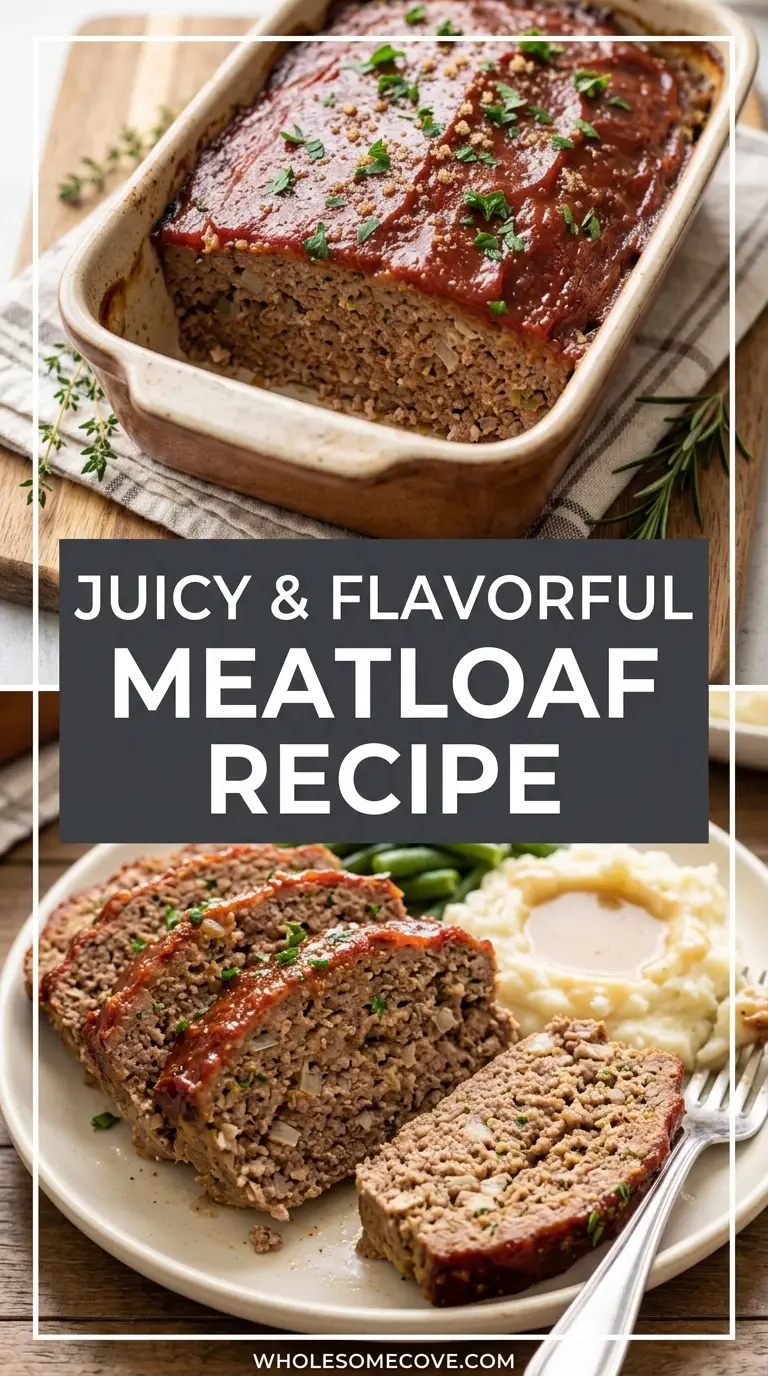
A great Meatloaf Recipe comes down to one step most people skip. Soaking the breadcrumbs in milk first keeps the beef tender, not dense.
This version uses 2 pounds of 85/15 ground beef, so it stays juicy without turning greasy. That soaked-bread trick is called a panade, and it holds moisture through a full hour of baking.
The glaze matters too. Ketchup, brown sugar, and a splash of vinegar caramelize on top into a sticky, tangy crust.
Start to finish, it runs about 90 minutes, and most of that is hands-off oven time. You need one bowl and pantry staples you probably already have.
| Quick Recipe Summary | |
|---|---|
| Prep Time | 20 minutes |
| Cook Time | 1 hour |
| Total Time | 1 hour 30 minutes |
| Servings | 8 slices |
| Difficulty Level | Easy |
For another hearty ground beef dinner, see Shepherds Pie Recipe.
Why You’ll Love This Meatloaf Recipe
This is the version to make when you want meatloaf that slices cleanly and actually tastes of something. It leans on a few small techniques that fix the problems most home cooks run into.
Here is what sets it apart:
- It stays moist all the way through. The milk-soaked panade traps liquid inside the beef, so you get a tender center instead of a dry, crumbly one.
- It holds its shape when sliced. Two eggs and the soaked bread bind the mixture enough to cut into neat slices without falling apart on the plate.
- The glaze does double duty. A ketchup, brown sugar, and vinegar mix goes on before baking and again near the end for a glossy, sticky top with real tang.
- It uses one bowl. Everything mixes together by hand, with nothing to melt, whisk separately, or precook except a quick onion softening if you prefer it mellow.
- It scales and freezes well. You can shape two loaves at once and freeze one raw or cooked for a fast dinner later.
- It works with what you have. Ground beef is standard, but a beef and pork blend, or even ground turkey, slots right in with minor tweaks.
You might also enjoy: Sloppy Joe Recipe
Ingredients
Everything here is easy to find, and most of it lives in the pantry or fridge already. Measure the glaze ingredients separately from the meatloaf ingredients so you do not accidentally mix them in too early.
For the meatloaf:
- 2 lb (900 g) ground beef, 85/15 (lean-to-fat ratio for the best balance of moisture and structure)
- 1 medium yellow onion, grated or very finely diced
- 3 cloves garlic, minced
- 2 large eggs, lightly beaten
- ¾ cup (75 g) panko breadcrumbs (or plain dried breadcrumbs)
- ⅔ cup (160 ml) whole milk
- 2 tablespoons Worcestershire sauce
- ¼ cup (60 ml) ketchup
- 2 tablespoons fresh parsley, chopped (optional)
- 1 teaspoon garlic powder
- 1 teaspoon dried thyme
- 1½ teaspoons fine salt
- ½ teaspoon black pepper
For the glaze:
- ½ cup (120 ml) ketchup
- 2 tablespoons brown sugar
- 1 tablespoon apple cider vinegar
- 1 teaspoon Dijon mustard
Grating the onion instead of dicing it made a bigger difference than I expected, since the juice works into the meat while the raw crunch disappears completely during baking.
Read Also: Worcestershire Sauce Recipe
Kitchen Equipment Needed
You do not need anything specialized to make a good meatloaf. A few basics do most of the work, and one or two upgrades make the process cleaner.
- A large glass mixing bowl for combining the meat and binders
- A box grater for the onion (a food processor works too)
- A loaf pan, or a rimmed baking sheet lined with foil for a free-form loaf
- A meat thermometer to check doneness without cutting into the loaf
- A small bowl and spoon for the glaze
- A pastry brush or the back of a spoon for spreading the glaze
- Measuring cups and spoons
A free-form loaf on a sheet pan browns on more sides and lets fat drain away, while a loaf pan gives you tidy, uniform slices. Both work, so pick based on whether you want more crust or a neater shape.
For more ideas along these lines, browse Best Potato Recipes.
Recommended Products for This Recipe
These are the tools and ingredients I reach for when I want the recipe to come out right every time. Each one solves a specific problem that tends to trip people up with meatloaf.
1. Instant-Read Meat Thermometer
Meatloaf is deceptive because the outside looks fully cooked long before the center reaches a safe temperature. An instant-read thermometer takes the guesswork out and tells you the moment the middle hits 160°F (71°C), which is the single best way to avoid both undercooking and drying it out.
2. Meatloaf Pan With Drainage Insert
A standard loaf pan traps rendered fat around the meat, which is why some meatloaf turns out greasy on the bottom. A pan with a perforated insert lets the fat drip into the base while the loaf sits above it, so the bottom stays firm instead of soggy.
3. Handheld Vegetable Chopper
Large chunks of onion never fully soften inside a loaf and leave a sharp bite. A chopper gets the onion small and even in seconds, which helps it melt into the meat rather than standing out.
4. Glass Meal Prep Containers
Meatloaf is one of the best make-ahead dinners, and it stores beautifully once cooled. Airtight glass containers keep leftover slices from drying in the fridge and go straight from cold storage to the microwave without swapping dishes.
For another baked potato favorite, try: Twice Baked Potatoes Recipe
Step-by-Step Instructions: How to Make Meatloaf
Follow these steps closely and you will have a tender, evenly cooked meatloaf with a glossy glaze.
Step 1: Preheat and Prep
- Position an oven rack in the center and preheat the oven to 350°F (175°C).
- If you are using a loaf pan, lightly grease it or line it with a strip of parchment for easy lifting.
- If you are baking a free-form loaf, line a rimmed baking sheet with foil and set it aside.
- Grate the onion on the large holes of a box grater, or chop it very finely, and mince the garlic.
Step 2: Make the Panade
- Place the panko breadcrumbs in a large mixing bowl.
- Pour the whole milk over the breadcrumbs and stir once to coat.
- Let the mixture sit for 5 minutes until the bread softens and absorbs the milk into a loose paste.
- This soaked-bread mixture is the panade, and it is what keeps the finished loaf moist.
Step 3: Combine the Wet Seasonings
- Add the beaten eggs, Worcestershire sauce, ¼ cup ketchup, grated onion, minced garlic, parsley, garlic powder, dried thyme, salt, and pepper to the panade.
- Stir with a fork or spoon until everything is evenly blended.
- Mixing the seasonings before the meat goes in means you do not have to overwork the beef to distribute them.
Step 4: Add the Beef and Mix Gently
- Add the ground beef to the bowl on top of the seasoned panade.
- Using clean hands or a fork, mix just until the ingredients are combined and no dry streaks remain.
- Stop as soon as it comes together, because overmixing packs the proteins tightly and makes the loaf dense and tough.
- The mixture should feel soft and slightly wet, not stiff.
Step 5: Shape the Loaf
- Transfer the mixture to your prepared loaf pan and press it in gently, or shape it into a loaf about 9 by 5 inches (23 by 13 cm) on the lined baking sheet.
- Smooth the top with the back of a spoon.
- Avoid compacting it hard; press only enough that it holds together and has an even surface.
Step 6: Make and Apply the Glaze
- In a small bowl, stir together the ½ cup ketchup, brown sugar, apple cider vinegar, and Dijon mustard until smooth.
- Brush or spoon about two-thirds of the glaze over the top and sides of the loaf, saving the rest for later.
- Reserving some glaze lets you add a fresh, glossy coat near the end of baking.
Step 7: Bake
- Place the meatloaf in the preheated oven and bake for 45 minutes.
- Remove it, brush on the remaining glaze, and return it to the oven.
- Continue baking for 10 to 15 minutes, until an instant-read thermometer inserted into the center reads 160°F (71°C).
- Total baking time is about 55 to 60 minutes depending on your oven and pan.
Step 8: Rest, Then Slice
- Take the meatloaf out and let it rest for 10 minutes before cutting.
- Resting lets the juices settle back into the meat so they do not run out when you slice.
- If you baked it in a loaf pan, lift it out using the parchment or drain any excess fat first.
- Slice into thick, even pieces and serve.
Read Also: Mushroom Gravy Recipe
Tips for The Best Meatloaf
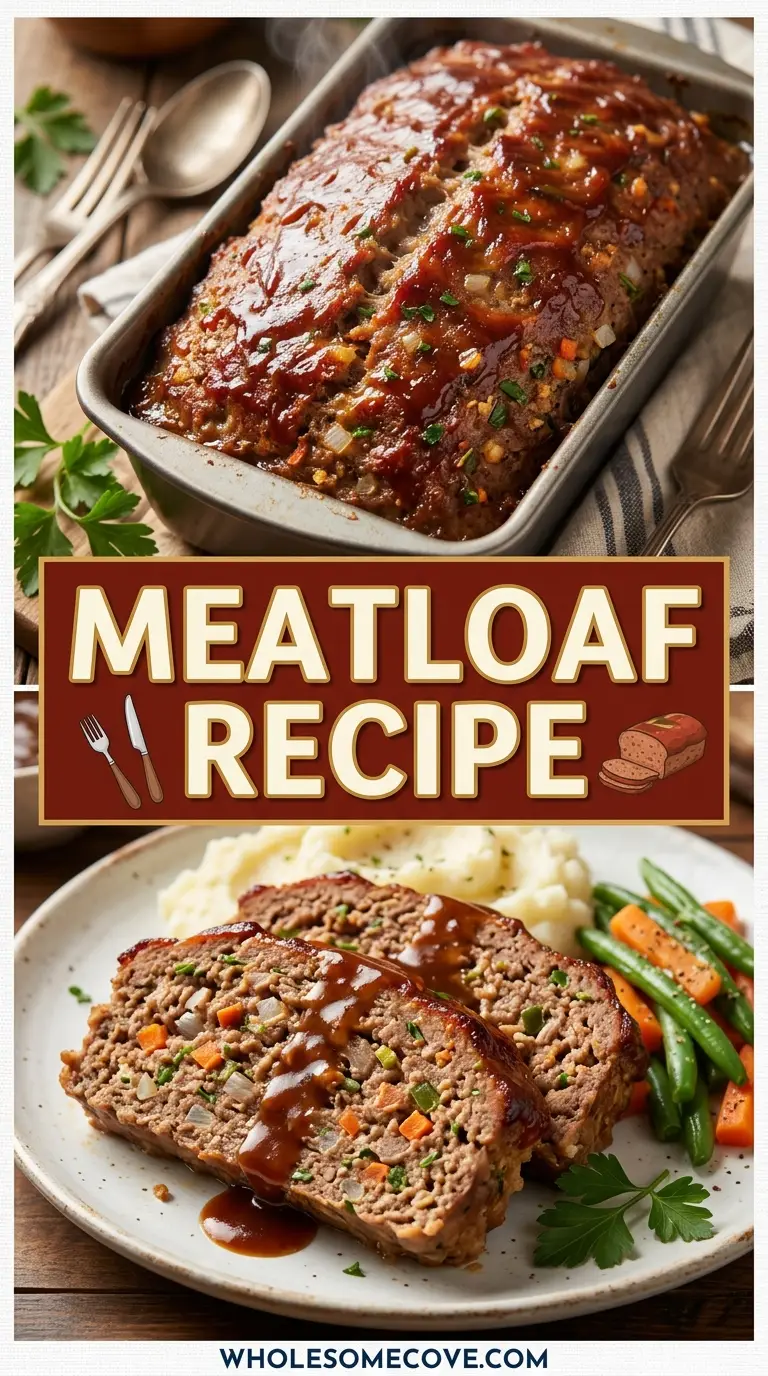
Small habits are the difference between an average meatloaf and one that comes out right every time. These are the ones that matter most.
- Do not overmix. Combine the beef with the other ingredients only until no dry bread shows. The more you work it, the tougher the texture.
- Use 85/15 beef. Leaner beef dries out, and fattier beef turns greasy. This ratio gives you a juicy loaf that still holds together.
- Always make the panade. Soaking bread in milk before it touches the meat is the core moisture step. Skipping it is the most common cause of dry meatloaf.
- Grate the onion. Fine or grated onion disappears into the loaf and adds moisture, while big diced pieces stay crunchy and can make slices fall apart.
- Check temperature, not time. Ovens vary, so pull the loaf when the center reads 160°F (71°C) rather than trusting the clock alone.
- Let it rest. Ten minutes of resting keeps the juices inside. Cutting immediately releases them onto the cutting board.
- Glaze in two coats. One coat before baking flavors the crust, and a second near the end gives you that shiny, sticky top.
I ruined my first meatloaf by packing the mixture into the pan like a snowball, which made it dense and rubbery; now I press it in just firmly enough to hold its shape and no more.
Another take on seasoned ground meat is Swedish Meatball Recipe.
What to Serve with Meatloaf
Meatloaf is a plate-anchor, so it pairs best with classic, comforting sides that soak up the glaze and any juices. Here are the pairings that round out the meal.
- Mashed Potatoes, the traditional partner, creamy enough to catch every bit of glaze
- Roasted Potatoes for crisp edges and a heartier bite
- Green Bean Casserole, which brings a creamy, savory contrast
- Maple Glazed Carrots for a touch of sweetness against the tangy top
- Brown Gravy spooned over both the meatloaf and the potatoes
- Dinner Rolls to mop up the plate
- Coleslaw for a cool, crunchy side
- Creamed Spinach for a rich, green counterpoint
- Roasted Brussels Sprouts with Bacon when you want something with a little char
- Baked Mac and Cheese for a full comfort-food spread
- Mexican Street Corn to add a smoky, zesty side
For a rich side to go alongside, try: Au Gratin Potatoes Recipe
Variations of Meatloaf
Once you have the base down, meatloaf takes well to swaps and add-ins. Try one of these when you want to change things up.
- Beef and pork blend: Replace half the beef with ground pork for a richer, softer texture and deeper flavor.
- Turkey meatloaf: Use ground turkey (93/7) in place of beef, add an extra tablespoon of oil or a little more panade, and watch the temperature closely so it does not dry out.
- Italian style: Add ¼ cup grated Parmesan, swap the thyme for Italian seasoning, and use marinara in place of the ketchup glaze.
- Bacon-wrapped: Lay strips of bacon over the shaped loaf before baking for a smoky, crisp exterior.
- Cheese-stuffed: Press a channel down the center, fill it with cubed mozzarella or cheddar, then seal the meat over the top before glazing.
- BBQ glaze: Swap the ketchup glaze for your favorite barbecue sauce for a smokier, sweeter finish.
- Veggie-loaded: Fold in ½ cup finely grated carrot or zucchini (squeezed dry) for extra moisture and hidden vegetables.
- Spicy kick: Add a diced jalapeño or a teaspoon of chipotle in adobo to the mix and a dash of hot sauce to the glaze.
I keep a small bowl of the glaze back for these versions too, because a fresh coat in the last five minutes gives even a barbecue or Italian loaf that glossy, finished look.
Read Also: Crack Burger Recipe
Storage and Reheating
Meatloaf is arguably better the next day, once the flavors settle and the loaf firms up. Store it properly and it reheats without drying out.
- Refrigerate: Cool the meatloaf completely, then store slices or the whole loaf in an airtight container for up to 4 days.
- Freeze cooked: Wrap cooled slices individually, then freeze in a bag or container for up to 3 months. Thaw overnight in the fridge.
- Freeze raw: Shape the loaf, wrap it tightly, and freeze unbaked for up to 3 months. Thaw fully before baking as directed.
- Reheat in the oven: Cover slices with foil and warm at 300°F (150°C) for 15 to 20 minutes, adding a spoonful of ketchup or broth to keep them moist.
- Reheat in the microwave: Heat individual slices in 30-second bursts with a damp paper towel over the top to trap steam.
- Make-ahead tip: You can mix and shape the loaf a day in advance, keep it covered in the fridge, and bake it fresh the next day.
Cold meatloaf holds together far better for sandwiches than warm, so I slice it straight from the fridge and pile it onto toasted bread with a little extra glaze.
A related slow-simmered beef dish is Beef Stew Recipe.
Nutritional Facts
Values are estimates per slice, based on 8 slices per loaf. Actual numbers vary with the beef ratio and brands used.
| Nutrient | Amount per Slice |
|---|---|
| Calories | about 340 |
| Protein | 26 g |
| Total Fat | 20 g |
| Saturated Fat | 7 g |
| Carbohydrates | 14 g |
| Sugar | 8 g |
| Fiber | 1 g |
| Sodium | 620 mg |
| Cholesterol | 115 mg |
For a lighter side option, try: Healthy Mashed Potatoes Recipe
Health Benefits of Key Ingredients
Beyond being satisfying, meatloaf delivers real nutrition from its core ingredients. Here is what the main components bring to the plate.
- Ground beef: A strong source of complete protein, iron, zinc, and vitamin B12, all of which support muscle maintenance, oxygen transport, and energy metabolism.
- Eggs: Add high-quality protein along with choline, which plays a role in brain and nerve function, and they help bind the loaf.
- Onion: Contributes antioxidants and natural sulfur compounds, plus prebiotic fiber that supports gut bacteria.
- Garlic: Long valued for its allicin content, which is associated with immune and cardiovascular support.
- Whole milk: Brings calcium and vitamin D that contribute to bone health, and its protein helps the panade hold moisture.
- Parsley: A small but useful source of vitamin K and vitamin C, adding a fresh note along with a nutrient bump.
- Thyme: Contains aromatic compounds with antioxidant properties and adds flavor without any salt or sugar.
Read Also: Broccoli Salad Recipe
FAQs About Meatloaf
1. Why does my meatloaf fall apart?
Meatloaf usually crumbles when it lacks enough binder or when the mixture is too wet. Make sure you include both eggs and the milk-soaked panade, which together hold the loaf together.
Cutting it too soon is another common cause. Let it rest for 10 minutes so it firms up before slicing.
2. What is the best meat to use for meatloaf?
Ground beef with an 85/15 lean-to-fat ratio is the reliable standard. It has enough fat to stay juicy without leaving a greasy loaf.
For deeper flavor, replace half the beef with ground pork. A beef-pork blend is a classic combination that stays tender.
3. Should meatloaf be cooked covered or uncovered?
Bake it uncovered so the glaze can caramelize and the top can brown. Covering it traps steam and leaves the surface pale and soft.
If the top browns too fast before the center is done, tent it loosely with foil for the last stretch. Remove the foil once you add the final glaze.
4. What internal temperature should meatloaf reach?
Cook it until the center reaches 160°F (71°C) on an instant-read thermometer. This is the safe temperature for ground beef.
Checking temperature rather than time is the surest way to avoid over or undercooking. Insert the probe into the thickest part of the loaf.
5. Why is my meatloaf dry?
Dryness almost always comes from lean beef, an overmixed mixture, or skipping the panade. Use 85/15 beef, mix gently, and always soak the breadcrumbs in milk first.
Overbaking is the other culprit. Pull the loaf as soon as it hits 160°F (71°C) rather than leaving it in longer.
6. Can I make meatloaf ahead of time or freeze it?
Yes to both. You can mix and shape the loaf a day ahead, refrigerate it covered, and bake it fresh the next day.
For longer storage, freeze it raw or cooked for up to 3 months. Thaw it fully in the fridge before baking or reheating.
7. Do I have to use a loaf pan?
No, a free-form loaf on a lined baking sheet works well and browns on more sides. It also lets excess fat drain away as it bakes.
A loaf pan gives you a neater shape and tidy slices. Choose based on whether you want more crust or a more uniform result.
You might also like: Homemade Biscuit Recipe
Classic Meatloaf Recipe
Ingredients
- 2 lb ground beef - 900g, 85/15 lean-to-fat ratio
- 1 yellow onion - medium, grated or very finely diced
- 3 cloves garlic - minced
- 2 large eggs - lightly beaten
- ¾ cup panko breadcrumbs - 75g; or plain dried breadcrumbs
- ⅔ cup whole milk - 160 ml
- 2 tablespoons Worcestershire sauce
- ¼ cup ketchup - 60 ml
- 2 tablespoons fresh parsley - chopped, optional
- 1 teaspoon garlic powder
- 1 teaspoon dried thyme
- 1½ teaspoons fine salt
- ½ teaspoon black pepper
- ½ cup ketchup - 120 ml
- 2 tablespoons brown sugar
- 1 tablespoon apple cider vinegar
- 1 teaspoon Dijon mustard
Equipment
- Large glass mixing bowl - For combining the meat and binders
- Box grater - For grating the onion; a food processor works too
- Loaf pan - Or a rimmed baking sheet lined with foil for a free-form loaf
- Rimmed baking sheet - Lined with foil, for free-form loaf
- Meat thermometer - To check doneness without cutting into the loaf
- Small bowl - For the glaze
- Spoon - For stirring the glaze
- Pastry brush - Or the back of a spoon for spreading the glaze
Method
- Position an oven rack in the center and preheat the oven to 350°F (175°C). Grease a loaf pan or line a rimmed baking sheet with foil. Grate the onion and mince the garlic.
- Place the panko breadcrumbs in a large mixing bowl, pour the whole milk over them, and stir once to coat. Let sit for 5 minutes until the bread softens into a loose paste.
- Add the beaten eggs, Worcestershire sauce, ¼ cup ketchup, grated onion, minced garlic, parsley, garlic powder, dried thyme, salt, and pepper to the panade. Stir until evenly blended.
- Add the ground beef and mix gently with clean hands or a fork just until combined and no dry streaks remain. Do not overmix.
- Transfer the mixture to the prepared loaf pan and press in gently, or shape into a 9 by 5 inch loaf on the lined baking sheet. Smooth the top with the back of a spoon.
- Stir together the ½ cup ketchup, brown sugar, apple cider vinegar, and Dijon mustard until smooth. Brush about two-thirds over the top and sides of the loaf, reserving the rest.
- Bake for 45 minutes. Remove, brush on the remaining glaze, and return to the oven. Bake for 10 to 15 minutes more, until an instant-read thermometer reads 160°F (71°C).
- Let the meatloaf rest for 10 minutes before slicing. Lift from the pan using the parchment or drain excess fat first, then slice into thick, even pieces and serve.
Nutrition
Notes
- Do not overmix the beef with the other ingredients; combine only until no dry bread shows, or the texture turns tough.
- Use 85/15 ground beef for the best balance of moisture and structure. Leaner beef dries out and fattier beef turns greasy.
- Always make the panade by soaking the breadcrumbs in milk before they touch the meat; skipping it is the most common cause of dry meatloaf.
- Grate the onion rather than dicing it so it disappears into the loaf and adds moisture without crunchy pieces.
- Check temperature, not time. Pull the loaf when the center reads 160°F (71°C) on an instant-read thermometer.
- Let the loaf rest for 10 minutes before slicing so the juices settle back into the meat.
- Glaze in two coats: one before baking to flavor the crust, and a second near the end for a shiny, sticky top.
- Make ahead: mix and shape the loaf a day in advance, keep it covered in the fridge, and bake it fresh the next day.
- Freeze raw or cooked for up to 3 months; thaw fully in the fridge before baking or reheating.
- Refrigerate leftovers in an airtight container for up to 4 days. Cold meatloaf slices hold together well for sandwiches.
Private Notes
Tried this recipe?
Let us know how it was!Final Thoughts
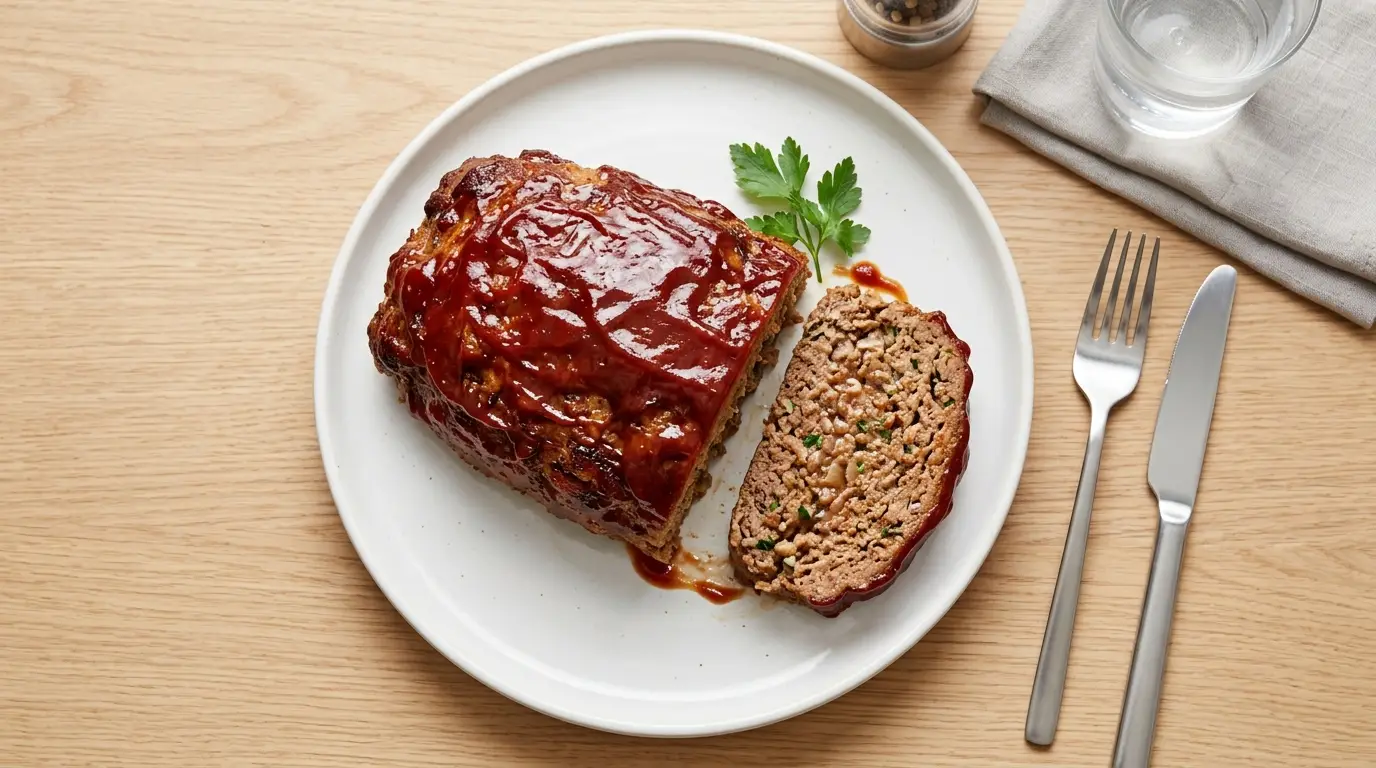
Classic meatloaf earns its place at the table because it is forgiving, filling, and endlessly adaptable. Get the panade and the temperature right, and the rest is easy.
Once you have the base recipe down, it becomes a weeknight staple you can riff on for years. The leftovers might be the best part.
Give this one a try the next time you want a warm, dependable dinner. If you make it, leave a comment with your favorite glaze twist and share it with someone who loves a good home-cooked meal.
Recommended:
- Scalloped Potatoes Recipe
- Smashed Potatoes Recipe
- Cheesy Potatoes Recipe
- Best Gravy Recipes
- Baked Ziti Recipe
- Healthy Cornbread Recipe
- Prime Rib Recipe
- Mashed Sweet Potato Recipe
- Roasted Sweet Potato Recipe