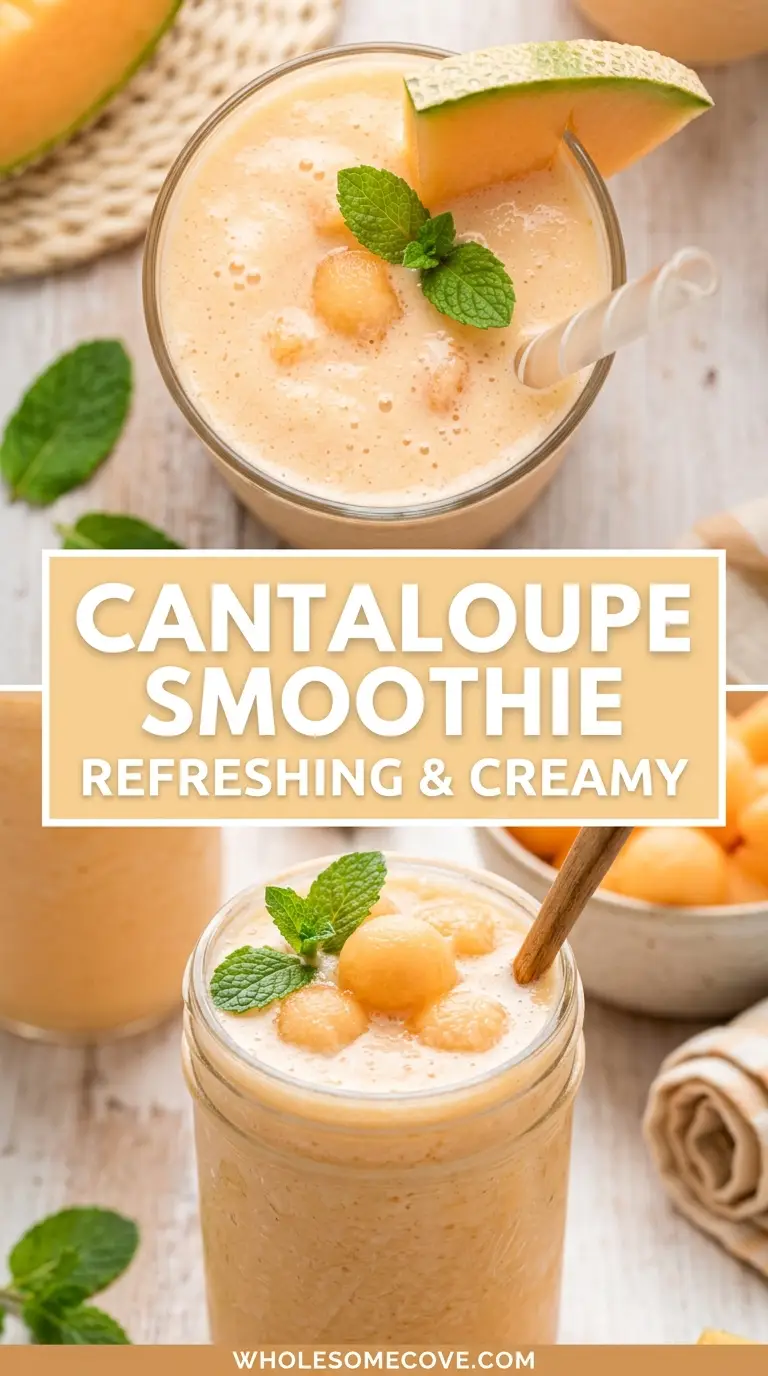
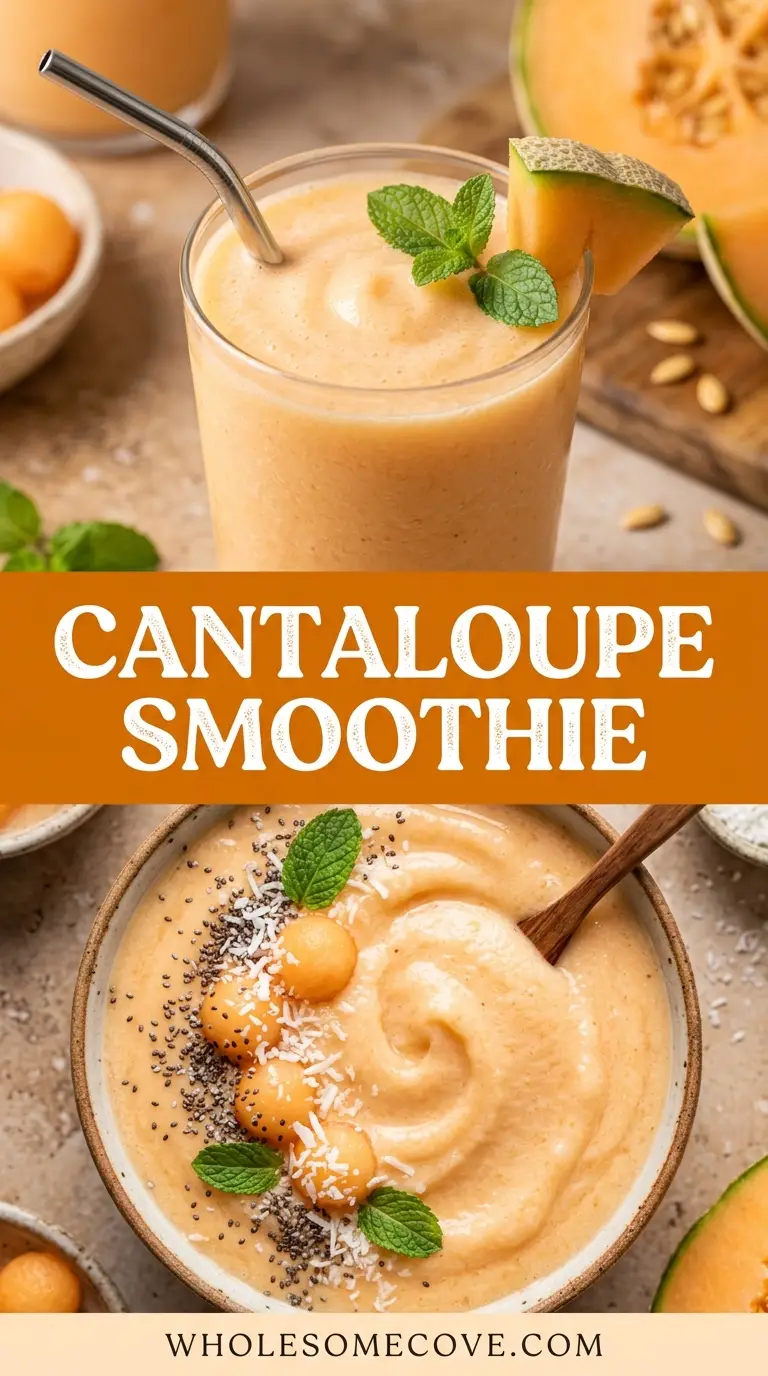
A ripe cantaloupe turns almost custardy once it hits a blender, and that’s the texture this cantaloupe smoothie recipe is built around. Seven ingredients and ten minutes are all it takes, no stovetop required.
Frozen banana replaces most of the ice here, so the melon’s flavor stays concentrated instead of watering down. This version leans on Greek yogurt for body, which keeps the drink thick enough to eat with a spoon rather than sip through a straw.
| Quick Recipe Summary | |
|---|---|
| Prep Time | 10 minutes |
| Cook Time | 0 minutes |
| Total Time | 10 minutes |
| Servings | 4 smoothies (about 12 oz each) |
| Difficulty Level | Easy |
Watermelon Smoothie is another melon-based option worth trying if you like this one.
Why You’ll Love This Cantaloupe Smoothie Recipe
This cantaloupe smoothie recipe uses ripe melon at its peak sweetness, so there’s no need to load it with added sugar.
It comes together in one blender jar with almost no cleanup, and every ingredient in it is something most kitchens already have on hand.
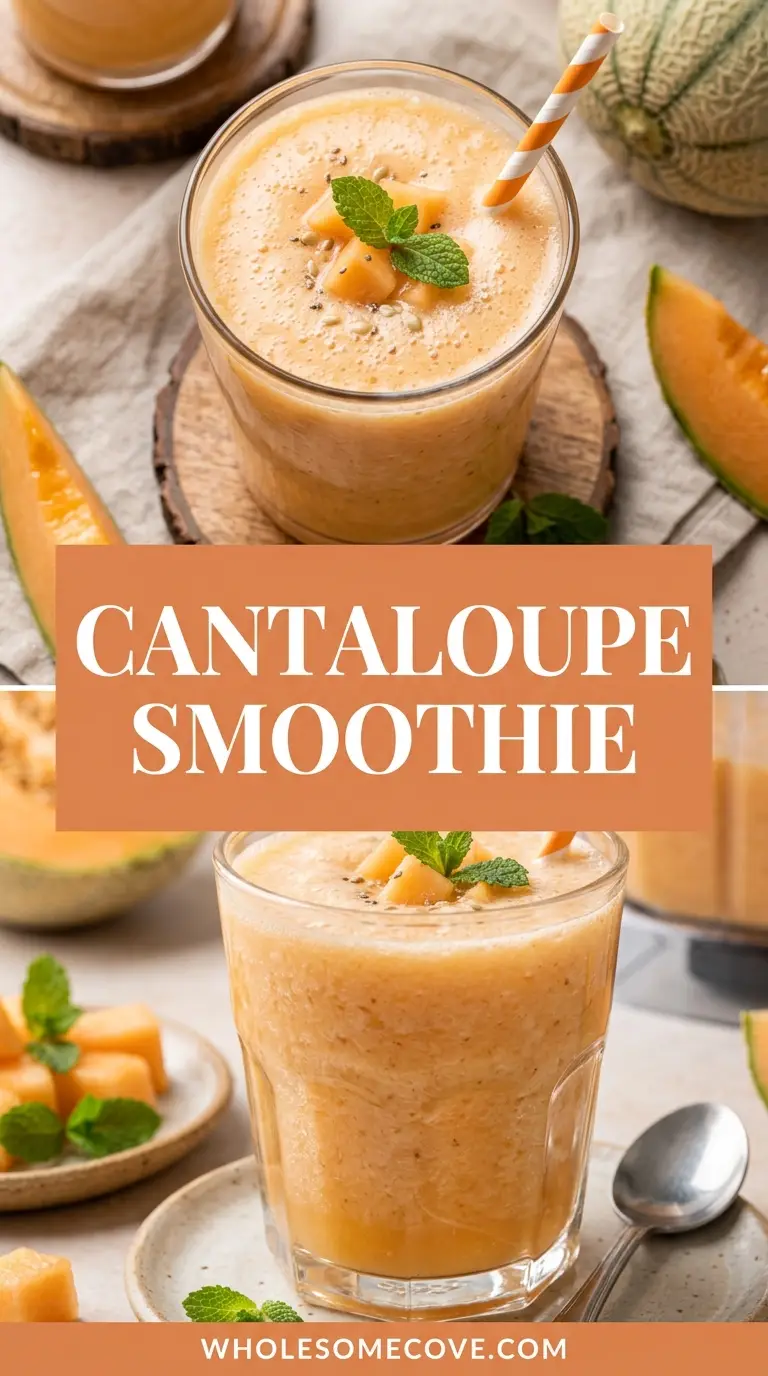
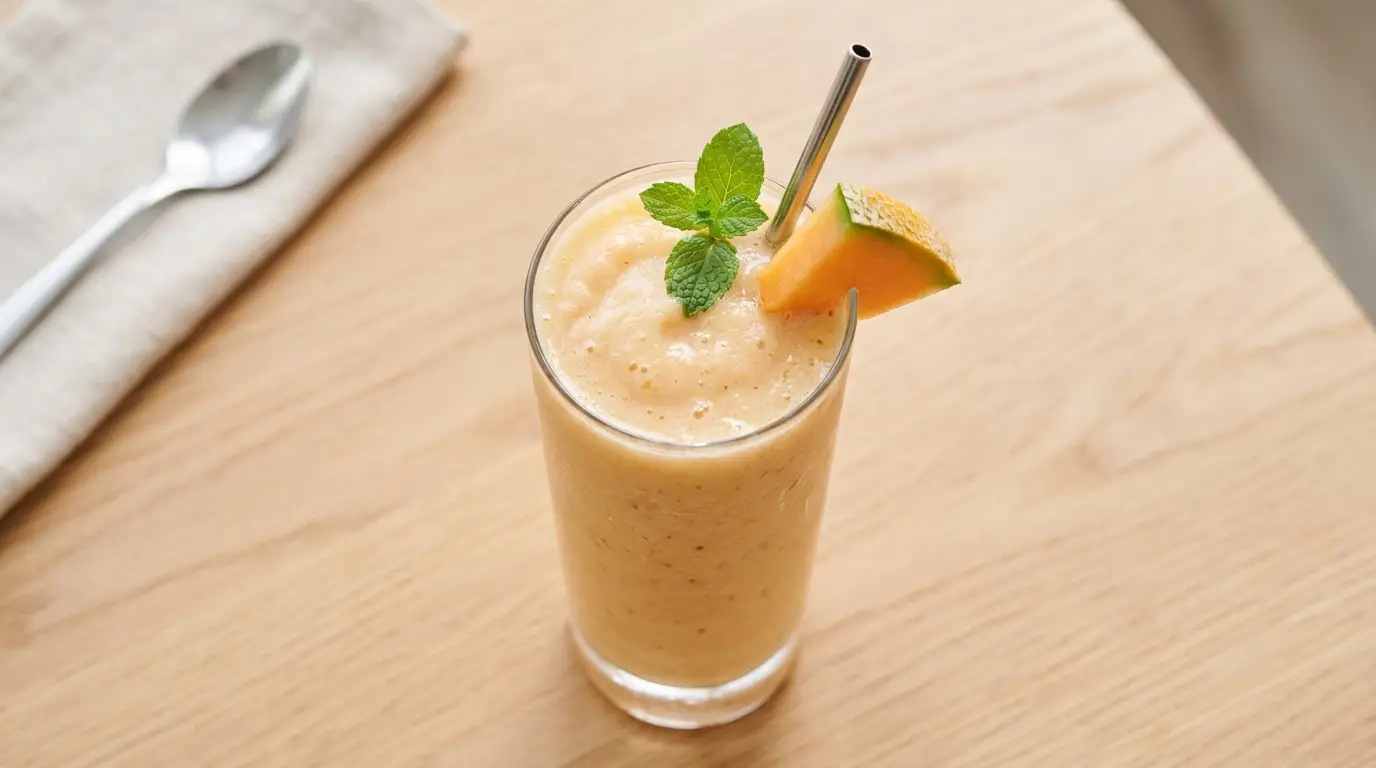
The texture lands somewhere between a classic milkshake and a fruit-forward yogurt drink, thick enough to eat with a spoon if you want to slow down and treat it like a breakfast bowl instead.
- Naturally sweet. Ripe cantaloupe has enough sugar on its own that the honey becomes optional rather than necessary.
- Thick without extra ice. The frozen banana does most of the thickening work, so the melon flavor doesn’t get diluted.
- Protein-boosted. Greek yogurt adds close to 10 grams of protein per serving, turning this into a real breakfast option instead of just a snack.
- Kid-friendly. The mild, melon-forward flavor tends to appeal to picky eaters who balk at anything too tart or too green.
- Budget-friendly. Cantaloupe is one of the cheaper melons most of the year, especially outside peak winter months.
- Dairy-free adaptable. Swapping the milk and yogurt for plant-based versions keeps the texture nearly identical.
- Meal-prep friendly. The fruit can be portioned and frozen ahead so morning assembly takes minutes.
For a smoothie built around greens instead of melon, my Spinach Smoothie is worth a look.
Ingredients
Seven ingredients go into this smoothie, and none of them require a special trip beyond the regular grocery store. Most produce sections carry cantaloupe year-round, though it tends to taste noticeably sweeter and cheaper from late spring through early fall.
- 3 cups (450g) cubed ripe cantaloupe, chilled (choose a melon that smells sweet at the stem end and gives slightly under light pressure)
- 1 large ripe banana, sliced and frozen at least 2 hours ahead (freezing it in advance is what gives the smoothie its thick, milkshake-like body)
- 1 cup (240g) plain Greek yogurt, full-fat or 2% for the creamiest texture
- 3/4 cup (180ml) milk, dairy or unsweetened almond milk for a lighter, dairy-free version
- 2 tablespoons (30ml) raw honey, adjust or omit depending on how sweet your melon already is
- 1/2 teaspoon (2.5ml) pure vanilla extract
- 1 cup (140g) ice cubes
I’ve found that skipping the honey entirely works fine when the cantaloupe is truly ripe, and adding it only when the melon tastes underwhelming keeps the smoothie from turning cloying.
Frozen Fruit Smoothie covers more tips on working with frozen produce if you want to batch-prep fruit for the week.
Kitchen Equipment Needed
Nothing exotic here. A decent blender does most of the work, and the rest of the list is just standard prep gear that makes the process faster and less messy.
- High-speed blender – a motor strong enough to crush frozen banana and ice without leaving chunks
- Melon baller or paring knife – for cubing the cantaloupe cleanly and quickly
- Cutting board
- Chef’s knife
- Liquid measuring cup – for the milk and honey
- Measuring spoons
- Glass storage jars – handy for freezing pre-portioned fruit or storing leftovers
- Silicone rubber spatula – for scraping down the sides of the blender jar between pulses
- Reusable silicone straws – a sturdier option than plastic straws for a thick, spoonable smoothie
Before moving on, my Greek Yogurt Smoothie has a longer breakdown of yogurt brands and their effect on smoothie texture.
Recommended Products for This Recipe
These are the specific products I reach for when making this smoothie regularly, based on what actually made a difference in texture and ease of prep. None of these are strictly required, but each one solves a small annoyance that comes up often enough to be worth mentioning.
1. Vitamix Explorian Blender
Underpowered blenders leave streaks of unblended banana fiber even after a full minute of running, which shows up as stringy bits in the finished drink. A high-torque motor like this one pulverizes frozen banana and ice in under 30 seconds, which keeps the smoothie smooth instead of grainy.
2. OXO Good Grips Melon Baller
A regular spoon tends to crush ripe cantaloupe flesh instead of cleanly separating it from the rind, which wastes fruit and leaves juice everywhere. This tool scoops clean cubes in seconds and works just as well on the rind’s flat sides once the melon is halved.
3. Glass Smoothie Tumblers with Lids and Straws
Regular drinking glasses work, but they don’t travel well if breakfast happens in the car. These seal tight enough to toss in a bag without leaking and hold roughly a full serving each, so there’s no guessing at portions.
4. Local Hive Raw Wildflower Honey
Ultra-filtered supermarket honey tends to taste one-dimensionally sweet with no real depth. Raw wildflower honey brings a slight floral note that complements ripe melon instead of just adding sugar, and a little goes further than the processed kind.
You might also enjoy: Almond Milk Smoothie
Step-by-Step Instructions: How to Make Cantaloupe Smoothie
Follow these steps and you’ll have a smooth, thick cantaloupe smoothie ready in about ten minutes.
1. Prep the Cantaloupe
- Rinse the outside of the melon under cool water before cutting, since the rind sits directly against the flesh once sliced open.
- Cut the cantaloupe in half and scoop out the seeds and stringy center with a spoon.
- Use a melon baller or paring knife to cut the flesh into roughly 1-inch cubes, discarding the rind.
- Measure out 3 cups (450g) and set aside; chill it in the fridge briefly if it isn’t already cold.
2. Add the Liquid Ingredients First
- Pour the milk into the blender jar first, followed by the honey and vanilla extract.
- Adding liquid before solids helps the blades catch the fruit instead of spinning uselessly underneath it.
3. Add the Yogurt and Cantaloupe
- Spoon the Greek yogurt into the blender on top of the liquid.
- Add the cubed cantaloupe on top of the yogurt.
4. Blend Until Mostly Smooth
- Secure the lid firmly before starting the blender, since a loose-fitting lid can let fruit splash out during the first few pulses.
- Blend on medium speed for about 20 seconds, until the cantaloupe and yogurt are fully incorporated.
- Stop and scrape down the sides with a rubber spatula if any fruit is stuck near the top.
5. Add the Frozen Banana and Ice
- Drop in the pre-frozen banana slices and the cup of ice cubes.
- Blend on high speed for 30 to 45 seconds, until the mixture is completely smooth and no ice chunks remain.
6. Check the Consistency
- If the smoothie is thicker than you’d like, add a splash more milk, one tablespoon at a time, and blend briefly to combine.
- If it’s too thin, add a few extra ice cubes and blend again.
7. Taste and Serve
- Taste the smoothie and stir in a little extra honey if the melon wasn’t quite as sweet as expected.
- Pour into glasses and serve immediately, while it’s still cold and thick.
Read Also: Banana Smoothie Recipe
Tips for The Best Cantaloupe Smoothie
A few small adjustments make a noticeable difference in the final texture and flavor.
- Freeze the banana ahead of time. Slice it and freeze in a single layer on a tray at least 2 hours before blending, then transfer to a bag; this is what gives the smoothie its thick, cold texture without diluting the flavor the way plain ice does.
- Use a truly ripe melon. An underripe cantaloupe tastes bland no matter how much honey you add, so smell the stem end for a sweet, slightly musky aroma before buying.
- Chill the cantaloupe before blending. Room-temperature melon makes for a lukewarm smoothie; refrigerate the fruit for at least an hour beforehand if you didn’t buy it cold.
- Don’t skip the scrape-down step. Cantaloupe fibers can catch under the blades, and a quick pause with a spatula prevents stringy bits in the final texture.
- Adjust honey to the fruit, not the recipe. I’ve found that late-summer cantaloupe rarely needs any added honey at all, while early-season melon usually does.
- Blend liquids first. This one habit alone fixed most of my early blending problems, since dry fruit sitting directly on the blades tends to just spin instead of puree.
- Make it a smoothie bowl. Cut the milk to 1/2 cup for a thicker, spoonable texture and top with granola and fresh fruit.
- Taste before adding sweetener. Cantaloupe’s sweetness can vary a lot between melons, so tasting a raw cube before you start is a quick way to gauge how much honey, if any, you’ll actually need.
- Keep portions consistent. Using the same measuring cup for the cantaloupe every time helps you dial in your preferred thickness instead of guessing at ratios each time you make it.
Yogurt Smoothie Recipe goes deeper into how different yogurt styles change smoothie consistency.
What to Serve with Cantaloupe Smoothie
This smoothie works well as a full breakfast on its own, but it also pairs nicely alongside something with a bit more texture or protein. Pairing it with a warm item tends to balance out the cold, refreshing quality of the melon nicely.
- Buttermilk Waffles – the smoothie’s cold, fruity flavor balances a warm, buttery waffle nicely.
- Protein Overnight Oats – for a heartier, more filling breakfast pairing.
- Avocado Toast – the savory, creamy toast contrasts well with the sweet smoothie.
- Banana Bread – a slice on the side turns this into a more substantial brunch spread.
- Homemade Granola – sprinkle it directly into the smoothie or serve it alongside for crunch.
- Breakfast Burrito – a savory, protein-heavy pairing for anyone who wants more than fruit at breakfast.
- French Toast – classic diner-style pairing that works for a weekend brunch table.
- Baked Oatmeal – a make-ahead option that pairs well when serving a crowd.
- Fresh mint leaves or a wedge of lime, for garnish rather than a full side dish.
- A small handful of granola or chia seeds stirred directly into the glass for texture.
For another fruity option to rotate into your breakfast lineup, Mango Smoothie is worth trying next.
Variations of Cantaloupe Smoothie
The base recipe is flexible enough to handle a handful of swaps without falling apart, and most of these variations use ingredients you may already keep on hand for other smoothies.
- Cantaloupe Mango Smoothie – replace half the cantaloupe with frozen mango chunks for a more tropical flavor.
- Green Cantaloupe Smoothie – add a handful of fresh spinach; the mild melon flavor mostly masks the green taste.
- Coconut Cantaloupe Smoothie – swap the milk for coconut milk and add a tablespoon of shredded coconut.
- Protein Cantaloupe Smoothie – blend in a scoop of vanilla protein powder and reduce the honey slightly to balance the added sweetness.
- Ginger Cantaloupe Smoothie – add a small knob of fresh ginger for a bit of warmth and spice.
- Berry Cantaloupe Smoothie – toss in a half cup of frozen strawberries or blueberries for a color and flavor boost.
- Cantaloupe Lime Smoothie – a squeeze of fresh lime juice brightens the flavor and cuts through the sweetness.
- Dairy-Free Cantaloupe Smoothie – use coconut yogurt and oat milk in place of the Greek yogurt and dairy milk.
- Cantaloupe Basil Smoothie – a couple of fresh basil leaves add an unexpected herbal note that pairs surprisingly well with sweet melon.
Frozen mango pairs especially well here, and my Banana Mango Smoothie shows another way to use that combination.
Storage and Reheating
Cantaloupe smoothies are best fresh, but leftovers can be stored with a little planning, and pre-portioning the fruit ahead of time makes future batches even faster.
- Refrigerator: Store in an airtight jar or bottle for up to 24 hours; the texture separates slightly, so stir or re-shake before drinking.
- Freezer: Pour into popsicle molds or ice cube trays and freeze for up to 2 months for a frozen treat or future smoothie base.
- Make-ahead fruit prep: Cube the cantaloupe and slice the banana up to 3 days ahead, storing each separately in the fridge or freezer until ready to blend.
- Reheating: This smoothie isn’t meant to be reheated; if it separates in the fridge, a quick re-blend or vigorous shake restores the texture.
- Avoid refreezing: Once fully thawed from a frozen batch, don’t refreeze it, as the texture turns icy and grainy on a second freeze.
- Travel tip: Pack the smoothie in an insulated tumbler with a couple of extra ice cubes if you need it to stay cold for more than an hour away from the fridge.
Coconut Milk Smoothie has more storage notes if you’re building a weekly smoothie prep routine.
Nutritional Facts
| Nutrition (per serving, based on 4 servings) | |
|---|---|
| Calories | 155 kcal |
| Carbohydrates | 29g |
| Protein | 8g |
| Fat | 2g |
| Fiber | 2g |
| Sugar | 24g |
| Sodium | 65mg |
| Potassium | 620mg |
Values are estimates and will vary based on specific brands and substitutions used.
Keto Smoothie Recipe is a good lower-carb option if you’re tracking macros closely.
Health Benefits of Key Ingredients
This smoothie isn’t just a treat; the core ingredients each carry real nutritional value, which is part of why it holds up as a legitimate breakfast option rather than just a dessert substitute.
- Cantaloupe – high in vitamin A and vitamin C, and its high water content contributes to hydration alongside its natural sweetness.
- Banana – provides potassium, which supports normal muscle and nerve function, plus a bit of fiber for digestion.
- Greek yogurt – a concentrated source of protein and probiotics, which support gut health and help the smoothie feel more filling.
- Honey – contains small amounts of antioxidants, though it should still be treated as an added sugar and used in moderation.
- Vanilla extract – contributes flavor without meaningful calories, letting you use less added sweetener overall.
- Milk – adds calcium and vitamin D, particularly if using fortified dairy or plant-based milk.
Berry Smoothie Recipe is another antioxidant-rich option worth adding to your rotation.
FAQs About Cantaloupe Smoothie
1. Can I use frozen cantaloupe instead of fresh?
Yes, frozen cantaloupe chunks work well and make the smoothie colder and thicker.
If you use frozen cantaloupe, you can reduce or skip the ice altogether to avoid over-diluting the flavor.
2. Why is my cantaloupe smoothie watery?
Cantaloupe has a naturally high water content, so an underripe or overly juicy melon can make the smoothie thinner than expected.
Using frozen banana instead of extra ice, and choosing a firmer, riper melon, usually solves this. A thicker yogurt, such as a strained Greek variety, can also help if the problem persists.
3. Can I make this smoothie without yogurt?
Yes, you can omit the yogurt and add an extra half banana or a splash more milk to maintain the thickness.
The smoothie will be lighter and less protein-rich, but still smooth and drinkable.
4. How ripe should the cantaloupe be?
Look for a melon that smells sweet at the stem end and gives slightly when pressed near the blossom end.
An underripe melon will taste bland even with honey added, so ripeness matters more than any other single factor here. If you’re unsure, a quick smell test at the store is usually more reliable than judging by color alone.
5. Can I add protein powder to this recipe?
Yes, a scoop of vanilla or unflavored protein powder blends in easily without changing the texture much.
You may want to reduce the honey slightly, since many protein powders are already lightly sweetened.
Protein Smoothie Recipe has more guidance on choosing a powder that blends smoothly.
Cantaloupe Smoothie
Ingredients
- 3 cups cantaloupe - 450g, cubed and chilled, from one ripe melon
- 1 banana - large, ripe, sliced and frozen at least 2 hours
- 1 cup Greek yogurt - 240g, plain, full-fat or 2%
- 3/4 cup milk - 180ml, dairy or unsweetened almond milk
- 2 tablespoons raw honey - 30ml, adjust or omit depending on sweetness of melon
- 1/2 teaspoon pure vanilla extract - 2.5ml
- 1 cup ice cubes - 140g
Equipment
- High-speed blender - a motor strong enough to crush frozen banana and ice without leaving chunks
- Melon baller or paring knife - for cubing the cantaloupe cleanly and quickly
- Liquid measuring cup - for the milk and honey
- Glass storage jars - (optional) for freezing pre-portioned fruit or storing leftovers
- Silicone rubber spatula - (optional) for scraping down the sides of the blender jar between pulses
- Reusable silicone straws - (optional) for a thicker, spoonable smoothie
Method
- Rinse the melon, cut in half, scoop out seeds, and cube the flesh into 1-inch pieces. Measure out 3 cups and chill if needed.
- Pour the milk into the blender jar first, followed by the honey and vanilla extract.
- Spoon the Greek yogurt into the blender on top of the liquid, then add the cubed cantaloupe on top of the yogurt.
- Secure the lid and blend on medium speed for about 20 seconds, until the cantaloupe and yogurt are fully incorporated. Stop and scrape down the sides with a rubber spatula if needed.
- Drop in the pre-frozen banana slices and the cup of ice cubes. Blend on high speed for 30 to 45 seconds, until the mixture is completely smooth and no ice chunks remain.
- If the smoothie is too thick, add a splash more milk, one tablespoon at a time, and blend briefly. If too thin, add a few extra ice cubes and blend again.
- Taste the smoothie and stir in a little extra honey if desired. Pour into glasses and serve immediately.
Nutrition
Notes
- Freeze the banana ahead of time: Slice it and freeze in a single layer on a tray for at least 2 hours before blending. This gives the smoothie its thick, cold texture without diluting the flavor with ice.
- Choose a ripe melon: An underripe cantaloupe tastes bland. Smell the stem end for a sweet, slightly musky aroma before buying.
- Chill the cantaloupe: Room-temperature melon makes for a lukewarm smoothie. Refrigerate the fruit for at least an hour beforehand.
- Don’t skip the scrape-down: Cantaloupe fibers can catch under the blades. A quick pause with a spatula prevents stringy bits in the final texture.
- Adjust honey to the fruit: Late-summer cantaloupe rarely needs honey, while early-season melon usually does. Taste a raw cube before adding sweetener.
- Blend liquids first: This habit helps the blades catch the fruit instead of spinning uselessly underneath it.
- Make it a smoothie bowl: Cut the milk to 1/2 cup for a thicker, spoonable texture and top with granola and fresh fruit.
- Store leftovers: Keep in an airtight jar in the refrigerator for up to 24 hours. The texture will separate, so stir or re-shake before drinking.
- Freeze for later: Pour into popsicle molds or ice cube trays and freeze for up to 2 months for a frozen treat or future smoothie base.
- Dairy-free adaption: Swap the milk and yogurt for plant-based versions like coconut yogurt and oat milk to keep the texture nearly identical.
Private Notes
Tried this recipe?
Let us know how it was!Final Thoughts
This cantaloupe smoothie recipe turns an often-underused fruit into a genuinely satisfying breakfast or snack.
It’s quick, it’s simple, and a truly ripe melon does most of the flavor work on its own.
Give it a try the next time you’ve got a ripe cantaloupe sitting on the counter, and let me know in the comments how you customized it.
If you make this recipe, I’d love to see it. Feel free to share a photo or leave a rating below.
Recommended:
- Orange Smoothie
- Apple Smoothie
- Coconut Smoothie
- Blueberry Smoothie
- Strawberry Smoothie
- Kale and Fruit Smoothie
- Green Smoothie
- Papaya Smoothie
- Passion Fruit Smoothie