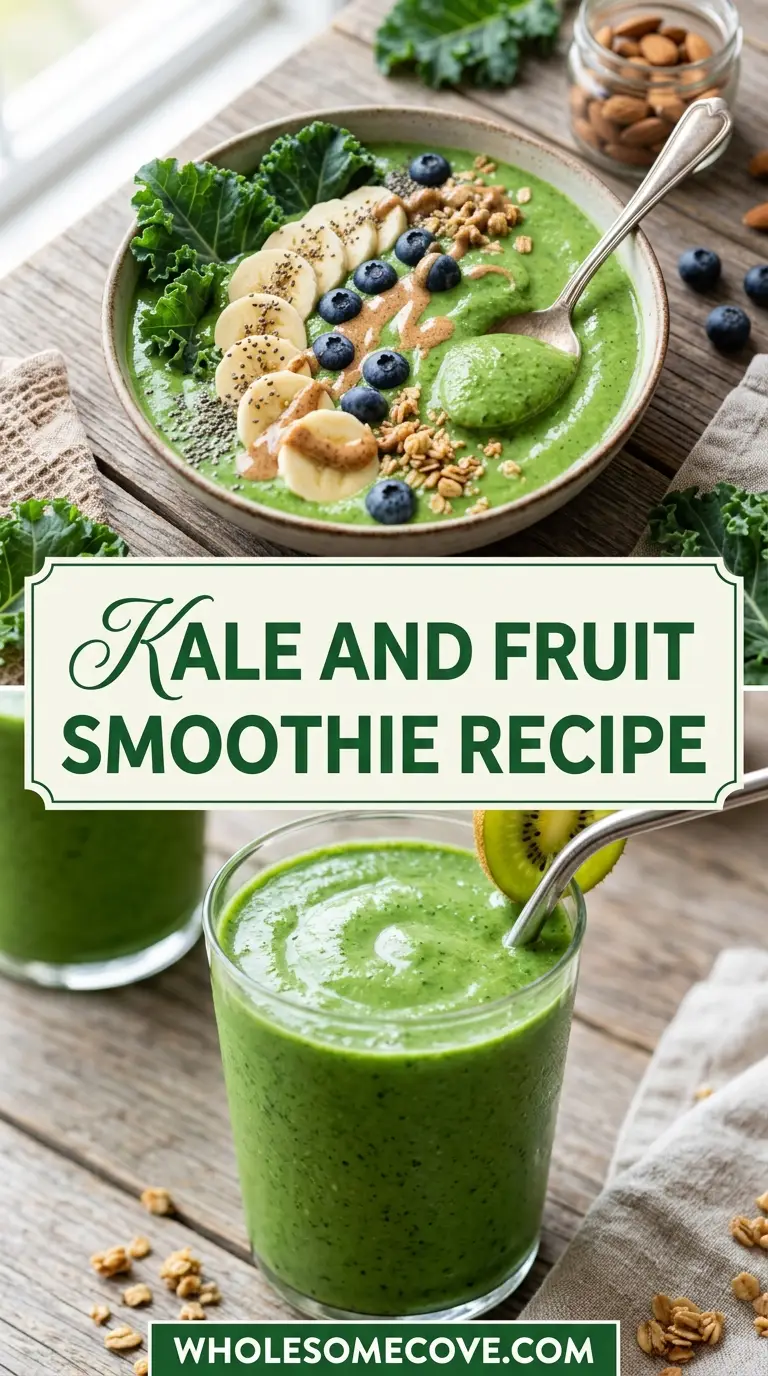
A good kale and fruit smoothie recipe can be genuinely hard to nail. Too much kale and it tastes like you blended a lawn; too much fruit and you lose all the nutritional benefits you were after in the first place.
This version strikes that sweet spot. It blends tender kale leaves with frozen mango, banana, and pineapple into a thick, creamy, vibrantly green drink that genuinely tastes tropical.
The fruit does the heavy lifting flavour-wise, while the kale quietly loads the whole thing with iron, fibre, and vitamins you’d normally have to chew your way through a salad to get.
| Quick Recipe Summary | |
|---|---|
| Prep Time | 5 minutes |
| Cook Time | 0 minutes |
| Total Time | 5 minutes |
| Servings | 2 smoothies |
| Difficulty Level | Easy |
If you love this green approach to breakfast, my spinach smoothie is another great way to sneak leafy greens into your morning routine.
Why You’ll Love This Kale And Fruit Smoothie Recipe
This smoothie is one of those recipes that sounds like it should taste virtuous and boring, but actually delivers something you’d genuinely crave. The frozen fruit creates a thick, almost milkshake-like texture that makes it feel indulgent rather than medicinal.
Here is why this recipe keeps earning its place in the weekly rotation:
- It tastes like a tropical treat. Mango, pineapple, and banana work together to produce a bright, sweet flavour that completely masks any bitterness from the kale.
- It comes together in 5 minutes. There is no chopping, cooking, or advance prep required beyond pulling ingredients from the freezer.
- It is naturally sweetened. The only sweetness here comes from the fruit itself, so you are getting real nutrition alongside the flavour.
- It is packed with nutrients. Kale brings iron, calcium, vitamins C and K, and fibre. The fruit adds potassium, antioxidants, and natural digestive enzymes.
- It keeps you full. Between the fibre from the kale, the complex carbs from the banana, and the optional protein add-ins, this smoothie genuinely holds you through the morning.
- It is endlessly flexible. Swap the fruit, change the liquid base, add protein powder or nut butter, and the core recipe adapts beautifully every time.
- It freezer-friendly by design. Using frozen fruit means you can keep everything on hand at all times without any fresh produce going to waste.
- It is naturally vegan, gluten-free, and dairy-free. It suits a wide range of dietary preferences right out of the blender.
Read Also: Green Smoothie Recipe
Ingredients
The ingredients here are simple, but their quality and proportions matter. Using frozen fruit (rather than fresh) is the key to getting that thick, cold, satisfying texture without needing ice, which dilutes the flavour.
- 2 large handfuls (about 60g / 2 oz) fresh or frozen kale leaves, tough stems removed
- 1 cup (150g / 5.3 oz) frozen mango chunks
- 1 medium banana (fresh or frozen), roughly broken into pieces
- 1/2 cup (80g / 2.8 oz) frozen pineapple chunks
- 1 cup (240ml / 8 fl oz) unsweetened almond milk (or coconut milk, oat milk, or water)
- 1/2 cup (120ml / 4 fl oz) cold water (adjust for desired thickness)
- 1 tablespoon chia seeds (optional, for added fibre and omega-3s)
- 1 tablespoon hemp protein powder or vanilla protein powder (optional, for added protein)
- 1 teaspoon raw honey or maple syrup (optional, only if you prefer extra sweetness)
- Juice of half a lime (optional, adds brightness and reduces any grassy kale taste)
For the best results, choose curly kale or lacinato (dinosaur) kale with the central ribs stripped out, as the ribs can make the smoothie taste bitter and fibrous.
You might also enjoy: Mango Smoothie
Kitchen Equipment Needed
Smoothie-making is one of the most forgiving kitchen tasks there is, but the right equipment does make a difference between a silky, drinkable result and a chunky, frustrating one.
- High-powered blender (essential for breaking down kale fibre completely; a Vitamix or Ninja is ideal)
- Measuring cups and spoons (for consistent results each time)
- Kitchen scale (optional but helpful for precise portions)
- Sharp knife (for stripping kale leaves from stems)
- Cutting board (for prepping the kale)
- Tall glasses or mason jars (16 oz / 475ml capacity works well for this recipe)
- Reusable straws (optional, helpful if you prefer to drink thick smoothies through a straw)
- Freezer-safe bags or containers (for pre-portioning frozen fruit and kale for batch prep)
Read Also: Dragon Fruit Smoothie Recipe
Recommended Products for This Recipe
These are the tools and ingredients I genuinely reach for when making this smoothie, based on experience and what actually makes a noticeable difference.
1. Vitamix 5200 Blender
This blender is the single biggest upgrade you can make for any smoothie that includes fibrous greens like kale. The motor is powerful enough to completely pulverise the kale cell walls, releasing more nutrients and creating a texture so smooth you would never guess there were leafy greens in there. It handles frozen fruit without protest and cleans itself in 30 seconds with warm water and a drop of soap.
2. Navitas Organics Raw Hemp Seeds
Adding a tablespoon of hemp seeds to this smoothie is one of the easiest ways to boost the protein and omega-3 content without affecting the taste at all. They blend in completely and add a very mild, almost nutty note that pairs beautifully with tropical fruit. I keep a bag in the freezer to extend the shelf life.
3. Organic Frozen Kale Bag
If you do not want to deal with fresh kale, a bag of organic frozen kale is a brilliant shortcut. The kale is already washed, de-stemmed, and chopped, and the freezing process actually softens the cell walls slightly, which helps it blend more smoothly. Look for brands that freeze it without any added water or preservatives.
4. Weck Tulip Jar 16 oz
These wide-mouth glass jars are brilliant for serving and transporting smoothies. They seal tightly for on-the-go use, look beautiful on a table, and are far more environmentally friendly than disposable cups. The wide mouth makes them easy to fill, clean, and drink from without a straw.
For a smoothie that takes a completely different tropical direction, try this passion fruit smoothie next.
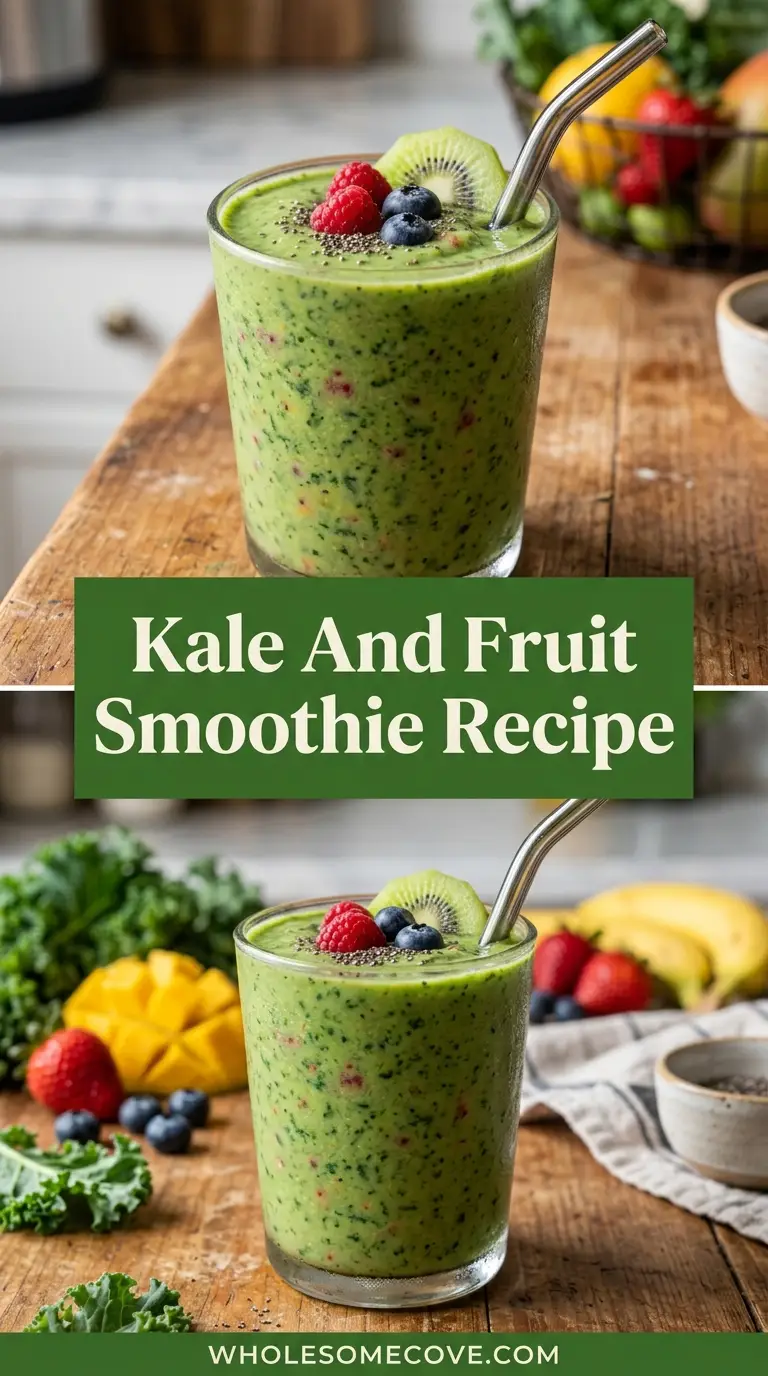
Step-by-Step Instructions: How to Make Kale And Fruit Smoothie
Step 1: Prepare the Kale
- Rinse the fresh kale leaves thoroughly under cold running water to remove any grit or residue.
- Lay each leaf flat on the cutting board and use your hands or a knife to strip the leaf away from the thick central rib. The ribs are fibrous and can make the smoothie taste bitter, so removing them is worth the 30 seconds it takes.
- Tear or roughly chop the kale leaves into smaller pieces (roughly 5cm / 2 inch sections). Smaller pieces blend more quickly and reduce the strain on the blender motor.
- If you are using frozen kale instead of fresh, skip the washing and simply measure out two large handfuls straight from the bag.
Step 2: Add Ingredients to the Blender in the Right Order
- Pour the liquid into the blender first. Adding the almond milk (240ml / 1 cup) and cold water (120ml / 1/2 cup) at the base creates a vortex that pulls the other ingredients down toward the blades and prevents the mixture from getting stuck.
- Add the kale on top of the liquid. Placing leafy greens directly against the liquid (rather than on top of heavy frozen fruit) helps them blend first and blend more thoroughly.
- Add the banana pieces on top of the kale.
- Add the frozen mango chunks (150g / 1 cup) and frozen pineapple chunks (80g / 1/2 cup) on top of everything else. The weight of the frozen fruit helps press everything down as the blender runs.
- If you are using chia seeds, hemp protein powder, or lime juice, add them now before you start blending.
Step 3: Blend Until Completely Smooth
- Secure the blender lid tightly. If your blender has a tamper tool, have it ready for the first 10-15 seconds of blending.
- Start blending on low speed for the first 5-10 seconds to get the ingredients moving, then increase to the highest speed.
- Blend on high for 45-60 seconds, or until the smoothie is completely smooth with no visible kale flecks.
- Stop and scrape down the sides with a spatula if needed, then blend for another 10-15 seconds.
- If the mixture is too thick to blend freely, add a small splash of almond milk or water (30ml / 2 tablespoons at a time) and blend again. Avoid adding too much liquid at once, as this can make the smoothie watery rather than thick and creamy.
Step 4: Taste and Adjust
- Remove the blender lid and taste the smoothie carefully before pouring.
- If the smoothie is not sweet enough for your preference, add the optional teaspoon of raw honey or maple syrup and blend for another 5 seconds.
- If you can detect any grassiness or bitterness from the kale, add a small squeeze of lime juice (about 1 teaspoon) and blend briefly. The acidity counteracts the grassy notes beautifully.
- If the smoothie is too thick, add another splash of liquid. If it is too thin, add a few more frozen fruit pieces and blend again.
Step 5: Pour and Serve Immediately
- Pour the smoothie into two tall glasses (about 400-450ml / 14-16 fl oz each) or mason jars.
- Add optional toppings if desired: a sprinkle of chia seeds, a few slices of fresh banana, or a small piece of pineapple on the rim for presentation.
- Serve immediately for the best texture and flavour. Smoothies made with kale oxidise quickly, so the colour and freshness are best within the first 10-15 minutes.
- If serving to children or anyone unfamiliar with green smoothies, pour into an opaque cup first; the tropical flavour does all the convincing once they taste it.
I like to taste the smoothie right after blending and adjust the sweetness before pouring, because this is the step where small tweaks make the biggest difference.
You might also love this avocado smoothie as a creamy variation on the healthy breakfast smoothie theme.
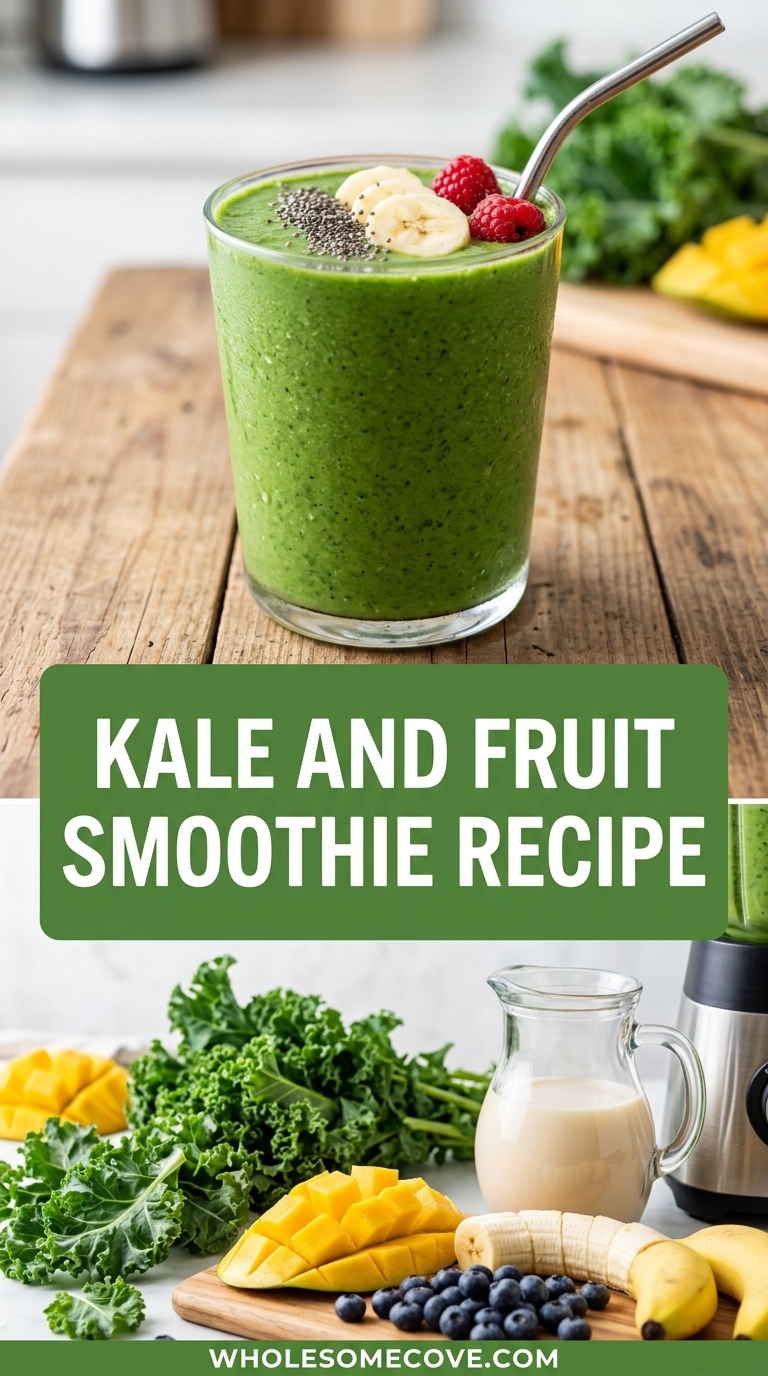
Tips for The Best Kale And Fruit Smoothie
Getting a kale smoothie right comes down to a few key techniques that separate a smooth, vibrant, delicious drink from one that tastes like punishment.
- Remove the kale stems entirely. The central rib is where most of the bitterness concentrates. Taking the extra 30 seconds to strip the leaves makes a significant flavour difference.
- Always use at least some frozen fruit. Frozen fruit is the secret to thick, cold, creamy smoothies without ice. Ice dilutes the flavour; frozen fruit enriches it.
- Add liquid to the blender first. This creates the suction that keeps everything moving toward the blades and prevents the motor from overheating or stalling.
- Use a high-powered blender if possible. A weak blender will leave tiny kale flecks that give the smoothie an unpleasant texture. A high-powered blender like a Vitamix or Ninja completely eliminates this problem.
- Start blending on low, then increase to high. This gradual increase prevents the motor from straining and gives the liquid a chance to start moving before tackling the frozen chunks.
- Add lime juice if you detect bitterness. A few drops of fresh lime juice neutralises any grassy or bitter flavour from the kale without changing the overall flavour profile in an obvious way.
- Pre-portion your smoothie ingredients into freezer bags. Measure everything out into individual bags on the weekend so each weekday morning you can tip a bag straight into the blender. This makes the smoothie feel truly effortless.
- Freeze ripe bananas in advance. When bananas start to over-ripen, peel and freeze them in pieces. They add natural sweetness and a creamier texture than fresh bananas, and they help chill the smoothie without diluting it.
- Use cold or chilled liquid. Starting with cold almond milk rather than room-temperature liquid keeps the smoothie nicely chilled throughout.
- Blend the kale and liquid first for extra-smooth results. If you have a standard blender (not high-powered), blend just the kale and liquid together for 30 seconds before adding the fruit. This pre-blending step breaks down the kale fibres more completely.
Read Also: Pineapple Smoothie Recipe
What to Serve with Kale And Fruit Smoothie
This smoothie works as a standalone breakfast, but pairing it with the right food turns it into a genuinely satisfying meal. The smoothie skews slightly sweet and fruity, so it pairs best with savoury or whole-grain accompaniments that balance it out.
Here are the best things to serve alongside a kale and fruit smoothie:
- Avocado toast with a sprinkle of red pepper flakes and a poached egg. The healthy fats in the avocado slow down the absorption of the fruit sugars and keep you full much longer. Try this avocado toast alongside it.
- Baked oatmeal with berries. The oats add complex carbohydrates and fibre that complement the lighter smoothie beautifully.
- Overnight oats with nut butter. The protein and fat from the nut butter combined with the oats and the smoothie create a complete, sustaining breakfast.
- Granola with Greek yogurt. A small bowl of yogurt and granola on the side adds protein and probiotics that the smoothie alone does not provide.
- Whole grain toast with almond butter. Simple, filling, and the fat content of the almond butter slows digestion just enough to prevent a blood sugar spike from the fruit.
- Soft-boiled eggs with sea salt. The protein and fat from the eggs perfectly balance the natural sweetness of the smoothie.
- Healthy banana bread. A slice of lightened-up banana bread turns the smoothie into a proper breakfast spread without being overly indulgent.
- A small bowl of mixed nuts and dried fruit. If you want something light and quick, a handful of nuts alongside the smoothie provides enough protein and fat to bridge you to lunch.
For another light and refreshing option to serve at brunch, try the watermelon smoothie.
Variations of Kale And Fruit Smoothie
One of the best things about this smoothie is how adaptable the base formula is. Once you have the core method down, you can customise it endlessly based on what is in season, what is in your freezer, or what nutritional goals you are working toward.
- Kale Berry Smoothie: Replace the mango and pineapple with 1 cup (150g / 5.3 oz) of frozen mixed berries. The berries add a deep purple colour, a tangy flavour, and a concentrated hit of antioxidants from the anthocyanins. Pair with the berry smoothie recipe for inspiration.
- Kale Mango Ginger Smoothie: Add a 1-inch (2.5cm) piece of fresh ginger root to the original recipe. The ginger adds warmth, aids digestion, and gives the whole smoothie a spicy kick that works beautifully against the sweet mango.
- Kale Protein Smoothie: Add one scoop of vanilla or unflavoured protein powder and two tablespoons of natural peanut butter. This version keeps you full for 4-5 hours and makes an excellent post-workout recovery drink.
- Kale Citrus Smoothie: Swap the almond milk for fresh orange juice (240ml / 1 cup) and add the zest of half an orange. The citrus base makes the smoothie even brighter and more refreshing, and vitamin C from the orange significantly enhances iron absorption from the kale.
- Kale Avocado Smoothie: Add half a ripe avocado to the original recipe. The avocado makes the smoothie extraordinarily creamy and rich, adds healthy monounsaturated fats, and dramatically increases the staying power of the drink.
- Kale Apple Smoothie: Replace the pineapple with half a green apple (cored and roughly chopped). Green apple adds a tartness that balances the sweetness of the mango beautifully and pairs naturally with the earthiness of the kale.
- Kale Coconut Smoothie: Swap the almond milk for full-fat coconut milk (use half the quantity as it is much richer) and add a tablespoon of toasted shredded coconut on top. This version tastes incredibly indulgent while still being entirely wholesome.
- Kale Peach Smoothie: Replace the mango with frozen peach slices for a softer, more delicate flavour. Peach is lighter than mango and creates a smoothie that tastes like summer in a glass.
Read Also: Blueberry Smoothie Recipe
Storage and Reheating
Smoothies are always best consumed immediately after blending, but there are smart ways to store them if you need to prep ahead.
- Refrigerator storage: Pour the smoothie into an airtight glass jar or container, seal it tightly, and store in the coldest part of the refrigerator. It will keep for up to 24 hours. Give it a good shake or stir before drinking as separation is completely normal.
- Minimise oxidation: Fill the storage jar as full as possible (leaving minimal air space at the top) to slow down oxidation. Oxidation is what causes green smoothies to turn brown and lose their vibrant colour.
- Add a squeeze of lemon or lime: A small amount of fresh lemon or lime juice mixed into the smoothie before storing acts as a natural preservative and helps the colour stay bright green for longer.
- Do not freeze the finished smoothie. The texture degrades significantly when you thaw it, becoming watery and separated. Freeze the unblended ingredients instead (see below).
- Freeze smoothie packs: Portion all the solid ingredients (kale, mango, pineapple, banana) into individual freezer-safe bags and store in the freezer for up to 3 months. When you are ready, dump the pack into the blender, add liquid, and blend. This is the best way to prep ahead without sacrificing freshness.
- Meal prep tip: Prepare 5-7 smoothie packs on Sunday evening and store them in the freezer. Each morning becomes a 2-minute task: open the bag, pour into the blender, add milk, blend, and go.
- Thawing: If your smoothie pack has been in the freezer, you do not need to thaw it. Add the frozen ingredients directly to the blender with the liquid and blend as normal. The frozen fruit creates the best texture when blended straight from frozen.
You might also enjoy: Peach Smoothie
Nutritional Facts
The following values are approximate per serving (makes 2 servings) and are based on the base recipe without optional add-ins.
| Nutrient | Per Serving |
|---|---|
| Calories | 190 kcal |
| Carbohydrates | 44g |
| Fibre | 5g |
| Sugars | 27g (all naturally occurring) |
| Protein | 4g |
| Fat | 2g |
| Saturated Fat | 0.2g |
| Sodium | 105mg |
| Potassium | 680mg |
| Vitamin C | 85mg (94% Daily Value) |
| Vitamin K | 180mcg (150% Daily Value) |
| Iron | 2mg (11% Daily Value) |
| Calcium | 150mg (12% Daily Value) |
Note: Nutritional values are estimates. Adding protein powder, chia seeds, or nut butter will increase protein, fat, and calorie content.
For another nutrient-dense breakfast, take a look at this easy healthy homemade granola.
Health Benefits of Key Ingredients
This smoothie is genuinely nutrient-dense, and understanding what each ingredient contributes can make you even more motivated to blend it up every morning.
- Kale: Often called one of the most nutrient-dense foods on the planet, kale delivers exceptional amounts of vitamin K (critical for blood clotting and bone density), vitamin C (immune support and collagen production), and beta-carotene (a precursor to vitamin A). It is also rich in quercetin and kaempferol, two antioxidants with anti-inflammatory properties. The iron content in kale is notably high for a plant food, especially when consumed with vitamin C (which this smoothie provides in abundance, boosting iron absorption significantly).
- Mango: Frozen mango provides a concentrated source of vitamin C, vitamin A, folate, and potassium. It contains mangiferin, a polyphenol with antioxidant and anti-inflammatory properties that has been studied for its role in supporting heart health. The natural enzymes in mango (amylases) also support healthy digestion.
- Banana: Banana is the source of the smoothie’s creamy texture and natural sweetness. It provides significant potassium (important for heart health and muscle function), vitamin B6 (supports brain health and mood regulation), and resistant starch (when slightly underripe), which feeds healthy gut bacteria and supports sustained energy release.
- Pineapple: Beyond its bright tropical flavour, pineapple contains bromelain, an enzyme that aids protein digestion and has documented anti-inflammatory properties. It is also an excellent source of manganese (important for bone health and metabolism) and vitamin C.
- Almond milk (unsweetened): Using unsweetened almond milk as the liquid base keeps the calorie content low while adding a mild, slightly nutty flavour that complements the fruit. It also adds a small amount of calcium and vitamin E to the smoothie.
- Chia seeds (optional): These tiny seeds are one of the richest plant-based sources of omega-3 fatty acids (ALA), and they deliver a notable hit of fibre, calcium, and protein in just a tablespoon. They also form a gel in liquid over time, which can help you feel full for longer.
- Lime juice (optional): A squeeze of lime juice adds vitamin C and significantly enhances iron absorption from the kale. The citric acid also brightens all the other flavours in the smoothie and helps suppress any residual bitterness from the greens.
For another way to enjoy kale in a nourishing meal, try this kale and sweet potato soup.
FAQs About Kale And Fruit Smoothie
1. Can you taste the kale in this smoothie?
With this recipe, not really. The combination of mango, pineapple, and banana is sweet and bold enough to completely dominate the flavour profile. The kale contributes a very faint earthiness that you might notice if you are actively looking for it, but most people taste tropical fruit first and nothing else.
2. Is it better to use fresh or frozen kale?
Both work well, but they produce slightly different results. Fresh kale creates a slightly greener, more vibrant colour and a thinner texture. Frozen kale blends more smoothly (the freezing process softens the cell walls) and helps chill the smoothie. Either is nutritionally excellent.
3. Can I make this smoothie without a high-powered blender?
Yes, but you need to adjust your technique. Pre-blend just the kale and liquid together on high for 30-45 seconds before adding any frozen fruit. This gives the kale a head start and prevents the larger flecks that a standard blender might leave behind. Use slightly less frozen fruit and let it thaw for a few minutes first to reduce the load on the motor.
4. How can I add more protein to this smoothie?
Several options work well here. Adding one scoop of vanilla or unflavoured protein powder is the easiest approach. Hemp seeds (2-3 tablespoons) add protein and omega-3s with almost no change in flavour. Two tablespoons of natural peanut butter or almond butter add both protein and healthy fats that significantly increase the smoothie’s staying power. Greek yogurt (about 1/2 cup / 120g) adds protein and makes the smoothie even creamier.
5. Why did my smoothie turn brown instead of staying green?
Browning is caused by oxidation, which happens when the blended ingredients are exposed to air over time. To prevent this, consume the smoothie as soon as possible after blending. If you are storing it, fill the container completely to minimise air space and add a small squeeze of lemon or lime juice, which slows oxidation. The smoothie is still perfectly safe and nutritious even if it browns slightly; it is simply a cosmetic change.
Read Also: Strawberry Banana Smoothie Recipe
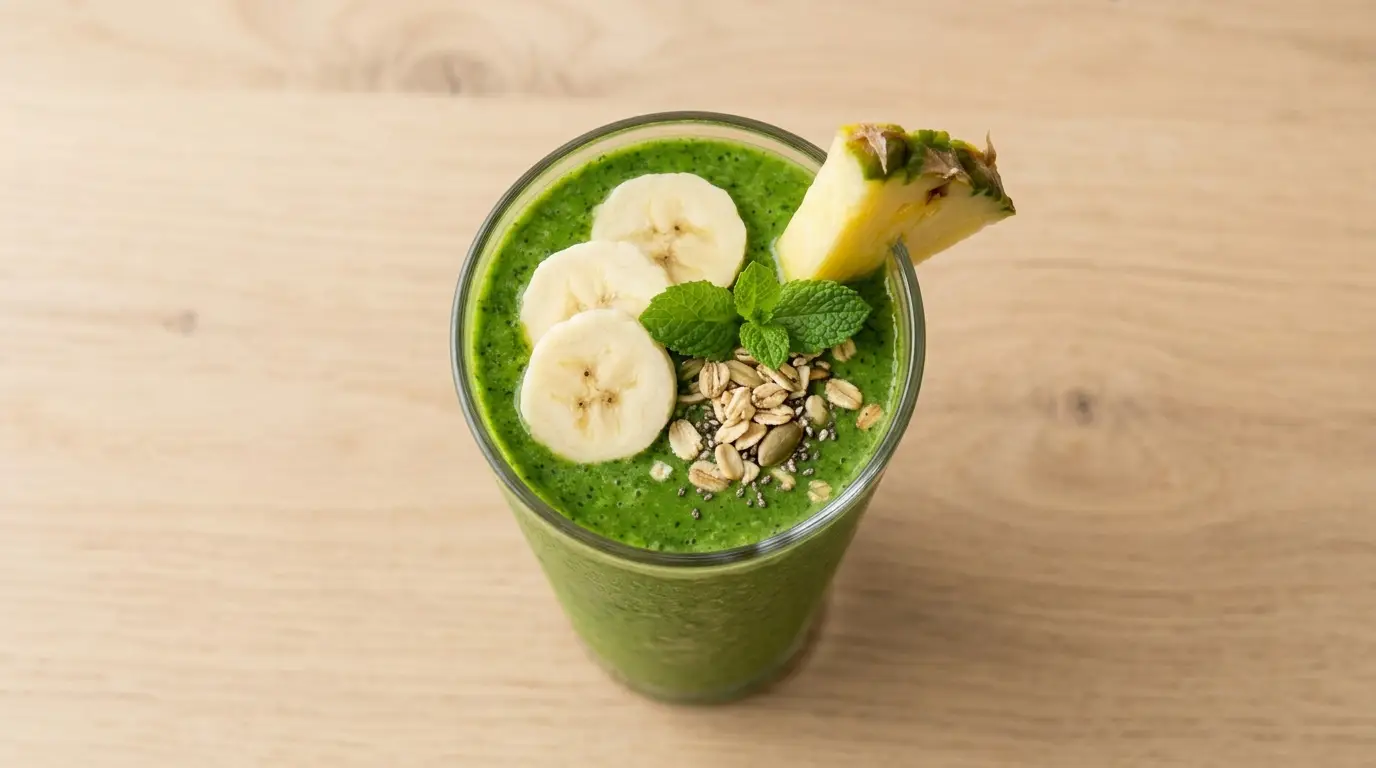
Kale And Fruit Smoothie
Ingredients
- 2 large handfuls kale leaves - about 60g / 2 oz, fresh or frozen, tough stems removed
- 1 cup frozen mango chunks - 150g / 5.3 oz
- 1 medium banana - fresh or frozen, roughly broken into pieces
- 1/2 cup frozen pineapple chunks - 80g / 2.8 oz
- 1 cup unsweetened almond milk - 240ml / 8 fl oz; coconut milk, oat milk, or water can be substituted
- 1/2 cup cold water - 120ml / 4 fl oz; adjust for desired thickness
- 1 tablespoon chia seeds - for added fibre and omega-3s
- 1 tablespoon hemp protein powder - or vanilla protein powder, for added protein
- 1 teaspoon raw honey - or maple syrup; only if extra sweetness is desired
- 1/2 lime, juiced - adds brightness and reduces any grassy kale taste
Equipment
- High-powered blender - A Vitamix or Ninja is ideal for fully breaking down kale fibres
- Kitchen scale - (optional) for precise portions
- Sharp knife - For stripping kale leaves from stems
- Tall glasses or mason jars - 16 oz / 475ml capacity per serving
- Reusable straws - (optional) helpful for drinking thick smoothies
- Freezer-safe bags or containers - (optional) for pre-portioning smoothie packs
Method
- Rinse fresh kale leaves thoroughly under cold running water, then strip the leaves away from the thick central ribs and tear into roughly 5cm / 2-inch pieces. If using frozen kale, skip washing and measure two large handfuls directly from the bag.
- Pour the almond milk and cold water into the blender first, then add the kale, banana, frozen mango, and frozen pineapple on top. Add any optional ingredients (chia seeds, protein powder, honey, lime juice) before blending.
- Secure the lid and blend on low for 5-10 seconds, then increase to the highest speed and blend for 45-60 seconds until completely smooth with no visible kale flecks. If needed, scrape down the sides and blend for another 10-15 seconds.
- Taste the smoothie and add honey or maple syrup if more sweetness is desired, or a small squeeze of lime juice if you detect any bitterness from the kale. Blend briefly to combine any additions.
- Pour into two tall glasses or mason jars (about 400-450ml / 14-16 fl oz each) and serve immediately for the best texture and colour. Top with optional garnishes such as sliced banana or a pineapple wedge on the rim if desired.
Nutrition
Notes
- Always remove the kale stems before blending. The central rib concentrates most of the bitterness and can leave an unpleasant texture.
- Add liquids to the blender first. Placing milk and water at the base creates the suction vortex that keeps all ingredients moving toward the blades without stalling the motor.
- Use frozen fruit instead of ice. Frozen mango, pineapple, and banana chill the smoothie while adding flavour and creaminess; ice only dilutes it.
- No high-powered blender? Pre-blend just the kale and liquid on high for 30-45 seconds before adding the frozen fruit. This breaks down fibres more thoroughly in a standard blender.
- To boost protein, add one scoop of vanilla protein powder, 2-3 tablespoons of hemp seeds, 2 tablespoons of peanut butter, or 1/2 cup (120g) of Greek yogurt.
- For extra creaminess and healthy fats, blend in half a ripe avocado. It makes the smoothie extraordinarily thick and increases its staying power significantly.
- Prep smoothie packs in advance by portioning all solid ingredients into individual freezer bags. Store for up to 3 months and blend straight from frozen with fresh liquid each morning.
- Store leftover smoothie in an airtight glass jar filled to the top (to minimise air exposure) in the refrigerator for up to 24 hours. Add a squeeze of lemon or lime juice before storing to slow oxidation and preserve the green colour.
- If the smoothie turns brown, it is still perfectly safe and nutritious. Browning is simply oxidation and a cosmetic change, not spoilage.
- For a citrus variation, swap the almond milk for fresh orange juice. The vitamin C from the orange also significantly enhances iron absorption from the kale.
Private Notes
Tried this recipe?
Let us know how it was!Final Thoughts
A kale and fruit smoothie is one of the most efficient, satisfying ways to start the day. It takes less time to make than toast, delivers an impressive range of vitamins and minerals, and genuinely tastes like something you would order at a smoothie bar rather than something you are forcing yourself to drink in the name of health.
Give this recipe a try with whatever fruit you have in the freezer and make it your own. If you blend it up, share how it went in the comments below or tag us on social media. It is always great to see how readers put their own spin on these recipes.
Recommended:
- Strawberry Smoothie
- Papaya Smoothie
- Banana Smoothie
- Healthy Waffle Recipe
- Protein Overnight Oats
- Easy Healthy Dinner Recipes for Family
- Chickpea and Spinach Curry
- Healthy Homemade Pesto
- Creamed Spinach
- Summer Vegetable Stir Fry