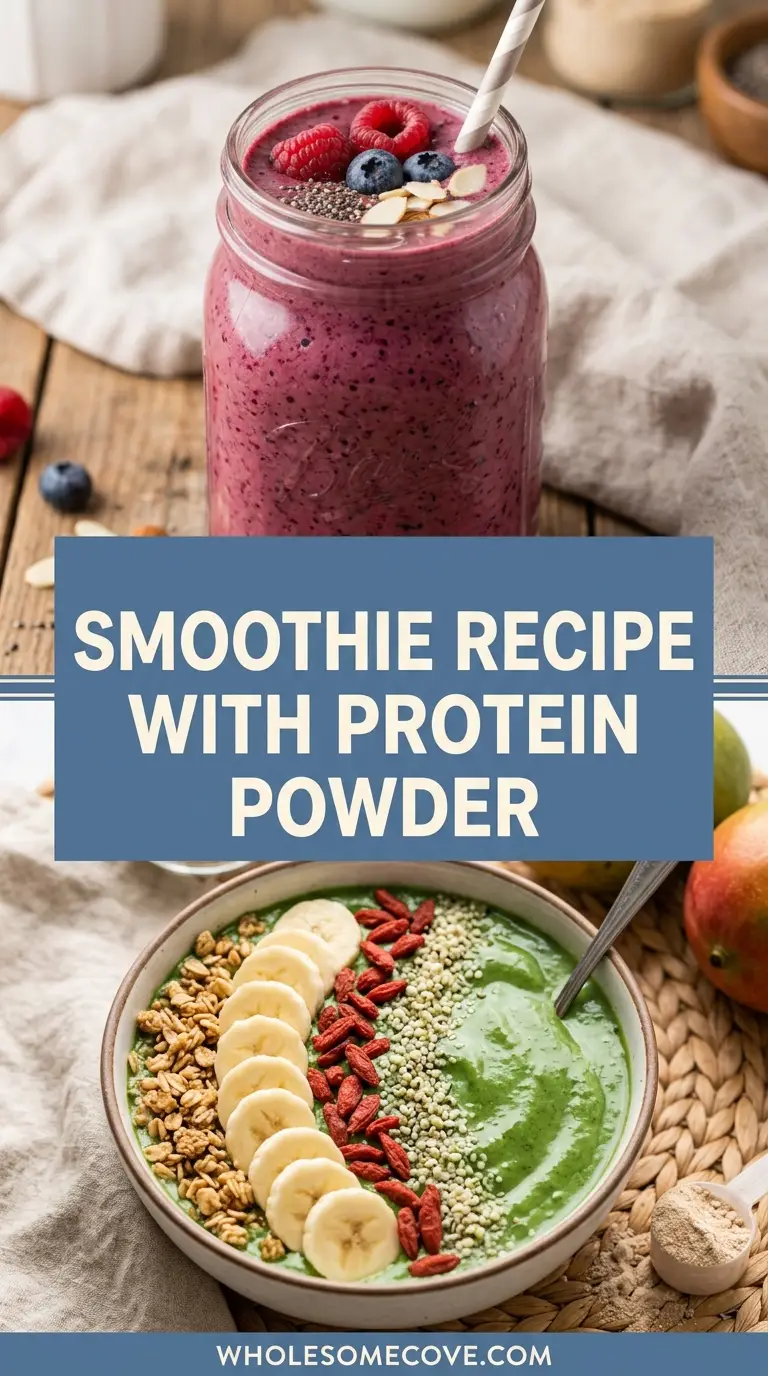
A great smoothie recipe with protein powder does more than just hit your macros. It keeps you full, tastes genuinely good, and takes less than five minutes to throw together.
This version is built around a banana-and-berry base blended with your choice of protein powder, almond milk, and a handful of simple add-ins that make the texture thick, creamy, and satisfying. It works as a pre-workout fuel, a post-gym recovery drink, or a no-fuss breakfast on busy mornings.
| Quick Recipe Summary | |
|---|---|
| Prep Time | 5 minutes |
| Cook Time | 0 minutes |
| Total Time | 5 minutes |
| Servings | 1 large smoothie (approximately 16 oz / 475 ml) |
| Difficulty Level | Easy |
If you want even more protein inspiration, my protein smoothie recipe walks you through a few flavor-forward variations worth bookmarking.
Why You’ll Love This Smoothie Recipe With Protein Powder
This smoothie genuinely earns a spot in your weekly rotation, not because it’s trendy but because it delivers on every front: taste, texture, and nutrition.
Here is why it works so well:
- It keeps you full for hours. The combination of protein powder, healthy fats from nut butter, and fiber from frozen fruit creates a satisfying blend that does not leave you reaching for snacks an hour later.
- The texture is thick and spoonable, not watery. Using frozen fruit instead of ice is the trick most people miss, and it makes the difference between a smoothie that feels like a meal and one that tastes like diluted juice.
- It comes together in under 5 minutes. Everything goes directly into the blender, and you are done. No cooking, no chopping, no mess to speak of.
- It is endlessly customizable. Chocolate protein powder or vanilla, almond milk or oat milk, berries or mango, it all works. The base is forgiving enough to handle substitutions without losing its structure.
- It is genuinely good post-workout. With around 30 grams of protein and fast-digesting carbs from the banana and berries, your muscles get exactly what they need to recover.
- Kids love it too. It tastes like a milkshake to them, but you know it is loaded with actual nutrition.
- No ice needed. Frozen fruit handles all the chilling, which keeps the flavor concentrated and the texture smooth.
Read Also: Peanut Butter Banana Smoothie Recipe
Ingredients
You only need a handful of ingredients for this smoothie, but each one plays a specific role in the flavor and texture.
- 1 medium frozen banana (about 4 oz / 115 g), sliced before freezing
- 1 cup (150 g) frozen mixed berries (strawberries, blueberries, and raspberries work great)
- 1 scoop (about 1 oz / 30 g) vanilla or chocolate protein powder (whey, plant-based, or casein all work)
- 1 cup (240 ml) unsweetened almond milk (or oat milk, regular milk, or coconut milk)
- 2 tablespoons (32 g) natural peanut butter or almond butter (adds healthy fat and creaminess)
- 1 tablespoon (15 g) chia seeds (optional, adds fiber and omega-3s)
- 1 teaspoon (5 ml) pure vanilla extract (optional, enhances flavor, especially with unflavored protein powder)
- 1 teaspoon (7 g) honey or maple syrup (optional, adjust to taste if your protein powder is lightly sweetened)
You might also enjoy: Peanut Butter Smoothie
Kitchen Equipment Needed
The right equipment makes the difference between a gritty, uneven smoothie and one that is silky from the first sip.
- High-speed blender (a Vitamix or Blendtec will blend frozen fruit completely smooth; a standard blender works but may leave small frozen chunks)
- Large blender cup or jar (at least 32 oz / 950 ml capacity to accommodate all the ingredients plus headroom)
- Measuring cups and spoons (for accurate liquid and dry measurements)
- Kitchen scale (optional, but helpful if you are tracking macros precisely)
- Long-handled spoon or spatula (for scraping down the sides of the blender between pulses)
- Wide-mouth mason jar or smoothie cup (for serving; the wide opening makes it easy to drink or eat with a spoon if the texture is extra thick)
- Reusable straw (thicker smoothie straws work better than standard ones with this recipe’s consistency)
Read Also: Berry Smoothie Recipe
Recommended Products for This Recipe
These are the products I actually use and trust when making this smoothie. They make a noticeable difference in results.
1. Vitamix 5200 Blender
The Vitamix 5200 is the blender I reach for whenever I am making thick frozen smoothies, and for good reason. Its variable speed motor pulverizes frozen fruit completely, giving you a silky, lump-free texture that cheaper blenders simply cannot achieve. If you make smoothies more than a couple of times a week, it pays for itself in consistency and durability.
2. Optimum Nutrition Gold Standard Whey Protein Powder
This is the whey protein I come back to most often for smoothies because it dissolves completely without any gritty texture or clumping. The vanilla flavor works with almost every fruit combination, and the macros are hard to beat at roughly 24 grams of protein per scoop. It blends cleanly and does not leave any artificial aftertaste.
3. Anthony’s Organic Chia Seeds
I started adding chia seeds to my smoothies after noticing how much longer they kept me full compared to smoothies without them. Anthony’s Organic is reliably fresh, finely textured, and high quality. Two tablespoons add about 5 grams of fiber and nearly 3 grams of omega-3 fatty acids per serving.
4. Nutiva Organic Coconut Oil
If you want an extra creaminess boost or are making a tropical variation, a teaspoon of Nutiva’s organic coconut oil blends in beautifully and adds a subtle richness. It also provides medium-chain triglycerides (MCTs), which are a quick energy source before a workout. The refined version is flavorless if you do not want any coconut taste.
5. Kiva Cacao Powder
For a chocolate-flavored version of this smoothie using unflavored or vanilla protein powder, raw cacao powder is far better than regular cocoa. Kiva’s version is organic, deeply chocolatey, and rich in antioxidants. One tablespoon transforms a vanilla-berry smoothie into something that tastes genuinely indulgent.
I also love using this base for my chocolate peanut butter banana smoothie when I want something that tastes more like dessert.
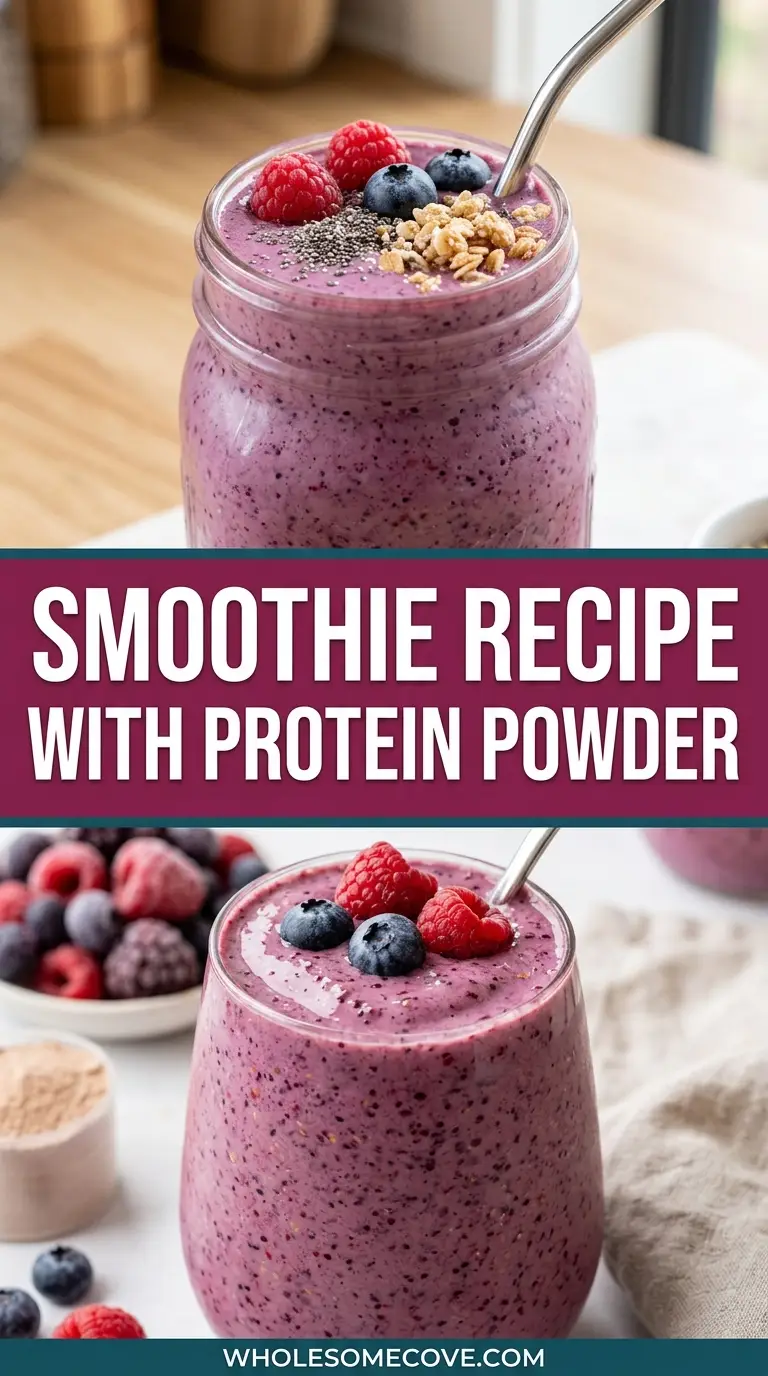
Step-by-Step Instructions: How to Make a Smoothie With Protein Powder
Follow these simple steps and you will have a thick, creamy protein smoothie ready in under five minutes.
Step 1: Prep Your Frozen Banana
- Peel a ripe banana and slice it into coins about 1 inch (2.5 cm) thick.
- Place the slices in a zip-lock bag or airtight container and freeze for at least 2 hours, preferably overnight.
- If you are in a hurry, use a store-bought frozen banana or a fresh banana. Note that a fresh banana will produce a thinner, less chilled smoothie.
- Ripe bananas with brown spots freeze and blend best. They also taste sweeter, which means you will need less added sweetener.
Step 2: Add Liquid First
- Pour 1 cup (240 ml) of unsweetened almond milk into the blender jar.
- Adding the liquid first protects the blender blades and helps the ingredients circulate more easily during blending.
- If you prefer a thicker smoothie, start with ¾ cup (180 ml) and add more only if the blender struggles.
Step 3: Add the Protein Powder
- Scoop 1 serving (about 1 oz / 30 g) of your protein powder directly on top of the liquid.
- Placing it in the liquid rather than on top of the frozen fruit helps it dissolve fully without clumping.
- If using a plant-based protein powder, be aware it tends to thicken more aggressively than whey, so you may need a splash more liquid.
Step 4: Add Nut Butter and Chia Seeds
- Add 2 tablespoons (32 g) of peanut butter or almond butter to the blender.
- Add 1 tablespoon (15 g) of chia seeds if using. You can also skip this step and sprinkle chia seeds on top as a garnish after blending.
- Add 1 teaspoon (5 ml) of vanilla extract and your optional sweetener at this stage if using.
Step 5: Add the Frozen Fruit
- Add 1 cup (150 g) of frozen mixed berries on top of the wet ingredients.
- Add the sliced frozen banana on top of the berries.
- Placing frozen ingredients on top helps them work their way down into the liquid during blending, rather than sitting directly on the blades from the start.
Step 6: Blend Until Completely Smooth
- Start the blender on low speed for about 15 seconds to get the ingredients moving, then increase to high speed.
- Blend on high for 45 to 60 seconds, or until the smoothie is completely smooth with no visible fruit chunks.
- If the blender is struggling or there are air pockets, stop the blender, use a spatula to push the mixture down, and blend again.
- Do not over-blend. Excessive blending heats the smoothie, which can make it watery and less cold.
Step 7: Taste and Adjust
- Taste the smoothie before pouring it out. If it needs more sweetness, add a teaspoon of honey and blend for 5 more seconds.
- If it is too thick, add 2 tablespoons (30 ml) of almond milk at a time until you reach the consistency you like.
- If it is too thin, add a few more frozen berries or half a frozen banana and blend again.
Step 8: Pour and Serve
- Pour immediately into a chilled glass or wide-mouth jar.
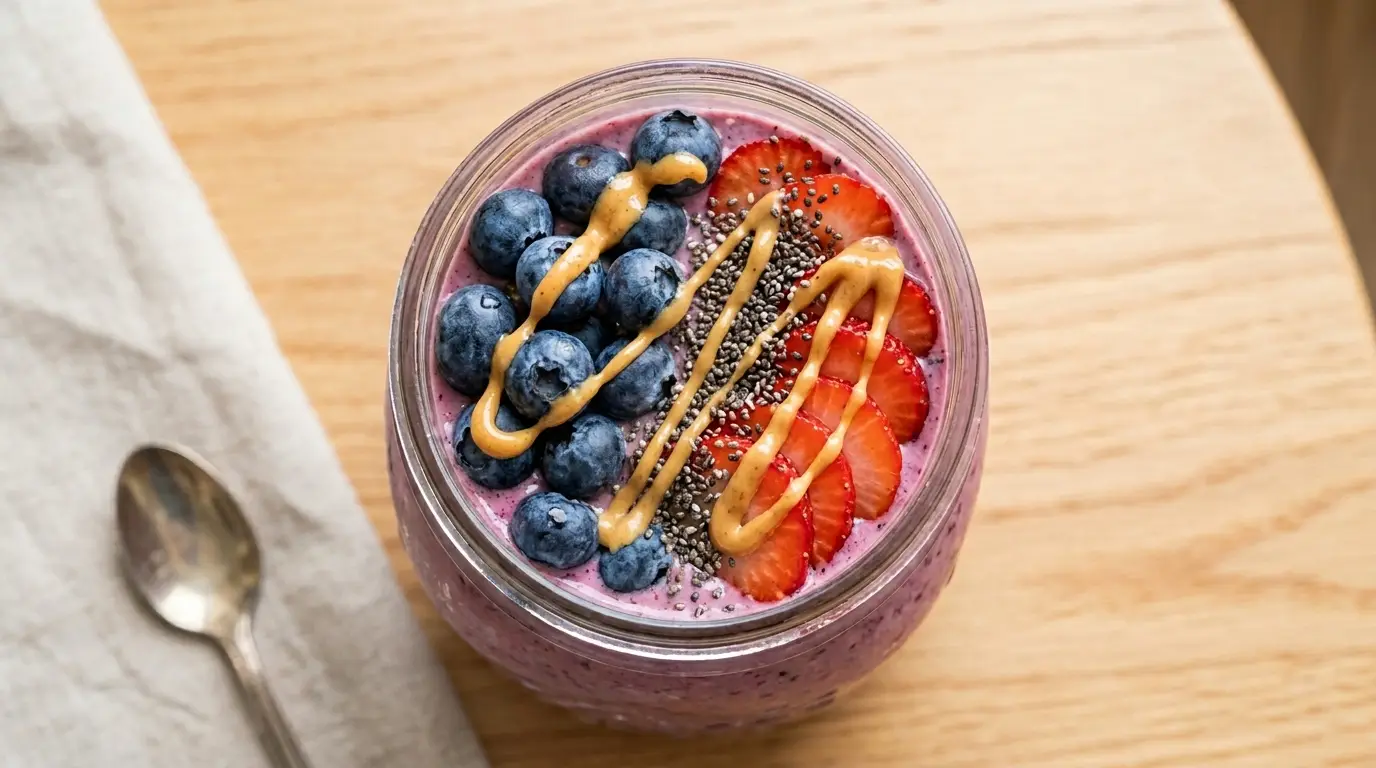
- Top with optional garnishes: a sprinkle of chia seeds, a few fresh berries, a drizzle of nut butter, or a dusting of cacao powder.
- Serve immediately. Protein smoothies thicken as they sit due to the chia seeds and nut butter, so drink it while it is at peak texture.
Read Also: Strawberry Banana Smoothie Recipe
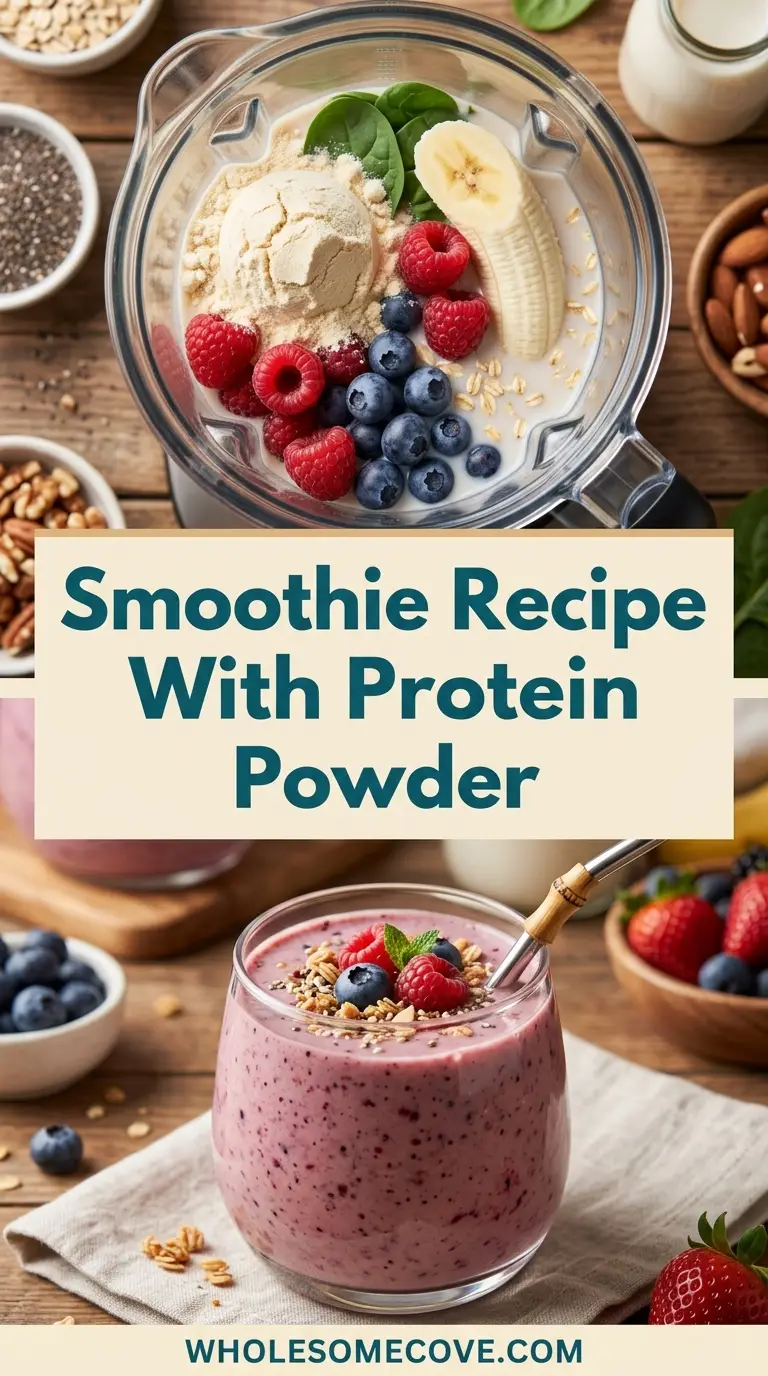
Tips for The Best Smoothie Recipe With Protein Powder
A few small adjustments separate a great protein smoothie from a truly exceptional one.
- Always freeze your banana ahead of time. Fresh bananas will make the smoothie thin and lukewarm. A frozen banana acts like a natural ice cream base, giving you that thick, creamy texture without any added ice that could water it down.
- Layer your ingredients correctly. Liquid goes in first, then soft ingredients like protein powder and nut butter, and frozen fruit goes in last. This layering method protects the motor and helps everything blend evenly.
- Choose the right protein powder for blending. Whey isolate blends most smoothly. Casein thickens considerably and can make the smoothie almost pudding-like. Plant-based proteins vary widely, so if yours tends to be gritty, blend it with the liquid alone for 15 seconds before adding other ingredients.
- Use ripe bananas. The riper the banana, the sweeter and creamier the final smoothie. Bananas with brown spots are ideal. Green bananas will taste starchy and bland.
- Do not add ice. Ice dilutes the flavor and makes the texture watery. Frozen fruit is the far better alternative.
- Adjust the liquid to your preferred consistency. Start with less liquid than you think you need. You can always add more, but you cannot take it away once it is too thin.
- Let chia seeds bloom for a gel-like thickness. If you want an especially thick smoothie without adding extra frozen fruit, stir your chia seeds into the almond milk and let them sit for 5 minutes before blending. They will expand and add a natural gel texture.
- Blend on high for the full minute. Stopping short leaves tiny frozen pieces in the smoothie that feel gritty on the way down. Give it a full 45 to 60 seconds on high speed for the smoothest results.
- Chill your glass first. A quick rinse with cold water or a few minutes in the freezer keeps the smoothie cold longer, especially if you like to sip it slowly.
- Batch your frozen banana portions. Freeze sliced bananas in individual smoothie-sized portions (one banana per bag) so you can pull exactly what you need each morning without measuring.
For another protein-packed morning option, try pairing this with my protein waffle recipe for a full high-protein breakfast spread.
What to Serve With a Smoothie Recipe With Protein Powder
This smoothie is satisfying enough to stand alone, but pairing it with the right foods rounds out your meal or snack time beautifully.
- Banana bread makes an excellent companion. A slice alongside the smoothie adds complex carbs and keeps you energized throughout the morning.
- Overnight oats: A small jar of overnight oats served beside this smoothie is a classic high-protein, high-fiber breakfast combination that fitness-focused eaters swear by.
- Hard-boiled eggs: Two hard-boiled eggs on the side add another 12 grams of protein and healthy fats without requiring any extra prep.
- Homemade granola sprinkled on top of the smoothie, served thick in a bowl, turns it into a smoothie bowl with satisfying crunch.
- Avocado toast: Half a slice of whole-grain avocado toast alongside the smoothie is a balanced, filling breakfast with plenty of healthy fats and fiber.
- Rice cakes with almond butter: Light enough not to make the meal feel heavy, these provide a satisfying crunch and extra protein between sips.
- Fresh fruit: A small bowl of sliced mango, kiwi, or papaya alongside the smoothie keeps things fresh and adds digestive enzymes.
- Greek yogurt: A small bowl of plain Greek yogurt with a drizzle of honey on the side complements the smoothie without overwhelming it.
You might also enjoy: Blueberry Smoothie
Variations of Smoothie Recipe With Protein Powder
Once you have the base down, there are so many directions you can take this smoothie.
- Chocolate peanut butter banana: Swap the mixed berries for an extra frozen banana, use chocolate protein powder, and add a tablespoon of raw cacao powder. It tastes like a chocolate milkshake and holds up beautifully for post-workout recovery.
- Tropical mango coconut: Replace the mixed berries with 1 cup (150 g) of frozen mango and swap the almond milk for coconut milk. Use vanilla protein powder for a classic tropical vibe.
- Green spinach protein smoothie: Add a large handful of fresh or frozen spinach along with your berries and banana. You will barely taste the spinach, but you will get a significant boost of iron, folate, and vitamin C.
- Strawberry cheesecake: Use frozen strawberries as your main fruit, add 2 tablespoons of cream cheese or Greek yogurt, and use vanilla protein powder. It tastes indulgent but is genuinely nutritious.
- Oat and banana protein smoothie: Add ¼ cup (25 g) of rolled oats before blending. The oats thicken the smoothie further and add slow-digesting carbs perfect for pre-workout fuel.
- Coffee protein smoothie: Add ¼ cup (60 ml) of cold brew coffee concentrate in place of the same amount of almond milk. Use chocolate protein powder for a mocha-flavored morning pick-me-up.
- Avocado protein smoothie: Swap the peanut butter for half a ripe avocado. The avocado makes the smoothie incredibly creamy and adds monounsaturated fats for sustained energy.
- Pumpkin spice protein smoothie: Use half a frozen banana, ¼ cup (60 g) of pure canned pumpkin, vanilla protein powder, a pinch of cinnamon, and a pinch of nutmeg. It is a cozy fall variation that works surprisingly well.
- High-calorie mass builder: Double the banana, add 2 tablespoons of natural peanut butter and 2 tablespoons of oats, and use whole milk instead of almond milk. This version pushes past 600 calories and is ideal for anyone in a caloric surplus.
For more inspiration, check out my green smoothie recipe for a spinach-and-kale twist on this formula.
Storage and Reheating
Protein smoothies are best consumed immediately, but a few storage strategies can help if you need to prep ahead.
- Drink it immediately for best texture and flavor. Protein smoothies are at their creamiest and coldest right after blending. The texture begins to change as the chia seeds absorb more liquid and the frozen fruit thaws.
- Refrigerate for up to 24 hours. Pour the blended smoothie into a tightly sealed jar and refrigerate. Give it a vigorous shake or a quick re-blend before drinking, as it will separate and thicken significantly overnight.
- Do not freeze the blended smoothie. Freezing a fully blended protein smoothie changes the texture unfavorably upon thawing. The liquid separates and the result is unappetizing. Instead, freeze the individual components (the banana, the berries) and blend fresh each time.
- Prep smoothie freezer packs for quick assembly. Portion out the frozen banana slices and frozen mixed berries into individual freezer bags and store them in the freezer. Each morning, you only need to dump one bag into the blender with the liquid and protein powder.
- Add the protein powder fresh each time. Protein powder is best blended in at serving time for optimal texture and freshness. Pre-mixing it into a liquid base and storing it overnight can make it clumpy and unpleasant.
- Store chia seeds separately if batch prepping. If you plan to pre-portion smoothie packs, keep the chia seeds separate and add them at blending time to control how thick the final smoothie becomes.
Read Also: Avocado Smoothie Recipe
Nutritional Facts
Nutritional values are approximate and will vary based on the specific protein powder brand, nut butter, and milk used.
| Nutritional Facts (Per Serving) | |
|---|---|
| Calories | 420 kcal |
| Protein | 30 g |
| Carbohydrates | 42 g |
| Dietary Fiber | 8 g |
| Sugars | 22 g (naturally occurring) |
| Total Fat | 14 g |
| Saturated Fat | 2 g |
| Cholesterol | 25 mg (varies with protein powder type) |
| Sodium | 210 mg |
| Potassium | 620 mg |
| Vitamin C | 18 mg (20% DV) |
| Calcium | 350 mg (30% DV) |
| Iron | 2.5 mg (14% DV) |
| Omega-3 Fatty Acids | 2.8 g |
My protein overnight oats hit similar macro numbers if you prefer a spoonable breakfast over a drinkable one.
Health Benefits of Key Ingredients
Every ingredient in this smoothie was chosen with purpose, and the nutritional payoff is significant.
- Protein powder: Protein is the most satiating macronutrient, and getting a full scoop here supports muscle repair after exercise, reduces hunger throughout the morning, and helps maintain lean body mass. Whey protein in particular is rich in leucine, the amino acid most responsible for triggering muscle protein synthesis.
- Frozen banana: Bananas are one of the best natural sources of potassium, which supports healthy blood pressure and muscle function. They also provide vitamin B6, which plays a key role in energy metabolism, and natural sugars that give you quick, clean fuel without a harsh crash.
- Frozen mixed berries: Berries are among the most antioxidant-dense foods available. Blueberries specifically are associated with improved cognitive function and reduced inflammation. Strawberries and raspberries provide vitamin C, folate, and anthocyanins that protect cells from oxidative damage.
- Almond milk: Unsweetened almond milk is low in calories and naturally free of lactose and cholesterol. It provides a small amount of vitamin E, an antioxidant that supports skin health and immune function. Fortified versions also deliver a meaningful dose of calcium and vitamin D.
- Natural peanut butter: Peanut butter adds monounsaturated and polyunsaturated fats that support heart health and help the body absorb fat-soluble vitamins. It also adds about 8 grams of protein and keeps you fuller for longer compared to a smoothie made without any fat.
- Chia seeds: Chia seeds are an exceptional source of plant-based omega-3 fatty acids, fiber, calcium, and magnesium. The soluble fiber in chia seeds slows digestion, stabilizes blood sugar after meals, and creates a feeling of sustained fullness.
FAQs About Smoothie Recipe With Protein Powder
1. Can I use any type of protein powder in this smoothie?
Yes, this recipe works with whey protein, whey isolate, plant-based protein (pea, rice, hemp, or mixed blends), and casein protein. Keep in mind that casein thickens much more aggressively than other types, so you may need to add more liquid when using it.
Plant-based proteins vary widely in how well they blend, so if yours tends to be gritty, blend it with just the almond milk for 15 to 20 seconds before adding the frozen fruit.
2. My smoothie came out too thin. What went wrong?
The most common cause is using fresh banana instead of frozen, or adding too much liquid at the start. Always start with frozen banana and no more than ¾ cup (180 ml) of milk, then adjust from there.
You can also thicken a thin smoothie by adding more frozen fruit, a tablespoon of nut butter, or a few tablespoons of rolled oats and blending again.
3. Can I make this smoothie the night before?
You can blend it the night before and store it in a sealed jar in the fridge for up to 24 hours. Shake or re-blend it before drinking, as it will separate and thicken considerably overnight.
For the freshest texture and flavor, blending it fresh each morning is always the better option. Using pre-portioned freezer packs makes this nearly as fast as pouring something from the fridge.
4. Is this smoothie good for weight loss?
This smoothie can absolutely support a weight loss goal when used as a meal replacement. The high protein content (around 30 grams) suppresses appetite, the fiber from the fruit and chia seeds slows digestion, and the whole food ingredients keep blood sugar stable.
If you are in a caloric deficit, consider reducing the peanut butter to 1 tablespoon (16 g) and skipping the added sweetener to bring the calorie count down to around 340 to 360 kcal.
5. Does it matter what flavor of protein powder I use?
It does affect the final taste, but the recipe is flexible enough to work with almost any flavor. Vanilla protein powder is the most versatile and pairs well with every fruit combination in this recipe.
Chocolate protein powder works especially well with the banana and makes the smoothie taste like a chocolate milkshake. Unflavored protein powder gives you the most neutral base to build on, so the fruit flavors come through cleanly.
For a completely different take on a fruity protein blend, my passion fruit smoothie is a great next experiment.
Smoothie Recipe With Protein Powder
Ingredients
- 1 medium frozen banana - about 4 oz / 115g, sliced into coins and frozen at least 2 hours ahead
- 1 cup frozen mixed berries - 150g; strawberries, blueberries, and raspberries work great
- 1 scoop vanilla or chocolate protein powder - about 1 oz / 30g; whey, plant-based, or casein all work
- 1 cup unsweetened almond milk - 240 ml; or oat milk, regular milk, or coconut milk
- 2 tablespoons natural peanut butter or almond butter - 32g; adds healthy fat and creaminess
- 1 tablespoon chia seeds - 15g; optional, adds fiber and omega-3s
- 1 teaspoon pure vanilla extract - 5 ml; optional, enhances flavor especially with unflavored protein powder
- 1 teaspoon honey or maple syrup - 7g; optional, adjust to taste if protein powder is lightly sweetened
- fresh berries - for topping
- chia seeds - sprinkle on top
- peanut butter - drizzle on top
- raw cacao powder - light dusting on top
Equipment
- High-speed blender - Such as a Vitamix or Blendtec; a standard blender works but may leave small frozen chunks
- Large blender jar - At least 32 oz / 950 ml capacity
- Kitchen scale - (optional) Helpful for precise macro tracking
- Long-handled spatula - For scraping down blender sides between pulses
- Wide-mouth mason jar or smoothie cup - For serving; wide opening works for both drinking and eating with a spoon
- Reusable straw - (optional) Thicker smoothie straws work best with this recipe’s consistency
Method
- Peel a ripe banana, slice it into 1-inch (2.5 cm) coins, and freeze in an airtight bag for at least 2 hours or overnight. Bananas with brown spots freeze and blend best, producing a sweeter, creamier result.
- Pour 1 cup (240 ml) of unsweetened almond milk into the blender jar first. Adding liquid first protects the blades and helps ingredients circulate during blending.
- Add 1 scoop (about 30g) of protein powder directly into the liquid. Placing it in the liquid rather than on frozen fruit helps it dissolve fully without clumping.
- Add 2 tablespoons (32g) of peanut butter or almond butter, 1 tablespoon (15g) of chia seeds, vanilla extract, and optional sweetener to the blender. These go in before the frozen fruit for even blending.
- Add 1 cup (150g) of frozen mixed berries followed by the sliced frozen banana on top. Layering frozen ingredients last helps them work down into the liquid during blending.
- Start on low speed for 15 seconds, then increase to high and blend for 45 to 60 seconds until completely smooth with no visible fruit chunks. If the blender struggles, stop and use a spatula to push the mixture down before continuing.
- Taste the smoothie and add a teaspoon of honey and blend 5 more seconds if more sweetness is needed. Add 2 tablespoons (30 ml) of almond milk at a time if too thick, or more frozen fruit if too thin.
- Pour immediately into a chilled glass or wide-mouth jar and top with optional garnishes such as fresh berries, a chia seed sprinkle, or a peanut butter drizzle. Serve right away for the best texture.
Nutrition
Notes
- Always use a frozen banana rather than a fresh one. A frozen banana is what gives this smoothie its thick, creamy, ice-cream-like texture without any added ice.
- Layer ingredients correctly: liquid first, then soft ingredients like protein powder and nut butter, frozen fruit last. This protects the blender motor and ensures even blending.
- If using plant-based protein powder that tends to be gritty, blend it with just the almond milk for 15 to 20 seconds before adding frozen fruit.
- Casein protein thickens considerably more than whey or plant-based. If using casein, start with only ¾ cup (180 ml) of milk and increase as needed.
- To prep ahead, portion frozen banana slices and frozen berries into individual zip-lock bags and store in the freezer. Each morning, dump one bag into the blender with the liquid and protein powder.
- Refrigerate leftovers in a sealed jar for up to 24 hours. Shake or re-blend before drinking as it will separate and thicken significantly overnight.
- Do not freeze the fully blended smoothie. The texture separates unpleasantly upon thawing. Freeze the raw fruit components instead and blend fresh.
- For a lower-calorie version, reduce peanut butter to 1 tablespoon (16g) and skip the sweetener to bring the total to approximately 340 to 360 kcal.
- To make a smoothie bowl, reduce almond milk to ½ cup (120 ml) for an extra-thick consistency, pour into a bowl, and top with granola, fresh fruit, and a drizzle of nut butter.
- Dairy-free and vegan options: use plant-based protein powder and any non-dairy milk. The recipe works seamlessly with all substitutions.
Private Notes
Tried this recipe?
Let us know how it was!Final Thoughts
This smoothie recipe with protein powder is one of the simplest, most reliable ways to get a high-protein, nutrient-dense meal on the table in under five minutes. It fits into busy mornings, post-gym routines, and meal-prep schedules without requiring much thought.
Try it exactly as written first, then start experimenting with the variations. Once you have the base formula memorized, it becomes second nature.
If you give this recipe a go, leave a comment below and let me know which protein powder you used and which fruit combination you loved best. Sharing what works (and what did not) helps everyone in the community make it even better.
Recommended:
- Mango Smoothie
- Strawberry Smoothie
- Peach Smoothie
- Watermelon Smoothie
- Pineapple Smoothie
- Kale and Fruit Smoothie
- Spinach Smoothie
- Beet Smoothie
- Dragon Fruit Smoothie
- Banana Smoothie