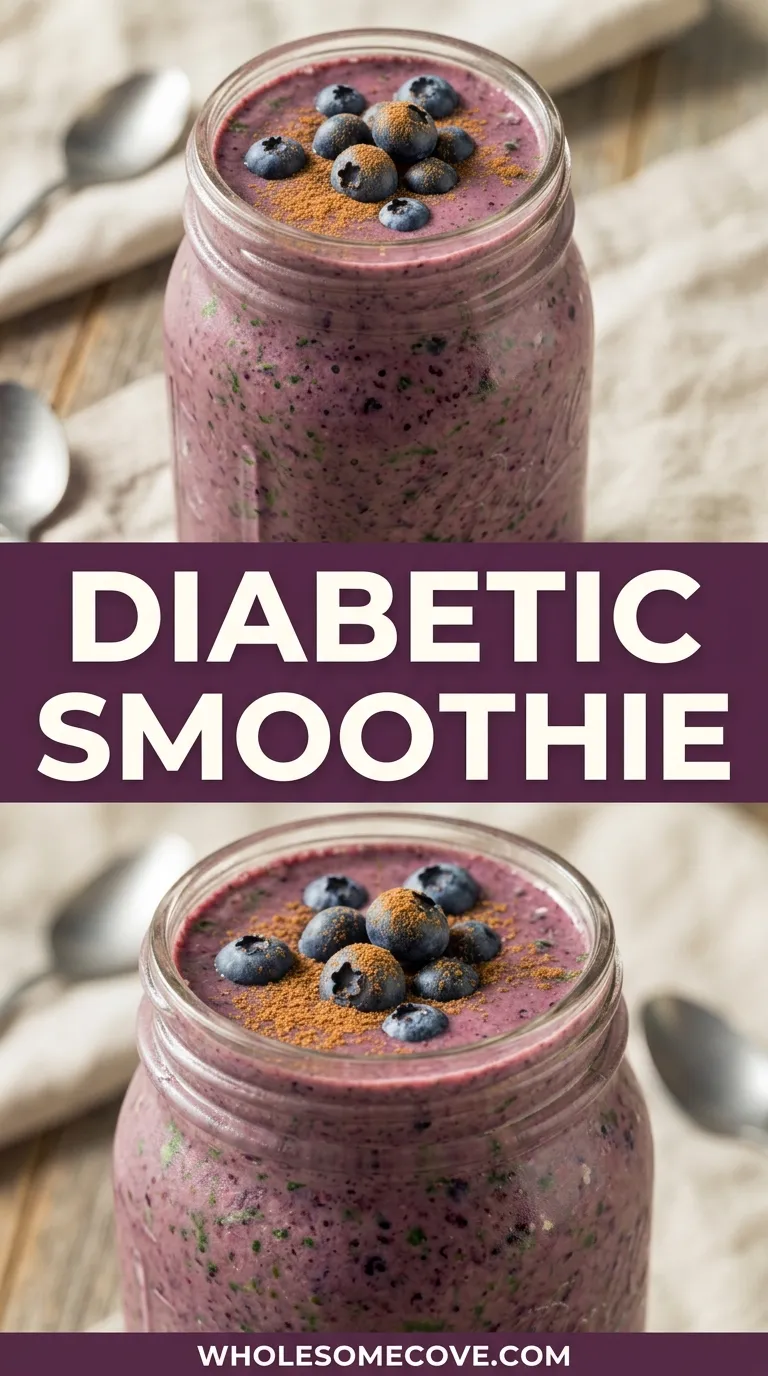
This diabetic smoothie recipe leans on frozen berries, spinach, and chia seeds instead of juice or added sugar, so the natural sweetness stays in check.
Seven ingredients and five minutes are all it takes, and the chia seeds and Greek yogurt slow down how fast the fruit sugars hit your bloodstream.
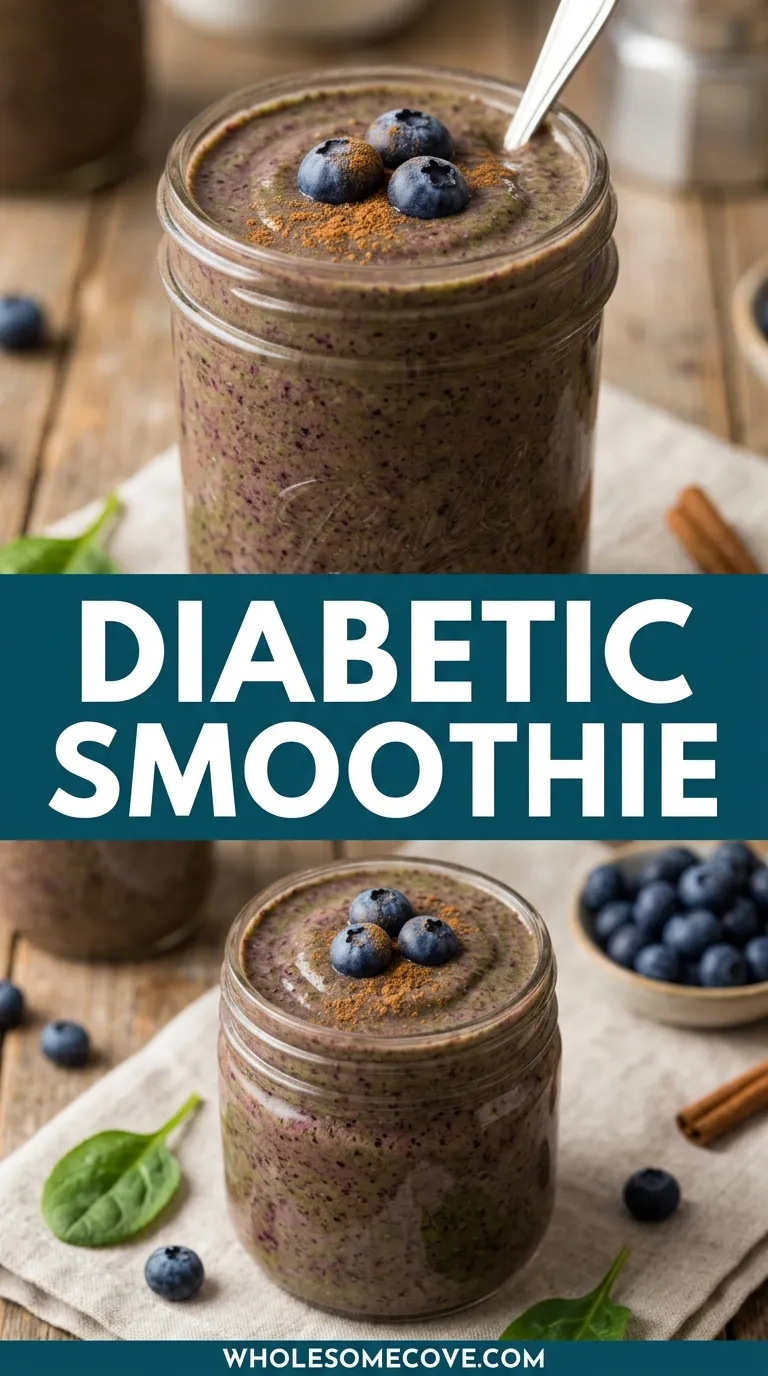
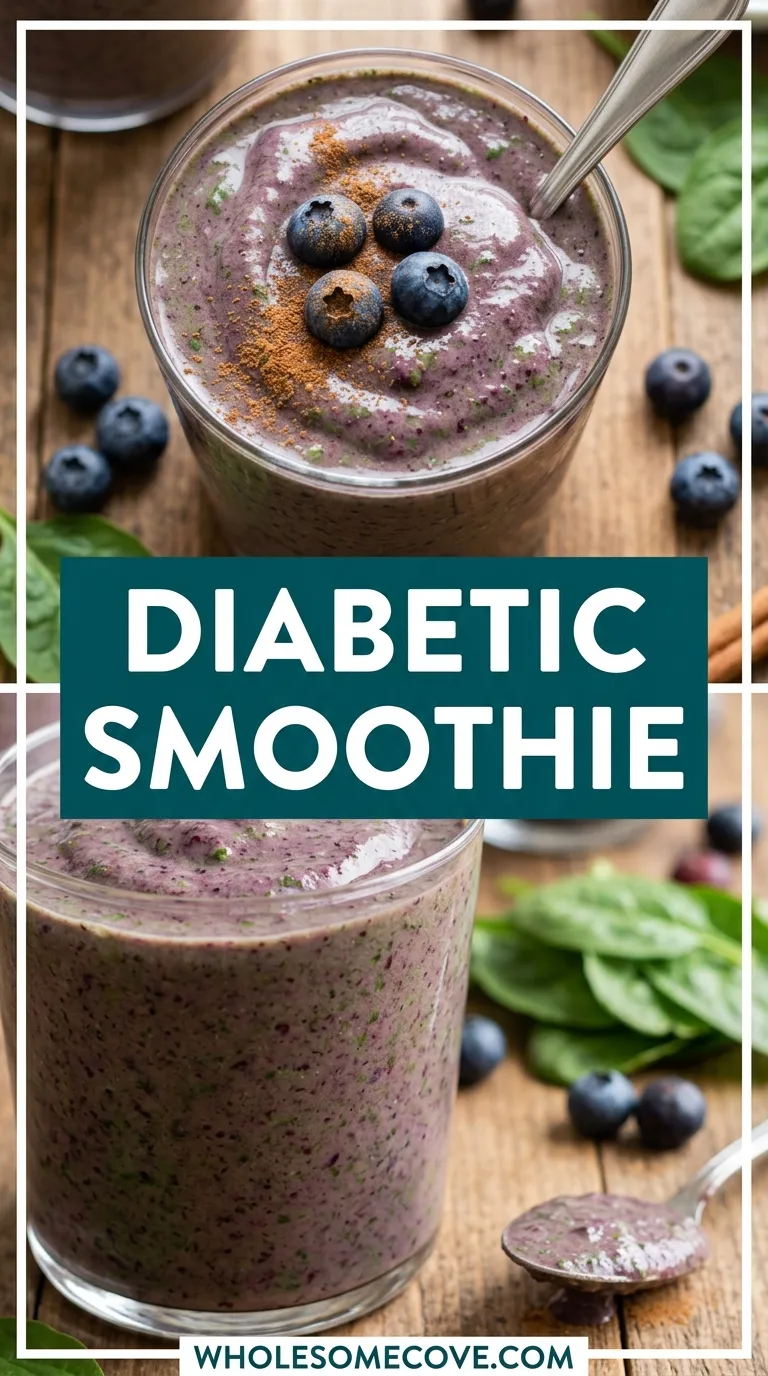
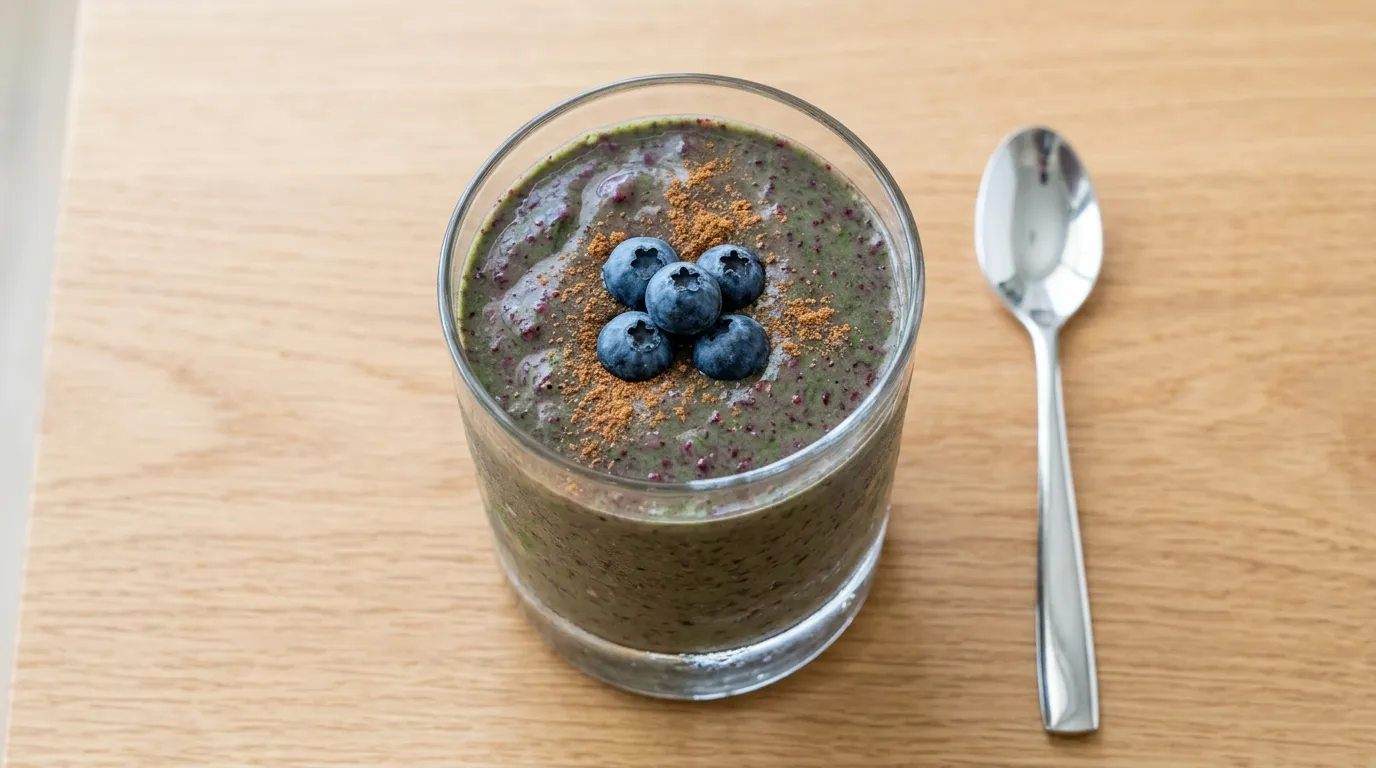
The berries and spinach blend into a thick, cold, deep purple-green smoothie that holds a straw upright, not a thin, watery drink.
A lot of smoothies marketed as healthy still start with fruit juice, sweetened yogurt, or a ripe banana as the base, which pushes the sugar content up fast.
This version swaps all three for unsweetened almond milk, plain Greek yogurt, and fiber-rich berries instead, so the carbohydrate count stays low without leaving the drink flavorless.
Each serving comes out to roughly 18 grams of total carbohydrates and about 12 grams of net carbs once the fiber is subtracted, numbers that are easy to track against a daily target.
| Quick Recipe Summary | |
|---|---|
| Prep Time | 5 minutes |
| Cook Time | 0 minutes |
| Total Time | 5 minutes |
| Servings | 2 smoothies (12 oz / 355 ml each) |
| Difficulty Level | Easy |
I keep coming back to this spinach smoothie whenever I want something green and glucose-friendly on the table in the morning.
Why You’ll Love This Diabetic Smoothie Recipe
This one earns its spot in a regular rotation because it does not rely on juice, honey, or ripe banana to taste good. Every ingredient here serves a purpose beyond flavor, whether that’s fiber, protein, or healthy fat.
It also scales easily for meal prep, since the produce and pantry items freeze well ahead of time without losing texture once blended.
- Uses only unsweetened, whole-food ingredients, no fruit juice or added sugar anywhere in the recipe
- Combines fiber (spinach, chia, berries) with protein (Greek yogurt) and fat (almond butter) to slow digestion
- Ready in 5 minutes with a single blender jar and no cooking required
- Naturally low in net carbs at roughly 12 grams per serving
- Easy to portion into freezer bags for grab-and-go mornings
- Adaptable for keto, higher-protein, or dairy-free needs without changing the base method
- Kid-friendly color and flavor despite the spinach, thanks to the berries masking the taste
Check out this berry smoothie if you want a version that skips the greens entirely.
Ingredients
Everything here is measured for two 12 oz servings, and every item is unsweetened by design so you control the exact amount of sugar going into the blender. Reading the label on the almond milk, yogurt, and almond butter matters more than it seems, since many store brands quietly add cane sugar or honey to products that sound plain on the shelf.
- 1 cup (240 ml) unsweetened almond milk, cold
- ½ cup (75 g) fresh baby spinach, packed
- ½ cup (70 g) frozen mixed berries (blueberries and strawberries)
- ¼ cup (60 g) plain Greek yogurt, unsweetened
- 1 tablespoon (15 g) chia seeds
- 1 tablespoon (16 g) unsweetened almond butter
- ½ teaspoon ground cinnamon
- 4 to 5 ice cubes, if you want it extra thick
For a matching almond milk-based drink, browse this almond milk smoothie next.
Kitchen Equipment Needed
A basic blender handles this fine, but a few small upgrades make the process faster and the texture smoother. None of this equipment is required to make the recipe work, it just removes some of the small frustrations that come up when blending fibrous greens and frozen fruit together.
- A high-speed blender capable of crushing frozen fruit and ice without leaving chunks
- Measuring cups and spoons for consistent portions each time
- A silicone spatula to scrape down the sides mid-blend
- Glass smoothie cups with lids for serving or taking on the go
- A small kitchen scale if you prefer weighing ingredients over using cup measurements, which is especially useful for the almond butter since scooping by volume tends to overestimate the actual amount added
This pairs well with the same tools I use for my Greek yogurt smoothie, since both rely on a strong motor to fully break down the yogurt.
Recommended Products for This Recipe
These are products I have actually used while testing and remaking this smoothie, not a generic list. Each one solves a specific problem that shows up when you’re making low-sugar smoothies regularly.
1. Vitamix E310 Explorian Blender
Weaker blenders leave small flecks of spinach stem and chia seed floating in the finished drink, which changes the texture from smooth to gritty. This one has enough motor power to fully break down frozen berries and fibrous greens in under 45 seconds, so the smoothie comes out uniformly smooth every time.
2. Chia Seeds (Organic, Whole)
Ground chia clumps the moment it touches liquid, but whole seeds blend in evenly and swell slightly as they sit, adding thickness without adding sugar. I buy the whole seeds specifically for this reason rather than the pre-ground version.
3. Unsweetened Almond Butter
Regular almond butter often has added sugar or honey mixed in, which defeats the purpose of a low-glycemic smoothie. Checking the label on this brand specifically confirmed a clean ingredient list of just almonds and salt, so I stopped worrying about hidden sugar in the fat source.
4. Reusable Smoothie Freezer Pouches
Freezing pre-measured smoothie packs in disposable bags gets expensive and wasteful fast. These reusable pouches stand up on their own in the freezer and rinse clean, which made batch-prepping this recipe for the whole week far less of a chore.
For another protein-forward option, take a look at this protein smoothie recipe.
Step-by-Step Instructions: How to Make Diabetic Smoothie
Follow these simple steps and you will have a diabetic-friendly smoothie ready in about five minutes.
1. Add the Liquid First
- Pour 1 cup (240 ml) of unsweetened almond milk into the blender jar
- Adding liquid before solids keeps the blades from struggling against dense ingredients at the very start
- Use cold almond milk straight from the fridge for the best final texture
2. Add the Spinach
- Add ½ cup (75 g) of packed fresh baby spinach directly into the almond milk
- Placing the greens in liquid, rather than on top of frozen fruit, helps the blades pull them down and break them apart fully
- Baby spinach blends smoother than mature spinach because the stems are thinner
3. Add the Berries, Yogurt, and Almond Butter
- Add ½ cup (70 g) of frozen mixed berries
- Add ¼ cup (60 g) of plain Greek yogurt
- Add 1 tablespoon (16 g) of unsweetened almond butter
- Sprinkle in ½ teaspoon of ground cinnamon
4. Blend Until Smooth
- Secure the lid and blend on high for 45 to 60 seconds
- Stop once to scrape down the sides with a silicone spatula if any spinach clings to the jar wall
- The finished smoothie should look uniformly deep purple-green with no visible spinach flecks
5. Add Ice for Extra Thickness (Optional)
- Drop in 4 to 5 ice cubes if you prefer a thicker, milkshake-like texture
- Blend for another 15 to 20 seconds until the ice is fully crushed
- Skip this step if you used fully frozen berries and want a thinner, more drinkable consistency
6. Pour and Serve
- Divide the smoothie evenly between two 12 oz glasses
- Serve immediately for the coldest texture and best consistency
- Give leftovers a quick stir or re-blend if they separate while sitting
I borrowed this liquid-first, greens-second order from a smoothie class years ago, and it is the single biggest fix for spinach flecks sticking to the blender wall.
Tips for The Best Diabetic Smoothie
A few small adjustments make a real difference in both texture and blood sugar impact.
- Use frozen berries instead of fresh plus ice, since frozen fruit chills the smoothie without watering it down
- Keep the almond butter at room temperature before blending, cold almond butter straight from the fridge can leave small streaks instead of blending in fully
- Stick to the ¼ cup Greek yogurt measurement, more yogurt adds protein but also thins the texture faster than expected
- Taste before adding any sweetener, the berries and cinnamon are usually enough
- If you need extra staying power, add a scoop of unflavored or low-carb protein powder along with the other ingredients
- Rinse the blender jar right after pouring, dried-on chia seeds are much harder to scrub off later
- Weigh the almond butter instead of scooping it by volume if your scale is handy, a heaping tablespoon can add several extra grams of fat and calories without you noticing
- Let frozen berries sit at room temperature for two or three minutes before blending if your blender struggles with fully frozen fruit, this reduces strain on the motor without meaningfully changing the temperature of the final drink
- Add the spinach in two smaller handfuls rather than one large one if your blender jar is on the smaller side, this keeps the greens from bunching up around the blades
For a caffeinated variation on the same low-sugar approach, this coffee smoothie recipe follows similar principles.
What to Serve with Diabetic Smoothie
This smoothie works well as a light breakfast on its own, but pairing it with a small amount of extra protein or fiber can help it hold you over longer. A smoothie alone, even a low-sugar one, tends to digest quickly, so adding something with more staying power on the side helps prevent an early mid-morning hunger dip.
- A slice of avocado toast on whole grain bread for healthy fat and fiber
- A side of protein overnight oats if you want a more substantial breakfast
- Two hard-boiled eggs for an easy protein boost
- A small handful of raw almonds or walnuts
- A scoop of healthy egg salad on a bed of greens for a savory contrast
- A warm bowl of baked oatmeal split between two people alongside half a smoothie each
- Unsweetened herbal tea or black coffee on the side
For more ideas built around the same base ingredients, this breakfast smoothie recipe is worth a look.
Variations of Diabetic Smoothie
Once the base method is familiar, it is easy to adjust the recipe for different goals without changing the core technique.
- Keto version: swap the almond milk for unsweetened coconut milk and add an extra tablespoon of almond butter for more fat
- Extra-protein version: blend in one scoop of unflavored or vanilla low-carb protein powder along with the yogurt
- Chocolate version: add one tablespoon of unsweetened cocoa powder for a chocolate-berry flavor without added sugar
- Tropical version: replace the mixed berries with frozen dragon fruit chunks for a milder, less tart flavor
- Dairy-free version: replace the Greek yogurt with unsweetened coconut yogurt
- Extra-green version: add a handful of chopped kale along with the spinach for more fiber and volume
- Warm-spice version: add a pinch of ground ginger alongside the cinnamon for a slightly spicier finish
- Nut-free version: swap the almond milk for unsweetened oat milk and replace the almond butter with sunflower seed butter for the same creaminess without tree nuts
- Higher-fiber version: stir in one extra teaspoon of ground flaxseed along with the chia seeds for additional soluble fiber
None of these variations change the core ratio of liquid to solids, so the same blending method and timing from the step-by-step instructions still applies no matter which version you choose.
If dragon fruit interests you, this dragon fruit smoothie recipe is a good next stop.
Storage and Reheating
This smoothie is meant to be served fresh, but a little planning makes weekday mornings faster.
- Store any leftover blended smoothie in an airtight container in the fridge for up to 24 hours
- Expect some separation after refrigeration, a quick stir or a 10-second re-blend brings it back together
- Freeze pre-portioned bags of spinach, berries, and almond butter (leaving out the liquid and yogurt) for up to 3 months
- On smoothie day, dump a frozen prep bag straight into the blender with the almond milk and yogurt
- Do not freeze the finished, already-blended smoothie, the texture turns grainy once thawed
I keep a stack of these pre-portioned freezer bags sorted by day of the week, so mornings are just dump-and-blend with no measuring involved. Labeling each bag with the date also helps track how long everything has been in the freezer, since spinach can pick up a slightly bitter, freezer-burned taste after the three-month mark.
If you are prepping several bags at once, laying them flat in the freezer until solid before stacking them upright saves a surprising amount of space and makes it easier to grab one without digging through the others.
For a similar make-ahead approach with fruit, this frozen fruit smoothie recipe uses the same batch-prep logic.
Nutritional Facts
| Nutrition (per 12 oz serving) | |
|---|---|
| Calories | 190 kcal |
| Total Carbohydrates | 18 g |
| Dietary Fiber | 6 g |
| Net Carbs | 12 g |
| Sugars | 7 g (naturally occurring) |
| Protein | 10 g |
| Total Fat | 10 g |
| Saturated Fat | 1.5 g |
| Sodium | 135 mg |
Values are estimates based on the exact ingredients listed and will vary with substitutions.
For a lower-carb spin on similar ingredients, this keto smoothie recipe is worth comparing against.
Health Benefits of Key Ingredients
Every ingredient in this smoothie was chosen for a specific nutritional reason, not just flavor. Looking at each one individually makes it easier to understand why the combination works together instead of just taking the low-carb claim at face value.
- Spinach: provides fiber, vitamin K, and folate with almost no impact on blood sugar
- Mixed berries: deliver antioxidants and natural sweetness while ranking lower on the glycemic index than most other fruit
- Greek yogurt: adds protein that slows how quickly the natural sugars in the fruit are absorbed
- Chia seeds: swell in liquid and add soluble fiber, which helps blunt post-meal blood sugar spikes
- Almond butter: contributes healthy monounsaturated fat that further slows digestion
- Cinnamon: commonly associated with modest improvements in insulin sensitivity when used regularly
- Unsweetened almond milk: keeps the base of the drink free of added sugar compared to flavored or sweetened milk alternatives
For another green, nutrient-dense option, this kale and fruit smoothie recipe uses a similar ingredient philosophy.
FAQs About Diabetic Smoothie
1. Is this diabetic smoothie recipe actually safe for blood sugar control?
This recipe avoids added sugar, fruit juice, and high-glycemic fruit, relying instead on berries, fiber, and protein to keep the glycemic impact lower than a typical smoothie.
Individual blood sugar response still varies, so it is worth checking your own levels the first few times you try it.
This is general food information rather than medical advice, so anyone managing diabetes should check with a doctor or dietitian before making a smoothie like this a regular part of their routine.
2. Can I use a different sweetener if I want it sweeter?
A few drops of liquid stevia or a small amount of monk fruit sweetener work well without adding carbohydrates.
I would avoid honey, maple syrup, or regular sugar here, since they defeat the purpose of the recipe.
3. How many carbs are in this smoothie?
Each serving has about 18 grams of total carbohydrates and roughly 12 grams of net carbs once you subtract the fiber.
That number will shift if you change the fruit, dairy, or portion sizes. Swapping in a full cup of berries instead of a half cup, for example, will raise both the total and net carb counts noticeably.
4. Can I make this smoothie ahead of time?
The blended smoothie keeps in the fridge for about 24 hours, though the texture is best within the first few hours.
For longer storage, freeze the spinach, berries, and almond butter in a prep bag and add the liquid ingredients fresh on the day you blend it.
5. What is the best fruit to use for a diabetic-friendly smoothie?
Berries are generally the best choice because they are lower in sugar and higher in fiber than fruits like banana, mango, or grapes.
I have found frozen berries blend smoother and colder than fresh ones, which is an added bonus beyond the sugar content.
Related reading: this strawberry blackberry smoothie recipe sticks to the same lower-sugar berry base.
Diabetic Smoothie
Ingredients
- 1 cup unsweetened almond milk - 240 ml, cold
- ½ cup fresh baby spinach - 75 g, packed
- ½ cup frozen mixed berries - 70 g, blueberries and strawberries
- ¼ cup plain Greek yogurt - 60 g, unsweetened
- 1 tablespoon chia seeds - 15 g
- 1 tablespoon unsweetened almond butter - 16 g
- ½ teaspoon ground cinnamon
- ice cubes - 4 to 5, optional, for extra thickness
Equipment
- High-speed blender - capable of crushing frozen fruit and ice
- Silicone spatula - to scrape down the sides mid-blend
- Glass smoothie cups with lids - for serving or taking on the go
- Small kitchen scale - optional, for weighing almond butter
Method
- Pour cold unsweetened almond milk into the blender jar, adding liquid before solids helps the blades start smoothly.
- Add packed fresh baby spinach directly into the almond milk, placing greens in the liquid helps them break down fully.
- Add frozen mixed berries, plain Greek yogurt, unsweetened almond butter, and ground cinnamon.
- Secure the lid and blend on high for 45 to 60 seconds, stopping once to scrape down the sides if needed, until uniformly smooth.
- Drop in ice cubes if you prefer a thicker texture and blend for another 15 to 20 seconds until fully crushed.
- Divide the smoothie evenly between two 12 oz glasses and serve immediately.
Nutrition
Notes
- Use frozen berries instead of fresh plus ice, since frozen fruit chills the smoothie without watering it down.
- Keep almond butter at room temperature before blending for best incorporation.
- Stick to ¼ cup Greek yogurt as more yogurt thins the texture faster than expected.
- Taste before adding any sweetener as the berries and cinnamon are usually enough.
- For extra staying power, add a scoop of unflavored or low-carb protein powder.
- Rinse the blender jar immediately after pouring, dried-on chia seeds are harder to scrub off later.
- Weigh the almond butter instead of scooping by volume for more accurate portions.
- Let frozen berries sit at room temperature for 2-3 minutes before blending if your blender struggles with fully frozen fruit.
- Add spinach in two smaller handfuls if your blender jar is smaller to prevent bunching around the blades.
- The blended smoothie keeps in the fridge for up to 24 hours but is best fresh.
Private Notes
Tried this recipe?
Let us know how it was!Final Thoughts
This diabetic smoothie recipe proves that a low-sugar breakfast does not have to taste like a compromise.
It comes together in one blender jar with ingredients most people already keep on hand.
Give it a try tomorrow morning, and let me know in the comments how you customized it or which variation you landed on.
Recommended:
- Strawberry Smoothie
- Mango Smoothie
- Banana Smoothie
- Strawberry Banana Smoothie
- Blueberry Banana Smoothie
- Peach Smoothie
- Pineapple Smoothie
- Watermelon Smoothie
- Coconut Milk Smoothie
- Matcha Green Tea Smoothie