
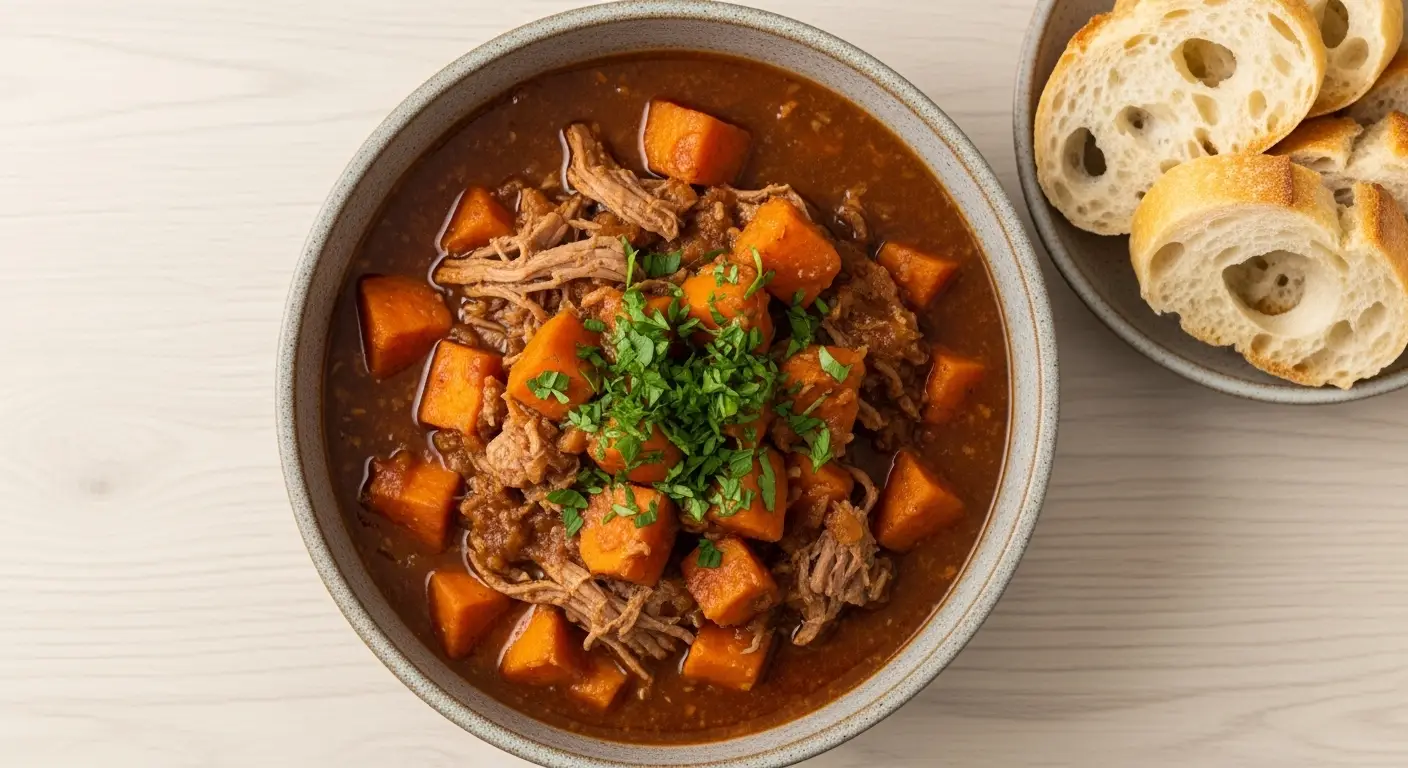
This pork and sweet potato stew recipe has been my cold-weather go-to for years now. I stumbled into it one autumn evening when I had a pork shoulder that needed to be used up and a pile of sweet potatoes sitting on the counter.
What came out of that pot was something my family immediately declared a keeper. The sweet potatoes melt into the broth, naturally thickening it while the pork becomes fall-apart tender after a long, slow simmer.
It’s the kind of meal that fills your kitchen with the most incredible smell. Rich, savory, with just a hint of warmth from the spices.
I’ve made this dozens of times since, tweaking the seasoning and technique until it hit that perfect balance of hearty and comforting. This version is the one I keep coming back to.
| Quick Recipe Summary | |
|---|---|
| Prep Time | 20 minutes |
| Cook Time | 1 hour 45 minutes |
| Total Time | 2 hours 5 minutes |
| Servings | 6 servings |
| Difficulty Level | Easy |
If you love hearty one-pot meals like this one, you’ll also want to try my Pork Stew Recipe — it’s another family staple that delivers big flavor with minimal effort.
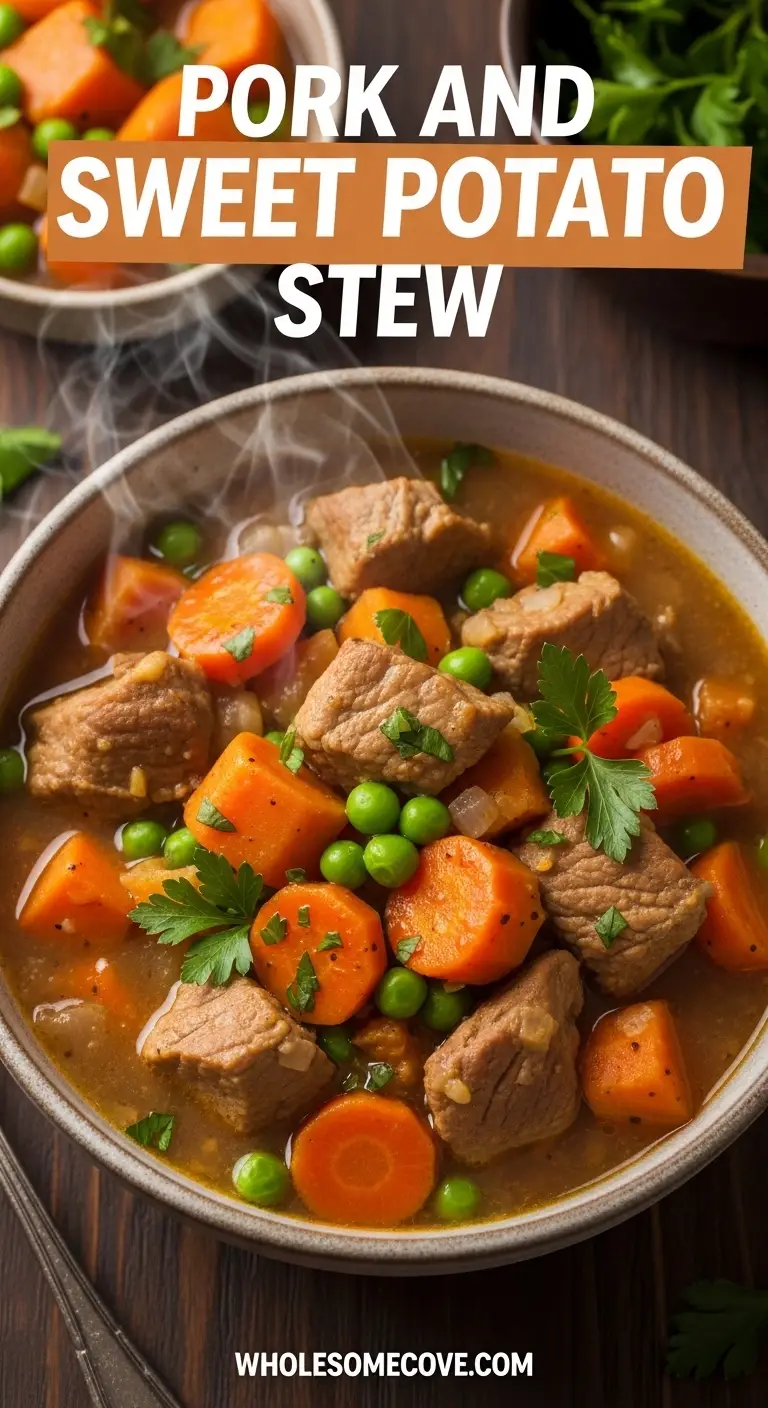
Why You’ll Love This Pork and Sweet Potato Stew Recipe
This is a one-pot wonder that requires minimal prep but delivers maximum flavor. The combination of tender pork and naturally sweet sweet potatoes creates a depth that tastes like you’ve been cooking all day.
- Incredibly easy to make: You don’t need any special skills or equipment. Brown the pork, build the base, add everything to the pot, and let the heat do the work for you.
- Deeply satisfying and filling: The pork provides plenty of protein and the sweet potatoes add hearty substance, so a single bowl genuinely keeps you full for hours.
- Naturally thickened broth: As the sweet potatoes cook down, they release their starches right into the broth, giving it a velvety, almost creamy consistency without any added flour or cream.
- Made from simple, affordable ingredients: Pork shoulder and sweet potatoes are budget-friendly staples that transform into something spectacular with the right treatment.
- Perfect for meal prep: This stew tastes even better the next day after the flavors have had time to meld. Make a big batch on Sunday and you’ve got satisfying lunches or dinners sorted for the week.
- Freezer-friendly: It freezes beautifully for up to three months, making it a great recipe to double so you always have a comforting meal on standby.
- Versatile and adaptable: You can easily swap in chicken thighs, add extra vegetables, or adjust the spice level to suit your household’s preferences.
For another warming fall stew, check out my Slow Cooker Pork Stew Recipe — it’s hands-off and perfect for busy weekdays.
Ingredients
These are straightforward, pantry-friendly ingredients, but the quality of your pork shoulder makes a real difference here. I always try to get bone-in if I can find it, as it adds even more richness to the broth. Fresh thyme also makes this dish noticeably more fragrant compared to dried.
- 2.5 lbs (1.1 kg) boneless pork shoulder, cut into 1.5-inch (4 cm) chunks
- 1.5 lbs (680 g) sweet potatoes (about 2 medium), peeled and cut into 1-inch (2.5 cm) cubes
- 1 large yellow onion, diced
- 4 cloves garlic, minced
- 3 medium carrots, sliced into half-moons (about 1.5 cups / 200 g)
- 2 stalks celery, diced
- 1 can (14.5 oz / 411 g) diced tomatoes, with juices
- 3 cups (710 ml) low-sodium chicken broth or pork broth
- 2 tablespoons avocado oil or olive oil, divided
- 2 tablespoons tomato paste
- 1 teaspoon smoked paprika
- 1 teaspoon ground cumin
- 1/2 teaspoon ground coriander
- 1/2 teaspoon ground black pepper
- 1 teaspoon salt (plus more to taste)
- 4 sprigs fresh thyme (or 1 teaspoon dried thyme)
- 2 bay leaves
- 1 tablespoon fresh flat-leaf parsley, chopped (for garnish)
You might also enjoy: Instant Pot Pork Stew Recipe
Kitchen Equipment Needed
You don’t need anything fancy for this recipe. A good heavy-bottomed pot is the most important tool here — it ensures even heat distribution so the stew simmers gently without scorching the bottom. I’ve made this in both a Dutch oven and a regular heavy stockpot with equally great results.
- 6-quart Dutch oven or heavy-bottomed stockpot
- Chef’s knife (8-inch recommended)
- Cutting board
- Wooden spoon or silicone spatula
- Measuring cups and spoons
- Vegetable peeler
- Ladle
- Tongs
Read Also: Beef Stew Recipe
Recommended Products for This Recipe
Over many batches of this stew, I’ve found a few products that genuinely elevate the results. These are my personal picks based on what I actually use in my own kitchen.
1. Lodge Enameled Cast Iron Dutch Oven
A quality Dutch oven is the single best investment you can make for stew recipes. It retains heat evenly, which means your pork braises at a steady temperature throughout the entire cook time without any hot spots that can lead to tough, chewy meat. The enamel coating also makes cleanup incredibly simple even after hours of simmering.
2. Smoked Paprika (Sweet or Hot)
Not all paprikas are created equal, and a high-quality smoked paprika makes an enormous difference in the depth of flavor in this stew. I use it in almost every savory stew I make because it adds a rich, slightly smoky undertone without overpowering the other ingredients.
3. Low-Sodium Chicken Bone Broth
Using a good-quality bone broth instead of regular stock adds body and a natural richness to the stew’s base that you really can taste. The collagen in bone broth also helps give the finished stew a luxurious, silky mouthfeel. I always keep a few cartons in the pantry for recipes like this.
4. Pork Shoulder (Boneless)
If you can find a well-marbled boneless pork shoulder, it’s worth seeking out. The fat content in the shoulder cut keeps the meat moist during the long braise and provides incredible flavor as it renders into the broth. It’s significantly better suited for stew than leaner cuts like pork loin.
Another warming option for cold evenings: Chicken Stew Recipe
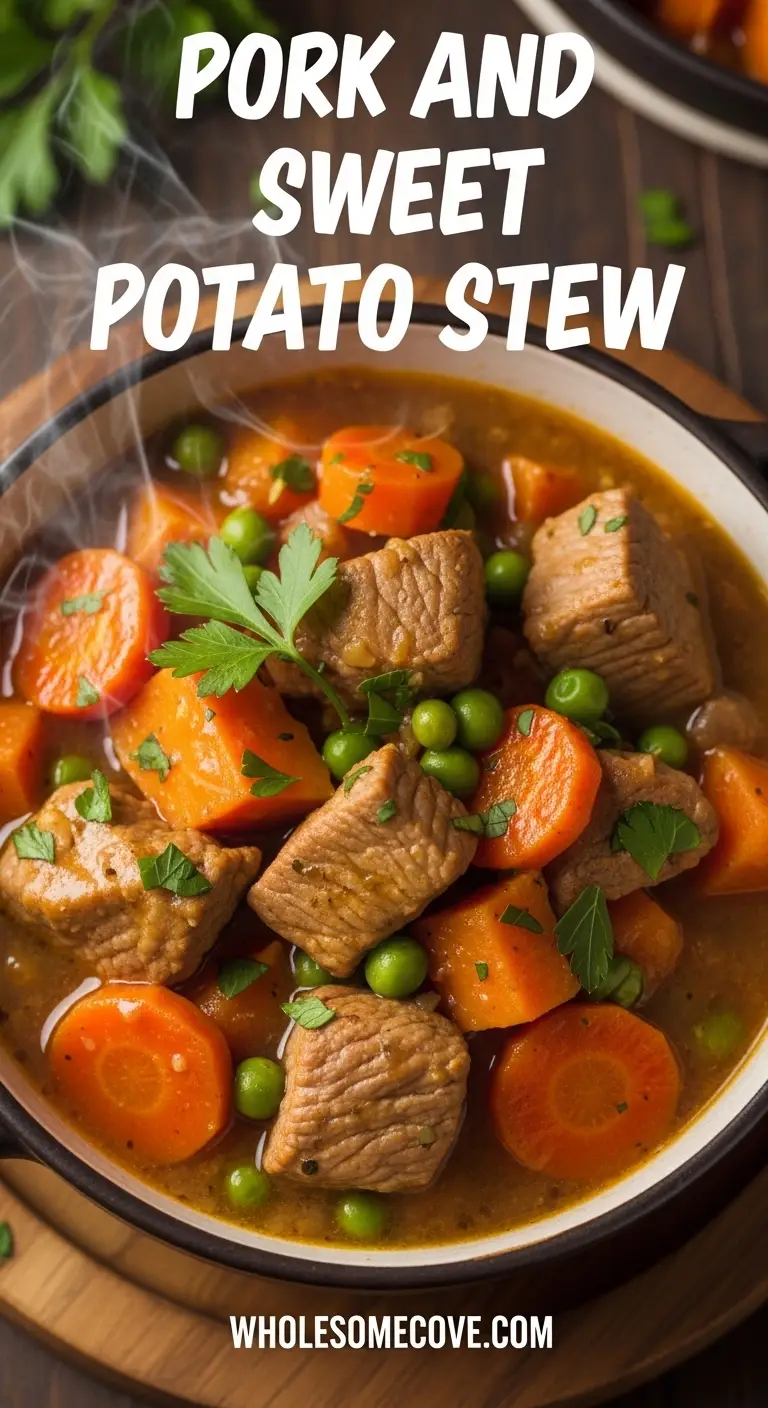
Step-by-Step Instructions: How to Make Pork and Sweet Potato Stew
1. Prepare Your Ingredients
- Pat the pork shoulder chunks dry with paper towels. This is an important step — moisture on the surface of the meat will cause it to steam rather than brown in the pan, and you want that golden crust for deep flavor.
- Season the pork pieces generously on all sides with 1 teaspoon of salt and 1/2 teaspoon of black pepper. Set aside.
- Peel the sweet potatoes using a vegetable peeler and cut them into roughly 1-inch (2.5 cm) cubes. Try to keep the pieces uniform so they cook evenly.
- Dice the onion and celery, mince the garlic, and slice the carrots into half-moons. Have everything ready to go before you start cooking — this stew moves quickly once the pot is hot.
2. Sear the Pork
- Heat your Dutch oven or heavy stockpot over medium-high heat. Add 1 tablespoon of avocado oil and let it get hot until it shimmers but does not smoke.
- Add the pork pieces in a single layer, making sure not to crowd the pot. If you have more pork than can fit comfortably, work in two batches. Crowding causes steaming rather than searing.
- Sear the pork for 3-4 minutes per side without moving it. You’re looking for a deep golden-brown crust on at least two sides of each piece. This step is essential for flavor development.
- Transfer the seared pork to a plate and set aside. Do not drain the pot — those browned bits on the bottom (called fond) are pure flavor that you’ll deglaze in the next step.
3. Build the Aromatic Base
- Reduce the heat to medium. Add the remaining 1 tablespoon of avocado oil to the same pot.
- Add the diced onion and celery. Cook, stirring occasionally, for 4-5 minutes until the onion is softened and translucent. Scrape up any browned bits from the bottom of the pot as you stir.
- Add the minced garlic and sliced carrots. Stir and cook for another 2 minutes until the garlic is fragrant. Don’t let the garlic burn — it should just turn pale golden and aromatic.
- Add the tomato paste to the pot. Stir it into the vegetables and cook for 1-2 minutes, allowing the tomato paste to caramelize slightly. It should deepen in color from bright red to a darker, brick-red shade. This step significantly enriches the final stew.
4. Add the Spices
- Sprinkle the smoked paprika, ground cumin, and ground coriander directly over the vegetables in the pot.
- Stir the spices into the vegetables and let them toast for about 60 seconds, stirring constantly. Toasting the spices in the fat before adding liquid blooms their flavors and makes the stew taste far more complex.
- Be careful not to let the spices scorch. If your heat is too high, reduce it slightly before adding the spices.
5. Deglaze and Simmer
- Pour in the diced tomatoes (with their juices) and use your wooden spoon to scrape up any remaining browned bits from the bottom of the pot. This is called deglazing, and all those bits dissolve into the broth for extra flavor.
- Pour in the chicken or pork broth and stir to combine everything well.
- Return the seared pork and any accumulated juices from the plate back to the pot. The juices that collected on the plate are flavorful — don’t leave them behind.
- Add the fresh thyme sprigs and bay leaves. Nestle them into the liquid.
- Bring the stew to a gentle boil over medium-high heat, then reduce the heat to low. You want a gentle, steady simmer — not a hard boil, which will toughen the pork.
- Cover the pot partially (leaving a small gap to allow some steam to escape) and simmer for 45 minutes.
6. Add the Sweet Potatoes
- After 45 minutes of simmering, add the cubed sweet potatoes to the pot. Stir to submerge them in the broth as much as possible.
- Replace the lid (still partially cracked) and continue to simmer for another 45-55 minutes, stirring occasionally, until both the pork and sweet potatoes are very tender.
- To test the pork, try pressing a chunk with the back of your spoon. It should break apart easily. The sweet potatoes should be soft all the way through when pierced with a fork.
- As the sweet potatoes cook, some of them will naturally break down and begin to thicken the broth. This is exactly what you want — it creates that luscious, velvety consistency.
7. Adjust and Finish
- Remove and discard the bay leaves and thyme sprigs.
- Taste the stew and adjust the seasoning. Add more salt if needed, a bit at a time. If you’d like more depth, a small splash of Worcestershire sauce works beautifully here.
- If the stew looks thinner than you’d like, you can use the back of a spoon to mash a few sweet potato chunks against the side of the pot. This releases more starch and thickens the broth naturally.
- Ladle the stew into bowls and garnish with freshly chopped flat-leaf parsley. Serve immediately with crusty bread or over rice if desired.
For a similar cozy dinner idea, my Lamb Stew Recipe uses many of the same techniques and is equally warming on a cold night.
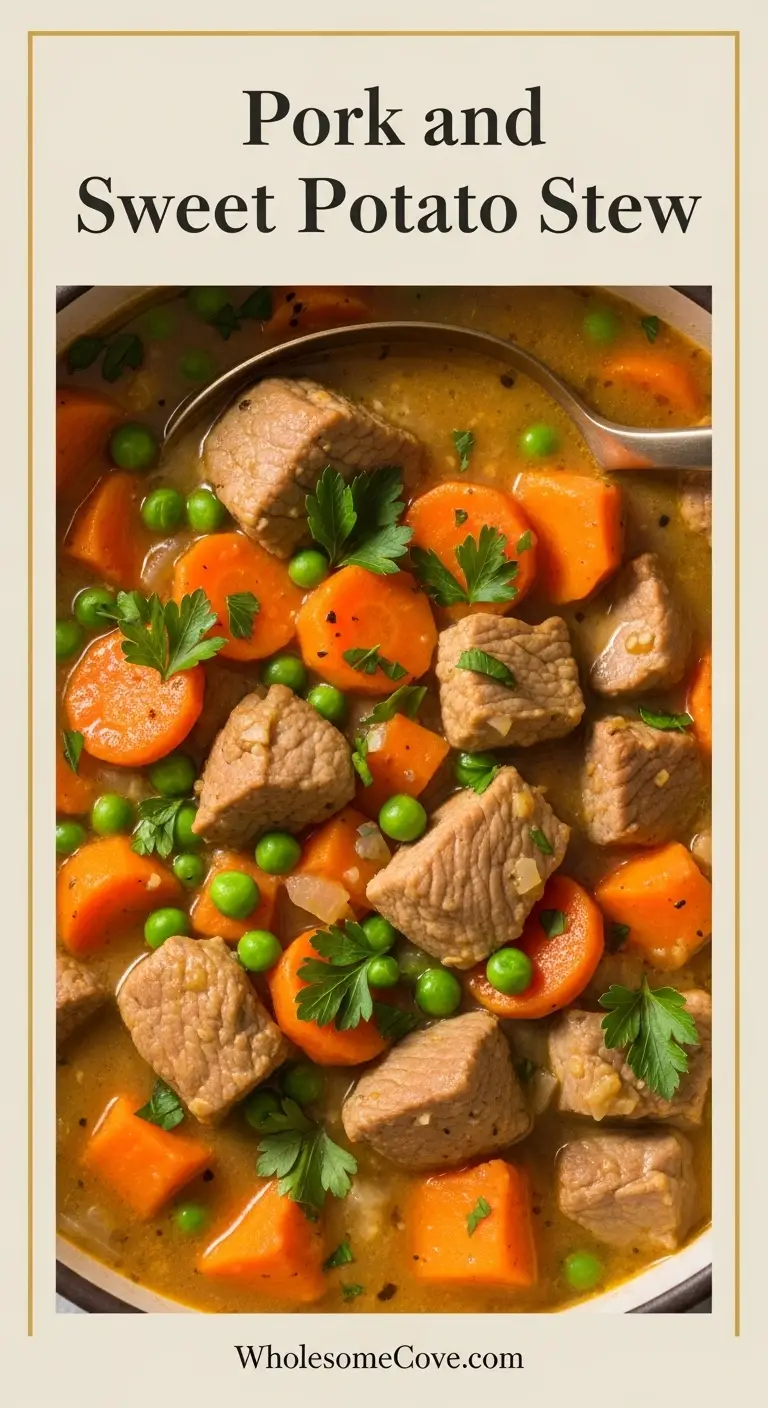
Tips for The Best Pork and Sweet Potato Stew
After making this recipe more times than I can count, here are the lessons that made the biggest difference in my results.
- Always sear the pork in batches: Overcrowding the pot is the number one reason stew doesn’t develop rich flavor. Give each piece of pork space to properly brown, and don’t rush this step by turning the heat up too high — medium-high with a hot pan is ideal.
- Dry the pork before searing: Pat each piece thoroughly with paper towels before it goes into the pan. Even a small amount of surface moisture will prevent proper browning and you’ll end up with pale, less flavorful meat.
- Don’t skip the tomato paste caramelization: Letting the tomato paste cook directly in the pot before adding liquid develops a concentrated, slightly sweet-savory flavor that you simply can’t replicate any other way. It only takes 2 minutes but makes a huge impact.
- Use bone-in pork if you can find it: Even if the recipe calls for boneless, using bone-in pork shoulder adds gelatin and marrow to the broth that makes it noticeably richer and silkier. Just make sure to remove the bones before serving.
- Cut the sweet potatoes larger than you think: Because sweet potatoes cook faster than pork, cutting them into larger 1-inch pieces helps them hold their shape rather than dissolving entirely into mush. Some breakdown is desirable for thickness, but you still want recognizable chunks in each bowl.
- Simmer gently, never boil hard: A vigorous boil will make the pork tough and stringy. The low, gentle simmer is what transforms tough pork shoulder into meltingly tender, flavorful meat. If you see large bubbles churning the surface, turn down the heat.
- Taste and season at the end: Sweet potatoes absorb salt as they cook, so what tasted properly seasoned at the beginning may need a touch more salt at the end. Always taste before serving and adjust accordingly.
- Let it rest before serving: If you have 10 minutes, let the finished stew sit off the heat before ladling. The flavors come together beautifully with a short rest period.
The same “low and slow” technique works beautifully in my Irish Stew Recipe — another hearty one-pot classic worth adding to your rotation.
What to Serve with Pork and Sweet Potato Stew
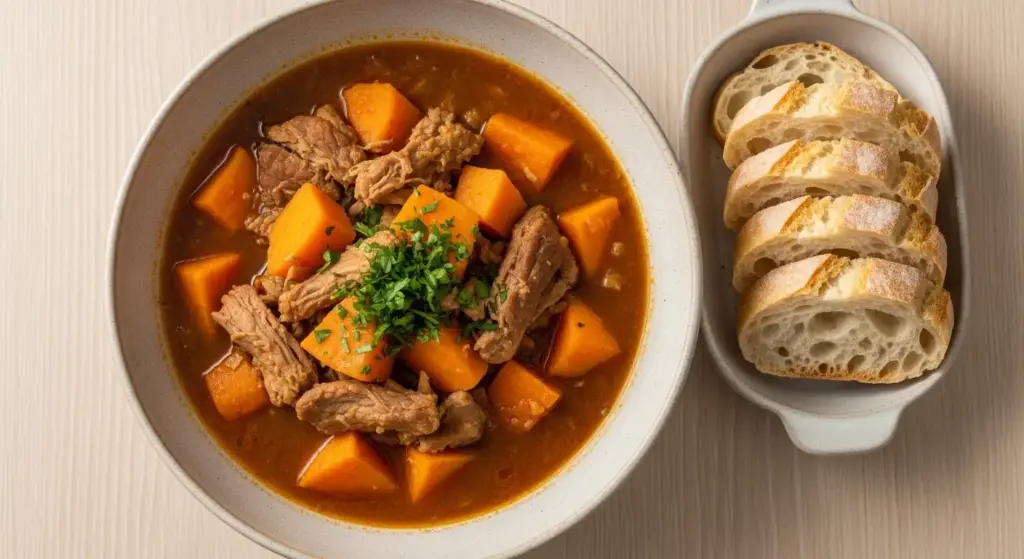
This stew is filling on its own, but a few simple sides can round it out into a truly satisfying spread.
- Homemade Biscuits: Fluffy, buttery biscuits are perfect for soaking up every last drop of that rich, velvety broth. They’re also quick to make and bake while the stew finishes simmering.
- Dinner Rolls: Soft, pillowy dinner rolls are another excellent bread option for dipping and mopping the bowl clean. These are crowd-pleasers for family dinners.
- Healthy Coleslaw: A crisp, lightly dressed coleslaw provides a refreshing, crunchy contrast to the richness of the stew. The acidity cuts through the heaviness and balances each bite.
- Broccoli Salad: A cold broccoli salad with a tangy dressing works beautifully alongside this warm stew. The cool crunch is a welcome textural counterpoint.
- Mashed Potatoes: For an extra-indulgent serving, ladle this stew directly over a scoop of creamy mashed potatoes. It sounds excessive and it absolutely is, in the best possible way.
- Steamed White or Brown Rice: A plain bowl of rice is one of the simplest and most satisfying pairings. It soaks up the broth like a sponge and makes the meal even more filling.
- Roasted Brussels Sprouts with Bacon: The slight bitterness of roasted Brussels sprouts pairs really well with the sweetness in this stew. The bacon doesn’t hurt either.
Read Also: Green Chile Pork Stew Recipe
Variations of Pork and Sweet Potato Stew
Once you’ve made the base recipe once, it’s easy and fun to experiment with different flavor profiles. Here are some of my favorite ways to change it up.
- Slow Cooker Version: Brown the pork and sauté the aromatics as directed, then transfer everything to a slow cooker. Cook on LOW for 7-8 hours or HIGH for 4-5 hours. Add the sweet potatoes during the last 2 hours of cooking on LOW so they don’t turn to mush.
- Instant Pot Version: Use the Sauté function to brown the pork and cook the aromatics. Then seal the lid and pressure cook on HIGH for 35 minutes, followed by a 10-minute natural pressure release. Add the sweet potatoes, reseal, and cook for another 5 minutes on HIGH.
- Mexican-Inspired Pork and Sweet Potato Stew: Add 1 can of drained and rinsed black beans, 1 teaspoon of chipotle chili powder, and a squeeze of lime juice at the end. Top with diced avocado, fresh cilantro, and a dollop of sour cream.
- African-Inspired Version: Replace the diced tomatoes with 1/2 cup of natural peanut butter stirred into the broth. Add a pinch of cayenne and finish with fresh lime juice. This creates a deeply rich, nutty stew that is absolutely incredible.
- Chicken and Sweet Potato Stew: Swap the pork shoulder for bone-in, skin-on chicken thighs. Reduce the total cooking time to about 45-50 minutes total since chicken cooks faster than pork.
- Make it Spicier: Add 1/2 teaspoon of cayenne pepper or 1 fresh jalapeño (diced, with seeds for more heat) along with the other aromatics. Red pepper flakes also work well.
- Add Greens: Stir in 2 large handfuls of fresh baby spinach or chopped kale during the last 5 minutes of cooking. They wilt quickly and add a beautiful pop of color along with extra nutrients.
You might also enjoy: Mexican Pork Stew Recipe
Storage and Reheating
This stew stores exceptionally well, and the flavor genuinely improves after a day in the fridge as everything melds together. Make a big batch and you’ll be glad you did come Tuesday evening.
- Refrigerator: Allow the stew to cool completely to room temperature before transferring it to an airtight container. Store in the refrigerator for up to 4 days. Do not leave the stew sitting at room temperature for more than 2 hours.
- Freezer: This stew freezes beautifully. Portion it into freezer-safe airtight containers or heavy-duty zip-lock bags, leaving about 1 inch of headspace for expansion. Freeze for up to 3 months. Label with the date so you know what you’re pulling out.
- Thawing from frozen: Transfer the frozen stew to the refrigerator the night before you plan to eat it and allow it to thaw slowly overnight. This preserves the texture of the pork and sweet potatoes better than a quick countertop thaw.
- Reheating on the stovetop (recommended): Pour the stew into a pot and reheat over medium-low heat, stirring occasionally, until heated through. If the stew has thickened significantly in the fridge, add a splash of broth or water to loosen it to your preferred consistency.
- Reheating in the microwave: Transfer a single serving to a microwave-safe bowl, cover loosely, and heat on HIGH in 1-minute intervals, stirring between each interval, until hot throughout. Microwave reheating works fine for individual portions.
- Note on sweet potato texture after freezing: The sweet potatoes will become slightly softer and more broken down after freezing and reheating. This actually helps thicken the stew further, but if you prefer more texture, add a few fresh cooked sweet potato cubes when reheating from frozen.
The same storage principles apply to my Cowboy Stew Recipe, another hearty pot of goodness that reheats like a dream.
Nutritional Facts
The following values are approximate, based on one serving (approximately 1.5 cups / 360 ml) out of 6 total servings. Exact values will vary depending on the specific products and exact quantities you use.
- Calories: 390 kcal
- Total Fat: 16 g
- Saturated Fat: 5 g
- Cholesterol: 90 mg
- Sodium: 520 mg
- Total Carbohydrates: 28 g
- Dietary Fiber: 5 g
- Total Sugars: 9 g
- Protein: 34 g
- Vitamin A: 210% DV
- Vitamin C: 20% DV
- Iron: 18% DV
- Potassium: 820 mg
Another filling, protein-rich dinner to explore: Pork Tenderloin with Roasted Root Vegetables Recipe
Health Benefits of Key Ingredients
Beyond tasting wonderful, this stew is genuinely nourishing. Each of the main ingredients brings something valuable to the nutritional table.
- Sweet Potatoes: These are one of the most nutrient-dense vegetables you can eat. They’re loaded with beta-carotene (which converts to Vitamin A in the body), supporting immune health, eye health, and skin health. They also provide significant amounts of potassium, Vitamin C, and dietary fiber, which promotes digestive health and helps you feel fuller for longer.
- Pork Shoulder: Pork is an excellent source of high-quality complete protein, meaning it contains all essential amino acids your body cannot produce on its own. It’s also rich in B vitamins — particularly B1 (thiamine), B6, and B12 — which are crucial for energy metabolism and nervous system function. Pork provides zinc and selenium as well, two minerals important for immune function.
- Carrots: Like sweet potatoes, carrots are rich in beta-carotene and antioxidants. They provide Vitamin K1 (important for bone health and blood clotting) and soluble fiber that feeds beneficial gut bacteria.
- Garlic: Garlic contains allicin and other sulfur compounds that have been studied for their anti-inflammatory and antimicrobial properties. Regular consumption of garlic is associated with cardiovascular benefits, including modest reductions in blood pressure and LDL cholesterol.
- Tomatoes: Canned diced tomatoes are a convenient source of lycopene, a powerful antioxidant that has been linked to reduced risk of certain cancers and heart disease. Cooking actually increases the bioavailability of lycopene compared to fresh tomatoes.
- Onion and Celery: Onions are rich in quercetin, a flavonoid with anti-inflammatory properties, while celery provides Vitamin K and antioxidants along with a satisfying crunch and aromatic depth to the broth base.
For another nutrient-packed soup that highlights sweet potatoes, try my Kale and Sweet Potato Soup Recipe — it’s lighter but equally comforting.
FAQs About Pork and Sweet Potato Stew
1. Can I use a different cut of pork instead of pork shoulder?
Yes, but pork shoulder is strongly recommended for the best results. Pork shoulder has the right amount of fat and connective tissue to become tender and flavorful after a long braise. Leaner cuts like pork loin or tenderloin will become dry and tough with extended cooking times, so if you must substitute, reduce the total cooking time significantly and check for doneness earlier.
2. My stew came out too thin. How can I thicken it?
The easiest fix is to mash a few of the sweet potato chunks directly in the pot using the back of your spoon or a fork. This releases more starch into the broth and thickens it naturally within minutes. Alternatively, you can mix 1 tablespoon of cornstarch with 2 tablespoons of cold water to create a slurry, then stir it into the simmering stew and cook for 2-3 minutes until thickened.
3. Can I make this stew ahead of time?
Absolutely, and I actually recommend it. The stew tastes noticeably better the next day once the flavors have had time to develop and meld. Make it up to 2 days ahead, store it covered in the refrigerator, and reheat gently on the stovetop before serving. It’s one of those dishes that rewards patience.
4. Can I add other vegetables to this stew?
Of course. This recipe is very forgiving and adaptable. Parsnips, turnips, or butternut squash are great additions that complement the sweet potatoes well. Green beans or zucchini can be added during the last 15-20 minutes of cooking since they cook much faster. Kale or spinach added in the final 5 minutes adds a lovely color and nutritional boost.
5. Is this stew gluten-free?
Yes, this recipe as written is naturally gluten-free. Just make sure that any store-bought broth you use is labeled gluten-free, as some brands add ingredients that contain gluten. All other ingredients in this recipe are naturally free of gluten.
For another naturally gluten-free comfort stew, check out my Venison Stew Recipe — it’s hearty, deeply flavored, and worth making if you can get your hands on some game meat.
Pork and Sweet Potato Stew
Ingredients
- 2.5 lbs boneless pork shoulder - 1.1 kg, cut into 1.5-inch (4 cm) chunks
- 1.5 lbs sweet potatoes - 680 g, about 2 medium, peeled and cut into 1-inch (2.5 cm) cubes
- 1 large yellow onion - diced
- 4 cloves garlic - minced
- 3 medium carrots - about 1.5 cups or 200 g, sliced into half-moons
- 2 stalks celery - diced
- 14.5 oz canned diced tomatoes - 411 g, 1 can, with juices
- 3 cups low-sodium chicken broth - 710 ml, or pork broth
- 2 tbsp avocado oil - divided, or olive oil
- 2 tbsp tomato paste
- 1 tsp smoked paprika
- 1 tsp ground cumin
- 0.5 tsp ground coriander
- 0.5 tsp ground black pepper
- 1 tsp salt - plus more to taste
- 4 sprigs fresh thyme - or 1 tsp dried thyme
- 2 bay leaves
- 1 tbsp fresh flat-leaf parsley - chopped, for garnish
Equipment
- 6-quart Dutch oven or heavy-bottomed stockpot - Essential for even heat distribution during the long braise
- Chef’s knife - 8-inch recommended
- Cutting board
- Wooden spoon or silicone spatula - For stirring and deglazing
- Measuring cups and spoons
- Vegetable peeler - For peeling sweet potatoes
- Ladle - For serving
- Tongs - For turning pork while searing
Method
- Pat pork shoulder chunks thoroughly dry with paper towels, then season all sides with 1 tsp salt and 1/2 tsp black pepper. Peel and cube the sweet potatoes, and dice the onion, celery, and carrots; mince the garlic.
- Heat 1 tbsp oil in a Dutch oven over medium-high heat and sear the pork in a single layer (in batches if needed) for 3-4 minutes per side until deeply golden brown. Transfer seared pork to a plate and set aside, leaving the drippings in the pot.
- Reduce heat to medium, add the remaining 1 tbsp oil, then cook the onion and celery for 4-5 minutes until softened, scraping up the browned bits. Add garlic and carrots and cook 2 more minutes until fragrant.
- Stir the tomato paste into the vegetables and cook for 1-2 minutes, stirring frequently, until it deepens to a brick-red color. This step caramelizes the paste and adds rich depth to the stew.
- Sprinkle the smoked paprika, cumin, and coriander over the vegetables and stir constantly for about 60 seconds until fragrant and toasted. Reduce heat slightly if the spices look like they may scorch.
- Pour in the diced tomatoes and broth, scraping up any remaining browned bits from the bottom of the pot. Return the seared pork and any accumulated juices, then nestle in the thyme sprigs and bay leaves.
- Bring the stew to a gentle boil over medium-high heat, then reduce to low. Cover partially and simmer for 45 minutes, maintaining a steady gentle simmer (not a hard boil).
- Stir in the cubed sweet potatoes, submerging them in the broth as much as possible. Replace the lid (partially cracked) and continue simmering for 45-55 minutes, stirring occasionally, until the pork is fall-apart tender and sweet potatoes are very soft.
- Remove and discard the bay leaves and thyme sprigs, then taste and adjust salt as needed. If a thicker broth is desired, mash a few sweet potato chunks against the pot wall. Ladle into bowls and garnish with fresh parsley.
Nutrition
Notes
- Always sear the pork in batches without crowding the pot — this ensures proper browning rather than steaming, which is key to building deep flavor.
- Pat the pork completely dry before searing. Even slight surface moisture will prevent a golden crust from forming.
- Don’t skip caramelizing the tomato paste — those 2 minutes make a noticeable difference in the richness of the final stew.
- Cut sweet potatoes into larger 1-inch pieces so they hold their shape during the long cook time rather than disintegrating entirely.
- Keep the heat on low during the simmer — a gentle bubble, not a rolling boil. Hard boiling will make pork shoulder tough and stringy.
- To naturally thicken the broth, mash a few cooked sweet potato chunks directly in the pot with the back of a spoon.
- Storage: Refrigerate in an airtight container for up to 4 days. Freeze in portions for up to 3 months. Reheat on the stovetop over medium-low heat, adding a splash of broth if needed.
- Make-ahead tip: This stew tastes even better the next day once the flavors have melded. Make it up to 2 days in advance and reheat before serving.
- Substitution: Swap pork shoulder for bone-in chicken thighs and reduce total cook time to 45-50 minutes total.
- To make in a slow cooker, brown the pork and sauté aromatics first, then transfer to the slow cooker and cook on LOW 7-8 hours, adding sweet potatoes for the last 2 hours.
Private Notes
Tried this recipe?
Let us know how it was!Final Thoughts
This pork and sweet potato stew is the kind of recipe that earns a permanent spot in your meal rotation after the very first bowl. It’s uncomplicated, deeply satisfying, and genuinely gets better every time you reheat it.
I hope it becomes a cold-weather staple in your house the way it has in mine. Give it a try this week and let me know how it turns out!
Drop a comment below to share your experience, any tweaks you made, or what you served it with. I love hearing how you made it your own.
Recommended:
- Brunswick Stew Recipe
- Crockpot Beef Stew Recipe
- Seafood Stew Recipe
- Kimchi Stew Recipe
- Pork and Apple Skillet Recipe
- Apple Cider Glazed Pork Chops Recipe
- Pork Chop Supreme Recipe
- Sweet Potato Casserole Recipe
- Sweet Potato and Black Bean Bowls Recipe
- Fall Dinner Recipes