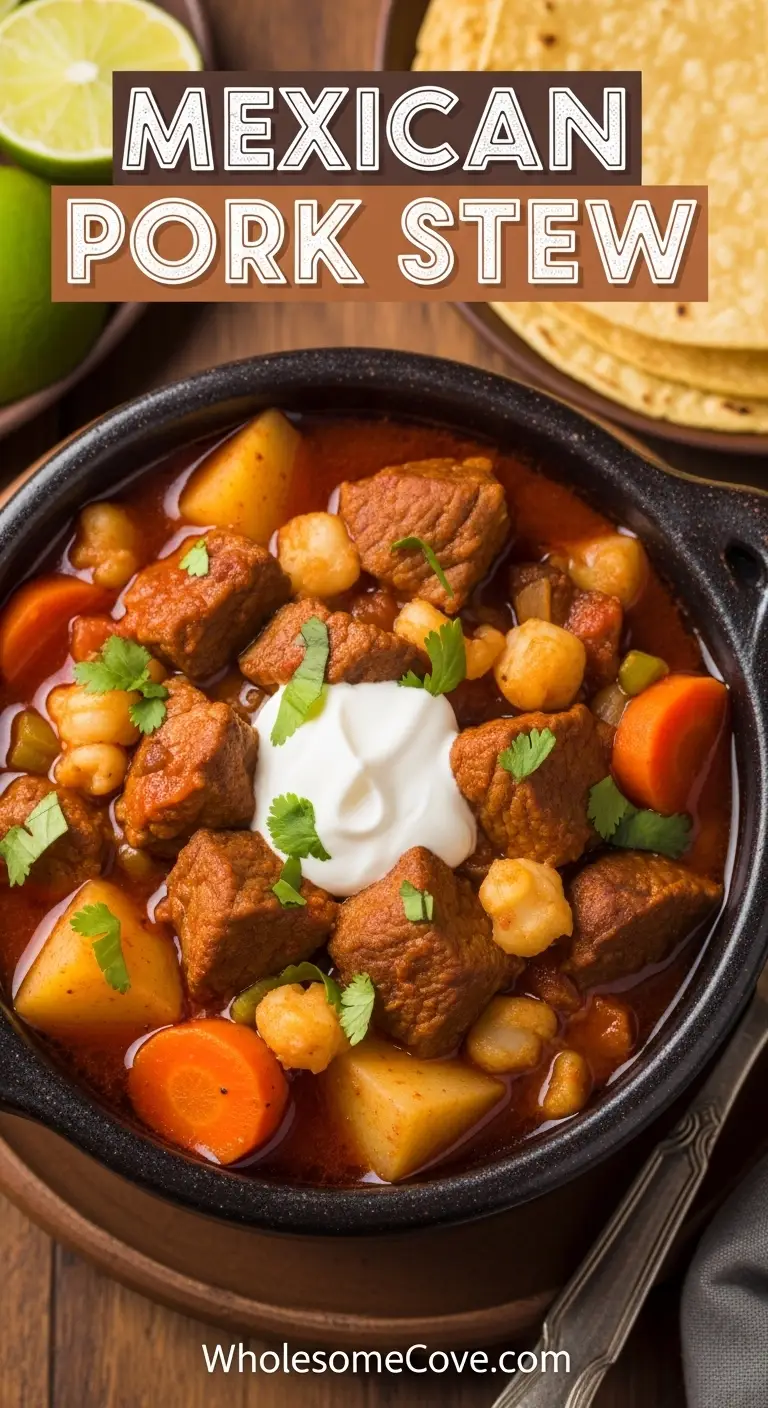
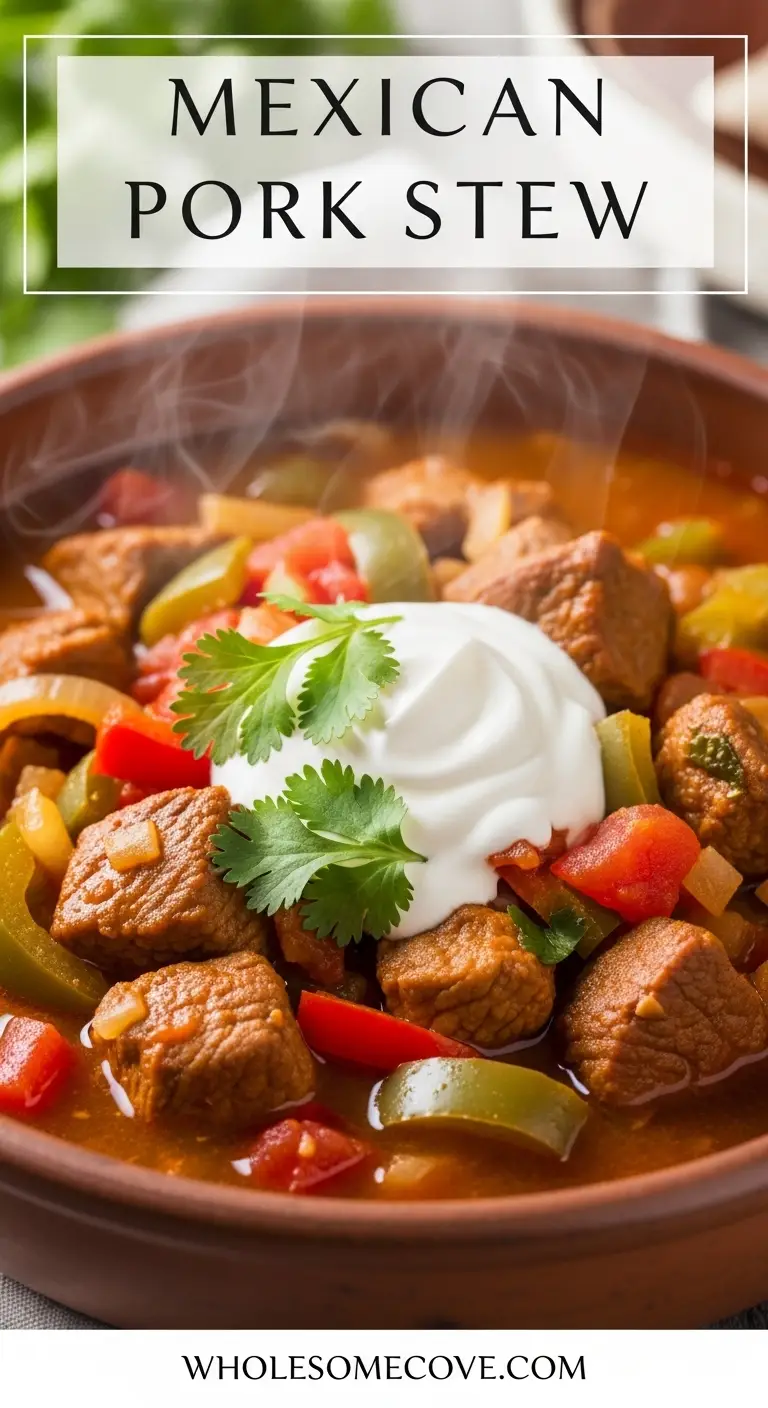
This Mexican Pork Stew Recipe is the kind of meal that fills your whole kitchen with the most incredible aroma, the kind that makes everyone wander in from the other room asking, “What’s cooking?” I first made this on a cold Sunday afternoon when I had a big chunk of pork shoulder sitting in my fridge and a serious craving for something bold and warming.
I threw in dried chiles, tomatoes, cumin, and oregano, and by the time it was done simmering, I had a stew that tasted like it came straight from a Mexican grandmother’s kitchen. It has been on heavy rotation ever since.
The pork turns so fall-apart tender after braising low and slow. The broth is rich, smoky, and deeply savory, with just the right kick from dried guajillo and ancho chiles.
This isn’t a weeknight 30-minute dinner. But I promise the hands-on time is minimal, and every single minute of simmering is completely worth it.
| Quick Recipe Summary | |
|---|---|
| Prep Time | 25 minutes |
| Cook Time | 2 hours 30 minutes |
| Total Time | 2 hours 55 minutes |
| Servings | 6 |
| Difficulty Level | Intermediate |
If you love hearty, stick-to-your-ribs stews, my Pork Stew Recipe is another fantastic base recipe worth bookmarking right now.
Why You’ll Love This Mexican Pork Stew Recipe
You are going to fall head over heels for this stew, and I’m not just saying that.
The flavor depth here is extraordinary. The combination of rehydrated dried chiles, fire-roasted tomatoes, and fragrant spices creates a broth you’ll want to drink straight from the bowl.
It’s surprisingly hands-off. After the initial browning and blending, the stew basically takes care of itself on the stovetop.
The pork shoulder gets unbelievably tender. After two-plus hours of braising, the meat falls apart into gorgeous, sauce-soaked shreds and chunks.
It’s also incredibly versatile. Serve it over rice, in warm tortillas, or with crusty bread, and it works beautifully every single time.
It reheats like a dream. In fact, it tastes even better the next day when all those flavors have had time to really come together.
And finally, it’s a true crowd-pleaser. I’ve served this to picky eaters, spice lovers, and everyone in between, and the pot is always empty by the end.
For another cozy hands-off version, check out my Slow Cooker Pork Stew which uses many of the same wonderful flavors.
Ingredients
The ingredient list might look long, but most of it is pantry staples and dried chiles that you can easily find in the international aisle or a Mexican grocery store. The dried chiles are genuinely the soul of this recipe, so please don’t skip them.
- 3 lbs (1.36 kg) boneless pork shoulder, cut into 2-inch (5 cm) cubes
- 1 teaspoon kosher salt, plus more to taste
- 1 teaspoon black pepper
- 2 tablespoons vegetable oil, divided
- 3 dried guajillo chiles, stems and seeds removed
- 2 dried ancho chiles, stems and seeds removed
- 1 (14 oz / 400g) can fire-roasted diced tomatoes
- 1 medium white onion, roughly chopped
- 6 cloves garlic, peeled
- 2 teaspoons ground cumin
- 1 teaspoon dried Mexican oregano
- 1/2 teaspoon smoked paprika
- 1/4 teaspoon ground cinnamon
- 2 cups (480 ml) low-sodium chicken broth
- 1 tablespoon apple cider vinegar
- 2 bay leaves
- 1 (15 oz / 425g) can hominy, drained and rinsed (optional but traditional)
- Fresh cilantro, sliced radishes, diced white onion, lime wedges, and warm tortillas for serving
For a smokier, green-chile version of this dish, you’ll love my Green Chile Pork Stew Recipe.
Kitchen Equipment Needed
Having the right tools makes this recipe so much smoother. Here’s everything you’ll need before you get started.
- Large Dutch oven or heavy-bottomed pot (at least 6 quarts / 5.7 liters)
- High-powered blender or immersion blender for the chile sauce
- Cutting board and sharp chef’s knife
- Tongs for browning the pork
- Fine mesh strainer or sieve
- Wooden spoon or silicone spatula
- Measuring spoons and measuring cups
- Small heatproof bowl for rehydrating chiles
- Ladle for serving
For the hands-off version, my Instant Pot Pork Stew Recipe uses a pressure cooker and cuts the total time significantly.
Recommended Products for This Recipe
These are products I personally use and genuinely recommend based on years of making stews and braises. They make a real difference in the final result.
1. Lodge Enameled Cast Iron Dutch Oven
A heavy, well-seasoned Dutch oven is absolutely essential for a stew like this. The thick walls distribute heat evenly so your pork braises at a consistent temperature without any hot spots that could scorch the bottom. I’ve been using mine for years and it’s hands-down the best braising vessel I own.
2. Vitamix High-Powered Blender
Blending those rehydrated dried chiles into a silky smooth sauce is a critical step in this recipe. A Vitamix blender completely obliterates any fibrous bits from the chiles and gives you a sauce with restaurant-quality texture. A regular blender can work in a pinch, but the results are noticeably smoother.
3. Whole Dried Guajillo and Ancho Chiles
The chiles are the backbone of this entire stew, so quality matters. I strongly recommend buying whole dried guajillo and ancho chiles rather than pre-ground chile powder, as the flavor is far more vibrant and complex. Look for chiles that are pliable and fragrant, not dry and brittle.
4. OXO Good Grips Fine Mesh Strainer
Straining the blended chile sauce through a fine mesh strainer removes any remaining skins or seeds and gives your stew a beautifully smooth, professional finish. It’s one of those small extra steps that make a huge difference in the final texture.
Read Also: Beef Stew Recipe
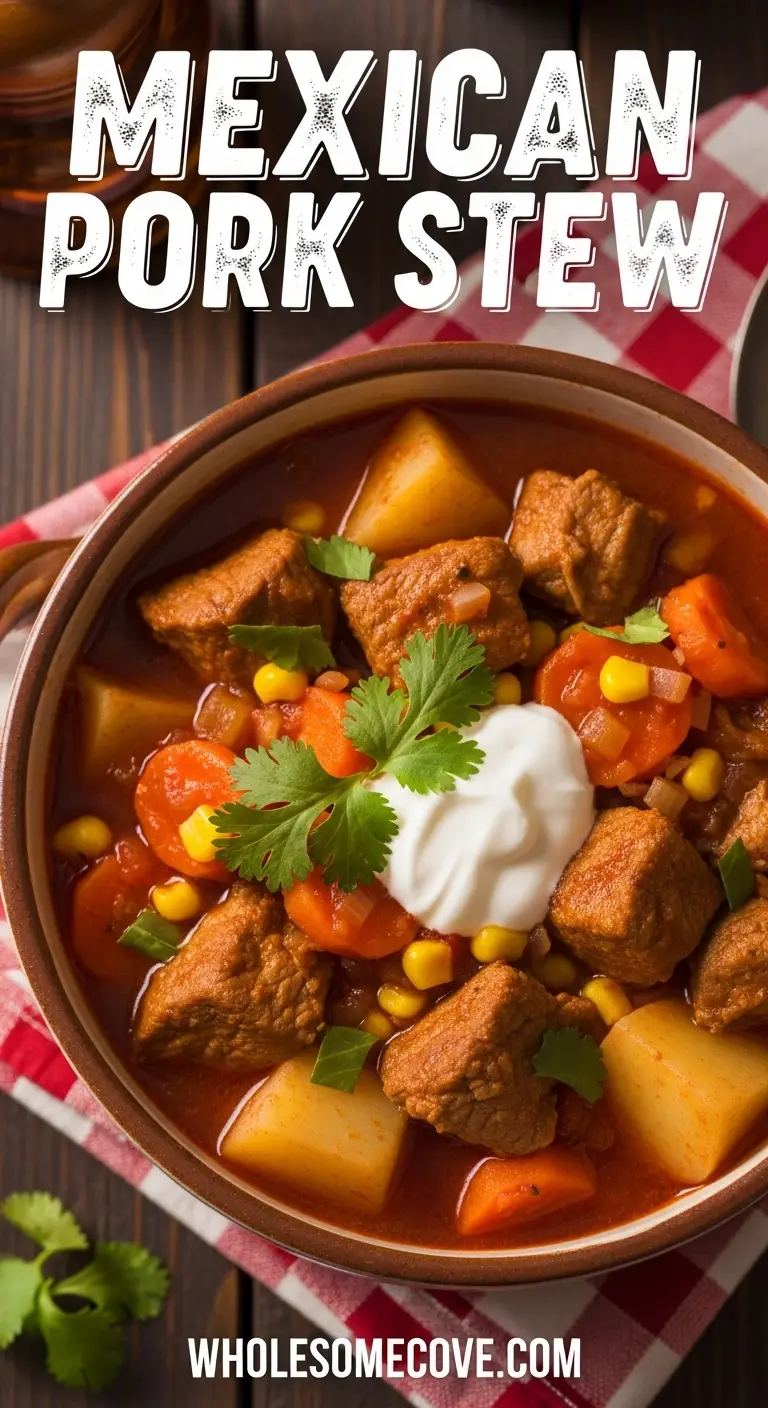
Step-by-Step Instructions: How to Make Mexican Pork Stew
Step 1: Prepare the Dried Chiles
- Using kitchen scissors or a sharp knife, cut the stems off the dried guajillo and ancho chiles and shake out as many seeds as you can. Don’t worry about getting every last seed out.
- Place the cleaned chiles in a dry skillet over medium heat and toast them for about 30 to 45 seconds per side. You’ll notice them start to puff slightly and become very fragrant. Watch them carefully, as burnt chiles will make your stew taste bitter.
- Transfer the toasted chiles to a heatproof bowl and pour enough boiling water over them to submerge them completely. Place a small plate on top to keep them submerged.
- Let the chiles soak for 20 to 25 minutes until they are very soft and pliable. Reserve about 1 cup (240 ml) of the soaking liquid before draining.
Step 2: Season and Brown the Pork
- While the chiles are soaking, pat the pork shoulder cubes completely dry with paper towels. This is crucial for getting a good sear, as moisture is the enemy of browning.
- Season all sides generously with 1 teaspoon of kosher salt and 1 teaspoon of black pepper, pressing the seasoning into the meat.
- Heat 1 tablespoon of vegetable oil in your large Dutch oven over medium-high heat until the oil is shimmering and almost smoking.
- Working in two or three batches so you don’t crowd the pan, add the pork cubes in a single layer. Let them sear undisturbed for 3 to 4 minutes until a deep golden-brown crust has formed on the bottom.
- Flip the pieces and sear for another 2 to 3 minutes on the other side. You’re not cooking the pork through at this stage, just building flavor through the Maillard reaction.
- Use tongs to transfer each browned batch to a plate and set aside. Add the remaining tablespoon of vegetable oil to the pot between batches if it looks dry.
Step 3: Sauté the Aromatics
- Reduce the heat to medium. In the same Dutch oven with the pork drippings still in the pan, add the roughly chopped white onion.
- Cook, stirring occasionally, for 4 to 5 minutes until the onion is softened and starting to turn golden at the edges.
- Add the 6 peeled garlic cloves and cook for another 1 minute, stirring constantly, until the garlic is fragrant and just starting to color. Don’t let it burn or it will turn bitter.
Step 4: Blend the Chile Sauce
- Drain the soaked chiles and add them to your blender along with the sautéed onion and garlic from the pot. Scrape everything out of the pot with a spatula to capture all those flavorful drippings.
- Add the entire can of fire-roasted diced tomatoes (with all the juices), 2 teaspoons of ground cumin, 1 teaspoon of dried Mexican oregano, 1/2 teaspoon of smoked paprika, and 1/4 teaspoon of ground cinnamon to the blender.
- Pour in 1/2 cup (120 ml) of the reserved chile soaking liquid to help the blender run smoothly.
- Blend on high speed for about 60 seconds until you have a completely smooth, velvety sauce. If blending hot liquid, leave a small gap in the blender lid or drape a folded kitchen towel over the top to prevent pressure from building up.
- For the smoothest possible sauce, pour the blended mixture through your fine mesh strainer set over a bowl, pressing on the solids with the back of a spoon to extract every drop of sauce. Discard the solids in the strainer.
Step 5: Build and Braise the Stew
- Return the Dutch oven to medium-high heat. Pour the strained chile sauce directly into the now-empty pot and let it cook, stirring frequently, for 3 to 4 minutes. This step essentially “fries” the sauce in the residual fat and deepens its flavor enormously. It will spit and spatter, so be careful and use a long-handled wooden spoon.
- Pour in the remaining 1 and 1/2 cups (360 ml) of chicken broth and stir to combine, scraping up any browned bits stuck to the bottom of the pot.
- Add the tablespoon of apple cider vinegar and the 2 bay leaves. Stir everything together well.
- Return all the browned pork pieces and any accumulated juices from the resting plate back into the pot. Make sure the pork is mostly submerged in the liquid. If needed, add a small splash more chicken broth or reserved chile soaking liquid to cover.
- Bring the stew to a boil, then immediately reduce the heat to low. Place the lid on the pot slightly ajar to allow some steam to escape.
- Simmer for 2 to 2.5 hours, stirring every 30 minutes or so, until the pork is completely fork-tender and nearly falling apart when pressed.
Step 6: Add the Hominy and Adjust Seasoning
- If using hominy, drain and rinse the can thoroughly under cold water, then stir it into the stew during the last 20 minutes of cooking so it can warm through and absorb the flavors of the broth.
- Remove and discard both bay leaves.
- Taste the stew and adjust the seasoning with additional salt as needed. If you want more brightness, add another small splash of apple cider vinegar, about 1/2 teaspoon at a time.
- If the stew seems too thick, add a splash of chicken broth or water to loosen it to your preferred consistency. If it is too thin, let it simmer uncovered for an additional 10 to 15 minutes to reduce and concentrate.
Step 7: Serve and Garnish
- Ladle the hot stew into warm bowls, making sure each serving gets plenty of pork pieces and broth.
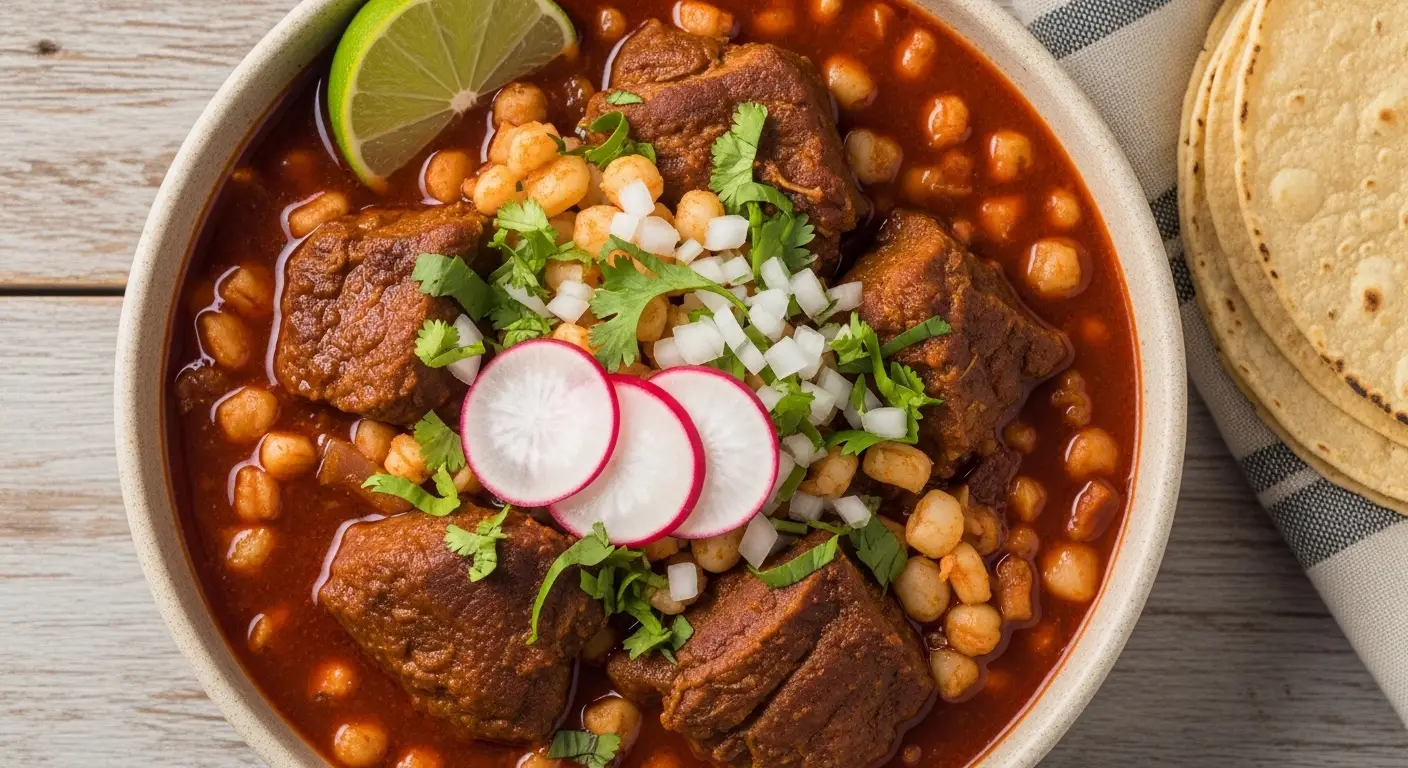
- Top each bowl with a generous handful of fresh chopped cilantro, a few thin slices of radish for crunch, a spoonful of diced raw white onion for brightness, and a big squeeze of fresh lime juice right before eating.
- Serve immediately with warm corn or flour tortillas on the side for dipping and scooping up all that incredible chile broth.
Another stew I absolutely love making on cold days is this Chicken Stew Recipe that uses a similar comforting braising technique.
Tips for The Best Mexican Pork Stew
Getting this stew just right comes down to a few key techniques. These are the lessons I learned the hard way so you don’t have to.
- Don’t skip browning the pork. I know it takes extra time, but that sear is where so much of the flavor is born. Crowding the pan is the enemy here, so brown in batches even if it feels tedious.
- Toast the chiles before soaking. Even 30 to 45 seconds in a dry hot pan wakes up the essential oils in the chiles and adds a whole extra layer of smoky, toasty complexity.
- Watch the chile soaking liquid. That reserved soaking liquid is concentrated with deep chile flavor. Use it to thin the sauce if needed, but taste it first as it can occasionally be slightly bitter.
- Fry the blended sauce in the pot before adding broth. This is a traditional technique in Mexican cooking and it makes a massive difference. Cooking the raw blended sauce in hot fat for a few minutes deepens the color from orange-red to a deep, gorgeous brick red.
- Use pork shoulder, not pork loin. Pork shoulder has the right amount of fat and connective tissue to become silky and tender during a long braise. Pork loin or tenderloin will dry out.
- Low and slow is key. Don’t rush the braise by cranking the heat. A gentle, patient simmer is what transforms the pork from chewy to melt-in-your-mouth tender.
- Season at the very end. The stew reduces as it cooks, concentrating the flavors and the salt. Always taste and adjust right before serving.
- Make it a day ahead if you can. This stew is genuinely one of those dishes that improves overnight. The flavors deepen and mellow beautifully.
This same patient, low-and-slow approach works beautifully in my Slow Cooker Chili Recipe if you want a set-it-and-forget-it option.
What to Serve with Mexican Pork Stew
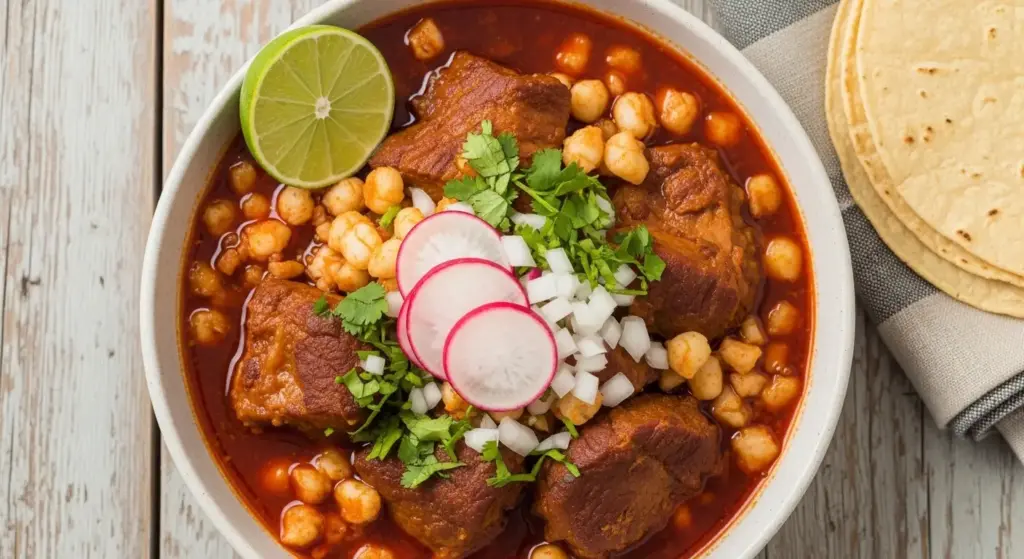
This stew is rich and deeply flavorful, so it pairs best with simple, complementary sides that let it shine.
Think of the sides as a support crew for the star of the show.
- Warm corn or flour tortillas. This is the classic pairing and for good reason. Torn tortillas are perfect for soaking up every last drop of that incredible chile broth.
- Mexican Street Corn on the cob or off-the-cob is a fantastic pairing that echoes the Mexican flavors beautifully.
- Steamed white rice or cilantro-lime rice. Rice is wonderful for absorbing the sauce and stretches the stew further when feeding a crowd.
- Refried beans or black beans. A simple bowl of seasoned beans rounds out the meal perfectly.
- Sliced avocado or fresh Guacamole. The creamy richness of avocado cuts beautifully through the boldness of the stew.
- Pickled red onions. The tangy brightness of quick-pickled onions is a welcome contrast to the deep, earthy flavors.
- Thinly sliced radishes and fresh lime wedges. These are more than just garnishes. The crunch and acid from these two elements wake up every bite.
- A cold Mexican lager or an agua fresca. Sometimes the best thing alongside this stew is something cold and refreshing to balance all that warmth.
Variations of Mexican Pork Stew
One of the things I love most about this recipe is how adaptable it is. Here are some fun ways to change it up.
- Green Chile Version (Pork Chile Verde). Swap out the dried red chiles and fire-roasted tomatoes for roasted tomatillos and fresh or canned green chiles. The result is a brighter, tangier stew with a beautiful green color.
- Slow Cooker Version. After blending the chile sauce and browning the pork, transfer everything to a slow cooker and cook on low for 7 to 8 hours or on high for 4 to 5 hours.
- Instant Pot Version. Use the sauté function to brown the pork and cook the aromatics, then pressure cook on high for 45 minutes with a natural release for fast, incredibly tender results.
- Spicier Version. Add a dried chipotle or chile de árbol along with the guajillo and ancho chiles for significantly more heat. A pinch of cayenne in the blended sauce also does the trick.
- Posole-Style. Increase the hominy to two full cans and add more broth to turn this stew into a brothier, posole-style soup. Top with shredded cabbage, sliced radishes, and dried oregano.
- With Potatoes. Add 2 to 3 medium Yukon Gold potatoes, cut into 1-inch cubes, during the last 30 to 40 minutes of simmering for a heartier, more filling version.
- Pork Belly Version. For an extra-rich, unctuous stew, substitute half of the pork shoulder with cubed pork belly. The extra fat adds an incredible silkiness to the broth.
For an entirely different style of Mexican-inspired comfort food, my Taco Soup Recipe is a quick weeknight alternative worth trying.
Storage and Reheating
This stew stores beautifully, making it an ideal meal prep recipe. Here’s everything you need to know to keep it tasting great.
- Refrigerator: Let the stew cool to room temperature, then transfer it to an airtight container. It will keep in the fridge for up to 4 to 5 days. The flavor actually improves significantly after a day or two.
- Freezer: This stew freezes extremely well. Portion it into freezer-safe containers or heavy-duty zip-lock bags, leaving about an inch of headspace for expansion. It will keep in the freezer for up to 3 months. Thaw overnight in the refrigerator before reheating.
- Stovetop Reheating: Pour the desired amount into a saucepan over medium-low heat. Stir occasionally and add a small splash of chicken broth or water if the stew has thickened during storage. Heat until warmed through, about 8 to 10 minutes.
- Microwave Reheating: Transfer a single serving to a microwave-safe bowl, cover loosely with a damp paper towel, and heat in 60-second intervals, stirring between each, until fully warmed through.
- Do not refreeze the stew once it has already been frozen and thawed.
Read Also: Crockpot Beef Stew Recipe
Nutritional Facts
The following nutrition information is an estimate per serving (1/6 of the total recipe, not including tortillas or rice on the side).
| Nutrient | Amount Per Serving |
|---|---|
| Calories | ~420 kcal |
| Total Fat | 22g |
| Saturated Fat | 7g |
| Cholesterol | 110mg |
| Sodium | 580mg |
| Total Carbohydrates | 18g |
| Dietary Fiber | 4g |
| Sugars | 5g |
| Protein | 38g |
| Vitamin C | 15% DV |
| Iron | 20% DV |
| Potassium | 750mg |
Nutritional values are estimates and will vary based on specific ingredients, portion sizes, and whether hominy is included.
Another great pork dish for a nutritious weeknight dinner is my Pork and Apple Skillet Recipe.
Health Benefits of Key Ingredients
This stew isn’t just delicious, it’s also packed with genuinely nourishing ingredients.
Each component brings something meaningful to the table beyond just flavor.
- Pork Shoulder is an excellent source of complete protein, providing all essential amino acids. It also delivers important B vitamins, particularly B12, B6, and niacin, which support energy metabolism and nerve function.
- Dried Guajillo and Ancho Chiles are rich in vitamins A, C, and E, which act as powerful antioxidants. They also contain capsaicin, a compound studied for its anti-inflammatory properties and metabolism-supporting effects.
- Garlic contains allicin, a bioactive compound that supports immune function, helps regulate blood pressure, and has demonstrated antimicrobial properties in research.
- Fire-Roasted Tomatoes are loaded with lycopene, an antioxidant linked to reduced risk of heart disease. Cooking tomatoes actually increases the bioavailability of lycopene compared to eating them raw.
- Cumin is a surprisingly rich source of iron and has been shown in some studies to support digestion and healthy blood sugar regulation.
- Hominy (if included) provides a solid source of dietary fiber and essential B vitamins. The traditional nixtamalization process also increases the bioavailability of niacin in the corn.
- Apple Cider Vinegar is a fermented ingredient that some research suggests may support gut health, blood sugar regulation, and satiety when consumed as part of a balanced meal.
- Onions are rich in quercetin and other flavonoids with anti-inflammatory and antioxidant properties. They also provide prebiotic fiber that supports beneficial gut bacteria.
If you love cooking with rich chile-based sauces, you might also enjoy making your own Enchilada Sauce from scratch to use in all kinds of recipes.
FAQs About Mexican Pork Stew
1. Can I use a different cut of pork?
Pork shoulder (also labeled as pork butt at some stores) is strongly recommended because its higher fat content and connective tissue break down beautifully during the long braise. Pork loin or tenderloin will turn dry and tough, so avoid those cuts for this recipe.
2. How spicy is this stew?
Guajillo and ancho chiles are both on the milder end of the heat scale, giving the stew a rich, earthy flavor with moderate warmth rather than a fiery kick. If you are sensitive to spice, this is a very approachable stew. Adding a dried chipotle or chile de árbol is the easiest way to dial up the heat if you want more.
3. Can I make this in a slow cooker?
Absolutely, and the results are wonderful. Brown the pork and blend the chile sauce on the stovetop first, then combine everything in your slow cooker. Cook on low for 7 to 8 hours or on high for 4 to 5 hours for perfectly tender, saucy pork.
4. What if I can’t find dried guajillo or ancho chiles?
Many well-stocked grocery stores carry them in the international foods aisle, and they are also readily available online. In a pinch, you can substitute with New Mexico dried chiles for the guajillo and pasilla chiles for the ancho. Pre-made enchilada sauce can work as a shortcut, though the flavor will be notably less complex.
5. Can I add vegetables to this stew?
Yes, definitely. Diced carrots and cubed Yukon Gold potatoes are the most common additions and work beautifully with the chile broth. Add them during the last 30 to 40 minutes of simmering so they stay tender but don’t turn mushy. Zucchini also works well if added during the final 15 minutes.
For another Mexican-inspired dish full of bold chile and avocado flavors, you’ll love my Chipotle Guacamole as a topping or side.
Mexican Pork Stew
Ingredients
- 3 lbs boneless pork shoulder - 1.36 kg, cut into 2-inch (5 cm) cubes
- 1 tsp kosher salt - plus more to taste
- 1 tsp black pepper
- 2 tbsp vegetable oil - divided
- 3 dried guajillo chiles - stems and seeds removed
- 2 dried ancho chiles - stems and seeds removed
- 14 oz canned fire-roasted diced tomatoes - 400g, one can with all juices
- 1 medium white onion - roughly chopped
- 6 garlic cloves - peeled
- 2 tsp ground cumin
- 1 tsp dried Mexican oregano
- 1/2 tsp smoked paprika
- 1/4 tsp ground cinnamon
- 2 cups low-sodium chicken broth - 480 ml, plus more as needed
- 1 tbsp apple cider vinegar
- 2 bay leaves
- 15 oz canned hominy - 425g, drained and rinsed; optional but traditional
- fresh cilantro - roughly chopped
- radishes - thinly sliced
- white onion - finely diced
- lime wedges
- warm corn or flour tortillas
Equipment
- Large Dutch oven - At least 6 quarts / 5.7 liters capacity
- High-powered blender - For blending the chile sauce smooth
- Immersion blender - (optional) Alternative to countertop blender
- Cutting board
- Chef’s knife - Sharp, for cubing pork and chopping aromatics
- Tongs - For turning pork while browning
- Fine-mesh strainer - For straining blended chile sauce to remove skins and seeds
- Wooden spoon or silicone spatula
- Measuring spoons
- Measuring cups
- Small heatproof bowl - For soaking dried chiles
- Ladle - For serving
Method
- Remove stems and seeds from the guajillo and ancho chiles, then toast them in a dry skillet over medium heat for 30 to 45 seconds per side until fragrant. Transfer to a heatproof bowl, cover with boiling water, and soak for 20 to 25 minutes until soft; reserve 1 cup (240 ml) of soaking liquid.
- Pat the pork cubes completely dry, season all sides with salt and pepper, then sear in 1 tablespoon of hot vegetable oil in a Dutch oven over medium-high heat for 3 to 4 minutes per side until deeply golden brown, working in batches to avoid crowding. Transfer browned pork to a plate and set aside.
- Reduce heat to medium and add the chopped onion to the same pot, cooking for 4 to 5 minutes until softened and golden. Add the garlic cloves and cook for 1 more minute, stirring constantly, until fragrant.
- Add the drained soaked chiles, sautéed onion and garlic, fire-roasted tomatoes, cumin, oregano, smoked paprika, cinnamon, and 1/2 cup (120 ml) of reserved chile soaking liquid to a blender and blend on high for 60 seconds until completely smooth. Strain through a fine mesh strainer into a bowl, pressing on the solids to extract all the sauce; discard solids.
- Return the Dutch oven to medium-high heat, pour in the strained chile sauce, and cook stirring frequently for 3 to 4 minutes until the sauce deepens in color and flavor. This step is essential for developing the stew’s rich, complex taste.
- Pour in the chicken broth, add the apple cider vinegar and bay leaves, then return the browned pork and any juices to the pot. Bring to a boil, reduce to low, cover slightly ajar, and simmer for 2 to 2.5 hours, stirring every 30 minutes, until the pork is completely fork-tender.
- If using hominy, stir it into the stew during the last 20 minutes of cooking. Remove and discard the bay leaves, then taste and adjust seasoning with salt and a splash more apple cider vinegar if desired.
- Ladle the stew into warm bowls and top with fresh cilantro, sliced radishes, diced white onion, and a generous squeeze of fresh lime juice. Serve with warm tortillas on the side.
Nutrition
Notes
- Use pork shoulder (also labeled pork butt) rather than pork loin or tenderloin, which will dry out during the long braise.
- Don’t skip browning the pork — the sear builds foundational flavor that carries through the entire stew. Always brown in batches to avoid steaming the meat.
- Toast the dried chiles before soaking to wake up their essential oils and add a smoky, toasty depth to the finished sauce.
- Frying the blended chile sauce in the pot for 3 to 4 minutes before adding broth is a traditional Mexican technique that deepens the color and flavor dramatically.
- The reserved chile soaking liquid adds concentrated flavor — use it to adjust the consistency of the stew, but taste it first as it can occasionally be slightly bitter.
- This stew tastes even better the next day as the flavors deepen overnight. Make it ahead and reheat gently on the stovetop with a splash of broth.
- Store leftovers in an airtight container in the refrigerator for up to 5 days or freeze for up to 3 months.
- To increase the heat, add a dried chipotle or chile de árbol along with the guajillo and ancho chiles when blending the sauce.
- For a slow cooker version, brown the pork and blend the sauce on the stovetop, then combine everything in the slow cooker on low for 7 to 8 hours.
- Add cubed Yukon Gold potatoes or diced carrots during the last 30 to 40 minutes of simmering for a heartier, more filling stew.
Private Notes
Tried this recipe?
Let us know how it was!Final Thoughts
If you’ve never made a Mexican pork stew from scratch with real dried chiles, I genuinely hope this recipe convinces you to try it.
The process is deeply satisfying, and the end result is one of those meals that makes you feel like you’ve really cooked something special.
It’s the kind of stew that brings people together around the table, that gets requested again and again, and that somehow tastes even better as leftovers the next morning.
I hope it becomes a regular rotation dish in your kitchen the way it has in mine.
If you give this recipe a try, please leave a comment below and let me know how it turned out. Sharing this with someone who loves bold, cozy food would also make my day.
Recommended:
- Mexican Chicken Soup
- Classic Guacamole
- Taco Soup with Ranch Dressing
- Healthy Nachos
- Cowboy Stew
- Lamb Stew
- Mashed Potatoes
- Roasted Potatoes
- Dinner Rolls
- Mexican Chicken Salad