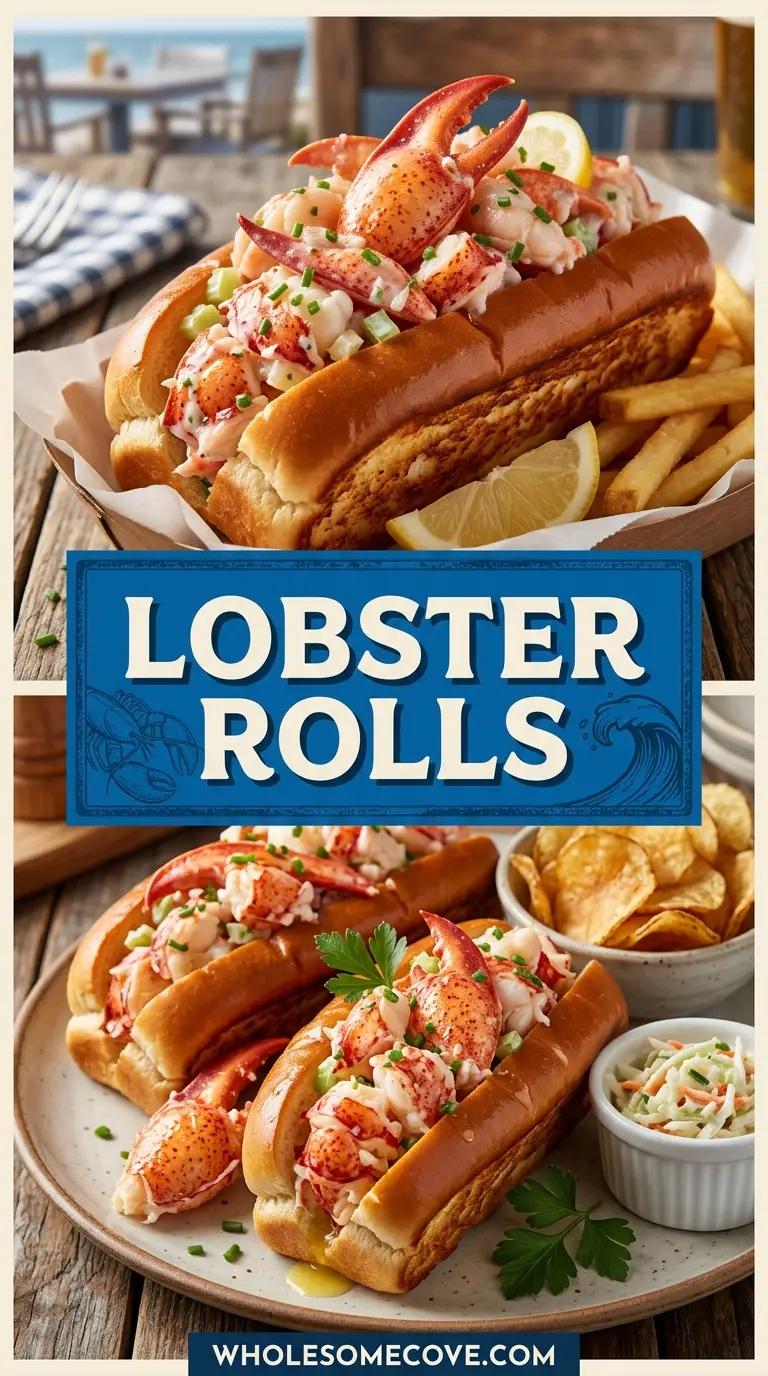
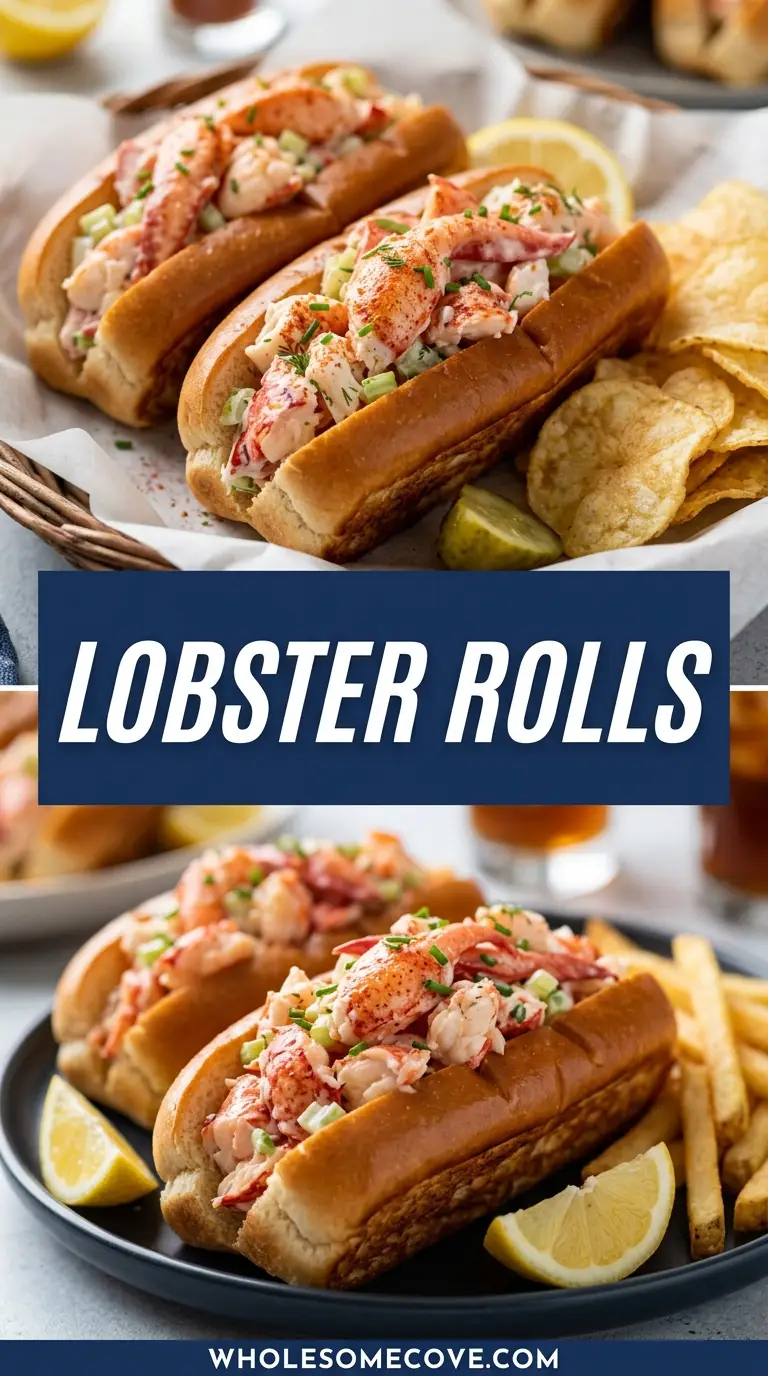
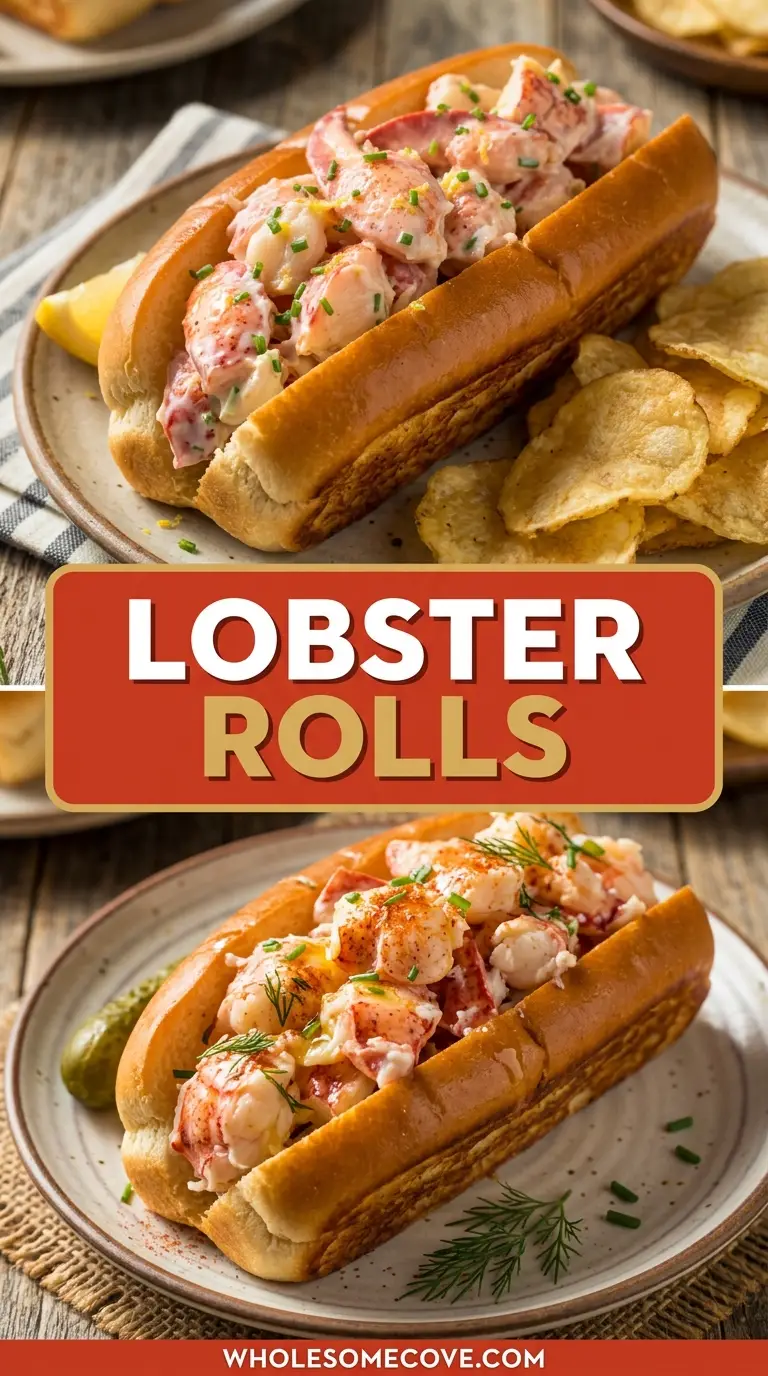
This lobster rolls recipe keeps the focus where Maine cooks put it, on sweet chilled lobster meat bound with just enough mayonnaise to coat rather than drown.
One pound (450 g) of picked meat fills four split-top buns. The whole thing comes together in about 30 minutes.
Most homemade versions go wrong in one of two ways: too much mayo, or meat that is dressed while it is still warm.
Warm meat weeps and turns the dressing greasy, so this method chills the lobster first and keeps the mayo light.
Toasting the buns in butter gives you crackling golden sides and a warm shell around the cool filling. Claw and knuckle meat, not just tail, keeps every bite tender.
That balance of cold lobster and warm buttered bread is the whole point of a Maine roll. Get it right and you barely need anything else on the plate.
| Quick Recipe Summary | |
|---|---|
| Prep Time | 20 minutes |
| Cook Time | 10 minutes |
| Total Time | 30 minutes |
| Servings | 4 rolls |
| Difficulty Level | Easy |
For another way to make the most of leftover lobster, see Lobster Mac and Cheese.
Why You’ll Love This Lobster Rolls Recipe
This is the version to make when you want the lobster to taste like lobster, not like a mayonnaise salad with a few chunks hiding in it. The dressing here is light on purpose, and the buttered bun does the heavy lifting.
Here is why it earns a spot in your summer rotation:
- The lobster stays the star. Three tablespoons of mayo for a full pound of meat means you taste sweet lobster first, dressing second.
- It is genuinely quick. From live lobster to filled roll is about 30 minutes, and less if you start with pre-cooked meat.
- No special skills required. If you can boil water and toast bread in a skillet, you can make this.
- It scales cleanly. The ratio is one pound of meat to four buns, so doubling for a crowd is simple math.
- You control the texture. Chilling the meat before dressing keeps everything firm and cold, never soupy.
- It works for lunch or a light dinner. Add chips and a cold drink and the meal is done.
- Cleanup is minimal. One pot, one bowl, one skillet.
You might also enjoy: New England Clam Chowder
Ingredients
Everything here is built around letting good lobster shine, so the supporting cast stays short. Use the freshest meat you can get, and keep the add-ins restrained.
- 1 lb (450 g) cooked lobster meat, chilled and cut into bite-size chunks (from about 3 to 4 lb / 1.4 to 1.8 kg of live lobster, roughly 2 large lobsters, or use pre-cooked claw and knuckle meat)
- 3 tablespoons (45 g) mayonnaise
- 1 large lemon (juice and zest of one half, about 1 tablespoon / 15 ml juice and 1 teaspoon zest; the other half cut into wedges for serving)
- 1 stalk celery, finely diced (about 1/4 cup / 30 g)
- 2 tablespoons (about 6 g) fresh chives, finely chopped
- 1 tablespoon (about 4 g) fresh dill, chopped (optional)
- 1/4 teaspoon Old Bay seasoning (optional)
- 1/4 teaspoon fine sea salt, plus more to taste
- 1/8 teaspoon freshly ground black pepper
- 4 New England split-top hot dog buns
- 3 tablespoons (42 g) unsalted butter, softened, for toasting the buns
- Pinch of smoked paprika (optional, for garnish)
A quick note on the meat: I’ve found claw and knuckle meat makes a better roll than tail, because the tail turns rubbery once chilled while the knuckles stay tender and sweet.
Read Also: Tartar Sauce
Kitchen Equipment Needed
Nothing here is exotic. If you already cook seafood at home, you likely own most of it.
- Large stainless steel stockpot for boiling the lobster
- Kitchen tongs for lowering and lifting the lobster
- Slotted spoon or spider to lift smaller pieces from the water
- Large bowl of ice water for shocking and cooling the cooked lobster
- Lobster crackers for cracking claws and knuckles
- Kitchen shears for splitting shells to reach the meat
- Chef’s knife and cutting board for chopping the meat and celery
- Medium glass mixing bowl for the lobster salad
- Cast iron griddle or skillet for toasting the buns
- Instant-read thermometer (optional) to confirm the lobster is done
- Measuring spoons and a zester for the dressing
A similar cold-seafood method turns up in Seafood Chowder, if you like working with picked shellfish.
Recommended Products for This Recipe
These are the items I reach for when I make lobster rolls, chosen because each one fixed a specific problem I ran into. They are recommendations based on my own kitchen testing, not requirements.
1. Duke’s Real Mayonnaise
A lot of mayo brands read as sweet, which fights the natural sweetness of the lobster. Duke’s is tangier and has no added sugar, so it lets the meat lead instead of competing with it.
2. New England Hot Dog Bun Pan
Regular hot dog buns will not toast on the sides, which is the best part of a Maine roll. This pan lets you bake or shape true split-top buns with flat faces that crisp up beautifully in butter.
3. Seafood Cracker and Pick Set
Picking a pound of lobster with a fork alone is slow and wasteful. A dedicated set gets the knuckle and claw meat out clean and in bigger pieces, which matters a lot when the meat is the whole dish.
4. Microplane Zester
The teaspoon of lemon zest in the dressing brightens the whole roll, and a good zester pulls just the yellow without the bitter white pith underneath. It also makes short work of the juice-and-zest step on a single lemon.
Read Also: Lemon Garlic Shrimp Over Couscous
Step-by-Step Instructions: How to Make Lobster Rolls
Follow these steps and you’ll have four proper Maine-style lobster rolls ready in about half an hour.
1. Cook the Lobster
- Fill a large stockpot with water, leaving room for the lobsters, and bring it to a rolling boil over high heat.
- Salt the water generously so it tastes like the sea, about 1 tablespoon per quart (15 ml per liter).
- Using tongs, lower the live lobsters in headfirst, one at a time, and cover the pot.
- Boil for 8 to 10 minutes for lobsters around 1.5 lb (680 g) each, until the shells turn bright red.
- If you have an instant-read thermometer, the meat at the thickest part of the tail should reach 135 to 140°F (57 to 60°C).
- If you are starting with pre-cooked lobster meat, skip this step entirely and go to step 3.
2. Cool and Pick the Meat
- Lift the lobsters out with tongs and plunge them straight into the large bowl of ice water to stop the cooking.
- Let them cool for about 10 minutes, until they are cold enough to handle comfortably.
- Twist off the claws, knuckles, and tail, then use crackers and shears to open the shells.
- Pull out all the meat, keeping the pieces as large as you can, and discard any shell fragments.
- Cut the meat into bite-size chunks, roughly 3/4 inch (2 cm), and keep it chilled while you make the dressing.
- You should have about 1 lb (450 g) of picked meat.
3. Make the Lobster Salad
- In a medium glass bowl, stir together the mayonnaise, lemon juice, lemon zest, and the Old Bay if using.
- Add the finely diced celery, chopped chives, and dill if using, then mix to combine.
- Fold in the chilled lobster meat gently, so the pieces stay intact and do not shred.
- Season with the sea salt and black pepper, then taste and adjust with a little more salt or lemon if needed.
- Keep the salad cold in the fridge while you toast the buns.
4. Toast the Buns
- Spread the softened butter over both flat outer sides of each split-top bun.
- Heat a cast iron griddle or skillet over medium heat until it is hot.
- Place the buns on their buttered sides and toast for 1 to 2 minutes per side, until deep golden and crisp.
- Watch them closely, since butter can go from golden to burnt quickly.
- Move the toasted buns to a plate and let them cool for a few seconds so they hold their shape.
5. Fill and Serve
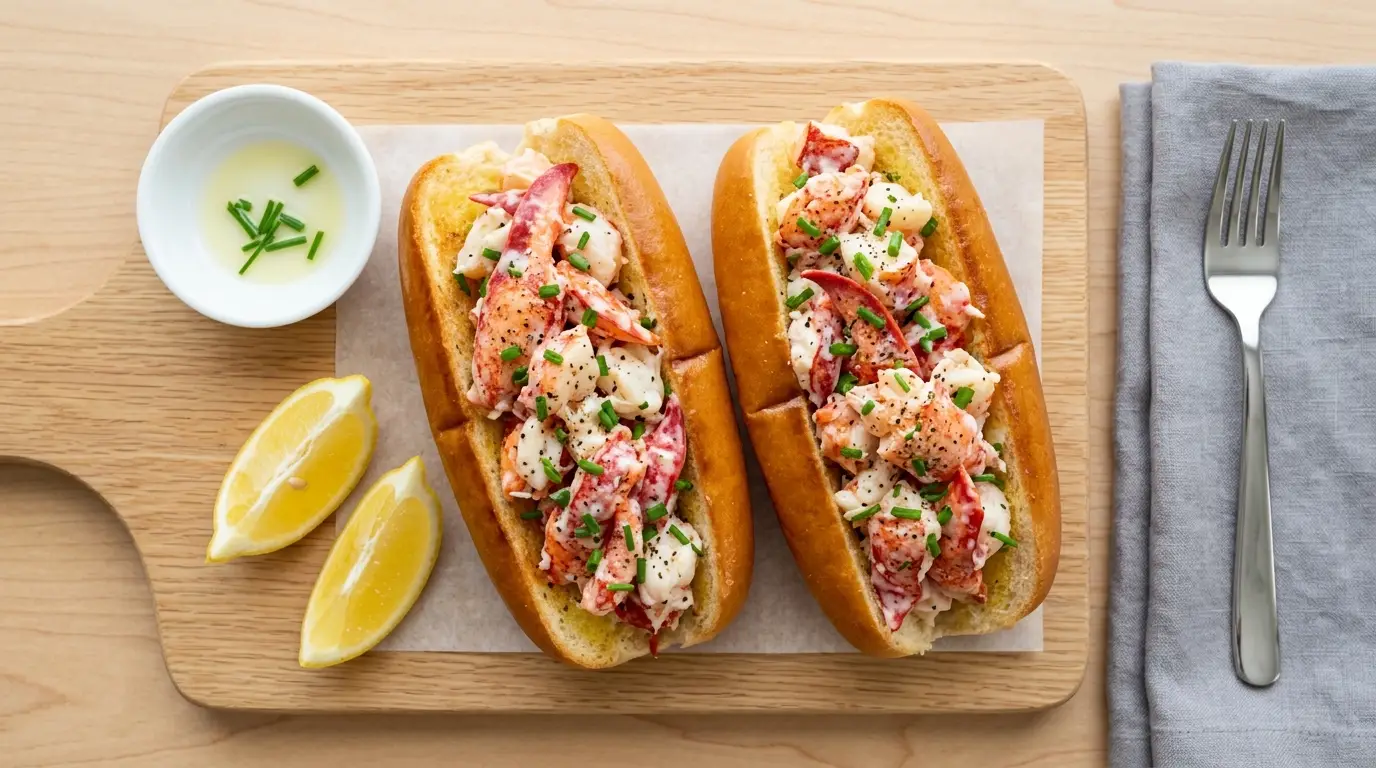
- Open each bun gently and divide the cold lobster salad evenly among the four buns, mounding it slightly.
- Dust the tops with a pinch of smoked paprika if using, for color.
- Serve right away with lemon wedges on the side.
- I dress the meat just before filling, never in advance, so the buns stay crisp and the salad stays cold.
A related seafood starter is Cocktail Sauce, which comes together while your lobster cools.
Tips for The Best Lobster Rolls
Small choices make the difference between a good roll and a great one. These are the details worth getting right.
- Chill the meat before dressing it. I ruined my first batch by folding mayo into warm lobster, which melted into a greasy slick and pooled at the bottom of the bun.
- Go light on the mayo. Start with less than you think you need. You can always add a spoonful, but you cannot take it back out.
- Keep the pieces big. Bite-size chunks feel more generous and taste more like lobster than finely chopped meat.
- Use split-top buns if you can find them. Their flat sides toast into crisp golden panels, which round buns cannot do.
- Toast in butter, not oil. Butter browns the split sides far more evenly and adds the flavor that ties the roll together.
- Salt the boiling water well. Under-seasoned water gives you bland meat that no amount of dressing can fix.
- Serve cold salad in a warm bun. That contrast of temperatures is the signature of a Maine roll.
- Add lemon at the end. A final squeeze right before serving keeps the flavor bright.
You might also like: Shrimp Macaroni Salad
What to Serve with Lobster Rolls
A lobster roll is rich and buttery, so the best sides are cool, crunchy, or sharp enough to cut through it. Keep the plate simple and let the roll be the centerpiece.
Here are pairings that work well:
- Kettle-cooked potato chips, the classic Maine shack side, for salt and crunch
- Coleslaw for a cold, tangy contrast to the buttery bun
- Corn on the Cob, sweet and in season right alongside lobster
- Potato Salad for a heartier plate at a cookout
- Corn Chowder if you want a warm, cozy pairing
- Classic Pasta Salad for feeding a group
- Mexican Street Corn when you want something bolder on the side
- French Fries for the diner-style version of the meal
- Dill pickles or quick-pickled onions for a sharp, briny bite
- Peach Lemonade or iced tea to round out a summer lunch
Read Also: Summer Dinner Recipes
Variations of Lobster Rolls
The Maine style is the classic, but there is plenty of room to make it your own. Here are the versions worth trying.
- Connecticut-style (warm butter roll): Skip the mayo entirely. Warm the picked meat in melted butter, then pile it into the toasted bun for a hot, buttery roll.
- Extra herby: Bump up the dill and chives, and add a little chopped tarragon for a fresh, garden-forward flavor.
- Spicy: Stir a teaspoon of hot sauce or a pinch of cayenne into the dressing, or lean harder on the Old Bay.
- Lighter dressing: Swap half the mayo for plain Greek yogurt for a tangier, leaner salad.
- Lobster BLT roll: Add crisp bacon, a lettuce leaf, and a slice of tomato for a heartier sandwich.
- Brioche bun version: Use split-top brioche for a richer, slightly sweet base.
- Celery-free: Leave out the celery and add finely diced cucumber for crunch without the strong celery note.
- Garlic butter finish: Brush the toasted buns with a little garlic butter before filling for extra depth.
For a different seafood main, check out Baked Cod with Mango Salsa.
Storage and Reheating
Lobster rolls are best assembled and eaten fresh, but the components store fine for a short window. The key is to keep the salad and the buns separate until you are ready to serve.
- Store the lobster salad in an airtight container in the fridge for up to 1 to 2 days.
- Keep buns separate and untoasted until serving, so they do not go soggy.
- Do not freeze the dressed salad. Mayo separates and the meat turns watery once thawed.
- Freezing plain cooked meat is possible for up to 3 months, but the texture softens, so it is better in warm applications than in a cold roll.
- Refresh day-old salad with a small squeeze of lemon and a pinch of salt before serving, since flavors dull in the fridge.
- Reheating is only for the Connecticut style. Warm the buttered meat gently in a skillet over low heat just until heated through, never boiling.
- Toast buns fresh each time for the best texture, even if the salad was made ahead.
You might also enjoy: Old-Fashioned Salmon Patties
Nutritional Facts
Values are approximate and based on one filled roll, made with a standard split-top bun and the dressing quantities above. Actual numbers will vary with your ingredients and portion sizes.
| Nutrient | Amount Per Roll |
|---|---|
| Calories | 390 kcal |
| Protein | 27 g |
| Total Fat | 19 g |
| Saturated Fat | 7 g |
| Carbohydrates | 25 g |
| Sugars | 4 g |
| Fiber | 1 g |
| Sodium | 720 mg |
| Cholesterol | 120 mg |
Read Also: Shrimp and Avocado Salad
Health Benefits of Key Ingredients
Beyond tasting like summer, a lobster roll built this way leans on ingredients with real nutritional value. Here is what the main components bring to the plate.
- Lobster: A lean source of high-quality protein that is naturally low in fat, and rich in vitamin B12, zinc, selenium, and copper. It also supplies some omega-3 fatty acids.
- Celery: Very low in calories and high in water, with a bit of fiber plus vitamin K and potassium.
- Lemon: Adds vitamin C and bright acidity, which helps you use less salt while still tasting seasoned.
- Chives: A source of vitamin K and antioxidants, with a mild onion flavor that adds a lot without adding sodium.
- Dill: Contains antioxidants and small amounts of vitamins A and C, plus a fresh herbal aroma.
- Olive-oil-based mayo (if you choose it): Can swap some saturated fat for unsaturated fat while keeping the creamy texture.
Another light summer plate worth trying is Watermelon Feta Salad with Mint.
FAQs About Lobster Rolls
1. What is the difference between a Maine and a Connecticut lobster roll?
A Maine lobster roll is served cold, with the meat lightly dressed in mayonnaise. A Connecticut roll is served warm, with the meat tossed in melted butter and no mayo.
Both use a toasted split-top bun. This recipe is the classic Maine style.
2. How much lobster meat do I need per roll?
Plan on about 4 ounces (115 g) of cooked lobster meat per roll. One pound (450 g) of picked meat fills four generous rolls.
That usually means about two large lobsters, or a pound of pre-cooked claw and knuckle meat.
3. Can I use frozen or pre-cooked lobster meat?
Yes, and it saves a lot of time. Thaw frozen meat fully in the fridge and pat it dry so it does not water down the dressing.
Pre-cooked claw and knuckle meat works especially well here, since those cuts stay tender when chilled.
4. Do I have to use split-top buns?
Split-top buns are traditional because their flat sides toast crisp in butter. If you cannot find them, a regular hot dog bun or a brioche bun will still work.
Toast whatever bun you use in butter for the best flavor and texture.
5. Should I use mayo or butter?
It comes down to which style you want. Mayo gives you the cold Maine roll, while butter gives you the warm Connecticut roll.
You can even brush the bun with butter and dress the meat with mayo for the best of both.
6. How do I keep my lobster roll from getting soggy?
Dress the meat only right before you fill the buns, never in advance. Keep the salad cold and the buns freshly toasted so they stay crisp.
If you are prepping ahead, store the salad and buns separately and assemble at the last minute.
7. Can I make lobster rolls ahead of time?
You can make the lobster salad up to a day ahead and keep it chilled. Toast the buns and assemble just before serving.
Refresh the salad with a little lemon and salt right before filling, since fridge time dulls the flavor.
For a different approach to a seafood favorite, see Blackened Fish with Pineapple Salsa.
Lobster Rolls
Ingredients
- 1 lb cooked lobster meat - 450g, chilled and cut into bite-size chunks; from about 3 to 4 lb / 1.4 to 1.8 kg of live lobster, roughly 2 large lobsters, or use pre-cooked claw and knuckle meat
- 3 tablespoons mayonnaise - 45g
- 1 large lemon - juice and zest of one half, about 1 tablespoon / 15 ml juice and 1 teaspoon zest; the other half cut into wedges for serving
- 1 stalk celery - finely diced, about 1/4 cup / 30g
- 2 tablespoons fresh chives - about 6g, finely chopped
- 1 tablespoon fresh dill - about 4g, chopped; optional
- 1/4 teaspoon Old Bay seasoning - optional
- 1/4 teaspoon fine sea salt - plus more to taste
- 1/8 teaspoon freshly ground black pepper
- 4 New England split-top hot dog buns
- 3 tablespoons unsalted butter - 42g, softened, for toasting the buns
- pinch smoked paprika - optional, for garnish
Equipment
- Large stainless steel stockpot - for boiling the lobster
- Kitchen tongs - for lowering and lifting the lobster
- Slotted spoon or spider - to lift smaller pieces from the water
- Large bowl - for ice water to shock and cool the cooked lobster
- Lobster crackers - for cracking claws and knuckles
- Kitchen shears - for splitting shells to reach the meat
- Chef’s knife and cutting board - for chopping the meat and celery
- Medium glass mixing bowl - for the lobster salad
- Cast iron griddle or skillet - for toasting the buns
- Instant-read thermometer - (optional) to confirm the lobster is done
- Measuring spoons and a zester - for the dressing
Method
- Fill a large stockpot with water, leaving room for the lobsters, and bring to a rolling boil. Salt generously, about 1 tablespoon per quart (15 ml per liter).
- Using tongs, lower live lobsters in headfirst, cover, and boil for 8 to 10 minutes for lobsters around 1.5 lb (680 g) each, until shells turn bright red. Meat should reach 135 to 140°F (57 to 60°C). Skip this step if using pre-cooked meat.
- Lift lobsters out with tongs and plunge into a large bowl of ice water to stop the cooking. Let cool for about 10 minutes until cold enough to handle comfortably.
- Twist off claws, knuckles, and tail, then use crackers and shears to open the shells. Pull out all the meat, keeping pieces as large as possible, and discard any shell fragments.
- Cut the meat into bite-size chunks, roughly 3/4 inch (2 cm), and keep it chilled. You should have about 1 lb (450 g) of picked meat.
- In a medium glass bowl, stir together the mayonnaise, lemon juice, lemon zest, and Old Bay if using. Add the finely diced celery, chopped chives, and dill if using, then mix to combine.
- Fold in the chilled lobster meat gently so the pieces stay intact and do not shred. Season with sea salt and black pepper, then taste and adjust with a little more salt or lemon if needed.
- Keep the salad cold in the fridge while you toast the buns.
- Spread softened butter over both flat outer sides of each split-top bun. Heat a cast iron griddle or skillet over medium heat until hot.
- Place the buns on their buttered sides and toast for 1 to 2 minutes per side, until deep golden and crisp. Watch closely since butter can go from golden to burnt quickly. Let cool for a few seconds.
- Open each bun gently and divide the cold lobster salad evenly among the four buns, mounding it slightly. Dust tops with a pinch of smoked paprika if using.
- Serve right away with lemon wedges on the side. Dress the meat just before filling, never in advance, so the buns stay crisp and the salad stays cold.
Nutrition
Notes
- Chill the meat before dressing it. Warm lobster will melt the mayo into a greasy slick that pools at the bottom of the bun.
- Go light on the mayo. Start with less than you think you need, since you can always add a spoonful but cannot take it back out.
- Keep the pieces big. Bite-size chunks feel more generous and taste more like lobster than finely chopped meat.
- Use split-top buns if possible. Their flat sides toast into crisp golden panels, which round buns cannot do.
- Toast in butter, not oil. Butter browns the split sides far more evenly and adds the flavor that ties the roll together.
- Salt the boiling water well. Under-seasoned water gives you bland meat that no amount of dressing can fix.
- Serve cold salad in a warm bun. That contrast of temperatures is the signature of a Maine roll.
- Add lemon at the end. A final squeeze right before serving keeps the flavor bright.
- Store lobster salad in an airtight container in the fridge for up to 1 to 2 days. Keep buns separate and untoasted until serving.
- Do not freeze the dressed salad. Mayo separates and the meat turns watery once thawed.
- For Connecticut-style, skip the mayo entirely and warm the picked meat in melted butter for a hot, buttery roll.
Private Notes
Tried this recipe?
Let us know how it was!Final Thoughts
A great lobster roll is not about doing more, it is about doing less and doing it well. Cold sweet meat, a little mayo, a squeeze of lemon, and a buttery toasted bun is all it takes.
Once you nail the ratio, you will stop paying seafood-shack prices for something you can make at home in half an hour.
Give this one a try the next time you get your hands on good lobster. It is simpler than you think.
If you make it, I would love to hear how it turned out. Leave a comment below and share it with anyone who loves a proper summer sandwich.
Recommended:
- Deviled Eggs
- Broccoli Salad
- Peach Iced Tea
- Baja Fish Tacos
- Shrimp Tacos with Mango Salsa
- Grilled Peach and Burrata Salad
- Steak and Corn Salad
- Fish Chowder
- Ono Hawaiian Macaroni Salad