I used to think pesto had to be loaded with oil and cheese to taste good. That changed one summer afternoon when my basil plants were taking over the garden, and I was determined to make something lighter but still packed with flavor.
What I discovered is that you can create a vibrant, delicious pesto that’s healthier without sacrificing that rich, herby taste we all crave. This healthy pesto recipe uses less oil, incorporates nutrient-dense ingredients, and delivers all the fresh basil flavor you want.
Since perfecting this recipe, I’ve tossed it with pasta, spread it on sandwiches, and even used it as a marinade for grilled chicken. My family can’t tell the difference from traditional pesto, but I feel better knowing we’re getting more nutrients and less unnecessary fat.
| Quick Recipe Summary | |
|---|---|
| Prep Time | 10 minutes |
| Cook Time | 0 minutes |
| Total Time | 10 minutes |
| Servings | 8 servings (about 1 cup) |
| Difficulty Level | Easy |

Why You’ll Love This Healthy Pesto Recipe
This isn’t your typical heavy pesto that leaves you feeling sluggish. I’ve lightened it up without losing any of that bold, garlicky flavor.
The secret is using less oil and adding a splash of vegetable broth to keep everything smooth and blendable. You still get that beautiful green color and addictive taste, but with fewer calories and more room for the good stuff like fresh herbs and nuts.
Here’s what makes this recipe special:
- Lower in calories and fat: Uses about half the oil of traditional recipes while maintaining a creamy, smooth texture
- Nutrient-dense: Packed with fresh basil, spinach, and healthy nuts
- Just as flavorful: The combination of garlic, lemon juice, and Parmesan creates layers of taste that rival any restaurant version
- Incredibly versatile: Works beautifully with pasta, as a sandwich spread, mixed into soups, or as a marinade for proteins
- Quick and easy: Ready in 10 minutes with minimal cleanup
Another favorite sauce in my kitchen is marinara sauce, which pairs wonderfully with this pesto for a duo of Italian flavors.
Ingredients
This recipe uses simple, wholesome ingredients you can feel good about. I’ve experimented with various combinations, and this balance gives you the best flavor and nutrition.
- 3 cups (90g) fresh basil leaves, packed (the star of the show, provides that classic pesto flavor)
- 1 cup (30g) fresh baby spinach, packed (adds nutrition and stretches the basil without changing the taste)
- 3 cloves garlic, peeled (adjust based on your garlic tolerance)
- 1/3 cup (40g) pine nuts or walnuts, lightly toasted (pine nuts are traditional, but walnuts work great and cost less)
- 1/2 cup (50g) grated Parmesan cheese, preferably freshly grated (fresh is key for the best flavor)
- 1/4 cup (60ml) extra virgin olive oil (significantly less than traditional recipes)
- 1/4 cup (60ml) low-sodium vegetable broth or water (this is the secret to reducing oil while keeping it creamy)
- 2 tablespoons (30ml) fresh lemon juice (brightens everything and adds a subtle tang)
- 1/4 teaspoon salt, or to taste
- 1/4 teaspoon black pepper, freshly ground
- Pinch of red pepper flakes (optional, but I always add them for a little kick)
Kitchen Equipment Needed
Having the right tools makes this recipe come together in minutes. I learned the hard way that not all blenders are created equal when it comes to pesto.
- Food processor or high-powered blender: A food processor works best for achieving that slightly textured, traditional pesto consistency
- Measuring cups and spoons: For accurate proportions
- Rubber spatula: To scrape down the sides and ensure everything blends evenly
- Small skillet: For toasting the nuts (don’t skip this step)
- Airtight container: For storage
You might also enjoy: Tzatziki Sauce Recipe
Recommended Products for This Recipe
These are my tried-and-true recommendations that make a real difference in the quality of your pesto.
1. Cuisinart 14-Cup Food Processor
After making pesto in several different machines, I finally invested in this food processor, and it’s been a kitchen workhorse. The large capacity means you can double or triple the recipe easily, and the powerful motor handles hard nuts and fibrous herbs without overheating. The pulse function gives you perfect control over texture.
2. Organic Pine Nuts
I’ve tried various brands of pine nuts, and organic ones from a reputable source really do taste better and fresher. They have a buttery, mild flavor that doesn’t overpower the basil. Yes, they’re pricey, but a little goes a long way, and you can freeze extras to keep them fresh.
3. Cold-Pressed Extra Virgin Olive Oil
Since pesto is uncooked, the quality of your olive oil really shines through. I use a cold-pressed extra virgin olive oil with a peppery, fruity finish. It makes such a difference in the final flavor. Look for oil in a dark bottle to protect it from light damage.
4. Parmigiano-Reggiano Wedge
Pre-grated cheese is convenient, but freshly grated Parmigiano-Reggiano from a wedge has a nuttier, more complex flavor and melts more smoothly into the pesto. I buy a wedge and grate what I need, storing the rest wrapped tightly in the fridge.
.jpg "Healthy Homemade Pesto Recipe")
Step-by-Step Instructions: How to Make Healthy Pesto
Follow these detailed steps, and you’ll have perfect healthy pesto every time. Even if you’re new to making sauces, this is incredibly forgiving.
1. Toast the Nuts
Toasting nuts is a step I never skip because it transforms their flavor completely.
- Place your pine nuts or walnuts in a small, dry skillet over medium-low heat
- Toast for 3-5 minutes, stirring frequently with a wooden spoon or shaking the pan
- Watch them carefully as they can go from golden to burnt in seconds
- You’ll know they’re ready when they smell fragrant and turn a light golden color
- Remove from heat immediately and transfer to a plate to stop the cooking process
- Let them cool for 2-3 minutes before using
2. Prepare Your Herbs
Fresh, clean herbs are essential for bright, vibrant pesto.
- Rinse the basil and spinach leaves under cool water
- Pat them dry thoroughly with paper towels or use a salad spinner
- Remove any thick stems from the basil (the tender stems near the top are fine to include)
- Make sure the leaves are completely dry, as excess water will make your pesto watery and dilute the flavors
3. Combine Ingredients in Food Processor
Order matters here for the best blending results.
- Add the garlic cloves to your food processor first
- Pulse 5-6 times until the garlic is finely chopped
- Add the toasted nuts and pulse another 5-6 times until they’re broken down into small pieces but not completely pulverized
- Add the basil and spinach leaves, packing them down gently
- Add the grated Parmesan cheese on top of the herbs
4. Add Liquids and Blend
This is where the magic happens and everything comes together.
- Drizzle in the olive oil and vegetable broth evenly over the ingredients
- Add the lemon juice, salt, black pepper, and red pepper flakes if using
- Place the lid on the food processor securely
- Pulse 8-10 times to start breaking everything down
- Scrape down the sides with a rubber spatula to ensure even blending
- Process continuously for 15-20 seconds until the mixture is smooth but still has a little texture
- Stop and check the consistency, scraping down the sides again if needed
This pairs beautifully with my baked ziti for a complete Italian meal.
5. Adjust Seasoning and Consistency
Tasting and adjusting is crucial for perfect pesto.
- Taste your pesto and assess the flavors
- Add more salt if it tastes flat, more lemon juice if you want brightness, or more Parmesan if you want a richer, cheesier flavor
- If the pesto is too thick, add vegetable broth 1 tablespoon at a time and pulse to incorporate
- If it’s too thin (which is rare), add a bit more Parmesan or a small handful of basil
- Keep in mind that the flavors will meld and intensify slightly as the pesto sits
6. Store or Serve Immediately
Proper handling keeps your pesto bright green and fresh.
- If serving immediately, transfer to a serving bowl
- Drizzle a thin layer of olive oil on top to prevent oxidation and browning
- For storage, transfer to an airtight container and press plastic wrap directly onto the surface before sealing
- Refrigerate for up to 5 days or freeze for up to 3 months
Tips for The Best Healthy Pesto
After making countless batches, I’ve learned what really makes a difference in the final product.
- Toast your nuts: This step is non-negotiable. Toasting brings out the natural oils and creates a deeper, richer flavor that raw nuts can’t provide
- Use fresh, high-quality basil: Wilted or yellowing basil will make your pesto bitter. Look for bright green, fragrant leaves with no dark spots
- Don’t over-blend: You want some texture in your pesto, not a completely smooth puree. Pulse and check frequently
- Add spinach strategically: The mild flavor of spinach stretches your basil without changing the taste, plus it adds folate, iron, and other nutrients
- Adjust oil to your preference: Start with 1/4 cup as written, but you can add up to 1/3 cup if you prefer a richer texture
- Keep everything cold: Cold ingredients blend better and help preserve that bright green color
- Prevent browning: The lemon juice helps, but storing with plastic wrap pressed directly on the surface is your best defense against oxidation
- Taste as you go: Everyone’s taste preferences are different, so adjust garlic, salt, and lemon to suit yours
What to Serve with Healthy Pesto
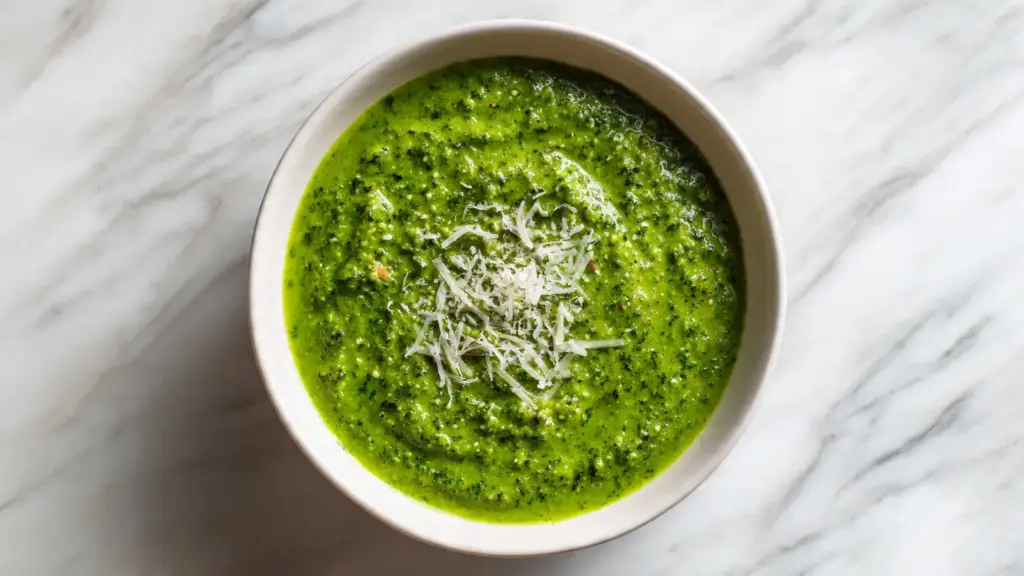
This pesto is incredibly versatile. I’ve found so many ways to use it beyond just pasta.
- Grilled chicken: Brush it on during the last few minutes of grilling or use it as a marinade
- Baked salmon: A dollop on top of salmon creates a restaurant-worthy dish
- Pasta: Toss with hot pasta, adding a splash of pasta cooking water to create a silky sauce
- Avocado toast: Spread it on toast before adding your avocado for an extra flavor boost
- Roasted vegetables: Drizzle over roasted zucchini, tomatoes, or cauliflower
- Pizza: Use it instead of red sauce for a white pesto pizza
- Grilled vegetable skewers: Brush on vegetables before grilling for incredible flavor
Read Also: Healthy Hummus Recipe
Variations of Healthy Pesto
Once you master the basic recipe, these variations open up a whole new world of flavors.
- Kale pesto: Swap half the basil for kale leaves (remove the tough stems first) for an earthier, more robust flavor and extra nutrients
- Arugula pesto: Replace half the basil with arugula for a peppery kick that’s amazing with grilled meats
- Sun-dried tomato pesto: Add 1/4 cup of drained sun-dried tomatoes for a sweeter, more complex flavor
- Walnut pesto: Use walnuts instead of pine nuts (they’re cheaper and have a slightly earthier taste)
- Vegan pesto: Replace the Parmesan with 2 tablespoons of nutritional yeast for a dairy-free version that’s still incredibly flavorful
- Cilantro-lime pesto: Swap basil for cilantro and use lime juice instead of lemon for a Mexican-inspired twist
- Pistachio pesto: Use shelled pistachios instead of pine nuts for a unique, slightly sweet flavor
Storage and Reheating
Proper storage keeps your pesto fresh and vibrant for days or even months.
- Refrigerator: Store in an airtight container with a thin layer of olive oil on top or plastic wrap pressed directly on the surface to prevent oxidation. It will keep for up to 5 days
- Freezer: Transfer to ice cube trays and freeze until solid, then pop out the cubes and store in a freezer bag for up to 3 months. This gives you perfectly portioned pesto anytime
- Preventing browning: The lemon juice helps, but exposure to air is the real enemy. Always cover the surface directly
- Thawing: Let frozen pesto cubes thaw in the refrigerator for a few hours or add them directly to hot pasta where they’ll melt quickly
- Color changes: Some darkening is natural due to oxidation, but it doesn’t affect flavor. Stir well before using if separation has occurred
- Never microwave: Heat destroys the fresh flavor and bright color. Instead, let it come to room temperature naturally or add it to hot dishes where it will warm gently
Another favorite: Stir Fry Sauce Recipe
Nutritional Facts
Per serving (2 tablespoons):
- Calories: 95
- Total Fat: 8g
- Saturated Fat: 2g
- Cholesterol: 4mg
- Sodium: 125mg
- Total Carbohydrates: 3g
- Dietary Fiber: 1g
- Sugars: 0g
- Protein: 3g
- Vitamin A: 20% DV
- Vitamin C: 10% DV
- Calcium: 8% DV
- Iron: 6% DV
This healthy version has approximately 40% fewer calories and 50% less fat than traditional pesto recipes, while maintaining excellent flavor and adding beneficial nutrients from the spinach.
Health Benefits of Key Ingredients
Every ingredient in this pesto brings something valuable to the table beyond just taste.
- Basil: Rich in antioxidants like flavonoids and volatile oils that have anti-inflammatory properties. It’s also a good source of vitamin K, which supports bone health and proper blood clotting
- Spinach: Packed with iron, folate, and vitamins A and C. The iron supports healthy red blood cells, while folate is essential for cell growth and DNA synthesis
- Garlic: Contains allicin, a compound with powerful antibacterial and antiviral properties. Regular garlic consumption has been linked to reduced blood pressure and improved cholesterol levels
- Pine nuts: Despite being calorie-dense, they provide heart-healthy monounsaturated fats, vitamin E, and minerals like zinc and magnesium
- Olive oil: A staple of the Mediterranean diet, it’s loaded with monounsaturated fats and antioxidants that support heart health and reduce inflammation
- Parmesan: Provides calcium and protein, and because it’s aged, it’s naturally lower in lactose than many other cheeses
- Lemon juice: High in vitamin C, which boosts immune function and helps your body absorb the iron from the spinach more effectively
FAQs About Healthy Pesto
1. Can I make this pesto without a food processor?
Yes, you can use a high-powered blender, though you may need to stop and scrape down the sides more frequently. For a more rustic texture, you can also make it by hand using a mortar and pestle, though this takes considerably more time and effort.
2. Why does my pesto turn brown?
Pesto turns brown due to oxidation when the herbs are exposed to air. The lemon juice in this recipe helps slow this process, but storing it with a thin layer of olive oil on top or plastic wrap pressed directly against the surface prevents most browning. Some darkening is natural and doesn’t affect flavor.
3. Can I freeze this healthy pesto?
Absolutely! Freezing is one of the best ways to preserve pesto. I recommend freezing it in ice cube trays, then transferring the frozen cubes to a freezer bag. This way, you can thaw just what you need for any recipe.
4. What can I substitute for pine nuts?
Walnuts are my go-to substitute since they’re more affordable and have a similar creamy texture when blended. Almonds, cashews, or even sunflower seeds also work well. Each nut brings a slightly different flavor profile, so experiment to find your favorite.
5. How do I use pesto with pasta?
The key is to reserve some pasta cooking water. Toss your drained hot pasta with the pesto, adding pasta water 1-2 tablespoons at a time until you achieve a silky, coating consistency. The starch in the pasta water helps the pesto cling to every strand.
I learned this technique from making my chicken spaghetti, where pasta water is essential for the sauce.
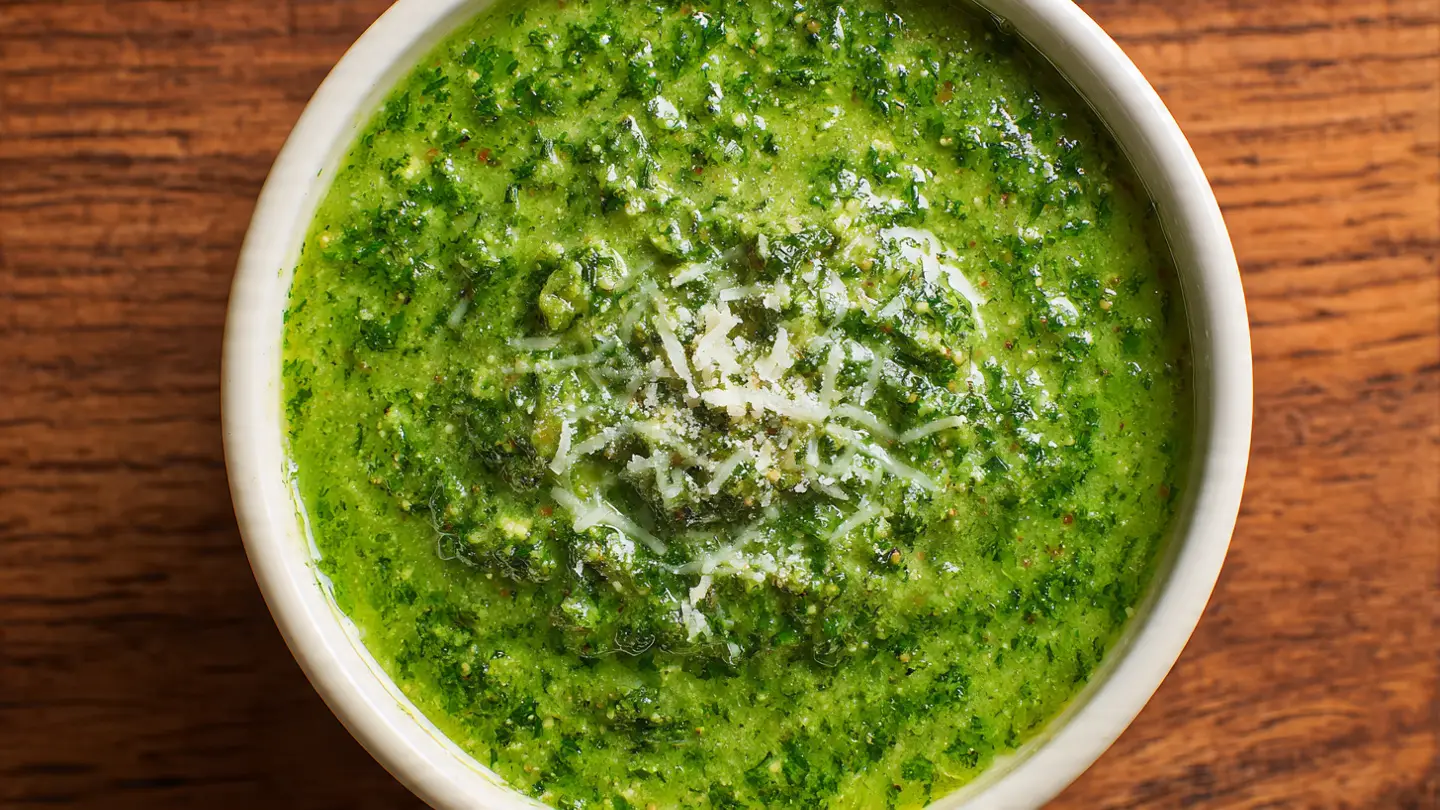
Healthy Pesto
Ingredients
- 3 cups fresh basil leaves - 90g, packed
- 1 cup fresh baby spinach - 30g, packed
- 3 cloves garlic - peeled
- 0.33 cup pine nuts - 40g, lightly toasted; walnuts work well too
- 0.5 cup Parmesan cheese - 50g, freshly grated; Parmigiano-Reggiano preferred
- 0.25 cup extra virgin olive oil - 60ml; cold-pressed recommended
- 0.25 cup low-sodium vegetable broth - 60ml, or water
- 2 tablespoons fresh lemon juice
- 0.25 teaspoon salt - or to taste
- 0.25 teaspoon black pepper - freshly ground
- red pepper flakes - pinch, optional
Equipment
- Food processor - or high-powered blender
- Small skillet - for toasting nuts
- Airtight container - for storage
Method
- Toast the pine nuts or walnuts in a dry skillet over medium-low heat for 3-5 minutes until fragrant and light golden, then transfer to a plate to cool.
- Rinse and thoroughly pat dry the basil and spinach leaves, removing any thick basil stems.
- Add garlic to the food processor and pulse 5-6 times until finely chopped, then add toasted nuts and pulse 5-6 more times until broken down but not pulverized.
- Add the basil, spinach, and grated Parmesan cheese to the food processor on top of the garlic and nut mixture.
- Drizzle in olive oil, vegetable broth, lemon juice, salt, pepper, and red pepper flakes if using.
- Pulse 8-10 times, scrape down sides with a rubber spatula, then process continuously for 15-20 seconds until smooth but slightly textured.
- Taste and adjust seasoning with salt, lemon juice, or Parmesan as desired, adding more broth if too thick.
- Serve immediately or transfer to an airtight container, pressing plastic wrap directly onto the surface before sealing.
Nutrition
Notes
- Toasting the nuts is non-negotiable – it brings out natural oils and creates a richer flavor that raw nuts cannot provide.
- Use fresh, high-quality basil for the best flavor. Wilted or yellowing basil will make your pesto bitter.
- Don’t over-blend the pesto – you want some texture, not a completely smooth puree.
- Stretch your basil with spinach – it adds nutrients without changing the classic pesto taste.
- Prevent browning by storing with a thin layer of olive oil on top or plastic wrap pressed directly onto the surface.
- This pesto freezes beautifully for up to 3 months – use ice cube trays for perfectly portioned cubes.
- For a vegan version, replace Parmesan with 2 tablespoons of nutritional yeast.
- Substitute walnuts, almonds, cashews, or sunflower seeds for pine nuts to save money while maintaining creaminess.
- When using with pasta, reserve some pasta cooking water and add 1-2 tablespoons to help the pesto coat every strand.
- Never microwave pesto – heat destroys the fresh flavor and bright color. Let it come to room temperature naturally instead.
Private Notes
Tried this recipe?
Let us know how it was!Final Thoughts
This healthy pesto has become such a staple in my kitchen that I always keep a batch in the freezer. It’s proof that eating healthier doesn’t mean sacrificing flavor or giving up the foods you love.
The beauty of this recipe is its simplicity and versatility. Once you get the basic technique down, you can experiment with different herbs, nuts, and add-ins to create your own signature version.
Give this healthy pesto a try, and I promise you won’t miss the extra oil. Toss it with your favorite pasta, spread it on sandwiches, or use it as a marinade for grilled proteins.
I’d love to hear how it turns out for you! Drop a comment below with your favorite way to use pesto, or share a photo of your creation on social media.
Recommended:
- Spaghetti Sauce Recipe
- Pizza Sauce Recipe
- Teriyaki Sauce Recipe
- Peanut Sauce Recipe
- Cheese Sauce Recipe
- Bechamel Sauce Recipe
- Enchilada Sauce Recipe
- Hoisin Sauce Recipe
- Bang Bang Sauce Recipe
- BBQ Sauce Recipe