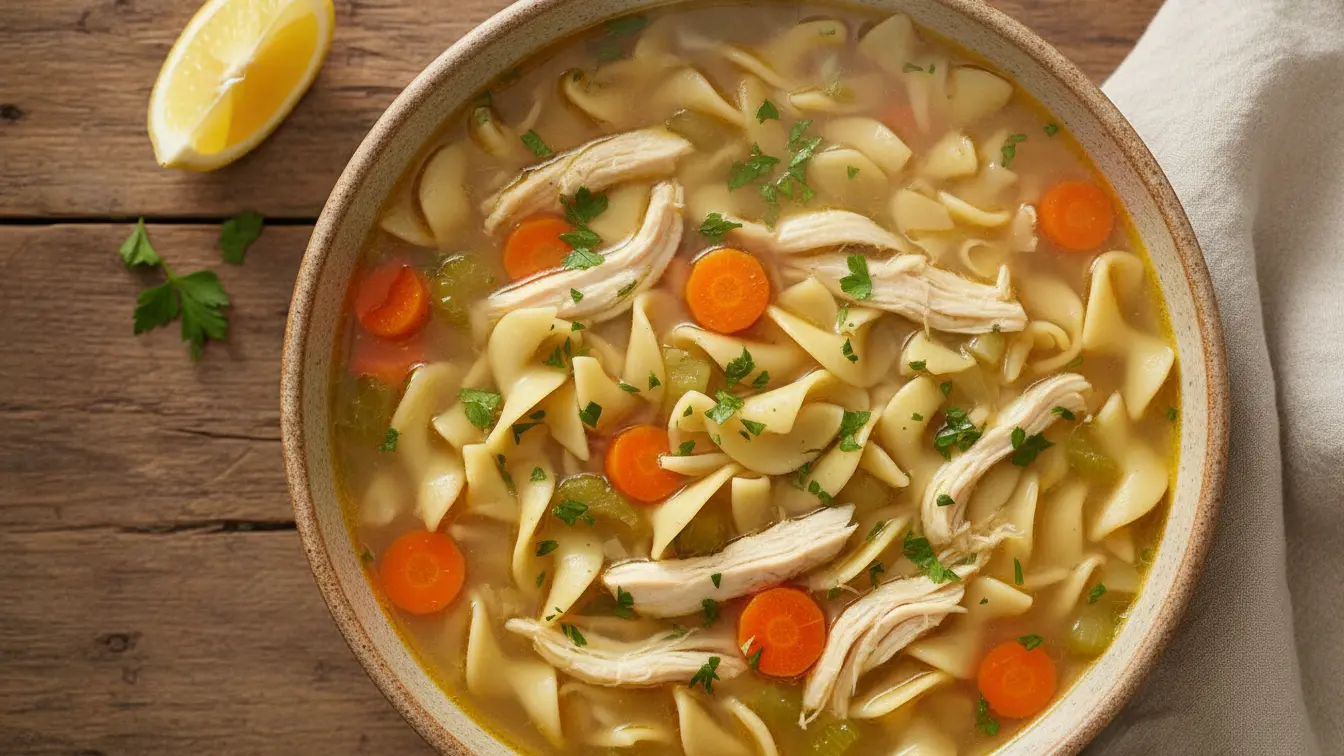
I never thought I’d become the kind of person who swears by their Instant Pot, but here we are. After years of simmering chicken soup on the stovetop for what felt like hours, this Instant Pot Chicken Noodle Soup Recipe changed everything for me.
My love affair with this recipe started on a particularly chaotic Monday when my daughter came home from school with the sniffles. I had exactly 30 minutes before her piano lesson, a pantry full of random ingredients, and zero energy for complicated cooking. That’s when I threw everything into my Instant Pot and hoped for the best.
What came out was nothing short of magical. The broth was rich and golden, the chicken was tender enough to shred with a fork, and the vegetables had that perfect just-cooked texture. My daughter finished two bowls before we had to leave, and I knew I’d stumbled onto something special.
| Quick Recipe Summary | |
|---|---|
| Prep Time | 10 minutes |
| Cook Time | 15 minutes |
| Total Time | 40 minutes (including pressure release) |
| Servings | 6 servings |
| Difficulty Level | Easy |
_result.jpg "Instant Pot Chicken Noodle Soup Recipe | Simple & Nourishing Family Meal")
Why You’ll Love This Instant Pot Chicken Noodle Soup Recipe
The beauty of this soup lies in its simplicity and the way it transforms basic ingredients into something that tastes like you’ve been cooking all day. I’ve made countless pots of chicken soup in my life, but the Instant Pot method has become my absolute favorite for so many reasons.
First, you’re looking at about 40 minutes from start to finish, including the time it takes for the pot to come to pressure. Compare that to the traditional 2-3 hours of stovetop simmering, and you’ll understand why this has become my weeknight hero.
- Hands-off cooking: Once you close that lid, you’re free to help with homework, answer emails, or just sit down for five minutes. No stirring, no watching, no babysitting a hot stove.
- Deeper flavor in less time: The pressure cooking process extracts flavors from the chicken and vegetables in a way that usually takes hours. The broth comes out rich, golden, and incredibly flavorful every single time.
- Tender, juicy chicken: I used to overcook my chicken all the time when making soup on the stovetop. The Instant Pot makes it nearly impossible to end up with dry, stringy meat. It stays moist and tender, even if you leave it in a few minutes longer.
- One-pot wonder: Everything cooks in one vessel, which means fewer dishes to wash. As someone who despises cleanup, this alone is worth the price of admission.
- Perfect for meal prep: This soup keeps beautifully in the fridge for up to 5 days and freezes like a dream. I often make a double batch on Sunday and portion it out for easy lunches throughout the week.
- Endlessly customizable: The base recipe is fantastic as-is, but it’s also incredibly forgiving. Forgot the celery? No problem. Want to add some fresh herbs? Go for it. This soup adapts to whatever you have on hand.
Another favorite: Creamy Tomato Basil Soup
Ingredients
For this recipe, I focus on simple, wholesome ingredients that you probably already have in your kitchen. The key is using bone-in, skin-on chicken thighs for maximum flavor, though boneless works too if you’re in a pinch.
For the Soup Base:
- 1.5 lbs (680g) bone-in, skin-on chicken thighs or breasts (about 4-5 pieces)
- 1 tablespoon olive oil
- 1 large onion, diced (about 1.5 cups or 200g)
- 3 medium carrots, peeled and sliced (about 1.5 cups or 200g)
- 3 celery stalks, sliced (about 1.5 cups or 180g)
- 4 cloves garlic, minced
- 6 cups (1.4 liters) low-sodium chicken broth
- 2 bay leaves
- 1 teaspoon dried thyme
- 1 teaspoon dried parsley
- 1/2 teaspoon black pepper
- 1 teaspoon salt (adjust to taste)
- 2 cups (200g) wide egg noodles
- 2 tablespoons fresh lemon juice (optional, but highly recommended)
- 2 tablespoons fresh parsley, chopped (for garnish)
Kitchen Equipment Needed
Having the right tools makes this recipe even easier, though you don’t need anything fancy beyond your Instant Pot itself. Here’s what I use every time I make this soup.
- 6-quart or 8-quart Instant Pot: This is obviously the star of the show. I use a 6-quart model, which is perfect for a family of four with leftovers. If you’re cooking for a crowd or love meal prep, the 8-quart is worth considering.
- Sharp knife and cutting board: For chopping all those vegetables. I prefer a large cutting board with a groove around the edges to catch any juice from the veggies.
- Measuring cups and spoons: Accuracy matters, especially with the liquid ratios in pressure cooking.
- Wooden spoon or silicone spatula: For sautéing the vegetables and stirring everything together.
- Ladle: For serving the soup without making a mess.
- Fine-mesh strainer (optional): If you want to strain your broth after cooking for an ultra-clear soup. I usually skip this step because I like a more rustic texture.
- Two forks: For shredding the chicken once it’s cooked.
Recommended Products for This Recipe
After making this soup dozens of times, I’ve found a few products that genuinely make the process easier and the results even better. These are the items I reach for every single time.
1. Instant Pot Duo Plus 6 Quart
I’ve tried several pressure cookers over the years, but the Instant Pot Duo Plus has become my ride-or-die. The upgraded lid design seals perfectly every time, and the extra pressure release options give you more control. Plus, the inner pot has measurement markings that help you nail the liquid ratios without pulling out measuring cups.
2. Better Than Bouillon Chicken Base
This concentrated chicken base has transformed my soup game. One teaspoon mixed with a cup of water gives you richer flavor than most store-bought broths, and a single jar lasts for months. I always keep one in my fridge for when I want to boost the flavor of my soup even more.
3. OXO Good Grips Silicone Ladle
A good ladle matters more than you’d think. This one has a comfortable grip, the silicone head won’t scratch your Instant Pot’s inner pot, and the angled design makes it easy to scoop up every last bit of broth. It’s also heat-resistant up to 600°F, so you can leave it resting in the pot without worry.
4. Reames Frozen Egg Noodles
While any egg noodles work in this recipe, these frozen ones have a homemade texture that’s unbeatable. They’re thicker and more substantial than dried noodles, and they hold up beautifully in the soup without getting mushy. You’ll find them in the frozen section of most grocery stores.
_result.jpg "Instant Pot Chicken Noodle Soup Recipe - Cozy 30-Minute Dinner")
Step-by-Step Instructions: How to Make Instant Pot Chicken Noodle Soup
I’m going to walk you through this process step by step, including all the little details I’ve learned through trial and error. Even if you’ve never used an Instant Pot before, you’ll be able to follow along easily.
1. Prepare Your Ingredients
- Dice your onion into roughly 1/2-inch (1.3cm) pieces. They don’t need to be perfect, just relatively uniform so they cook evenly.
- Peel and slice your carrots into rounds about 1/4-inch (0.6cm) thick. I like to cut them on a slight diagonal for a prettier presentation, but this is purely aesthetic.
- Slice your celery stalks into similar-sized pieces as the carrots. Don’t forget to trim off the tough ends and any leaves (though you can save those leaves for garnish if you like).
- Mince your garlic. I use a garlic press to save time, but chopping works just as well. Just make sure the pieces are small so they distribute evenly throughout the soup.
- Pat your chicken pieces dry with paper towels. This helps them brown better in the next step and removes any excess moisture that could water down your broth.
2. Sauté the Aromatics
- Turn your Instant Pot to the “Sauté” function and select “Normal” or “Medium” heat. Wait until the display reads “Hot,” which takes about 2-3 minutes.
- Add the olive oil and swirl it around to coat the bottom of the pot. You want a thin layer covering the entire surface.
- Add the diced onion, carrots, and celery all at once. Stir them frequently with a wooden spoon, scraping up any bits that try to stick to the bottom. This should take about 5 minutes, and you’re looking for the onions to become translucent and the vegetables to soften slightly.
- Add the minced garlic and stir constantly for about 30 seconds. Garlic burns quickly, so don’t walk away during this step. You’ll know it’s ready when you can smell that amazing garlic aroma filling your kitchen.
- If anything has stuck to the bottom of the pot, add a splash of the chicken broth and scrape it up with your wooden spoon. This is called deglazing, and it prevents the dreaded “Burn” warning later. Make sure the bottom feels completely smooth when you run your spoon across it.
Read Also: Easy Chicken Noodle Soup Recipe
3. Add the Chicken and Broth
- Nestle the chicken pieces into the pot, right on top of the vegetables. If you’re using bone-in, skin-on pieces, place them skin-side up. The skin will render some fat into the broth, adding richness.
- Pour in all 6 cups of chicken broth. The liquid should just barely cover the chicken pieces. If it doesn’t, add a bit more broth or water until the chicken is submerged.
- Drop in the bay leaves, dried thyme, dried parsley, black pepper, and salt. Give everything a gentle stir to distribute the seasonings, but try not to move the chicken around too much.
- At this point, take a moment to check the bottom of the pot again. Run your wooden spoon across it to make sure nothing is stuck. This is your last chance to prevent a burn warning.
4. Pressure Cook the Soup
- Close the Instant Pot lid and make sure the valve is set to “Sealing.” This is crucial. If the valve is set to “Venting,” the pot won’t come to pressure.
- Press the “Manual” or “Pressure Cook” button and set the timer for 10 minutes at high pressure. The pot will take about 10-15 minutes to come to pressure, and then the countdown will begin. During this time, you might hear some hissing or see steam escape from the valve. This is normal as the pot builds pressure.
- Once the timer goes off, you’ll hear a beep. Let the pressure release naturally for 10 minutes. This means you don’t touch the valve at all. Just let the pot sit there and do its thing.
- After 10 minutes, carefully move the valve from “Sealing” to “Venting” to release any remaining pressure. Be careful because hot steam will shoot out. I usually use a wooden spoon to move the valve so my hand isn’t directly over the steam. Wait until the float valve drops completely before opening the lid.
5. Shred the Chicken
- Carefully remove the chicken pieces from the pot using tongs or a slotted spoon. Place them on a cutting board or in a large bowl. They’ll be very hot and extremely tender, so handle them gently.
- If you used bone-in chicken, remove and discard the bones and skin. The meat should practically fall off the bone at this point.
- Use two forks to shred the chicken into bite-sized pieces. I like a mix of larger chunks and smaller shreds for varied texture in every spoonful.
- Return the shredded chicken to the pot and stir it into the soup. At this point, taste your broth and adjust the seasoning if needed. I often add a bit more salt and pepper at this stage.
This pairs beautifully with my Homemade Biscuit Recipe for dunking.
6. Cook the Noodles
- Turn the Instant Pot back to the “Sauté” function on normal heat. Once the soup comes to a simmer, add the egg noodles.
- Cook the noodles for 6-8 minutes, stirring occasionally to prevent them from clumping together. The exact time depends on the type of noodles you’re using. I usually check them at the 6-minute mark and then every minute after that until they reach my preferred tenderness.
- If you’re using fresh or frozen noodles, they’ll need less time, usually 3-5 minutes. If you’re using thick, dried egg noodles, you might need the full 8 minutes or even a bit longer.
- Remove and discard the bay leaves. Trust me, you don’t want anyone biting into a bay leaf in their soup.
7. Finish and Serve
- Turn off the Instant Pot. Stir in the fresh lemon juice if using. This brightens up all the flavors and adds a subtle tang that really makes the soup sing. I always use lemon juice because it transforms the soup from good to absolutely incredible.
- Taste one more time and adjust the seasoning as needed. Sometimes I add a pinch more salt, a crack of black pepper, or even a dash of hot sauce if I’m in the mood.
- Ladle the soup into bowls and garnish with fresh chopped parsley. I also like to add a squeeze of extra lemon juice to each bowl and sometimes a drizzle of good olive oil for richness.
_result.jpg "Instant Pot Chicken Noodle Soup Recipe | Kid-Friendly Comfort Food")
Tips for The Best Instant Pot Chicken Noodle Soup
After making this soup more times than I can count, I’ve learned a few tricks that consistently deliver the best results. These are the details that separate a good soup from an absolutely incredible one.
- Use bone-in chicken for richer flavor: I know boneless chicken is convenient, but bone-in pieces create a much more flavorful broth. The bones release gelatin and minerals that give the soup body and depth. If you must use boneless, consider adding an extra bouillon cube or some chicken base to compensate.
- Don’t skip the sauté step: It might be tempting to throw everything in at once, but sautéing the vegetables first develops sweetness and complexity. Those caramelized bits on the bottom of the pot also add incredible flavor once they’re deglazed into the soup.
- Cook noodles separately for leftovers: If you plan to store leftovers, cook only the amount of noodles you’ll eat right away and store the soup and extra noodles separately. Noodles absorb liquid as they sit, which can make your soup more like a stew by day two. I learned this the hard way after a batch of soup turned into chicken and noodles with barely any broth left.
- Natural pressure release is key: Don’t do a quick release after pressure cooking. The natural release time allows the flavors to meld and keeps the chicken incredibly tender. A quick release can also make the chicken seize up and become slightly tougher.
- Deglaze thoroughly: Those brown bits stuck to the bottom aren’t just flavor, they’re also potential triggers for the dreaded “Burn” warning. Make sure the bottom of the pot is completely smooth before closing the lid.
- Season in stages: I add salt at the beginning, but I also taste and adjust at the end. The broth concentrates slightly during pressure cooking, so what tasted perfect raw might need a touch more seasoning once everything’s done.
- Add vegetables in stages for better texture: If you like your carrots and celery with more bite, add them after pressure cooking during the sauté step when you add the noodles. They’ll stay crispier this way.
- Use fresh herbs at the end: Dried herbs work great during pressure cooking, but a handful of fresh parsley, dill, or thyme stirred in at the end adds a bright, fresh flavor that dried herbs can’t match.
You might also enjoy: Lasagna Soup
Serving Suggestions
This soup is comforting enough to stand on its own, but I love pairing it with a few simple sides that make the meal feel complete. Here are my favorite accompaniments that turn a bowl of soup into a proper dinner.
Perfect Pairings:
- Crusty bread for dunking: There’s something deeply satisfying about dragging a piece of warm, crusty bread through chicken noodle soup. I usually serve this with my Dinner Rolls or pick up a fresh baguette from the bakery.
- Simple green salad: A light salad with a vinaigrette balances the richness of the soup perfectly. I keep it simple with mixed greens, cucumber, and tomatoes.
- Grilled cheese sandwiches: This is the ultimate comfort food combination. My kids request grilled cheese with this soup every single time.
- Crackers or oyster crackers: Keep it classic with saltines or oyster crackers on the side. They add a nice textural contrast and soak up the broth beautifully.
- Roasted vegetables: If I want to make the meal a bit more substantial, I’ll roast some broccoli or Brussels sprouts on the side.
- Fresh fruit: A simple fruit salad or apple slices provide a refreshing contrast to the warm, savory soup, especially if you’re serving this to kids.
Read Also: Zuppa Toscana
Variations of Instant Pot Chicken Noodle Soup
The beauty of this recipe is how easily it adapts to different tastes and dietary needs. I’ve tried countless variations, and here are my favorites that work every single time.
- Asian-inspired version: Replace the thyme and parsley with fresh ginger and add a tablespoon of soy sauce. Use rice noodles instead of egg noodles and garnish with green onions and sesame oil. This has become my husband’s favorite variation.
- Creamy chicken noodle soup: After shredding the chicken, stir in 1 cup of heavy cream or half-and-half. It becomes luxuriously rich and reminds me of a cross between chicken noodle soup and chicken pot pie filling.
- Mexican-inspired: Add a can of diced green chiles, a teaspoon of cumin, and use fresh cilantro instead of parsley. Serve with lime wedges and crushed tortilla chips on top. This version has some heat and tons of flavor.
- Lemon herb: Double the lemon juice and add fresh dill. This lighter, brighter version is perfect for spring and summer. I love making this when I’m feeling under the weather.
- Vegetable-loaded: Add extra vegetables like green beans, peas, corn, or diced tomatoes. I throw them in during the sauté step with the noodles so they keep some texture.
- Use different noodles: Try rotini, shells, or even rice for a gluten-free option. Each gives the soup a different character. My daughter prefers the smaller pasta shapes because they fit better on her spoon.
- Kale and white bean: Add a can of white beans and a few cups of chopped kale during the final sauté step. This makes the soup more substantial and adds extra nutrients.
- Spicy kick: Stir in red pepper flakes, a diced jalapeño, or a splash of hot sauce. Start with a little and adjust to your heat preference.
For a lighter option, try: Lentil and Vegetable Soup
Storage and Reheating
This soup stores beautifully, which is one of the reasons I love making big batches. Here’s everything I’ve learned about keeping this soup fresh and delicious for days.
Storing:
- In the refrigerator: Transfer completely cooled soup to airtight containers and refrigerate for up to 5 days. I prefer glass containers because they don’t absorb odors or stains.
- Separate noodles for best results: If you know you’ll have leftovers, store the noodles separately from the broth and chicken. Add fresh noodles when you reheat individual portions. This prevents the noodles from turning mushy and absorbing all the broth.
- In the freezer: The soup base (broth, chicken, and vegetables) freezes wonderfully for up to 3 months. Don’t freeze the noodles, though. Cook them fresh when you’re ready to eat. I freeze soup in individual portions using freezer-safe containers or heavy-duty freezer bags. Lay the bags flat so they stack easily.
- Cool quickly for food safety: Don’t leave the soup sitting at room temperature for hours. I place the inner pot in an ice bath if I need to cool it quickly before refrigerating or freezing.
Reheating:
- Stovetop method (best): Transfer the soup to a pot and heat over medium heat, stirring occasionally, until warmed through. This usually takes about 10 minutes. If the soup has thickened in the fridge, add a splash of chicken broth or water to thin it out.
- Microwave: Heat individual portions in microwave-safe bowls in 1-minute intervals, stirring between each, until hot. Cover the bowl with a microwave-safe lid or paper towel to prevent splattering.
- From frozen: Thaw overnight in the refrigerator for best results, then reheat using either method above. You can also reheat from frozen on the stovetop over low heat, adding extra liquid as it thaws.
- Add fresh elements: When reheating, I like to add a squeeze of fresh lemon juice and some fresh parsley to brighten up the flavors. It makes leftovers taste just as good as the fresh batch.
Another favorite: Pasta Fagioli
_result.jpg "Instant Pot Chicken Noodle Soup Recipe - Easy Meal Prep Favorite")
Nutritional Facts
Per serving (based on 6 servings):
- Calories: 285
- Total Fat: 8g
- Saturated Fat: 2g
- Cholesterol: 95mg
- Sodium: 890mg
- Total Carbohydrates: 25g
- Dietary Fiber: 3g
- Sugars: 4g
- Protein: 28g
- Vitamin A: 110% DV
- Vitamin C: 15% DV
- Calcium: 4% DV
- Iron: 12% DV
Note: Nutritional information is approximate and will vary based on specific ingredients used and portion sizes. Using low-sodium broth and reducing added salt can significantly lower the sodium content.
Health Benefits of Key Ingredients
Beyond tasting incredible, this soup is genuinely good for you. I love that I can serve my family something they crave while also nourishing their bodies.
Why This Soup Is Actually Healthy:
- Chicken provides lean protein: Essential for muscle repair, immune function, and keeping you satisfied. The dark meat from thighs also contains more iron and zinc than white meat.
- Bone broth supports gut health: When you use bone-in chicken, the broth becomes rich in gelatin and collagen, which support digestive health and joint function. I’ve noticed my skin looks better when I eat this soup regularly.
- Carrots are loaded with beta-carotene: Your body converts this to vitamin A, which supports vision, immune function, and skin health. The orange color isn’t just pretty, it’s a sign of serious nutrition.
- Celery offers anti-inflammatory compounds: It’s also high in antioxidants and can help lower blood pressure. Plus, it adds great crunch and flavor without many calories.
- Garlic boosts immunity: It has powerful anti-viral and anti-bacterial properties, which is why chicken soup has that reputation for fighting colds. There’s actual science behind Grandma’s cure-all soup.
- Onions contain quercetin: This powerful antioxidant has anti-inflammatory properties and may help reduce blood pressure and cholesterol levels.
- The warm broth keeps you hydrated: Especially important when you’re sick or during cold weather when you might not drink enough water.
Read Also: Italian Wedding Soup
FAQs About Instant Pot Chicken Noodle Soup
1. Can I use frozen chicken in this recipe?
Yes, absolutely! The Instant Pot handles frozen chicken beautifully, though you’ll need to adjust the cooking time slightly. Add 3-5 minutes to the pressure cooking time if using frozen chicken breasts or thighs. Make sure the pieces aren’t stuck together in one big frozen lump, or they won’t cook evenly.
2. Why did my Instant Pot display a “Burn” warning?
This usually happens when food is stuck to the bottom of the pot, preventing proper heat distribution. Always deglaze the pot thoroughly after sautéing by adding liquid and scraping up all the brown bits with a wooden spoon. Make sure the bottom feels completely smooth before pressure cooking, and ensure you’re using enough liquid (at least 1 cup is required for the Instant Pot to come to pressure).
3. Can I make this soup ahead of time?
Definitely! This soup actually tastes even better the next day as the flavors meld together. I recommend preparing the soup base (everything except the noodles) up to 3 days ahead. Store it in the fridge, then reheat and cook the noodles fresh when you’re ready to serve.
4. What’s the best type of noodles to use?
Wide egg noodles are traditional and my personal favorite because they have great texture and hold up well in the soup. However, you can use any short pasta shape like rotini, shells, or penne. For a gluten-free version, rice noodles or gluten-free pasta work well, though they may need slightly less cooking time.
5. How do I make this soup lower in sodium?
Use no-salt-added or low-sodium chicken broth and reduce or eliminate the added salt. You can add more herbs and spices to compensate for the reduced sodium. I also like adding a splash of vinegar or extra lemon juice at the end, which brightens flavors without adding salt. Taste as you go and adjust seasonings based on your preference.
Final Thoughts
This Instant Pot Chicken Noodle Soup has become so much more than just a recipe in my house. It’s become our comfort food, our sick-day staple, our “I don’t know what to make for dinner” solution, and our way of showing love when someone needs it.
I hope this recipe brings as much warmth and comfort to your table as it has to mine. Give it a try, and don’t be afraid to make it your own with different vegetables, seasonings, or variations. The best recipes are the ones you adapt to suit your family’s tastes.
I’d love to hear how your soup turns out! Drop a comment below with any questions or your own tips and tricks. And if you love this recipe as much as we do, share it with someone who could use a warm, comforting bowl of homemade soup.
Recommended:
- Chicken Gnocchi Soup
- Cheeseburger Soup
- Beef Barley Soup
- Taco Soup
- Potato Leek Soup
- French Onion Beef Short Rib Soup
- Carrot Ginger Soup
- Avgolemono Soup
- Matzo Ball Soup
- Kale and Sweet Potato Soup