
I’ll never forget the first time I tasted real fish chowder at a tiny seaside shack in Maine during a chilly October weekend getaway. My hands were practically frozen from the coastal wind, and that first spoonful of creamy, potato-rich broth studded with tender chunks of fish changed everything.
I spent the next few weeks trying to recreate that bowl at home, and after several attempts (including one disastrous batch where I overcooked the fish into rubbery bits), I finally nailed it. This Fish Chowder Recipe delivers all that coastal comfort without requiring an oceanside location.
The beauty of a good fish chowder lies in its simplicity. You don’t need fancy techniques or hard-to-find ingredients, just quality fish, potatoes, aromatics, and cream coming together in perfect harmony.
| Quick Recipe Summary | |
|---|---|
| Prep Time | 20 minutes |
| Cook Time | 35 minutes |
| Total Time | 55 minutes |
| Servings | 6 servings |
| Difficulty Level | Easy |
If you’re a fan of creamy, comforting soups, you’ll also love my New England Clam Chowder which shares that same rich, satisfying texture.
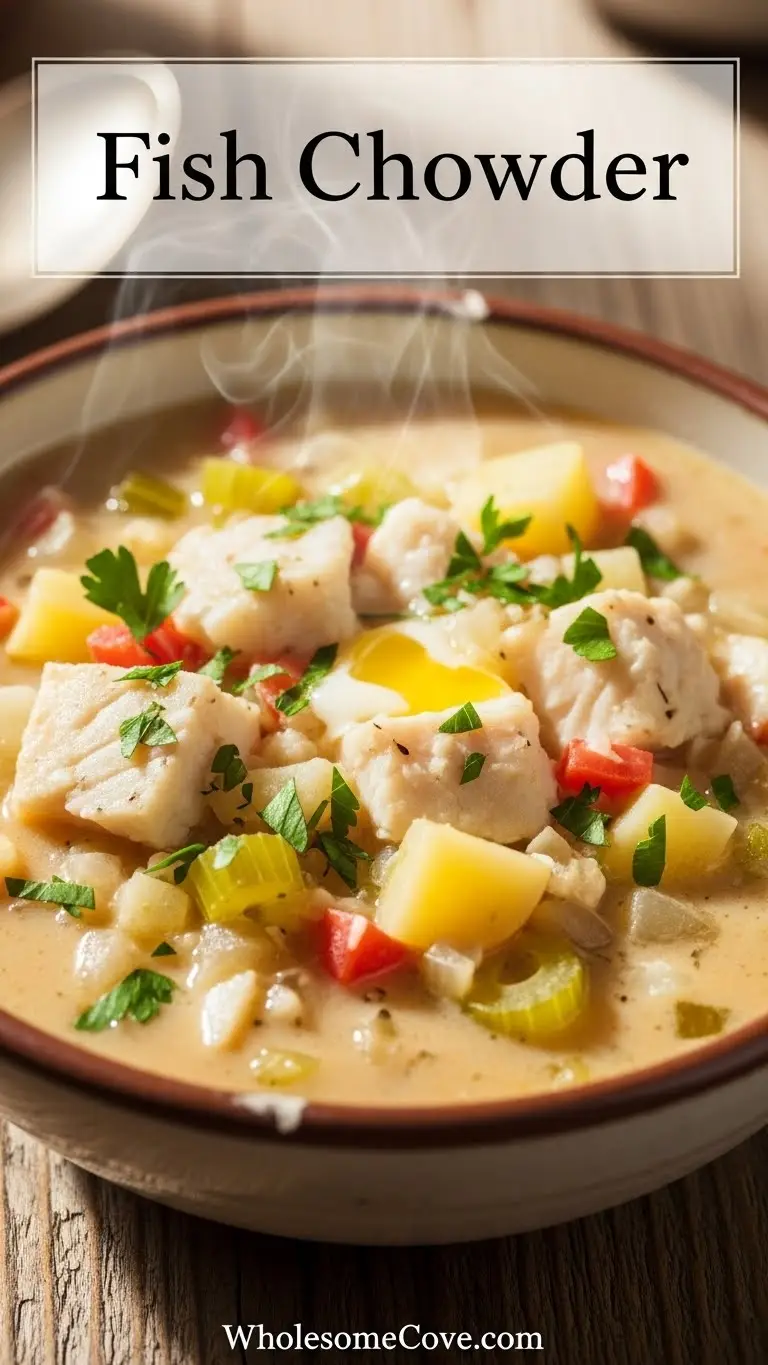
Why You’ll Love This Fish Chowder Recipe
This fish chowder has become my go-to recipe whenever I need something that feels both nourishing and indulgent. It’s the kind of soup that makes you want to curl up with a good book on a rainy afternoon.
The creamy broth is silky without being too heavy, and the potatoes add just enough body to make each spoonful satisfying.
Here’s what makes this chowder special:
- Budget-friendly luxury: Uses affordable white fish instead of pricey seafood, but tastes absolutely restaurant-worthy
- Ready in under an hour: From chopping to serving, this comes together faster than you’d think for such an impressive dish
- Naturally gluten-free: No flour-based roux needed, the potatoes provide all the thickness you want
- Crowd-pleaser: Even people who claim they’re not “fish people” always come back for seconds
- Meal prep friendly: Actually tastes even better the next day once all those flavors have melded together
Another favorite? Try my Chicken Corn Chowder for a different take on this cozy comfort food style.
Ingredients
This chowder relies on simple, quality ingredients that work together to create something truly special. I’ve learned through trial and error that using fresh (not frozen) fish makes all the difference in texture, though frozen will work in a pinch.
For the Chowder Base:
- 4 slices thick-cut bacon, chopped
- 2 tablespoons butter
- 1 large yellow onion, finely diced
- 2 celery stalks, diced
- 3 cloves garlic, minced
- 1½ pounds Yukon Gold potatoes (about 4 medium), peeled and cut into ½-inch cubes
- 3 cups seafood stock or fish stock
- 1 cup clam juice
- 2 bay leaves
- 1 teaspoon fresh thyme leaves (or ½ teaspoon dried thyme)
- ½ teaspoon smoked paprika
- ¼ teaspoon cayenne pepper (optional, for a subtle kick)
- 1½ teaspoons salt, plus more to taste
- ½ teaspoon black pepper
For the Fish and Cream:
- 1½ pounds firm white fish fillets (cod, haddock, or halibut), cut into 1-inch chunks
- 1½ cups heavy cream
- ½ cup whole milk
- 2 tablespoons fresh parsley, chopped
- 1 tablespoon fresh dill, chopped (optional but highly recommended)
- 2 teaspoons lemon juice
For Serving:
- Extra chopped parsley
- Oyster crackers or crusty bread
- Lemon wedges
Kitchen Equipment Needed
Having the right tools makes this recipe so much easier to execute. I used to try making chowder in a regular saucepan, but investing in a proper Dutch oven changed everything about how evenly the soup cooks.
Essential Equipment:
- Large Dutch oven or heavy-bottomed pot (at least 6 quarts)
- Sharp chef’s knife
- Cutting board
- Wooden spoon or silicone spatula
- Ladle
- Measuring cups and spoons
- Small bowl (for holding prepped ingredients)
Optional but Helpful:
- Immersion blender (if you prefer a partially blended, creamier texture)
- Potato masher (for slightly thickening the soup)
- Fine-mesh strainer (for straining the stock if needed)
For a Manhattan-style twist, check out my Manhattan Clam Chowder, which uses a tomato-based broth instead of cream.
Recommended Products for This Recipe
After making this chowder dozens of times, I’ve found a few products that genuinely make the process easier and the results better. These aren’t just random recommendations—they’re tools and ingredients I actually use in my own kitchen.
1. Le Creuset Enameled Cast Iron Dutch Oven
This is hands-down my favorite pot for making any kind of soup or chowder. The heavy bottom distributes heat so evenly that you never get hot spots or scorching, and it holds temperature beautifully. I’ve had mine for over eight years and it still looks brand new.
2. Wild-Caught Cod Fillets
Using high-quality, sustainably sourced fish makes an incredible difference in both flavor and texture. Wild-caught cod stays firm during cooking and has a sweeter, cleaner taste than farmed varieties. Worth every penny.
3. Kitchen Mama Electric Can Opener
I know this seems random, but opening cans of clam juice used to drive me crazy until I got this automatic opener. It’s especially helpful when you’re juggling multiple prep tasks at once.
4. Vitamix Immersion Blender
If you like your chowder with a creamier, slightly thicker consistency, an immersion blender lets you partially blend the soup right in the pot. I usually blend about a third of mine to create that perfect velvety texture while keeping plenty of chunky bits.

Step-by-Step Instructions: How to Make Fish Chowder
Take your time with these steps, especially if you’re new to making chowder. The key is building flavors layer by layer, which creates that deep, satisfying taste that makes people ask for your recipe.
1. Render the Bacon and Build Your Flavor Base
- Place your Dutch oven over medium heat and add the chopped bacon
- Cook the bacon for 6-8 minutes, stirring occasionally, until it’s crispy and has rendered most of its fat
- Use a slotted spoon to transfer the cooked bacon to a paper towel-lined plate, leaving about 2 tablespoons of bacon fat in the pot
- If you have more than 2 tablespoons of fat, pour off the excess but save it (it’s liquid gold for other recipes)
- Add the butter to the bacon fat and let it melt completely
2. Sauté the Aromatics
- Add the diced onion and celery to the pot with the bacon fat and butter
- Cook for 5-6 minutes, stirring frequently, until the vegetables are softened and the onion becomes translucent
- Add the minced garlic and cook for another 60-90 seconds, stirring constantly so it doesn’t burn
- You’ll know it’s ready when your kitchen smells absolutely amazing and the garlic is fragrant but not browned
3. Add the Potatoes and Liquids
- Add the cubed potatoes to the pot and stir them around to coat them in the aromatic mixture
- Pour in the seafood stock and clam juice, making sure the potatoes are mostly covered by liquid
- Add the bay leaves, thyme, smoked paprika, cayenne (if using), salt, and black pepper
- Stir everything together thoroughly to distribute the seasonings
- Increase the heat to medium-high and bring the mixture to a boil
4. Simmer Until Potatoes Are Tender
- Once the chowder reaches a boil, reduce the heat to medium-low to maintain a gentle simmer
- Partially cover the pot with a lid (leave it slightly ajar to prevent overflow)
- Let the soup simmer for 15-18 minutes, stirring occasionally, until the potatoes are tender when pierced with a fork but not falling apart
- The potatoes should hold their shape but be cooked through completely
5. Optional Step for Thicker Chowder
- If you want a thicker consistency, use a potato masher to gently mash about a quarter of the potatoes right in the pot
- Alternatively, remove about 1 cup of the soup (mostly potatoes and broth), blend it until smooth in a blender, and return it to the pot
- This step creates a naturally creamy base without adding any flour or cornstarch
- I usually skip this step because I love chunky chowder, but it’s personal preference
6. Add the Fish
- Reduce the heat to low so the soup is barely simmering
- Gently add the fish chunks to the pot, distributing them evenly throughout the chowder
- Give everything a gentle stir, being careful not to break up the fish pieces
- Let the fish cook for 4-5 minutes without stirring too much
- The fish is done when it’s opaque throughout and flakes easily with a fork but still holds together in chunks
7. Incorporate the Cream and Finish
- Pour in the heavy cream and whole milk, stirring very gently to combine
- Heat the chowder through for 2-3 minutes, but do not let it boil (boiling can cause the cream to separate and the fish to become tough)
- Remove the bay leaves and discard them
- Stir in the chopped parsley, dill (if using), and lemon juice
- Taste the chowder and adjust the seasoning with more salt and pepper if needed
- Remember that the flavors will continue to develop as it sits
8. Serve
- Ladle the hot chowder into bowls, making sure each serving gets a good mix of fish, potatoes, and bacon
- Sprinkle the reserved crispy bacon over the top of each bowl
- Garnish with extra fresh parsley and a lemon wedge on the side
- Serve immediately with oyster crackers or crusty bread for dipping
Looking for more soup inspiration? My Corn Chowder is another family favorite that’s perfect for any season.
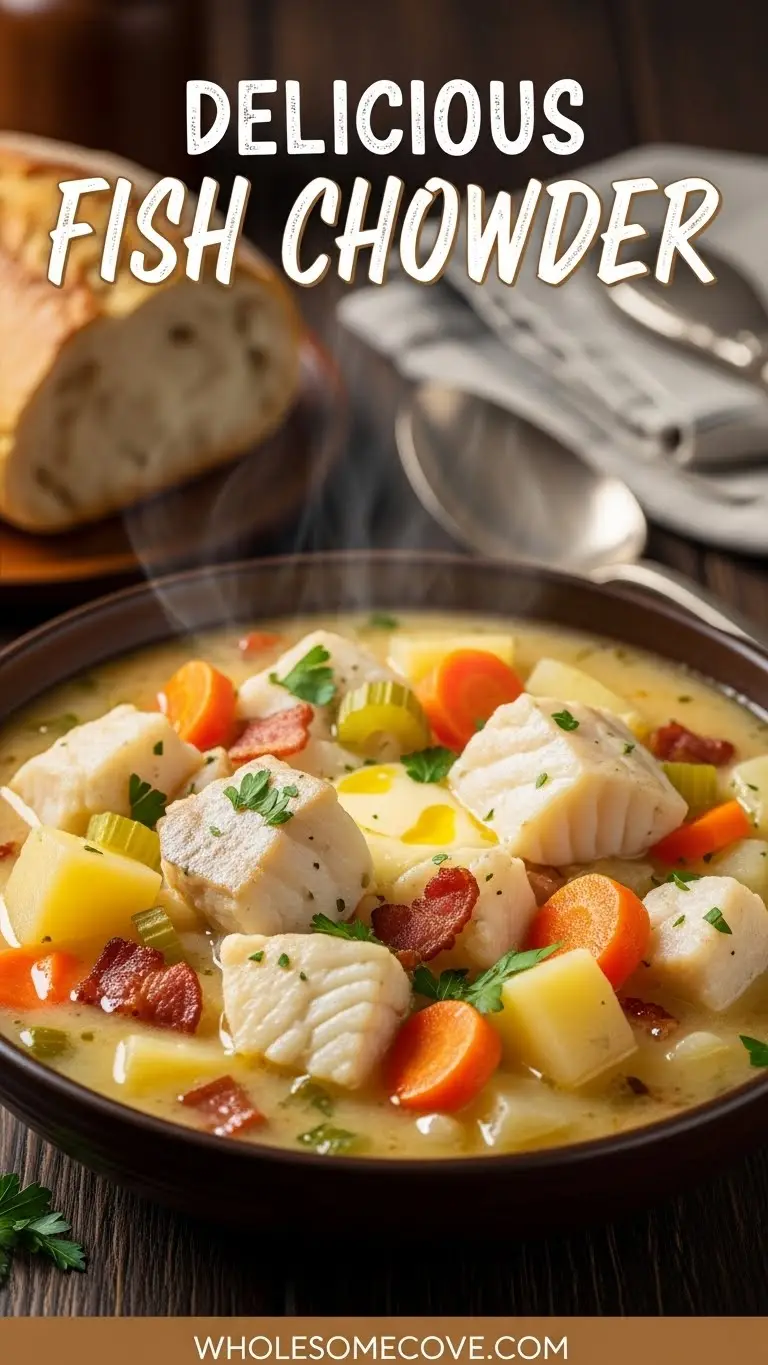
Tips for The Best Fish Chowder
These are the little tricks I’ve picked up over the years that elevate this chowder from good to absolutely memorable. Some I learned from mistakes, others from experimenting with different techniques.
Key Tips to Remember:
- Choose the right fish: Firm white fish like cod, haddock, or halibut work best because they hold their shape during cooking. Avoid delicate fish like tilapia or sole, which fall apart too easily. I learned this the hard way when my first attempt turned into fish mush.
- Don’t skip the bacon: Even if you’re tempted to make this lighter by omitting the bacon, don’t do it. That smoky, salty flavor is essential to the overall taste profile. You can reduce it to 3 slices if you must, but keep some in there.
- Add fish at the end: This is crucial. If you add the fish too early, it overcooks and becomes rubbery. The residual heat from the soup is enough to cook it through perfectly in just 4-5 minutes.
- Use Yukon Gold potatoes: They have the perfect texture and a naturally buttery flavor that works beautifully in chowder. Russets get too mealy, and red potatoes don’t break down enough.
- Keep the heat low after adding cream: High heat causes dairy to separate, creating an unappealing grainy texture. Once the cream goes in, keep everything at a gentle simmer.
- Let it rest before serving: If time allows, let the finished chowder sit for 10-15 minutes before serving. The flavors meld together and deepen significantly during this time.
- Fresh herbs make a difference: Dried herbs work in the simmering stage, but fresh parsley and dill added at the end bring a brightness that dried versions just can’t match.
- Season at the end: The liquids reduce slightly as the soup cooks, concentrating the saltiness. Always do your final seasoning adjustment after the cream is added.
What to Serve with Fish Chowder
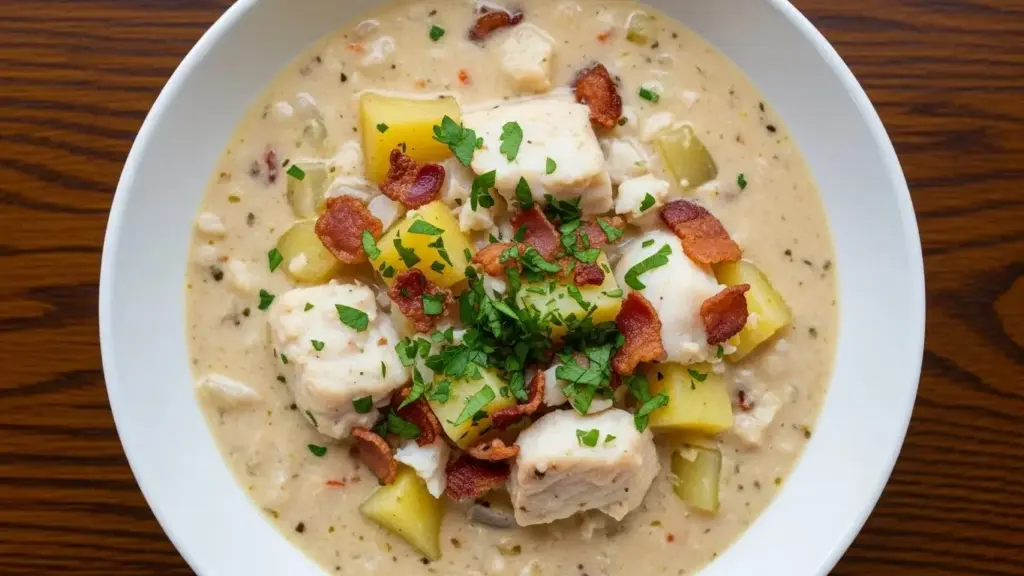
This chowder is hearty enough to be a meal on its own, but adding a few complementary sides turns dinner into something special. I usually keep things simple and let the chowder be the star.
A crusty, chewy bread is non-negotiable in my house. There’s something deeply satisfying about tearing off a piece and using it to soak up every last drop of that creamy broth.
Perfect Pairings:
- Crusty sourdough bread, warmed and slathered with Honey Butter
- Homemade Biscuits, still warm from the oven
- Simple green salad with a light vinaigrette to cut through the richness
- Coleslaw for a crunchy, tangy contrast
- Deviled Eggs as a classic seafood accompaniment
- Steamed green beans with lemon and garlic
- Grilled Vegetable Skewers for added nutrition
Variations of Fish Chowder
Once you’ve mastered the basic recipe, these variations let you customize the chowder to your preferences or whatever you have on hand. I make a different version almost every time depending on what’s in my fridge.
Delicious Variations to Try:
- Corn and Fish Chowder: Add 1½ cups of fresh or frozen corn kernels along with the potatoes for sweetness and extra texture
- Seafood Medley Chowder: Replace half the fish with shrimp, scallops, or crab meat for a more luxurious version (add shellfish in the last 3 minutes of cooking)
- Smoked Fish Chowder: Use half regular white fish and half smoked haddock or smoked salmon for incredible depth of flavor
- Spicy Cajun Fish Chowder: Add 1 tablespoon of Cajun seasoning and a diced jalapeño with the aromatics, plus a dash of hot sauce at the end
- New England Style: Increase the cream to 2 cups and add an extra potato for an even thicker, richer chowder
- Lighter Version: Replace the heavy cream with half-and-half and use turkey bacon instead of regular bacon to reduce calories
- Tomato-Based Fish Chowder: Swap the cream for 2 cups of crushed tomatoes and add fresh basil for a Manhattan-style approach
- Coconut Fish Chowder: Replace the cream with coconut milk and add curry powder, ginger, and lime for a Thai-inspired twist
If you love the versatility of chowders, explore my Seafood Stew for another hearty, ocean-inspired dish.
Storage and Reheating
This chowder actually benefits from a night in the fridge as the flavors deepen and become even more cohesive. Just follow these storage tips to maintain the best texture and taste.
Storage Instructions:
- Let the chowder cool to room temperature before storing (don’t leave it out for more than 2 hours)
- Transfer to an airtight container and refrigerate for up to 3 days
- Store any leftover crispy bacon separately in a small container so it stays crunchy
- For longer storage, freeze the chowder without the cream for up to 2 months (add cream when reheating)
- Label containers with the date so you remember when you made it
- The chowder will thicken considerably in the fridge, which is completely normal
Reheating Tips:
- Reheat gently on the stovetop over medium-low heat, stirring occasionally to prevent scorching
- Add a splash of stock, milk, or cream to thin the chowder back to your desired consistency
- Never use high heat or a microwave at full power, as this can cause the cream to separate and the fish to toughen
- If using a microwave, heat in 1-minute intervals at 50% power, stirring between each interval
- Taste and adjust seasoning after reheating, as flavors can mellow in the fridge
Another comforting soup that reheats beautifully? Check out my Potato Leek Soup.

Nutritional Facts
Here’s the approximate nutritional breakdown per serving (based on 6 servings). Keep in mind that these values can vary depending on the specific ingredients and quantities you use.
Per Serving (approximately 1½ cups):
- Calories: 425
- Total Fat: 26g
- Saturated Fat: 14g
- Cholesterol: 115mg
- Sodium: 890mg
- Total Carbohydrates: 24g
- Dietary Fiber: 2g
- Sugars: 4g
- Protein: 24g
- Vitamin A: 18% DV
- Vitamin C: 25% DV
- Calcium: 12% DV
- Iron: 8% DV
Health Benefits of Key Ingredients
While this chowder is definitely a comfort food, it does offer some impressive nutritional benefits thanks to its whole-food ingredients. I love that I can feel good about serving something this delicious to my family.
White fish is one of the best sources of lean protein you can find, plus it’s loaded with beneficial omega-3 fatty acids that support heart and brain health.
Nutritional Highlights:
- White Fish: Excellent source of high-quality protein and vitamin B12, supports muscle health and provides selenium for immune function
- Potatoes: Rich in potassium (more than bananas), vitamin C, and resistant starch that feeds beneficial gut bacteria
- Garlic: Contains allicin with powerful anti-inflammatory and immune-boosting properties
- Celery: Provides important antioxidants and has natural anti-inflammatory benefits
- Onions: High in quercetin, an antioxidant that may help reduce inflammation and support heart health
- Bacon (in moderation): Provides protein and makes the dish more satisfying, helping you feel full longer
- Heavy Cream: Contains fat-soluble vitamins A, D, E, and K, plus provides sustained energy
For more nutritious comfort food, try my Lentil and Vegetable Soup.
FAQs About Fish Chowder
1. Can I use frozen fish for this chowder?
Yes, you absolutely can use frozen fish. Just make sure to thaw it completely in the refrigerator overnight before using it in the recipe.
Pat the fish dry with paper towels before adding it to the chowder, as excess moisture can water down your soup.
2. Why is my fish chowder too thin?
If your chowder is thinner than you’d like, try mashing some of the cooked potatoes against the side of the pot with a fork or potato masher. This releases starch into the soup, naturally thickening it without adding flour.
You can also let the chowder simmer uncovered for an additional 5-10 minutes to allow some of the liquid to evaporate.
3. Can I make fish chowder ahead of time?
You can prepare the base (everything except the fish and cream) up to a day ahead. When you’re ready to serve, reheat the base, then add the fish and cream and proceed with the recipe.
This actually works really well for dinner parties because you can do most of the work in advance.
4. What’s the difference between fish chowder and clam chowder?
The main difference is the protein used. Fish chowder features chunks of white fish, while clam chowder contains clams or other shellfish.
The base preparation and ingredients are very similar, though clam chowder often includes clam juice for extra briny flavor.
5. How do I prevent the cream from curdling in my chowder?
The key is temperature control. Always add cream when the soup is at a gentle simmer, never at a rolling boil.
Once the cream is added, keep the heat low and stir gently to incorporate it without causing the proteins in the dairy to separate.
Looking for more creamy soup recipes? My Creamy Tomato Basil Soup is another winner.
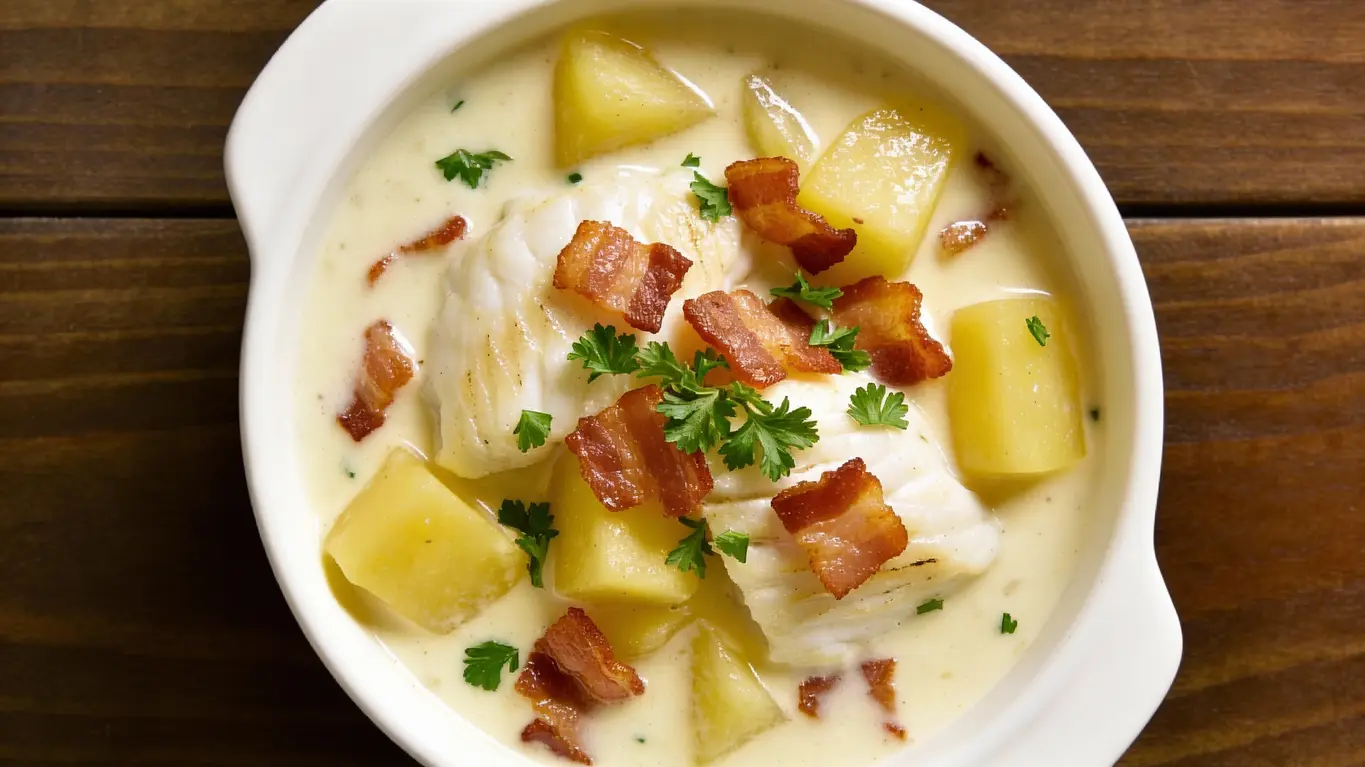
Fish Chowder
Ingredients
- 4 thick-cut bacon - slices, chopped
- 2 tbsp butter - 30g
- 1 large yellow onion - finely diced
- 2 celery stalks - diced
- 3 garlic cloves - minced
- 1.5 lbs Yukon Gold potatoes - about 680g or 4 medium, peeled and cut into ½-inch cubes
- 3 cups seafood stock or fish stock - 720ml
- 1 cup clam juice - 240ml
- 2 bay leaves
- 1 tsp fresh thyme leaves - or ½ tsp dried thyme
- 0.5 tsp smoked paprika
- 0.25 tsp cayenne pepper - optional, for a subtle kick
- 1.5 tsp salt - plus more to taste
- 0.5 tsp black pepper
- 1.5 lbs firm white fish fillets - about 680g; cod, haddock, or halibut recommended, cut into 1-inch chunks
- 1.5 cups heavy cream - 360ml
- 0.5 cup whole milk - 120ml
- 2 tbsp fresh parsley - chopped
- 1 tbsp fresh dill - chopped; optional but highly recommended
- 2 tsp lemon juice - freshly squeezed
- fresh parsley - extra, chopped, for garnish
- oyster crackers or crusty bread - for serving
- lemon wedges - for serving
Equipment
- Large Dutch oven or heavy-bottomed pot - At least 6 quarts
- Sharp chef’s knife
- Cutting board
- Wooden spoon or silicone spatula
- Ladle
- Measuring cups and spoons
- Small bowl - For holding prepped ingredients
- Immersion blender - (optional) For a partially blended, creamier texture
- Potato masher - (optional) For slightly thickening the soup
- Fine-mesh strainer - (optional) For straining the stock if needed
Method
- Cook chopped bacon in a Dutch oven over medium heat for 6–8 minutes until crispy, then transfer to a paper towel-lined plate, leaving about 2 tablespoons of fat in the pot. Add butter and let it melt completely.
- Add diced onion and celery to the pot and cook for 5–6 minutes until softened and translucent. Stir in minced garlic and cook for 60–90 seconds until fragrant but not browned.
- Stir in the cubed potatoes, then pour in the seafood stock and clam juice. Add bay leaves, thyme, smoked paprika, cayenne (if using), salt, and pepper; stir to combine and bring to a boil over medium-high heat.
- Reduce heat to medium-low, partially cover, and simmer for 15–18 minutes, stirring occasionally, until potatoes are tender when pierced with a fork but still hold their shape.
- For a thicker chowder, use a potato masher to gently mash about a quarter of the potatoes in the pot, or blend 1 cup of the soup until smooth and stir it back in.
- Reduce heat to low and gently add the fish chunks, distributing them evenly. Cook for 4–5 minutes without stirring too much, until the fish is opaque and flakes easily but still holds together.
- Pour in the heavy cream and milk, stirring gently, then heat through for 2–3 minutes without boiling. Remove bay leaves, stir in parsley, dill, and lemon juice, and adjust seasoning to taste.
- Ladle into bowls, top with reserved crispy bacon and extra parsley, and serve immediately with oyster crackers or crusty bread and a lemon wedge on the side.
Nutrition
Notes
- Choose firm fish: Cod, haddock, or halibut hold their shape best during cooking. Avoid delicate fish like tilapia or sole, which fall apart too easily.
- Don’t skip the bacon: The smoky, salty flavor from the bacon fat is essential to the chowder’s depth. Use at least 3 slices even if reducing for a lighter version.
- Add fish last: Adding the fish too early results in rubbery, overcooked pieces. Four to five minutes of gentle simmering at the end is all it needs.
- Use Yukon Gold potatoes: Their buttery flavor and texture are ideal for chowder. Russets get too mealy; red potatoes don’t break down enough.
- Keep heat low after adding cream: High heat causes dairy to separate and creates a grainy texture. Always maintain a gentle simmer once cream is added.
- Make-ahead tip: Prepare the base (everything except fish and cream) up to a day ahead. Reheat, then add fish and cream when ready to serve.
- Storage: Refrigerate in an airtight container for up to 3 days. Store crispy bacon separately so it stays crunchy. To freeze, omit the cream and add it when reheating.
- Reheating: Reheat gently on the stovetop over medium-low heat with a splash of stock or milk to thin. Avoid high heat or full-power microwave — use 50% power in 1-minute intervals.
- Frozen fish works: Thaw completely overnight in the refrigerator and pat dry with paper towels before adding to the chowder to avoid watering down the broth.
- Let it rest: Allow the finished chowder to sit for 10–15 minutes before serving for deeper, more melded flavors.
Private Notes
Tried this recipe?
Let us know how it was!Final Thoughts
This Fish Chowder Recipe has earned its place in my regular dinner rotation, and I hope it does the same for you. There’s something magical about how simple ingredients transform into something so deeply comforting and satisfying.
The best part is watching people’s faces light up with that first spoonful, especially on a cold evening when everyone needs a little extra warmth. Don’t be surprised when this becomes one of those recipes you make again and again, tweaking it slightly each time to make it your own.
Give this chowder a try and let me know how it turns out in the comments below. I’d love to hear about any variations you come up with or any special touches you add to make it uniquely yours!
Recommended:
- Beef Barley Soup
- Zuppa Toscana
- Pasta Fagioli
- Italian Wedding Soup
- Cheeseburger Soup
- French Onion Beef Short Rib Soup
- Avgolemono Soup
- Easy Chicken Noodle Soup
- Taco Soup
- Carrot Ginger Soup