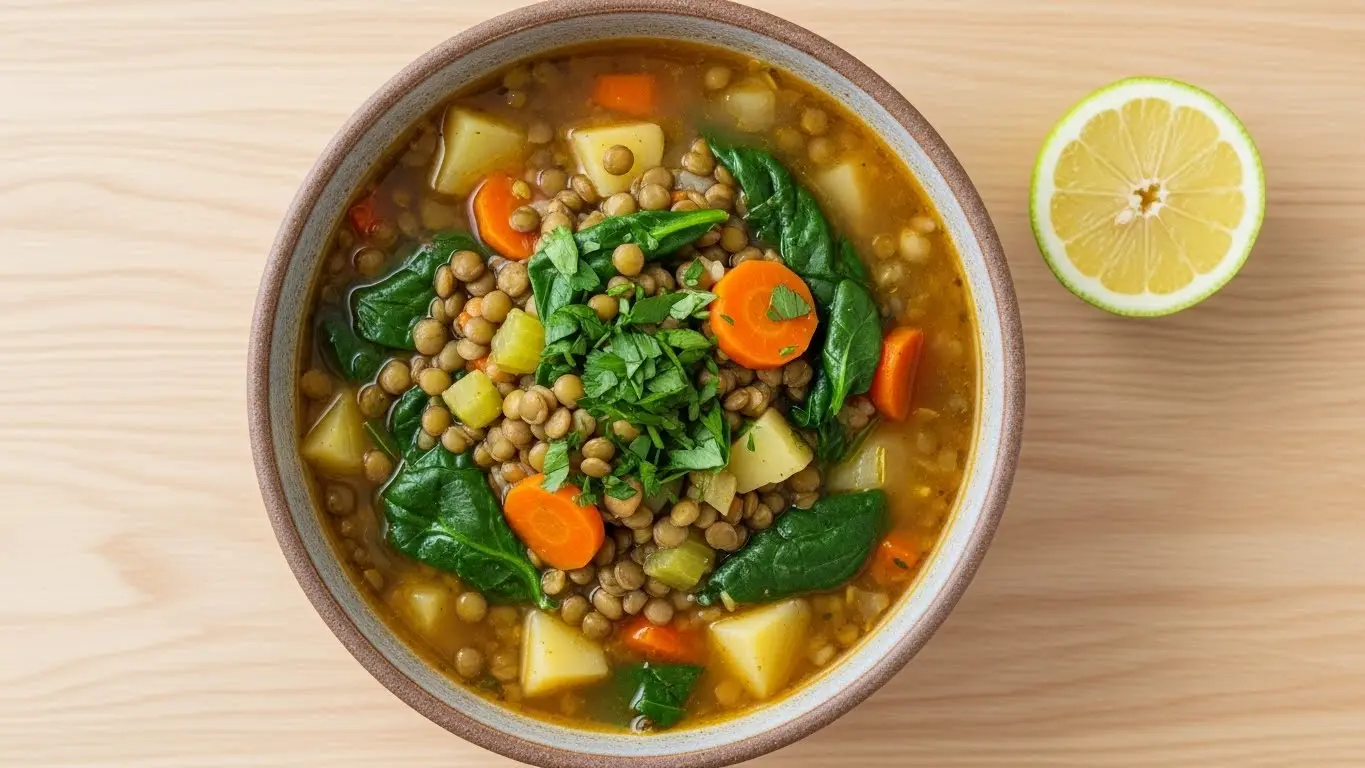
I used to think of lentil soup as one of those “healthy but boring” dishes you make when you’re trying to be good.
Then one chilly autumn evening, I found myself with a half-empty fridge, a bag of green lentils I’d been meaning to use, and a rumbling stomach. What I threw together that night completely changed my perspective on this humble Lentil and Vegetable Soup Recipe.
The trick is treating each vegetable with care, building layers of flavor, and letting the lentils do their magic of creating a naturally creamy, satisfying texture without any cream at all.
Now it’s the soup I crave on cold days, the one my kids actually ask for, and the recipe friends text me about after I’ve served it at dinner parties.
| Quick Recipe Summary | |
|---|---|
| Prep Time | 15 minutes |
| Cook Time | 40 minutes |
| Total Time | 55 minutes |
| Servings | 6-8 servings |
| Difficulty Level | Easy |

Why You’ll Love This Lentil and Vegetable Soup Recipe
This soup checks every box for what I want in a weeknight dinner. It’s hearty enough to satisfy even the pickiest eaters in my house, yet light enough that you don’t feel weighed down after a bowl.
Here’s what makes this recipe special:
- Budget-friendly ingredients: Lentils are incredibly affordable, and most of the vegetables are pantry or fridge staples. I’ve made this soup for under $12 and fed my entire family with leftovers to spare.
- Naturally plant-based and protein-packed: Each serving delivers about 15 grams of protein from the lentils alone. No meat needed, though I’ll share variations if you want to add some.
- One-pot simplicity: Everything cooks in a single pot, which means less cleanup and more time to relax. I usually have this going while I help with homework or catch up on emails.
- Freezer-friendly for meal prep: This soup actually tastes better the next day after the flavors meld. I always make a double batch and freeze half in individual portions for those nights when cooking feels impossible.
- Customizable to your taste: You can swap vegetables based on what’s in season or what you have on hand. I’ve made this with butternut squash in fall, zucchini in summer, and even added kale when I’m feeling extra virtuous.
- Kid-approved comfort food: My youngest used to pick around vegetables, but something about the way they soften into this soup makes them disappear. The earthy lentils blend so well with the sweet carrots and savory tomatoes that it all just works together.
Another favorite: Zuppa Toscana Recipe
Ingredients
The beauty of this recipe is how simple the ingredient list is. I keep most of these items stocked in my pantry, so I can whip up this soup whenever the craving hits.
For the Soup Base:
- 2 tablespoons olive oil (30 ml)
- 1 large onion, diced (about 1 ½ cups/225 g)
- 3 cloves garlic, minced
- 2 medium carrots, diced (about 1 cup/150 g)
- 2 celery stalks, diced (about 1 cup/150 g)
- 1 large russet potato, peeled and cubed (about 2 cups/300 g)
- 1 ½ cups (300 g) green or brown lentils, rinsed and picked over
- 1 can (14.5 oz/411 g) diced tomatoes, with their juices
- 6 cups (1.4 liters) vegetable broth (or chicken broth if not keeping it vegetarian)
- 2 cups (475 ml) water
- 2 bay leaves
- 1 teaspoon dried thyme
- 1 teaspoon smoked paprika
- ½ teaspoon ground cumin
- 1 teaspoon salt (adjust to taste)
- ½ teaspoon black pepper
- 2 cups (60 g) fresh spinach or kale, roughly chopped
- 2 tablespoons fresh lemon juice (from about 1 lemon)
- Fresh parsley for garnish (optional)
Kitchen Equipment Needed
You don’t need any fancy gadgets to make this soup. I use the same basic tools for almost all my soup recipes, and they’ve served me well for years.
- Large soup pot or Dutch oven (at least 6-quart/5.7-liter capacity): This is essential for making sure everything fits comfortably and cooks evenly. I use my trusty 7-quart Dutch oven for this.
- Wooden spoon or silicone spatula: For stirring without scratching your pot. I prefer wooden spoons because they don’t conduct heat.
- Chef’s knife and cutting board: A sharp knife makes prep work so much faster. I spent years struggling with dull knives before investing in a good one, and it changed everything.
- Measuring cups and spoons: Accuracy matters, especially with the lentils and liquid ratios.
- Can opener: For the diced tomatoes.
- Immersion blender (optional): If you prefer a partially blended, creamier soup texture. I sometimes blend about a third of the soup to thicken it naturally while keeping chunks of vegetables.
- Ladle: For serving.
- Fine-mesh strainer: To rinse the lentils before cooking.
Recommended Products for This Recipe
After making this soup countless times, I’ve discovered a few products that genuinely make a difference in the final result. These aren’t necessary, but they do elevate the dish.
1. Le Creuset Enameled Cast Iron Dutch Oven
I resisted buying a Dutch oven for years because of the price, but this has become my most-used pot. The even heat distribution means your vegetables caramelize beautifully without burning, and the lentils cook perfectly tender every time. Plus, it goes from stovetop to oven if you ever want to finish dishes with a crispy top.
2. Bob’s Red Mill Green Lentils
Not all lentils are created equal. These cook consistently and hold their shape instead of turning to mush. I’ve tried cheaper brands that resulted in mushy, overcooked lentils even when I followed the timing exactly, so quality matters here.
3. Better Than Bouillon Vegetable Base
This concentrated paste gives you so much more control over the flavor of your broth than boxed stock. A little goes a long way, and it keeps for months in the fridge. The depth of flavor it adds is remarkable compared to standard vegetable broth.
4. Cuisinart Smart Stick Immersion Blender
If you like your soup with a creamier texture, an immersion blender is perfect for partially blending while keeping it chunky. This one is powerful enough to get the job done but affordable enough that it won’t break the bank.

Step-by-Step Instructions: How to Make Lentil and Vegetable Soup
This soup comes together in about an hour, and most of that is hands-off simmering time. The key is building flavor in layers rather than just dumping everything in at once.
1. Prepare Your Vegetables and Lentils
- Rinse the lentils in a fine-mesh strainer under cold running water. Pick through them to remove any small stones or debris. This takes just a minute but it’s important because I’ve occasionally found little pebbles hiding in there.
- Dice the onion into roughly ¼-inch (6 mm) pieces. I don’t worry about perfect uniformity, but keeping them similar in size helps them cook evenly.
- Mince the garlic cloves finely. I used to use a garlic press, but I find that hand-mincing gives better flavor and texture.
- Peel and dice the carrots into ¼-inch (6 mm) cubes. The smaller pieces will soften into the soup, while larger chunks would stay too firm.
- Dice the celery stalks to match the carrot size. Try to keep the pieces consistent so everything finishes cooking at the same time.
- Peel the potato and cut it into ½-inch (1.3 cm) cubes. The potato will partially break down as it cooks, naturally thickening the soup.
- If using fresh spinach or kale, roughly chop it into bite-sized pieces. Don’t worry about removing thick kale stems at this point as they’ll soften during cooking.
2. Sauté the Aromatics
- Heat the olive oil in your large soup pot or Dutch oven over medium heat. Let it warm for about 30 seconds until it shimmers slightly.
- Add the diced onion to the pot. Stir occasionally and cook for 5-7 minutes until the onion becomes translucent and starts to soften. You want to see some golden edges forming but not deep brown caramelization yet.
- Add the minced garlic and stir constantly for about 1 minute until fragrant. Be careful not to let it burn, as burnt garlic tastes bitter. The moment you can smell it strongly, it’s ready for the next step.
- This is where the magic starts happening. The combination of onion and garlic creates the flavor foundation for the entire soup.
You might also enjoy: Pasta Fagioli Recipe
3. Add the Vegetables and Spices
- Toss in the diced carrots and celery. Stir everything together so the vegetables are coated with the oil and aromatics.
- Cook for another 5 minutes, stirring occasionally. The vegetables should start to soften slightly at the edges. This pre-cooking step helps develop deeper flavor than if you just added everything at once.
- Sprinkle in the dried thyme, smoked paprika, cumin, salt, and black pepper. Stir constantly for about 30 seconds to 1 minute. This “blooming” of the spices in the hot oil releases their essential oils and makes them more flavorful.
- I learned this technique from my grandmother, who always said that spices need heat to wake up. The difference in flavor is noticeable.
4. Add the Lentils, Tomatoes, and Liquids
- Pour in the rinsed lentils and stir them into the vegetable mixture. Let them cook for about 1 minute, stirring constantly. This helps them absorb some of the flavors before the liquid goes in.
- Add the can of diced tomatoes along with all their juices. The acidity from the tomatoes will help keep the lentils from getting too mushy and adds a bright flavor to balance the earthiness.
- Pour in the vegetable broth and water. The combination of broth and water gives you control over the sodium level while still maintaining good flavor.
- Drop in the bay leaves. Make a mental note of how many you add because you’ll need to fish them out later. I once forgot and served the soup with the bay leaves still in, which led to a slightly embarrassing dinner party moment.
- Give everything a good stir, making sure the lentils aren’t clumped together at the bottom.
5. Bring to a Boil and Simmer
- Increase the heat to high and bring the soup to a rolling boil. This should take about 5-7 minutes.
- Once it’s boiling vigorously, immediately reduce the heat to medium-low. You want a gentle simmer, where you see small bubbles breaking the surface but it’s not a violent boil.
- Partially cover the pot with a lid, leaving about an inch gap for steam to escape. This prevents the soup from reducing too much while still allowing some evaporation to concentrate the flavors.
- Let it simmer for 25-30 minutes, stirring every 10 minutes or so. The lentils should become tender but not mushy. Green or brown lentils will hold their shape better than red lentils.
- After about 20 minutes, test a lentil by pressing it between your fingers. It should be tender but still have a slight bite. If they’re still too firm, continue cooking for another 5-10 minutes.
6. Add the Potatoes
- After the initial 25-30 minutes of simmering, add the cubed potatoes to the pot. Stir them in gently.
- Continue simmering for another 15-20 minutes until the potatoes are fork-tender. You should be able to easily pierce them with a fork but they shouldn’t be falling apart.
- As the potatoes cook, some of them will naturally break down and help thicken the soup. This is exactly what you want for that hearty, comforting texture.
- Check the liquid level during this time. If the soup is looking too thick, add another ½ to 1 cup (120-240 ml) of water or broth. If it’s too thin, let it simmer uncovered for the last 10 minutes to reduce.
7. Finish with Greens and Lemon
- Stir in the chopped spinach or kale. It will seem like a lot at first, but it wilts down dramatically within 2-3 minutes.
- Let the greens wilt completely, stirring occasionally. The residual heat is enough to cook them perfectly without making them slimy.
- Remove the pot from the heat. Fish out and discard the bay leaves. I use a spoon to press them against the side of the pot so they’re easy to spot.
- Squeeze in the fresh lemon juice and stir well. This final acidic hit brightens all the flavors and keeps the soup from tasting flat. Don’t skip this step because it really makes everything pop.
- Taste and adjust the seasoning. You might need more salt, pepper, or even another squeeze of lemon depending on your preferences and the saltiness of your broth.
8. Serve and Garnish
- Ladle the hot soup into bowls. I like to make sure each serving has a good mix of lentils, vegetables, and broth.
- Garnish with freshly chopped parsley if using. The fresh herb adds a pop of color and a subtle freshness.
- Serve immediately while it’s steaming hot. I usually put out some crusty bread, crackers, or a simple side salad to round out the meal.
- Any leftovers can be stored in the refrigerator or frozen for later. The soup will thicken as it sits, so you may need to add a splash of water or broth when reheating.
Read Also: Italian Wedding Soup Recipe
Tips for The Best Lentil and Vegetable Soup
After making this soup more times than I can count, I’ve learned a few tricks that consistently produce the best results. Here’s what works for me.
- Don’t skip rinsing the lentils: I know it seems like an extra step, but rinsing removes excess starch and any dust or debris. The first time I skipped this, my soup had a slightly gritty texture that I couldn’t figure out until I realized I’d forgotten to rinse.
- Use the right lentils: Green or brown lentils hold their shape best in soup. Red or yellow lentils will break down and create more of a dal-like consistency, which isn’t bad but it’s a different dish. I learned this the hard way when I grabbed the wrong bag of lentils once.
- Layer your flavors: Cooking the onions first, then adding garlic, then spices, then everything else creates depth. If you dump everything in at once, the soup tastes one-dimensional.
- Don’t add salt to the lentils too early: Some people say salt toughens lentils if added at the beginning, though I haven’t found this to be a huge issue. Still, I add most of my salt toward the end so I can taste and adjust as needed.
- Cut vegetables uniformly: This isn’t just about aesthetics. When vegetables are similar sizes, they finish cooking at the same time. Nothing’s worse than mushy carrots and crunchy celery in the same bite.
- Adjust thickness to your preference: I like my lentil soup thick enough that a spoon stands up in it, but some people prefer it brothier. Control this by adjusting the amount of liquid or simmering time.
- Let it rest before serving: If you have 10-15 minutes, let the soup sit off the heat before serving. The flavors continue to meld, and it’s less likely to burn anyone’s mouth.
- Taste before serving: This seems obvious, but I’ve served under-seasoned soup more times than I’d like to admit. Always taste and adjust salt, pepper, and lemon juice right before serving.
- Use good broth: The quality of your broth matters significantly. Homemade is ideal, but a good quality store-bought broth or Better Than Bouillon makes a big difference over cheap boxed broth.
- Add acid at the end: The lemon juice is crucial for balancing the earthy lentils, but if you add it too early, the acid can make the lentils tough and extend cooking time.
What to Serve with Lentil and Vegetable Soup
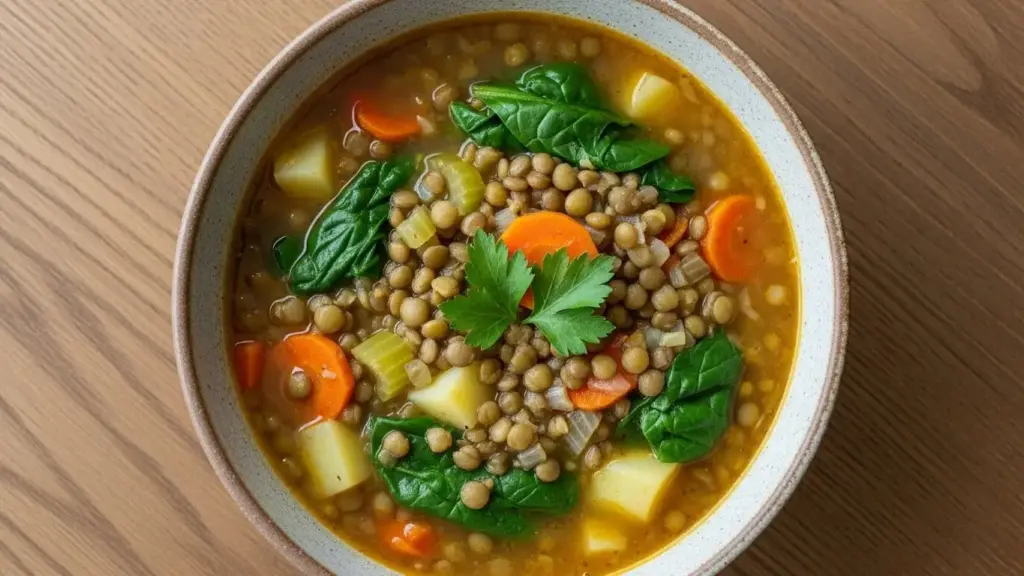
This soup is hearty enough to stand alone as a meal, but I usually serve it with something on the side to round things out. Here are my favorite pairings that complement the earthy, savory flavors.
- Crusty bread or dinner rolls: Nothing beats dipping warm Dinner Rolls into this soup. The bread soaks up all the flavorful broth, and it adds a satisfying textural contrast. I often make my own, but a good quality bakery loaf works perfectly.
- Simple green salad: A light salad with mixed greens, cucumber, and a tangy vinaigrette cuts through the richness of the soup. I like to use lemon juice in the dressing to echo the brightness in the soup itself.
- Grilled cheese sandwich: This is my kids’ favorite combo. The melty, gooey cheese alongside the healthy soup makes for a balanced comfort food meal. It’s like a grown-up version of tomato soup and grilled cheese.
- Roasted vegetables: Sometimes I’ll roast some extra vegetables in the oven while the soup simmers. The caramelized edges and concentrated sweetness pair beautifully with the soup. Try Grilled Vegetable Skewers for a lighter option.
- Quinoa or rice: If you want to make the meal even more filling, serve the soup over a scoop of cooked quinoa or brown rice. This makes it more of a bowl situation and adds extra protein.
- Cornbread: The slight sweetness of Healthy Cornbread complements the savory soup wonderfully. Plus, cornbread is excellent for soaking up every last drop.
- Cheese and crackers: I sometimes set out a simple cheese board with crackers as an appetizer before serving the soup. Sharp cheddar or aged gouda work particularly well.
- Avocado toast: For a trendy twist, serve the soup with Avocado Toast on the side. The creamy avocado and crunchy toast add nice contrast to the soup’s texture.
For a lighter option, try: Chickpea Salad Recipe
Variations of Lentil and Vegetable Soup
One of my favorite things about this recipe is how flexible it is. I’ve made countless versions over the years, and they’ve all been delicious. Here are some variations I return to again and again.
- Mediterranean-Style: Replace the smoked paprika and cumin with dried oregano and a pinch of cinnamon. Add a diced red bell pepper with the other vegetables. Finish with crumbled feta cheese and a drizzle of olive oil instead of the lemon juice. This version reminds me of trips to Greece.
- Curry Lentil Soup: Swap the cumin and paprika for 2 tablespoons of curry powder. Add a can of coconut milk in place of 1 cup of the water for a creamy, rich soup with warming spices. I sometimes add diced sweet potato instead of regular potato for this version.
- Italian-Inspired: Add a parmesan rind to the pot while the soup simmers (remove it before serving). Use Italian seasoning instead of the cumin and paprika. Stir in some cooked pasta shells or ditalini in the last 10 minutes of cooking. Top with freshly grated parmesan cheese.
- Spicy Version: Add 1-2 diced jalapeños with the other vegetables, and include ½ teaspoon of red pepper flakes with the spices. You can also swirl in some sriracha or hot sauce when serving for extra heat. My husband loves this version.
- Smoky Bacon Addition: For non-vegetarians, cook 4-6 strips of bacon until crispy, remove and crumble, then use the bacon fat instead of olive oil to sauté the vegetables. Stir the crumbled bacon back in at the end. The smokiness adds incredible depth.
- Moroccan-Spiced: Use a combination of cumin, coriander, turmeric, and a pinch of cinnamon. Add diced butternut squash instead of potato. Finish with fresh cilantro and a dollop of Greek yogurt. This version is absolutely stunning.
- Sausage and Lentil Soup: Brown some Italian sausage (mild or spicy) before adding the vegetables, and use the rendered fat to cook the aromatics. This makes it heartier and adds tons of flavor. Similar to my Zuppa Toscana, but with lentils.
- Creamy Version: Use an immersion blender to puree about half of the finished soup, leaving the rest chunky. Or stir in ½ cup of heavy cream or coconut cream at the end for a richer, creamier texture.
- Garden Vegetable: Add whatever vegetables you have on hand or what’s in season. I’ve used zucchini, bell peppers, green beans, butternut squash, sweet potatoes, and even corn. The beauty of soup is its flexibility.
- Pressure Cooker/Instant Pot Version: Sauté the aromatics using the sauté function, add everything except the greens and lemon juice, and cook on high pressure for 15 minutes. Natural release for 10 minutes, then quick release. Stir in greens and lemon juice.
Storage and Reheating
This soup stores beautifully, which makes it perfect for meal prep. I often make a big batch on Sunday and eat it throughout the week.
- Refrigerator storage: Let the soup cool to room temperature, then transfer it to airtight containers. It will keep in the fridge for up to 5 days. The soup will thicken considerably as it sits because the lentils continue absorbing liquid. Just add a splash of water or broth when reheating.
- Freezer storage: This soup freezes exceptionally well for up to 3 months. I like to freeze it in individual portions using freezer-safe containers or heavy-duty freezer bags. Lay the bags flat to freeze so they stack neatly and thaw faster. Leave about an inch of headspace in containers because the soup will expand as it freezes.
- Thawing: The best way to thaw frozen soup is overnight in the refrigerator. If you’re in a hurry, you can defrost it in the microwave using the defrost setting, stirring occasionally.
- Reheating on the stovetop: Pour the soup into a pot over medium heat. Stir occasionally and add a bit of water or broth if it’s too thick. Heat until it’s bubbling gently throughout, about 5-10 minutes. This is my preferred reheating method because you can easily adjust the consistency.
- Reheating in the microwave: Transfer a portion to a microwave-safe bowl. Cover loosely with a microwave-safe lid or plate. Heat on high for 2-3 minutes, stir, then continue heating in 1-minute intervals until hot throughout. The microwave can create hot spots, so stirring is important.
- Portion control tip: I freeze soup in muffin tins for small portions, then pop out the frozen portions and store them in a freezer bag. This way, I can defrost exactly the amount I want without wasting any.
- Refreshing leftovers: When reheating, I often add a fresh squeeze of lemon juice and some chopped fresh herbs to brighten up the flavors. It makes day-old soup taste freshly made.
- Texture note: The vegetables may soften more over time, which some people like. If you prefer firmer vegetables, slightly undercook them initially if you know you’ll be storing leftovers.
Read Also: Potato Leek Soup Recipe
Nutritional Facts
Per Serving (based on 8 servings):
- Calories: 210
- Total Fat: 4g
- Saturated Fat: 0.5g
- Cholesterol: 0mg
- Sodium: 620mg
- Total Carbohydrates: 35g
- Dietary Fiber: 12g
- Sugars: 6g
- Protein: 15g
- Vitamin A: 80% DV
- Vitamin C: 25% DV
- Calcium: 6% DV
- Iron: 30% DV
Note: Nutritional information is approximate and will vary based on specific ingredients used and portion sizes. Sodium content can be adjusted by using low-sodium broth or reducing added salt.
Health Benefits of Key Ingredients
This soup isn’t just delicious, it’s genuinely nutritious. Every ingredient brings something valuable to the table, which is why I feel good about serving this to my family regularly.
- Lentils: These tiny powerhouses are loaded with plant-based protein, complex carbohydrates, and soluble fiber. The fiber helps with digestion and keeps you feeling full longer, which is why this soup is so satisfying. Lentils are also rich in folate, iron, potassium, and magnesium. I love that one cup of cooked lentils provides about 18 grams of protein.
- Carrots: The bright orange color comes from beta-carotene, which your body converts to vitamin A for eye health and immune function. Carrots also add natural sweetness that balances the earthiness of the lentils without any added sugar.
- Spinach or kale: These leafy greens are nutritional superstars. They’re packed with vitamins K, A, and C, plus iron, calcium, and antioxidants. The vitamin C in the tomatoes and lemon juice helps your body absorb the iron from the greens more effectively.
- Tomatoes: Rich in lycopene, a powerful antioxidant that’s been linked to heart health and reduced cancer risk. Cooked tomatoes actually have more bioavailable lycopene than raw ones, so soup is a great way to get this benefit.
- Garlic and onions: Both contain compounds with anti-inflammatory and immune-boosting properties. They’ve been used medicinally for centuries, and modern research backs up many of those traditional uses. Plus, they make everything taste better.
- Olive oil: Provides heart-healthy monounsaturated fats and helps your body absorb the fat-soluble vitamins in the vegetables. Don’t skip the oil thinking you’re saving calories; those healthy fats are important.
- Celery: Often overlooked, celery is actually a good source of antioxidants and provides fiber with very few calories. It also adds minerals like potassium and folate.
- Lemon juice: Beyond brightening the flavor, the vitamin C in lemon juice enhances iron absorption from the lentils and greens. It also provides antioxidants and supports immune health.
Another favorite: Chicken Gnocchi Soup Recipe
FAQs About Lentil and Vegetable Soup
1. Do I need to soak lentils before making this soup?
No, you don’t need to soak lentils, which is one of the reasons I love this recipe. Unlike dried beans, lentils cook relatively quickly without any pre-soaking.
Just rinse them well before adding them to the pot. The whole soup comes together in under an hour, making it perfect for weeknight dinners when you don’t have time for lengthy prep work.
2. Can I use red lentils instead of green or brown lentils?
You can, but the result will be quite different. Red lentils break down as they cook and will create a thicker, more porridge-like consistency rather than the chunky soup texture this recipe produces.
If you want to use red lentils, reduce the cooking time to about 15-20 minutes total and expect a creamier soup. I actually have a separate red lentil soup recipe for when I want that texture.
3. How can I make this soup thicker or thinner?
To thicken the soup, you have several options. Let it simmer uncovered for an extra 10-15 minutes to reduce the liquid, add more potatoes (which break down and create natural thickness), or use an immersion blender to puree about a third of the soup.
To thin it out, simply add more vegetable broth or water until you reach your desired consistency. The soup naturally thickens as it sits, so leftover portions often need a splash of liquid when reheating.
4. Can I make this soup in a slow cooker or Instant Pot?
Absolutely! For a slow cooker, sauté the aromatics and spices in a skillet first for best flavor, then transfer everything to your slow cooker.
Cook on low for 6-7 hours or high for 3-4 hours. For an Instant Pot, use the sauté function for the aromatics, add everything except the greens and lemon, cook on high pressure for 15 minutes, natural release for 10 minutes, then stir in the greens and lemon juice.
5. My soup turned out too salty. How can I fix it?
This happened to me once when I accidentally used regular broth instead of low-sodium. Add a peeled, quartered potato and let it simmer for 15 minutes (the potato will absorb some salt), then remove it.
You can also add more water or unsalted broth to dilute the saltiness, though this might require rebalancing other seasonings. Another trick is adding a splash of lemon juice or vinegar, which can help balance the perception of saltiness.
Read Also: Matzo Ball Soup Recipe
Final Thoughts
This Lentil and Vegetable Soup has become one of those recipes I return to again and again, especially when I need something nourishing that doesn’t require much effort. It’s proof that healthy cooking doesn’t have to be complicated or boring.
I hope this recipe finds its way into your regular rotation like it has mine. Give it a try and let me know what you think in the comments below, and don’t hesitate to share your own variations or favorite add-ins!
Recommended:
- Taco Soup Recipe
- Lasagna Soup Recipe
- Cheeseburger Soup Recipe
- Avgolemono Soup Recipe
- Panera Broccoli Cheddar Soup Recipe
- Easy Chicken Noodle Soup Recipe
- Instant Pot Chicken Noodle Soup Recipe
- Crockpot Beef Stew Recipe
- Brunswick Stew Recipe
- Seafood Stew Recipe