I still remember the first time I made a proper beef stew from scratch. It was a chilly October afternoon, and I had just gotten back from the farmer’s market with the most beautiful chuck roast.

I had always relied on my mom’s quick weeknight version with pre-packaged stew meat, but I wanted to try something different. That day, I learned that real beef stew isn’t about shortcuts. It’s about patience, building layers of flavor, and letting the meat and vegetables transform into something incredibly comforting.
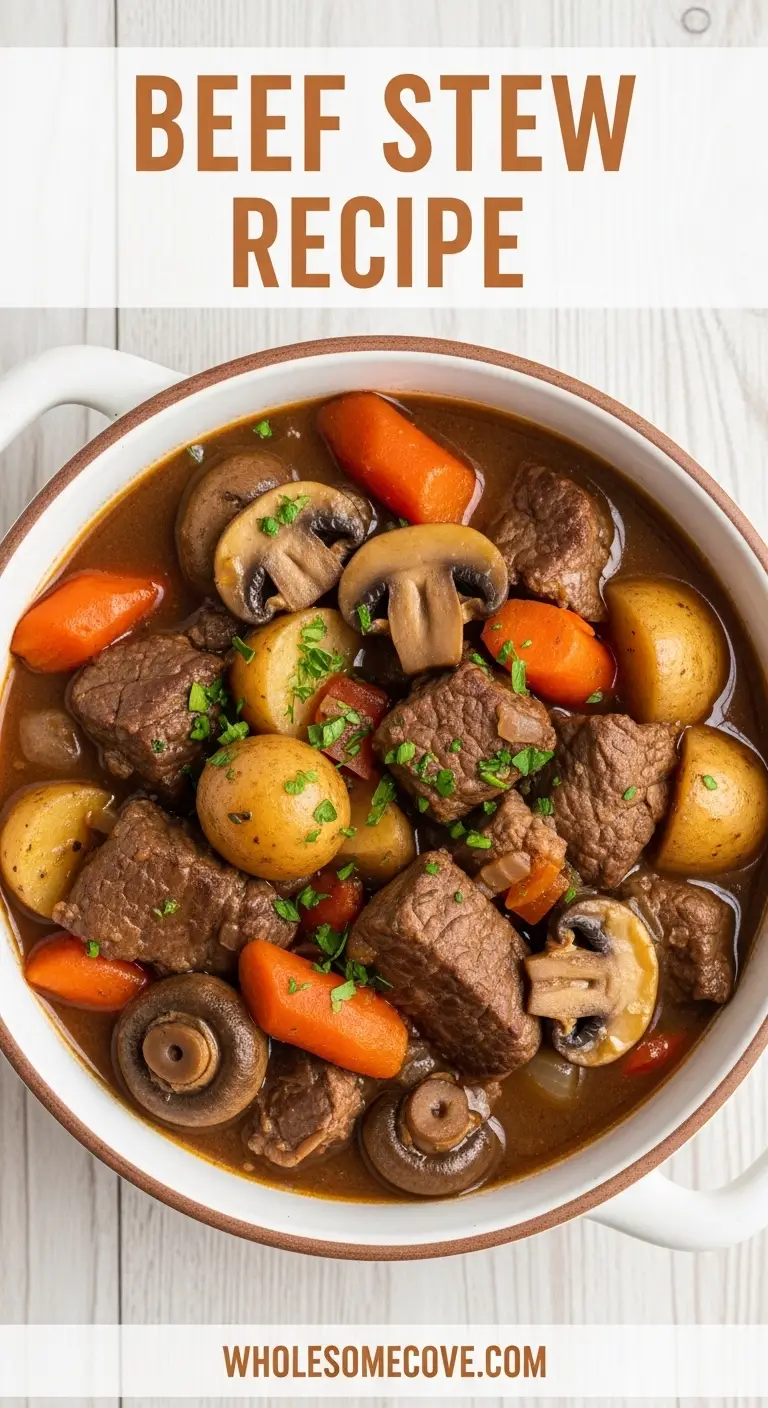
This beef stew recipe has become my cold-weather go-to. The beef becomes so tender it practically falls apart, the vegetables soak up all that rich, savory broth, and your whole house smells absolutely amazing while it cooks.
| Quick Recipe Summary | |
|---|---|
| Prep Time | 25 minutes |
| Cook Time | 2 hours 30 minutes |
| Total Time | 2 hours 55 minutes |
| Servings | 6 servings |
| Difficulty Level | Medium |
If you love hearty, warming meals, you might also enjoy my Slow Cooker Beef Barley Soup, which has a similar depth of flavor.
Why You’ll Love This Beef Stew Recipe
This isn’t your average throw-everything-in-a-pot stew. I’ve tested this recipe dozens of times, and every step has a purpose.
The browning process might seem tedious at first, but it creates those deep, caramelized flavors that make this stew unforgettable. The red wine adds richness without being overpowering, and the vegetables stay perfectly tender without turning to mush.
What makes this beef stew special is the texture of the meat. After two hours of gentle simmering, the chuck roast transforms into these melt-in-your-mouth chunks that are so tender you barely need a knife. My husband actually requests this dish specifically because it reminds him of his grandmother’s Sunday dinners.
Here’s why this recipe stands out:
- Fork-tender beef that practically melts in your mouth
- Rich, velvety broth thickened naturally by the flour coating and potatoes
- Perfect balance of vegetables that hold their shape but soak up flavor
- Deep, complex taste from properly browning the meat and deglazing the pan
- One-pot meal that feeds a crowd and tastes even better the next day
- Flexible recipe that works on the stovetop or in the oven
Another favorite: Cowboy Stew Recipe
Ingredients
This recipe uses simple, wholesome ingredients that you probably already have in your kitchen. The quality of your beef really matters here, so I always recommend going for well-marbled chuck roast if you can find it.
Here’s what you’ll need:
For the Beef:
- 3 pounds (1.4 kg) beef chuck roast, cut into 2-inch cubes
- 1/3 cup (42g) all-purpose flour
- 2 teaspoons kosher salt
- 1 teaspoon black pepper
- 1 teaspoon paprika
- 3 tablespoons olive oil (divided)
For the Vegetables:
- 1 large yellow onion, diced
- 4 cloves garlic, minced
- 4 medium carrots (about 1 pound/450g), peeled and cut into 1-inch pieces
- 3 celery stalks, cut into 1-inch pieces
- 1.5 pounds (680g) Yukon gold potatoes, cut into 1.5-inch cubes
- 8 ounces (225g) baby bella mushrooms, quartered
For the Broth:
- 1.5 cups (360ml) dry red wine (Cabernet Sauvignon or Merlot)
- 4 cups (960ml) beef broth
- 3 tablespoons tomato paste
- 2 tablespoons Worcestershire sauce
- 2 bay leaves
- 3 sprigs fresh thyme (or 1 teaspoon dried thyme)
- 1 sprig fresh rosemary (or 1/2 teaspoon dried rosemary)
For Finishing:
- 1 cup (150g) frozen peas
- Fresh parsley, chopped (for garnish)
This pairs beautifully with my Brown Gravy Recipe if you want extra sauce on the side.
Kitchen Equipment Needed
Having the right equipment makes this recipe so much easier. I learned this the hard way when I tried making beef stew in a shallow skillet and everything crowded together.
Here’s what I recommend:
- Large Dutch oven (6-8 quart capacity) or heavy-bottomed pot with a lid
- Sharp chef’s knife for cutting the beef and vegetables
- Large cutting board
- Wooden spoon or heat-resistant spatula for stirring
- Measuring cups and spoons
- Tongs for turning the beef while browning
- Large mixing bowl for coating the beef
- Ladle for serving
You might also enjoy: Venison Stew Recipe
Recommended Products for This Recipe
Over the years of making beef stew, I’ve discovered a few products that truly make a difference in the final result. These aren’t necessary, but they’ll elevate your stew from good to absolutely incredible.
1. Le Creuset Enameled Cast Iron Dutch Oven
I resisted buying an expensive Dutch oven for years, thinking any heavy pot would do. But once I invested in a Le Creuset, I understood why everyone raves about them. The even heat distribution means your beef browns perfectly without hot spots, and the tight-fitting lid keeps all the moisture locked in during the long simmer. Mine is over ten years old and looks almost new.
2. Better Than Bouillon Beef Base
This concentrated beef base has completely changed how I make stew. It delivers a much richer, deeper beef flavor than regular boxed broth, and you can control the intensity. I actually mix this with homemade or low-sodium broth to get the perfect flavor balance without it being too salty.
3. Premium Tomato Paste in a Tube
I used to waste half a can of tomato paste every time I made stew until I discovered these tubes. They’re convenient, the paste has a fresher taste, and you can squeeze out exactly what you need. The Italian brands tend to have the most concentrated tomato flavor.
4. High-Quality Cabernet Sauvignon
Don’t cook with wine you wouldn’t drink, but you also don’t need to spend a fortune. I’ve found that a mid-range Cabernet Sauvignon in the $12-15 range gives incredible depth to the broth without breaking the bank. The fruity notes add complexity that makes people wonder what your secret ingredient is.
Read Also: Irish Stew Recipe
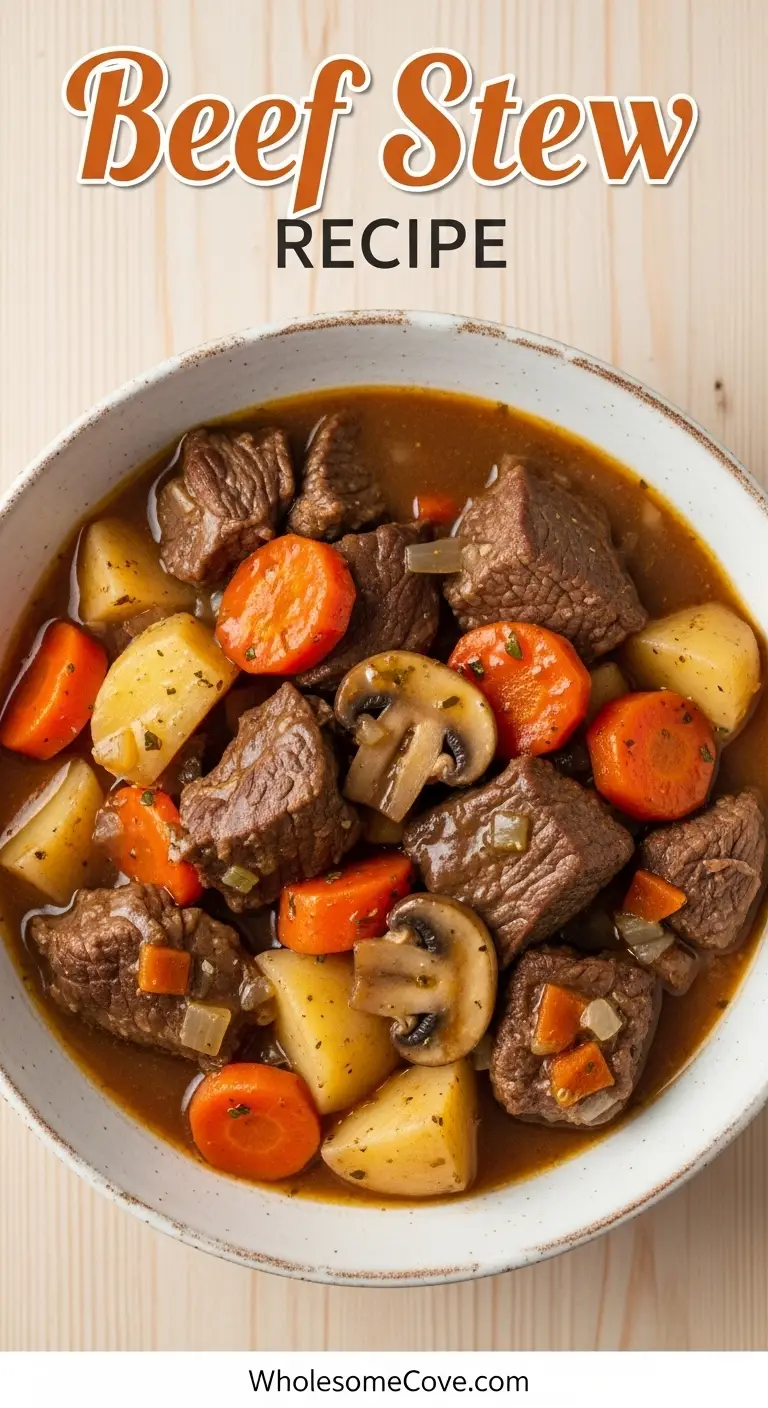
Step-by-Step Instructions: How to Make Beef Stew
This is where the magic happens. Take your time with these steps, especially the browning. That’s where most of the flavor develops.
1. Prepare the Beef
- Pat the beef cubes completely dry with paper towels (this is crucial for browning, not steaming)
- In a large bowl, mix together the flour, salt, pepper, and paprika
- Add the beef cubes to the flour mixture and toss until each piece is evenly coated
- Shake off any excess flour and set the coated beef aside on a plate
2. Brown the Beef in Batches
- Heat 1 tablespoon of olive oil in your Dutch oven over medium-high heat until it shimmers
- Working in 3 batches to avoid crowding, add beef cubes in a single layer
- Let them sear undisturbed for 3-4 minutes until a deep golden-brown crust forms on the bottom
- Use tongs to turn each piece and brown all sides, about 8-10 minutes total per batch
- Transfer browned beef to a clean plate and repeat with remaining batches, adding 1 tablespoon of fresh oil for each batch
- Don’t skip this step or rush it – this browning creates the foundation of flavor for your entire stew
3. Cook the Aromatics
- In the same pot (don’t wipe it out – those brown bits are pure flavor), add the remaining tablespoon of oil if needed
- Add the diced onions and cook, stirring occasionally, for 5-6 minutes until they soften and start to turn golden
- Add the minced garlic and cook for 1 minute, stirring constantly, until fragrant but not burned
- Stir in the tomato paste and cook for 2-3 minutes, stirring frequently, until it darkens to a deep rust color
4. Deglaze and Build the Broth
- Pour in the red wine and use your wooden spoon to scrape up all those beautiful browned bits stuck to the bottom of the pot
- Let the wine simmer for 3-4 minutes to cook off the alcohol and reduce slightly
- Add the beef broth, Worcestershire sauce, bay leaves, thyme sprigs, and rosemary sprig
- Return all the browned beef and any accumulated juices to the pot
- Bring everything to a gentle boil, then immediately reduce heat to low
5. Simmer the Stew
- Cover the pot with the lid slightly ajar (this prevents the stew from reducing too much)
- Let it simmer gently for 1.5 hours, stirring every 30 minutes
- The beef should be getting tender, but it won’t be fall-apart yet
- Check the heat occasionally to make sure it’s maintaining a very gentle simmer, not a rolling boil
6. Add the Vegetables
- After 1.5 hours, add the carrots, celery, potatoes, and mushrooms to the pot
- Stir gently to combine everything
- Cover again and continue simmering for another 45-60 minutes
- The vegetables should be tender when pierced with a fork, and the beef should be incredibly tender
7. Finish and Serve
- Remove and discard the bay leaves, thyme sprigs, and rosemary sprig
- Stir in the frozen peas and let them warm through for 2-3 minutes
- Taste the broth and adjust seasoning with additional salt and pepper if needed
- If the stew seems too thin, let it simmer uncovered for 10-15 minutes to thicken
- Ladle into bowls, garnish with fresh chopped parsley, and serve immediately
For a lighter stew variation, try my Chicken Stew Recipe.
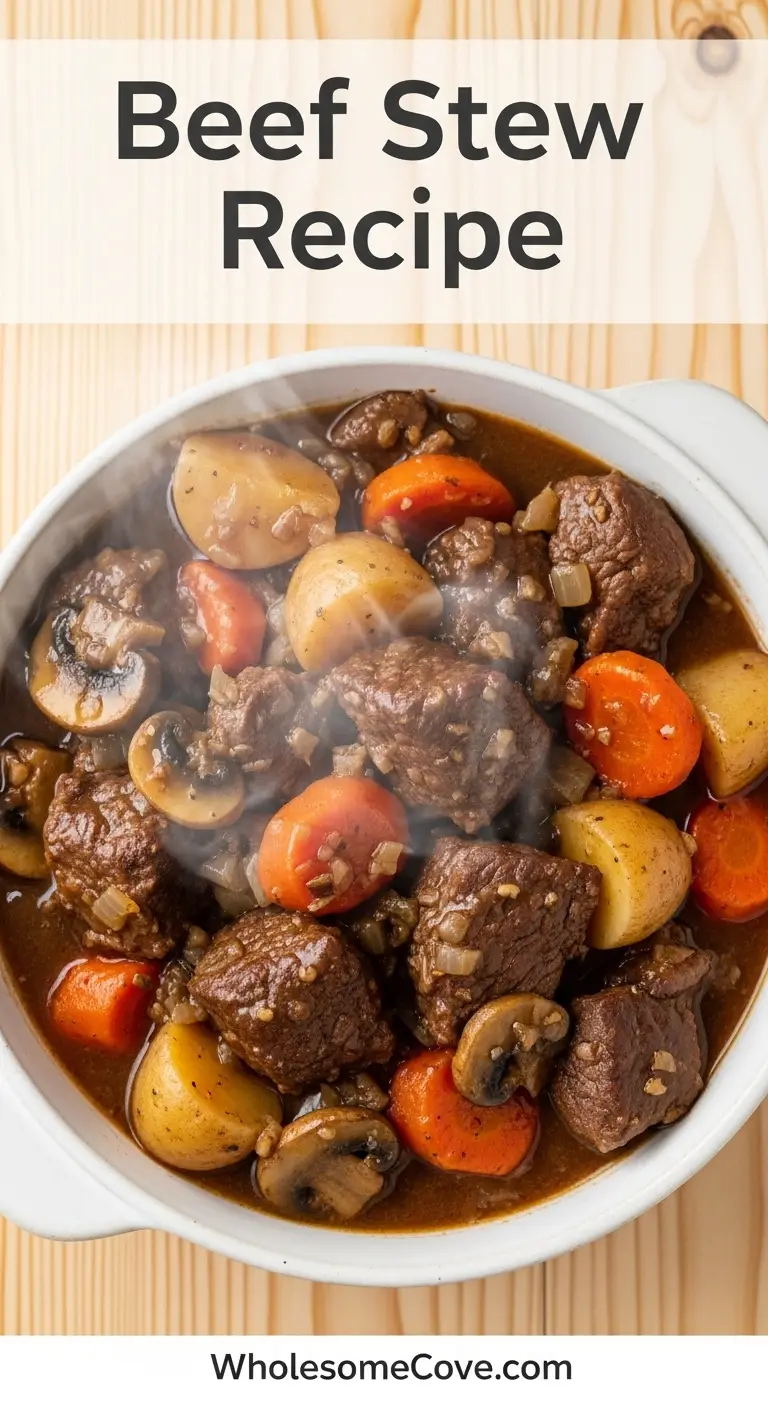
Tips for The Best Beef Stew
I’ve made plenty of mistakes with beef stew over the years, so let me save you some trouble. These tips come from real experience, not just theory.
Here’s what I’ve learned:
- Choose the right cut: Chuck roast is ideal because it has enough fat marbling to stay moist during the long cooking time. Avoid lean cuts like sirloin, which will dry out and become tough.
- Don’t skip the browning: I know it adds time, but browning the beef in batches creates the deep, rich flavor that makes this stew special. Crowding the pan will steam the meat instead of searing it.
- Cut vegetables uniformly: This ensures everything cooks at the same rate. I learned this when I had some vegetables turn to mush while others were still firm.
- Use good wine: You’re cooking with it, not marinating in it. Choose a wine you’d actually enjoy drinking. The flavor concentrates as it cooks.
- Low and slow is key: Resist the urge to crank up the heat. A gentle simmer breaks down the tough connective tissue in the beef without drying it out.
- Add potatoes later: I used to add them at the beginning and they’d completely fall apart. Adding them halfway through keeps them intact.
- Let it rest before serving: If you have time, let the stew sit for 15-20 minutes off the heat before serving. The flavors meld together even more beautifully.
- Taste and adjust: Every beef broth is different in saltiness. Always taste before serving and adjust the seasoning.
- Don’t overcrowd your pot: Your Dutch oven should be no more than 3/4 full to allow proper simmering and even heat distribution.
This hearty dish goes wonderfully with my Biscuits and Gravy Recipe.
What to Serve with Beef Stew
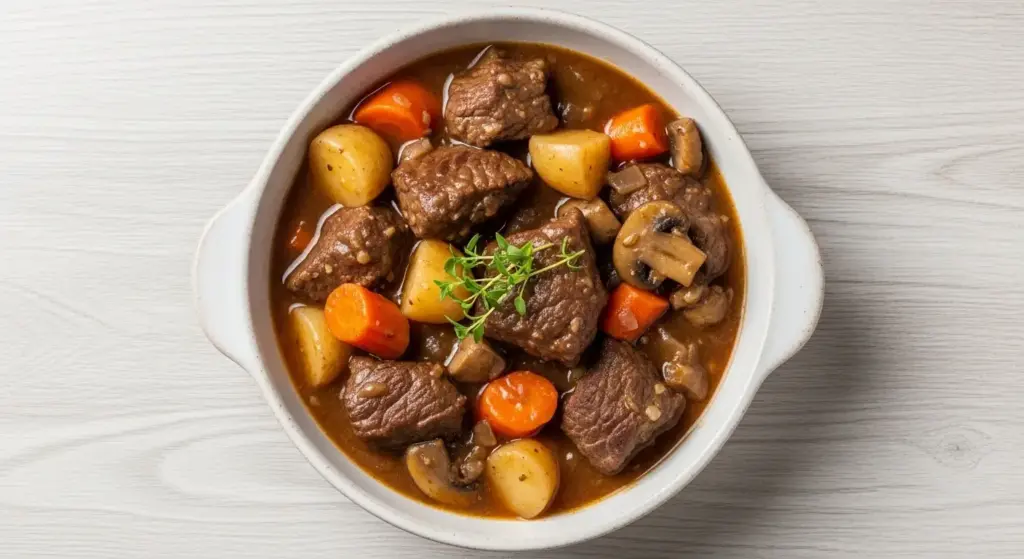
Beef stew is incredibly hearty on its own, but I love serving it with something to soak up that amazing broth. My family has strong opinions about the best accompaniments, and honestly, they’re all right.
Here are my favorite pairings:
- Crusty bread: A fresh baguette or sourdough loaf for dipping into that rich gravy
- Buttermilk biscuits: Flaky, buttery Biscuits are perfect for sopping up every drop
- Egg noodles: Serve the stew over buttered egg noodles for extra comfort
- Mashed potatoes: Yes, even though there are potatoes in the stew, my husband insists on Healthy Mashed Potatoes on the side
- Rice: A simple side of white or brown rice makes this even more filling
- Green salad: A crisp, fresh Broccoli Salad cuts through the richness
- Roasted vegetables: Extra vegetables never hurt anyone
- Cornbread: Sweet Healthy Cornbread is a Southern-style pairing
- Coleslaw: The tangy crunch of Healthy Coleslaw provides nice contrast
- Dinner rolls: Soft, warm rolls are always welcome at our table
You might also enjoy: Brunswick Stew Recipe
Variations of Beef Stew
Once you’ve mastered the basic recipe, it’s fun to experiment with different flavors. I’ve tried all of these variations, and each one brings something unique to the table.
Here are some of my favorites:
- Slow cooker beef stew: After browning the beef and sautéing the vegetables (don’t skip this step), transfer everything to your slow cooker. Cook on low for 8 hours or high for 4-5 hours. Add the peas in the last 30 minutes.
- Instant Pot version: Use the sauté function to brown the beef and vegetables, then pressure cook on high for 35 minutes with natural release. The meat will be incredibly tender in a fraction of the time.
- Guinness beef stew: Replace half the beef broth with Guinness or another dark beer for a deep, malty flavor. This Irish-inspired version is incredible.
- Beef bourguignon style: Add bacon, pearl onions, and use a full bottle of red wine for a French twist. It’s more elegant but just as comforting.
- Root vegetable stew: Add parsnips, turnips, and sweet potatoes along with or instead of the regular potatoes for earthy sweetness.
- Spicy beef stew: Stir in 1-2 teaspoons of smoked paprika, a pinch of cayenne, and some diced jalapeños for heat.
- Italian beef stew: Use Italian seasoning instead of thyme and rosemary, add a can of diced tomatoes, and finish with fresh basil.
- Vegetable-heavy version: Double the vegetables and reduce the beef to 2 pounds for a lighter, veggie-forward stew.
Read Also: Lamb Stew Recipe
Storage and Reheating
This is one of those magical recipes that actually tastes better the next day. The flavors have time to develop and meld together overnight.
Here’s how to store and reheat it properly:
- Refrigerator storage: Let the stew cool to room temperature, then transfer to an airtight container. It will keep for 4-5 days in the fridge. The broth may thicken as it sits, which is totally normal.
- Freezing: This stew freezes beautifully. Cool completely and portion into freezer-safe containers, leaving about an inch of space at the top for expansion. Freeze for up to 3 months. I like to freeze it in individual portions for easy weeknight meals.
- Reheating from the fridge: Transfer to a pot and reheat over medium-low heat, stirring occasionally, for 10-15 minutes until heated through. Add a splash of beef broth or water if it’s too thick.
- Reheating from frozen: Thaw overnight in the refrigerator, then reheat as directed above. You can also reheat from frozen in a covered pot over low heat, stirring frequently, for about 30 minutes.
- Microwave reheating: Portion into microwave-safe bowls, cover, and heat in 2-minute intervals, stirring between each, until hot throughout.
- Avoid boiling: When reheating, keep the heat gentle. Boiling can make the beef tough and dry out the vegetables.
Another comforting option: Chicken and Sausage Gumbo Recipe
Nutritional Facts
Per serving (based on 6 servings):
- Calories: 485
- Total Fat: 18g
- Saturated Fat: 5g
- Cholesterol: 115mg
- Sodium: 780mg
- Total Carbohydrates: 35g
- Dietary Fiber: 5g
- Sugars: 7g
- Protein: 42g
- Vitamin A: 180% DV
- Vitamin C: 35% DV
- Calcium: 8% DV
- Iron: 35% DV
Note: Nutritional information is an estimate and will vary based on specific ingredients used and portion sizes.
For a seafood twist, try my Seafood Stew Recipe.
Health Benefits of Key Ingredients
This beef stew isn’t just delicious comfort food. It’s actually packed with nutrients that are good for you.
Here’s what you’re getting:
- Beef chuck: Rich in high-quality protein, iron, zinc, and B vitamins, especially B12, which supports energy production and brain health. The collagen from the beef also benefits joint health.
- Carrots: Loaded with beta-carotene, which converts to vitamin A for eye health and immune function. The longer cooking time actually makes some nutrients more bioavailable.
- Potatoes: Provide potassium, vitamin C, and resistant starch when cooled and reheated, which is beneficial for gut health.
- Mushrooms: Add vitamin D, selenium, and antioxidants. They also contribute to the rich, umami flavor of the broth.
- Onions and garlic: Contain anti-inflammatory compounds and prebiotics that support digestive health.
- Red wine: Adds antioxidants like resveratrol (though much of the alcohol cooks off during the long simmer).
- Tomato paste: Concentrated source of lycopene, an antioxidant that’s especially beneficial when cooked with a bit of fat.
You might also enjoy: Pork Stew Recipe
FAQs About Beef Stew
1. Why is my beef stew meat tough?
The most common reason is not cooking it long enough. Chuck roast has a lot of connective tissue that needs time to break down. Make sure you’re simmering gently for the full 2.5 hours.
Another issue could be that you boiled the stew instead of simmering it. High heat actually makes the meat tougher. Keep it at a gentle bubble.
2. Can I make beef stew without wine?
Absolutely! Replace the wine with an equal amount of beef broth. You can add 1-2 tablespoons of balsamic vinegar or red wine vinegar to add some of that acidic depth that wine provides.
The stew will still be delicious, just with a slightly different flavor profile.
3. How do I thicken beef stew if it’s too watery?
The flour coating on the beef should naturally thicken the stew, but if it’s still too thin, you have several options. You can let it simmer uncovered for 15-20 minutes to reduce the liquid.
Alternatively, mix 2 tablespoons of cornstarch with 2 tablespoons of cold water to make a slurry, then stir it into the simmering stew. Another option is to mash a few of the potato pieces against the side of the pot to release their starch.
4. Can I use a different cut of beef?
Chuck roast is really the best choice because it has the right amount of fat and connective tissue. However, you can use bottom round, brisket, or short ribs if needed.
Avoid lean cuts like sirloin or tenderloin, as they’ll become dry and tough during the long cooking time. You want a well-marbled cut that benefits from braising.
5. Why did my vegetables turn to mush?
This usually happens when vegetables are cut too small or added too early. Make sure you’re adding the potatoes, carrots, and celery after the beef has cooked for 1.5 hours, not at the beginning.
Also, cut them into chunks at least 1 inch in size. They’ll shrink as they cook, and larger pieces hold their shape better.
For another hearty soup, try my Slow Cooker Cheeseburger Soup.
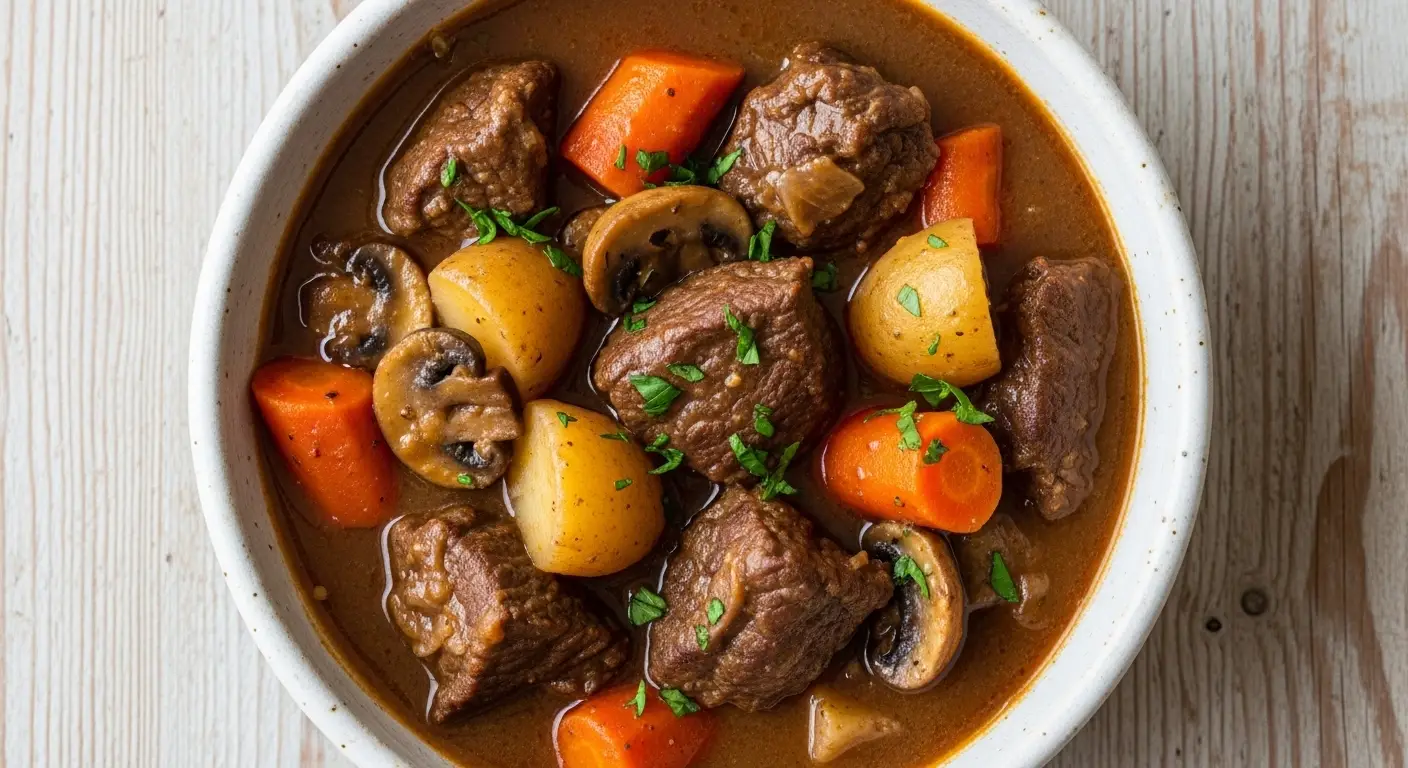
Beef Stew
Ingredients
- 3 pounds beef chuck roast - 1.4 kg, cut into 2-inch cubes
- 1/3 cup all-purpose flour - 42g
- 2 teaspoons kosher salt
- 1 teaspoon black pepper
- 1 teaspoon paprika
- 3 tablespoons olive oil - divided
- 1 large yellow onion - diced
- 4 cloves garlic - minced
- 4 medium carrots - about 1 pound or 450g, peeled and cut into 1-inch pieces
- 3 celery stalks - cut into 1-inch pieces
- 1.5 pounds Yukon gold potatoes - 680g, cut into 1.5-inch cubes
- 8 ounces baby bella mushrooms - 225g, quartered
- 1.5 cups dry red wine - 360ml, Cabernet Sauvignon or Merlot
- 4 cups beef broth - 960ml
- 3 tablespoons tomato paste
- 2 tablespoons Worcestershire sauce
- 2 bay leaves
- 3 sprigs fresh thyme - or 1 teaspoon dried thyme
- 1 sprig fresh rosemary - or 1/2 teaspoon dried rosemary
- 1 cup frozen peas - 150g
- fresh parsley - chopped, for garnish
Equipment
- Large Dutch oven - 6-8 quart capacity, or heavy-bottomed pot with lid
- Sharp chef’s knife - For cutting beef and vegetables
- Large cutting board
- Wooden spoon or heat-resistant spatula - For stirring
- Measuring cups and spoons
- Tongs - For turning beef while browning
- Large mixing bowl - For coating the beef
- Ladle - For serving
Method
- Pat the beef cubes completely dry with paper towels. In a large bowl, mix together the flour, salt, pepper, and paprika. Add the beef cubes to the flour mixture and toss until evenly coated, then shake off excess flour and set aside on a plate.
- Heat 1 tablespoon of olive oil in your Dutch oven over medium-high heat until shimmering. Working in 3 batches to avoid crowding, add beef cubes in a single layer and sear undisturbed for 3-4 minutes until deeply browned. Turn each piece to brown all sides (8-10 minutes total per batch), then transfer to a plate. Add 1 tablespoon fresh oil for each new batch.
- In the same pot (don’t wipe it out), add diced onions and cook for 5-6 minutes until softened and golden. Add minced garlic and cook for 1 minute until fragrant. Stir in tomato paste and cook for 2-3 minutes, stirring frequently, until it darkens to a deep rust color.
- Pour in the red wine and use a wooden spoon to scrape up all the browned bits from the bottom of the pot. Let the wine simmer for 3-4 minutes to cook off the alcohol and reduce slightly. Add the beef broth, Worcestershire sauce, bay leaves, thyme, and rosemary. Return all the browned beef and accumulated juices to the pot, then bring to a gentle boil.
- Reduce heat to low and cover the pot with the lid slightly ajar. Let simmer gently for 1.5 hours, stirring every 30 minutes. The beef should be getting tender but won’t be fall-apart yet.
- Add the carrots, celery, potatoes, and mushrooms to the pot and stir gently to combine. Cover again and continue simmering for another 45-60 minutes until the vegetables are fork-tender and the beef is incredibly tender.
- Remove and discard the bay leaves, thyme sprigs, and rosemary sprig. Stir in the frozen peas and let warm through for 2-3 minutes. Taste the broth and adjust seasoning with additional salt and pepper if needed. If the stew is too thin, simmer uncovered for 10-15 minutes to thicken. Ladle into bowls, garnish with fresh parsley, and serve immediately.
Nutrition
Notes
- Chuck roast is the ideal cut for this stew because it has enough fat marbling to stay moist during long cooking. Avoid lean cuts like sirloin which will dry out.
- Don’t skip the browning step or crowd the pan. Browning in batches creates the deep, rich flavor foundation for the entire stew.
- For a non-alcoholic version, replace the wine with an equal amount of beef broth plus 1-2 tablespoons of balsamic vinegar or red wine vinegar.
- The stew actually tastes better the next day as the flavors continue to develop. Store in an airtight container in the refrigerator for up to 5 days.
- To freeze, cool completely and portion into freezer-safe containers, leaving an inch of space at the top for expansion. Freeze for up to 3 months.
- If the stew is too thin, you can mash a few potato pieces against the side of the pot to release their starch, or make a cornstarch slurry (2 tablespoons cornstarch mixed with 2 tablespoons cold water) and stir into the simmering stew.
- For Slow Cooker: After browning the beef and sautéing vegetables, transfer everything to your slow cooker. Cook on low for 8 hours or high for 4-5 hours. Add peas in the last 30 minutes.
- For Instant Pot: Use the sauté function to brown beef and vegetables, then pressure cook on high for 35 minutes with natural release. The meat will be incredibly tender in much less time.
- Cut vegetables into uniform 1-1.5 inch pieces to ensure they cook evenly. Adding them after the initial 1.5 hours prevents them from turning to mush.
- When reheating, use gentle heat to avoid making the beef tough. Add a splash of beef broth if the stew has thickened too much in the refrigerator.
Private Notes
Tried this recipe?
Let us know how it was!Final Thoughts
There’s something deeply satisfying about a pot of beef stew simmering on the stove on a cold day. The whole house fills with that incredible aroma, and you know something really special is waiting for you at dinner.
This recipe has become one of my most-requested dishes, not because it’s fancy or complicated, but because it’s genuine comfort in a bowl. The tender beef, perfectly cooked vegetables, and rich broth create something that feels like a warm hug from the inside out.
I hope this beef stew becomes a favorite in your home too. Don’t be intimidated by the time it takes. Most of that is hands-off simmering while you go about your day.
Give it a try this weekend, and I’d love to hear how it turns out for you. Feel free to leave a comment below with any questions or to share your own favorite beef stew variations!
Recommended:
- Chicken Noodle Soup Recipe
- French Onion Beef Short Rib Soup Recipe
- Cheeseburger Chowder Soup Recipe
- Slow Cooker Taco Soup Recipe
- Cream of Chicken Soup Recipe
- New England Clam Chowder Recipe
- Shepherds Pie Recipe
- Healthy Shepherds Pie Recipe
- Corn Chowder Recipe
- Roasted Potatoes Recipe