
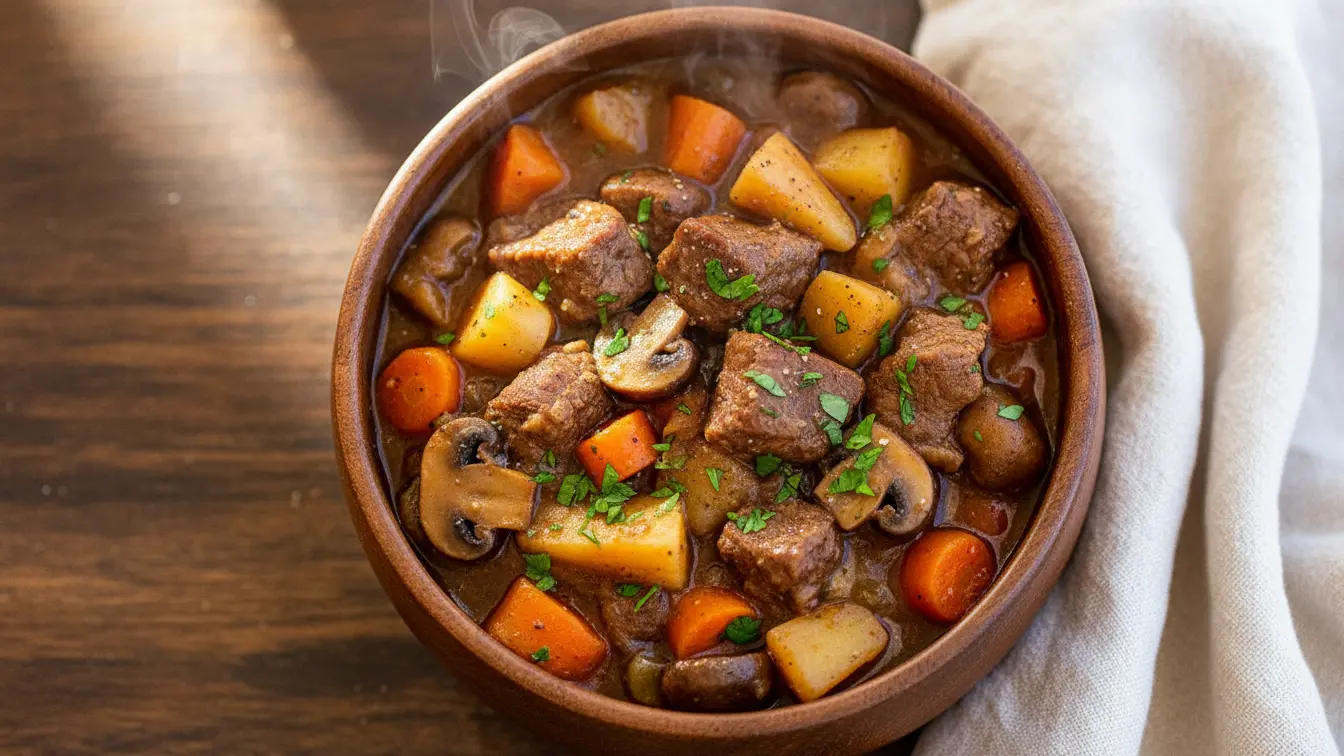
I grew up in a small hunting community where venison was as common as chicken in most households. My grandfather would return from his fall hunts with stories and meat that would sustain us through winter, and this venison stew recipe was born from my grandmother’s need to turn tough cuts into something tender and delicious.
The first time I attempted to make this on my own, I made the cardinal mistake of rushing the process. I thought I could have dinner ready in an hour, and ended up with chewy, disappointing meat that my family politely pushed around their plates. That failure taught me the most important lesson about cooking venison: patience is everything. This meat demands respect and time, but when you give it both, the results are absolutely worth the wait.
This venison stew recipe transforms gamey, lean meat into fork-tender morsels swimming in a rich, wine-laced broth. The key is a long, slow simmer that breaks down the tough fibers while vegetables add sweetness and depth.
| Quick Recipe Summary | |
|---|---|
| Prep Time | 25 minutes |
| Cook Time | 2 hours 45 minutes |
| Total Time | 3 hours 10 minutes |
| Servings | 6-8 servings |
| Difficulty Level | Moderate |
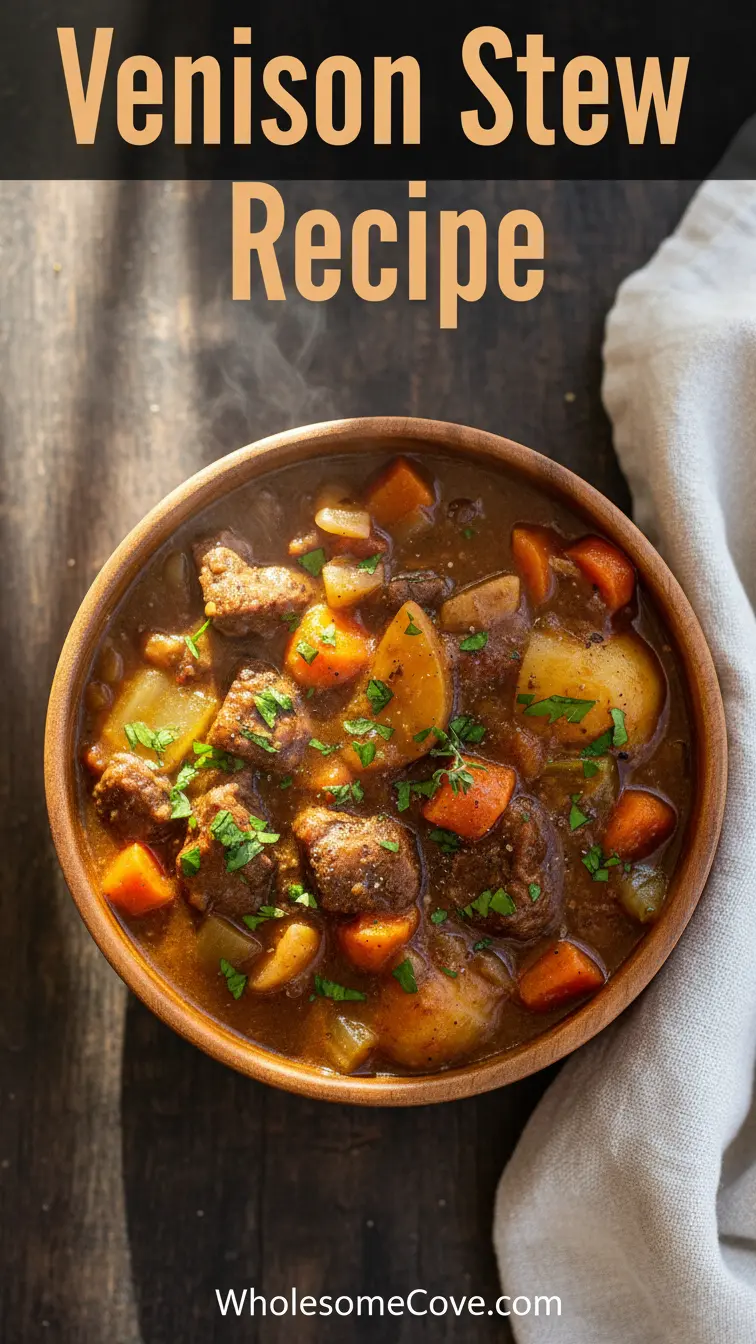
Why You’ll Love This Venison Stew Recipe
This isn’t just another stew. It’s a celebration of wild game done right, where traditional techniques meet practical home cooking.
The slow braising method ensures even the toughest cuts become melt-in-your-mouth tender. I’ve used this recipe with everything from shoulder to neck meat, and it works beautifully every time.
Unlike beef stew, venison has virtually no fat, which means the broth stays clean and clear rather than greasy. This makes it feel lighter on your stomach while still being incredibly satisfying on cold evenings.
The combination of red wine, juniper berries, and fresh herbs complements the natural gamey flavor instead of masking it. You’ll taste the wild origins of the meat without any unpleasant aftertaste.
Root vegetables like carrots, parsnips, and turnips add natural sweetness that balances the rich, earthy venison. They also thicken the broth slightly as they break down, creating a velvety texture without needing flour or cornstarch.
This recipe feeds a crowd and actually tastes better the next day, making it perfect for meal prep or entertaining. I often make a double batch and freeze half for those nights when I need comfort food fast.
The satisfaction of serving a meal you’ve made from meat you or someone you know harvested is unmatched. It connects you to a food tradition that spans centuries.
If you’re looking for another hearty stew option, my lamb stew recipe uses similar braising techniques with equally delicious results.
Ingredients
This recipe relies on simple, quality ingredients that let the venison shine. The vegetables should be fresh and firm, while the herbs can be adjusted based on what you have available.
- 2.5 lbs (1.1 kg) venison stew meat, cut into 1.5-inch cubes (shoulder, neck, or shank work best)
- 3 tablespoons olive oil, divided
- 2 medium yellow onions, roughly chopped
- 4 cloves garlic, minced
- 3 tablespoons all-purpose flour
- 2 cups (475 ml) dry red wine (Cabernet Sauvignon or Merlot)
- 4 cups (950 ml) beef broth or venison stock
- 2 tablespoons tomato paste
- 3 large carrots, peeled and cut into 1-inch pieces
- 3 medium parsnips, peeled and cut into 1-inch pieces
- 2 medium turnips, peeled and cubed
- 1 lb (450 g) baby potatoes, halved
- 8 oz (225 g) cremini mushrooms, quartered
- 3 sprigs fresh thyme
- 2 bay leaves
- 6-8 juniper berries, lightly crushed
- 1 teaspoon black peppercorns
- 2 teaspoons kosher salt, plus more to taste
- 1 teaspoon black pepper
- 2 tablespoons fresh parsley, chopped (for garnish)
Kitchen Equipment Needed
Having the right tools makes this recipe significantly easier. A heavy pot is absolutely essential for maintaining even heat during the long cooking process.
- Dutch oven or heavy-bottomed pot (5-6 quart capacity minimum)
- Sharp chef’s knife for cutting meat and vegetables
- Large cutting board (preferably one you designate for meat)
- Wooden spoon for stirring
- Measuring cups and spoons
- Tongs for turning meat
- Ladle for serving
- Paper towels for drying meat
- Small bowl for mixing flour coating
Recommended Products for This Recipe
After making this stew countless times, I’ve found a few products that genuinely improve the process and final result.
1. Le Creuset Enameled Cast Iron Dutch Oven
This pot distributes heat so evenly that you won’t get any hot spots that could burn your vegetables or scorch the bottom. The heavy lid traps moisture perfectly, creating that gentle steam environment venison needs to become tender. I’ve had mine for over a decade, and it still looks nearly new.
2. Wild Game Venison Stew Meat
If you don’t have access to hunted venison, high-quality farmed venison is surprisingly accessible online. The texture and flavor are excellent, and it arrives frozen and well-packaged. This removes any barrier to trying this recipe even if you’re not a hunter.
3. Spice Lab Juniper Berries
These little berries are traditionally used in Scandinavian game cooking for good reason. They add a subtle pine-like flavor that enhances venison’s wild character without overwhelming it. A jar lasts forever since you only need a few per recipe.
4. OXO Good Grips Ladle
This might seem like overkill to recommend a specific ladle, but serving stew with a flimsy one is frustrating. This one has a comfortable grip and a deep bowl that doesn’t drip everywhere. Small things matter when you’re trying to plate a beautiful dinner.
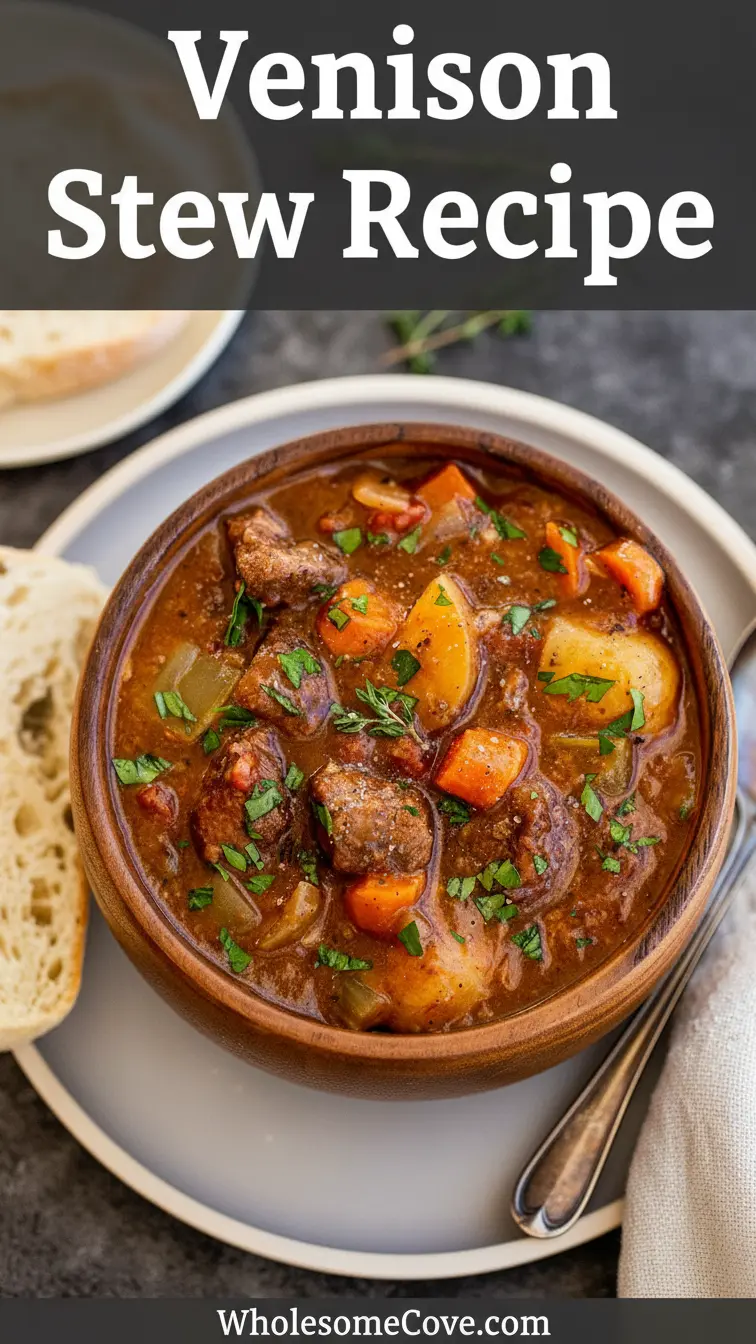
Step-by-Step Instructions: How to Make Venison Stew
The process is straightforward but requires attention to timing. Don’t rush any of these steps, especially the initial searing and the long simmer.
1. Prepare and Dry the Venison
- Remove the venison from the refrigerator 30 minutes before cooking to bring it closer to room temperature.
- Pat each piece completely dry with paper towels, pressing firmly to remove all surface moisture.
- Remove any silver skin or tough connective tissue with a sharp knife, as these won’t break down during cooking.
- Cut the meat into uniform 1.5-inch cubes so they cook evenly.
- Season generously with 1 teaspoon salt and 1/2 teaspoon black pepper on all sides.
Drying the meat is crucial because wet meat steams instead of searing. I learned this the hard way when my first attempt produced gray, boiled-looking meat with no flavor development. You want a deep brown crust that adds complexity to the final stew.
2. Sear the Venison in Batches
- Heat 2 tablespoons olive oil in your Dutch oven over medium-high heat until it shimmers and just begins to smoke.
- Working in two batches to avoid overcrowding, add half the venison cubes in a single layer with space between each piece.
- Let the meat sear undisturbed for 3-4 minutes until a dark brown crust forms on the bottom.
- Use tongs to turn each piece and brown the remaining sides, about 2-3 minutes per side.
- Transfer the browned meat to a plate and repeat with the remaining venison, adding a splash more oil if the pan looks dry.
Overcrowding the pan drops the temperature too much, causing the meat to release moisture and steam rather than brown. This is why batch cooking matters, even though it takes longer.
3. Sauté the Aromatics
- Reduce heat to medium and add the remaining tablespoon of oil to the pot.
- Add the chopped onions and cook, stirring occasionally, until they soften and turn golden at the edges, about 8-10 minutes.
- Stir in the minced garlic and cook for 1 minute until fragrant but not browned.
- Push the onions and garlic to the sides of the pot to create a clear space in the center.
Read Also: Irish Stew Recipe
4. Create the Flour Roux
- Sprinkle the 3 tablespoons flour directly into the cleared center of the pot.
- Stir the flour constantly with your wooden spoon, letting it cook for 2-3 minutes until it turns a light tan color and smells slightly nutty.
- Mix the flour into the onions and garlic, coating everything evenly.
- Cook for another minute, stirring constantly to prevent burning.
This step thickens your stew and removes the raw flour taste that can make broth taste chalky. The flour also helps the wine and broth emulsify into a silky sauce.
5. Deglaze with Wine
- Pour the red wine into the pot in a steady stream while scraping the bottom vigorously with your wooden spoon.
- Use the spoon to loosen all the browned bits (fond) stuck to the bottom, as these contain concentrated flavor.
- Bring the wine to a rapid boil and let it bubble vigorously for 5-6 minutes, reducing by about half.
- Stir in the tomato paste until it’s completely dissolved into the wine.
The alcohol in the wine will mostly cook off during this reduction, leaving behind deep, fruity complexity. If you skip this step and add raw wine, your stew will taste harsh and acidic.
6. Add Liquids and Return Meat
- Pour in the beef broth and stir everything together until the flour mixture is fully incorporated with no lumps.
- Return all the seared venison to the pot along with any juices that have accumulated on the plate.
- Add the thyme sprigs, bay leaves, crushed juniper berries, and black peppercorns.
- Bring everything to a full boil over high heat, then immediately reduce to the lowest possible simmer.
You might also enjoy my crockpot beef stew recipe, which uses a similar braising technique but in a slow cooker.
7. Slow Simmer the Venison
- Partially cover the pot, leaving about a 1-inch gap for steam to escape.
- Maintain a gentle simmer where you see only occasional small bubbles breaking the surface.
- Cook for 1.5 to 2 hours, checking every 30 minutes to ensure the liquid isn’t boiling too vigorously.
- Stir gently every 30 minutes to prevent sticking and ensure even cooking.
- The venison is ready when a fork can easily pierce through with minimal resistance.
This is where patience pays off. I set a timer and use this time to prep my vegetables or handle other kitchen tasks. Resist the urge to turn up the heat to speed things along, as high heat will tighten the meat fibers instead of relaxing them.
8. Add Root Vegetables
- Once the venison is tender, add the carrots, parsnips, and turnips to the pot.
- Stir gently to submerge the vegetables in the liquid without breaking up the tender meat.
- Continue simmering for 20 minutes until the vegetables are just starting to soften but still have some resistance when pierced with a fork.
Adding vegetables in stages prevents them from turning to mush. Root vegetables are hearty, but even they can’t withstand 2 hours of simmering without disintegrating.
9. Add Potatoes and Mushrooms
- Stir in the halved baby potatoes and quartered mushrooms.
- Make sure everything is submerged in liquid, adding a splash more broth if needed to barely cover the ingredients.
- Simmer for an additional 20-25 minutes until the potatoes are fork-tender and the mushrooms have released their moisture.
- Remove the thyme sprigs and bay leaves, which have now given up all their flavor.
Mushrooms add an earthy, umami depth that complements venison beautifully. I prefer cremini over white button mushrooms because they have more flavor, but use what you can find.
10. Season and Finish
- Taste the broth and adjust the seasoning, adding salt and pepper as needed (I usually add another 1/2 to 1 teaspoon salt at this stage).
- If the stew seems too thin, increase the heat and simmer uncovered for 10-15 minutes to reduce and concentrate the liquid.
- If it’s too thick, stir in a bit more broth or water to reach your preferred consistency.
- Remove from heat and let the stew rest for 10 minutes before serving, which allows the flavors to settle and meld together.
- Garnish each serving with fresh chopped parsley for a pop of color and fresh flavor.
The resting period isn’t optional. It makes a noticeable difference in how cohesive the flavors taste. I use this time to set the table and warm the serving bowls.
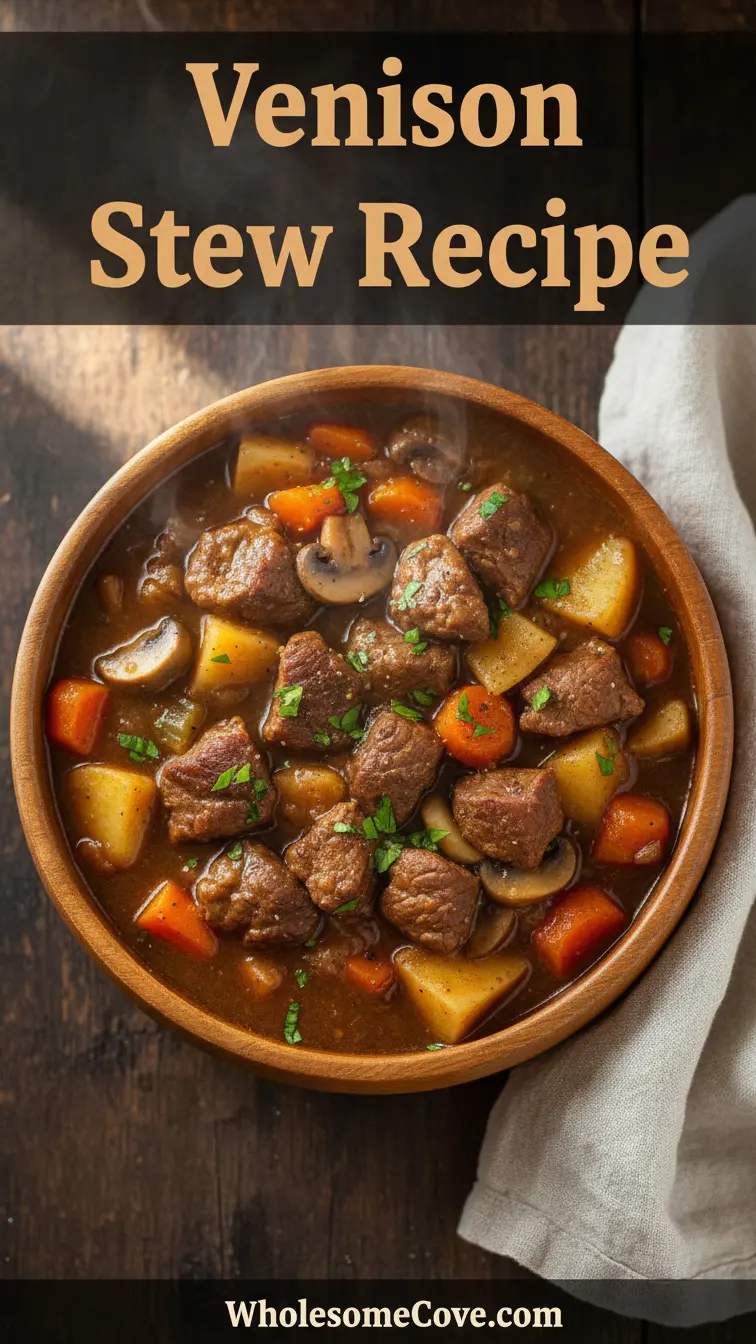
Tips for The Best Venison Stew
These details separate a good venison stew from a truly exceptional one. I’ve learned most of these through trial and error over the years.
- Don’t skip the marinating option: If you have time, marinate the venison cubes in red wine with crushed juniper berries and thyme overnight in the refrigerator. This infuses flavor deep into the meat and helps tenderize it even further. Pat the meat dry before searing, and use the marinade as part of your cooking liquid.
- Control your heat religiously: The difference between a gentle simmer and a rolling boil will make or break this dish. Venison is extremely lean, so high heat makes it tough and stringy. You should see only a few bubbles breaking the surface every few seconds.
- Use a mix of white and red wine: I sometimes use 1 cup red and 1 cup white wine for a more nuanced flavor profile. The white adds brightness while the red provides depth. This is especially good if your venison is particularly gamey.
- Add a strip of bacon: For extra richness, render 2-3 strips of chopped bacon before searing the venison, then use the bacon fat instead of oil. Remove the crispy bacon and stir it back in during the last 10 minutes of cooking.
- Incorporate tomato paste early: Adding tomato paste to the flour roux before deglazing helps it caramelize slightly, which adds umami and reduces acidity. This technique comes from French cooking and makes a subtle but noticeable difference.
- Try different root vegetables: Celeriac (celery root) adds a subtle celery flavor without stringy bits. Rutabaga provides sweetness similar to turnips but with a slightly peppery note. Sweet potatoes can work too, though add them in the last 15 minutes as they cook faster.
- Add mushroom powder: If you can find dried mushroom powder (or grind your own dried porcini), a tablespoon stirred in with the flour amplifies the earthy flavors exponentially.
- Consider a splash of balsamic vinegar: In the last 10 minutes, a tablespoon of good balsamic vinegar adds complexity and helps balance the richness. This is my secret weapon when the stew tastes a bit flat.
- Rest and reheat: This stew genuinely improves overnight as the flavors marry. Make it a day ahead, refrigerate, then gently reheat before serving. You can also skim any fat that solidifies on top.
- Add fresh herbs at the end: Beyond parsley, try stirring in fresh rosemary or sage in the last 5 minutes for a different herbal note that stays bright and distinct.
Another fantastic option for hearty comfort food is my slow cooker chili recipe, which shares the same set-it-and-forget-it appeal.
Serving Suggestions
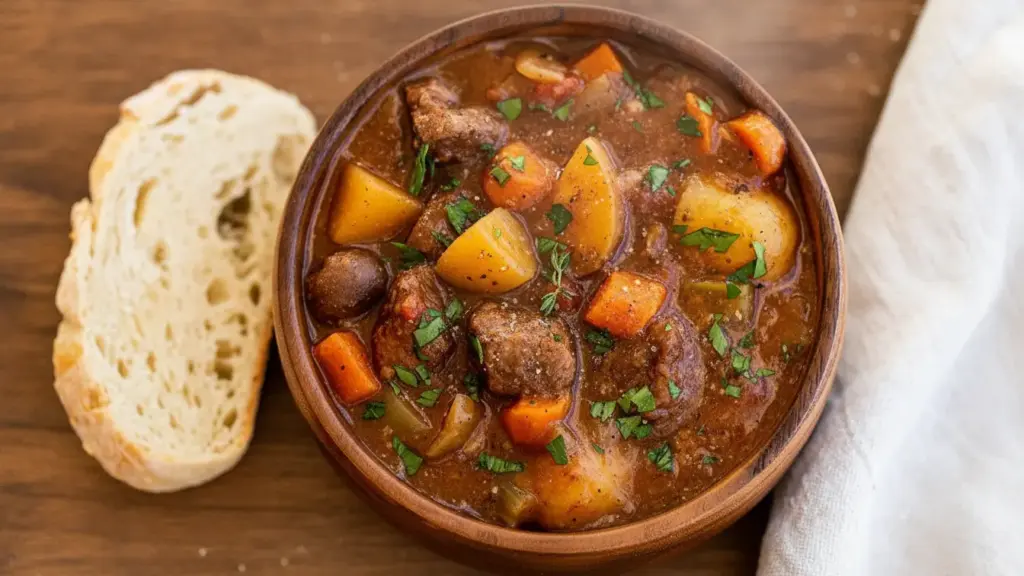
Venison stew is rustic and hearty, so it pairs best with simple accompaniments that don’t compete for attention.
Serve this in wide, shallow bowls to showcase all the vegetables and broth. I like to place a piece of crusty bread in the bottom of each bowl before ladling the stew over it, letting the bread soak up all that rich liquid.
Crusty sourdough bread or a hearty whole grain loaf is essential for mopping up every last drop of broth. Warm the bread slightly and brush it with butter or olive oil for an extra touch.
For sides that won’t overpower the stew, consider:
- Mashed potatoes: Classic and comforting, they turn this into an even more substantial meal
- Buttered egg noodles: Wide, flat noodles provide a tender base that soaks up the broth beautifully
- Simple green salad: A bright salad with vinaigrette cuts through the richness and adds freshness
- Roasted Brussels sprouts: Their slight bitterness complements the sweet root vegetables in the stew
- Pickled vegetables: A small dish of pickled onions, beets, or cucumbers adds acidity that balances the rich meat
- Crusty dinner rolls: Warm, soft rolls are perfect for soaking up every bit of broth
For beverages, serve the same red wine you cooked with, or try a dark beer or hard cider that echoes the autumn flavors. A simple sparkling water with lemon works too if you prefer non-alcoholic options.
Variations of Venison Stew
Once you master the basic recipe, these variations add exciting new dimensions without requiring completely different techniques.
- Scandinavian-style with lingonberries: Add 1/2 cup lingonberry preserves in the last 30 minutes for a sweet-tart contrast that’s traditional in Nordic game cooking. Serve with boiled potatoes and pickled cucumber on the side.
- French-inspired bourguignon style: Use all red wine instead of mixing with broth, add pearl onions and lardons (thick-cut bacon), and finish with a touch of brandy. Serve over buttered egg noodles.
- Mediterranean version: Replace juniper berries with fresh rosemary and oregano, add kalamata olives and sun-dried tomatoes in the last 30 minutes, and finish with a squeeze of lemon juice.
- Irish stew influence: Use only root vegetables and potatoes, replace wine with stout beer, and add a handful of pearl barley that cooks along with the meat for a thicker, heartier texture.
- Spicy southwestern twist: Add chipotle peppers in adobo, swap turnips for sweet potatoes, include cumin and smoked paprika, and finish with fresh cilantro instead of parsley.
- German-style with sauerkraut: Add 1 cup drained sauerkraut in the last 15 minutes, along with caraway seeds and a bay leaf. This cuts through the richness beautifully.
- Asian-inspired flavor profile: Use soy sauce instead of some of the salt, add star anise and ginger to the broth, include daikon radish among the vegetables, and finish with scallions and sesame oil.
- Creamy version: Stir in 1/2 cup heavy cream or crème fraîche in the last 10 minutes for a luxurious, silky texture that mellows the gamey flavor.
For a seafood alternative that’s equally comforting, try my oyster stew recipe which has a completely different flavor profile but similar warming qualities.
Storage and Reheating
Proper storage extends the life of this stew and can actually improve its flavor as the ingredients continue to meld.
Refrigerator storage: Let the stew cool to room temperature, then transfer to airtight containers and refrigerate within 2 hours of cooking. It will keep for 4-5 days in the refrigerator. The broth may thicken as it cools, which is normal.
Freezer storage: This stew freezes beautifully for up to 3 months. Cool completely, then portion into freezer-safe containers, leaving 1 inch of headspace for expansion. Label with the date and contents. I prefer freezing in meal-sized portions so I can thaw only what I need.
Reheating from refrigerated: Transfer to a pot and reheat gently over medium-low heat, stirring occasionally, until heated through (about 15-20 minutes). Add a splash of broth or water if it seems too thick. You can also reheat individual portions in the microwave on 50% power to prevent the meat from toughening.
Reheating from frozen: Thaw overnight in the refrigerator for best results, then reheat as above. In a pinch, you can reheat from frozen over very low heat, stirring frequently and adding liquid as needed, but this takes 45-60 minutes.
Pro tip: When reheating, stop just before it reaches a full boil. Overheating can make the vegetables mushy and the meat tough. You want it hot enough to be steaming but not actively bubbling.
Nutritional Facts
Per serving (based on 8 servings):
- Calories: 380
- Protein: 34g
- Carbohydrates: 28g
- Dietary Fiber: 5g
- Sugars: 8g
- Fat: 12g
- Saturated Fat: 2.5g
- Cholesterol: 95mg
- Sodium: 680mg
- Potassium: 890mg
- Vitamin A: 120% DV
- Vitamin C: 35% DV
- Iron: 25% DV
Note that venison is remarkably lean compared to beef, with significantly less saturated fat and cholesterol. It’s also an excellent source of iron, B vitamins, and protein. The vegetables contribute substantial fiber, vitamins, and minerals, making this a genuinely nutritious meal.
Health Benefits of Key Ingredients
Beyond tasting incredible, this stew packs some serious nutritional advantages that make it a smart choice for regular meal rotation.
Venison is one of the leanest red meats available, with about half the fat and calories of beef while providing the same amount of protein. It’s exceptionally high in vitamin B12, which supports nerve function and red blood cell production. The iron in venison is heme iron, the type your body absorbs most efficiently, making this an excellent choice for preventing anemia. Wild venison also contains higher levels of omega-3 fatty acids compared to conventionally raised beef.
Root vegetables like carrots, parsnips, and turnips provide complex carbohydrates that digest slowly, keeping blood sugar stable. They’re loaded with fiber that supports digestive health and helps you feel satisfied longer. Carrots are famous for beta-carotene, which converts to vitamin A for eye health, while parsnips provide folate important for cell growth and metabolism.
Mushrooms are one of the few non-animal sources of vitamin D, especially when exposed to sunlight. They contain selenium, an antioxidant that supports immune function, and various B vitamins that help convert food into energy. The umami compounds in mushrooms may also help reduce sodium needs by making food taste more savory naturally.
Garlic and onions contain sulfur compounds that have been studied for their potential cardiovascular benefits. They may help reduce blood pressure and cholesterol levels while providing prebiotic fiber that feeds beneficial gut bacteria.
Red wine (most alcohol cooks off) contributes resveratrol and other polyphenols that have antioxidant properties. The small amount remaining in the finished dish adds flavor complexity without significant alcohol content.
Juniper berries have been used medicinally for centuries for their anti-inflammatory and antioxidant properties. They contain volatile oils that may support digestion and have antimicrobial effects.
You might also like my beef barley soup recipe, another nutrient-dense option that’s perfect for cold weather meals.
FAQs About Venison Stew
1. How do I reduce the gamey flavor if I find it too strong?
The gamey flavor comes from the deer’s diet and age. Soaking cubed venison in milk or buttermilk for 2-4 hours in the refrigerator before cooking can mellow this considerably.
The acid and proteins in dairy help neutralize some of the compounds responsible for the wild taste. Alternatively, a longer marination in red wine with herbs accomplishes something similar while adding complementary flavors rather than just removing ones you don’t want.
2. Can I make this in a slow cooker instead?
Absolutely, and it works beautifully for a hands-off approach. Brown the meat and sauté the aromatics in a skillet first (don’t skip this step as it builds essential flavor), then transfer everything to your slow cooker.
Cook on low for 6-7 hours or high for 3-4 hours, adding the vegetables in the last 1-2 hours depending on your setting. The result is equally tender, though you’ll lose some of the concentrated broth you get from stovetop reduction.
3. What’s the best cut of venison for stewing?
Tougher cuts with more connective tissue actually work best because the long cooking breaks them down into gelatin, creating a silky texture. Shoulder, neck, and shank are ideal.
Avoid using tenderloin or backstrap, which are lean, tender cuts meant for quick cooking. They’ll become dry and chalky in a stew. Save those premium cuts for steaks or roasts.
4. My stew is too thin. How can I thicken it?
The easiest fix is simmering uncovered for 15-20 minutes to reduce and concentrate the liquid. If you need faster results, mix 2 tablespoons cornstarch with 2 tablespoons cold water until smooth, then stir this slurry into the simmering stew.
Cook for 5 minutes until thickened. Alternatively, mash a few of the cooked potatoes against the side of the pot and stir them in, which thickens naturally while adding body.
5. Can I substitute beef if I don’t have venison?
Yes, though you’ll lose the distinctive flavor that makes this special. Use chuck roast cut into cubes, which has similar texture and benefits from long braising.
Reduce the cooking time slightly since beef is less lean and tenderizes a bit faster. You might also reduce the wine slightly or add a touch of Worcestershire sauce to mimic some of the complex flavors venison provides naturally.
Final Thoughts
This venison stew recipe represents everything I love about cold-weather cooking: it’s deeply satisfying, remarkably forgiving, and tastes even better the next day. The transformation of tough, lean venison into something so tender you can cut it with your spoon never fails to impress me, even after making this dozens of times.
If you’ve been intimidated by cooking wild game, this is your entry point. The technique is straightforward, and the slow simmer does most of the work for you. Even if you’ve never tasted venison before, the familiar stew format makes it approachable while letting you experience something special.
I’d love to hear how your version turns out. Did you try any of the variations? What did your family think? Drop a comment below and share your experience, or let me know if you have questions before you start cooking.
Recommended:
- Mississippi Pot Roast Recipe
- Slow Cooker Pot Roast Recipe
- Brunswick Stew Recipe
- French Onion Beef Short Rib Soup Recipe
- Swedish Meatball Recipe
- Zuppa Toscana Recipe
- Pasta Fagioli Recipe
- Filet Mignon Recipe
- Prime Rib Recipe
- Green Bean Casserole Recipe