I grew up watching my grandmother make this Irish stew recipe every Sunday during the colder months. The smell of tender lamb simmering with root vegetables would fill the entire house, and we’d all gather around her worn wooden table, waiting impatiently for our bowls.

That old family recipe has been passed down through generations, and I’ve tweaked it over the years to suit my own cooking style. What I love most about this dish is how it transforms simple ingredients into something truly special.
The first time I made it on my own, I completely overcooked the potatoes and they turned into mush. But even that mistake taught me something valuable about timing and patience. Now, I can make this stew in my sleep, and it’s become one of those recipes I turn to when I need comfort food that feels like a warm hug.
| Quick Recipe Summary | |
|---|---|
| Prep Time | 20 minutes |
| Cook Time | 2 hours 30 minutes |
| Total Time | 2 hours 50 minutes |
| Servings | 6 servings |
| Difficulty Level | Easy |
Why You’ll Love This Irish Stew Recipe
This dish is pure comfort in a bowl. I’ve made countless pots of this stew over the years, and it never fails to bring people together around the dinner table.
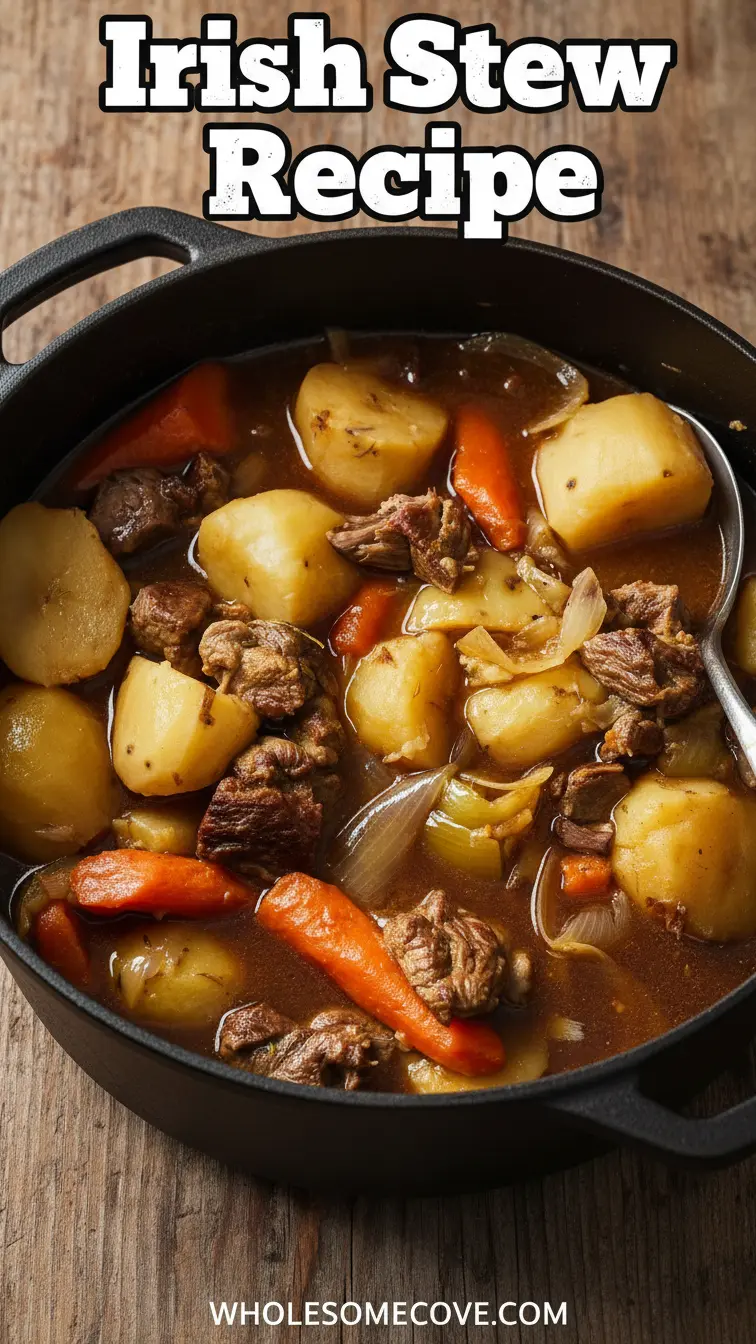
The beauty of this recipe lies in its simplicity. You don’t need fancy ingredients or complicated techniques, just good quality lamb, hearty vegetables, and a bit of patience while it all simmers together. The lamb becomes so tender it practically falls apart with your fork, and the vegetables soak up all those rich, savory flavors.
Here’s what makes this recipe truly special:
- Minimal ingredients with maximum flavor: Just a handful of simple ingredients create incredible depth
- Naturally gluten-free and dairy-free: Perfect for those with dietary restrictions
- Make-ahead friendly: This stew actually tastes better the next day
- Budget-friendly comfort food: Affordable ingredients that stretch to feed a crowd
- One-pot wonder: Less cleanup means more time to enjoy your meal
- Customizable to your taste: Easy to adjust vegetables and seasonings
Another favorite: Slow Cooker Pot Roast
Ingredients
This recipe relies on quality ingredients that come together beautifully. I always choose the best lamb I can find, it makes all the difference in the final dish.
- 3 pounds (1.4 kg) lamb shoulder or lamb stew meat, cut into 2-inch chunks
- 2 tablespoons vegetable oil
- 2 large onions, roughly chopped
- 4 cloves garlic, minced
- 3 large carrots, peeled and cut into 1-inch pieces (about 2 cups / 240g)
- 3 medium potatoes, peeled and cut into 1.5-inch chunks (about 3 cups / 450g)
- 2 medium parsnips, peeled and cut into 1-inch pieces (about 1.5 cups / 180g)
- 4 cups (960ml) beef broth or lamb stock
- 2 cups (480ml) water
- 3 sprigs fresh thyme (or 1 teaspoon dried thyme)
- 2 bay leaves
- 1 tablespoon Worcestershire sauce
- Salt and black pepper to taste
- 2 tablespoons fresh parsley, chopped for garnish
Read Also: Crockpot Beef Stew
Kitchen Equipment Needed
Having the right tools makes this recipe even easier to prepare. I’ve learned that investing in a good Dutch oven changed my stew game completely.
- Large Dutch oven or heavy-bottomed pot (at least 6-quart capacity)
- Sharp chef’s knife
- Cutting board
- Wooden spoon for stirring
- Measuring cups and spoons
- Ladle for serving
- Vegetable peeler
Recommended Products for This Recipe
After making this stew countless times, I’ve found a few products that genuinely make the process better and the results more delicious.
1. Le Creuset Enameled Cast Iron Dutch Oven
This is my absolute workhorse in the kitchen. The heavy cast iron distributes heat evenly, so your lamb browns perfectly and the stew simmers without any hot spots. I’ve had mine for over ten years, and it still looks gorgeous on my stovetop.
2. Grass-Fed Lamb Shoulder
The quality of your lamb makes or breaks this recipe. I prefer grass-fed lamb because it has a richer, more complex flavor without that gamey taste some people dislike. The meat stays tender during the long cooking time and creates the most incredible broth.
3. Better Than Bouillon Roasted Beef Base
This concentrated beef base adds so much depth to the stew. It’s more flavorful than regular boxed broth, and I always keep a jar in my fridge. A little goes a long way, and it dissolves instantly into your cooking liquid.
You might also enjoy: Beef Barley Soup
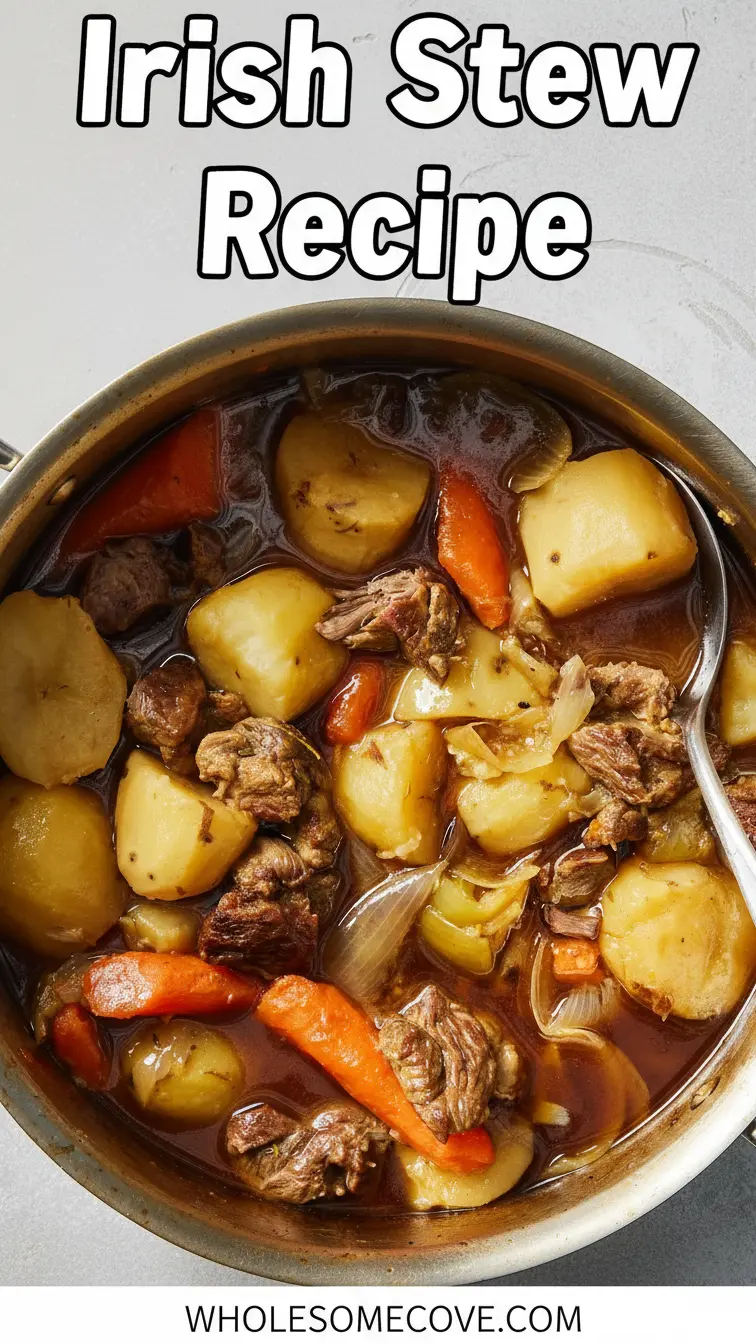
Step-by-Step Instructions: How to Make Irish Stew
I’ll walk you through every step of this process. Don’t rush it, the slow simmer is what makes this stew absolutely perfect.
1. Prepare the Lamb
- Pat the lamb chunks completely dry with paper towels. This is crucial for getting a good sear, wet meat will steam instead of brown.
- Season all sides of the lamb generously with salt and black pepper. Don’t be shy here, the seasoning adds essential flavor.
- Let the seasoned lamb sit at room temperature for about 15 minutes while you prep your vegetables. This helps it cook more evenly.
2. Brown the Lamb
- Heat the vegetable oil in your Dutch oven over medium-high heat until it shimmers. You want it hot enough that the meat sizzles immediately when it hits the pan.
- Working in batches to avoid overcrowding, add the lamb chunks in a single layer. Overcrowding drops the pan temperature and prevents proper browning.
- Brown the lamb on all sides, about 3-4 minutes per side, until you get a deep golden crust. This caramelization builds incredible flavor.
- Transfer the browned lamb to a plate and set aside. Don’t worry if it’s not cooked through, it will finish in the stew.
3. Sauté the Aromatics
- Reduce the heat to medium and add the chopped onions to the same pot. The lamb drippings will add flavor to everything.
- Cook the onions for about 5-7 minutes, stirring occasionally, until they soften and turn translucent. Scrape up any browned bits from the bottom of the pot, that’s pure flavor.
- Add the minced garlic and cook for 1 minute more, stirring constantly so it doesn’t burn. You’ll smell that beautiful aroma right away.
This pairs beautifully with my homemade dinner rolls for soaking up all that delicious broth.
4. Build the Stew Base
- Return the browned lamb and any accumulated juices back to the pot. Those juices are liquid gold.
- Pour in the beef broth and water, making sure all the lamb is submerged. Add more liquid if needed to cover everything.
- Stir in the Worcestershire sauce for an extra layer of savory depth. This is my secret ingredient that people can never quite identify.
- Add the fresh thyme sprigs and bay leaves. If using dried thyme, add it now too.
5. Add the Vegetables
- Add the carrots and parsnips first since they take longer to cook than potatoes. Stir them into the liquid.
- Bring the stew to a boil over high heat, then immediately reduce to a gentle simmer. You want small bubbles breaking the surface, not a rolling boil.
- Cover the pot with the lid slightly ajar to allow some steam to escape. This prevents the stew from becoming too watery.
- Simmer for 1.5 hours, stirring occasionally to prevent sticking.
6. Add the Potatoes and Finish
- After 1.5 hours, add the potato chunks to the stew. Potatoes break down quickly, so they go in later than the other vegetables.
- Continue simmering uncovered for another 45 minutes to 1 hour, until the lamb is fall-apart tender and the potatoes are cooked through but still hold their shape.
- Taste the broth and adjust the seasoning with more salt and pepper as needed. The flavors will have concentrated, so be careful not to oversalt.
- Remove and discard the thyme sprigs and bay leaves before serving.
7. Serve and Garnish
- Ladle the hot stew into deep bowls, making sure each serving gets a good mix of lamb, vegetables, and broth.
- Sprinkle fresh chopped parsley over the top for a pop of color and fresh flavor.
- Serve immediately while piping hot, with crusty bread on the side for dunking.
Read Also: Zuppa Toscana
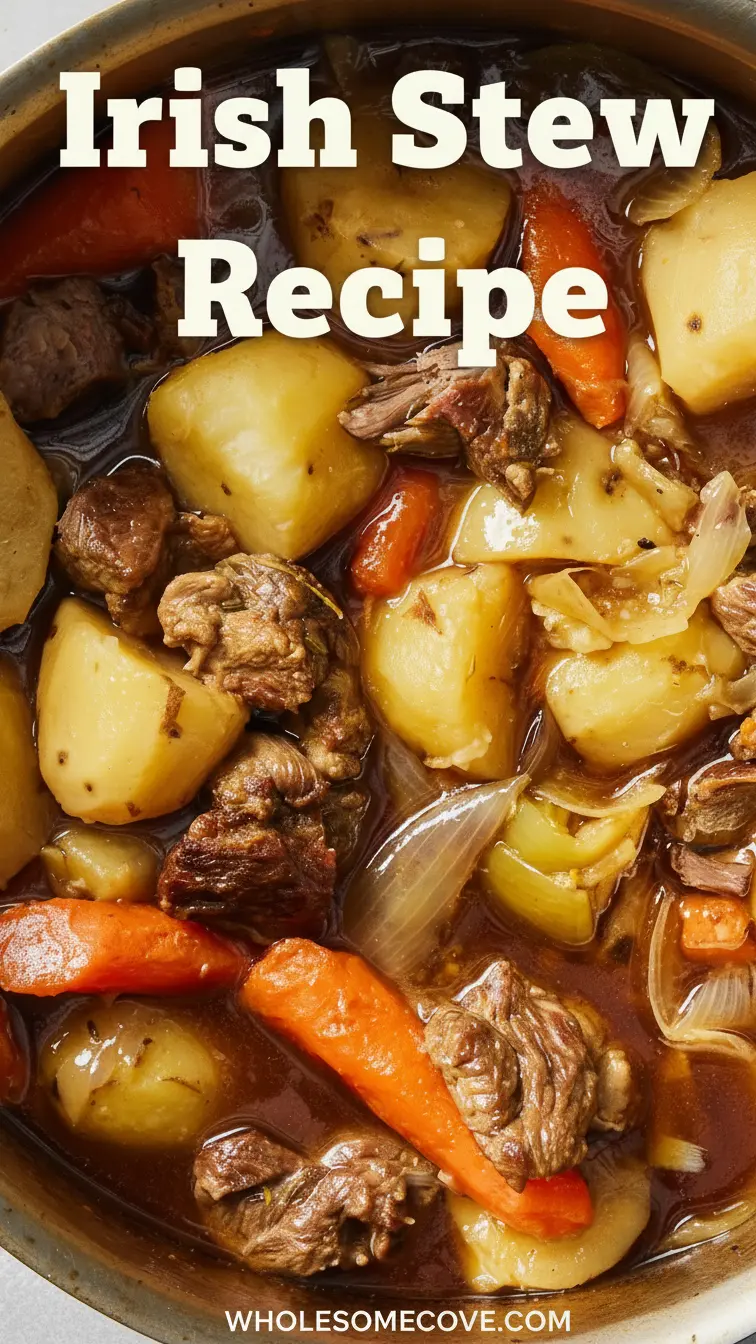
Tips for The Best Irish Stew
These are the little tricks I’ve learned over years of making this recipe. They’re the difference between good stew and great stew.
- Don’t skip browning the lamb: This step creates the foundation of flavor through the Maillard reaction. I know it’s tempting to skip, but don’t.
- Use bone-in lamb if possible: The bones add richness and body to the broth. Just remove them before serving.
- Choose starchy potatoes: Varieties like russet or Yukon gold break down slightly and help thicken the stew naturally.
- Keep the simmer gentle: A hard boil makes the lamb tough and chewy. Low and slow is the way to go.
- Add vegetables in stages: Root vegetables can handle longer cooking, but potatoes need less time to prevent them from disintegrating.
- Make it a day ahead: This stew is even better the next day after all the flavors have melded together. Just reheat gently on the stovetop.
- Adjust liquid as needed: If your stew gets too thick, add more broth. If it’s too thin, simmer uncovered to reduce it.
- Season at the end: The broth concentrates as it cooks, so save your final seasoning adjustments for the last 15 minutes.
Another favorite: Brunswick Stew
Serving Suggestions
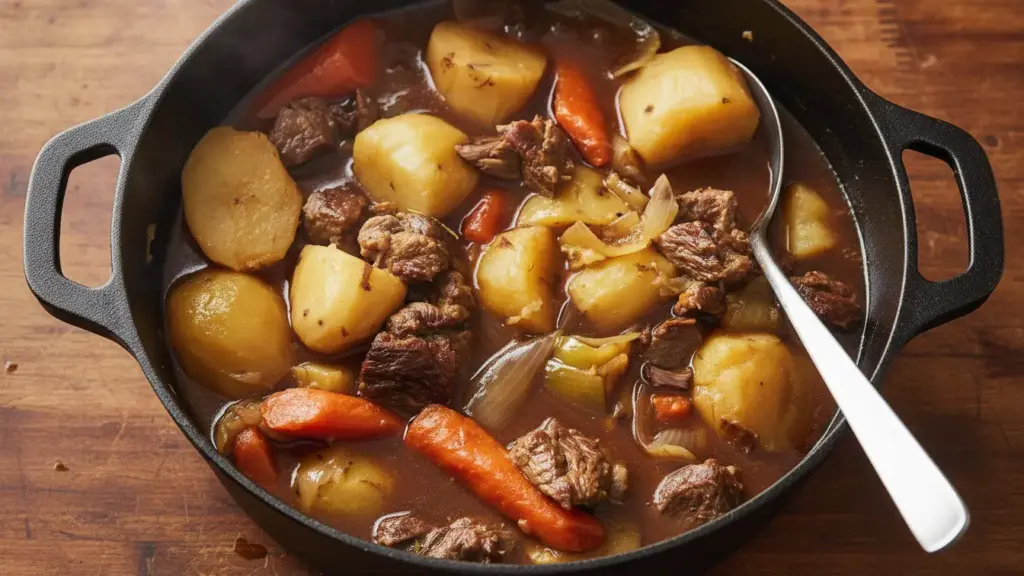
I love serving this stew with simple sides that complement rather than compete with the rich flavors.
Irish stew is hearty enough to be a complete meal on its own, but I always put out some extras for people to enjoy. The combination of tender lamb and root vegetables in that flavorful broth is incredibly satisfying.
- Traditional soda bread: The slightly dense texture is perfect for soaking up every drop of broth
- Crusty artisan bread: Warm from the oven with butter melting into it
- Simple green salad: Something light with a tangy vinaigrette cuts through the richness
- Roasted Brussels Sprouts with Bacon: Roasted Brussels Sprouts with Bacon adds a nice crispy element
- Steamed cabbage: A traditional Irish accompaniment that’s simple and delicious
- Mashed Potatoes: Mashed Potatoes alongside might seem like carb overload, but trust me, it’s wonderful
- Pickled vegetables: The acidity balances the rich stew beautifully
You might also enjoy: Creamy Tomato Basil Soup
Variations of Irish Stew
One of the best things about this recipe is how adaptable it is. I’ve made so many versions over the years, each one delicious in its own way.
- Guinness Irish Stew: Replace 1 cup of broth with Guinness stout for a deeper, maltier flavor. The beer adds incredible richness.
- Beef Irish Stew: Swap the lamb for beef chuck if you prefer. The cooking time remains the same.
- Add turnips or rutabaga: These traditional root vegetables add earthiness and variety to the mix.
- Include pearl barley: Add 1/2 cup of pearl barley with the carrots for extra heartiness and to naturally thicken the stew.
- Herbs variation: Try adding a sprig of rosemary along with the thyme, or finish with fresh dill.
- Slow cooker version: Brown the lamb first, then transfer everything to a slow cooker and cook on low for 8 hours.
- Instant Pot method: Brown the lamb using the sauté function, add remaining ingredients, and pressure cook on high for 35 minutes with natural release.
- White wine addition: Deglaze the pot with 1/2 cup white wine after cooking the onions for elegant acidity.
Read Also: Mississippi Pot Roast
Storage and Reheating
This stew is one of those magical dishes that actually improves with time. I often make a double batch just so we can enjoy leftovers all week.
- Refrigerator storage: Let the stew cool completely, then transfer to an airtight container. It will keep for up to 4 days in the fridge. The flavors deepen overnight.
- Freezer storage: This stew freezes beautifully for up to 3 months. Use freezer-safe containers and leave an inch of headspace for expansion. Label with the date.
- Thawing: Transfer frozen stew to the refrigerator and let it thaw overnight. Don’t thaw at room temperature.
- Reheating on stovetop: This is my preferred method. Pour the stew into a pot and heat over medium-low, stirring occasionally, until warmed through. Add a splash of broth if it’s thickened too much.
- Microwave reheating: Place individual portions in microwave-safe bowls, cover, and heat in 2-minute intervals, stirring between each, until hot.
- Oven reheating: Transfer to an oven-safe dish, cover with foil, and reheat at 325°F (165°C) for about 30 minutes.
- Pro tip: Don’t let the stew boil when reheating, or the vegetables will break down further and the lamb can become dry.
You might also enjoy: Taco Soup
Nutritional Facts
Per serving (based on 6 servings):
- Calories: 485
- Protein: 38g
- Carbohydrates: 32g
- Dietary Fiber: 5g
- Sugars: 6g
- Fat: 22g
- Saturated Fat: 7g
- Cholesterol: 115mg
- Sodium: 680mg
- Potassium: 1,180mg
- Vitamin A: 180% DV
- Vitamin C: 45% DV
- Calcium: 6% DV
- Iron: 25% DV
Note: Nutritional values are approximate and will vary based on specific ingredients and portion sizes used.
Health Benefits of Key Ingredients
Beyond tasting amazing, this stew is actually packed with nutritious ingredients that support your health.
Lamb is an excellent source of high-quality protein, iron, zinc, and B vitamins, especially B12. The iron in lamb is heme iron, which your body absorbs more easily than the iron found in plant foods. This makes it particularly beneficial for maintaining healthy red blood cells and preventing anemia.
- Carrots: Loaded with beta-carotene, which converts to vitamin A for eye health and immune function
- Parsnips: Rich in fiber, folate, and vitamin C, plus they contain unique antioxidants
- Potatoes: Provide potassium for heart health and vitamin C for immune support
- Onions: Contain quercetin, a powerful anti-inflammatory compound, and support gut health
- Garlic: Known for its antimicrobial properties and cardiovascular benefits
- Thyme: This herb has antibacterial properties and is rich in antioxidants
Another favorite: Chicken Gnocchi Soup
FAQs About Irish Stew
1. Can I use lamb chops instead of stewing lamb?
You can, but I don’t recommend it for this recipe. Lamb chops are lean cuts meant for quick cooking, while stew meat or lamb shoulder has more connective tissue that breaks down beautifully during the long simmer. If you do use chops, bone them first and reduce the cooking time significantly.
2. Why is my Irish stew too watery?
This usually happens when the stew hasn’t simmered long enough or the lid was completely closed during cooking. Remove the lid and simmer uncovered for the last 30 minutes to reduce and concentrate the liquid. The potatoes also naturally thicken the stew as some of them break down.
3. Can I make this recipe in advance?
Absolutely, and I highly encourage it. Make the stew up to 2 days ahead and store it in the refrigerator. The flavors will meld together beautifully overnight. Just reheat gently on the stovetop before serving, adding a splash of broth if needed.
4. What’s the difference between Irish stew and regular beef stew?
Traditional Irish stew specifically uses lamb or mutton rather than beef, and it typically contains fewer ingredients, focusing on the pure flavors of meat, onions, and root vegetables. Regular beef stew often includes tomatoes, which you won’t find in authentic Irish stew. Irish stew is also generally thinner and brothier than American-style beef stew.
5. My lamb turned out tough, what went wrong?
The most common reason is not cooking it long enough. Lamb shoulder needs at least 2 hours of gentle simmering to become tender. Also, make sure your stew isn’t boiling rapidly, which can toughen the meat. Low and slow is the key to melt-in-your-mouth lamb.
Read Also: Swedish Meatball
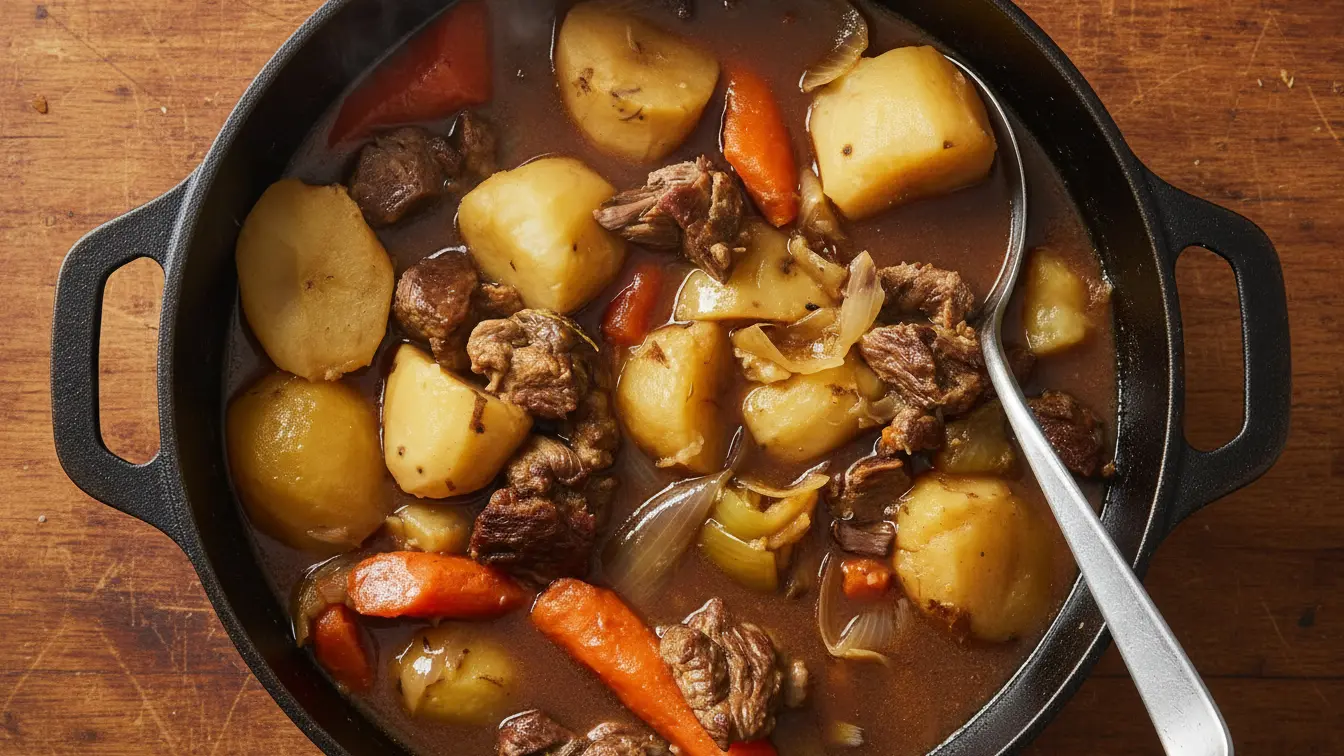
Irish Stew
Ingredients
- 3 lbs lamb shoulder or lamb stew meat - 1.4 kg, cut into 2-inch chunks
- 2 tbsp vegetable oil
- 2 large onions - roughly chopped
- 4 cloves garlic - minced
- 3 large carrots - about 2 cups / 240g, peeled and cut into 1-inch pieces
- 3 medium potatoes - about 3 cups / 450g, peeled and cut into 1.5-inch chunks
- 2 medium parsnips - about 1.5 cups / 180g, peeled and cut into 1-inch pieces
- 4 cups beef broth or lamb stock - 960ml
- 2 cups water - 480ml
- 3 sprigs fresh thyme - or 1 teaspoon dried thyme
- 2 bay leaves
- 1 tbsp Worcestershire sauce
- salt and black pepper - to taste
- 2 tbsp fresh parsley - chopped
Equipment
- Large Dutch oven or heavy-bottomed pot - At least 6-quart capacity
- Sharp chef’s knife
- Cutting board
- Wooden spoon - For stirring
- Measuring cups and spoons
- Ladle - For serving
- Vegetable peeler
Method
- Pat the lamb chunks completely dry with paper towels, then season all sides generously with salt and black pepper. Let the seasoned lamb rest at room temperature for about 15 minutes while you prep your vegetables.
- Heat vegetable oil in a Dutch oven over medium-high heat until shimmering, then brown the lamb in batches — about 3–4 minutes per side — until deeply golden. Transfer browned lamb to a plate and set aside.
- Reduce heat to medium and cook the onions in the same pot for 5–7 minutes, scraping up any browned bits, until softened. Add garlic and cook for 1 minute more, stirring constantly.
- Return the browned lamb and any accumulated juices to the pot, then pour in the beef broth and water, ensuring the lamb is submerged. Stir in Worcestershire sauce and add the thyme sprigs and bay leaves.
- Add carrots and parsnips to the pot, bring to a boil, then immediately reduce to a gentle simmer. Cover with the lid slightly ajar and simmer for 1.5 hours, stirring occasionally.
- Stir in the potato chunks and continue simmering uncovered for 45–60 minutes, until the lamb is fall-apart tender and potatoes are cooked through. Remove thyme sprigs and bay leaves, then taste and adjust seasoning.
- Ladle the hot stew into deep bowls, ensuring each serving has a good mix of lamb, vegetables, and broth. Garnish with fresh chopped parsley and serve immediately with crusty bread on the side.
Nutrition
Notes
- Don’t skip browning the lamb — this step creates the foundation of flavor through caramelization and should not be rushed.
- Use bone-in lamb shoulder if possible for a richer, more gelatinous broth; remove the bones before serving.
- Choose starchy potatoes like russet or Yukon gold — they break down slightly and help thicken the stew naturally.
- Keep the simmer gentle throughout; a hard rolling boil will toughen the lamb. Low and slow is the key.
- This stew tastes even better the next day — make it up to 2 days ahead and reheat gently on the stovetop.
- Freezer-friendly: store in airtight containers for up to 3 months. Thaw overnight in the refrigerator before reheating.
- For a Guinness variation, replace 1 cup of broth with Guinness stout for a deeper, maltier flavor.
- If the stew is too thin, simmer uncovered for the last 30 minutes to reduce. If too thick, add a splash of broth.
- Season at the very end — the broth concentrates significantly as it cooks, so hold off on final salt adjustments until the last 15 minutes.
- Beef chuck can be substituted for lamb at the same quantities and cooking time for a more mild-flavored stew.
Private Notes
Tried this recipe?
Let us know how it was!Final Thoughts
There’s something incredibly satisfying about making a pot of Irish stew from scratch. It connects me to my grandmother’s kitchen and all those Sunday dinners that made our house feel like home.
This recipe has seen me through countless dinner parties, weeknight meals when I needed something comforting, and even a few St. Patrick’s Day celebrations. Every single time, it delivers that same warm, satisfying experience that keeps people coming back for seconds.
I hope this becomes one of your go-to comfort food recipes too. There’s no fancy technique here, just good ingredients, a little patience, and the magic that happens when you let everything simmer together.
Give this Irish stew a try and let me know how it turns out for you. I’d love to hear about any variations you create or family traditions you pair it with. Drop a comment below and share your experience!
Recommended:
- Potato Leek Soup
- Italian Wedding Soup
- Pasta Fagioli
- French Onion Beef Short Rib Soup
- Lentil and Vegetable Soup
- Easy Chicken Noodle Soup
- Instant Pot Chicken Noodle Soup
- Carrot Ginger Soup
- Roasted Butternut Squash Soup
- Kale and Sweet Potato Soup