I’ll never forget the first time I attempted a lamb stew recipe on a chilly October evening.

My grandmother had just shared her handwritten recipe card with me, complete with ingredient splatters and notes in the margins from decades of cooking. I was nervous about working with lamb for the first time, but the moment those tender chunks hit the pot with aromatic herbs, I knew I was onto something special.
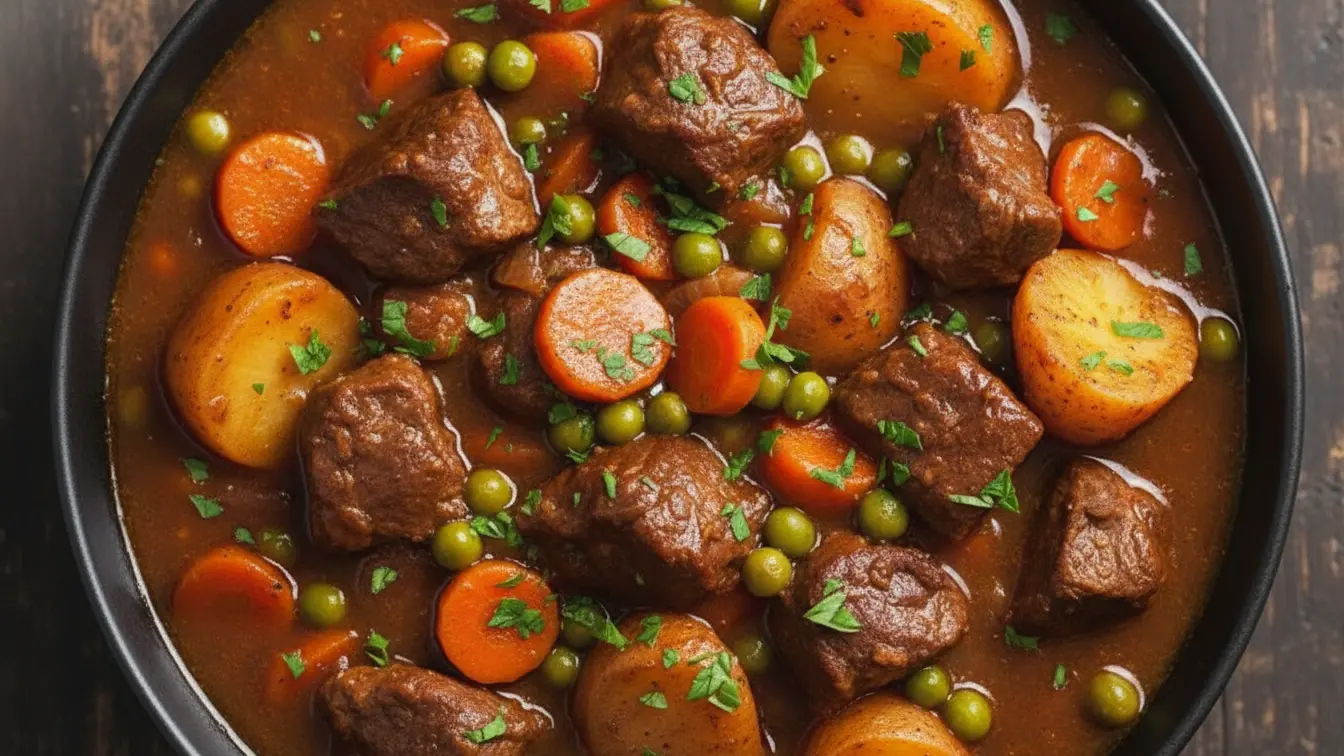
That night changed everything for me. The rich, savory broth, fall-apart tender meat, and perfectly cooked vegetables created a meal that had my entire family asking for seconds. Now, years later, this lamb stew has become my go-to comfort food whenever the weather turns cold or I need something deeply satisfying.
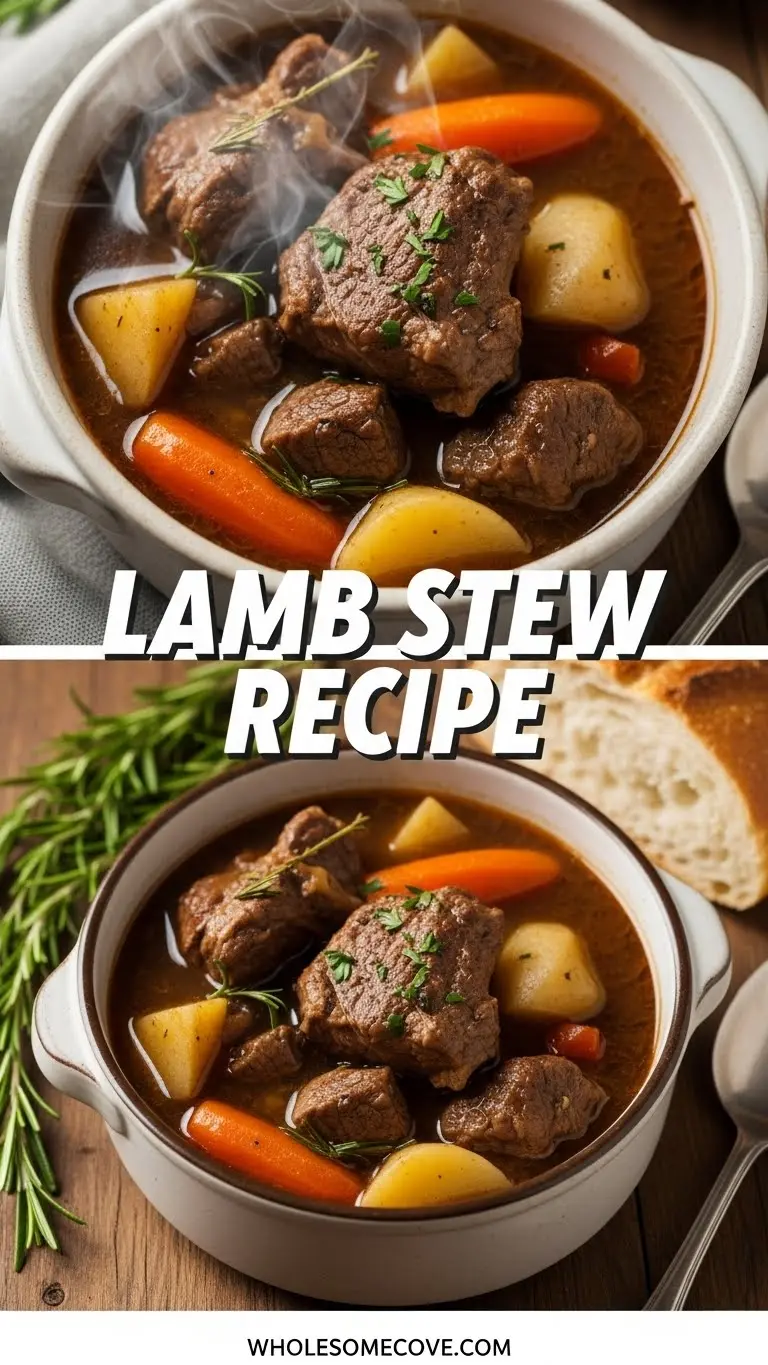
What makes this recipe truly special is how it transforms simple ingredients into something extraordinary. The slow cooking process allows the lamb to become incredibly tender while the vegetables soak up all those wonderful flavors.
| Quick Recipe Summary | |
|---|---|
| Prep Time | 20 minutes |
| Cook Time | 2 hours 30 minutes |
| Total Time | 2 hours 50 minutes |
| Servings | 6-8 servings |
| Difficulty Level | Intermediate |
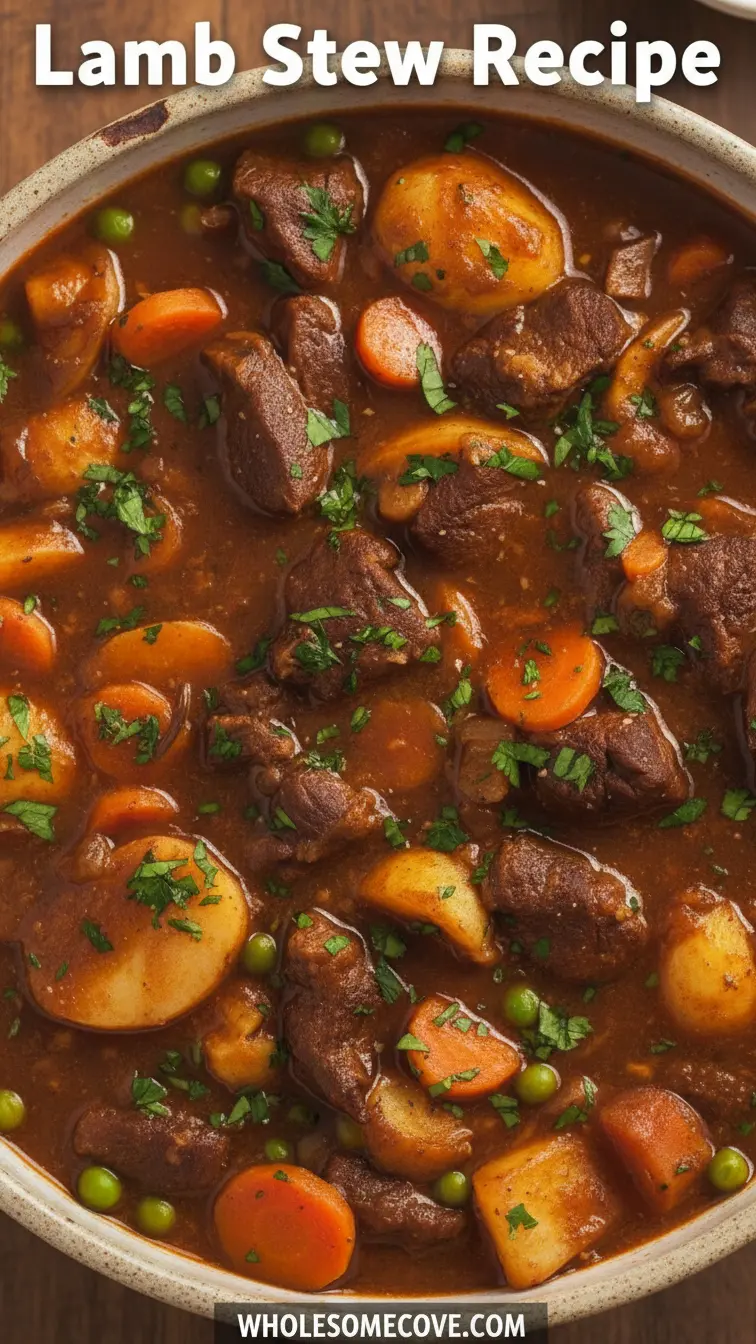
Why You’ll Love This Lamb Stew Recipe
This lamb stew has earned its place as a family favorite in my household, and I’m confident it’ll do the same in yours. The combination of tender lamb, hearty vegetables, and a rich, flavorful broth creates a complete meal that satisfies on every level.
What truly sets this recipe apart is its versatility and depth of flavor. The lamb becomes so tender it practically melts in your mouth, while the vegetables maintain just enough texture to keep things interesting.
The magic happens in these key areas:
- Deep, complex flavors: Hours of slow simmering create layers of taste that you simply can’t rush
- Budget-friendly comfort: Lamb shoulder is surprisingly affordable and feeds a crowd beautifully
- One-pot convenience: Everything cooks together, making cleanup a breeze
- Perfect for meal prep: This stew actually tastes better the next day as flavors continue to develop
- Nutritious and filling: Packed with protein, vegetables, and wholesome ingredients that keep you satisfied
- Impressive yet approachable: Looks like you spent all day cooking, but it’s actually quite straightforward
This pairs beautifully with my homemade biscuit recipe for soaking up every last drop of that incredible broth.
Ingredients
Getting the right ingredients makes all the difference in this lamb stew recipe. I’ve learned through trial and error that quality lamb shoulder and fresh herbs create the foundation for exceptional flavor.
Here’s what you’ll need:
For the Lamb:
- 3 pounds (1.4 kg) lamb shoulder, cut into 2-inch cubes
- 2 tablespoons olive oil
- 1 teaspoon salt
- 1/2 teaspoon black pepper
- 3 tablespoons all-purpose flour (for dusting)
For the Vegetables:
- 3 large carrots, peeled and cut into 1-inch pieces (about 2 cups/300g)
- 4 medium Yukon Gold potatoes, cut into 1.5-inch chunks (about 3 cups/450g)
- 2 large yellow onions, roughly chopped (about 2 cups/300g)
- 3 celery stalks, cut into 1-inch pieces (about 1.5 cups/180g)
- 4 cloves garlic, minced
- 1 cup (150g) frozen peas (added at the end)
For the Broth and Seasonings:
- 4 cups (960ml) beef broth or stock
- 2 cups (480ml) red wine (I prefer Cabernet Sauvignon)
- 3 tablespoons tomato paste
- 2 bay leaves
- 3 sprigs fresh thyme (or 1 teaspoon dried)
- 2 sprigs fresh rosemary (or 1 teaspoon dried)
- 1 tablespoon Worcestershire sauce
- 1/2 teaspoon smoked paprika
Kitchen Equipment Needed
Having the right tools makes cooking this lamb stew so much easier. I learned this the hard way when I tried making it in a too-small pot and ended up with broth all over my stovetop.
Essential equipment for this recipe:
- Large Dutch oven or heavy-bottomed pot (at least 6-quart capacity) – This is absolutely crucial for even heat distribution
- Sharp chef’s knife – For cutting the lamb and vegetables into uniform pieces
- Cutting board – Preferably one designated for meat
- Wooden spoon or heat-resistant spatula – For stirring and scraping up those flavorful browned bits
- Measuring cups and spoons – Accuracy matters, especially with seasonings
- Tongs – Makes turning the lamb pieces much easier
- Ladle – For serving without making a mess
- Medium mixing bowl – For tossing the lamb with flour
- Paper towels – Essential for patting the meat dry before browning
Another favorite: Instant Pot Chicken Noodle Soup
Recommended Products for This Recipe
After making this lamb stew countless times, I’ve found a few products that genuinely make the process better and the results more delicious.
1. Le Creuset Enameled Cast Iron Dutch Oven
This is the pot I reach for every single time I make stew. The heavy cast iron distributes heat so evenly that nothing burns on the bottom, and the tight-fitting lid locks in moisture perfectly. I’ve had mine for over eight years and it still looks beautiful. The 7.25-quart size is ideal for making enough stew to feed a crowd or have plenty of leftovers.
2. Australian Grass-Fed Lamb Shoulder
The quality of your lamb makes an enormous difference in the final dish. I started using grass-fed Australian lamb about two years ago and haven’t looked back. The meat is more flavorful, tender, and sustainable. It costs a bit more, but the superior taste is absolutely worth it for special occasions or when you really want to impress.
3. Better Than Bouillon Beef Base
This concentrated paste has revolutionized my stew-making. Unlike boxed broth, you can control the intensity of flavor, and it keeps in the fridge for months. Just one tablespoon mixed with a cup of water creates rich, restaurant-quality broth. I always keep a jar on hand for soups and stews.
4. Wusthof Classic Chef’s Knife
Cutting through lamb shoulder requires a seriously sharp, sturdy knife. This 8-inch chef’s knife has been my kitchen workhorse for years. It slices through meat and vegetables effortlessly, and the balanced weight makes prep work so much faster. A good knife truly changes your cooking experience.
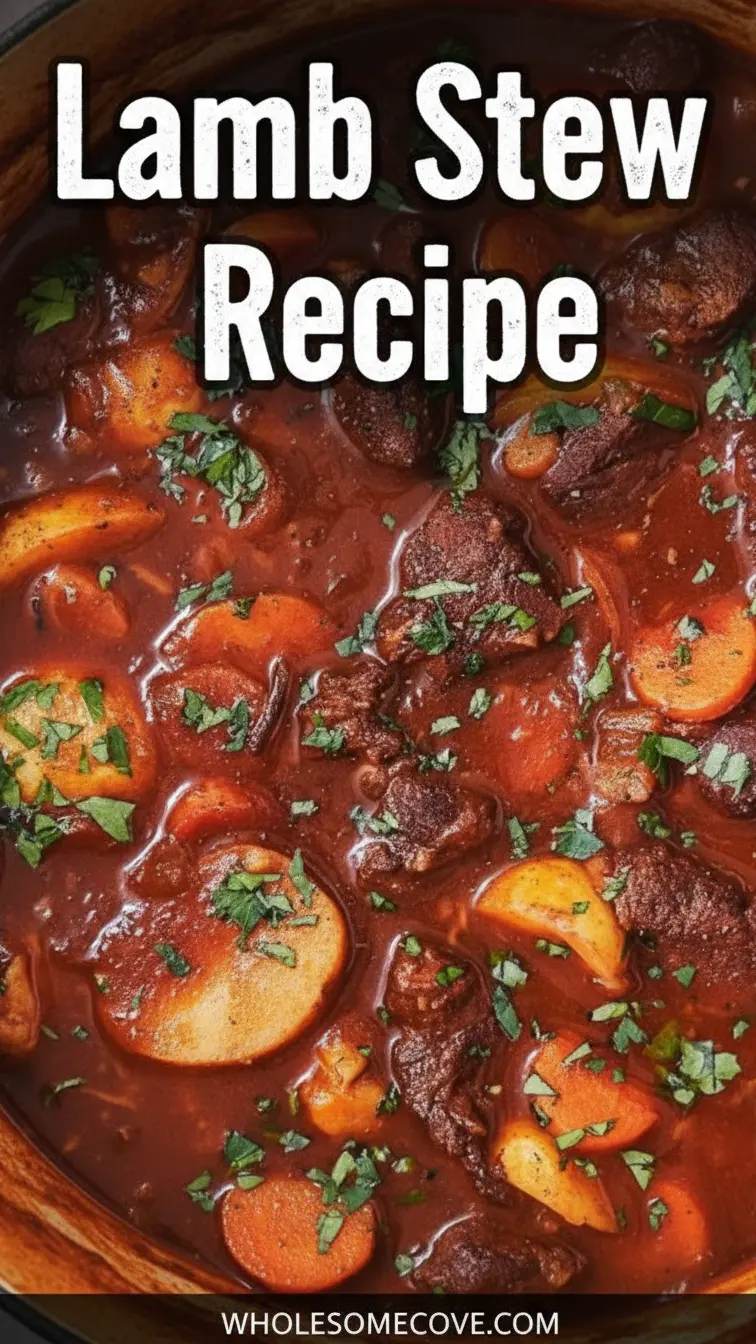
Step-by-Step Instructions: How to Make Lamb Stew
Making lamb stew is a labor of love, but I promise the results are worth every minute. Take your time with each step, and you’ll be rewarded with the most tender, flavorful stew you’ve ever tasted.
1. Prepare and Season the Lamb
- Pat the lamb cubes completely dry with paper towels (this is crucial for getting a good sear, as moisture prevents browning)
- Place the lamb pieces in a large bowl and season generously with salt and pepper on all sides
- Add the flour to the bowl and toss the lamb pieces until each cube is lightly coated (this creates a beautiful crust and helps thicken the stew later)
- Let the floured lamb sit at room temperature for 10-15 minutes while you prep the vegetables (this allows the flour to hydrate and stick better to the meat)
2. Brown the Lamb in Batches
- Heat your Dutch oven over medium-high heat and add the olive oil, letting it get hot until it shimmers (but not smoking)
- Working in 2-3 batches to avoid overcrowding, add the lamb pieces in a single layer with space between each piece
- Let each piece sear undisturbed for 3-4 minutes until a deep golden-brown crust forms on the bottom
- Use tongs to flip each piece and brown the other sides, spending about 2-3 minutes per side
- Transfer the browned lamb to a clean plate and repeat with remaining pieces, adding a bit more oil if the pot looks dry
- Don’t worry if some flour sticks to the bottom of the pot – those browned bits (called fond) are pure flavor
Read Also: Irish Stew Recipe
3. Sauté the Aromatics
- Reduce the heat to medium and add the chopped onions to the same pot (no need to clean it)
- Cook the onions for 5-7 minutes, stirring occasionally, until they become soft and translucent
- Add the minced garlic and cook for another 60-90 seconds, stirring constantly, until fragrant but not browned
- Stir in the tomato paste and cook for 2-3 minutes, stirring frequently, until it darkens slightly and becomes aromatic (this step removes the raw taste and concentrates the flavor)
- Use your wooden spoon to scrape up all those beautiful browned bits from the bottom of the pot
4. Deglaze with Wine
- Pour in the red wine all at once and immediately start scraping the bottom of the pot with your wooden spoon
- Let the wine bubble vigorously for 3-4 minutes to cook off the alcohol and reduce by about one-third
- The liquid should look slightly thickened and the harsh wine smell should mellow into something rich and inviting
- Continue scraping to ensure all the flavorful fond is incorporated into the liquid
5. Build the Stew Base
- Return all the browned lamb pieces (along with any accumulated juices) back to the pot
- Pour in the beef broth and add the Worcestershire sauce, stirring to combine everything
- Tuck in the bay leaves, fresh thyme sprigs, and rosemary sprigs, pushing them down into the liquid
- Sprinkle in the smoked paprika and give everything a good stir
- Bring the entire mixture to a vigorous boil over high heat, which should take about 5-7 minutes
If you’re looking for something equally comforting, try my crockpot beef stew recipe for a hands-off approach.
6. Simmer the Stew Low and Slow
- Once boiling, immediately reduce the heat to low so the liquid maintains a gentle simmer (you should see small bubbles breaking the surface occasionally)
- Cover the pot with the lid slightly ajar (about 1 inch opening) to allow some steam to escape
- Let the stew simmer for 1.5 hours, stirring every 20-30 minutes to prevent sticking and ensure even cooking
- The lamb should be tender but not quite falling apart yet (if it’s still tough, give it another 15-30 minutes)
7. Add the Vegetables
- After the initial 1.5 hours of simmering, add the carrots, potatoes, and celery to the pot
- Gently stir to submerge the vegetables in the liquid (add a bit more broth or water if needed to barely cover everything)
- Return the lid to its slightly ajar position and continue simmering for another 45-60 minutes
- The vegetables should be fork-tender and the potatoes should break apart easily when pressed
- Check and stir every 20 minutes, adding more liquid if the stew looks too thick
8. Finish and Adjust Seasoning
- Taste the broth and adjust the seasoning with additional salt and pepper as needed (the flavors should be rich and well-balanced)
- Remove and discard the bay leaves, thyme stems, and rosemary stems (they’ve done their job)
- Stir in the frozen peas and let them warm through for 3-4 minutes
- If the stew is too thin, let it simmer uncovered for 10-15 minutes to reduce and thicken
- If it’s too thick, add broth or water a half cup at a time until it reaches your desired consistency
- Let the stew rest off the heat for 10 minutes before serving (this allows the flavors to settle and meld together beautifully)
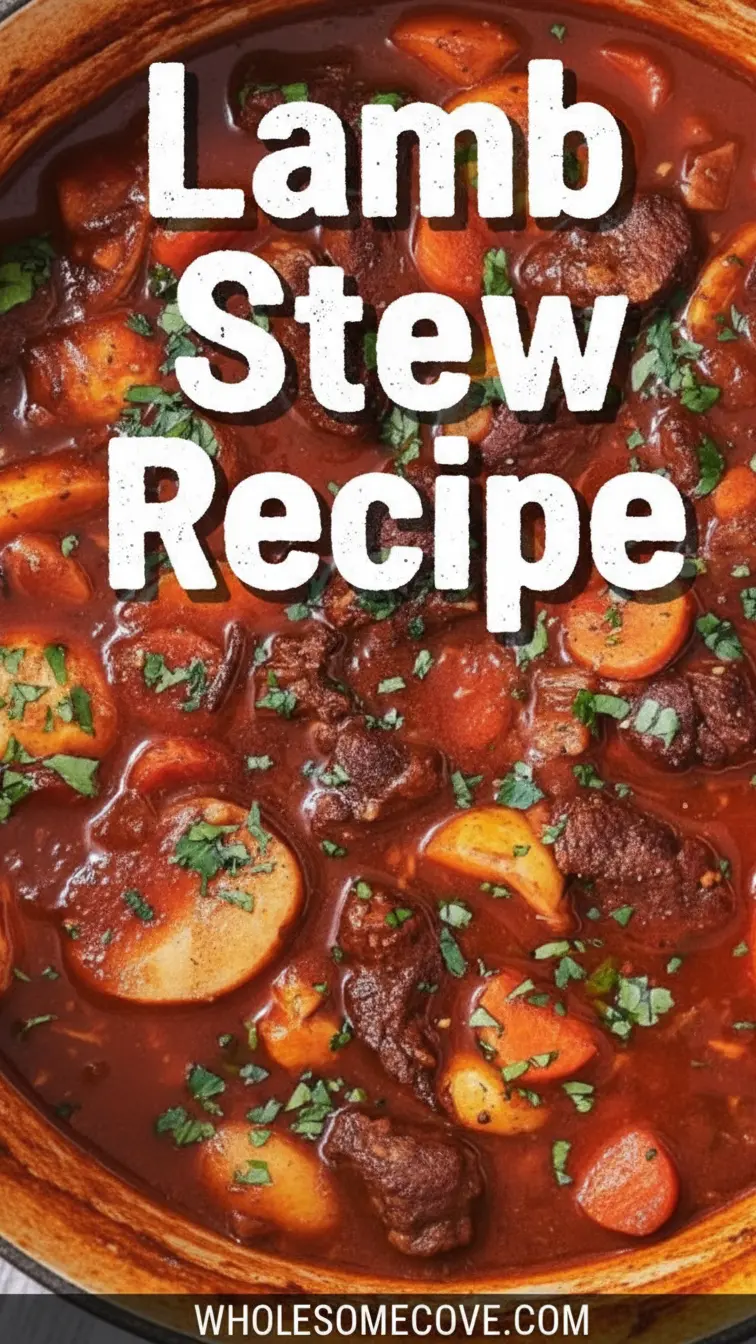
Tips for The Best Lamb Stew
Over the years, I’ve discovered several tricks that take this lamb stew from good to absolutely incredible. These tips come from both successes and a few kitchen disasters that taught me valuable lessons.
Here are my most important tips:
- Choose the right cut: Lamb shoulder is ideal because it has enough fat and connective tissue to stay moist and tender during long cooking (lamb leg or loin will become dry and tough)
- Don’t skip browning: Taking the time to properly brown the meat in batches creates layers of flavor that you simply cannot replicate any other way (this step adds at least 30% more depth to your final stew)
- Pat the meat dry: Moisture is the enemy of a good sear, so use paper towels to thoroughly dry each piece before it hits the hot oil
- Low and slow wins: Resist the urge to crank up the heat to speed things along (high heat will toughen the meat, while gentle simmering makes it melt-in-your-mouth tender)
- Cut vegetables uniformly: Same-sized pieces ensure everything cooks evenly and you don’t end up with mushy carrots and crunchy potatoes
- Layer your liquids: Using both wine and broth creates a more complex, restaurant-quality flavor profile than broth alone
- Taste as you go: Season in stages rather than dumping all the salt in at once (you can always add more, but you can’t take it away)
- Make it ahead: This stew tastes even better the next day after the flavors have had time to marry, so don’t hesitate to make it 24 hours in advance
- Skim the fat: After cooking, a layer of fat will rise to the surface (skim most of it off for a cleaner-tasting stew, but leave a little for richness)
- Use good wine: If you wouldn’t drink it, don’t cook with it (the flavor concentrates, so cheap wine will make your stew taste cheap)
You might also enjoy: Brunswick Stew Recipe
Serving Suggestions
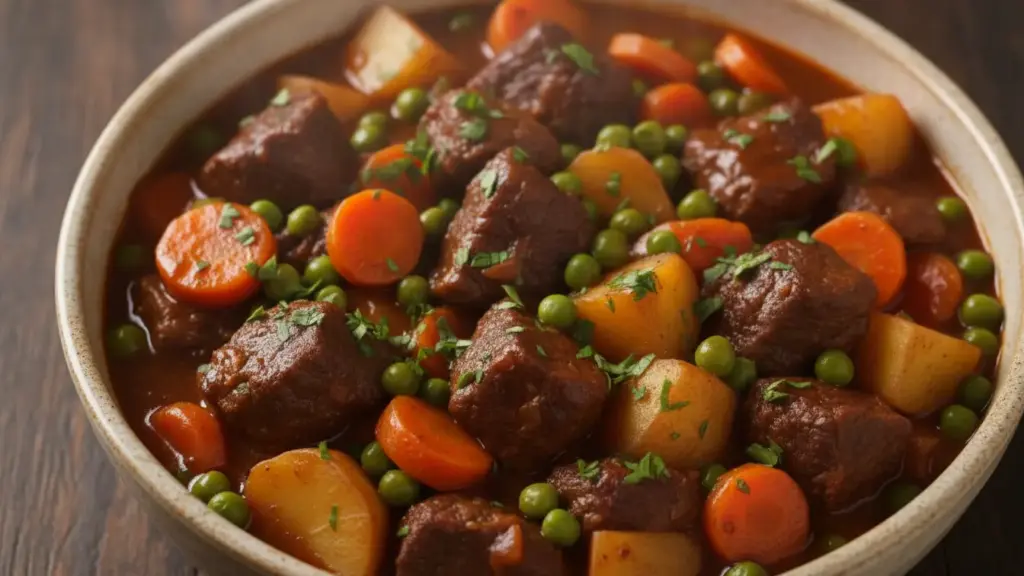
Lamb stew is incredibly satisfying on its own, but pairing it with the right sides transforms it into a complete, memorable meal. I love how versatile this stew is when it comes to accompaniments.
The rich, hearty nature of lamb stew calls for sides that can either soak up the delicious broth or provide a fresh contrast to the deep flavors.
Perfect accompaniments include:
- Crusty bread: Nothing beats tearing off chunks of warm, crusty bread to dip into that savory broth (sourdough and French baguettes are my top choices)
- Mashed Potatoes: Create a bed of creamy mashed potatoes and ladle the stew right on top for ultimate comfort food
- Dinner Rolls: Soft, buttery rolls are perfect for mopping up every last drop
- Simple green salad: A crisp salad with vinaigrette provides a refreshing contrast to the rich stew
- Buttered egg noodles: Wide egg noodles tossed with butter make a wonderful base for serving the stew
- Steamed rice: Plain white or brown rice absorbs the broth beautifully and stretches the meal further
- Roasted Brussels Sprouts with Bacon: The slight bitterness and crunch balance the stew’s richness perfectly
- Pickled vegetables: A small side of pickled onions or cucumbers cuts through the richness and adds brightness
Variations of Lamb Stew
One of the best things about this lamb stew recipe is how easily you can adapt it to different tastes, dietary needs, or whatever ingredients you have on hand. I’ve experimented with countless variations over the years.
Try these delicious twists:
- Mediterranean-style: Replace the standard herbs with oregano and add chickpeas, diced tomatoes, and a squeeze of lemon juice at the end for a Greek-inspired version
- Moroccan-spiced: Stir in cumin, coriander, cinnamon, and a pinch of cayenne, then add dried apricots and serve over couscous
- Irish-inspired: Use Guinness instead of red wine, add turnips and parsnips alongside the other vegetables, and finish with chopped fresh parsley
- Root vegetable-heavy: Add parsnips, turnips, rutabaga, and sweet potatoes for an earthier, heartier version
- Tomato-based: Add a 28-ounce can of crushed tomatoes along with the broth for a richer, more Italian-style stew
- Slow cooker adaptation: Brown the meat and sauté the aromatics as directed, then transfer everything to a slow cooker and cook on low for 7-8 hours or high for 4-5 hours
- Instant Pot version: Use the sauté function for browning, then pressure cook on high for 35 minutes with natural release
- Lighter option: Use lamb leg instead of shoulder and trim all visible fat (though it won’t be quite as tender)
- Gluten-free: Skip the flour dusting and thicken the stew at the end with a cornstarch slurry instead
- Pearl barley addition: Add 1/2 cup pearl barley with the vegetables for extra heartiness and a wonderful chewy texture
For a different take on hearty comfort food, check out my slow cooker chili recipe.
Storage and Reheating
Lamb stew is one of those magical dishes that actually improves with time, making it perfect for meal prep or enjoying as leftovers. Proper storage ensures you can safely enjoy this stew for days.
Follow these storage guidelines for the best results:
- Refrigerator storage: Let the stew cool completely to room temperature (this takes about 1 hour), then transfer to airtight containers and refrigerate for up to 4 days
- Freezer storage: Portion the cooled stew into freezer-safe containers or heavy-duty freezer bags, leaving 1 inch of headspace for expansion, and freeze for up to 3 months (label with the date)
- Thawing: Transfer frozen stew to the refrigerator 24 hours before you plan to reheat it (never thaw at room temperature)
- Reheating on stovetop: Pour the stew into a pot over medium-low heat, stirring occasionally, until heated through (about 15-20 minutes), adding a splash of broth if it seems too thick
- Reheating in microwave: Place a portion in a microwave-safe bowl, cover loosely, and heat in 2-minute intervals, stirring between each, until piping hot throughout
- Reheating from frozen: You can reheat directly from frozen on the stovetop over low heat, but it will take 30-40 minutes and require frequent stirring to prevent scorching
- Quality tip: The vegetables may become softer after storage, which is perfectly fine (some people actually prefer the texture)
- Freezing advice: If you plan to freeze the stew, slightly undercook the potatoes as they can become grainy when frozen (they’ll finish cooking during reheating)
- Portioning: Freeze in individual or family-sized portions so you can thaw only what you need
Nutritional Facts
Understanding the nutritional content helps you make informed decisions about portion sizes and how this stew fits into your overall diet. These values are approximate and based on one serving (assuming 8 servings total).
Per Serving:
- Calories: 425
- Total Fat: 18g
- Saturated Fat: 6g
- Cholesterol: 95mg
- Sodium: 680mg
- Total Carbohydrates: 28g
- Dietary Fiber: 4g
- Sugars: 5g
- Protein: 35g
- Vitamin A: 85% DV
- Vitamin C: 25% DV
- Calcium: 6% DV
- Iron: 20% DV
Another favorite: Beef Barley Soup
Health Benefits of Key Ingredients
Beyond being absolutely delicious, this lamb stew packs some impressive nutritional benefits that make it a wholesome choice for your family. I love knowing that comfort food can also nourish our bodies.
The star ingredients offer these health benefits:
- Lamb: Rich in high-quality protein, vitamin B12, zinc, and iron, lamb supports muscle growth, immune function, and energy production (grass-fed lamb also contains beneficial omega-3 fatty acids)
- Carrots: Loaded with beta-carotene (which converts to vitamin A), carrots support eye health, immune function, and skin health
- Potatoes: Despite their reputation, potatoes provide vitamin C, potassium, and resistant starch that supports gut health and blood sugar control
- Onions and garlic: Both contain powerful antioxidants and anti-inflammatory compounds that support heart health and may boost immune function
- Celery: A good source of antioxidants and beneficial plant compounds that may help reduce inflammation and support digestion
- Red wine: When cooked, red wine contributes antioxidants like resveratrol without the alcohol content, potentially supporting heart health
- Fresh herbs: Rosemary and thyme contain antimicrobial properties and antioxidants that may support brain health and reduce inflammation
- Tomato paste: Concentrated source of lycopene, a powerful antioxidant that supports heart and prostate health
FAQs About Lamb Stew
1. Can I use a different cut of lamb instead of shoulder?
Yes, but the results will vary significantly. Lamb shank works beautifully and becomes incredibly tender, though you’ll need to remove the bones before serving. Lamb leg can work if you’re careful not to overcook it, but it tends to be leaner and can become dry during the long simmering time. I strongly recommend sticking with lamb shoulder for the most foolproof, melt-in-your-mouth results.
2. My stew turned out too thin and watery. How can I fix it?
This happens sometimes, especially if your vegetables released a lot of moisture. The easiest fix is to remove the lid and let the stew simmer uncovered for 20-30 minutes to reduce and concentrate the flavors. Alternatively, you can mix 2 tablespoons of cornstarch with 2 tablespoons of cold water, stir it into the simmering stew, and cook for 5 minutes until thickened.
3. Can I make this lamb stew without wine?
Absolutely! Replace the wine with an equal amount of additional beef broth plus 2 tablespoons of red wine vinegar or balsamic vinegar. The vinegar provides the acidity that wine would normally contribute, which helps balance the rich flavors. You could also use non-alcoholic red wine if you prefer.
4. Why is my lamb still tough after 2 hours of cooking?
Lamb shoulder can sometimes take longer to become tender, especially if the pieces are particularly large or if the simmer wasn’t gentle enough. Simply continue cooking for another 30-60 minutes, checking every 15 minutes. Make sure the liquid is at a gentle simmer, not a rolling boil, as high heat can actually make meat tougher.
5. How far in advance can I prepare this stew?
This stew is perfect for advance preparation and actually tastes better when made ahead. You can prepare it up to 3 days in advance and store it in the refrigerator. In fact, I prefer making it the day before serving because the flavors have more time to develop and meld together. Just reheat gently on the stovetop before serving.
Read Also: Oyster Stew Recipe
Final Thoughts
This lamb stew recipe has been a cherished part of my cooking repertoire for years, and sharing it with you feels like inviting you into my kitchen. There’s something incredibly satisfying about creating a meal that brings people together around the table, fills the house with amazing aromas, and provides both comfort and nourishment.
The beauty of this stew lies not just in its rich, complex flavors but in its ability to adapt to your needs and preferences. Don’t be afraid to make it your own by adjusting the vegetables, playing with the herbs, or trying different variations.
I’d love to hear how your lamb stew turns out! Drop a comment below with your experience, any creative twists you added, or questions you might have. And if you enjoyed this recipe, please share it with friends and family who appreciate good, honest comfort food.
Recommended:
- Potato Leek Soup
- Zuppa Toscana
- Mississippi Pot Roast
- Swedish Meatball
- Taco Soup
- Pasta Fagioli
- Chicken Gnocchi Soup
- Italian Wedding Soup
- Cheeseburger Soup
- Avgolemono Soup