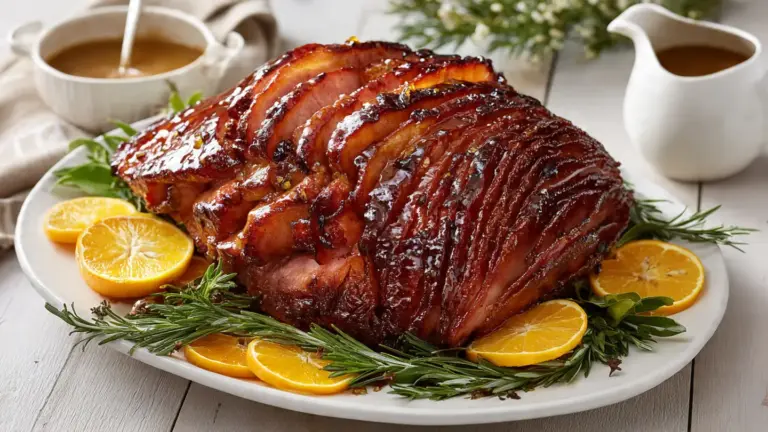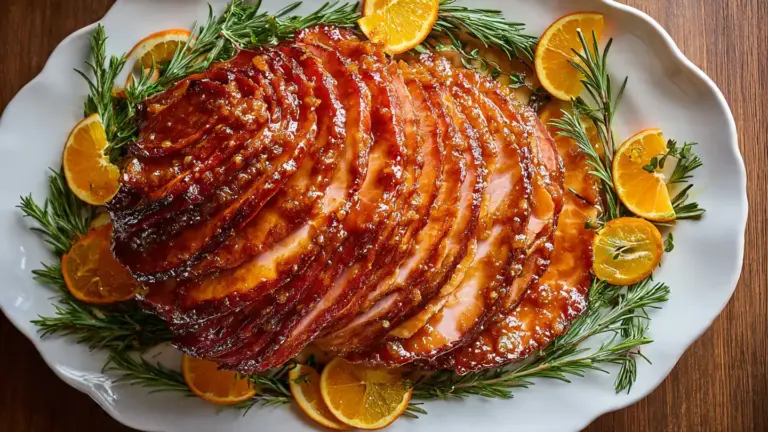
My go-to baked ham recipe has saved more holiday dinners than I can count. I still remember the first time I made it for Easter. I had a 9-pound bone-in ham, zero confidence, and a kitchen full of relatives watching me like I was performing surgery.
What came out of that oven was nothing short of spectacular. The brown sugar glaze had caramelized into a lacquered, amber crust, the meat was impossibly juicy, and every single person asked me for the recipe before dessert was served.
I’ve since made this ham for Christmas, Thanksgiving, Easter, and even a random Sunday when I just needed something impressive on the table. The technique is simple, the ingredients are pantry staples, and the result looks like you spent all day in the kitchen.
The secret is a two-stage approach: low and slow first (covered in foil to lock in moisture), then a blast of high heat to caramelize that gorgeous glaze. Once you try it this way, you’ll never go back to the dry, overcooked hams of the past.
| Quick Recipe Summary | |
|---|---|
| Prep Time | 20 minutes |
| Cook Time | 2 hours 30 minutes |
| Total Time | 2 hours 50 minutes |
| Servings | 16 to 20 servings |
| Difficulty Level | Easy |
If you love a good pork centerpiece, you might also enjoy this Apple Cider Glazed Pork Chops Recipe for weeknights when you want those same sweet-savory flavors without the full holiday production.
Why You’ll Love This Baked Ham Recipe
This recipe is genuinely foolproof, even for first-timers. The ham is sold fully cooked, so all you’re really doing is warming it through and adding a deeply flavorful glaze.
The brown sugar glaze is the real star here. It’s sweet, tangy, slightly smoky, and it creates the most gorgeous caramelized crust you’ve ever seen on a piece of meat.
- It feeds a crowd effortlessly. A single 8 to 10-pound bone-in ham can feed 16 to 20 people, making it the most practical centerpiece for any large gathering.
- Mostly hands-off cooking. Apart from making the glaze and applying it in the final stage, the oven does all the heavy lifting.
- Incredible leftovers. Ham leftovers are endlessly versatile — sandwiches, omelets, soups, and casseroles all benefit from sliced baked ham.
- The glaze is magic. A combination of brown sugar, honey, Dijon mustard, apple cider vinegar, and warm spices creates a sticky, shiny, caramelized coating that takes the ham from good to unforgettable.
- It’s a showstopper presentation. That golden, glazed exterior looks absolutely stunning on a holiday table, and guests will be impressed before they even take a bite.
- Budget-friendly per serving. Ham is one of the most affordable proteins for feeding a large group, especially when you calculate cost per person.
For another crowd-pleasing pork dinner idea, try this Pork Tenderloin with Roasted Root Vegetables Recipe.
Ingredients
You’ll want to start with a good-quality, fully cooked, bone-in ham — either a whole ham or a half ham works great. I personally prefer the shank end because it’s easier to carve and has that classic ham shape. For the glaze, everything comes together in one small saucepan in under 10 minutes.
For the Ham:
- 1 bone-in, fully cooked ham, shank or butt end (8 to 10 lbs / 3.6 to 4.5 kg)
- 1 cup (240 ml) water or pineapple juice (for the roasting pan)
- Whole cloves, optional (for scoring decoration)
For the Brown Sugar Glaze:
- 1 cup (200 g) packed dark brown sugar
- ¼ cup (85 g) honey
- 2 tablespoons Dijon mustard
- 2 tablespoons apple cider vinegar
- 1 tablespoon unsalted butter
- 1 teaspoon ground cinnamon
- ½ teaspoon ground ginger
- ½ teaspoon garlic powder
- ¼ teaspoon ground cloves
- ¼ teaspoon smoked paprika
- Pinch of black pepper
Read Also: Ham and Potato Soup Recipe
Kitchen Equipment Needed
Having the right tools makes baking a ham much smoother and less stressful. Nothing on this list is fancy or hard to find, but a few items are worth investing in if you don’t already own them.
Here’s what you’ll need to have ready before you start:
- Large roasting pan (at least 13×9 inches / 33×23 cm)
- Roasting rack (fits inside the roasting pan)
- Heavy-duty aluminum foil
- Sharp chef’s knife or carving knife
- Cutting board
- Small saucepan
- Instant-read meat thermometer
- Pastry brush or basting brush
- Measuring cups and spoons
- Wooden spoon or silicone spatula
- Large serving platter
You might also enjoy: Scalloped Potatoes Recipe
Recommended Products for This Recipe
I only recommend products I’ve actually used in my own kitchen. These are the ones that make a real difference when baking a holiday ham.
1. Granite Ware Covered Oval Roaster
A sturdy, deep roasting pan is non-negotiable for a ham this size. I’ve used flimsy disposable pans before, and they buckle under the weight and heat — not ideal when you’re hauling a 9-pound ham out of a 425°F oven. A quality roasting pan distributes heat evenly and gives you a stable platform for basting. It’s also perfect for pot roasts and whole chickens the rest of the year.
2. ThermoWorks Thermapen Instant-Read Thermometer
The single biggest mistake people make with ham is overcooking it. This thermometer takes all the guesswork out — you know exactly when your ham hits that perfect 140°F (60°C) internal temperature. I’ve been using mine for years on everything from steaks to whole turkeys, and it pays for itself every single holiday season.
3. Dark Brown Sugar (Bulk)
Most grocery store brown sugar is fine, but a high-quality dark brown sugar with a rich molasses content makes a noticeably deeper, more complex glaze. The difference shows up in the caramelization — darker, richer, and more flavorful than light brown sugar can achieve.
4. Silicone Basting Brush
A good silicone basting brush is one of those tools you don’t realize you needed until you have one. It holds the glaze better than a standard brush, survives high heat without singed bristles, and cleans up in seconds. Essential for getting that thick, even glaze onto every inch of the ham’s surface.
Read Also: Mashed Potatoes Recipe
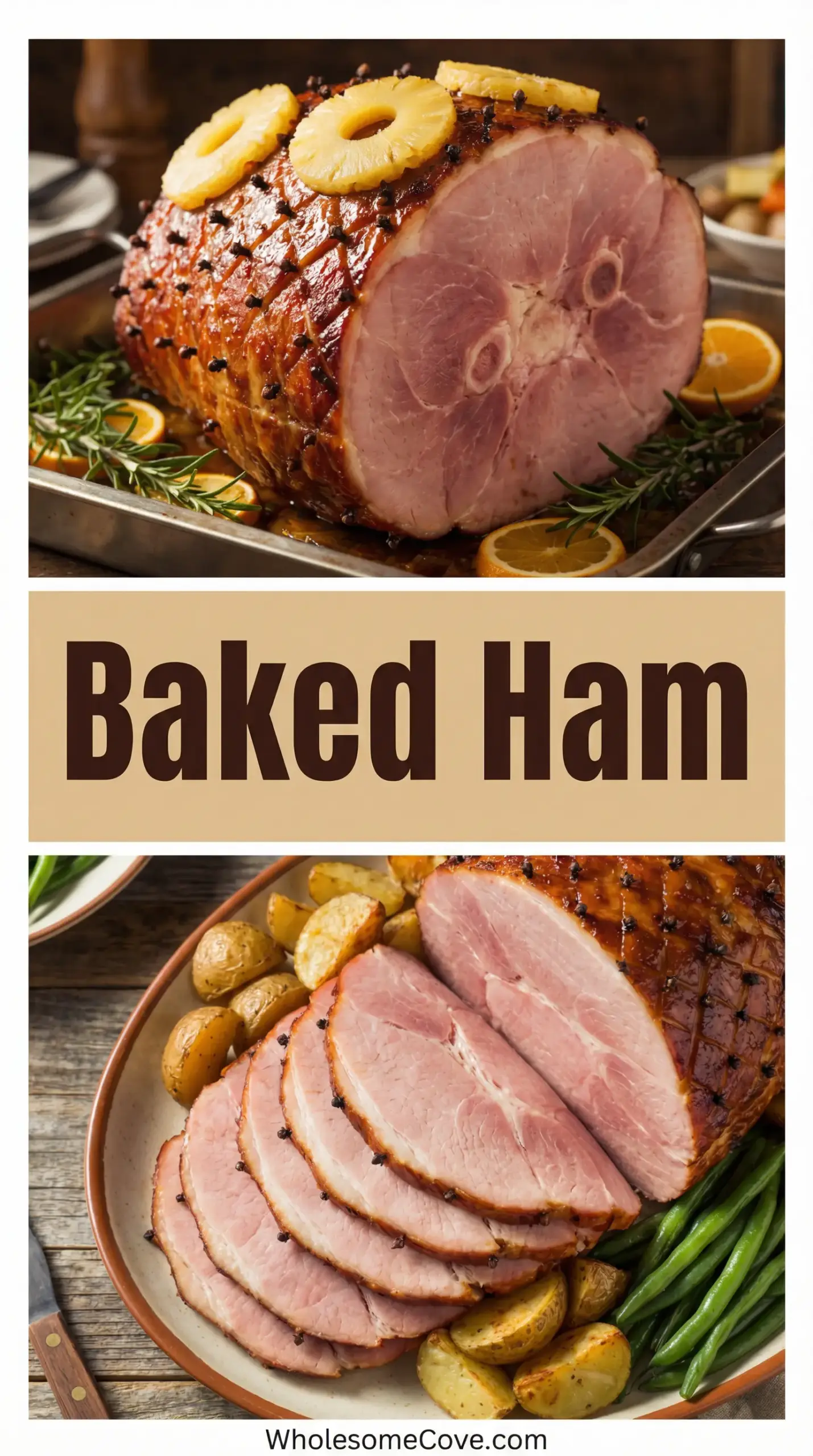
Step-by-Step Instructions: How to Make Baked Ham
Step 1: Take the Ham Out of the Fridge Early
- Remove the ham from the refrigerator about 1 hour before you plan to cook it.
- Letting the ham come closer to room temperature ensures more even cooking throughout — cold ham straight from the fridge can end up with an overcooked exterior and an undercooked center.
- Remove any plastic wrap, netting, or outer packaging, but keep the ham whole at this stage.
- Check the packaging to confirm your ham is labeled “fully cooked” or “ready to eat” — this recipe is designed for a pre-cooked ham, which you’re essentially reheating and glazing.
Step 2: Preheat the Oven and Prepare the Roasting Pan
- Preheat your oven to 325°F (165°C).
- Place a roasting rack inside your large roasting pan.
- Pour 1 cup (240 ml) of water or pineapple juice into the bottom of the pan — this creates steam inside the foil, which keeps the ham moist throughout the long bake.
- Lightly spray or grease the rack to prevent sticking.
Step 3: Score the Ham
- Place the ham flat-side down on a cutting board.
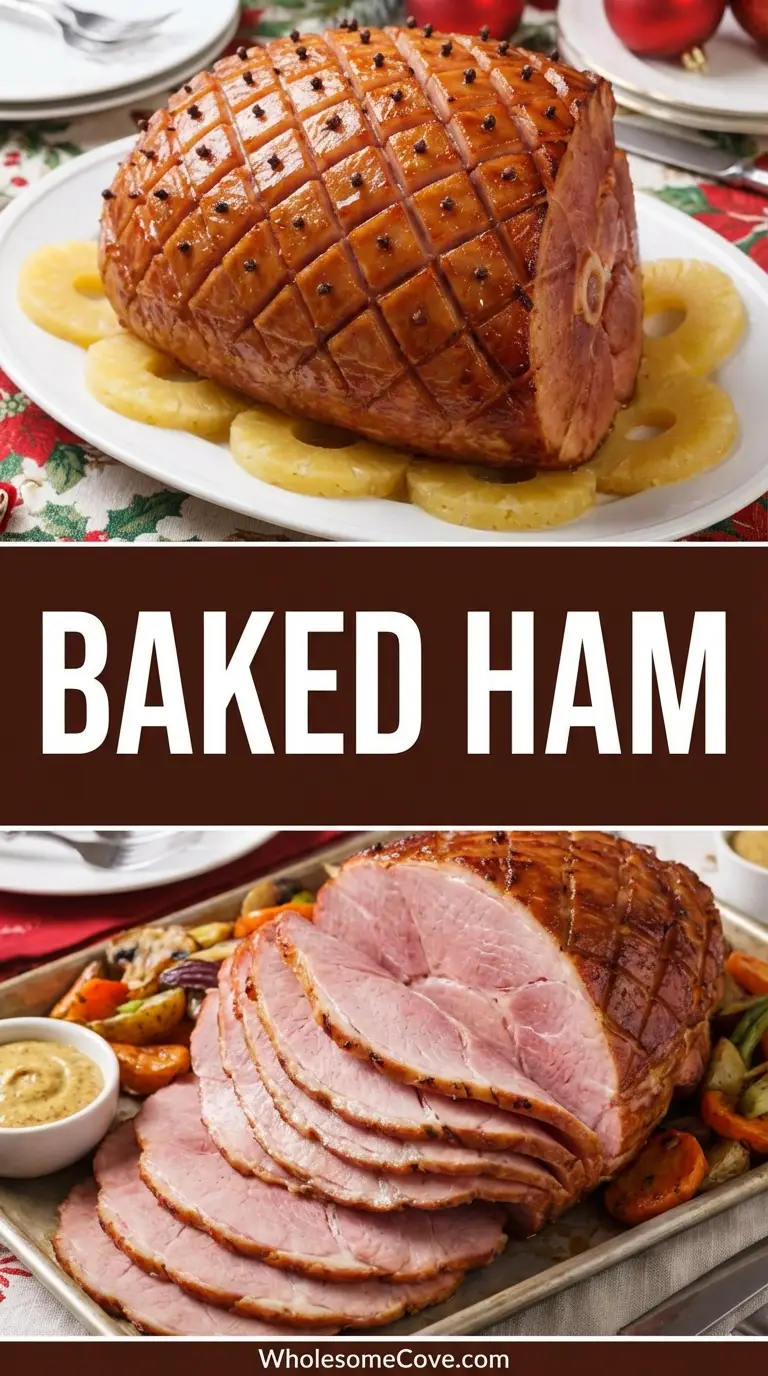
- Using a sharp chef’s knife, cut shallow parallel lines across the surface of the ham, about ½ inch (1.2 cm) deep and 1 inch (2.5 cm) apart.
- Rotate the ham and cut parallel lines in the opposite direction to create a diamond crosshatch pattern across the entire surface.
- These scored lines serve two purposes: they allow the glaze to penetrate deeper into the meat, and they create those beautiful diamond shapes that are a hallmark of a classic glazed ham presentation.
- Optional: Press a whole clove into the center of each diamond for a traditional, festive look and subtle spiced flavor.
Step 4: Set the Ham in the Pan and Wrap in Foil
- Transfer the scored ham to the prepared roasting rack, flat-side down.
- Pull long sheets of heavy-duty aluminum foil around the ham, sealing it tightly to create a foil tent or pouch.
- Make sure the foil is crimped tightly all around the edges of the roasting pan — you want a good seal to trap steam inside.
- This step is critical. Without the foil, the ham dries out badly during the long first phase of cooking.
Step 5: Roast the Ham Low and Slow
- Place the foil-wrapped ham in the preheated 325°F (165°C) oven.
- Roast for approximately 12 to 15 minutes per pound (26 to 33 minutes per kg). For a 9-pound ham, that’s roughly 1 hour and 45 minutes to 2 hours and 15 minutes.
- Use your instant-read thermometer to check the internal temperature. You’re aiming for around 120°F (49°C) internally before you move on to the glazing phase — this is the point where the ham is thoroughly warmed through.
- Do not rush this stage. Slow, moist heat is what keeps the ham juicy.
Step 6: Make the Brown Sugar Glaze
- While the ham is roasting, combine all glaze ingredients in a small saucepan: 1 cup (200 g) dark brown sugar, ¼ cup (85 g) honey, 2 tablespoons Dijon mustard, 2 tablespoons apple cider vinegar, 1 tablespoon unsalted butter, 1 teaspoon ground cinnamon, ½ teaspoon ground ginger, ½ teaspoon garlic powder, ¼ teaspoon ground cloves, ¼ teaspoon smoked paprika, and a pinch of black pepper.
- Place the saucepan over medium heat and stir everything together.
- Bring the mixture to a gentle boil, then reduce the heat to low and simmer for 2 to 3 minutes, stirring frequently, until the glaze thickens slightly.
- Remove from heat and set aside to cool for about 10 minutes. The glaze will continue to thicken as it cools, which helps it adhere better to the ham.
- Taste the glaze — it should be intensely sweet, slightly tangy from the vinegar and mustard, and aromatic from the warm spices.
Step 7: Apply the Glaze and Crank Up the Heat
- About 30 minutes before the ham finishes its initial roasting time, remove the pan from the oven.
- Increase the oven temperature to 425°F (220°C).
- Carefully remove the foil (watch out for steam — it will be hot).
- Use your basting brush to generously apply the brown sugar glaze all over the surface of the ham, working it into the scored diamond lines as much as possible.
- Return the ham to the oven, uncovered.
Step 8: Glaze Again and Caramelize
- Bake for 15 minutes at 425°F (220°C).
- Remove the ham from the oven and brush on another generous layer of glaze.
- Return to the oven for another 10 to 15 minutes, watching closely to ensure the glaze caramelizes without burning.
- The finished ham should have a deep amber, lacquered glaze — sticky, shiny, and slightly caramelized at the edges of each scored diamond.
- If you want even more caramelization, switch your oven to broil for 2 to 3 minutes, keeping a very close eye on it. The glaze can go from perfectly caramelized to burnt in under a minute under the broiler.
Step 9: Rest, Carve, and Serve
- Remove the ham from the oven and let it rest on the roasting rack for at least 15 to 20 minutes before carving.
- Resting allows the juices to redistribute through the meat — skip this step and they’ll run out all over your cutting board.
- Transfer the ham to a large cutting board or serving platter.
- To carve a bone-in shank ham, slice parallel to the bone on both sides to remove large sections of meat, then slice those sections against the grain.
- Spoon any remaining pan juices or leftover glaze over the sliced ham before serving.
Read Also: Maple Glazed Carrots Recipe
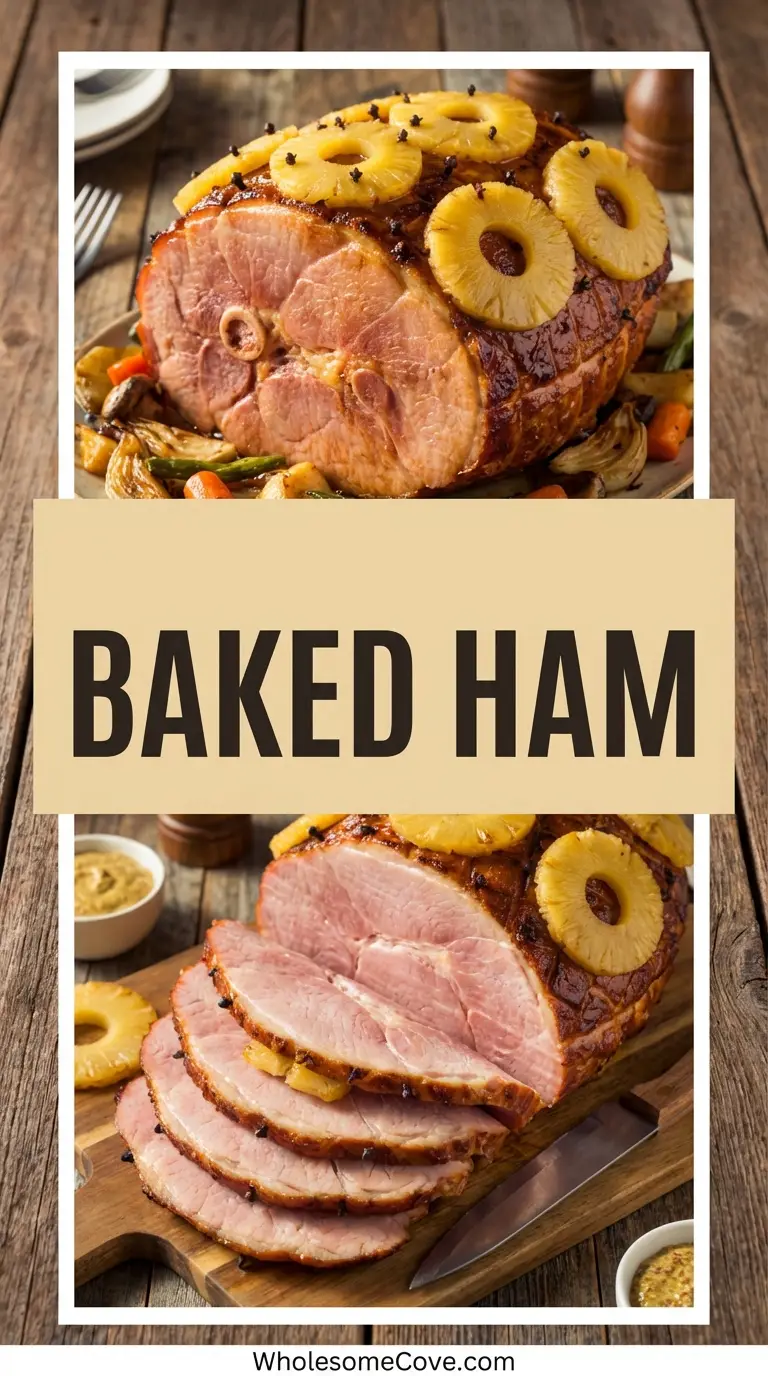
Tips for The Best Baked Ham
A little prep and a few smart decisions along the way make the difference between a good ham and a truly spectacular one. Here are the things I’ve learned through years of making this recipe, including a few lessons from batches that didn’t go quite as planned.
- Always use bone-in ham. Bone-in ham is significantly juicier and more flavorful than boneless. The bone conducts heat and adds richness to the meat as it roasts.
- Don’t skip the foil wrap. I tested this without foil once out of curiosity. The exterior dried out and the glaze scorched before the inside was even warm. Always cover tightly for the first phase.
- Use dark brown sugar in the glaze. Light brown sugar works, but dark brown sugar has a deeper molasses flavor that produces a richer, more complex glaze. The difference is noticeable.
- Let the glaze cool before applying. A slightly cooled, thickened glaze sticks to the ham much better than a hot, thin one. Apply it when it has the consistency of thick syrup.
- Score deeply enough to matter. Those cuts should go at least ½ inch (1.2 cm) deep. Shallow scoring looks pretty but doesn’t get the glaze into the meat where it really counts.
- Use a thermometer, not a timer. Every ham is a different size and shape. An instant-read thermometer is the only reliable way to know when your ham is perfectly done.
- Plan for ¾ pound per person. For a bone-in ham, estimate ¾ pound (340 g) of ham per adult. Round up if you want leftovers (and you do — trust me on this).
- Save the ham bone. Once you’ve carved the ham, put the bone in a zip-top bag and freeze it. It’s pure gold for making soups, stews, and bean dishes.
- Don’t toss the pan drippings. The liquid in the bottom of the pan after baking is intensely flavorful. Thin it with a splash of water and serve it alongside the ham as a simple sauce.
Another favorite: Green Bean Casserole Recipe
What to Serve with Baked Ham
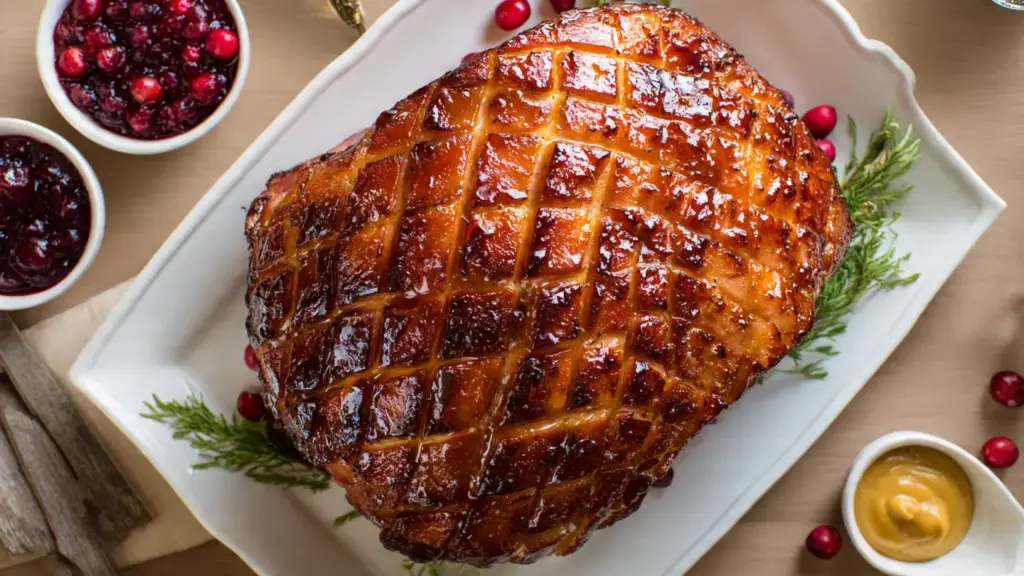
A glazed baked ham deserves equally impressive side dishes. These are my personal go-to pairings that complete the holiday table.
The classic combination of sweet ham with savory, starchy sides is unbeatable. Here are the dishes I always keep in my rotation when this ham is on the menu:
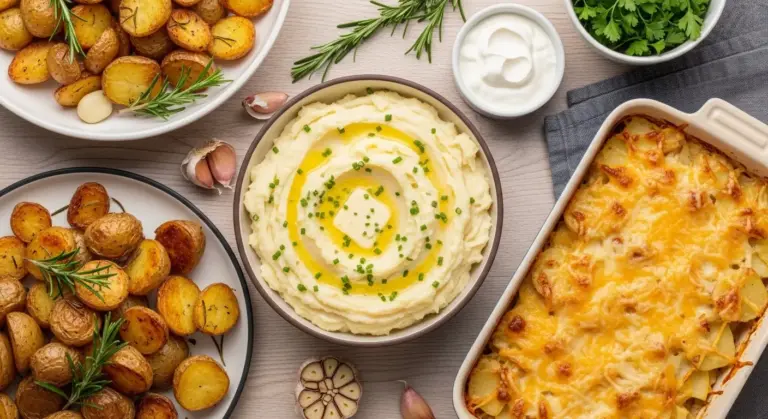
- Scalloped Potatoes — creamy, cheesy layers of potato are the ultimate companion to sweet glazed ham
- Mashed Potatoes — buttery mashed potatoes with the pan drippings spooned over the top is an absolute dream
- Maple Glazed Carrots — the sweetness echoes the glaze and adds beautiful color to the plate
- Roasted Brussels Sprouts with Bacon — the slight bitterness of brussels sprouts balances the richness of the ham beautifully
- Green Bean Casserole — a holiday staple that rounds out the table with creamy, comforting flavor
- Deviled Eggs — a classic Easter appetizer that pairs naturally with ham as the main course
- Dinner Rolls — soft, pillowy rolls are perfect for making small ham sandwiches right at the table
- Cranberry Sauce — the tartness cuts through the sweetness of the glaze and adds a festive touch
- Healthy Cornbread — slightly sweet cornbread is a Southern classic alongside a glazed ham
- Velveeta Mac and Cheese — a crowd favorite, especially when there are kids at the table
You might also enjoy: Au Gratin Potatoes Recipe
Variations of Baked Ham
The base recipe is classic and reliable, but there are so many delicious directions you can take it depending on the season or your personal preferences. Here are my favorite ways to switch things up.
Start with the same scoring technique and low-and-slow roasting method, then experiment with the glaze and flavorings:
- Pineapple Glazed Ham: Replace the apple cider vinegar with pineapple juice and add a can of crushed pineapple to the roasting pan. Arrange pineapple rings and maraschino cherries across the surface of the ham secured with toothpicks for that retro-classic look.
- Maple and Orange Glazed Ham: Swap the honey for pure maple syrup and replace the vinegar with freshly squeezed orange juice. Add a teaspoon of orange zest to the glaze for a bright, citrusy depth of flavor.
- Coca-Cola Ham: This Southern classic replaces the liquid in the roasting pan with a full can of Coca-Cola. The cola adds a subtle caramel note and keeps the meat incredibly moist.
- Honey Mustard Glazed Ham: Double the Dijon mustard in the glaze and add a tablespoon of yellow mustard for a sharper, more tangy-forward flavor profile. This is wonderful for those who find the brown sugar glaze a touch too sweet.
- Spiced Holiday Ham: Add ½ teaspoon of allspice, a pinch of nutmeg, and 1 tablespoon of bourbon to the glaze for a deeply spiced, warming holiday flavor that’s especially at home at Christmas.
- Brown Sugar and Herb Ham: After scoring, rub the ham with a mixture of finely minced fresh rosemary, thyme, garlic, and olive oil before applying the glaze in the final stage. The herbs add a savory complexity that balances the sweetness.
- Slow Cooker Ham: Place the ham in a large slow cooker, pour the glaze over it, and cook on LOW for 4 to 5 hours. Finish under the broiler for 5 minutes to caramelize the glaze.
This ham also pairs beautifully with leftovers used in Ham and Potato Soup.
Storage and Reheating
Properly stored, baked ham keeps beautifully for days and tastes even better the next morning on a toasted roll. Here’s how to make the most of your leftovers.
The glaze can make the surface slightly sticky once refrigerated, which is totally normal and not a sign that anything has gone wrong:
- Refrigerator storage: Wrap leftover ham tightly in plastic wrap or aluminum foil, or store it in an airtight container. It will keep in the refrigerator for up to 5 days.
- Freezer storage: Slice the ham and freeze it in zip-top freezer bags with as much air removed as possible. Frozen ham keeps well for up to 3 months.
- Thawing frozen ham: Transfer frozen ham slices to the refrigerator the night before you plan to use them and let them thaw overnight. Avoid thawing at room temperature.
- Reheating slices in the oven: Arrange slices in a baking dish, add a splash of water or chicken broth to prevent drying, cover tightly with foil, and reheat at 325°F (165°C) for 15 to 20 minutes.
- Reheating in the microwave: Place slices on a microwave-safe plate, cover with a damp paper towel, and microwave on medium power in 30-second intervals until warmed through. Avoid full power, which can dry out the meat.
- Ham bone storage: Store the ham bone in a zip-top bag in the freezer for up to 3 months. Use it to make bean soup, split pea soup, or a rich stock.
- Leftover glaze: Any remaining glaze can be stored in an airtight container in the refrigerator for up to 1 week. Gently rewarm it in a small saucepan before using.
For a delicious use of leftover ham, make this Ham and Potato Soup Recipe.
Nutritional Facts
The following nutrition information is based on a standard serving size of approximately 4 oz (113 g) of bone-in baked ham with glaze, based on 18 servings from a 9-pound ham.
| Nutrient | Per Serving | ||| | Calories | 320 kcal | | Total Fat | 11 g | | Saturated Fat | 4 g | | Cholesterol | 95 mg | | Sodium | 1,450 mg | | Total Carbohydrates | 22 g | | Sugars | 21 g | | Protein | 32 g | | Iron | 2 mg | | Potassium | 490 mg |
Note: Nutritional values are estimates and will vary based on the specific ham brand, exact size, and amount of glaze applied.
Read Also: Broccoli Salad Recipe
Health Benefits of Key Ingredients
Baked ham isn’t exactly a health food, but the key ingredients in this recipe do offer some meaningful nutritional benefits worth knowing about.
The glaze and the ham itself both contribute more than just great flavor — here’s a closer look at what some of the core ingredients bring to the table:
- Ham (pork): Ham is an excellent source of complete protein, providing all essential amino acids. A single serving delivers around 30 to 35 grams of protein, which supports muscle maintenance, satiety, and energy. It also contains B vitamins, particularly B1 (thiamine) and B12, which are essential for nerve function and energy metabolism.
- Dark brown sugar: While it’s still sugar and should be consumed in moderation, brown sugar does contain trace amounts of iron, calcium, and potassium from its molasses content. It contributes those rich, caramel-like flavors with a slightly more complex flavor profile than white sugar.
- Honey: Raw honey contains antioxidants, including flavonoids and phenolic acids, that have been studied for their anti-inflammatory properties. It also has a slightly lower glycemic index than refined sugar, meaning it raises blood sugar a bit more gradually.
- Dijon mustard: Mustard seeds are a source of selenium, magnesium, and omega-3 fatty acids. Dijon adds tanginess with virtually zero calories, making it one of the most flavor-efficient ingredients in the glaze.
- Apple cider vinegar: ACV has been associated with improved digestion and blood sugar management in various studies. In this recipe, it primarily works as a flavor balancer, cutting through the sweetness of the glaze with acidity.
- Cinnamon: Ground cinnamon is a powerful source of antioxidants and has been linked to blood sugar regulation and anti-inflammatory effects. Even in small amounts, it contributes real health value alongside its warming flavor.
- Garlic powder: Garlic compounds, including allicin, have well-documented antimicrobial and cardiovascular benefits. Garlic powder retains many of these beneficial compounds and adds savory depth to the glaze.
This recipe also pairs beautifully with Roasted Brussels Sprouts with Bacon for a nutrient-rich holiday plate.
FAQs About Baked Ham
1. What kind of ham should I buy for this recipe?
You want a fully cooked, bone-in ham for this recipe. Look for either a shank end or butt end half ham, typically between 8 and 10 pounds (3.6 to 4.5 kg). Shank end hams are a little easier to carve and have that classic holiday ham shape. Avoid boneless hams if you can — the bone adds moisture and flavor that boneless just can’t replicate.
2. Do I have to score the ham?
Scoring is not strictly required, but it’s highly recommended. The diamond pattern allows the glaze to penetrate deeper into the meat and creates more surface area for caramelization. It also gives your ham that classic, beautiful presentation that looks like you pulled it straight from a magazine.
3. How do I know when my ham is done?
For a fully cooked ham, you’re aiming for an internal temperature of 140°F (60°C) — this ensures it’s heated through without drying out. Use an instant-read thermometer inserted into the thickest part of the ham, avoiding contact with the bone. The bone conducts heat differently and will give you an inaccurate reading if you touch it.
4. Can I make the glaze ahead of time?
Absolutely, and I actually recommend it. The glaze can be made up to 5 days in advance and stored in an airtight container in the refrigerator. When you’re ready to use it, reheat it gently in a small saucepan over low heat until it returns to a pourable consistency. Having the glaze ready in advance takes one task off your plate on a busy holiday cooking day.
5. What can I do with leftover baked ham?
Leftover baked ham is one of the great bonuses of this recipe. Slice it thin and pile it on sandwiches, dice it and toss it into scrambled eggs or omelets, cube it for mac and cheese, or add it to a pot of soup. The ham bone is particularly valuable — simmer it with white beans, split peas, or vegetables for a deeply flavorful soup that will taste like it cooked all day.
Read Also: Potato Salad Recipe
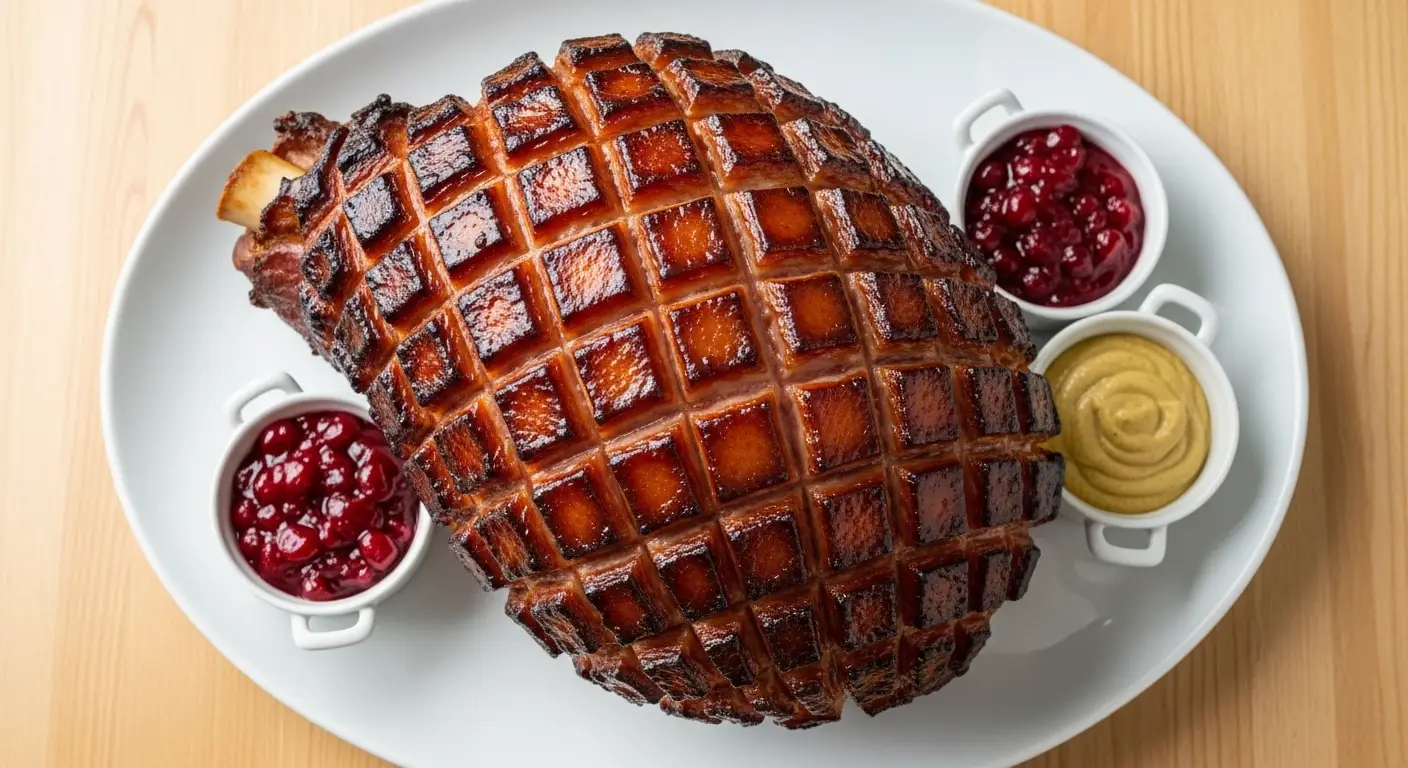
Baked Ham with Brown Sugar Glaze
Ingredients
- 1 bone-in fully cooked ham, shank or butt end - 8 to 10 lbs (3.6 to 4.5 kg); pre-cooked/ready-to-eat
- 1 cup water or pineapple juice - 240 ml; for the roasting pan
- whole cloves - optional, for scoring decoration
- 1 cup packed dark brown sugar - 200g
- 1/4 cup honey - 85g
- 2 tablespoons Dijon mustard
- 2 tablespoons apple cider vinegar
- 1 tablespoon unsalted butter
- 1 teaspoon ground cinnamon
- 1/2 teaspoon ground ginger
- 1/2 teaspoon garlic powder
- 1/4 teaspoon ground cloves
- 1/4 teaspoon smoked paprika
- black pepper - pinch
Equipment
- Large roasting pan - At least 13×9 inches (33×23 cm)
- Roasting rack - Fits inside the roasting pan
- Heavy-duty aluminum foil
- Sharp chef’s knife or carving knife - For scoring and carving
- Cutting board
- Small saucepan - For making the glaze
- Instant-read meat thermometer - Essential for checking doneness
- Pastry brush or basting brush - Silicone preferred
- Measuring cups and spoons
- Wooden spoon or silicone spatula - For stirring the glaze
- Large serving platter
Method
- Remove the ham from the refrigerator about 1 hour before cooking and discard all packaging. Allowing it to come closer to room temperature ensures even cooking throughout.
- Preheat oven to 325°F (165°C). Place a roasting rack inside a large roasting pan and pour 1 cup (240 ml) of water or pineapple juice into the bottom of the pan.
- Using a sharp knife, cut shallow parallel lines about ½ inch (1.2 cm) deep and 1 inch (2.5 cm) apart across the surface of the ham, then repeat in the opposite direction to create a diamond crosshatch pattern. If desired, press a whole clove into the center of each diamond.
- Place the ham flat-side down on the roasting rack, then wrap it tightly in heavy-duty aluminum foil, crimping the edges firmly to create a sealed tent that will trap steam.
- Roast the foil-wrapped ham at 325°F (165°C) for 12 to 15 minutes per pound (26 to 33 minutes per kg), until the internal temperature reaches approximately 120°F (49°C).
- Combine all glaze ingredients in a small saucepan over medium heat, stirring to combine. Bring to a gentle boil, then reduce heat and simmer for 2 to 3 minutes until slightly thickened; remove from heat and cool for 10 minutes.
- Remove the pan from the oven and increase oven temperature to 425°F (220°C). Carefully remove the foil, then generously brush the glaze all over the ham, working it into the scored lines.
- Return the uncovered ham to the oven and bake for 15 minutes, then brush on another layer of glaze and bake for another 10 to 15 minutes until deep amber and caramelized. For extra caramelization, broil for 2 to 3 minutes, watching closely.
- Remove the ham from the oven and let it rest for 15 to 20 minutes before carving. Slice parallel to the bone to remove large sections of meat, then slice against the grain, and spoon pan juices over the top before serving.
Nutrition
Notes
- Always use a bone-in ham for the juiciest results — the bone conducts heat and adds richness that boneless hams simply cannot match.
- Do not skip the foil wrap during the first phase of roasting. Without it, the exterior dries out and the glaze will scorch before the interior is warmed through.
- Use dark brown sugar rather than light brown sugar for a deeper, more molasses-forward glaze with better caramelization.
- Let the glaze cool for about 10 minutes before applying — a thicker, cooler glaze adheres to the surface much better than a thin, hot one.
- Score the ham at least ½ inch (1.2 cm) deep so the glaze can penetrate into the meat, not just sit on the surface.
- Always use an instant-read thermometer rather than relying solely on timing. You’re aiming for an internal temperature of 140°F (60°C) in the thickest part of the ham, avoiding the bone.
- Plan for approximately ¾ pound (340g) of bone-in ham per adult when estimating servings.
- Save the ham bone after carving — freeze it in a zip-top bag for up to 3 months and use it to make bean soup, split pea soup, or a rich stock.
- Store leftover ham wrapped tightly in the refrigerator for up to 5 days, or freeze sliced portions for up to 3 months. Reheat covered with foil at 325°F (165°C) with a splash of broth to prevent drying.
- The glaze can be made up to 5 days ahead and stored in an airtight container in the refrigerator. Reheat gently before using.
Private Notes
Tried this recipe?
Let us know how it was!Final Thoughts
A baked ham like this is one of those recipes that earns a permanent place in your holiday rotation after the very first time you make it.
The combination of that juicy, tender meat and the sticky, caramelized brown sugar glaze is just impossible to beat at a holiday table.
I hope this becomes your go-to recipe for every Easter, Christmas, and Sunday dinner for years to come.
If you make it, I’d love to hear how it turned out — drop a comment below and let me know if you tried any of the variations, or share a photo of your gorgeous glazed ham with me!
Recommended:
- Ham and Potato Soup Recipe
- Pork Stew Recipe
- Dinner Rolls Recipe
- Sweet Potato Casserole Recipe
- Twice Baked Potatoes Recipe
- Cranberry Jello Salad Recipe
- Deviled Eggs Recipe
- Honey Mustard Sauce Recipe
- Air Fryer Mac and Cheese Recipe
- Pork and Apple Skillet Recipe