
If you’ve ever been craving something warm, cheesy, and deeply satisfying, this creamy mac and cheese recipe is exactly what you need to make tonight. It’s a stovetop version that comes together with a proper roux-based béchamel sauce, real shredded cheese, and a few flavor-building tricks that take it from “just okay” to genuinely unforgettable.
I’ll be honest: for a long time, I thought mac and cheese was just pasta and melted cheese. Then I had a version at a friend’s dinner party that completely changed my perspective. She made a silky sauce from scratch, and there was something about the combination of sharp cheddar, a little Dijon, and smoked paprika that made it taste rich without being heavy.
I spent weeks after that trying to recreate it. The first few batches were either too thick, too grainy, or just tasted like plain cheese on pasta. Once I figured out the right technique — the right cheese-to-roux ratio, the trick of tempering in the dairy slowly — it clicked.
This recipe is the one I’ve settled on. It’s the stovetop classic: creamy, golden, and ready in about 30 minutes.
| Quick Recipe Summary | |
|---|---|
| Prep Time | 10 minutes |
| Cook Time | 20 minutes |
| Total Time | 30 minutes |
| Servings | 6 servings |
| Difficulty Level | Easy |
If you love cheesy pasta dishes, you might also enjoy my Baked Mac and Cheese Recipe for a golden, oven-finished version of this comfort food classic.

Why You’ll Love This Creamy Mac and Cheese Recipe
This mac and cheese is the kind of dish that gets requested again and again once you make it for someone.
It works on a weeknight, at a potluck, or as a side dish for a big family dinner.
- Real cheese, real flavor: Using freshly grated sharp cheddar makes a world of difference in flavor and melt quality.
- No powdered cheese packets: The sauce is made entirely from scratch with simple, wholesome ingredients.
- Ready in 30 minutes: From boiling the pasta water to plating, you can have dinner on the table fast.
- Incredibly creamy texture: The roux-based sauce stays smooth and velvety, not gluey or dry.
- Customizable: Once you master the base sauce, you can add proteins, vegetables, or different cheeses with ease.
- Kid-friendly and adult-approved: The flavor is rich and savory enough that everyone at the table will want seconds.
- Budget-friendly: The ingredients are affordable and most are already in your kitchen.
Another favorite at my table: One Pot Mac and Cheese Recipe — perfect for nights when even fewer dishes sound appealing.
Ingredients
This recipe keeps things simple, with a focus on quality over quantity. The cheese you choose is the single most important ingredient here, so don’t reach for the pre-shredded bags — they’re coated in anti-caking agents that prevent smooth melting.
- Pasta:
- 1 lb (450g) elbow macaroni
- Salt (for pasta water — use more than you think you need)
- For the cheese sauce:
- 4 tablespoons (57g) unsalted butter
- ¼ cup (30g) all-purpose flour
- 2 cups (480ml) whole milk, warmed
- 1 cup (240ml) heavy cream, warmed
- 2 cups (200g) sharp cheddar cheese, freshly grated
- 1 cup (100g) Gruyère cheese, freshly grated
- 1 teaspoon Dijon mustard
- ½ teaspoon smoked paprika
- ½ teaspoon garlic powder
- ¼ teaspoon onion powder
- ¼ teaspoon white pepper
- Salt to taste
Read Also: Southern Mac and Cheese Recipe
Kitchen Equipment Needed
Keeping the right tools on hand makes this recipe much more straightforward, especially when you’re managing a sauce and pasta at the same time.
- Large pot (for boiling pasta)
- Heavy-bottomed saucepan or Dutch oven (for the cheese sauce — thin pans scorch easily)
- Box grater or cheese grater
- Wooden spoon or silicone spatula
- Whisk
- Measuring cups and spoons
- Colander (for draining pasta)
- Ladle (optional, for serving)
For mac and cheese nights, I also sometimes finish it under the broiler — in which case a broiler-safe baking dish comes in handy too.
Read Also: Velveeta Mac and Cheese Recipe
Recommended Products for This Recipe
These are products I genuinely reach for when I make this dish, and they make a real difference in the final result.
1. Le Creuset Enameled Cast Iron Dutch Oven
A heavy-bottomed pot is non-negotiable for a smooth, lump-free cheese sauce, and this one distributes heat so evenly that you won’t get hot spots that cause the sauce to scorch or break. I’ve used mine for years and it’s just as good as the day I bought it. It’s a splurge, but it pays for itself in better cooking results.
2. Microplane Premium Box Grater
Pre-shredded cheese is the number one reason homemade mac and cheese comes out grainy instead of silky, and a good grater makes freshly shredding the block cheese completely effortless. This grater has four sides for different textures and stays sharp for years. I use it for cheese, citrus zest, and vegetables constantly.
3. Tillamook Sharp Cheddar Cheese Block
For this recipe, the quality of your cheddar matters more than just about anything else, and Tillamook’s sharp cheddar has a bold, tangy flavor that really stands out in the sauce. It melts beautifully without going oily, and the flavor comes through even with the cream and butter. I buy it in the large block format and grate what I need.
4. Smoked Paprika (La Chinata)
This Spanish smoked paprika is a cut above generic store brands — the smoky depth it adds to the cheese sauce is subtle but remarkable. Just half a teaspoon transforms the flavor profile from basic to something that tastes like it took a lot more effort than it did. I add it to soups, stews, and roasted vegetables too.
You might also enjoy: Tini’s Mac and Cheese Recipe

Step-by-Step Instructions: How to Make Creamy Mac and Cheese
Step 1: Bring a Large Pot of Water to a Boil
- Fill your large pot with about 4–5 quarts (3.8–4.7 liters) of cold water.
- Place the pot on the stove over high heat and cover it with a lid to speed up boiling.
- Once the water reaches a rolling boil, add a generous amount of salt — at least 1 tablespoon (15g). The water should taste pleasantly salty, almost like mild ocean water. This is the one chance you have to season the pasta itself.
Step 2: Cook the Pasta
- Add the 1 lb (450g) elbow macaroni to the boiling salted water and stir immediately to prevent sticking.
- Cook according to package directions, but pull the pasta 1–2 minutes earlier than the stated time so it’s just barely al dente. It will finish cooking in the hot sauce.
- Before draining, scoop out about ½ cup (120ml) of the starchy pasta water and set it aside — you can use it to loosen the sauce later if needed.
- Drain the pasta through a colander and set it aside. Do not rinse it; the starch on the surface helps the sauce cling.
Step 3: Make the Roux
- While the pasta is cooking, place your heavy-bottomed saucepan or Dutch oven over medium heat.
- Add the 4 tablespoons (57g) of unsalted butter and allow it to melt completely, swirling the pan occasionally.
- Once the butter is melted and beginning to foam, add the ¼ cup (30g) of all-purpose flour all at once.
- Whisk constantly for 1½ to 2 minutes. The mixture should turn slightly golden and smell nutty — this cooks out the raw flour taste. Don’t rush this step; undercooking the roux results in a floury-tasting sauce.
Step 4: Add the Dairy
- Reduce the heat to medium-low. Slowly pour in the 2 cups (480ml) of warmed whole milk, about ¼ cup at a time, whisking constantly after each addition to fully incorporate before adding more.
- Once all the milk is whisked in smoothly, pour in the 1 cup (240ml) of warmed heavy cream in a steady stream, continuing to whisk.
- Increase the heat to medium and continue to whisk the sauce as it heats, cooking for 3–5 minutes until it thickens enough to coat the back of a spoon.
Step 5: Season the Sauce
- Once the béchamel is thickened, remove the pan from the heat or reduce it to the lowest setting.
- Add the 1 teaspoon of Dijon mustard, ½ teaspoon of smoked paprika, ½ teaspoon of garlic powder, ¼ teaspoon of onion powder, and ¼ teaspoon of white pepper.
- Stir everything together thoroughly. Taste the sauce at this point and adjust salt as needed.
Step 6: Melt in the Cheese
- This is the most critical step: the sauce must NOT be boiling when you add the cheese. High heat causes proteins in the cheese to seize and the sauce to go grainy.
- Add the 2 cups (200g) of shredded sharp cheddar to the sauce in two or three batches, stirring gently with a wooden spoon or spatula after each addition until fully melted.
- Repeat with the 1 cup (100g) of shredded Gruyère, again in batches.
- The final sauce should be glossy, smooth, and thick enough to coat the spoon heavily.
Step 7: Combine Pasta and Sauce
- Return the drained elbow macaroni to the pot (or add it directly to the saucepan if it’s large enough).
- Pour the cheese sauce over the pasta and fold everything together gently until every piece of pasta is evenly coated.
- If the sauce feels too thick, add the reserved pasta water a tablespoon or two at a time and stir until you reach your desired consistency.
- Taste one more time and add salt if needed.
Step 8: Serve
- Spoon the creamy mac and cheese into bowls or onto plates immediately while it’s at its creamiest.
- Garnish with a light dusting of smoked paprika or freshly cracked black pepper if you like.
- Serve hot — the sauce tightens up a little as it cools, so this dish is best eaten right away.
I learned the basics of a great roux-based sauce while experimenting with my Cheese Sauce Recipe, which is a great all-purpose recipe to have in your back pocket.

Tips for The Best Creamy Mac and Cheese
Getting mac and cheese exactly right comes down to a handful of technique details that are easy to overlook but make a big difference.
- Always grate your own cheese: Pre-shredded cheese contains cellulose and anti-caking agents that prevent smooth melting. Block cheese, freshly grated, melts into a silky, uniform sauce every single time.
- Warm your dairy before adding it: Cold milk added to a hot roux can cause lumps and uneven thickening. Warm it in the microwave for about 60 seconds before pouring it in.
- Don’t boil the sauce after adding cheese: High heat breaks cheese sauce and makes it greasy and grainy. Add the cheese off the heat or on the lowest flame, and stir patiently.
- Salt the pasta water generously: This is the only opportunity you have to season the pasta from the inside out, and it makes a noticeable difference in the overall dish.
- Pull the pasta slightly undercooked: The pasta will absorb some of the sauce as it sits and finish cooking from the residual heat, so pulling it 1–2 minutes early prevents mushiness.
- Use a combination of cheeses: Sharp cheddar provides bold flavor and color; Gruyère adds nuttiness and incredible melt quality. Together they’re far better than either alone.
- Dijon mustard is your secret weapon: You won’t taste mustard in the final dish, but it rounds out the cheese flavor and adds a subtle depth that’s hard to identify but easy to miss when it’s not there.
- Save your pasta water: The starchy cooking water is perfect for adjusting sauce consistency without thinning out the flavor.
- Taste and adjust before serving: Cheese is naturally salty, so always taste the finished dish before adding more salt.
Read Also: Instant Pot Mac and Cheese Recipe
What to Serve with Creamy Mac and Cheese
Mac and cheese is the ultimate comfort food side dish, but it also holds its own as a main course with the right accompaniments.
The key is to balance its rich, creamy flavors with something bright, crispy, or savory on the side.
- Roasted Brussels Sprouts with Bacon — the bitterness of the sprouts and the smokiness of the bacon cut right through the richness of the cheese sauce.
- Coleslaw — a cold, tangy slaw is a classic pairing, especially at summer cookouts.
- Broccoli Salad — creamy, crunchy, and a little sweet, this salad contrasts the warm pasta perfectly.
- Meatloaf — a classic American pairing that feels deeply nostalgic and satisfying.
- Deviled Eggs — a great party appetizer to serve alongside mac and cheese at gatherings.
- Pulled Ham — smoky, tender pulled ham is an incredible topping or side for mac and cheese.
- Green Bean Casserole — a creamy vegetable side that pairs warmly with the pasta at holiday meals.
- Biscuits and Gravy — for a Southern-style spread, fluffy biscuits make the perfect addition.
Another great comfort food side: Creamed Spinach Recipe
Variations of Creamy Mac and Cheese
Once you have the base recipe down, it’s incredibly easy to customize this dish with different flavors, proteins, and techniques.
The sauce itself is a blank canvas, and it takes on other flavors beautifully.
- Baked Mac and Cheese: Transfer the sauced pasta to a baking dish, top with buttered breadcrumbs and a little extra shredded cheese, and bake at 375°F (190°C) for 20–25 minutes until golden and bubbly on top.
- Lobster Mac and Cheese: Stir in chunks of cooked lobster meat and a splash of white wine to the sauce before combining with the pasta for a luxurious, restaurant-style version.
- Bacon Mac and Cheese: Cook 6 strips of bacon until crispy, crumble them, and fold into the finished mac and cheese along with a little of the rendered bacon fat stirred into the sauce.
- Southern Mac and Cheese: Use a mix of sharp cheddar, Colby Jack, and cream cheese for a richer, denser sauce, and add eggs to create that custardy baked texture that’s a hallmark of Southern soul food.
- Air Fryer Mac and Cheese: Portion the finished pasta into individual ramekins, top with cheese and breadcrumbs, and air fry at 375°F (190°C) for 5–7 minutes for a perfectly crisped top.
- Spicy Mac and Cheese: Whisk in ½ teaspoon of cayenne pepper and 1 tablespoon of hot sauce along with the other spices for a version with heat that builds beautifully.
- Vegetable Mac and Cheese: Stir in roasted broccoli florets, caramelized onions, or sun-dried tomatoes to add texture and nutritional value without overwhelming the cheese flavor.
Read Also: Crock Pot Mac and Cheese Recipe
Storage and Reheating
This mac and cheese stores well, though the sauce does thicken considerably as it cools — which is easy to fix when reheating.
Proper storage and gentle reheating keeps the texture close to fresh.
- Refrigerator: Store leftovers in an airtight container in the refrigerator for up to 4 days.
- Freezer: You can freeze mac and cheese in airtight containers or zip-lock bags for up to 2 months. The texture may be slightly less creamy after thawing, but the flavor holds up well.
- Reheating on the stovetop (best method): Place the mac and cheese in a saucepan over low heat. Add a splash of milk (start with 2–3 tablespoons) and stir gently as it warms, adding a little more milk as needed until the sauce loosens back up to a creamy consistency.
- Reheating in the microwave: Transfer to a microwave-safe bowl, add a tablespoon or two of milk, and cover loosely with a microwave-safe plate or wrap. Heat in 60-second intervals, stirring between each, until warmed through.
- Do not overheat: High heat when reheating will break the sauce and make it greasy. Low and slow is always the right call.
- From frozen: Thaw overnight in the refrigerator before reheating using either of the methods above.
For another comforting pasta dish that stores and reheats beautifully, check out my Baked Ziti Recipe.
Nutritional Facts
The following values are per serving, based on 6 servings per batch, and are approximate.
| Nutritional Facts (Per Serving) | |
|---|---|
| Calories | 610 kcal |
| Total Fat | 32g |
| Saturated Fat | 19g |
| Cholesterol | 95mg |
| Sodium | 520mg |
| Total Carbohydrates | 58g |
| Dietary Fiber | 2g |
| Sugars | 6g |
| Protein | 24g |
| Calcium | 480mg (37% DV) |
| Iron | 2.5mg (14% DV) |
| Vitamin A | 820 IU (16% DV) |
| Potassium | 290mg |
Nutritional values are estimates based on standard ingredient data and may vary depending on specific brands used.
You might also enjoy: Stuffed Shells Recipe
Health Benefits of Key Ingredients
Mac and cheese is a comfort food, not a salad — but that doesn’t mean it’s nutritionally empty.
Several key ingredients contribute genuine health value alongside all that delicious flavor.
- Cheddar Cheese: A rich source of calcium, which supports bone density and muscle function. It also provides vitamin K2, linked to cardiovascular health, and a meaningful amount of protein per ounce.
- Gruyère Cheese: Contains high levels of calcium and phosphorus, and has a lower lactose content than many other cheeses, making it easier for some people to digest.
- Whole Milk: Provides a good balance of fat-soluble vitamins A and D, which support eye health, immune function, and bone strength. Whole milk fat also improves satiety.
- Heavy Cream: Contains vitamins A, D, E, and K — all fat-soluble nutrients that are better absorbed when consumed alongside dietary fat, which cream naturally provides.
- Butter: Supplies short-chain fatty acids like butyrate, which play a role in gut health and inflammation reduction when consumed in moderation.
- Elbow Macaroni: Provides complex carbohydrates for sustained energy and, when made with enriched flour, contributes iron and B vitamins like folate and thiamine.
- Dijon Mustard: Contains selenium, a trace mineral with antioxidant properties. Mustard seeds have also been studied for their anti-inflammatory compounds.
- Smoked Paprika: A source of antioxidants including capsaicin, lutein, and zeaxanthin, which support eye health and help neutralize free radicals in the body.
Read Also: Healthy Alfredo Sauce Recipe
FAQs About Creamy Mac and Cheese
1. Why did my cheese sauce turn out grainy?
Grainy cheese sauce is almost always caused by adding cheese to a sauce that’s too hot. When the sauce is at a rolling boil or even a strong simmer, the proteins in the cheese seize up and separate from the fat, creating a gritty texture.
Remove the pan from the heat entirely before stirring in the cheese, and add it in batches rather than all at once.
2. Can I use a different pasta shape?
Absolutely — elbow macaroni is traditional, but cavatappi, shells, and rotini all work beautifully because their curves and ridges trap the sauce.
Smaller shapes tend to hold sauce better than larger ones, so just keep that in mind when choosing an alternative.
3. Can I make this ahead of time?
You can make the cheese sauce up to two days ahead and store it in an airtight container in the refrigerator.
Reheat it gently on the stovetop with a splash of milk, then cook the pasta fresh and combine when ready to serve.
4. What’s the best cheese to use for mac and cheese?
Sharp cheddar is the most widely used choice because of its bold flavor and good melt quality. For a more complex sauce, adding Gruyère, Fontina, or a small amount of cream cheese works very well.
Avoid cheeses labeled as “processed” or pre-shredded from a bag, since the additives prevent smooth melting.
5. How do I keep mac and cheese from drying out?
The key is to undercook the pasta slightly before combining it with the sauce, since the pasta continues to absorb liquid as it sits.
When reheating, always add a splash of milk and warm it slowly over low heat — never blast it on high in the microwave.
Read Also: Cacio e Pepe Recipe
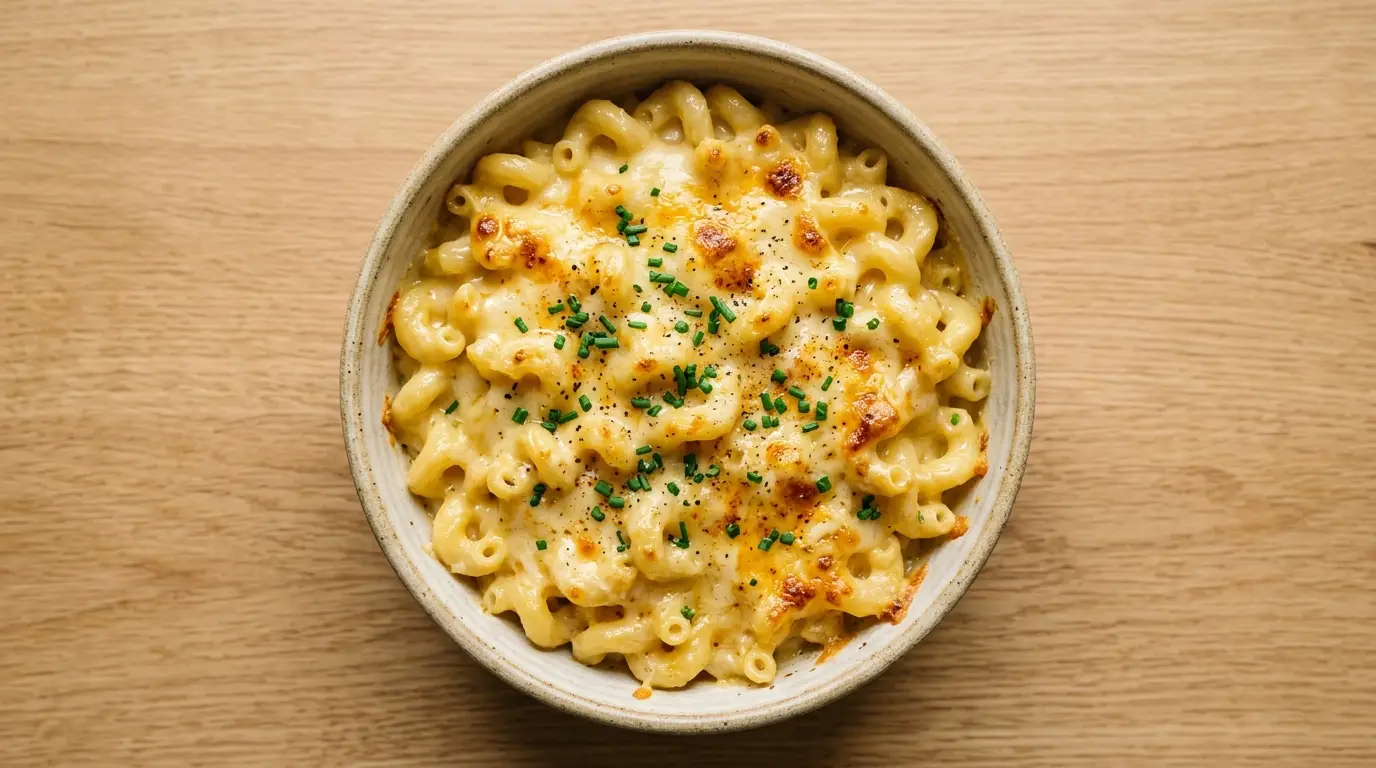
Creamy Mac and Cheese
Ingredients
- 1 lb elbow macaroni - 450g
- salt - For the pasta water — use generously
- 4 tbsp unsalted butter - 57g
- ¼ cup all-purpose flour - 30g
- 2 cups whole milk - 480ml, warmed
- 1 cup heavy cream - 240ml, warmed
- 2 cups sharp cheddar cheese - 200g, freshly grated from a block
- 1 cup Gruyère cheese - 100g, freshly grated
- 1 tsp Dijon mustard
- ½ tsp smoked paprika
- ½ tsp garlic powder
- ¼ tsp onion powder
- ¼ tsp white pepper
- salt - To taste, for the sauce
- smoked paprika - Optional, for dusting on top
- freshly cracked black pepper - Optional, for garnish
Equipment
- Large pot - For boiling pasta
- Heavy-bottomed saucepan or Dutch oven - For making the cheese sauce — thin pans scorch easily
- Box grater or cheese grater - For freshly grating the cheese
- Wooden spoon or silicone spatula
- Whisk
- Measuring cups and spoons
- Colander - For draining pasta
- Ladle - (optional) For serving
- Broiler-safe baking dish - (optional) For finishing under the broiler
Method
- Fill a large pot with 4–5 quarts (3.8–4.7L) of water and bring to a rolling boil over high heat. Add at least 1 tablespoon of salt — the water should taste pleasantly salty.
- Add the elbow macaroni and cook 1–2 minutes less than package directions so it’s just barely al dente. Before draining, reserve ½ cup (120ml) of starchy pasta water, then drain and set aside without rinsing.
- Melt the butter in a heavy-bottomed saucepan over medium heat, then add the flour all at once and whisk constantly for 1½–2 minutes until the mixture turns slightly golden and smells nutty.
- Reduce heat to medium-low and slowly pour in the warmed milk about ¼ cup at a time, whisking constantly after each addition, then pour in the warmed heavy cream in a steady stream. Increase to medium heat and whisk for 3–5 minutes until the sauce thickens enough to coat the back of a spoon.
- Remove the pan from heat and stir in the Dijon mustard, smoked paprika, garlic powder, onion powder, white pepper, and salt to taste.
- With the sauce off the heat, add the shredded cheddar and Gruyère in two to three batches, stirring gently after each addition until fully melted and the sauce is glossy and smooth.
- Add the drained pasta to the cheese sauce and fold together until every noodle is evenly coated, adding reserved pasta water a tablespoon at a time if the sauce is too thick. Serve immediately, garnished with a dusting of smoked paprika or cracked black pepper.
Nutrition
Notes
- Always grate your own cheese from a block — pre-shredded cheese contains anti-caking agents that prevent smooth melting and result in a grainy sauce.
- Warm the milk and cream before adding them to the roux to prevent lumps and ensure even thickening.
- Never add cheese to a boiling or vigorously simmering sauce — remove the pan from heat first to avoid a grainy, broken sauce.
- Pull the pasta 1–2 minutes before the package directions say — it will finish cooking in the hot cheese sauce and absorb some liquid, so starting al dente prevents mushiness.
- The Dijon mustard won’t make the dish taste like mustard — it amplifies the cheese flavor and adds subtle depth that’s hard to identify but easy to miss when omitted.
- Save the pasta cooking water before draining — the starch it contains is perfect for loosening a too-thick sauce without diluting flavor.
- Store leftovers in an airtight container in the refrigerator for up to 4 days, or freeze for up to 2 months.
- To reheat, warm gently on the stovetop over low heat with a splash of milk, stirring until the sauce loosens back to a creamy consistency — avoid high heat.
- For a baked version, transfer the sauced pasta to a baking dish, top with buttered breadcrumbs and extra cheese, and bake at 375°F (190°C) for 20–25 minutes until golden.
- Gruyère can be substituted with Fontina, Havarti, or white cheddar if needed — all melt smoothly and complement the sharp cheddar well.
Private Notes
Tried this recipe?
Let us know how it was!Final Thoughts
This creamy mac and cheese recipe is one of those dishes that earns a permanent spot in your weeknight rotation the first time you make it.
Once you taste a from-scratch sauce made with real cheese and a proper roux, the boxed stuff just doesn’t cut it anymore.
I hope you give this recipe a try soon — it’s the kind of meal that makes everyone at the table a little happier.
If you make it, drop a comment below and let me know how it turned out, or share a photo on social media — I love seeing your versions!
Recommended:
- Velveeta Mac and Cheese Recipe
- Tini’s Mac and Cheese Recipe
- Best Bacon Mac and Cheese Recipe
- Best Lobster Mac and Cheese Recipe
- Chicken Spaghetti Recipe
- Pasta Fagioli Recipe
- Lasagna Recipe
- Carbonara Recipe
- Crock Pot Mac and Cheese Recipe
- Chicken Caesar Pasta Salad Recipe