I’ll be honest with you: the first time I decided to make a smoked beef tenderloin recipe, I was terrified. This is not a cheap cut of meat, and the idea of ruining it on my smoker made my stomach drop.
But after one bite of that first smoke-kissed, perfectly pink tenderloin, I never looked back.
My biggest early mistake was skipping the dry brine. I tossed the meat right on the smoker without any prep, and it came out pretty bland despite the beautiful smoke ring.
Once I started salting it overnight and giving it time to rest in the fridge, the difference was like night and day.
Now I make this every Christmas, every birthday, and honestly any occasion that calls for something truly special.
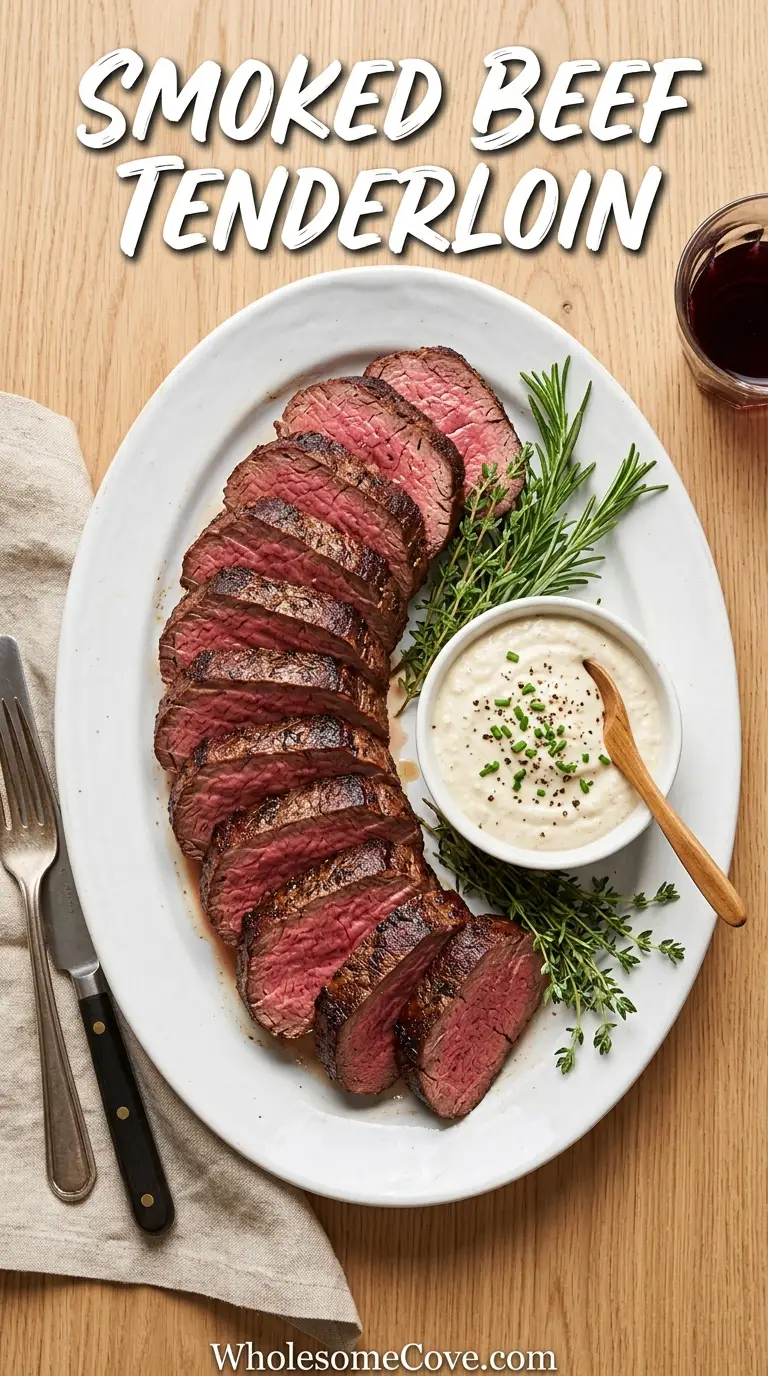
The reverse sear method I use here is the real star: low-and-slow smoke to build incredible flavor, followed by a blazing hot sear that creates a deeply caramelized crust.
You do not need to be a pitmaster to nail this recipe. You just need a smoker, a reliable instant-read thermometer, and the confidence to follow the steps.
| Quick Recipe Summary | |
|---|---|
| Prep Time | 20 minutes (plus 8–24 hours dry brine) |
| Cook Time | 1 hour 15 minutes |
| Total Time | 1 hour 35 minutes (active time) |
| Servings | 8–10 servings |
| Difficulty Level | Intermediate |
If you love showstopper beef roasts, you might also enjoy this classic Beef Tenderloin Recipe for a comparison of oven-roasted vs. smoked methods.
Why You’ll Love This Smoked Beef Tenderloin Recipe
This dish is the kind of thing that makes people go completely quiet at the dinner table. That silence is the best compliment a cook can ever receive.
The smoke adds a subtle, woodsy depth that you simply cannot replicate in an oven. It elevates what is already the most tender cut of beef into something truly extraordinary.
The reverse sear method means you get perfectly pink, edge-to-edge medium-rare doneness every single time.
No grey overcooked band around the outside, just pure, beautiful pink from crust to center.
This recipe is also more forgiving than people expect. With a good thermometer, the margin for error is surprisingly small.
You can prep it the night before, which makes it perfect for entertaining when you want to actually enjoy your guests.
All the hard work happens quietly in the smoker while you sip something cold.
It feeds a crowd with ease, and the presentation is absolutely stunning when you slice it tableside. Your guests will think you trained at a steakhouse.
Another favorite to pair with this for a surf-and-turf spread: Grilled Salmon with Dill Sauce
Ingredients
The ingredients for smoked beef tenderloin are beautifully simple. The quality of your beef does most of the talking, so a solid dry rub and a good brine are all you need to let it shine.
- 1 whole beef tenderloin (4–5 lbs / 1.8–2.3 kg), trimmed and tied
- 2 tablespoons (30 ml) olive oil (for coating)
- 2 teaspoons (10 g) coarse kosher salt (for brine; use generously)
- 2 teaspoons (5 g) freshly cracked black pepper
- 1 teaspoon (3 g) garlic powder
- 1 teaspoon (3 g) onion powder
- 1 teaspoon (3 g) smoked paprika
- 1/2 teaspoon (1 g) dried rosemary, finely crushed
- 1/2 teaspoon (1 g) dried thyme
- Butcher’s twine (for trussing)
- Oak or hickory wood chunks or chips (for smoking)
For the optional horseradish cream sauce:
- 1/2 cup (120 g) sour cream
- 2 tablespoons (30 g) prepared horseradish
- 1 tablespoon (15 ml) fresh lemon juice
- 1 teaspoon (5 g) Dijon mustard
- Salt and pepper to taste
You might also enjoy this Beef Tenderloin Steak Recipe if you prefer individual cuts over a whole roast.
Kitchen Equipment Needed
Having the right tools makes all the difference with this cook. Nothing is more stressful than not knowing your meat’s internal temperature on a $100 roast.
- Pellet smoker or offset smoker (or a charcoal grill set up for indirect heat)
- Instant-read meat thermometer (absolutely non-negotiable for this recipe)
- Leave-in probe thermometer (optional but highly recommended)
- Cast iron skillet (for the reverse sear, if not searing on grill)
- Sharp boning or fillet knife (for trimming silver skin)
- Large cutting board
- Aluminum foil (for tenting during rest)
- Paper towels
- Small mixing bowl (for dry rub)
- Brush or your hands (for applying olive oil)
Read Also: Beef Tenderloin Tips Recipe
Recommended Products for This Recipe
These are products I personally use and trust every time I make this recipe. They genuinely make a difference in the final result.
1. Pellet Smoker Grill
A good pellet smoker takes all the guesswork out of temperature control, which is critical when cooking an expensive cut like beef tenderloin. You set your temperature and the smoker maintains it automatically while you monitor the internal temp. It is truly the most stress-free way to smoke meat.
2. Wireless Meat Probe Thermometer
This is the one piece of equipment I credit most for my smoked beef tenderloin success. A wireless probe lets you monitor the internal temperature of the meat from across the yard without opening the smoker lid and losing heat. Consistency is everything with this cook.
3. Pre-Seasoned Cast Iron Skillet
If you are doing the reverse sear finish in a skillet rather than directly on the grill, a large pre-seasoned cast iron skillet gives you an even, ferociously hot sear that creates that gorgeous mahogany crust. No other pan gets hot enough or distributes heat as evenly. I have had mine for years and it only gets better.
4. Oak Smoking Wood Chunks
Oak is my absolute top recommendation for beef tenderloin. It imparts a clean, medium-strength smoke flavor that complements the natural richness of the beef without overpowering its delicate flavor. Chunks rather than chips burn more slowly and produce a steadier, more consistent smoke.
5. Butcher’s Twine
Trussing the tenderloin with butcher’s twine is not optional: it is what creates that uniform, even thickness that allows the meat to cook at the same rate from end to end. A simple roll of food-safe cotton twine is all you need, and it makes a real visual difference in the final presentation too.
Read Also: Prime Rib Recipe
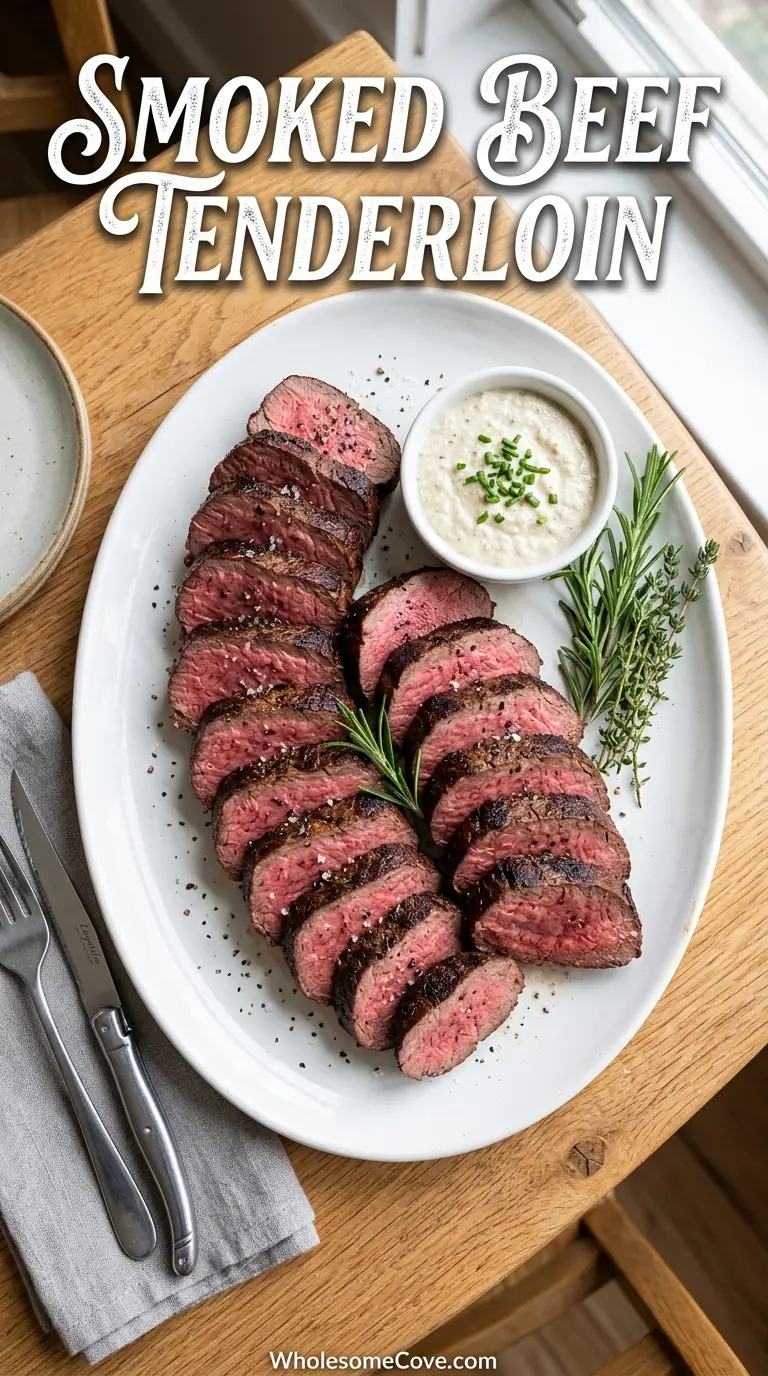
Step-by-Step Instructions: How to Make Smoked Beef Tenderloin
Step 1: Dry Brine the Tenderloin (8–24 Hours Before Cooking)
- Place your trimmed beef tenderloin on a wire rack set over a sheet pan or plate.
- Pat the meat completely dry on all sides using paper towels. Moisture is the enemy of a good crust, so be thorough here.
- Generously season every surface of the tenderloin with coarse kosher salt. You want a visible, even coating all over, including the ends. Do not be shy; most of this salt will draw moisture out and then be reabsorbed, deeply seasoning the meat.
- Leave the tenderloin uncovered on the rack and place it in the refrigerator for a minimum of 8 hours and up to 24 hours. Overnight is the sweet spot for this recipe.
- When you pull it out the next day, you will notice the surface looks dry and slightly tacky. This is exactly what you want: that tacky surface is called a pellicle, and it is what allows smoke to adhere beautifully to the meat.
Step 2: Truss the Tenderloin
- Remove the tenderloin from the refrigerator about 45 minutes to 1 hour before you plan to start smoking. Bringing the meat closer to room temperature promotes more even cooking throughout.
- Look at your tenderloin and identify the thin, tapered “tail” end. Take this thin end and fold it back underneath the thicker portion of the roast, tucking it snugly against the main body so the overall thickness of the roast is as uniform as possible from end to end.
- Using butcher’s twine, tie a loop around the folded tail end to secure it in place. Tie additional loops every 1.5 to 2 inches (4–5 cm) along the entire length of the roast. This keeps the tenderloin round and prevents it from flattening out on the grill grate.
- Snip off any excess twine ends with kitchen scissors. Your trussed roast should now look like a neat, even cylinder.
Step 3: Apply the Dry Rub
- In a small bowl, combine the black pepper, garlic powder, onion powder, smoked paprika, dried rosemary, and dried thyme. Stir to combine into a uniform dry rub mixture.
- Brush or pour the olive oil over every surface of the brined and trussed tenderloin. Use your hands or a pastry brush to make sure every inch is evenly coated. The oil helps the rub adhere and promotes browning during the sear.
- Sprinkle the dry rub mixture evenly over the entire surface of the oiled tenderloin. Use your hands to gently press the rub into the meat so it adheres well. Make sure all sides, including the ends, are coated.
- Do not add any additional salt to the rub if you completed the dry brine step. The overnight salt is more than enough seasoning for the interior.
- Let the rubbed tenderloin sit at room temperature while you prepare your smoker.
Step 4: Prepare and Preheat Your Smoker
- Fill your smoker’s hopper with pellets or add wood chunks to your firebox. For beef tenderloin, oak is the classic choice for a clean, robust smoke flavor. Hickory is a close second. Avoid anything too light like applewood for this cut, as the smoke time is relatively short and you want the flavor to come through.
- Preheat your smoker to 250°F (121°C). Allow it to fully come up to temperature and stabilize before adding the meat. This can take 15–20 minutes depending on your smoker.
- Set up your smoker for indirect heat if using a charcoal grill: build a fire on one side only and place the meat on the opposite side with no heat beneath it.
- If your smoker has a Super Smoke or high-smoke setting, now is a great time to use it for the first portion of the cook.
Step 5: Smoke the Tenderloin
- Place the trussed, rubbed tenderloin directly on the smoker’s grill grate over indirect heat. Position it so the thicker end is slightly toward the hotter side of the smoker if you have any hot spots.
- Insert a leave-in probe thermometer into the absolute center of the thickest part of the roast if you have one. This lets you monitor the internal temperature without opening the lid repeatedly.
- Close the smoker lid and let the beef smoke undisturbed at 250°F (121°C). Resist the urge to open the lid and check frequently; every time the lid opens, you lose heat and extend your cook time.
- Smoke the tenderloin until the internal temperature reaches 110°F (43°C) if you plan to finish with a reverse sear, or until it reaches 125°F (52°C) if you plan to skip the sear and slice directly. At 250°F, expect approximately 15 minutes per pound (per 450 g), so a 4-pound roast will take roughly 60 minutes.
- During the last 15 minutes of smoking, prepare your searing surface so it is blazing hot and ready to go the moment the meat comes off.
Step 6: Rest and Reverse Sear
- When the internal temperature of the tenderloin reaches 110°F (43°C), remove it from the smoker and transfer it to a plate or cutting board. Loosely tent it with aluminum foil and let it rest for 10 minutes. This brief rest allows the surface to cool slightly and dry out even further, which helps you achieve a better sear.
- While the tenderloin rests, crank your grill to its highest possible heat setting (500°F / 260°C or higher), or heat a large cast iron skillet over the highest burner on your stove until the skillet is visibly smoking.
- Place the rested tenderloin directly onto the blazing hot grill grate or into the screaming hot skillet. Sear for 2–3 minutes per side (about 8–10 minutes total), rotating to sear all four “sides” of the roast until a deep, dark mahogany crust has formed on every surface.
- Use your instant-read thermometer frequently during this step to track the temperature. Pull the tenderloin from the sear when the internal temperature reaches 125°F (52°C) for medium-rare or 130°F (54°C) for medium.
- Transfer the seared tenderloin to a clean cutting board and tent loosely with foil again. Allow it to rest for a final 10–15 minutes before slicing. During this rest, the internal temperature will continue to rise 3–5°F (about 2–3°C) from carryover cooking.
Step 7: Make the Horseradish Cream Sauce
- While the tenderloin rests for its final 10–15 minutes, combine the sour cream, prepared horseradish, fresh lemon juice, and Dijon mustard in a small bowl.
- Stir everything together until smooth and well combined. Taste and season with salt and pepper as needed.
- Adjust the horseradish level to your preference: more for a punchier sauce, less for a milder, creamier version.
- Transfer the sauce to a small serving bowl and refrigerate until ready to serve alongside the sliced tenderloin.
Step 8: Slice and Serve
- Remove the butcher’s twine from the rested tenderloin using kitchen scissors or a paring knife, cutting each loop and pulling it free.
- Using a sharp carving or slicing knife, cut the tenderloin into medallions approximately 1 to 1.5 inches (2.5–4 cm) thick. Use smooth, even strokes without sawing back and forth, as this preserves the beautiful pink interior.
- Arrange the sliced medallions on a large serving platter. Drizzle any resting juices that have pooled on the cutting board over the slices.
- Serve immediately with the horseradish cream sauce on the side.
You might also enjoy these Beef Tenderloin Tips for a great use of the trimmings from this cook.
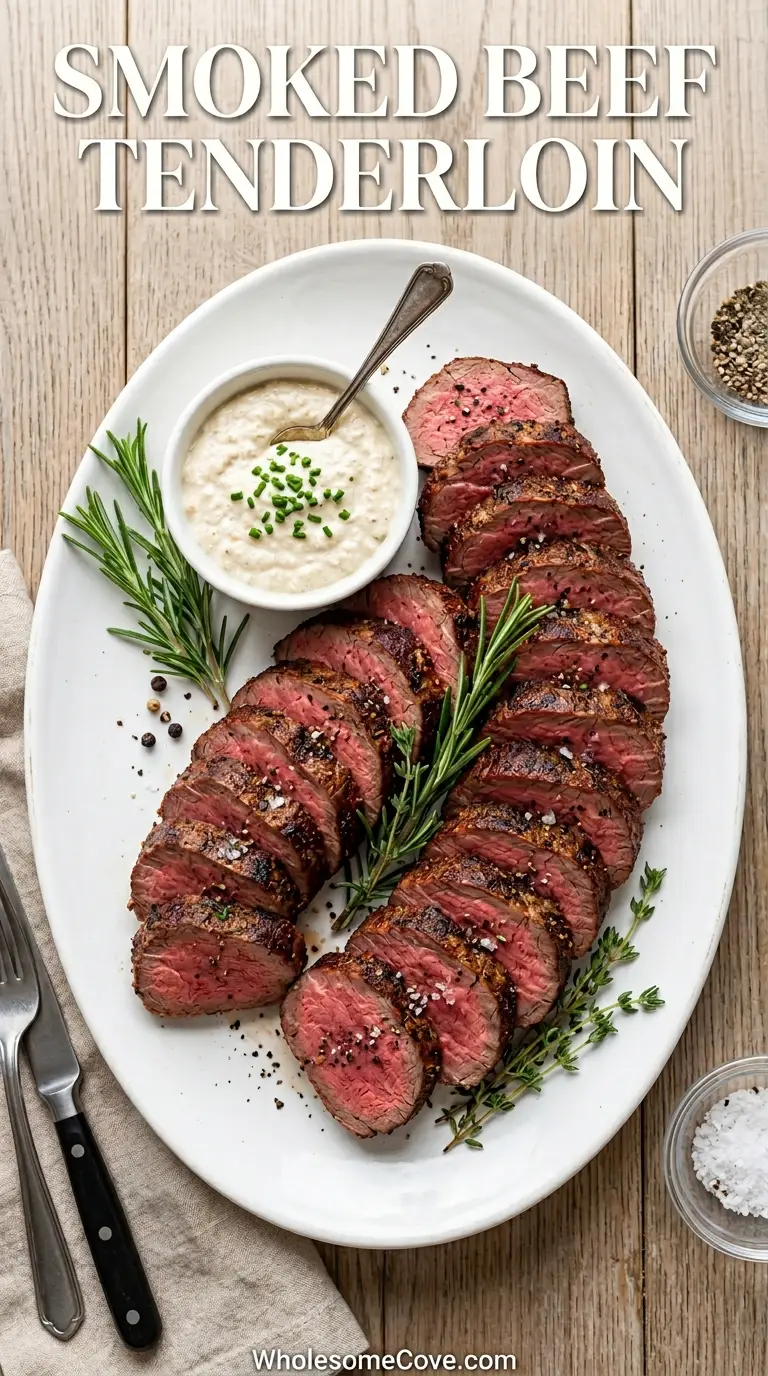
Tips for The Best Smoked Beef Tenderloin
Getting smoked beef tenderloin right is about understanding a few key principles. These are the lessons I learned from my own mistakes, and they will save you the heartache of an expensive mishap.
- Always cook to temperature, not to time. Time is just a guideline. Every tenderloin is different in thickness and density, and every smoker runs slightly different. The only reliable guide is an accurate instant-read thermometer, so do not skip this tool.
- Do not skip the dry brine. Even 8 hours makes a massive difference in flavor and moisture retention. If you only have 1 hour, salt generously right before smoking, but overnight is truly the gold standard.
- Use a leave-in probe thermometer. Opening the smoker lid repeatedly to check the temperature extends the cook time and lets valuable smoke escape. A wireless probe lets you monitor everything without disturbing the cook.
- Choose the right wood. For beef tenderloin, oak and hickory are the classic pairings. They provide a strong enough smoke signal during the relatively short cook time. Fruitwoods like apple or cherry can work but produce a lighter smoke that may get lost in the short smoking window.
- Truss the roast properly. An unevenly shaped tenderloin will have the thin end overcook long before the thick end reaches temperature. A few minutes of trussing saves you from having part of your roast well-done and part barely rare.
- Let the meat rest twice. The first rest before searing allows the surface to dry and promotes better crust development. The second rest after searing allows the juices to redistribute. Skipping either rest costs you moisture and flavor.
- Sear at the highest possible heat. A lukewarm sear just steams the meat and creates a grey band. You want the skillet or grill grate blazing hot so the sear is fast, fierce, and creates real caramelization.
- Pull slightly under your target temperature. Carryover cooking during the final rest will raise the internal temperature another 3–5°F (1–3°C). If you target 130°F (54°C), pull at 125–127°F (52–53°C) to land in the perfect medium-rare zone.
- Buy a whole tenderloin and trim it yourself. Pre-trimmed center-cut chateaubriand from the butcher is convenient but significantly more expensive per pound. A whole untrimmed tenderloin from a wholesale club is much more economical when you are serving 8–10 people.
- Do not overcrowd the sear. If you had to slice the tenderloin in half to fit your smoker, sear each piece separately. Overcrowding drops the pan temperature and causes steaming instead of searing.
Read Also: Filet Mignon Recipe
What to Serve with Smoked Beef Tenderloin
Smoked beef tenderloin is elegant and rich, so the best sides are those that complement its flavor without competing with it. Think creamy, earthy, and lightly acidic accompaniments.
- Mashed Potatoes are the quintessential partner for tenderloin: creamy, buttery, and the perfect vehicle for soaking up all those beautiful meat juices.
- Creamed Spinach adds a rich, slightly bitter green element that cuts beautifully through the richness of the beef.
- Au Gratin Potatoes are a slightly more elegant potato option if you want to elevate the side dishes to match the main course.
- Green Bean Casserole is a classic holiday pairing that brings texture and a touch of savory creaminess to the plate.
- Roasted Brussels Sprouts with Bacon offer a caramelized, slightly smoky bite that echoes the wood-fired character of the beef.
- Mushroom Gravy is a gorgeous drizzle option if you prefer a sauce with more body than the horseradish cream.
- Dinner Rolls are never a bad idea at the table, especially when there are meat juices to mop up.
- Scalloped Potatoes are another indulgent, crowd-pleasing option that pairs beautifully with this roast for a holiday feast.
- Roasted Sweet Potato adds a touch of sweetness and color to the plate that contrasts beautifully with the deep, smoky crust of the beef.
You might also enjoy: Maple Glazed Carrots
Variations of Smoked Beef Tenderloin
The base recipe here is intentionally clean and classic, but there are many wonderful ways to put your own spin on this dish. These variations all work beautifully with the same smoking and searing technique.
- Mustard and herb crusted: Slather the tenderloin in a thin layer of Dijon or English mustard before applying the dry rub. The mustard acts as a binder that helps the herbs and spices adhere, and it adds a subtle tangy depth to the crust.
- Garlic butter finish: Instead of the horseradish cream, melt 4 tablespoons (55 g) of butter with 4 crushed garlic cloves and 2 sprigs of fresh rosemary in a small pan. Spoon this fragrant garlic butter over the sliced tenderloin just before serving for an incredibly rich, aromatic finish.
- Coffee and brown sugar rub: Replace the smoked paprika and dried herbs with 1 tablespoon of finely ground espresso and 1 tablespoon of brown sugar. The coffee adds a deeply savory, slightly bitter complexity and the brown sugar promotes beautiful caramelization during the sear.
- Spicy Cajun style: Swap the dry rub for a bold Cajun or Creole seasoning blend. This Southern-inspired variation pairs especially well with the stronger smoke character of hickory wood and a side of creamy mashed potatoes.
- Surf and turf with crab topping: After slicing, top each medallion with a small spoonful of warm crab imperial or lump crab meat sauteed in butter. This is an absolute showstopper for a dinner party and a very classic steakhouse presentation.
- Whole tenderloin with blue cheese crust: After the reverse sear and the final rest, press a mixture of crumbled blue cheese and toasted breadcrumbs onto the top surface of the roast. Place briefly under a broiler for 2–3 minutes until the cheese melts and bubbles. The salty, funky cheese is magnificent against the smoky beef.
- Peppercorn crusted au poivre style: Use a very coarse, heavily cracked black peppercorn coating in place of the standard rub. After searing, deglaze the cast iron pan with cognac or brandy and a splash of cream for a classic French-inspired pan sauce.
Read Also: Beef Stew Recipe
Storage and Reheating
Smoked beef tenderloin stores beautifully and is actually quite lovely served cold the next day, sliced thin on a sandwich or over a salad. Proper storage preserves the flavor and texture for several days.
- Refrigerator storage: Allow leftover tenderloin to cool completely to room temperature before storing, which takes about 20–30 minutes. Wrap the remaining roast tightly in plastic wrap or place sliced medallions in an airtight container. Store in the refrigerator for up to 4 days.
- Freezer storage: Wrap the tenderloin tightly in plastic wrap, then wrap again in aluminum foil or place in a zip-lock freezer bag, pressing out as much air as possible. Frozen smoked beef tenderloin will keep well for up to 3 months. Thaw overnight in the refrigerator before reheating.
- Reheating whole or large pieces: Place the tenderloin in a baking dish and add a splash (about 2 tablespoons / 30 ml) of beef broth or water to the bottom of the dish to help it steam gently. Cover tightly with aluminum foil and warm in a 275°F (135°C) oven for 15–20 minutes until just warmed through. Avoid higher temperatures, which will overcook the meat and push it past medium.
- Reheating individual slices: The gentlest and most effective method for individual medallions is a quick 30–45 seconds in a microwave at 50% power, covered with a damp paper towel. Alternatively, sear them briefly in a hot cast iron pan for 30 seconds per side for a fresh, warm surface.
- Serving cold: Do not overlook this option. Cold smoked beef tenderloin is exceptional sliced thin and served on good crusty bread with the horseradish cream sauce as a sandwich or as part of a charcuterie-style platter.
- Meal prep tip: If you know you will have leftovers, avoid slicing the entire roast at once. Store unsliced portions whole, as they retain moisture much better than pre-sliced medallions.
You might also enjoy: Mississippi Pot Roast Recipe
Nutritional Facts
The following values are approximate per serving, based on a 4.5 lb (2 kg) whole beef tenderloin divided into 8 equal servings, prepared as described in this recipe with olive oil rub and horseradish cream sauce. Individual values will vary depending on exact portion size and finishing method.
| Nutrient | Per Serving (approx.) |
|---|---|
| Calories | 340 kcal |
| Protein | 42 g |
| Total Fat | 17 g |
| Saturated Fat | 5 g |
| Unsaturated Fat | 10 g |
| Cholesterol | 115 mg |
| Carbohydrates | 2 g |
| Fiber | 0.3 g |
| Sodium | 520 mg |
| Iron | 3.5 mg |
| Zinc | 6.2 mg |
Nutritional values are estimates and will vary based on the exact size and trim of your tenderloin, the amount of olive oil used, and the quantity of horseradish cream sauce served.
Read Also: Slow Cooker Pot Roast Recipe
Health Benefits of Key Ingredients
Smoked beef tenderloin is one of the leanest ways to enjoy beef, and several of its key ingredients carry genuine nutritional value beyond just being delicious.
Beef tenderloin is an exceptional source of complete protein and a variety of essential micronutrients that support overall health and muscle function.
- Beef tenderloin (protein and iron): As one of the leanest cuts of beef, tenderloin delivers high-quality complete protein with all essential amino acids needed for muscle repair and growth. It is also an excellent source of heme iron, the form of iron most readily absorbed by the body, along with zinc and B vitamins including B12, which supports neurological function and energy metabolism.
- Garlic powder (antimicrobial and cardiovascular support): Garlic contains allicin, a naturally occurring sulfur compound with well-documented antimicrobial properties. Research has also associated regular garlic consumption with modest reductions in blood pressure and improved cholesterol balance.
- Olive oil (heart-healthy fats): The olive oil coating used in this recipe is rich in oleic acid, a monounsaturated fat associated with reduced inflammation and cardiovascular health. Extra virgin olive oil also contains polyphenols, plant-based antioxidants that support immune function.
- Smoked paprika (antioxidant-rich): Paprika is made from dried red peppers and is a meaningful source of carotenoids including beta-carotene and capsanthin, both of which act as antioxidants in the body. It also contains vitamin C, though some is lost during the drying process.
- Horseradish (digestive health): The prepared horseradish in the sauce contains glucosinolates, sulfur-containing compounds that have been studied for their potential cancer-fighting and liver-protective properties. Horseradish also contains dietary fiber and vitamin C.
- Thyme and rosemary (anti-inflammatory herbs): Both dried thyme and rosemary contain rosmarinic acid and other polyphenolic compounds with anti-inflammatory and antioxidant properties. They add more than just flavor: they contribute genuinely bioactive compounds to the dish.
- Black pepper (bioavailability booster): The piperine compound in black pepper has been studied for its ability to enhance the bioavailability of other nutrients, particularly curcumin and certain antioxidants, meaning the other beneficial compounds in this dish may be better absorbed when black pepper is present.
For another protein-rich, celebration-worthy main, try this Rack of Lamb Recipe.
FAQs About Smoked Beef Tenderloin
1. What temperature should smoked beef tenderloin be cooked to?
For medium-rare, pull the tenderloin from the smoker when the internal temperature reaches 110–115°F (43–46°C) if you are finishing with a reverse sear. The sear will bring it up to the final target of 125–130°F (52–54°C), where tenderloin is at its absolute best.
Cooking beyond 135°F (57°C) begins to dry out this lean cut significantly, so a reliable thermometer is your most important tool here.
2. How long does it take to smoke a beef tenderloin?
At 250°F (121°C), a whole 4–5 lb (1.8–2.3 kg) beef tenderloin takes approximately 60–75 minutes to reach the pull temperature for a reverse sear finish. Plan for about 15 minutes per pound (per 450 g) as a rough estimate.
Always rely on temperature rather than time, as smoker performance, outdoor temperature, and meat thickness all affect the actual cook time.
3. What wood is best for smoking beef tenderloin?
Oak is the most widely recommended wood for beef tenderloin because it produces a clean, medium-intensity smoke that complements the natural richness of the beef without overwhelming its delicate flavor. Hickory is an excellent alternative with a slightly stronger smoke character.
Fruitwoods like applewood and cherrywood can be used, but the shorter smoke time means their subtler flavors may be barely perceptible in the finished dish.
4. Can I smoke beef tenderloin without a sear?
Yes, you absolutely can skip the reverse sear if you prefer. Simply smoke the tenderloin at 250°F (121°C) until the internal temperature reaches 125°F (52°C) for medium-rare, remove it, tent loosely with foil, and rest for 15 minutes before slicing.
The crust will be softer and more uniform without the sear, but the interior smoke flavor and tenderness will be just as wonderful. Many people prefer this approach for a cleaner, more elegant presentation.
5. Do I need to dry brine the tenderloin?
You do not need to, but you absolutely should if time permits. The dry brine draws moisture from the meat’s surface, which then gets reabsorbed along with the dissolved salt, deeply seasoning the interior in a way that a simple surface rub cannot replicate.
It also dries the exterior, which dramatically improves the quality of your final crust during the sear. Even 4–6 hours of dry brining makes a noticeable difference compared to seasoning right before the cook.
For a beautiful holiday roast alternative, check out this Leg of Lamb Recipe.
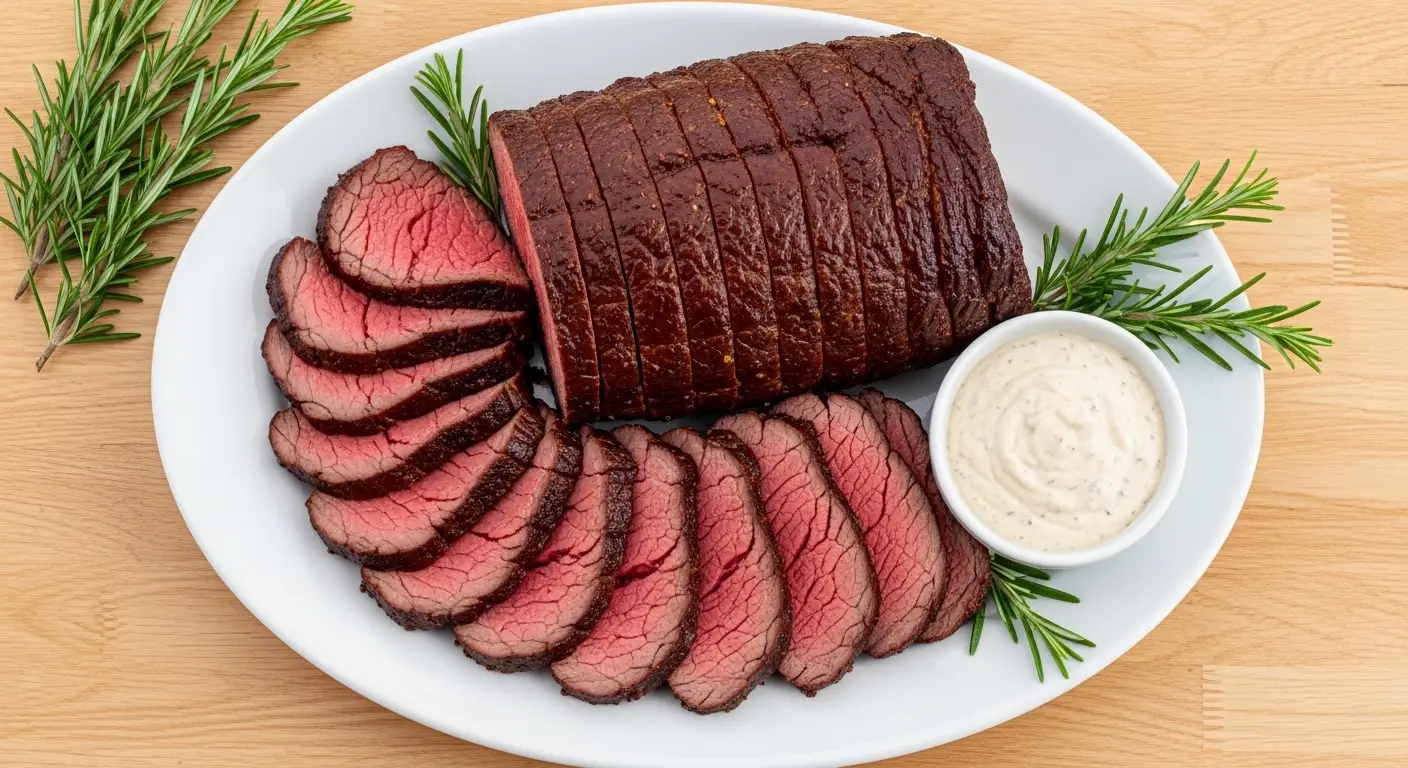
Smoked Beef Tenderloin
Ingredients
- 1 whole beef tenderloin - 4–5 lbs (1.8–2.3 kg), trimmed and tied
- 2 tbsp olive oil - 30 ml, for coating
- 2 tsp coarse kosher salt - 10 g, for the dry brine; apply generously to all surfaces
- 2 tsp freshly cracked black pepper - 5 g
- 1 tsp garlic powder - 3 g
- 1 tsp onion powder - 3 g
- 1 tsp smoked paprika - 3 g
- 1/2 tsp dried rosemary - 1 g, finely crushed
- 1/2 tsp dried thyme - 1 g
- butcher’s twine - For trussing the roast
- oak or hickory wood chunks or chips - For smoking; oak preferred for clean, medium smoke flavor
- 1/2 cup sour cream - 120 g
- 2 tbsp prepared horseradish - 30 g; adjust to taste
- 1 tbsp fresh lemon juice - 15 ml
- 1 tsp Dijon mustard - 5 g
- salt and pepper - To taste, for finishing the sauce
Equipment
- Pellet smoker or offset smoker - Or a charcoal grill set up for indirect heat
- Instant-read meat thermometer - Essential for monitoring internal temperature accurately
- Leave-in probe thermometer - (optional) Wireless probe recommended for hands-free monitoring
- Cast iron skillet (12-inch) - (optional) For reverse sear finish if not searing directly on grill
- Sharp boning or fillet knife - For trimming silver skin from the tenderloin
- Aluminum foil - For tenting the meat during both rest periods
- Paper towels - For patting the meat completely dry before brining
- Small mixing bowl - For combining the dry rub ingredients
- Butcher’s twine - For trussing the tenderloin to an even thickness
- Wire rack with sheet pan - For dry brining the tenderloin uncovered in the refrigerator
- Pastry brush - (optional) For applying olive oil evenly over the surface
Method
- Pat the trimmed tenderloin completely dry with paper towels, then coat every surface generously with coarse kosher salt. Place uncovered on a wire rack set over a sheet pan and refrigerate for 8–24 hours until the surface looks dry and tacky.
- Remove the tenderloin from the refrigerator 45–60 minutes before smoking. Fold the thin tail end underneath the roast and tie with butcher’s twine at 1.5–2 inch (4–5 cm) intervals to create an even cylinder from end to end.
- Combine black pepper, garlic powder, onion powder, smoked paprika, dried rosemary, and dried thyme in a small bowl. Coat the tenderloin evenly with olive oil, then press the dry rub firmly onto all surfaces including the ends.
- Preheat your smoker to 250°F (121°C) using oak or hickory wood and allow it to fully stabilize before adding the meat. Set up for indirect heat if using a charcoal grill.
- Place the trussed tenderloin on the grill grate over indirect heat and insert a leave-in probe into the thickest part if available. Smoke undisturbed at 250°F (121°C) until the internal temperature reaches 110°F (43°C), approximately 60–75 minutes total.
- Remove the tenderloin from the smoker at 110°F (43°C) and tent loosely with aluminum foil. Rest for 10 minutes while you heat your grill or cast iron skillet to its highest possible temperature (500°F / 260°C or higher).
- Sear the tenderloin for 2–3 minutes per side on all four surfaces until a deep mahogany crust forms, monitoring closely with an instant-read thermometer. Pull from the heat when the internal temperature reaches 125°F (52°C) for medium-rare or 130°F (54°C) for medium.
- Transfer the seared tenderloin to a clean cutting board, tent loosely with foil, and rest for 10–15 minutes. Carryover cooking will raise the internal temperature an additional 3–5°F (1–3°C) during this time.
- While the tenderloin rests, stir together sour cream, prepared horseradish, fresh lemon juice, and Dijon mustard in a small bowl. Season with salt and pepper to taste, then refrigerate until ready to serve.
- Remove the butcher’s twine, then slice the tenderloin into 1–1.5 inch (2.5–4 cm) medallions using smooth, even strokes with a sharp carving knife. Arrange on a serving platter, drizzle with resting juices, and serve immediately with the horseradish cream sauce on the side.
Nutrition
Notes
- Always cook to internal temperature, not time. A reliable instant-read thermometer is the single most important tool for this recipe.
- Do not skip the dry brine. Even 8 hours makes a significant difference in depth of flavor and moisture retention compared to seasoning right before the cook.
- Use oak or hickory wood for the best result with beef. Fruitwoods like applewood are too mild for the short smoke window and the flavor will barely register.
- Trussing the tenderloin is essential. The tapered tail end will overcook long before the center reaches temperature if left unfolded and untied.
- Rest the meat twice: once for 10 minutes before the sear to dry the surface, and again for 10–15 minutes after the sear to allow juices to redistribute.
- Pull the tenderloin 3–5°F (1–3°C) below your target temperature. Carryover cooking during the final rest will bring it to the perfect doneness without overshooting.
- For the best sear, make sure your cast iron skillet or grill grate is visibly smoking hot before the meat touches it. A lukewarm surface steams the meat and prevents crust formation.
- Leftovers can be wrapped tightly and stored in the refrigerator for up to 4 days. Reheat gently in a 275°F (135°C) oven covered with foil, or serve cold sliced thin on crusty bread.
- To freeze, wrap tightly in plastic wrap then foil and freeze for up to 3 months. Thaw overnight in the refrigerator before reheating.
- For an easy variation, substitute the dry rub with a bold Cajun seasoning blend, or slather the tenderloin with Dijon mustard before applying the rub for a tangy, herb-crusted crust.
Private Notes
Tried this recipe?
Let us know how it was!Final Thoughts
If you have never made a smoked beef tenderloin before, I genuinely hope this recipe takes the intimidation completely out of the equation.
This dish has become my most requested recipe at every gathering I host.
The combination of fragrant wood smoke, a deeply caramelized crust, and that gorgeous rosy interior is something that photographs beautifully and tastes even better than it looks.
Every time I slice into one at the table, I am reminded that some of the most impressive food does not require complicated technique, just patience and the right method.
Whether this is for a holiday dinner, a milestone birthday, or simply a weekend when you want to make something truly special, I promise this recipe will deliver.
If you give this smoked beef tenderloin recipe a try, I would love to hear how it turned out! Drop a comment below, share a photo, or tag me on social media. Tell me what sides you served it with and whether you went for the horseradish cream or something entirely different.
Recommended:
- Beef Tenderloin Recipe
- Beef Tenderloin Steak Recipe
- Filet Mignon Recipe
- Prime Rib Recipe
- Lamb Chops Recipe
- Boneless Leg of Lamb Recipe
- Roast Chicken Recipe
- Beef and Broccoli Stir Fry Recipe
- BBQ Sauce Recipe
- Brown Gravy Recipe