I still remember the first time I attempted a beef tenderloin steak recipe at home. I’d spent way too much on gorgeous filets, only to turn them into pricey hockey pucks because I had the heat too low and crowded the pan.
After that disaster, I became borderline obsessed with getting it right. I read everything, tested different methods, and finally landed on this sear-then-oven approach that delivers perfect results every single time.
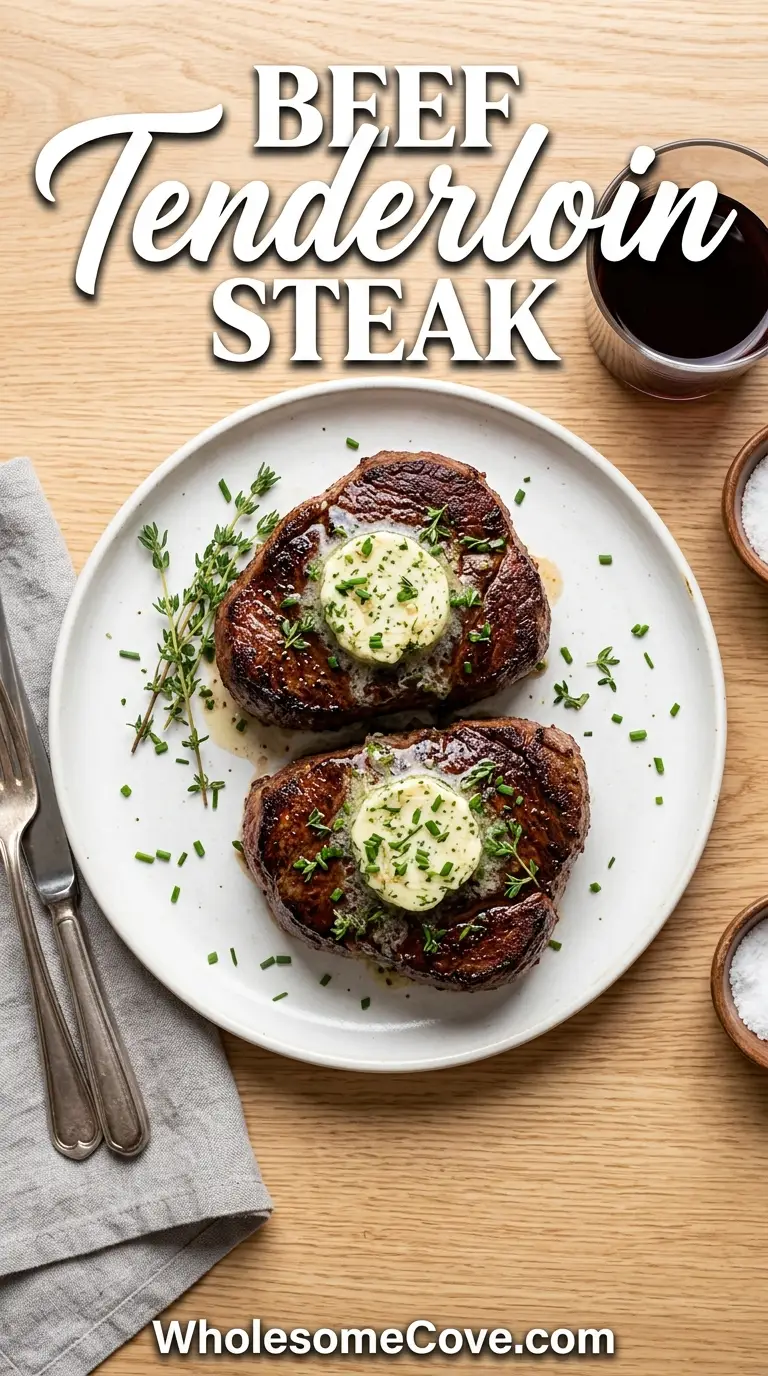
It gives you a deeply browned, crackly crust on the outside with a buttery, rosy pink center that practically melts when you bite into it. The herb butter finish is what really takes it over the top. Once you make beef tenderloin steaks at home this way, you’ll wonder why you ever paid steakhouse prices.
| Quick Recipe Summary | |
|---|---|
| Prep Time | 10 minutes |
| Cook Time | 15 minutes |
| Total Time | 25 minutes |
| Servings | 2 steaks |
| Difficulty Level | Intermediate |
If you love cooking premium cuts at home, you might also enjoy my Filet Mignon Recipe for another take on tenderloin perfection.
Why You’ll Love This Beef Tenderloin Steak Recipe
This recipe is the most reliable way I’ve found to get steakhouse results without leaving your kitchen. The two-step cook method (sear on the stove, finish in the oven) takes all the guesswork out of nailing your preferred doneness.
The herb butter is something I started adding after a trip to a fancy restaurant left me totally hooked on that glossy, garlicky finish. It melts right into the crust and adds a richness that plain salt and pepper just can’t match.
What I also love is how fast this comes together on a weeknight. You only need about 25 minutes total, and most of that is hands-off oven time.
- Melt-in-your-mouth texture: Beef tenderloin is the most tender cut on the animal, meaning you get fork-tender bites with almost zero effort on your part.
- Restaurant-quality crust: The screaming-hot cast iron skillet creates that deep, golden-brown sear you see at upscale steakhouses.
- Herb butter magic: Compound butter with garlic, fresh thyme, and rosemary adds layers of savory flavor that soaks into every bite.
- Foolproof doneness: The oven-finish method means the inside cooks evenly and gently, so you’re not playing chicken with a hot pan trying to guess when it’s medium-rare.
- Minimal ingredients: You only need a handful of pantry staples. The beef itself is the star, and this recipe treats it that way.
- Impressive for guests: This is the kind of dish that looks and tastes like you spent hours cooking, but the actual effort is surprisingly manageable.
- Flexible doneness: Use a meat thermometer and cook it anywhere from rare to medium-well without changing the technique at all.
You might also enjoy: Prime Rib Recipe
Ingredients
You don’t need a long shopping list for this recipe. The key is sourcing high-quality beef tenderloin steaks, because great ingredients really do most of the heavy lifting here.
- 2 beef tenderloin steaks (filet mignon cuts, about 6–8 oz / 170–225g each, 1.5–2 inches / 4–5 cm thick)
- 1 teaspoon kosher salt (or coarse sea salt)
- ½ teaspoon freshly cracked black pepper
- 1 tablespoon avocado oil or canola oil (for high-heat searing)
- 3 tablespoons (42g) unsalted butter, softened and divided
- 3 garlic cloves, smashed and peeled
- 3–4 sprigs fresh thyme
- 2 sprigs fresh rosemary
- 1 tablespoon finely chopped fresh chives (for garnish, optional)
For the Compound Herb Butter (Optional but Recommended):
- 4 tablespoons (56g) unsalted butter, softened to room temperature
- 1 garlic clove, finely minced or grated
- 1 teaspoon fresh thyme leaves
- 1 teaspoon fresh rosemary, finely chopped
- ¼ teaspoon kosher salt
- ¼ teaspoon freshly cracked black pepper
Read Also: Beef Tips and Gravy Recipe
Kitchen Equipment Needed
Having the right tools makes a genuine difference with this recipe, especially when it comes to getting a proper sear and hitting your target temperature accurately.
- Cast iron skillet (10–12 inch / 25–30 cm, oven-safe — this is essential for both stovetop searing and oven finishing)
- Instant-read meat thermometer (absolutely non-negotiable for hitting the right internal temperature)
- Oven mitts or a heavy kitchen towel (cast iron holds heat intensely — protect your hands)
- Tongs (for flipping the steak without piercing it and losing juices)
- Small mixing bowl (for preparing the compound butter)
- Parchment paper or plastic wrap (for rolling and chilling compound butter log)
- Basting spoon or large spoon (for spooning butter over the steaks while they cook)
- Cutting board (let the steaks rest here after cooking)
- Paper towels (for patting the steaks dry before seasoning — this is crucial for a good crust)
Another favorite: Beef and Broccoli Stir Fry Recipe
Recommended Products for This Recipe
These are products I personally use and genuinely love for making beef tenderloin steaks at home. They make a real difference in the final result.
1. Lodge Cast Iron Skillet (12-Inch)
A properly seasoned cast iron skillet retains heat more evenly than any other pan, which is exactly what you need for that deep, golden crust. I’ve had mine for years and it only gets better with each use. Once you sear steaks in cast iron, you’ll never go back.
2. ThermoPro Instant-Read Meat Thermometer
Guessing whether a steak is done is the single biggest mistake home cooks make with expensive cuts. This thermometer gives you an accurate reading in seconds so you can pull the steaks at exactly the right temperature every time. It’s inexpensive and completely removes the guesswork.
3. Grass-Fed Beef Tenderloin Steaks
If you want restaurant-level results, starting with quality beef matters. Look for grass-fed, center-cut filets that are at least 1.5 inches thick. Grass-fed beef tends to have deeper, more complex flavor and holds up beautifully to the sear-and-baste technique.
4. Fleur de Sel or Maldon Sea Salt Flakes
Finishing the steak with a sprinkle of good flaky sea salt right before serving makes a noticeable difference. The salt adds a subtle crunch and amplifies every bite. It sounds simple, but it genuinely elevates the whole dish.
For more beef dinner ideas, check out my Beef Stew Recipe.
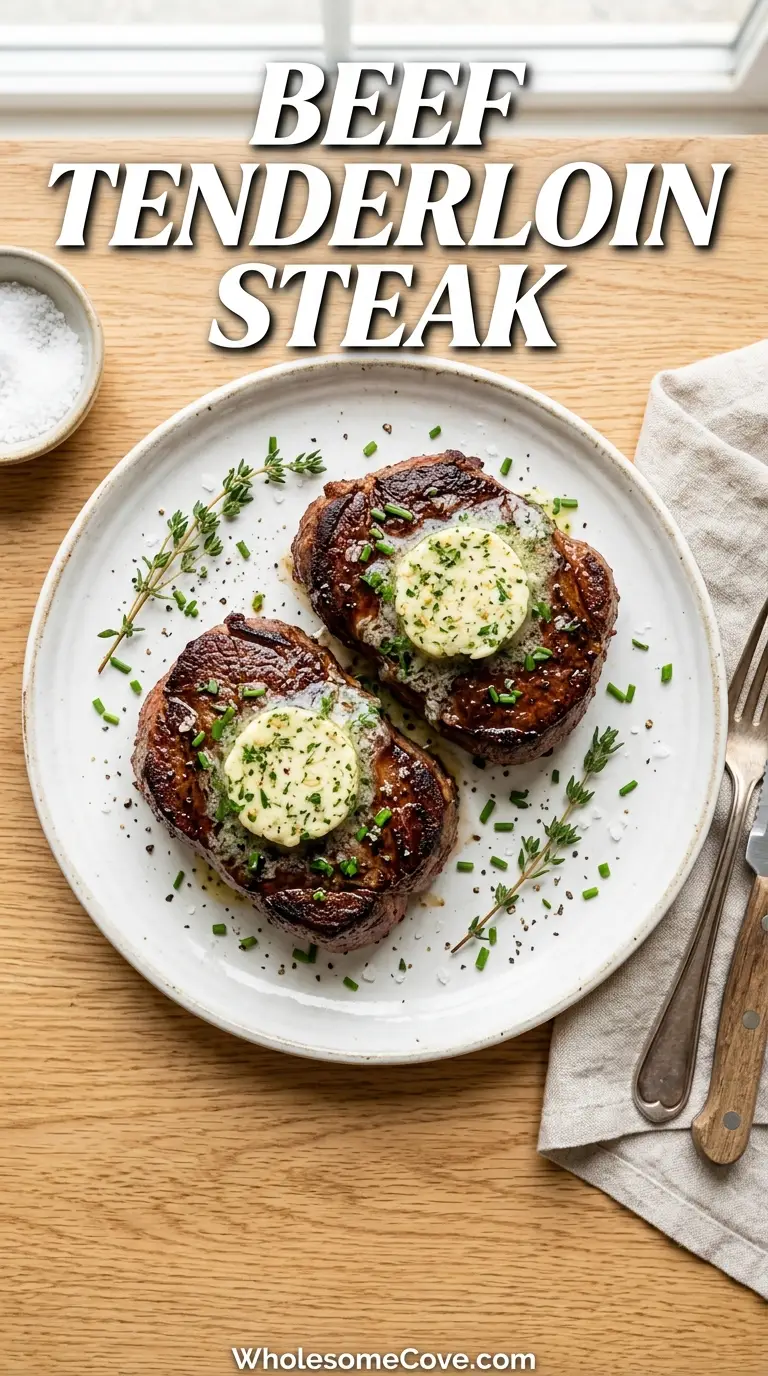
Step-by-Step Instructions: How to Make Beef Tenderloin Steak
Step 1: Make the Compound Herb Butter
- Place the softened butter in a small mixing bowl.
- Add the minced garlic, chopped fresh thyme, chopped fresh rosemary, kosher salt, and black pepper to the bowl.
- Use a fork to mash and mix everything together until fully combined and the herbs are evenly distributed throughout the butter.
- Spoon the mixed butter onto a sheet of parchment paper or plastic wrap, forming a rough log shape about 1 inch (2.5 cm) in diameter.
- Roll the parchment tightly around the butter log, then twist both ends closed to seal it.
- Refrigerate for at least 20 minutes, or up to several days ahead of time. This step can absolutely be done a day in advance, which makes the recipe even faster on cooking day.
Step 2: Prep the Steaks
- Remove your beef tenderloin steaks from the refrigerator at least 30–45 minutes before you plan to cook them. This allows the steaks to come close to room temperature, which is critical for even cooking all the way through.
- Place the steaks on a clean cutting board or plate.
- Use paper towels to pat the steaks very dry on all sides, including the top, bottom, and edges. Removing surface moisture is one of the most important steps for building a good crust — moisture creates steam, and steam prevents browning.
- Season all sides of the steaks generously with kosher salt and freshly cracked black pepper. Press the seasoning lightly into the meat so it adheres. Don’t be shy with the salt — it forms the backbone of the crust.
Step 3: Preheat the Oven and Pan
- Preheat your oven to 425°F (220°C). Make sure the oven is fully up to temperature before you start cooking.
- Place your cast iron skillet on the stovetop over high heat and let it preheat for at least 4–5 minutes. You want the pan to be extremely hot before the steaks go in. If you flick a drop of water into the pan and it evaporates immediately, the pan is ready.
- Add the avocado or canola oil to the hot skillet and swirl it around to coat the surface. Let the oil heat for about 30 seconds until it just begins to shimmer and smoke slightly.
Step 4: Sear the First Side
- Using tongs, carefully place the steaks in the hot skillet. Do not slide them or push them around — set them down firmly and leave them alone. You should hear a loud sizzle the moment they hit the pan.
- Sear the first side undisturbed for 3–4 minutes. Resist the urge to peek or move them. You want the exterior to develop a deep, dark, caramelized crust. If the steaks are sticking, they’re not ready to flip — a properly seared steak will release naturally when the crust has formed.
- While the first side sears, add 2 tablespoons of butter, the smashed garlic cloves, fresh thyme sprigs, and rosemary sprigs to the pan around the steaks.
Step 5: Sear the Second Side and Baste
- Flip the steaks over using tongs.
- Immediately begin basting: tilt the pan slightly toward you and use a large spoon to scoop up the melted butter and herbs, then spoon it repeatedly over the top of the steaks. Continue basting for 1–2 minutes. The butter will foam, turn slightly golden, and smell nutty and fragrant — this is exactly what you want.
- Sear the second side for about 2 minutes while continuing to baste. The goal here is crust development and flavor infusion, not cooking through — the oven will finish the job.
Step 6: Transfer to the Oven and Cook to Desired Doneness
- Carefully transfer the entire cast iron skillet (steaks, butter, herbs, and all) into the preheated 425°F (220°C) oven. Use oven mitts — the skillet handle will be extremely hot.
- Roast the steaks to your desired internal temperature, checking with your instant-read thermometer every 2–3 minutes after the first 5 minutes:
- Rare: 120–125°F (49–52°C) — about 3–4 minutes in the oven
- Medium-Rare: 130–135°F (54–57°C) — about 5–7 minutes in the oven
- Medium: 140–145°F (60–63°C) — about 8–10 minutes in the oven
- Medium-Well: 150–155°F (65–68°C) — about 11–12 minutes in the oven
- Remember that the internal temperature will rise another 3–5°F (1–3°C) as the steaks rest, so pull them out of the oven slightly below your target temperature.
Step 7: Rest the Steaks
- Remove the skillet from the oven and transfer the steaks to a cutting board or clean plate using tongs.
- Tent them loosely with aluminum foil. Do not wrap them tightly — you want the crust to stay crisp, not steam and soften.
- Let the steaks rest for at least 5 minutes. This step is non-negotiable. Resting allows the muscle fibers to relax and the juices to redistribute back through the meat. Cut into a steak too soon and all those delicious juices pour out onto the cutting board instead of staying where they belong.
Step 8: Finish with Herb Butter and Serve
- Remove the compound herb butter log from the refrigerator and slice it into rounds, about ¼ inch thick.
- Place one or two butter rounds on top of each steak immediately after resting. The residual heat from the steak will gently melt the butter into a glossy, aromatic sauce that cascades down the sides.
- Sprinkle with flaky sea salt and chopped fresh chives, if using.
- Serve immediately while the crust is still crisp and the butter is still melting.
This recipe is similar in technique to making a full Beef Tenderloin Recipe — the same principles apply, just scaled for individual steaks.
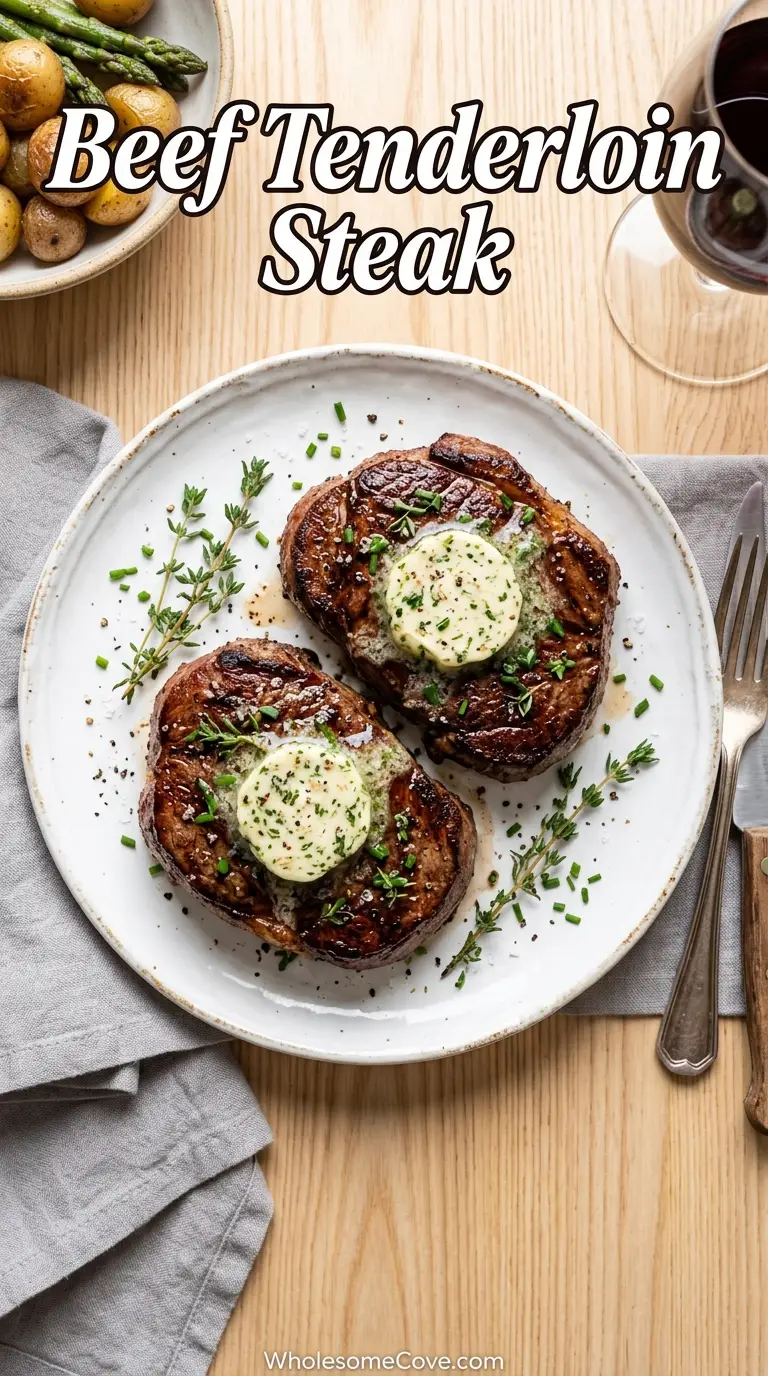
Tips for The Best Beef Tenderloin Steak
Getting beef tenderloin steaks right comes down to a handful of details that make a big difference in the final result.
- Always dry-brine or at minimum pat the steaks very dry: Surface moisture is the enemy of a proper sear. Even 30 extra seconds with paper towels makes a visible difference in how much crust you develop.
- Use a high smoke-point oil: Butter alone will burn at the temperatures needed for searing. Use avocado, canola, or grapeseed oil to sear, then add butter for basting once the initial crust is set.
- Get the pan screaming hot: This is not the moment for medium heat. You need high heat to trigger the Maillard reaction, which is what gives you that complex, savory crust. A lukewarm pan steams the steak instead of searing it.
- Don’t skip resting: I made this mistake many times early on. Resting for 5 minutes isn’t optional — it’s what separates a juicy steak from a steak that bleeds out all over your cutting board.
- Buy thick steaks: Ask your butcher for cuts that are at least 1.5 inches (4 cm) thick, ideally 2 inches (5 cm). Thin steaks cook through before you ever get a proper crust.
- Use a thermometer every time: Even after making this dozens of times, I still use a thermometer. It removes all doubt and eliminates the risk of overcooking an expensive cut.
- Season more than you think you need to: Kosher salt and pepper should be visible on the surface of the steak. A light sprinkle isn’t enough — the seasoning needs to penetrate and help build the crust.
- Don’t move the steak during searing: Let it sit undisturbed. If it’s sticking, it hasn’t formed a crust yet and needs more time.
- Make compound butter ahead of time: It keeps in the fridge for up to a week and can be frozen for up to a month. Having it ready means dinner comes together in under 20 minutes.
- Let the pan cool slightly before deglazing for a pan sauce: If you want a quick red wine or beef broth pan sauce after the steaks are done, let the pan come off high heat first so the sauce doesn’t burn immediately.
Read Also: Mushroom Gravy Recipe
What to Serve with Beef Tenderloin Steak
A dish this special deserves sides that match its elegance without stealing the spotlight. I tend to go for rich, creamy sides that complement the savory depth of the beef.
Rich, velvety sides like Mashed Potatoes are the ultimate pairing with beef tenderloin — the creaminess balances the savory, buttery crust beautifully.
- Roasted Potatoes: Crispy on the outside, fluffy on the inside — a classic steakhouse pairing that never fails. Season them simply with garlic and herbs so they complement rather than compete with the steak.
- Creamed Spinach: This classic steakhouse side is silky, lightly sweet from the cream, and pairs perfectly with the savory beef.
- Au Gratin Potatoes: Layered with cream and cheese, these are indulgent in the best possible way and feel like a proper special-occasion side.
- Green Bean Casserole: A comforting, crowd-pleasing veggie side that adds texture and warmth to the plate.
- Roasted Brussels Sprouts with Bacon: The slight bitterness of the sprouts and the smoky bacon play really well against the richness of tenderloin.
- Maple Glazed Carrots: Sweet, glossy carrots add color and a gentle sweetness that rounds out a rich beef plate.
- Deviled Eggs: A fun, retro starter that works beautifully as part of a dinner party spread alongside the main.
- Crusty bread or dinner rolls: You’ll want something to soak up all the herb butter that pools on the plate. A good piece of bread is the perfect way to do it.
Variations of Beef Tenderloin Steak
The classic version is hard to beat, but there are a few ways to switch things up depending on your mood or what you have on hand.
Here’s a fun way to change the flavor profile while keeping the same reliable technique.
- Bacon-Wrapped Tenderloin Steak: Wrap each steak with a strip of thin-cut bacon before searing. The bacon crisps up as it sears, bastes the steak in its own fat, and adds a smokiness that’s absolutely irresistible.
- Peppercorn Crust: Instead of basic black pepper, press whole cracked mixed peppercorns into the surface of each steak before searing. The crust becomes deeply aromatic and spicy in a way that works beautifully with the mild, buttery beef.
- Blue Cheese Compound Butter: Swap out the herb butter for a compound made with softened butter, crumbled blue cheese, and a touch of Worcestershire sauce. The sharpness of the cheese against the rich beef is a classic combination.
- Red Wine Pan Sauce: After removing the steaks to rest, deglaze the hot skillet with ½ cup (120ml) of dry red wine, scraping up all the browned bits from the bottom. Add ½ cup (120ml) beef broth and let it simmer until reduced by half. Stir in a tablespoon of cold butter and pour over the steaks.
- Chimichurri-Topped: Skip the compound butter entirely and top the finished steaks with a vibrant, herb-packed chimichurri sauce for a South American twist. Try this alongside my Chimichurri Steak Tacos Recipe for more chimichurri inspiration.
- Surf and Turf: Serve the tenderloin steak alongside seared shrimp or a butter-poached lobster tail for the ultimate date night dinner.
- Reverse Sear Method: Instead of searing first, cook the steaks low and slow in the oven at 250°F (120°C) until they reach about 10°F below your target temperature, then sear in a scorching hot pan for 60–90 seconds per side. This produces edge-to-edge even color and a stunning crust.
- Rosemary-Garlic Infused Oil Sear: Infuse the searing oil with garlic and rosemary before adding the steaks. Remove the aromatics before the steaks go in to prevent burning, but the flavor transfers beautifully to the crust.
Storage and Reheating
Leftover beef tenderloin steak is honestly worth celebrating — cold sliced tenderloin on a salad the next day is one of life’s simple pleasures.
Proper storage and gentle reheating are what keep the texture close to fresh-cooked.
- Refrigerator storage: Let the steaks cool completely, then wrap them tightly in plastic wrap or store in an airtight container. They’ll keep for up to 3–4 days in the refrigerator.
- Freezer storage: Wrap each steak individually in plastic wrap, then place in a zip-lock freezer bag. Freeze for up to 2–3 months. Thaw overnight in the refrigerator before reheating.
- Best reheating method (stovetop): Place the steak in a skillet over low heat with a small knob of butter. Heat gently for 3–4 minutes per side, or until warmed through. Low and slow is the key — high heat will overcook the center.
- Oven reheating: Preheat oven to 250°F (120°C). Place the steak on a wire rack set over a baking sheet and warm for 20–25 minutes until heated through. This preserves the texture better than any other method for thicker steaks.
- Avoid the microwave: I know it’s tempting, but the microwave makes steak tough and rubbery within seconds. Use it only as an absolute last resort, and use 30-second bursts at 50% power if you must.
- Cold steak serving idea: Cold sliced tenderloin works beautifully on top of a salad with blue cheese, walnuts, and a simple vinaigrette. You’ll barely feel like you’re eating leftovers.
You might also enjoy: Steak and Corn Salad Recipe
Nutritional Facts
The following nutritional information is an estimate for one beef tenderloin steak (approximately 6 oz / 170g) with compound herb butter, calculated per serving.
| Nutrient | Amount Per Serving | ||| | Calories | 480 kcal | | Total Fat | 34g | | Saturated Fat | 16g | | Cholesterol | 155mg | | Sodium | 620mg | | Total Carbohydrates | 1g | | Dietary Fiber | 0g | | Sugars | 0g | | Protein | 42g | | Iron | 3.5mg | | Potassium | 620mg |
Nutritional values are estimates and may vary based on the exact size of your steak, the amount of butter used, and specific brands of ingredients.
Read Also: Beef Barley Soup Recipe
Health Benefits of Key Ingredients
Beef tenderloin may feel indulgent, but it comes with a solid nutritional profile that makes it a smart choice for an occasional protein-forward meal.
The combination of lean protein, essential minerals, and anti-inflammatory herbs in this recipe means you’re not just eating something delicious — you’re fueling your body well.
- Beef Tenderloin (high-quality protein): Tenderloin is one of the leaner cuts of beef, lower in fat than ribeye or brisket, while still delivering a powerful dose of complete protein with all essential amino acids for muscle repair and growth.
- Iron and zinc: Beef is one of the richest dietary sources of heme iron, the form most easily absorbed by the body. It also provides zinc, which supports immune function and wound healing.
- B vitamins: Beef tenderloin is rich in B12, B6, and niacin, all of which play key roles in energy metabolism, red blood cell production, and nervous system health.
- Garlic: Garlic contains allicin, a compound with well-documented antimicrobial and anti-inflammatory properties. It also supports cardiovascular health by helping to manage blood pressure levels.
- Fresh Herbs (thyme and rosemary): Both thyme and rosemary are packed with antioxidants that help combat oxidative stress in the body. Rosemary in particular has been studied for its potential memory-boosting and anti-inflammatory properties.
- Butter (in moderation): Grass-fed butter provides fat-soluble vitamins A, D, E, and K2, as well as conjugated linoleic acid (CLA), a fatty acid associated with improved body composition.
- Avocado oil: Used for searing, avocado oil is rich in heart-healthy monounsaturated fats and has one of the highest smoke points of any cooking oil, making it safer for high-heat cooking than many alternatives.
Another favorite: Brown Gravy Recipe
FAQs About Beef Tenderloin Steak
1. What is the difference between beef tenderloin steak and filet mignon?
They’re the same cut of beef. Filet mignon is the French name for a steak cut from the beef tenderloin, typically referring to the center-cut portion. The terms are used interchangeably in most American recipes and restaurants.
2. What internal temperature should beef tenderloin steak reach for medium-rare?
Medium-rare is generally considered the ideal doneness for tenderloin. Pull the steaks from the oven when the internal temperature reads 130°F (54°C), then allow them to rest — the temperature will climb to approximately 135°F (57°C) during resting.
3. Can I cook beef tenderloin steak without a cast iron skillet?
Yes, any oven-safe, heavy-bottomed skillet will work. A stainless steel pan is a good alternative. Avoid non-stick pans, which generally can’t handle the high heat needed for a proper sear and may release harmful fumes above certain temperatures.
4. Should I marinate beef tenderloin steak?
Tenderloin is so naturally tender and flavorful that marinating isn’t necessary and can actually mask the clean, buttery taste of the beef. Simple seasoning with kosher salt, pepper, and compound herb butter is all this cut needs to shine.
5. How far in advance can I prepare the compound herb butter?
The compound butter keeps wrapped tightly in the refrigerator for up to 7 days. You can also freeze it for up to 2 months and slice off rounds directly from frozen as needed. It’s one of those things worth making a big batch of and keeping on hand.
Read Also: Steak Quesadilla Recipe
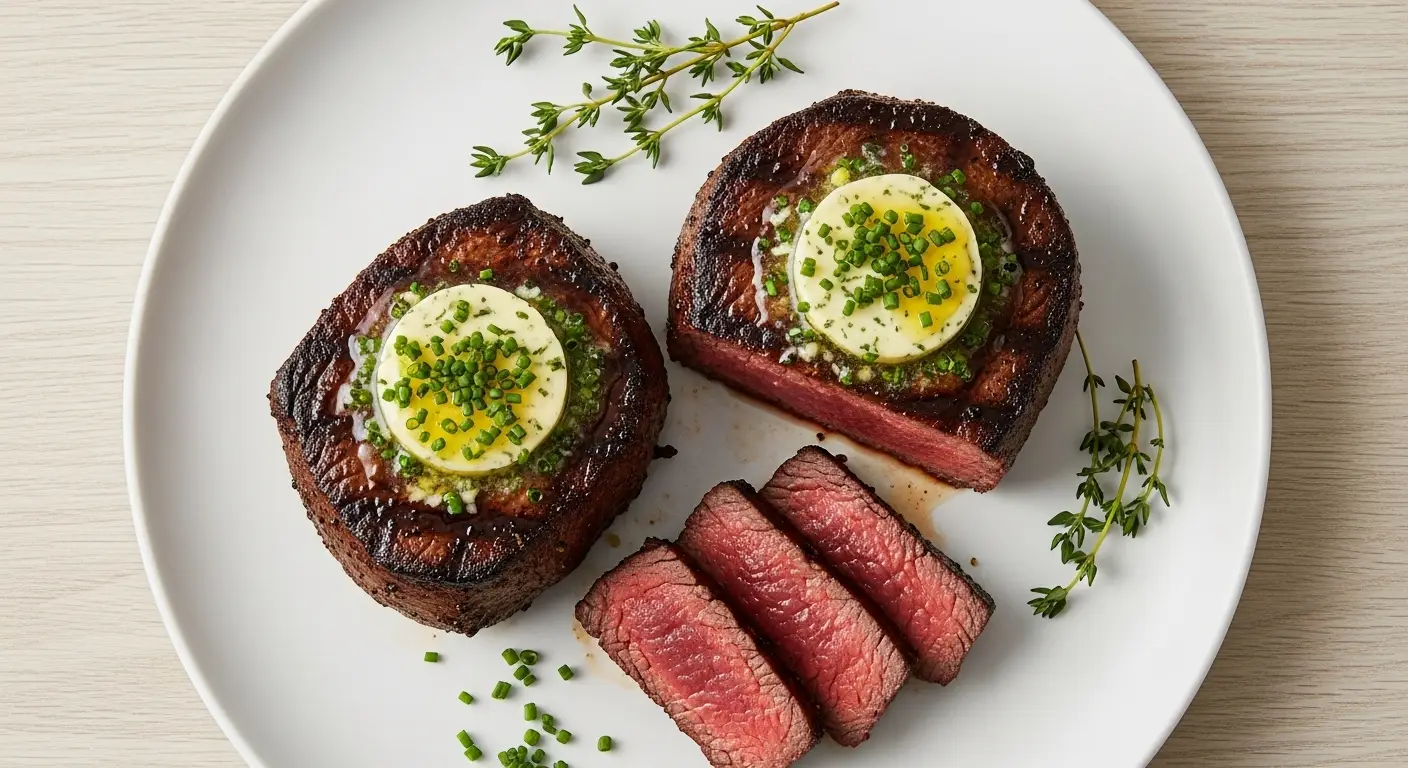
Beef Tenderloin Steak
Ingredients
- 2 beef tenderloin steaks - filet mignon cuts, about 6–8 oz / 170–225g each, 1.5–2 inches / 4–5 cm thick
- 1 tsp kosher salt - or coarse sea salt
- ½ tsp freshly cracked black pepper
- 1 tbsp avocado oil - or canola oil; use a high smoke-point oil for searing
- 3 tbsp unsalted butter - 42g, softened and divided; used for stovetop basting
- 3 garlic cloves - smashed and peeled
- 3–4 sprigs fresh thyme - for pan basting
- 2 sprigs fresh rosemary - for pan basting
- 1 tbsp fresh chives - finely chopped; for garnish, optional
- 4 tbsp unsalted butter - 56g, softened to room temperature
- 1 garlic clove - finely minced or grated
- 1 tsp fresh thyme leaves - stripped from stems
- 1 tsp fresh rosemary - finely chopped
- ¼ tsp kosher salt - for the compound butter
- ¼ tsp freshly cracked black pepper - for the compound butter
Equipment
- Cast iron skillet (10–12 inch, oven-safe) - Essential for both stovetop searing and oven finishing
- Instant-read meat thermometer - Required for accurate internal temperature reading
- Oven mitts or heavy kitchen towel - Cast iron retains intense heat — protect your hands
- Tongs - For flipping steaks without piercing the meat
- Small mixing bowl - For preparing the compound herb butter
- Parchment paper or plastic wrap - For rolling and chilling the compound butter log
- Basting spoon - For spooning melted butter over steaks while cooking
- Cutting board - For resting steaks after cooking
- Paper towels - For patting steaks completely dry before seasoning
Method
- Mash together the softened butter, minced garlic, fresh thyme, rosemary, salt, and pepper in a small bowl until fully combined. Spoon onto parchment paper, roll into a log, twist ends closed, and refrigerate for at least 20 minutes (or up to 1 week).
- Remove steaks from the refrigerator 30–45 minutes before cooking to bring them close to room temperature. Pat all sides completely dry with paper towels, then season generously with kosher salt and black pepper on all sides.
- Preheat your oven to 425°F (220°C). Heat a cast iron skillet over high heat for 4–5 minutes until extremely hot, then add the oil and let it shimmer for about 30 seconds.
- Place the steaks in the hot skillet and sear undisturbed for 3–4 minutes until a deep, dark crust forms. Add 2 tablespoons of butter, the smashed garlic cloves, thyme sprigs, and rosemary sprigs to the pan around the steaks.
- Flip the steaks using tongs, then tilt the pan and spoon the foaming butter repeatedly over the tops of the steaks for 1–2 minutes. Continue searing the second side for about 2 minutes while basting.
- Transfer the entire skillet to the preheated oven and roast until the steaks reach your target internal temperature: 130–135°F (54–57°C) for medium-rare, about 5–7 minutes. Pull them 3–5°F below your target since the temperature will rise as they rest.
- Transfer the steaks to a cutting board and tent loosely with foil — do not wrap tightly. Rest for at least 5 minutes to allow the juices to redistribute throughout the meat.
- Slice the chilled compound butter into rounds and place one or two on top of each steak immediately after resting. Garnish with flaky sea salt and chopped fresh chives if desired, then serve immediately.
Nutrition
Notes
- Pat steaks completely dry with paper towels before seasoning — surface moisture prevents browning and is the most common reason home cooks end up with gray, steamed steak instead of a proper sear.
- Use avocado or canola oil for the initial sear, not butter alone. Butter burns at high searing temperatures; add it only after the initial crust has set for the basting step.
- Always use a meat thermometer. Even experienced cooks use one every time for expensive cuts — there is no reliable substitute for checking the actual internal temperature.
- Buy steaks that are at least 1.5 inches (4 cm) thick, ideally 2 inches (5 cm). Thin steaks cook through before a proper crust ever develops.
- The compound herb butter can be made up to 7 days in advance and kept refrigerated, or frozen for up to 2 months. Slice rounds directly from frozen as needed.
- To reheat leftovers, use a skillet over low heat with a small knob of butter for 3–4 minutes per side, or warm in a 250°F (120°C) oven on a wire rack for 20–25 minutes. Avoid the microwave.
- For a quick pan sauce, deglaze the hot skillet after removing the steaks with ½ cup (120ml) dry red wine and ½ cup (120ml) beef broth. Simmer until reduced by half, then swirl in a tablespoon of cold butter.
- Bacon-wrapped variation: wrap each steak with a strip of thin-cut bacon before searing. The bacon crisps up and bastes the steak in smoky fat throughout cooking.
- Reverse sear option: cook steaks low and slow at 250°F (120°C) until 10°F below target temperature, then sear in a screaming-hot pan for 60–90 seconds per side for edge-to-edge even doneness.
- Cold leftover tenderloin sliced thin over a salad with blue cheese, walnuts, and a simple vinaigrette is one of the best next-day meals you can have.
Private Notes
Tried this recipe?
Let us know how it was!Final Thoughts
Making beef tenderloin steak at home is one of those cooking skills that sounds intimidating until you actually do it. Once you realize it only takes 25 minutes and a handful of pantry staples, it becomes your go-to for any night that calls for something special.
The sear-then-oven method truly takes the fear out of expensive cuts. With a good thermometer and a hot cast iron pan, you’re already most of the way there.
I hope this recipe becomes a regular in your kitchen rotation. If you give it a try, leave a comment below and let me know how yours turned out — or share it with someone who could use a good steak night.
Recommended:
- Beef Tenderloin Recipe
- Rack of Lamb Recipe
- Lamb Chops Recipe
- Mississippi Pot Roast Recipe
- Slow Cooker Pot Roast Recipe
- Crockpot Beef Stew Recipe
- Swedish Meatball Recipe
- Meatloaf Recipe
- Beef Barley Soup Recipe
- Chimichurri Steak Tacos Recipe