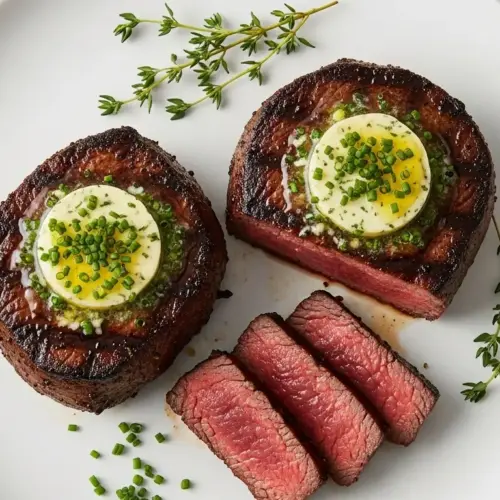
Beef Tenderloin Steak

This Beef Tenderloin Steak recipe uses the classic sear-then-oven method to deliver a deeply golden, crackly crust on the outside and a buttery, rosy pink center that practically melts in your mouth. Finished with a homemade herb compound butter loaded with garlic, fresh thyme, and rosemary, this is the kind of restaurant-quality dinner you can pull off at home in just 25 minutes with a handful of simple ingredients.
Equipment
- Cast iron skillet (10–12 inch, oven-safe) - Essential for both stovetop searing and oven finishing
- Instant-read meat thermometer - Required for accurate internal temperature reading
- Oven mitts or heavy kitchen towel - Cast iron retains intense heat — protect your hands
- Tongs - For flipping steaks without piercing the meat
- Small mixing bowl - For preparing the compound herb butter
- Parchment paper or plastic wrap - For rolling and chilling the compound butter log
- Basting spoon - For spooning melted butter over steaks while cooking
- Cutting board - For resting steaks after cooking
- Paper towels - For patting steaks completely dry before seasoning
Ingredients
- 2 beef tenderloin steaks - filet mignon cuts, about 6–8 oz / 170–225g each, 1.5–2 inches / 4–5 cm thick
- 1 tsp kosher salt - or coarse sea salt
- ½ tsp freshly cracked black pepper
- 1 tbsp avocado oil - or canola oil; use a high smoke-point oil for searing
- 3 tbsp unsalted butter - 42g, softened and divided; used for stovetop basting
- 3 garlic cloves - smashed and peeled
- 3–4 sprigs fresh thyme - for pan basting
- 2 sprigs fresh rosemary - for pan basting
- 1 tbsp fresh chives - finely chopped; for garnish, optional
For the Compound Herb Butter
- 4 tbsp unsalted butter - 56g, softened to room temperature
- 1 garlic clove - finely minced or grated
- 1 tsp fresh thyme leaves - stripped from stems
- 1 tsp fresh rosemary - finely chopped
- ¼ tsp kosher salt - for the compound butter
- ¼ tsp freshly cracked black pepper - for the compound butter
Instructions
- Mash together the softened butter, minced garlic, fresh thyme, rosemary, salt, and pepper in a small bowl until fully combined. Spoon onto parchment paper, roll into a log, twist ends closed, and refrigerate for at least 20 minutes (or up to 1 week).
- Remove steaks from the refrigerator 30–45 minutes before cooking to bring them close to room temperature. Pat all sides completely dry with paper towels, then season generously with kosher salt and black pepper on all sides.
- Preheat your oven to 425°F (220°C). Heat a cast iron skillet over high heat for 4–5 minutes until extremely hot, then add the oil and let it shimmer for about 30 seconds.
- Place the steaks in the hot skillet and sear undisturbed for 3–4 minutes until a deep, dark crust forms. Add 2 tablespoons of butter, the smashed garlic cloves, thyme sprigs, and rosemary sprigs to the pan around the steaks.
- Flip the steaks using tongs, then tilt the pan and spoon the foaming butter repeatedly over the tops of the steaks for 1–2 minutes. Continue searing the second side for about 2 minutes while basting.
- Transfer the entire skillet to the preheated oven and roast until the steaks reach your target internal temperature: 130–135°F (54–57°C) for medium-rare, about 5–7 minutes. Pull them 3–5°F below your target since the temperature will rise as they rest.
- Transfer the steaks to a cutting board and tent loosely with foil — do not wrap tightly. Rest for at least 5 minutes to allow the juices to redistribute throughout the meat.
- Slice the chilled compound butter into rounds and place one or two on top of each steak immediately after resting. Garnish with flaky sea salt and chopped fresh chives if desired, then serve immediately.
Notes
- Pat steaks completely dry with paper towels before seasoning — surface moisture prevents browning and is the most common reason home cooks end up with gray, steamed steak instead of a proper sear.
- Use avocado or canola oil for the initial sear, not butter alone. Butter burns at high searing temperatures; add it only after the initial crust has set for the basting step.
- Always use a meat thermometer. Even experienced cooks use one every time for expensive cuts — there is no reliable substitute for checking the actual internal temperature.
- Buy steaks that are at least 1.5 inches (4 cm) thick, ideally 2 inches (5 cm). Thin steaks cook through before a proper crust ever develops.
- The compound herb butter can be made up to 7 days in advance and kept refrigerated, or frozen for up to 2 months. Slice rounds directly from frozen as needed.
- To reheat leftovers, use a skillet over low heat with a small knob of butter for 3–4 minutes per side, or warm in a 250°F (120°C) oven on a wire rack for 20–25 minutes. Avoid the microwave.
- For a quick pan sauce, deglaze the hot skillet after removing the steaks with ½ cup (120ml) dry red wine and ½ cup (120ml) beef broth. Simmer until reduced by half, then swirl in a tablespoon of cold butter.
- Bacon-wrapped variation: wrap each steak with a strip of thin-cut bacon before searing. The bacon crisps up and bastes the steak in smoky fat throughout cooking.
- Reverse sear option: cook steaks low and slow at 250°F (120°C) until 10°F below target temperature, then sear in a screaming-hot pan for 60–90 seconds per side for edge-to-edge even doneness.
- Cold leftover tenderloin sliced thin over a salad with blue cheese, walnuts, and a simple vinaigrette is one of the best next-day meals you can have.
Nutrition
Serving: 1steakCalories: 480kcalCarbohydrates: 1gProtein: 42gFat: 34gSaturated Fat: 16gPolyunsaturated Fat: 2gMonounsaturated Fat: 13gCholesterol: 155mgSodium: 620mgPotassium: 620mgVitamin A: 10IUVitamin C: 2mgCalcium: 3mgIron: 20mg
Tried this recipe?Let us know how it was!