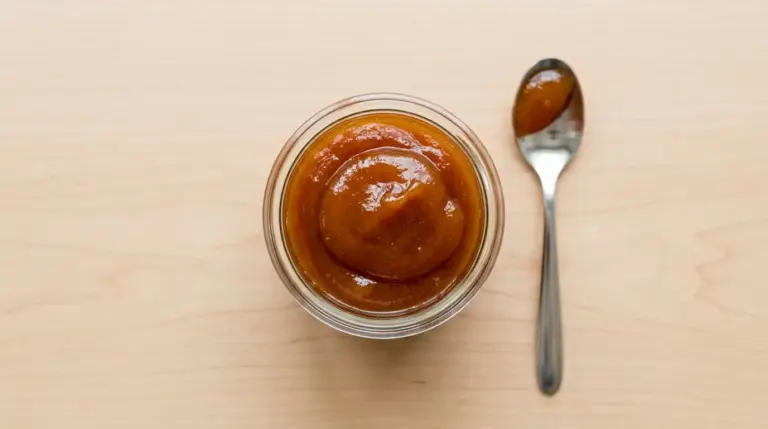
When I first attempted a rack of lamb recipe years ago, I honestly thought it was going to be one of those dishes I’d ruin and never attempt again. The price tag on a frenched rack of lamb is enough to make anyone’s hands shake a little, and I had visions of serving a gray, overcooked disaster to my in-laws on Easter Sunday.
It turned out to be the most unforgettable meal I had ever cooked in my own kitchen.
That’s the thing about rack of lamb. It looks impossibly fancy, like something reserved for Michelin-star restaurants and people who take cooking classes in Tuscany. But once you understand what the meat actually needs, it’s one of the most forgiving and rewarding things you can make.
My version uses a bold garlic and herb crust of rosemary, parsley, and Dijon mustard, a combination I landed on after too many batches with bland results. The mustard is the secret weapon, helping the herbs stick to the meat and adding a subtle, tangy depth that takes the whole dish from good to something you’ll be talking about for days.
If you’ve been putting off trying this dish, this is your sign to finally go for it.
| Quick Recipe Summary | |
|---|---|
| Prep Time | 20 minutes (plus 30 minutes resting time) |
| Cook Time | 20-25 minutes |
| Total Time | About 1 hour 15 minutes |
| Servings | 4-6 servings |
| Difficulty Level | Intermediate |
If you love elegant lamb dishes, you’ll also want to check out my Lamb Chops Recipe for another quick and stunning weeknight or special occasion option.
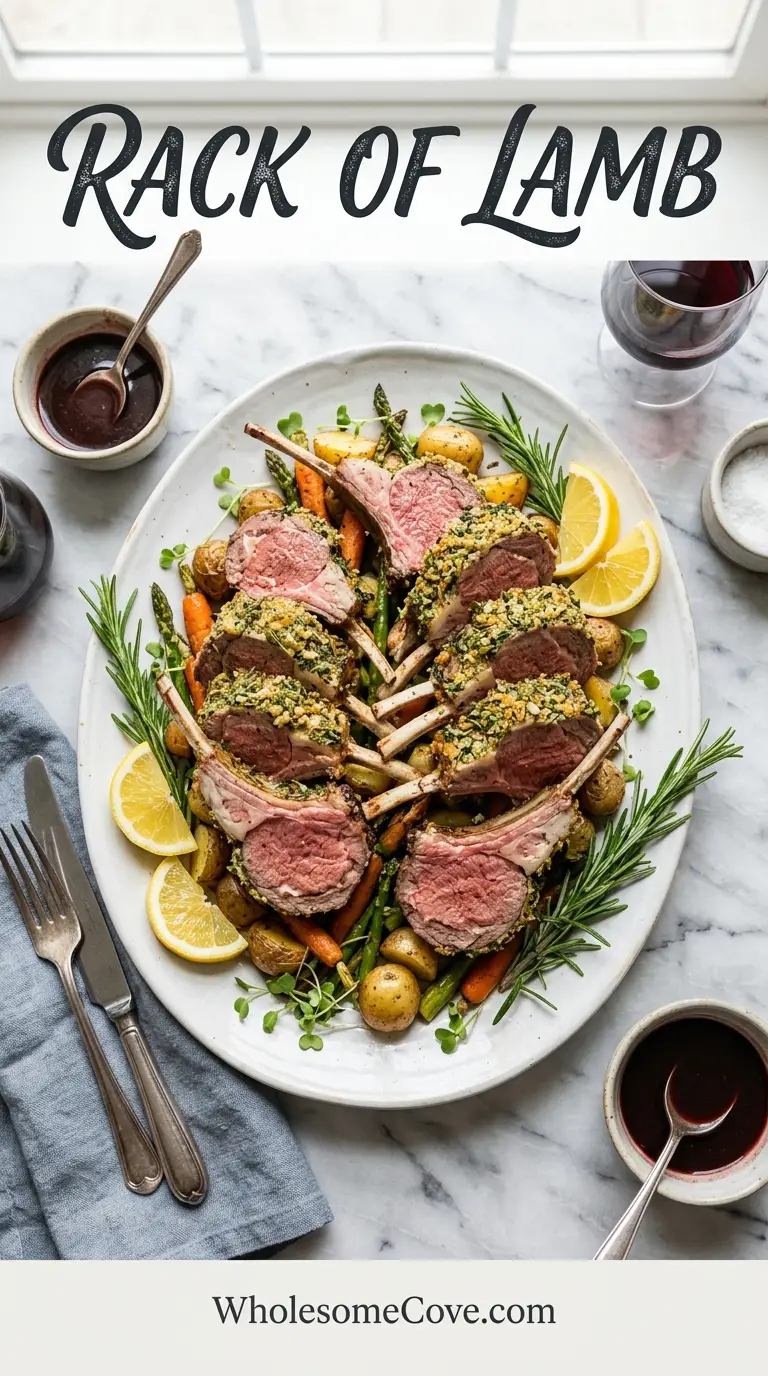
Why You’ll Love This Rack of Lamb Recipe
This dish is one of those rare recipes that genuinely looks harder than it is, and that gap between effort and impression is what makes it so exciting to make.
The herb and garlic crust bakes into a savory, aromatic shell that perfumes your entire kitchen while the lamb roasts. Every time I make it, someone walks in and immediately asks what smells so incredible.
The cook time is short. At 450°F (232°C), the rack is typically done in about 20 to 25 minutes, which means you spend more time prepping a beautiful table than hovering over a hot oven.
A frenched rack of lamb looks stunning on a platter. The exposed rib bones give it that dramatic, restaurant-worthy presentation that makes guests feel like they’re being truly spoiled.
It suits nearly every special occasion. Easter, Christmas, a birthday, an anniversary, or even a fancy Friday night dinner all work beautifully with this as the centerpiece.
The leftovers (if you have any) are remarkable. Cold sliced lamb with a smear of Dijon on crusty bread the next morning is something I secretly look forward to every single time.
You can easily scale the recipe up. One rack serves two to three people comfortably, so for a larger crowd, you simply add another rack and keep everything else the same.
Read Also: Lamb Stew Recipe
Ingredients
A good rack of lamb doesn’t need much in the way of extras. The meat itself is the star, and the goal of every ingredient here is to amplify its natural richness rather than cover it up. Whenever I’ve gone overboard with competing flavors, I’ve always wished I’d kept it simple.
- 2 frenched racks of lamb (approximately 1.5 lbs / 680g each, about 7-8 bones per rack)
- 1 teaspoon kosher salt (plus more for seasoning)
- 1/2 teaspoon freshly ground black pepper (plus more for seasoning)
- 2 tablespoons extra virgin olive oil, divided (30ml)
- 8-10 cloves garlic, peeled
- 2 tablespoons fresh rosemary leaves (about 3-4 sprigs)
- 3 tablespoons fresh flat-leaf parsley leaves
- 1 tablespoon fresh thyme leaves
- 1/4 teaspoon red pepper flakes
- 2 tablespoons Dijon mustard
- 1 tablespoon lemon zest (from 1 large lemon)
- 2 tablespoons unsalted butter (for basting, optional but highly recommended)
- 1 additional sprig of rosemary (for basting)
For the Breadcrumb Crust (Optional but Delicious):
- 1/2 cup (50g) panko breadcrumbs
- 2 tablespoons finely grated Parmesan cheese
- 1 tablespoon olive oil
You might also enjoy the bold, savory flavors in my Irish Stew Recipe for another comforting lamb-based dish.
Kitchen Equipment Needed
Having the right tools makes this recipe noticeably smoother from start to finish. I learned the hard way that trying to check doneness without an instant-read thermometer leads to guessing, and guessing leads to overcooked lamb. Don’t guess with a piece of meat this good.
- Instant-read meat thermometer: Non-negotiable for hitting the right internal temperature
- Cast iron skillet or oven-safe heavy skillet: For searing the lamb before roasting
- Rimmed baking sheet or roasting pan: For transferring the rack to the oven
- Small food processor or mini blender: To blend the garlic and herb paste together smoothly
- Wire cooling rack (optional): Elevates the lamb for even heat circulation in the oven
- Aluminum foil: For tenting the lamb during its rest and for covering the bone tips
- Sharp chef’s knife: For slicing cleanly between the ribs after resting
- Large cutting board: A sturdy surface for carving and resting the lamb
- Pastry brush: For applying the mustard and herb paste evenly
- Mixing bowls (small and medium): For combining the herb paste and optional breadcrumb crust
- Tongs: For turning and handling the rack during searing
- Paper towels: For patting the lamb dry before seasoning
Read Also: Prime Rib Recipe
Recommended Products for This Recipe
These are the items I personally use and genuinely recommend based on what has made the biggest difference in my results over the years. None of these are luxuries. They’re practical tools and ingredients that will elevate not just this dish, but everything else you make.
1. Lodge 12-Inch Cast Iron Skillet
A cast iron skillet gives you the kind of ripping-hot sear that creates a deeply browned, flavorful crust on the lamb before it ever hits the oven. I’ve tried searing on stainless steel and non-stick pans, and nothing comes close to the crust you get from cast iron. It also goes straight from stovetop to oven, which cuts down on dishes.
2. Thermapen One Instant-Read Thermometer
This is the single most important tool in any meat cook’s kitchen. Rack of lamb goes from perfect to overcooked fast, and a reliable instant-read thermometer removes all the guesswork. I’ve been using mine for years and it reads temperature in about a second.
3. Cuisinart Mini Food Processor
The garlic and herb paste comes together in seconds when you have a small food processor. Without one, you’re hand-chopping garlic and herbs, which works but takes longer and doesn’t give you as fine or as uniform a paste. I use mine constantly for sauces, dressings, and marinades.
4. Maille Old Style Whole Grain Dijon Mustard
Not all Dijon mustards are the same. Maille has a sharper, more complex flavor than budget store-brand options, and because the mustard plays such a functional and flavor role in this recipe, the quality genuinely matters. It also keeps well in the fridge for months.
5. Microplane Zester / Grater
Lemon zest brightens the herb paste and keeps the lamb from tasting too heavy. A Microplane zester gives you fine, dry zest in seconds without accidentally grating into the bitter white pith underneath. I use mine for everything from pasta to desserts.
The savory roasted flavors in this dish pair beautifully with my Shepherd’s Pie Recipe if you’re planning a full lamb-themed dinner spread.
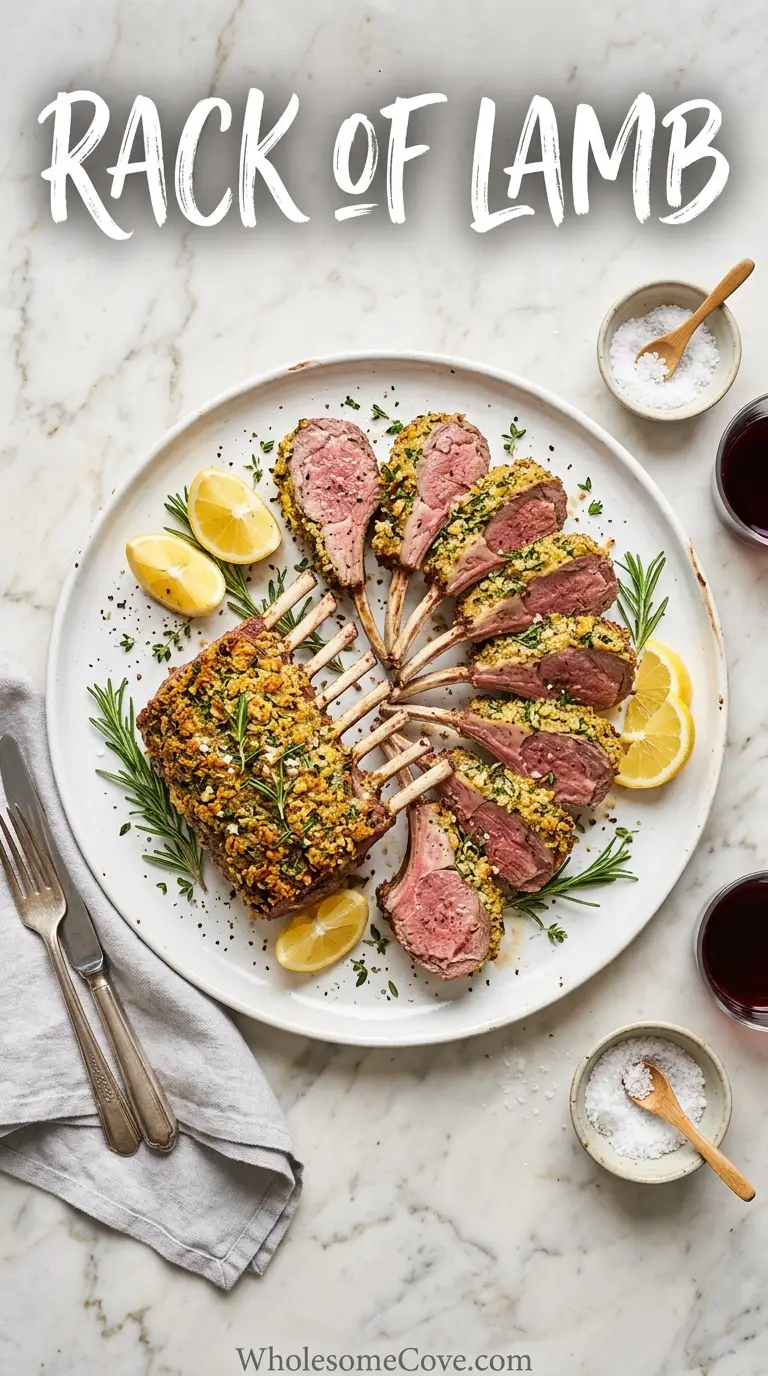
Step-by-Step Instructions: How to Make Rack of Lamb
Step 1: Bring the Lamb to Room Temperature and Prep the Bones
- Remove both racks of lamb from the refrigerator at least 30 to 45 minutes before you plan to cook. Cold meat placed directly into a hot oven cooks unevenly, with the outside overcooking before the center reaches the right temperature.
- Set the racks on a clean cutting board or plate and leave them uncovered at room temperature.
- Tear off two pieces of aluminum foil, each about 8 inches long. Wrap each piece of foil around the exposed rib bones on both racks. This prevents the delicate bones from scorching under the high oven heat and keeps the presentation clean.
- Use paper towels to pat the surface of both racks completely dry. Moisture on the surface of the meat prevents a good sear. Press the paper towels firmly against all sides and blot until the surface feels dry to the touch.
Step 2: Make the Garlic and Herb Paste
- Peel 8 to 10 cloves of garlic and drop them into the bowl of a small food processor.
- Strip the rosemary leaves from 3 to 4 sprigs (about 2 tablespoons total) and add them to the food processor.
- Add 3 tablespoons of fresh flat-leaf parsley leaves and 1 tablespoon of fresh thyme leaves to the processor.
- Add 1/4 teaspoon of red pepper flakes, the zest of 1 large lemon, and 1 tablespoon of olive oil.
- Pulse the food processor 10 to 15 times, scraping down the sides as needed, until the mixture forms a coarse paste. You want everything finely chopped and unified but not completely smooth. A little texture in the paste gives the crust more character.
- Taste a tiny bit of the paste and adjust seasoning as needed. If it feels flat, add a pinch of salt. If you want more heat, add a few more red pepper flakes.
Step 3: Season and Apply the Mustard and Herb Paste
- Season both racks generously on all sides with kosher salt and freshly ground black pepper. Press the seasoning into the surface of the meat with your hands so it adheres well.
- Using a pastry brush or the back of a spoon, apply a thin, even layer of Dijon mustard (about 1 tablespoon per rack) over the meaty fat side of each rack. The mustard acts as a binder that helps the herb paste stick during roasting and adds a subtle savory tang to the crust.
- Spoon the garlic and herb paste evenly over the mustard-coated side of each rack. Press it firmly with your fingers so it adheres in a thick, even layer. Don’t be shy here. A thicker coating means a better crust.
- If using the optional breadcrumb crust: In a small bowl, mix 1/2 cup panko breadcrumbs with 2 tablespoons grated Parmesan and 1 tablespoon olive oil. Press this mixture firmly over the herb paste on each rack. The breadcrumbs will toast in the oven and add a beautiful crunch to the exterior.
- Allow the seasoned and coated racks to rest at room temperature for an additional 15 minutes while you prepare the oven and your skillet.
Step 4: Sear the Lamb on the Stovetop
- Preheat your oven to 450°F (232°C) and position the oven rack in the upper-middle section of the oven.
- Place a large cast iron skillet or oven-safe heavy skillet over high heat on the stovetop. Allow it to heat for 2 full minutes until it is smoking hot. This is important for achieving a proper sear.
- Add 1 tablespoon of olive oil to the hot skillet and swirl to coat the bottom.
- Using tongs, carefully place the racks of lamb herb-side UP into the skillet. Sear the underside (the bone-side and the exposed meat on the ends) for about 2 to 3 minutes without moving them. You want deep golden-brown color on the seared areas.
- The herb crust side should remain facing up throughout this step. Do not press down on the crust or flip the racks onto the crust side, as this will knock the paste off.
- Once the bottom is nicely seared, remove the skillet from heat. You are now ready to transfer to the oven.
Step 5: Roast the Lamb in the Oven
- Transfer the cast iron skillet (or transfer the racks to a rimmed baking sheet if your skillet is too small) to the preheated 450°F (232°C) oven, placing the racks herb-side up and fat-side up.
- If two racks are being cooked, you can stand them upright and interlock the bones against each other in a “crown” formation, which allows air to circulate around the meat and looks stunning. Alternatively, lay them flat with the herb crust facing up.
- Roast for 20 to 25 minutes, checking the internal temperature at the 18-minute mark with your instant-read thermometer inserted into the thickest part of the meat, not touching the bone.
- Target internal temperatures: 120°F (49°C) for rare, 125-130°F (52-54°C) for medium-rare (the most popular and recommended), 135°F (57°C) for medium. Remove the lamb about 5 degrees below your target temperature, as the temperature will continue to rise during resting.
- Keep a close eye on the herb crust. If it starts to look too dark before the lamb has reached temperature, tent a loose piece of foil over the top of the rack to prevent burning.
Step 6: Optional Butter Baste
- As soon as you pull the lamb from the oven, immediately add 2 tablespoons of unsalted butter and one sprig of fresh rosemary to the hot skillet.
- The residual heat will melt the butter quickly. Tilt the pan and use a large spoon to repeatedly baste the meat with the melted, rosemary-infused butter for about 1 minute.
- This step adds an extra layer of richness and a gorgeous glossy finish to the lamb. It is completely optional but takes about 60 extra seconds and makes a noticeable difference.
Step 7: Rest, Carve, and Serve
- Transfer the racks of lamb to a large cutting board. Tent a sheet of aluminum foil loosely over the top and allow the lamb to rest for at least 10 minutes. Do not skip this step. Resting allows the juices to redistribute throughout the meat, resulting in a much juicier and more tender chop.
- After resting, remove the foil from the bones for serving.
- To carve, use a sharp chef’s knife to slice between each rib bone, cutting straight down through the meat in one smooth, confident motion. Each rack will yield 7 to 8 individual chops.
- Arrange the chops on a warmed platter or individual plates, leaning them upright with the bones crisscrossed for an elegant presentation.
- Serve immediately while the crust is still crisp and the meat is warm.
For another impressive dinner centerpiece, take a look at my Filet Mignon Recipe.
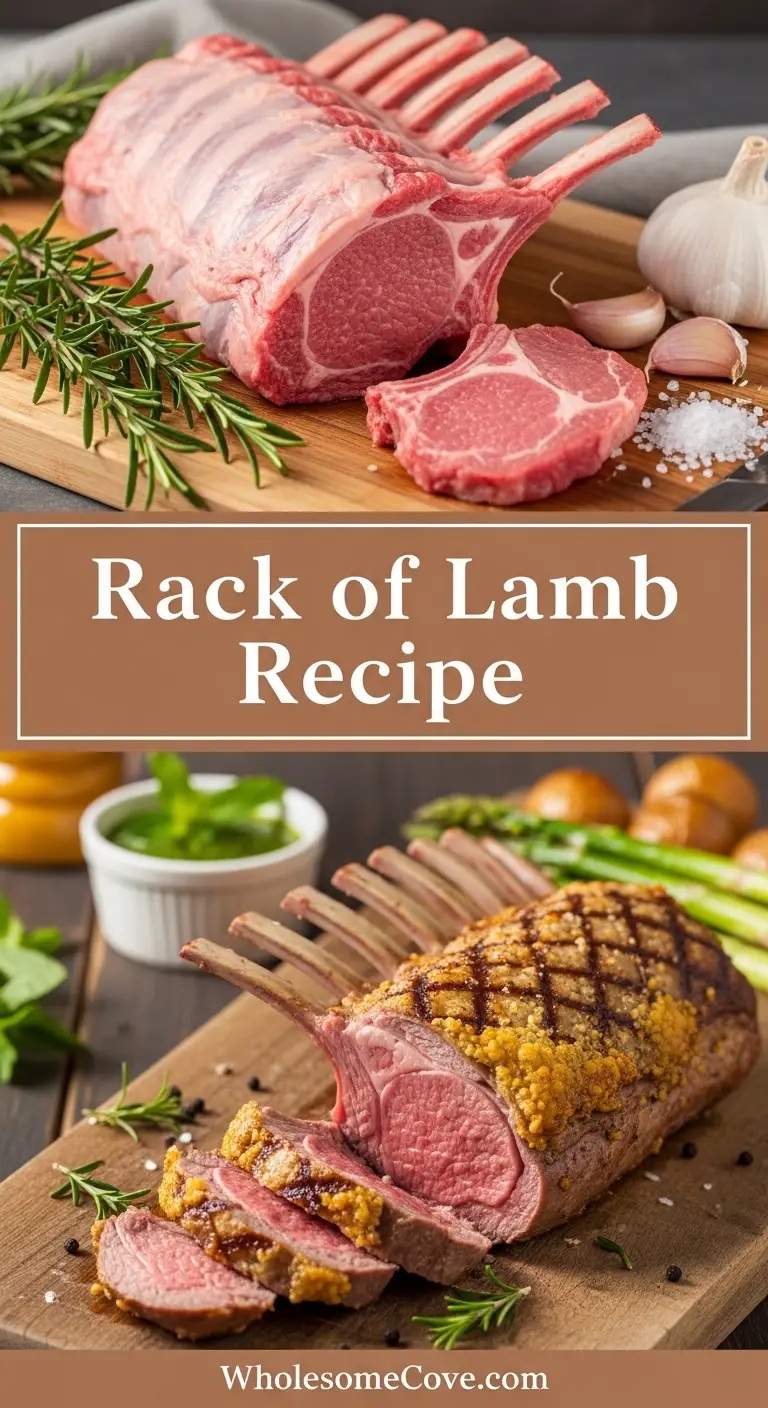
Tips for The Best Rack of Lamb
Getting a rack of lamb right comes down to understanding a few key principles and committing to them every time. These are the things I wish someone had told me before my very first attempt.
- Always buy frenched racks: Frenched means the rib bones have been cleaned of excess meat and fat, giving you the classic elegant look and easier carving. Most grocery stores and all butcher shops sell them this way. If in doubt, call ahead.
- Pat the lamb completely dry before seasoning: Moisture is the enemy of a good sear and a good crust. Use paper towels and press firmly on all sides before applying salt, pepper, or any paste.
- Don’t skip the room-temperature rest before cooking: Cold lamb placed in a hot oven cooks unevenly. Thirty to forty-five minutes on the counter makes a real difference in how evenly the meat cooks from edge to center.
- Use a meat thermometer every single time: Visual cues are not reliable for lamb, especially at these quick cook times. An instant-read thermometer is the only way to guarantee your desired doneness. Medium-rare at 125-130°F (52-54°C) is ideal.
- Pull the lamb 5 degrees below your target temperature: The internal temperature will continue to rise during the resting period. If you wait until the thermometer reads your final target, the lamb will be overcooked by the time you serve it.
- Protect the herb crust during the sear: Always sear the lamb with the herb crust facing up, not down. The crust can slide or burn if it contacts the hot skillet directly.
- Let it rest a full 10 minutes before slicing: This is one of the most skipped steps, and it’s one of the most important. A rack sliced immediately after coming out of the oven will lose most of its juices on the cutting board.
- Use fresh herbs whenever possible: Dried rosemary works in a pinch, but fresh herbs give you a brighter, more vibrant crust with noticeable flavor differences. If using dried rosemary, use about one-third the amount called for.
- Season the lamb generously: Lamb is a rich meat that can handle a bold hand with salt and pepper. Under-seasoning is the most common mistake. Don’t be timid.
- Wrap the bones in foil before roasting: The exposed bone tips can scorch under high heat. A small piece of foil wrapped around each bone prevents burning and keeps the presentation clean.
Another showstopper for dinner parties is my Beef Stew Recipe if you’re building out your repertoire of impressive mains.
What to Serve with Rack of Lamb
Rack of lamb is a rich, savory centerpiece, and the best sides balance that richness with something creamy, bright, or simply roasted. These are the pairings that have worked best for me over the years.
The classic accompaniment is a velvety smooth potato dish. Mashed Potatoes made with good butter and cream are the most traditional choice, and for good reason. The creaminess is a perfect counterpoint to the bold herb crust.
- Roasted Potatoes: Crispy on the outside and fluffy within, these are a more textured alternative to mashed and roast beautifully alongside the lamb in the same oven.
- Maple Glazed Carrots: The natural sweetness of glazed carrots plays beautifully against the savory herbed lamb and makes the plate look stunning.
- Creamed Spinach: A steakhouse classic that works equally well with lamb, especially for an elegant dinner party spread.
- Grilled Vegetable Skewers: Seasonal vegetables with a little char add color and freshness to a plate that could otherwise feel very heavy.
- Tzatziki Sauce: A cool, garlicky Greek yogurt sauce alongside the lamb is a Mediterranean combination that I find absolutely irresistible. A spoonful on the side of each plate is my favorite finishing touch.
- Roasted Sweet Potato: The caramelized sweetness of roasted sweet potato offers a lovely contrast to the herb-forward lamb.
- Green Bean Casserole: A crowd-pleasing comfort side that pairs well for holiday meals when rack of lamb is often the main event.
- Dinner Rolls: Warm, fluffy rolls for soaking up the juices and resting butter are always welcome at the table when lamb is involved.
Read Also: Au Gratin Potatoes Recipe
Variations of Rack of Lamb
The classic garlic and herb version is my go-to, but rack of lamb is an incredibly versatile canvas. Here are some of my favorite ways to change things up when I want to try something different.
- Pistachio-crusted rack of lamb: Blend 1/2 cup of shelled pistachios in a food processor until coarsely ground, then mix them into the herb paste or breadcrumb crust. The nuts add a gorgeous green color and a rich, buttery crunch that contrasts beautifully with the meat.
- Middle Eastern spiced lamb: Replace the rosemary and thyme with 1 teaspoon each of cumin, coriander, and smoked paprika, plus a pinch of cinnamon. Serve with warm pita and hummus for a completely different flavor profile that’s equally stunning.
- Mint and lemon crust: Add 3 tablespoons of fresh mint leaves to the herb paste along with extra lemon zest. Mint is the most classic pairing for lamb and brings a cool, bright note to the rich meat.
- Provençal herb crust: Replace the individual herbs with 2 tablespoons of herbes de Provence and add a splash of white wine to the paste. This gives the lamb a distinctly southern French character.
- Tandoori rack of lamb: Marinate the rack overnight in a mixture of Greek yogurt, garam masala, turmeric, cumin, and ginger. The yogurt tenderizes the meat and creates a beautifully charred coating in a hot oven or under a broiler.
- Brown butter and sage: Skip the herb paste and instead baste the seared rack repeatedly with brown butter infused with crispy fresh sage leaves. Simple, indulgent, and deeply savory.
- Dijon and breadcrumb only (no fresh herbs): For a more pantry-friendly version, spread Dijon mustard over the lamb, press on panko breadcrumbs seasoned with garlic powder, salt, and grated Parmesan, and roast as directed. It’s simpler but still produces a beautiful result.
You might also enjoy: Healthy Shepherd’s Pie
Storage and Reheating
Rack of lamb is absolutely best eaten the day it’s made, ideally within minutes of coming off the cutting board. That said, if you have leftovers, they’re genuinely wonderful and shouldn’t be wasted.
- Refrigerating: Allow the lamb to cool to room temperature before storing. Place leftover chops in an airtight container or wrap them tightly in plastic wrap and refrigerate for up to 3 days. Keep any pan juices or drippings in a separate small container and use them for reheating.
- Freezing: Rack of lamb freezes well. Wrap individual chops tightly in plastic wrap, then place them in a zip-top freezer bag with as much air removed as possible. They will keep in the freezer for up to 2 months. Thaw overnight in the refrigerator before reheating.
- Reheating in the oven (recommended): Preheat your oven to 300°F (150°C). Place the chops in a small baking dish and add a splash of water, broth, or reserved pan drippings to the bottom of the dish to create steam. Cover tightly with foil and heat for 10 to 15 minutes, or until warmed through. This method keeps the lamb from drying out.
- Reheating in a skillet: Heat a dry skillet over medium-low heat. Place the chop in the pan and cover loosely. Reheat for 2 to 3 minutes per side, being careful not to overcook. The internal temperature should reach about 110-115°F (43-46°C) for a gentle warm-up without pushing into overcooked territory.
- Serving cold: Leftover rack of lamb sliced cold and served on a charcuterie board, in a salad with arugula and lemon dressing, or on crusty bread with grainy Dijon is genuinely excellent. Don’t feel like you have to reheat it.
- Reheating in a microwave: Use the microwave only as a last resort, as it can make the lamb rubbery and uneven. If you must, use 50% power in 30-second intervals until just warmed through.
Read Also: Scalloped Potatoes Recipe
Nutritional Facts
The values below are estimates per serving, based on 4 servings from 2 full racks of lamb (2-3 chops per person). Values will vary based on the specific size of the rack and how much fat is trimmed before eating.
| Nutrient | Per Serving (Approximate) |
|---|---|
| Calories | 520-580 kcal |
| Protein | 38-42g |
| Total Fat | 38-44g |
| Saturated Fat | 14-18g |
| Cholesterol | 125-140mg |
| Carbohydrates | 4-6g (from herb paste) |
| Fiber | 0.5g |
| Sodium | 420-480mg |
| Iron | 3-4mg |
| Zinc | 5-6mg |
| Vitamin B12 | 3-4mcg |
Please note that these values are estimates only and have not been calculated by a registered dietitian. For precise nutritional information, use a dedicated nutrition calculator with the exact brands and quantities of ingredients you use.
Another impressive option for special occasion dinners is the Beef Barley Soup Recipe for a heartier cold-weather alternative.
Health Benefits of Key Ingredients
Rack of lamb gets a reputation as an indulgent dish, and it certainly is a treat. But several of its key ingredients offer real nutritional value beyond just delicious flavor.
Lamb itself is a surprisingly nutrient-dense protein that brings a range of important vitamins and minerals to the table alongside its exceptional taste.
- High-quality protein: Lamb is a complete protein source containing all essential amino acids, supporting muscle maintenance, immune function, and overall tissue repair. A single serving provides 38 to 42 grams of protein, making it highly satisfying.
- Rich in zinc: Zinc is critical for immune system function, wound healing, and healthy skin. Lamb is one of the best dietary sources of this often under-consumed mineral, with a serving providing close to 50% of the recommended daily intake.
- Excellent source of vitamin B12: Vitamin B12 supports nerve function, red blood cell production, and DNA synthesis. Lamb provides more B12 per serving than many other common proteins.
- Iron content: Lamb provides heme iron, the form most readily absorbed by the human body, making it particularly beneficial for those managing iron-deficiency anemia or looking to maintain healthy energy levels.
- Rosemary: Beyond its incredible aroma, rosemary contains compounds that have demonstrated antioxidant and anti-inflammatory properties in research. It may also support digestive comfort and cognitive function.
- Garlic: Garlic is one of the most studied food-based compounds in nutrition. It contains allicin, which has demonstrated antibacterial and immune-supporting properties, and it may help support healthy blood pressure and cholesterol levels when consumed regularly.
- Olive oil: Extra virgin olive oil provides heart-healthy monounsaturated fats and polyphenol antioxidants that are associated with reduced inflammation and cardiovascular benefits, especially when used in moderate quantities.
- Fresh herbs (parsley, thyme): Fresh parsley and thyme both contribute vitamin C, vitamin K, and various antioxidants to the dish, though in small quantities relative to a full daily serving.
- Lemon zest: The zest of lemon is concentrated in volatile oils and vitamin C, contributing both brightness and a small antioxidant boost to the herb crust without adding significant calories.
For a plant-powered side to complement this dish, my Healthy Hummus Recipe is a wonderful, nutrient-rich addition to the spread.
FAQs About Rack of Lamb
1. How long does rack of lamb take to cook?
At 450°F (232°C), a frenched rack of lamb typically takes 20 to 25 minutes to reach medium-rare (125-130°F / 52-54°C internal temperature). Smaller racks may be done closer to 18 minutes, so always use a meat thermometer rather than relying on time alone.
2. Do I need to marinate rack of lamb overnight?
You don’t need to, and in fact a long overnight marinade can slightly alter the texture of the meat. Applying the herb paste and letting the lamb rest at room temperature for 30 to 45 minutes is sufficient to get great flavor penetration. If you prefer a deeper garlic flavor, marinating for 2 to 4 hours in the fridge works well, but overnight is generally not necessary.
3. What is a “frenched” rack of lamb?
Frenching refers to the technique of cleaning the fat and meat from the rib bones, leaving them exposed and clean. It creates the classic elegant appearance of rack of lamb with its distinctive standing rib bones. Most grocery stores sell pre-frenched racks, and any butcher shop can do it on request if you’re buying from a specialty counter.
4. What is the best internal temperature for rack of lamb?
Most cooks and culinary professionals recommend serving rack of lamb at medium-rare, which is an internal temperature of 125 to 130°F (52 to 54°C) after resting. At this temperature, the meat is pink, juicy, and tender throughout. Cooking beyond 145°F (63°C) produces a drier, less tender chop that loses much of what makes lamb so special.
5. Can I cook rack of lamb in an air fryer?
Yes, it is possible to cook a single small rack of lamb in a large-capacity air fryer. Season and coat as directed, preheat the air fryer to 400°F (200°C), and cook the rack herb-side up for about 18 to 20 minutes for medium-rare. Check with a thermometer at the 15-minute mark. The results are quite good, though you won’t get the same depth from a stovetop sear first.
Read Also: Broccoli Salad Recipe
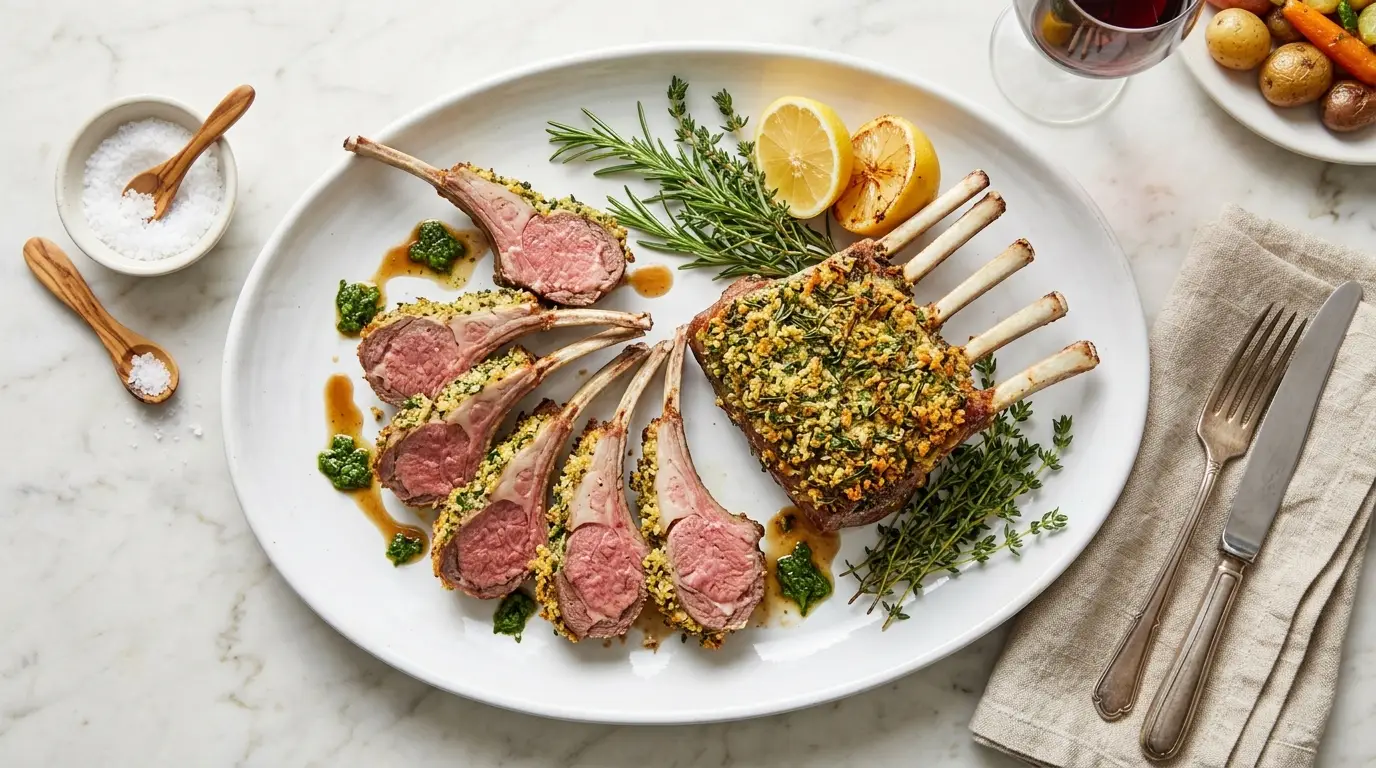
Rack of Lamb Recipe (Herb and Garlic Crusted)
Ingredients
- 2 frenched racks of lamb - approximately 1.5 lbs / 680g each, about 7-8 bones per rack
- 1 tsp kosher salt - plus more for seasoning
- 1/2 tsp freshly ground black pepper - plus more for seasoning
- 2 tbsp extra virgin olive oil - 30ml, divided
- 8 cloves garlic - up to 10 cloves, peeled
- 2 tbsp fresh rosemary leaves - from about 3-4 sprigs
- 3 tbsp fresh flat-leaf parsley leaves
- 1 tbsp fresh thyme leaves
- 1/4 tsp red pepper flakes
- 2 tbsp Dijon mustard - about 1 tablespoon per rack
- 1 tbsp lemon zest - from 1 large lemon
- 2 tbsp unsalted butter - for basting; optional but recommended
- 1 sprig fresh rosemary - for butter basting; optional
- 1/2 cup panko breadcrumbs - 50g
- 2 tbsp Parmesan cheese - finely grated
- 1 tbsp olive oil - for mixing into breadcrumb crust
Equipment
- Instant-read meat thermometer - Essential for checking internal temperature accurately
- Cast iron skillet (12-inch) - Or any oven-safe heavy skillet; used for stovetop sear and optional oven transfer
- Rimmed baking sheet or roasting pan - For transferring racks to the oven if skillet is too small
- Small food processor or mini blender - For blending the garlic and herb paste
- Wire cooling rack - (optional) Elevates lamb for even heat circulation in the oven
- Aluminum foil - For wrapping bone tips and tenting during rest
- Sharp chef’s knife - For slicing cleanly between rib bones after resting
- Large cutting board - For resting and carving the lamb
- Pastry brush - For applying mustard and herb paste evenly
- Small mixing bowl - For combining the optional breadcrumb crust
- Medium mixing bowl - For combining herb paste ingredients if not using a food processor
- Tongs - For turning and handling the rack during searing
- Paper towels - For patting the lamb completely dry before seasoning
Method
- Remove both racks from the refrigerator 30 to 45 minutes before cooking and set them on a cutting board. Wrap small pieces of aluminum foil around the exposed rib bone tips to prevent scorching, then pat all surfaces completely dry with paper towels.
- Add the peeled garlic cloves, rosemary leaves, parsley, thyme, red pepper flakes, lemon zest, and 1 tablespoon of olive oil to a small food processor and pulse 10 to 15 times until a coarse paste forms. Taste and adjust seasoning with a pinch of salt if needed.
- Season both racks generously on all sides with kosher salt and black pepper, pressing it in with your hands. Use a pastry brush to apply a thin layer of Dijon mustard over the fat side of each rack, then press the garlic herb paste firmly on top in an even, thick layer.
- If using, mix the panko breadcrumbs, grated Parmesan, and 1 tablespoon olive oil together in a small bowl. Press this mixture firmly over the herb paste on each rack to form an even outer layer.
- Preheat the oven to 450°F (232°C) with the rack in the upper-middle position. Heat a cast iron skillet over high heat for 2 minutes, add 1 tablespoon olive oil, then place the racks herb-side UP and sear the underside for 2 to 3 minutes until deeply browned.
- Transfer the skillet (or move racks to a rimmed baking sheet) to the preheated oven, herb-side up, and roast for 20 to 25 minutes. Begin checking the internal temperature at 18 minutes, aiming for 125-130°F (52-54°C) for medium-rare — remove the lamb about 5°F below your target as it will continue rising.
- Immediately after removing the lamb from the oven, add the unsalted butter and rosemary sprig to the hot skillet and let the butter melt. Tilt the pan and spoon the rosemary-infused butter over the meat repeatedly for about 1 minute.
- Transfer the racks to a cutting board, tent loosely with foil, and rest for a full 10 minutes before carving. Slice between each rib bone using a sharp chef’s knife, arrange the chops on a warmed platter, and serve immediately.
Nutrition
Notes
- Always buy frenched racks of lamb for the classic presentation and easier carving. Most grocery stores carry them pre-frenched, or ask your butcher.
- Pat the lamb completely dry with paper towels before seasoning — moisture prevents a proper sear and a crispy herb crust.
- Let the lamb rest at room temperature for 30 to 45 minutes before cooking so it cooks evenly from edge to center.
- Use an instant-read thermometer every time. Pull the lamb at 120°F (49°C) for rare, 125-130°F (52-54°C) for medium-rare, or 135°F (57°C) for medium.
- Always remove the lamb from the oven 5°F below your final target temperature, as the internal temperature continues to rise during the resting period.
- Sear the lamb with the herb crust facing UP, never down — contact with the hot skillet will knock the paste off and burn the herbs.
- Do not skip the 10-minute resting period after roasting. Slicing too soon causes the juices to run out, resulting in dry, less flavorful chops.
- Use fresh herbs whenever possible. If substituting dried rosemary, use one-third the amount called for (about 2 teaspoons).
- Leftovers keep refrigerated in an airtight container for up to 3 days. Reheat in a 300°F (150°C) oven with a splash of broth, covered tightly with foil, for 10 to 15 minutes.
- For a pistachio crust variation, blend 1/2 cup shelled pistachios and mix into the herb paste or breadcrumb crust for a nutty, vibrant finish.
Private Notes
Tried this recipe?
Let us know how it was!Final Thoughts
Rack of lamb might seem like a dish reserved for professional kitchens or the most confident home cooks, but I promise you it belongs in your regular rotation too.
With the right technique, a good thermometer, and a handful of fresh herbs, you can pull something truly remarkable from your own oven.
I hope this recipe gives you the confidence to go for it. And when you do, I’d love to hear how it turned out. Leave a comment below and let me know how you served it, any changes you made, or if your family is already requesting it for next week’s dinner.
Recommended:
- Lamb Chops Recipe
- Irish Stew Recipe
- Mashed Potatoes Recipe
- Roasted Potatoes Recipe
- Creamed Spinach Recipe
- Cranberry Sauce Recipe
- Potato Salad Recipe
- Coleslaw Recipe
- Healthy Shepherd’s Pie Recipe
- Green Bean Casserole Recipe