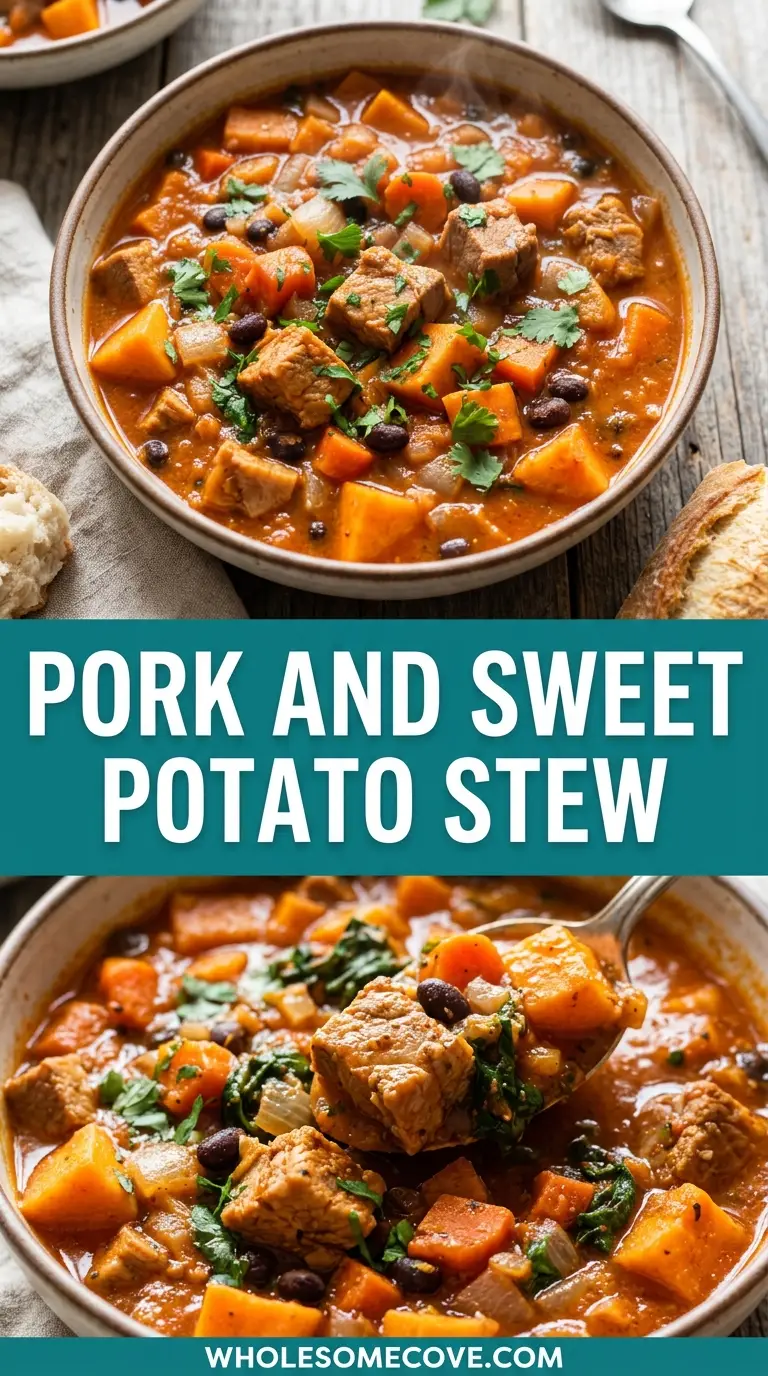
This pork and sweet potato stew recipe leans on one small timing trick. The sweet potatoes go in during the last 30 minutes, not at the start.
Add them too early and they collapse into mush, which is the complaint behind most watery versions. Late timing keeps the cubes tender and whole.
Browning 2 pounds (900 g) of pork shoulder first builds the savory base. The flour dredge adds color and quietly thickens the broth as it simmers.
Smoked paprika and tomato paste turn the broth a deep, burnished orange. The sweet potatoes soften just enough to lend body without any cream.
The whole pot comes together in just over two hours and serves six. Most of that is hands-off time while the stew simmers on its own.
It tastes even better the next day, once the spices settle in. Leftovers reheat gently with just a splash of broth.
| Quick Recipe Summary | |
|---|---|
| Prep Time | 20 minutes |
| Cook Time | 1 hour 50 minutes |
| Total Time | 2 hours 10 minutes |
| Servings | 6 servings |
| Difficulty Level | Easy |
Read Also: Classic Pork Stew
Why You’ll Love This Pork and Sweet Potato Stew Recipe
This is the kind of one-pot dinner you start on a Sunday afternoon and barely think about again until it’s ready. The payoff is a bowl of fork-tender pork in a glossy, spiced broth.
Here is what makes it worth your time:
- It uses an affordable cut. Pork shoulder is one of the cheapest cuts at the butcher, and slow simmering turns it silky.
- The broth thickens itself. Flour on the pork and starch from the sweet potatoes do the work, so there is no slurry to fuss with at the end.
- It is mostly hands-off. Active cooking runs about 30 minutes, and the rest is quiet simmering.
- The flavor is warm, not fiery. Smoked paprika, cumin, and thyme give depth that suits anyone at the table.
- It keeps beautifully. The stew holds for days in the fridge and freezes for months.
- One pot, one cleanup. Everything happens in a single Dutch oven from sear to serve.
For a hands-off version you set and forget, a slow cooker pork stew follows the same flavor path with less watching.
Ingredients
Everything here is easy to find, and most of it likely lives in your pantry already. The measurements below feed six, with both imperial and metric listed.
- 2 lbs (900 g) boneless pork shoulder, trimmed and cut into 1-inch (2.5 cm) cubes
- 2 tablespoons (16 g) all-purpose flour, for dredging
- 1 teaspoon salt, plus more to taste
- ½ teaspoon black pepper
- 2 tablespoons (30 ml) extra virgin olive oil
- 1 large yellow onion, diced
- 4 cloves garlic, minced
- 2 tablespoons (32 g) tomato paste
- 2 teaspoons smoked paprika
- 1 teaspoon ground cumin
- 1 teaspoon dried thyme
- 2 bay leaves
- 1 tablespoon (15 ml) Worcestershire sauce
- 4 cups (960 ml) low-sodium chicken broth
- 1.5 lbs (650 g) sweet potatoes (about 2 medium), peeled and cut into 1-inch (2.5 cm) cubes
- 2 tablespoons (8 g) fresh parsley, chopped, for garnish
A quick note on the broth: reach for low-sodium so you control the salt yourself, since the stew reduces and concentrates as it cooks.
Sweet potatoes do a lot of quiet work in this dish, and they shine in plenty of other recipes too. Browse more ideas in this collection of sweet potato recipes.
Kitchen Equipment Needed
You don’t need anything specialized here. A heavy pot and a sharp knife cover most of it.
- A heavy Dutch oven or stockpot with a lid, at least 5 to 6 quarts
- A sharp chef’s knife for cubing the pork and vegetables
- A sturdy cutting board
- A wooden spoon for scraping up the browned bits
- A vegetable peeler for the sweet potatoes
- A ladle for serving
- A set of measuring spoons and a liquid measuring cup
A wide, heavy base matters more than brand here, since it lets the pork brown in a single layer without steaming.
If you are weighing cookware, a classic beef stew uses the exact same pot and technique, so anything you buy earns its keep twice.
Recommended Products for This Recipe
These are the tools and ingredients I reach for when I want this stew to come out a little better. Each one solved a specific problem for me along the way.
1. Lodge Enameled Cast Iron Dutch Oven
Thin pots scorch the bottom of a stew long before the top of the liquid catches up, which leaves you stirring constantly. A heavy enameled Dutch oven holds steady low heat, so the pork simmers gently for over an hour without sticking or burning.
2. Better Than Bouillon
When I ran out of boxed broth mid-recipe, a spoonful of concentrated base stirred into water saved the pot, and honestly tasted deeper. It lets you dial the broth strength up or down without opening four cartons.
3. Microplane Zester
Mincing garlic by hand always left me with uneven bits that burned in the hot pot before the rest softened. Grating the cloves on a fine zester gives a smooth paste that melts evenly into the base.
4. Fat Separator
Pork shoulder renders a fair amount of fat, and skimming it with a spoon never got all of it. A separator pours off the excess in seconds so the finished broth stays rich without turning greasy.
For a faster weeknight route to similar flavors, an Instant Pot pork stew trims the simmer down to about an hour under pressure.
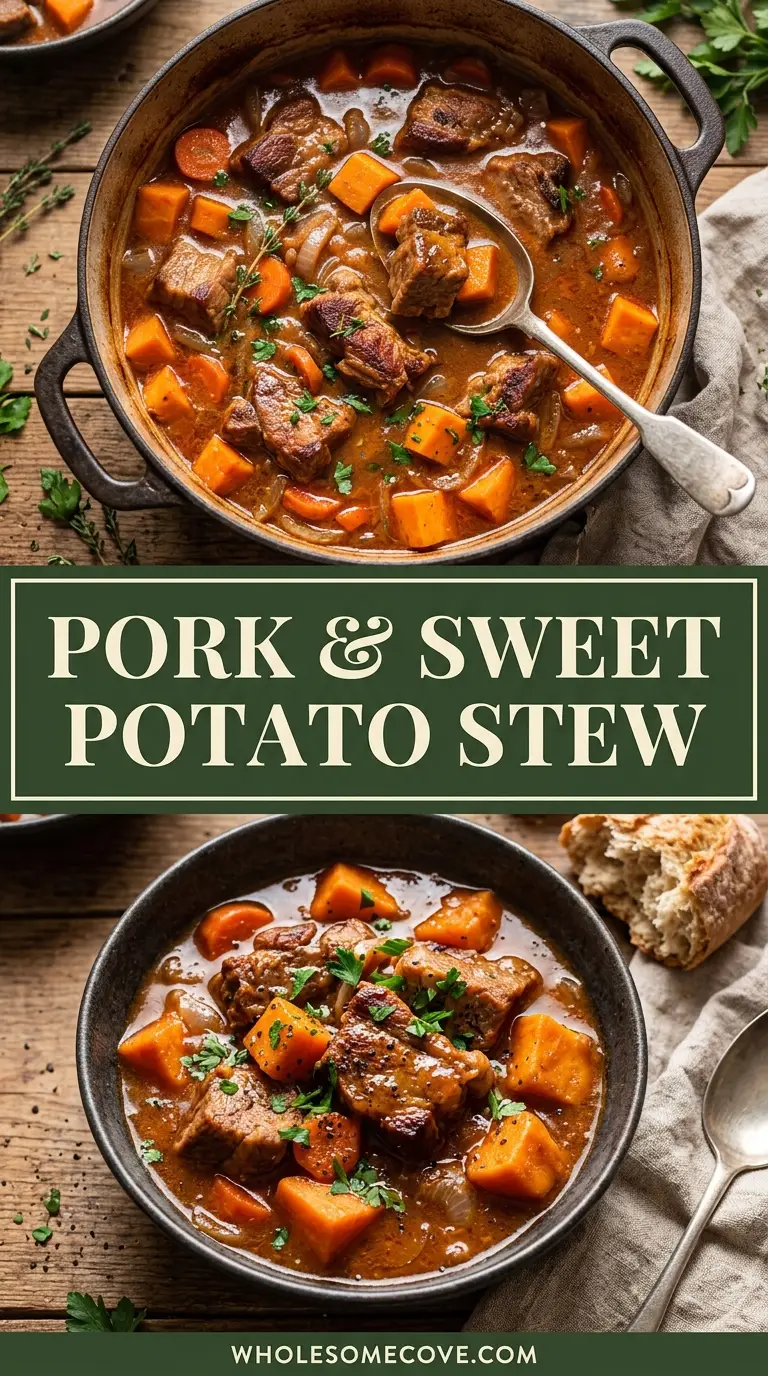
Step-by-Step Instructions: How to Make Pork and Sweet Potato Stew
Follow these steps in order and you’ll have a rich, tender stew with very little fuss.
1. Prep and dredge the pork
- Pat the pork cubes dry with paper towels, since surface moisture keeps meat from browning.
- In a bowl, toss the pork with the flour, 1 teaspoon salt, and the black pepper until every piece is lightly coated.
- Shake off any heavy excess flour so the pot doesn’t turn pasty.
2. Sear the pork in batches
- Heat the olive oil in your Dutch oven over medium-high heat until it shimmers.
- Add the pork in a single layer, working in two batches so the pieces have room.
- Let each batch brown undisturbed for 2 to 3 minutes per side, about 6 to 8 minutes total.
- Transfer the browned pork to a plate and set it aside. It will finish cooking later.
3. Soften the aromatics
- Lower the heat to medium and add the diced onion to the same pot.
- Cook for 4 to 5 minutes, stirring, until the onion turns soft and translucent.
- Add the minced garlic and cook for 1 minute more, just until fragrant.
4. Build the flavor base
- Stir in the tomato paste, smoked paprika, cumin, and dried thyme.
- Cook for about 1 minute, stirring constantly, so the paste darkens and the spices bloom.
- This short step deepens the color and removes any raw tomato edge.
5. Deglaze and add liquid
- Pour in the chicken broth and add the Worcestershire sauce and bay leaves.
- Scrape the bottom of the pot with your wooden spoon to lift every browned bit, since that is pure flavor.
- Return the seared pork and any resting juices to the pot.
6. Simmer the pork low and slow
- Bring the stew to a gentle simmer, then reduce the heat to low.
- Cover the pot, leaving the lid slightly ajar, and cook for 1 hour and 15 minutes.
- Stir occasionally and keep the simmer lazy, not a hard boil, so the pork stays tender.
7. Add the sweet potatoes
- Stir in the cubed sweet potatoes, pressing them under the liquid.
- Cover again and simmer for 30 minutes, until the pork is very tender and the sweet potatoes are soft but still hold their shape.
8. Finish and serve
- Fish out and discard the bay leaves.
- Taste and adjust with more salt and pepper as needed.
- Ladle into bowls and scatter the chopped parsley over the top.
For another cozy one-pot meal that follows the same browning-then-simmering rhythm, a crockpot beef stew is worth saving for a slower day.
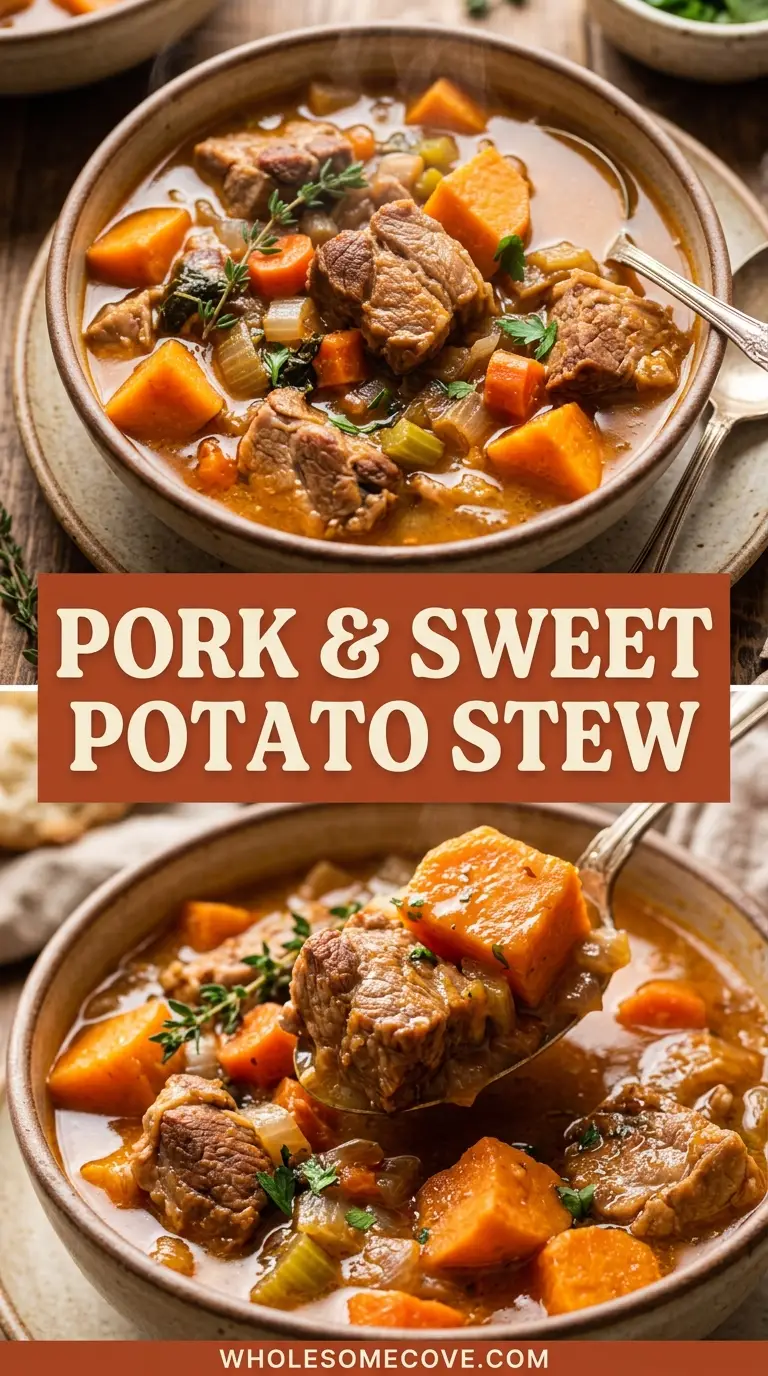
Tips for The Best Pork and Sweet Potato Stew
Small habits make the difference between a flat stew and one with real depth. These are the ones that have earned a permanent spot in how I cook this.
- Dry the pork before dredging. Wet meat steams instead of browning, and that color is where the deepest flavor comes from.
- Sear in two batches. I ruined an early batch by crowding all the pork in at once, and it went grey and watery instead of browned, so now I always split it.
- Cut the sweet potatoes a touch larger than the pork. I’ve found that bigger cubes hold their shape through the final simmer instead of dissolving before the meat is ready.
- Bloom the spices in the fat. Cooking the paprika and cumin with the tomato paste for a minute wakes them up far more than tossing them into liquid.
- Save the Worcestershire for depth. A splash near the end adds a savory backbone that does more than extra salt, so I keep the bottle right on the counter.
- Let it rest. Even 15 minutes off the heat lets the broth settle and thicken before serving.
- Taste at the very end. The broth concentrates as it reduces, so final seasoning should always come last.
You might also enjoy: Mexican Pork Stew
What to Serve with Pork and Sweet Potato Stew
This stew is filling on its own, but the right side turns it into a full spread. The broth begs for something to soak it up, and a crisp or fresh element balances the richness.
- Dinner Rolls for tearing and dunking into the broth
- Homemade Biscuits, flaky and buttery, as a classic stew partner
- Cornbread, which plays off the smoky, slightly sweet broth
- Coleslaw for a cool, crunchy contrast to the warm bowl
- Maple Glazed Carrots to echo the sweetness of the potatoes
- Roasted Brussels Sprouts with Bacon for a savory, crispy side
- Broccoli Salad when you want something fresh and make-ahead
- A simple green salad with a sharp vinaigrette to cut the richness
- A glass of medium-bodied red wine or a cold amber ale
A related recipe worth bookmarking is Irish Stew, another rib-sticking bowl built for a chilly evening.
Variations of Pork and Sweet Potato Stew
Once you have the base down, the stew bends easily to whatever you have on hand. Here are some directions worth trying.
- Spicy Southwestern: Add a minced chipotle in adobo and a cup of corn with the sweet potatoes for smoke and heat.
- Beer-braised: Swapping one cup of the broth for a bottle of amber lager gives the stew a maltier edge I like in colder months.
- Root vegetable medley: Add diced carrots, parsnips, or turnips along with the pork for more texture.
- Greens finish: Stir in a few handfuls of chopped kale or spinach in the last 5 minutes for color and a nutrition bump.
- Bean boost: Add a drained can of black beans or chickpeas with the sweet potatoes to stretch the pot further.
- Herb swap: Trade the thyme for rosemary and a bay leaf for a more woodsy, earthy profile.
- Coconut curry twist: Replace one cup of broth with coconut milk and add a spoon of curry powder for a warming, slightly sweet version.
Read Also: Green Chile Pork Stew
Storage and Reheating
Few dishes reward leftovers like a pork stew, and this one gets better after a night in the fridge. Store it properly and it stays good for a week of easy dinners.
- Refrigerate: Cool the stew completely, then store it in an airtight container for up to 4 days.
- Freeze: Pack cooled stew into freezer-safe containers or bags, leaving room for expansion, and freeze for up to 3 months.
- Thaw: Move frozen stew to the fridge overnight before reheating for the most even results.
- Reheat on the stove: Warm it gently over medium-low heat, stirring now and then, until heated through.
- Reheat in the microwave: Use 1-minute bursts, stirring between each, so it heats evenly.
- Loosen as needed: The stew thickens in the fridge, so stir in a splash of broth or water to bring it back to a pourable consistency.
- Note on texture: Sweet potatoes soften slightly after freezing, which is normal and does not affect the flavor.
For a lighter option, try: Chicken Stew
Nutritional Facts
The values below are estimates per serving, based on six servings. Actual numbers will vary with your specific ingredients and portion sizes.
| Nutrient | Amount per Serving |
|---|---|
| Calories | 385 kcal |
| Protein | 31 g |
| Carbohydrates | 24 g |
| Total Fat | 18 g |
| Saturated Fat | 5 g |
| Fiber | 4 g |
| Sugar | 7 g |
| Sodium | 480 mg |
A similar wholesome side built on the same vegetable is this roasted sweet potato, handy when you want its benefits without a full pot of stew.
Health Benefits of Key Ingredients
Beyond comfort, this stew packs in some genuinely nourishing ingredients. Here is what the main players bring to the bowl.
- Pork shoulder: A solid source of complete protein, plus B vitamins like thiamine and B12 that support energy and nerve function.
- Sweet potatoes: Loaded with beta-carotene, which the body converts to vitamin A, along with fiber and potassium.
- Onion: Contains antioxidants and prebiotic fiber that feed healthy gut bacteria.
- Garlic: Brings compounds linked to immune support and heart health.
- Tomato paste: A concentrated source of lycopene, an antioxidant more available to the body when cooked.
- Smoked paprika and cumin: Add antioxidants and warmth without any added sugar or fat.
- Fresh parsley: A small garnish that still delivers vitamin K and a hit of fresh brightness.
For another pork dish that pairs the meat with naturally sweet produce, take a look at this pork and apple skillet.
FAQs About Pork and Sweet Potato Stew
1. What is the best cut of pork for this stew?
Pork shoulder, sometimes labeled pork butt or Boston butt, is the top choice. Its marbling breaks down over a long simmer and keeps the meat tender.
Leaner cuts like loin or tenderloin tend to dry out and turn stringy during slow cooking. If you only have those on hand, cut the simmer time significantly.
2. Why did my sweet potatoes turn to mush?
The most common cause is adding them too early in the cook. They only need about 30 minutes, so they go in during the final stretch, not at the start.
Cutting them into larger cubes than the pork also helps them hold their shape. Aim for pieces around 1 inch or slightly bigger.
3. How do I thicken pork and sweet potato stew?
This recipe thickens on its own thanks to the flour on the pork and the starch from the sweet potatoes. For a thicker result, mash a few sweet potato cubes against the side of the pot and stir them in.
If you want it thicker still, whisk 1 tablespoon of cornstarch with 2 tablespoons of cold water and stir it in during the last few minutes. Let it bubble briefly to lose any raw starch taste.
4. Can I freeze this stew?
Yes, it freezes well for up to 3 months in an airtight container. Cool it completely first, then leave a little room at the top for expansion.
The sweet potatoes may soften a bit more after thawing, which is normal. Reheat gently and add a splash of broth to loosen it.
5. Can I make this in a slow cooker?
Absolutely. Sear the pork and bloom the aromatics on the stovetop first, then transfer everything except the sweet potatoes to the slow cooker.
Cook on low for 6 to 7 hours, adding the sweet potatoes in the final hour. This keeps them from overcooking while the pork gets meltingly tender.
6. My stew tastes too sweet. How do I balance it?
The sweet potatoes add natural sweetness, so a little acid brings it back into line. Stir in a splash of vinegar or a squeeze of lemon at the end.
A pinch more salt and black pepper also sharpens the savory side. Taste as you go until it feels balanced.
A related bowl built for cooler weather is this collection of fall dinner recipes, full of the same cozy spirit.
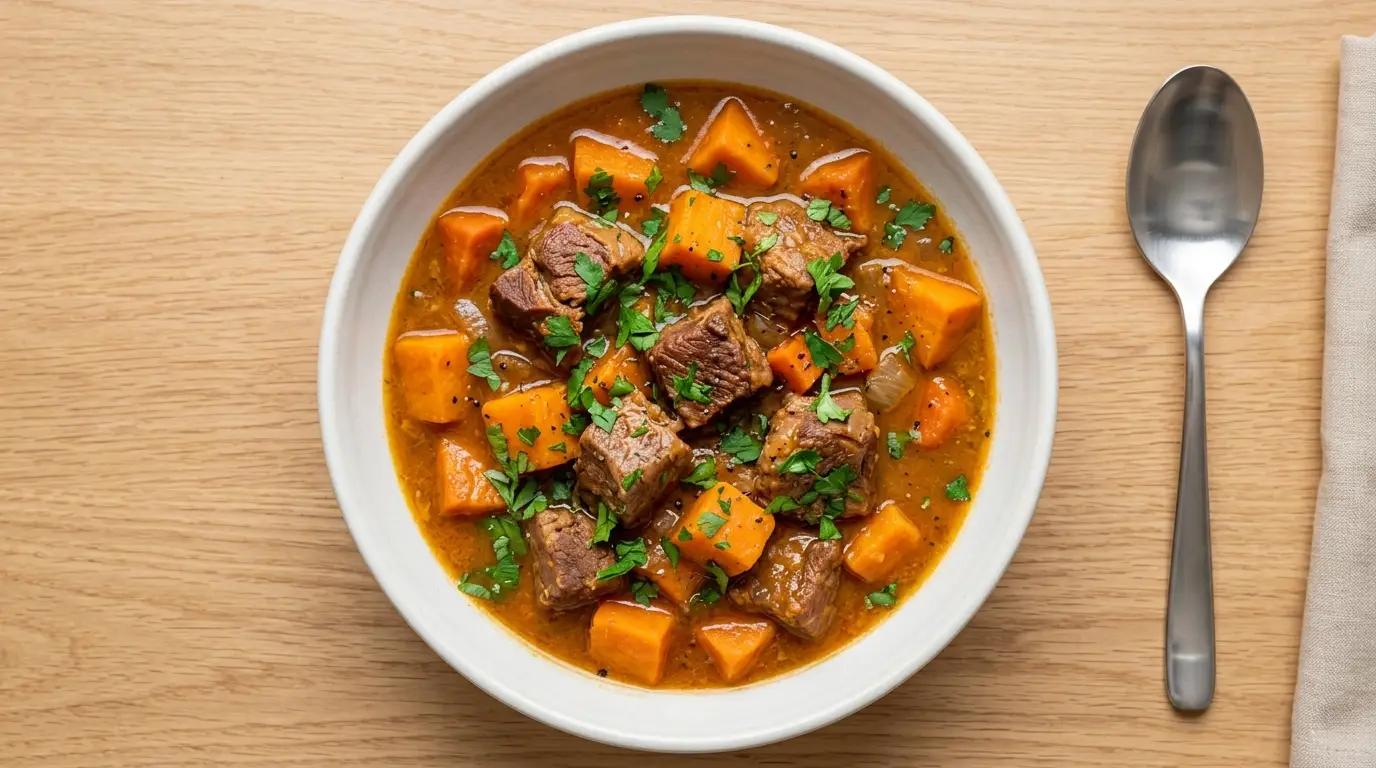
Pork and Sweet Potato Stew
Ingredients
- 2 lbs boneless pork shoulder - 900 g, trimmed and cut into 1-inch (2.5 cm) cubes
- 2 tablespoons all-purpose flour - 16 g, for dredging
- 1 teaspoon salt - plus more to taste
- ½ teaspoon black pepper
- 2 tablespoons extra virgin olive oil - 30 ml
- 1 large yellow onion - diced
- 4 cloves garlic - minced
- 2 tablespoons tomato paste - 32 g
- 2 teaspoons smoked paprika
- 1 teaspoon ground cumin
- 1 teaspoon dried thyme
- 2 bay leaves
- 1 tablespoon Worcestershire sauce - 15 ml
- 4 cups low-sodium chicken broth - 960 ml
- 1.5 lbs sweet potatoes - 650 g, about 2 medium, peeled and cut into 1-inch (2.5 cm) cubes
- 2 tablespoons fresh parsley - 8 g, chopped, for garnish
Equipment
- Heavy Dutch oven or stockpot - At least 5 to 6 quarts, with a lid
- Sharp chef’s knife - For cubing the pork and vegetables
- Sturdy cutting board
- Wooden spoon - For scraping up the browned bits
- Vegetable peeler - For the sweet potatoes
- Ladle - For serving
Method
- Pat the pork cubes dry with paper towels. In a bowl, toss the pork with the flour, 1 teaspoon salt, and the black pepper until every piece is lightly coated, then shake off any heavy excess flour.
- Heat the olive oil in your Dutch oven over medium-high heat until it shimmers. Add the pork in a single layer, working in two batches, and let each batch brown undisturbed for 2 to 3 minutes per side, about 6 to 8 minutes total. Transfer the browned pork to a plate and set it aside.
- Lower the heat to medium and add the diced onion to the same pot. Cook for 4 to 5 minutes, stirring, until the onion turns soft and translucent. Add the minced garlic and cook for 1 minute more, just until fragrant.
- Stir in the tomato paste, smoked paprika, cumin, and dried thyme. Cook for about 1 minute, stirring constantly, so the paste darkens and the spices bloom.
- Pour in the chicken broth and add the Worcestershire sauce and bay leaves. Scrape the bottom of the pot with your wooden spoon to lift every browned bit, then return the seared pork and any resting juices to the pot.
- Bring the stew to a gentle simmer, then reduce the heat to low. Cover the pot, leaving the lid slightly ajar, and cook for 1 hour and 15 minutes, stirring occasionally and keeping the simmer lazy, not a hard boil.
- Stir in the cubed sweet potatoes, pressing them under the liquid. Cover again and simmer for 30 minutes, until the pork is very tender and the sweet potatoes are soft but still hold their shape.
- Fish out and discard the bay leaves. Taste and adjust with more salt and pepper as needed. Ladle into bowls and scatter the chopped parsley over the top.
Nutrition
Notes
- Dry the pork before dredging: Wet meat steams instead of browning, and that color is where the deepest flavor comes from.
- Sear in two batches: Crowding all the pork in at once makes it go grey and watery instead of browned, so always split it.
- Cut the sweet potatoes a touch larger than the pork: Bigger cubes hold their shape through the final simmer instead of dissolving before the meat is ready.
- Bloom the spices in the fat: Cooking the paprika and cumin with the tomato paste for a minute wakes them up far more than tossing them into liquid.
- Save the Worcestershire for depth: A splash near the end adds a savory backbone that does more than extra salt.
- Let it rest: Even 15 minutes off the heat lets the broth settle and thicken before serving.
- Taste at the very end: The broth concentrates as it reduces, so final seasoning should always come last.
- Storage: Cool the stew completely, then store it in an airtight container in the refrigerator for up to 4 days.
- Freezing: Pack cooled stew into freezer-safe containers or bags, leaving room for expansion, and freeze for up to 3 months. Thaw overnight in the fridge before reheating.
- Reheating: Warm gently over medium-low heat, stirring now and then, or use 1-minute microwave bursts, stirring between each. Stir in a splash of broth or water to loosen the stew as needed.
- Slow cooker option: Sear the pork and bloom the aromatics on the stovetop first, then transfer everything except the sweet potatoes to the slow cooker. Cook on low for 6 to 7 hours, adding the sweet potatoes in the final hour.
- Thickening: This recipe thickens on its own thanks to the flour on the pork and the starch from the sweet potatoes. For a thicker result, mash a few sweet potato cubes against the side of the pot and stir them in, or whisk 1 tablespoon of cornstarch with 2 tablespoons of cold water and stir it in during the last few minutes.
Private Notes
Tried this recipe?
Let us know how it was!Final Thoughts
This is the pot I come back to when the weather turns and I want dinner to feel like a reward. Tender pork, soft sweet potatoes, and a broth that tastes like it took all day.
The best part is how forgiving it is, bending to whatever vegetables or spices you have on hand. Make it once and it quietly becomes part of your cold-weather rotation.
Give it a try this week and let the pot do most of the work for you. If you make it, drop a comment to share how it turned out, and pass the recipe along to someone who could use a warm bowl.
Recommended:
- Venison Stew
- Lamb Stew
- Cowboy Stew
- Brunswick Stew
- Sweet Potato Soup
- Apple Cider Glazed Pork Chops
- Pork Tenderloin with Roasted Root Vegetables
- Crockpot Fall Recipes
- Mashed Sweet Potato
- Baked Sweet Potato