A good Instant Pot Pork Stew Recipe turns a stubborn, well-marbled cut of pork into fork-tender chunks in about 30 minutes of pressure.
That speed is the real draw. A stovetop version would need two to three hours of low simmering.
Most pork stews fail on the cut. Lean loin or tenderloin dries out under pressure, while fatty pork shoulder breaks down into something silky.
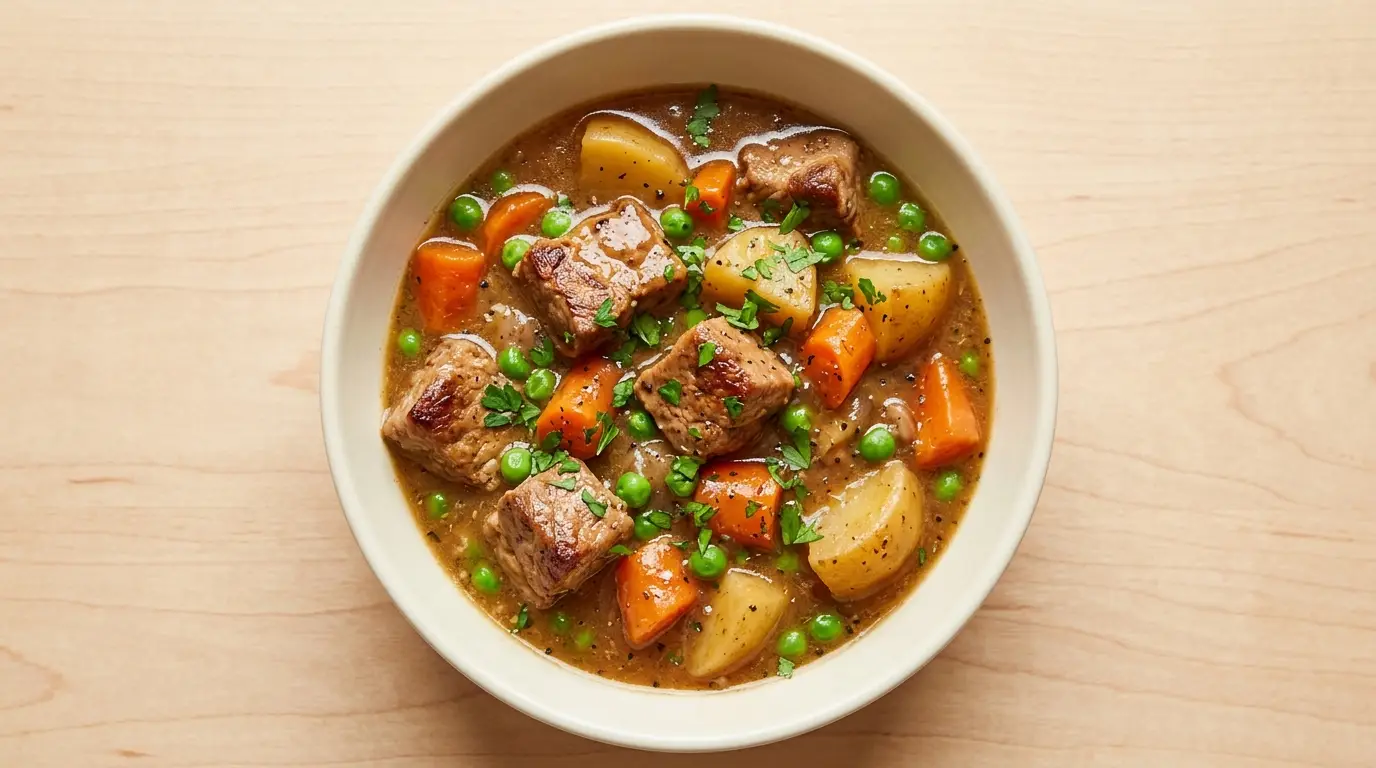
This version earns its texture two ways. A hard sear builds deep color, and starchy Yukon Gold potatoes thicken the broth without any flour.
Plan on about 1 hour and 15 minutes from start to finish. That yields 6 hearty bowls.
| Quick Recipe Summary | |
|---|---|
| Prep Time | 20 minutes |
| Cook Time | 55 minutes |
| Total Time | 1 hour 15 minutes |
| Servings | 6 servings |
| Difficulty Level | Easy |
For the traditional stovetop method this recipe is based on, see Pork Stew.

Why You’ll Love This Instant Pot Pork Stew Recipe
This is the stew you make when you want braised-all-day flavor on a Tuesday. The pressure cooker does the slow work in a fraction of the time.
- It is genuinely fast for a stew. Pork shoulder that would need hours in a Dutch oven comes out fork-tender after 30 minutes at high pressure.
- One pot does everything. You sear, saute, pressure cook, and thicken all in the same insert, so cleanup is minimal.
- The broth thickens itself. Starch from Yukon Gold potatoes gives the liquid body, and a quick cornstarch slurry at the end makes it glossy and spoon-coating.
- It is forgiving. Pork shoulder has enough fat and connective tissue that a few extra minutes of cooking will not ruin it.
- It reheats beautifully. Like most stews, the flavor deepens overnight, which makes it a strong meal-prep choice.
- It feeds a crowd affordably. Pork shoulder is one of the cheaper cuts at the butcher, and this recipe stretches 2.5 pounds into 6 full bowls.
Short on counter space? Try this hands-off version: Slow Cooker Pork Stew
Ingredients
Here is everything you need for a classic, savory pork stew. Measurements are given in both imperial and metric so the recipe works wherever you cook.
- 2 tablespoons (30 ml) olive oil
- 2.5 lbs (1.1 kg) boneless pork shoulder, trimmed and cut into 1.5-inch (4 cm) cubes
- 1 teaspoon (6 g) salt
- 0.5 teaspoon (1 g) black pepper
- 1 teaspoon (2 g) smoked paprika
- 1 large yellow onion, diced
- 3 cloves garlic, minced
- 2 stalks celery, sliced
- 3 tablespoons (45 g) tomato paste
- 2 tablespoons (30 ml) Worcestershire sauce
- 3 cups (720 ml) low-sodium beef broth
- 1 lb (450 g) Yukon Gold potatoes, cut into 1-inch (2.5 cm) chunks
- 3 medium carrots (about 250 g), sliced into rounds
- 1 teaspoon (1 g) dried thyme
- 1 teaspoon (1 g) dried rosemary
- 2 bay leaves
- 3 tablespoons (24 g) cornstarch whisked with 3 tablespoons (45 ml) cold water
- 1 cup (150 g) frozen peas
- Fresh parsley, chopped, for garnish (optional)
Read Also: Beef Stew Recipe
Kitchen Equipment Needed
You do not need much here, since the Instant Pot handles nearly every step. These are the tools that make the process smoother.
- A 6-quart Instant Pot or similar electric pressure cooker
- A sharp chef’s knife for cubing the pork and vegetables
- A sturdy cutting board
- A wooden spoon for scraping up the browned bits
- A small bowl for mixing the cornstarch slurry
- Measuring cups and spoons
- A plate or bowl to hold the seared pork
Another weeknight win for the same pot: Instant Pot Mac and Cheese
Recommended Products for This Recipe
These are the items I reach for whenever I make this stew. Each one solved a specific problem that kept showing up in testing.
1. Instant Pot Duo Plus
The 6-quart Duo Plus has a sensitive enough burn sensor that tomato paste and seared fond do not trigger the dreaded “Burn” warning the way older models did. The stainless insert also holds a hard sear better than nonstick, which is where most of this stew’s flavor comes from.
2. Better Than Bouillon Roasted Beef Base
Boxed broth can leave pork stew tasting thin, and this concentrated base fixes that without adding more liquid to thicken later. A spoonful stirred into the water gives the broth a deep, roasted backbone.
3. Silicone-Tipped Tongs
Searing pork in batches means lifting hot cubes in and out of a cramped insert, and metal tongs scratch the pot. Silicone tips grip the meat without marking the surface and handle the heat of the saute function fine.
4. Fat Separator
Pork shoulder renders a fair amount of fat, and skimming it from the surface with a spoon is slow. A fat separator pulls the grease off the top in seconds so the finished stew tastes rich rather than greasy.
For a bolder, chili-spiked take on the same cut, see Mexican Pork Stew.
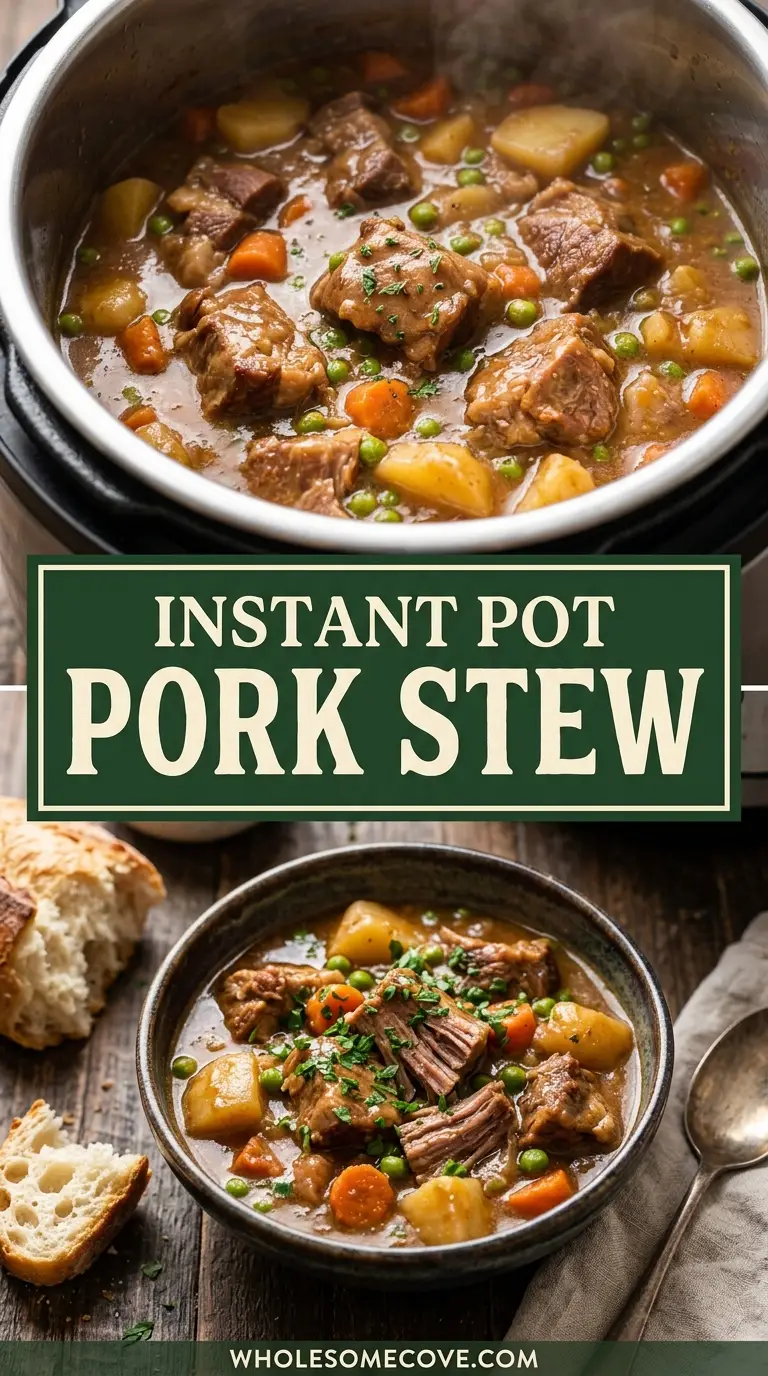
Step-by-Step Instructions: How to Make Instant Pot Pork Stew
Follow these steps in order and you will have a rich, tender pork stew ready in just over an hour.
1. Season and Sear the Pork
- Pat the pork cubes dry with paper towels, since dry meat browns far better than wet meat.
- Season the pork all over with the salt, black pepper, and smoked paprika, tossing to coat evenly.
- Press the Saute button on the Instant Pot and set it to the higher or “More” setting if your model allows it.
- Add the olive oil and let it heat until it shimmers.
- Working in two or three batches, add the pork in a single layer and sear for about 3 minutes per batch, until deeply browned on at least one side. Do not crowd the pot, or the pork will steam instead of brown.
- Transfer the seared pork to a clean plate and set aside. Leave the rendered fat and browned bits in the pot.
2. Build the Flavor Base
- Add the diced onion and sliced celery to the pot and saute for 3 to 4 minutes, stirring often, until the onion softens.
- Add the minced garlic and cook for 30 seconds, until fragrant.
- Stir in the tomato paste and cook for 1 to 2 minutes, letting it darken slightly against the bottom of the pot. This step takes the raw edge off the paste and builds a deeper color.
3. Deglaze the Pot
- Pour in the Worcestershire sauce and about half of the beef broth.
- Scrape the bottom of the insert thoroughly with a wooden spoon to lift every browned bit. This is the most important anti-burn step, since stuck-on fond is what usually trips the sensor.
- Make sure nothing is still stuck before moving on.
4. Add the Remaining Ingredients
- Return the seared pork and any juices on the plate to the pot.
- Pour in the rest of the beef broth.
- Add the potato chunks, carrot rounds, dried thyme, dried rosemary, and bay leaves.
- Stir gently so everything is submerged in the liquid. Do not stir in the cornstarch slurry or the peas yet.
5. Pressure Cook
- Lock the lid in place and set the valve to the sealing position.
- Select Manual or Pressure Cook on high pressure and set the timer for 30 minutes.
- Allow about 10 to 15 minutes for the pot to come up to pressure before the timer starts counting down.
- When the timer finishes, let the pressure release naturally for 10 minutes, then carefully switch the valve to venting to release any remaining pressure.
6. Thicken and Finish
- Open the lid, remove and discard the bay leaves, and skim off excess surface fat if needed.
- Press Saute again to bring the stew to a gentle simmer.
- Whisk the cornstarch and cold water together one more time, then stir the slurry into the simmering stew.
- Cook for 3 to 5 minutes, stirring, until the broth thickens enough to coat the back of a spoon.
- Stir in the frozen peas and cook for 2 minutes more, just until heated through.
- Turn off the pot, taste, and adjust salt and pepper. Garnish with chopped parsley before serving.
Read Also: Green Chile Pork Stew
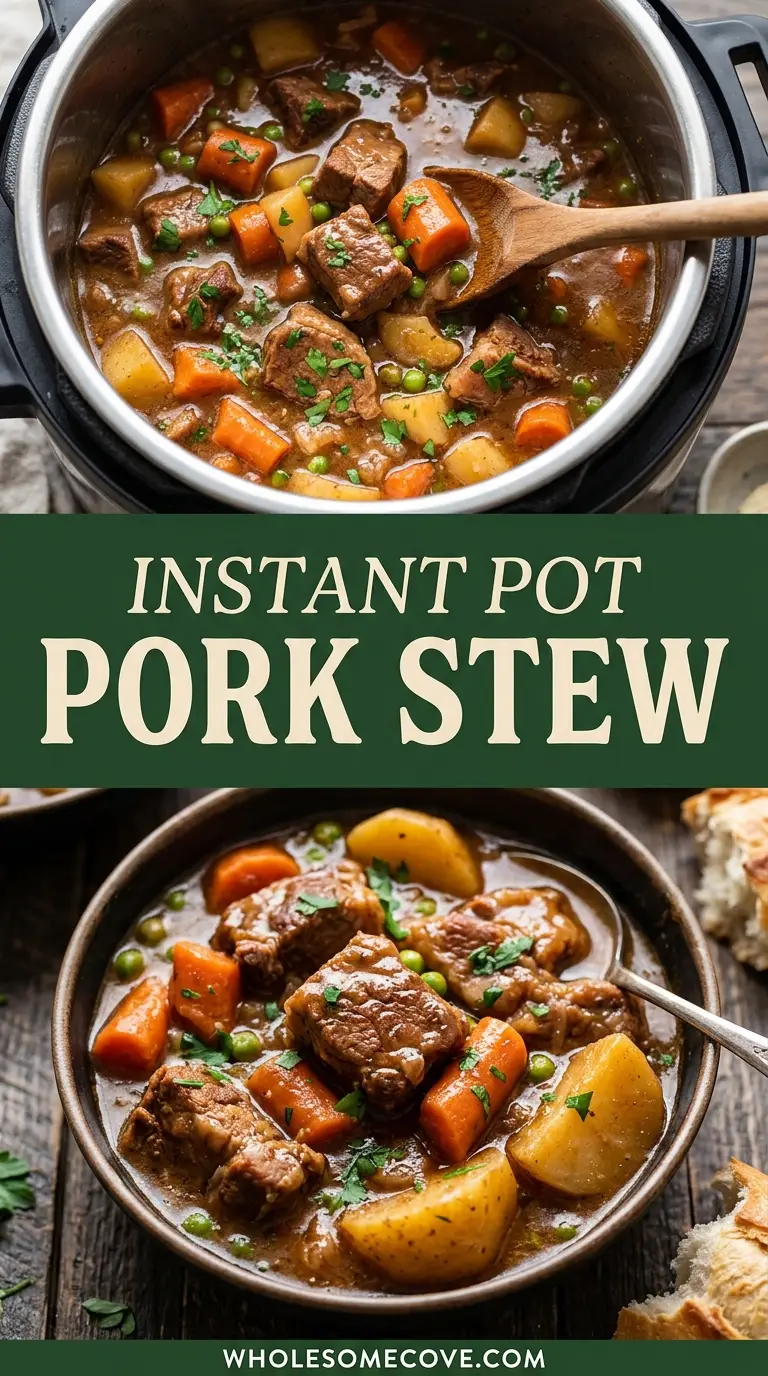
Tips for The Best Instant Pot Pork Stew
A few small habits make the difference between a watery, pale stew and a thick, deeply savory one. These are the ones worth remembering.
- Choose pork shoulder, not loin. Pork shoulder, also sold as pork butt or Boston butt, has the fat and connective tissue that turn silky under pressure. I ruined an early batch with lean loin and ended up with dry, stringy meat even though the timer was correct.
- Sear in batches and do not rush it. Crowding the pot drops the temperature and you get gray, steamed pork with no crust. The fond from a proper sear is where most of the broth’s depth comes from.
- Cut everything to size. Keep the pork at about 1.5 inches and the potatoes at about 1 inch so they finish cooking at the same time.
- Deglaze completely. I keep a flat-edged wooden spoon just for scraping the insert, because any fond left stuck to the bottom is the usual cause of a burn warning.
- Let it rest before thickening. A natural release keeps the pork juicy, since a fast release can make the meat seize up and toughen.
- Add delicate vegetables last. Peas go in at the very end so they stay bright green instead of turning to mush.
You might also enjoy: Crockpot Beef Stew
What to Serve with Instant Pot Pork Stew
This stew is a complete meal on its own, but the right side turns it into a proper spread. Most of these exist to soak up that thick, savory broth.
- Dinner Rolls for tearing and dipping into the broth
- Warm Homemade Biscuits with butter
- A scoop of Mashed Potatoes if you want to ladle the stew over the top
- Fluffy Basmati Rice to stretch the pot further
- A square of Healthy Cornbread for a slightly sweet contrast
- A crisp, tangy Coleslaw to cut the richness
- A simple green salad with a sharp vinaigrette
- A glass of medium-bodied red wine or a cold apple cider
If you want a lighter stew night in rotation, consider Chicken Stew.
Variations of Instant Pot Pork Stew
The base recipe takes well to swaps, so treat it as a template. Here are the directions I go in most often.
- Smoky and spicy. Add a diced chipotle in adobo and a teaspoon of cumin for a Southwestern lean.
- Creamy finish. Stir in a splash of heavy cream or a spoonful of sour cream after cooking for a richer broth.
- Root vegetable heavy. Swap half the potatoes for parsnips, turnips, or sweet potatoes for an earthier, slightly sweeter bowl.
- Apple and cider. Replace one cup of the broth with apple cider and add a diced apple for a cozy autumn version.
- Mushroom and wine. Saute 8 ounces of sliced cremini mushrooms with the onion and deglaze with half a cup of dry red wine.
- Green and fresh. Stir a few handfuls of baby spinach or kale in at the end until just wilted.
- Low-carb. Skip the potatoes, lean on extra carrots and celery, and thicken with a touch more cornstarch or a splash of cream instead.
Read Also: Pork and Sweet Potato Stew
Storage and Reheating
Pork stew is one of the best make-ahead dinners there is, because the flavor only improves after a night in the fridge. Store it properly and it will keep well.
- Refrigerator. Cool the stew to room temperature, then store it in an airtight container for up to 4 days.
- Freezer. Freeze in portioned containers for up to 3 months. Leave some headspace, since the liquid expands as it freezes.
- Thawing. Move frozen stew to the fridge overnight before reheating for the most even results.
- Stovetop reheating. Warm it in a saucepan over medium-low heat, stirring occasionally, adding a splash of broth if it has thickened too much.
- Instant Pot reheating. Use the Saute function on low and stir until heated through, which works well for larger batches.
- Microwave reheating. Heat single bowls in 1-minute bursts, stirring between each, until hot throughout.
For a classic cold-weather option, try: Irish Stew
Nutritional Facts
These values are estimates per serving, based on 6 servings. Actual numbers will vary with the exact cut of pork and brands you use.
| Nutrient | Amount per Serving |
|---|---|
| Calories | 420 kcal |
| Protein | 34 g |
| Total Fat | 22 g |
| Saturated Fat | 7 g |
| Carbohydrates | 24 g |
| Fiber | 4 g |
| Sugar | 5 g |
| Sodium | 620 mg |
A similar nutrient profile shows up in Lamb Stew.
Health Benefits of Key Ingredients
Beyond being comforting, this stew is built on ingredients that carry real nutritional value. Here is what the main players bring to the bowl.
- Pork shoulder is a strong source of complete protein, along with B vitamins like thiamine, niacin, and B12 that support energy metabolism.
- Carrots are rich in beta-carotene, which the body converts to vitamin A for eye and immune health.
- Potatoes provide potassium and vitamin C, plus resistant starch that supports gut health, especially once cooked and cooled.
- Onions and garlic contain sulfur compounds and prebiotic fibers linked to heart and immune support.
- Celery adds fiber and a range of antioxidants for very few calories.
- Peas contribute plant protein, fiber, and vitamin K in a small serving.
- Tomato paste is a concentrated source of lycopene, an antioxidant that becomes more available to the body when cooked.
Read Also: French Onion Beef Stew
FAQs About Instant Pot Pork Stew
1. What is the best cut of pork for stew?
Pork shoulder, also labeled pork butt or Boston butt, is the top choice. Its fat and connective tissue break down under pressure into tender, juicy meat.
Avoid lean cuts like loin or tenderloin. They tend to turn dry and tough when stewed.
2. Why is my pork still tough after pressure cooking?
Tough pork almost always comes down to the cut or the timing. A lean cut will stay tough no matter how long it cooks, while a fatty cut that is undercooked just needs more time.
If you used pork shoulder and it is still firm, simply reseal and cook for another 10 minutes. Connective tissue needs enough time to fully break down.
3. Do I really need to sear the pork first?
Searing is not strictly required, but it is worth the extra 10 minutes. The browned crust creates fond, which gives the broth most of its deep, savory flavor.
If you skip it, the stew will still taste good. It will just be lighter and less complex.
4. How do I thicken pork stew in the Instant Pot?
The easiest method is a cornstarch slurry stirred in at the end on the Saute setting. Equal parts cornstarch and cold water whisked smooth, then simmered for a few minutes, will thicken the broth noticeably.
The starchy potatoes also release body as they cook. For an even thicker stew, mash a few of the cooked potato chunks against the side of the pot.
5. Can I use frozen pork?
You can, though searing becomes impossible and the flavor suffers slightly. If using frozen pork, skip the sear and add about 5 minutes to the cook time.
For the best texture and taste, thaw the pork fully first. That lets you brown it properly.
6. Can I make this recipe without an Instant Pot?
Yes, the same ingredients work on the stovetop or in a slow cooker. On the stovetop, simmer covered for 2 to 3 hours until the pork is tender.
In a slow cooker, cook on low for 7 to 8 hours. You may want to brown the pork in a skillet first either way.
For another crowd-sized pot of comfort, see: Brunswick Stew
Instant Pot Pork Stew
Ingredients
- 2 tablespoons olive oil - 30 ml
- 2.5 lbs boneless pork shoulder - 1.1 kg, trimmed and cut into 1.5-inch (4 cm) cubes
- 1 teaspoon salt - 6 g
- 0.5 teaspoon black pepper - 1 g
- 1 teaspoon smoked paprika - 2 g
- 1 large yellow onion - diced
- 3 cloves garlic - minced
- 2 stalks celery - sliced
- 3 tablespoons tomato paste - 45 g
- 2 tablespoons Worcestershire sauce - 30 ml
- 3 cups low-sodium beef broth - 720 ml
- 1 lb Yukon Gold potatoes - 450 g, cut into 1-inch (2.5 cm) chunks
- 3 medium carrots - about 250 g, sliced into rounds
- 1 teaspoon dried thyme - 1 g
- 1 teaspoon dried rosemary - 1 g
- 2 bay leaves
- 3 tablespoons cornstarch - 24 g, whisked with 3 tablespoons (45 ml) cold water
- 1 cup frozen peas - 150 g
- fresh parsley - chopped, for garnish (optional)
Equipment
- 6-Quart Instant Pot - or similar electric pressure cooker
- Chef’s knife - for cubing the pork and vegetables
- Wooden spoon - for scraping up the browned bits
- Small bowl - for mixing the cornstarch slurry
- Plate or bowl - to hold the seared pork
- Silicone-tipped tongs - (optional) for lifting hot pork cubes in and out of the insert
- Fat separator - (optional) for skimming rendered fat from the surface
Method
- Pat the pork cubes dry with paper towels, then season all over with salt, black pepper, and smoked paprika. Press Saute on the Instant Pot set to More, add olive oil, and sear the pork in two or three batches in a single layer for about 3 minutes per batch until deeply browned. Transfer the seared pork to a plate and set aside, leaving the rendered fat and browned bits in the pot.
- Add the diced onion and sliced celery to the pot and saute for 3 to 4 minutes until the onion softens, stirring often. Add the minced garlic and cook for 30 seconds until fragrant, then stir in the tomato paste and cook for 1 to 2 minutes, letting it darken slightly against the bottom of the pot.
- Pour in the Worcestershire sauce and about half of the beef broth. Scrape the bottom of the insert thoroughly with a wooden spoon to lift every browned bit, making sure nothing is still stuck before moving on.
- Return the seared pork and any juices on the plate to the pot, then pour in the rest of the beef broth. Add the potato chunks, carrot rounds, dried thyme, dried rosemary, and bay leaves, and stir gently so everything is submerged. Do not stir in the cornstarch slurry or the peas yet.
- Lock the lid in place and set the valve to sealing. Select Manual or Pressure Cook on high pressure and set the timer for 30 minutes. Allow about 10 to 15 minutes for the pot to come up to pressure, then when the timer finishes, let the pressure release naturally for 10 minutes before carefully switching the valve to venting to release any remaining pressure.
- Open the lid, remove and discard the bay leaves, and skim off excess surface fat if needed. Press Saute again to bring the stew to a gentle simmer, whisk the cornstarch and cold water together one more time, then stir the slurry into the simmering stew. Cook for 3 to 5 minutes, stirring, until the broth thickens enough to coat the back of a spoon, then stir in the frozen peas and cook for 2 minutes more until heated through. Turn off the pot, taste, and adjust salt and pepper, and garnish with chopped parsley before serving.
Nutrition
Notes
- Choose pork shoulder, not loin. Pork shoulder, also sold as pork butt or Boston butt, has the fat and connective tissue that turn silky under pressure. Lean loin or tenderloin will turn out dry and stringy even with correct timing.
- Sear in batches and do not rush it. Crowding the pot drops the temperature and you get gray, steamed pork with no crust. The fond from a proper sear is where most of the broth’s depth comes from.
- Cut everything to size. Keep the pork at about 1.5 inches and the potatoes at about 1 inch so they finish cooking at the same time.
- Deglaze completely. Any fond left stuck to the bottom of the insert is the usual cause of a burn warning. Scrape thoroughly with a flat-edged wooden spoon before pressure cooking.
- Let it rest before thickening. A 10-minute natural release keeps the pork juicy, since a fast release can make the meat seize up and toughen.
- Add delicate vegetables last. Peas go in at the very end so they stay bright green instead of turning to mush.
- Storage: Cool the stew to room temperature, then store in an airtight container in the refrigerator for up to 4 days. Freeze in portioned containers for up to 3 months, leaving headspace since the liquid expands.
- Reheating: Thaw frozen stew in the fridge overnight. Warm on the stovetop over medium-low heat or use the Instant Pot Saute function on low, adding a splash of broth if it has thickened too much. Single bowls can be microwaved in 1-minute bursts, stirring between each.
- Variations: Add a diced chipotle in adobo and a teaspoon of cumin for a smoky, spicy version; stir in heavy cream or sour cream for a creamy finish; swap half the potatoes for parsnips, turnips, or sweet potatoes; replace one cup of broth with apple cider and add a diced apple; saute sliced cremini mushrooms with the onion and deglaze with dry red wine; stir in baby spinach or kale at the end; or skip the potatoes and thicken with extra cornstarch or a splash of cream for a low-carb version.
- Make-ahead: The flavor deepens overnight, making this a strong meal-prep choice. Make it up to 4 days ahead and reheat gently before serving.
Private Notes
Tried this recipe?
Let us know how it was!Final Thoughts
This is the kind of dinner that makes the Instant Pot feel worth the counter space. Tender pork, soft vegetables, and a glossy broth, all from one pot in just over an hour.
Once you have made it a couple of times, the swaps in the variations section are where the fun starts. It is hard to go wrong with a cut this forgiving.
Give this pork stew a try on your next cozy night in. I would love to hear how it turned out for you.
If you make it, leave a comment below and share it with a friend who could use an easy weeknight win.
Recommended:
- Venison Stew
- Cowboy Stew
- Seafood Stew
- Kimchi Stew
- Instant Pot Potato Soup
- Slow Cooker Pot Roast
- Mississippi Pot Roast
- Beef Tips and Gravy
- Roasted Potatoes