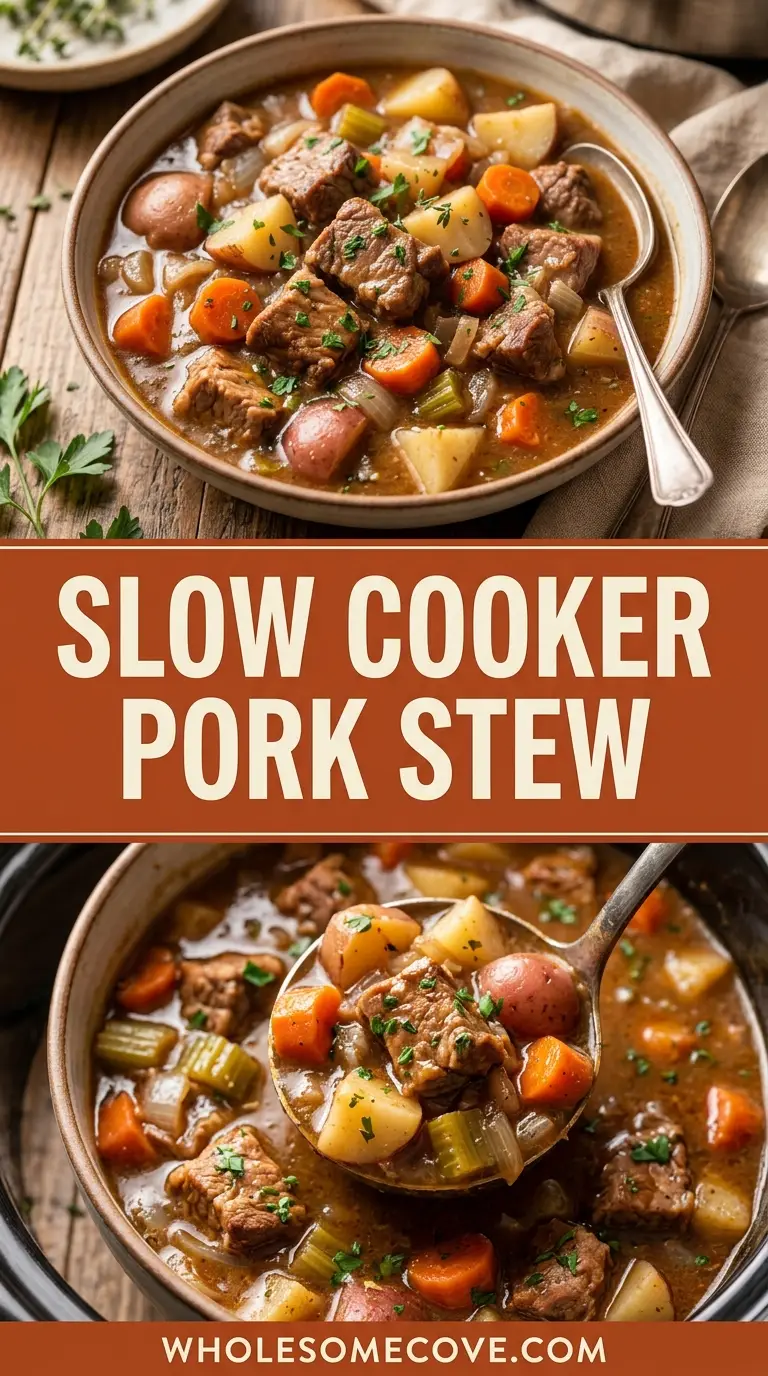
This slow cooker pork stew recipe turns an inexpensive cut of pork shoulder into fork-tender chunks swimming in a thick, glossy gravy. The long, gentle braise breaks down the connective tissue that makes shoulder so cheap, leaving meat you can pull apart with a spoon.
Most stews go wrong at the very first step. Cooks tip raw pork straight into the pot and skip the sear, which is why so many crockpot versions come out pale and one-note.
Browning the meat first builds the deep, savory base this recipe leans on. That single ten-minute step is the line between flat broth and rich broth.
You need about 25 minutes of hands-on work, and then the slow cooker handles the next eight hours on its own. The result feeds six, with Yukon gold potatoes, carrots, and celery in every bowl.
| Quick Recipe Summary | |
|---|---|
| Prep Time | 25 minutes |
| Cook Time | 8 hours 20 minutes |
| Total Time | 8 hours 45 minutes |
| Servings | 6 |
| Difficulty Level | Easy |
For a version that follows the same method without the appliance, see Pork Stew.
Why You’ll Love This Slow Cooker Pork Stew Recipe
This is the kind of dinner that cooks itself while you do everything else. A little prep in the morning gives you a hot, finished meal by evening with almost no effort in between.
Here is what makes it worth putting on your rotation:
- It uses a budget cut. Pork shoulder is one of the cheapest cuts at the counter, and the slow cooker turns its toughness into an advantage.
- The texture is right. Yukon gold potatoes and carrots stay in defined chunks instead of falling apart after hours in the pot.
- The broth has real depth. Searing the pork, browning tomato paste, and a splash of Worcestershire give the gravy a savory backbone.
- It reheats beautifully. Like most stews, it tastes even better the next day once the flavors settle.
- It scales and freezes well. Double the batch and you have make-ahead lunches for a week or two.
- Cleanup is minimal. One skillet for searing and one crock, and that is the whole sink.
You might also enjoy: Instant Pot Pork Stew
Ingredients
Everything here is standard grocery-store fare, and most of it is pantry staples you likely already keep on hand. The pork and the root vegetables do the heavy lifting, while the seasonings round out the broth.
- 2.5 lbs (1.13 kg) boneless pork shoulder, cut into 1.5-inch cubes
- 3 tbsp all-purpose flour, for dredging the pork
- 1 tsp salt
- 0.5 tsp black pepper
- 2 tbsp olive oil, for searing
- 1 large yellow onion, diced
- 4 cloves garlic, minced
- 3 tbsp tomato paste
- 4 cups (960 ml) beef broth (chicken broth works too)
- 2 tbsp Worcestershire sauce
- 1 tsp smoked paprika
- 1 tsp dried thyme
- 2 bay leaves
- 1.5 lbs (680 g) Yukon gold potatoes, cut into 1-inch chunks
- 4 medium carrots (about 1 lb / 450 g), sliced into thick coins
- 2 celery stalks, sliced
- 1 cup (150 g) frozen peas
- 2 tbsp cornstarch mixed with 2 tbsp cold water
- Fresh parsley, chopped, for garnish
I keep a jar of beef base in the fridge specifically for this recipe, because a spoonful stirred into water gives a deeper color and rounder flavor than boxed broth without watering down the pot.
Read Also: Beef Stew
Kitchen Equipment Needed
You do not need much beyond your slow cooker and a good skillet. A separate pan for searing is the one tool people are tempted to skip, and it is the one you should not.
- Slow cooker (6-quart or larger is ideal for this volume)
- Cast iron skillet, for searing the pork and browning the aromatics
- Cutting board
- Chef’s knife
- Wooden spoon, for scraping up the browned bits
- Ladle, for serving
- Small bowl, for mixing the cornstarch slurry
- Measuring cups and spoons
For a similar make-ahead method, try: Crockpot Beef Stew
Recommended Products for This Recipe
These are the specific tools and ingredients I reach for when I make this stew, chosen because each one fixed a problem I ran into along the way. None of them are required, but they make the process smoother and the result more consistent.
1. Crock-Pot 7-Quart Programmable Slow Cooker
A programmable model matters here because eight hours is a long time to guess at. This one switches to a keep-warm setting automatically when the timer ends, so the stew holds at serving temperature instead of overcooking if you get home late.
2. Lodge Cast Iron Skillet
A thin nonstick pan cannot get hot enough to build a real crust on the pork, which is where most of the flavor comes from. Cast iron holds high heat through batch after batch, so the last cubes brown as well as the first.
3. Better Than Bouillon Beef Base
Boxed broth is fine, but a concentrated base lets you dial the strength up or down without adding volume. It is what gives the gravy that dark, roasted color you expect from a long-simmered stew.
4. OXO Good Grips Ladle
A deep, well-balanced ladle scoops meat, vegetables, and broth in one pass without dribbling down the side of the pot. It is a small thing that makes serving a chunky stew far less messy.
For another slow-simmered main worth keeping in your back pocket, see Slow Cooker Pot Roast.
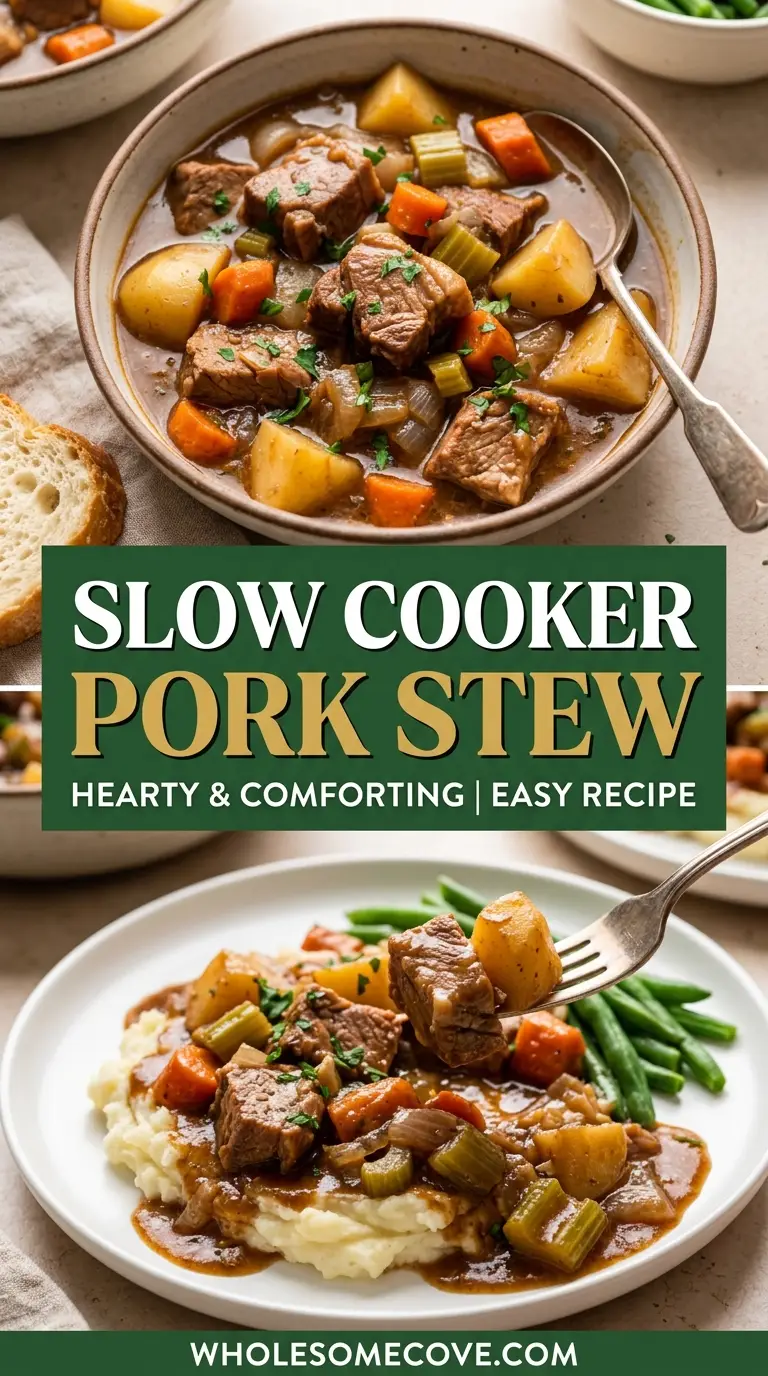
Step-by-Step Instructions: How to Make Slow Cooker Pork Stew
Follow these steps in order and you will have a rich, tender pork stew waiting for you at the end of the day.
Step 1: Season and Sear the Pork
- Pat the pork cubes dry with paper towels so they brown instead of steam.
- Add the flour, salt, and black pepper to a large bowl or zip-top bag, then toss the pork until every piece is lightly coated.
- Heat the olive oil in your cast iron skillet over medium-high heat until it shimmers.
- Working in batches, add the pork in a single layer and let it sear undisturbed for about 2 minutes per side, until deeply browned on all sides. Do not crowd the pan.
- Transfer each finished batch straight into the slow cooker.
Skipping the sear is the single biggest reason pork stew tastes washed out. I tried it once to save ten minutes, and the whole pot came out gray and flat by comparison.
Step 2: Build the Flavor Base
- Lower the heat to medium and add the diced onion to the same skillet, using the leftover fat and browned bits.
- Cook the onion for 4 to 5 minutes, stirring often, until soft and translucent.
- Stir in the minced garlic and the tomato paste, and cook for 1 to 2 minutes until the paste darkens slightly and smells toasty.
- Pour in about 1 cup of the beef broth to deglaze, scraping the bottom of the pan with a wooden spoon to lift every browned bit.
- Pour this mixture into the slow cooker over the pork.
Step 3: Add the Broth, Seasonings, and Vegetables
- Add the remaining beef broth, Worcestershire sauce, smoked paprika, dried thyme, and bay leaves to the slow cooker.
- Add the potato chunks, carrot coins, and sliced celery.
- Stir everything gently so the pork and vegetables are evenly distributed and mostly submerged in the liquid.
Step 4: Slow Cook Until Tender
- Cover the slow cooker with the lid.
- Cook on LOW for 8 hours, or on HIGH for 4 hours, until the pork is fork-tender and the vegetables are soft.
- Resist the urge to lift the lid during cooking, since each peek releases heat and adds time.
Step 5: Thicken, Add Peas, and Finish
- In a small bowl, whisk the cornstarch with 2 tablespoons of cold water until smooth with no lumps.
- Remove and discard the bay leaves.
- Stir the cornstarch slurry into the stew, then scatter in the frozen peas.
- Cover and cook on HIGH for a final 15 to 20 minutes, until the broth thickens to a gravy consistency and the peas are heated through.
- Taste and adjust with more salt and pepper if needed, then garnish each bowl with chopped parsley.
Adding the peas at the very end keeps them bright green and firm, since stirring them in early leaves them dull and mushy after hours in the heat.
Read Also: Chicken Stew
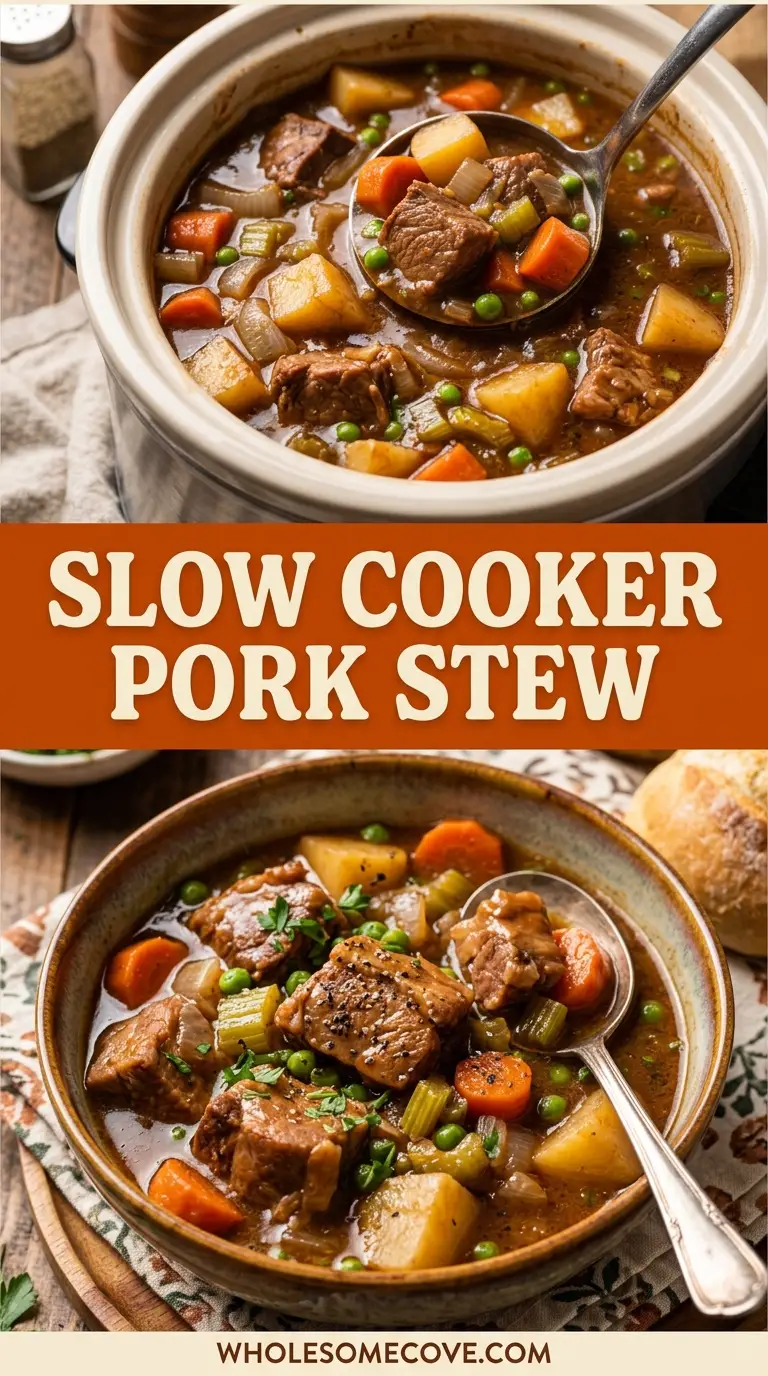
Tips for The Best Slow Cooker Pork Stew
Small choices along the way make the difference between a good pot and a great one. These are the ones that consistently pay off.
- Cut the pork evenly. Uniform 1.5-inch cubes cook at the same rate, so you avoid a mix of dry and underdone pieces.
- Brown in batches. A crowded pan traps steam and prevents a crust, so give each batch room even if it takes a few extra minutes.
- Choose waxy potatoes. I’ve found Yukon golds hold their shape far better than russets, which tend to dissolve into the broth after seven or eight hours.
- Cut carrots thick. Thin slices turn to mush over a long cook, while thick coins keep a pleasant bite.
- Do not skip the deglaze. The browned bits stuck to the skillet are pure flavor, and a splash of broth lifts them right into the pot.
- Layer dense vegetables at the bottom. Potatoes and carrots cook faster when they sit closest to the heating element.
- Adjust the thickness to taste. For a thicker stew, mash a few of the cooked potato chunks against the side of the crock before serving.
- Salt at the end. Broth reduces and concentrates over hours, so wait until the finish to correct the seasoning.
For a bolder, spicier option, try: Mexican Pork Stew
What to Serve with Slow Cooker Pork Stew
This stew is hearty enough to stand alone, but a starchy side to soak up the gravy takes it from a bowl to a full spread. Choose something that can carry that rich broth without competing with it.
- Mashed Potatoes for spooning the stew right over the top
- Dinner Rolls for wiping the bowl clean
- Homemade Biscuits, warm and flaky, on the side
- Roasted Potatoes if you want extra texture
- Basmati Rice to stretch the stew further
- Cornbread for a slightly sweet contrast
- A crisp Coleslaw to cut through the richness
- A simple green salad with a sharp vinaigrette
- A glass of dry red wine or a cold amber ale
A similar approach works in Green Chile Pork Stew.
Variations of Slow Cooker Pork Stew
Once you have the base method down, the stew bends easily to whatever you have on hand or are in the mood for. Here are the swaps worth trying.
- Sweet potato version: Replace half the Yukon golds with sweet potatoes for a sweeter, earthier bowl.
- Root vegetable medley: Add parsnips, turnips, or rutabaga alongside the carrots for more variety.
- Red wine braise: Swap 1 cup of the broth for dry red wine to deepen the gravy.
- Herb-forward: Add a sprig of fresh rosemary and a few thyme stems tied in a bundle for easy removal.
- Spicy kick: Stir in a diced chipotle in adobo or a pinch of cayenne for heat.
- Creamy finish: Swirl in a splash of heavy cream or a dollop of Dijon mustard at the end.
- Mushroom addition: Add sliced cremini mushrooms with the vegetables for an extra savory note.
- Bean boost: Add a can of drained cannellini beans in the last hour for more heft.
Read Also: Pork and Sweet Potato Stew
Storage and Reheating
Pork stew is a strong make-ahead candidate, and the flavor genuinely improves after a night in the fridge. Store and reheat it with a little care and it will taste nearly as good as day one.
- Refrigerate: Cool the stew, then store it in an airtight container for up to 4 days.
- Freeze: Ladle cooled stew into freezer-safe containers or bags, leaving headroom for expansion, and freeze for up to 3 months.
- Thaw: Move frozen stew to the fridge overnight before reheating for the best texture.
- Reheat on the stovetop: Warm gently over medium-low heat, stirring occasionally, until heated through.
- Reheat in the microwave: Use 50 percent power in short bursts, stirring between each, to avoid overcooking the pork.
- Loosen if needed: Add a splash of broth or water when reheating, since the gravy thickens as it sits.
- A freezing note: Potatoes can soften more after freezing, so if you plan to freeze the whole batch, slightly undercook them going in.
For a classic alternative, try: Irish Stew
Nutritional Facts
Values below are estimates for one of six servings and will vary with your exact ingredients and portion size.
| Nutrient | Amount per Serving |
|---|---|
| Calories | 410 kcal |
| Protein | 36 g |
| Carbohydrates | 28 g |
| Fat | 17 g |
| Saturated Fat | 5 g |
| Fiber | 5 g |
| Sugar | 6 g |
| Sodium | 780 mg |
Another option worth trying is Lamb Stew.
Health Benefits of Key Ingredients
Beyond being comfort food, this stew is built on whole ingredients that bring real nutritional value. Here is what the main players contribute to the bowl.
- Pork shoulder: A strong source of complete protein along with B vitamins like thiamine, which supports energy metabolism.
- Carrots: Rich in beta-carotene, which the body converts to vitamin A for eye and immune health.
- Potatoes: Provide potassium and vitamin C, plus resistant starch when cooled that supports gut health.
- Onion and garlic: Contain sulfur compounds and antioxidants linked to heart health and immune support.
- Celery: Adds fiber and water with very few calories, along with vitamin K.
- Peas: Deliver plant protein, fiber, and vitamin C in a small, sweet package.
- Tomato paste: A concentrated source of lycopene, an antioxidant that becomes more available when cooked.
Read Also: Mississippi Pot Roast
FAQs About Slow Cooker Pork Stew
1. Do I really need to sear the pork first?
You can skip it, but you will notice the difference. Searing creates browned, caramelized surfaces that dissolve into the broth and give the stew its deep, savory flavor.
If you are truly short on time, brown at least half the pork. Even a partial sear adds more character than none at all.
2. What is the best cut of pork for stew?
Pork shoulder, also sold as pork butt or Boston butt, is the top choice. Its marbling and connective tissue break down over hours of slow cooking into tender, juicy meat.
Leaner cuts like tenderloin dry out and turn stringy over a long cook. Save those for quicker, high-heat methods instead.
3. Can I cook this on high instead of low?
Yes, cook it on HIGH for about 4 hours in place of 8 hours on LOW. The pork will still turn tender within that window.
That said, LOW gives the connective tissue more time to melt. If your schedule allows, the longer, gentler cook produces a slightly silkier result.
4. Why is my stew watery, and how do I fix it?
Slow cookers trap moisture, so stews often finish thinner than stovetop versions. The cornstarch slurry stirred in at the end is the simplest fix.
You can also mash a few cooked potatoes against the side of the crock. Their starch thickens the broth naturally without changing the flavor.
5. Can I add other vegetables?
Absolutely, this stew is forgiving. Parsnips, turnips, mushrooms, and green beans all work well alongside or in place of the standard vegetables.
Just match the cut size to the cooking time. Hardy roots go in at the start, while quick-cooking additions like peas or green beans belong in the final stretch.
6. Can I make this ahead of time?
Yes, and many cooks think it tastes better the next day. The flavors continue to meld overnight in the fridge.
Store it airtight for up to 4 days, or freeze for up to 3 months. Reheat gently and loosen with a splash of broth if it has thickened too much.
You might also enjoy: Apple Cider Glazed Pork Chops
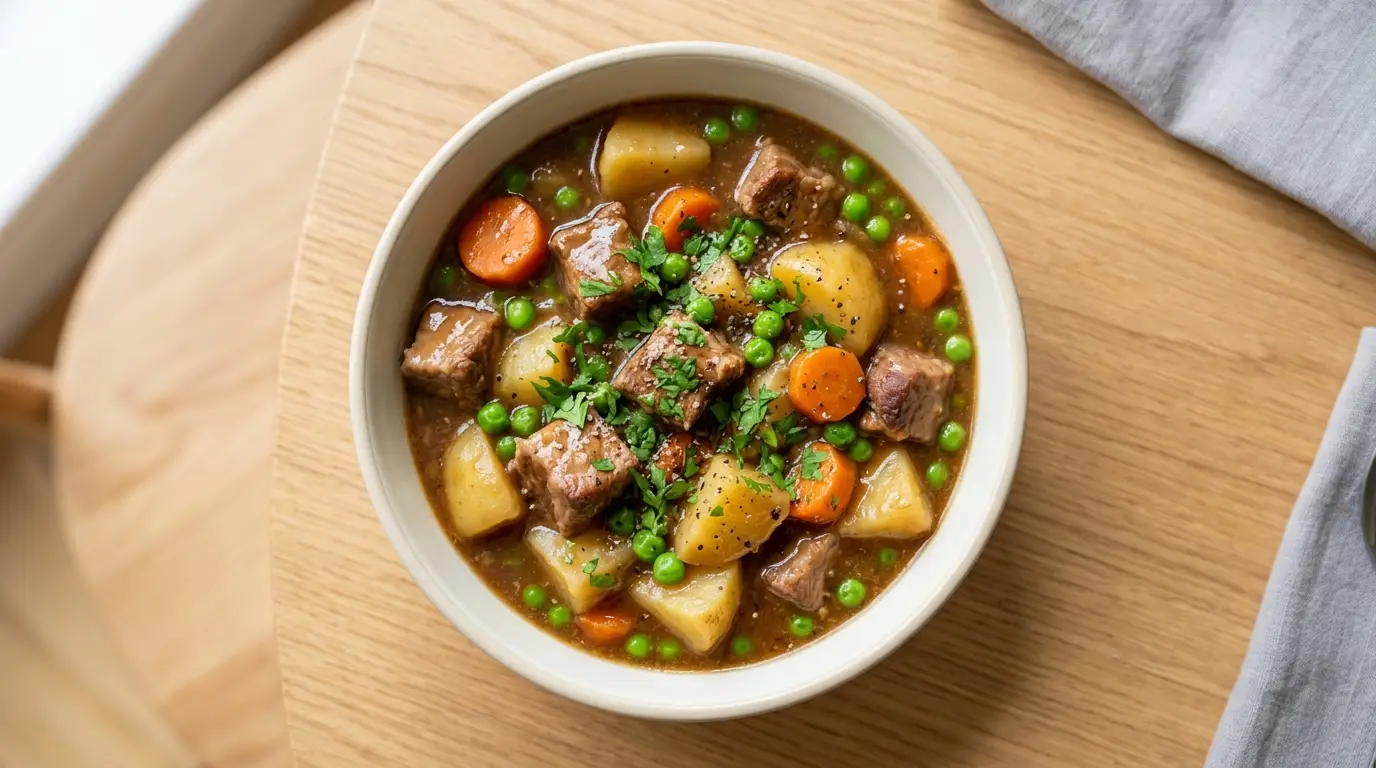
Slow Cooker Pork Stew
Ingredients
- 2.5 lbs boneless pork shoulder - 1.13 kg, cut into 1.5-inch cubes
- 3 tbsp all-purpose flour - for dredging the pork
- 1 tsp salt
- 0.5 tsp black pepper
- 2 tbsp olive oil - for searing
- 1 large yellow onion - diced
- 4 cloves garlic - minced
- 3 tbsp tomato paste
- 4 cups beef broth - 960 ml; chicken broth works too
- 2 tbsp Worcestershire sauce
- 1 tsp smoked paprika
- 1 tsp dried thyme
- 2 bay leaves
- 1.5 lbs Yukon gold potatoes - 680 g, cut into 1-inch chunks
- 4 medium carrots - about 1 lb / 450 g, sliced into thick coins
- 2 stalks celery - sliced
- 1 cup frozen peas - 150 g
- 2 tbsp cornstarch - mixed with 2 tbsp cold water
- Fresh parsley - chopped, for garnish
Equipment
- Slow cooker - 6-quart or larger is ideal for this volume
- Cast iron skillet - For searing the pork and browning the aromatics
- Wooden spoon - For scraping up the browned bits
- Ladle - For serving
- Small bowl - For mixing the cornstarch slurry
Method
- Pat the pork cubes dry with paper towels. Add the flour, salt, and black pepper to a large bowl or zip-top bag, then toss the pork until every piece is lightly coated.
- Heat the olive oil in a cast iron skillet over medium-high heat until it shimmers. Working in batches, sear the pork in a single layer for about 2 minutes per side until deeply browned, then transfer to the slow cooker.
- Lower the heat to medium and add the diced onion to the same skillet. Cook for 4 to 5 minutes until soft and translucent, then stir in the garlic and tomato paste and cook for 1 to 2 minutes until darkened and toasty.
- Pour in about 1 cup of the beef broth to deglaze, scraping the bottom of the pan with a wooden spoon to lift every browned bit. Pour this mixture into the slow cooker over the pork.
- Add the remaining beef broth, Worcestershire sauce, smoked paprika, dried thyme, and bay leaves to the slow cooker. Add the potato chunks, carrot coins, and sliced celery, then stir gently so everything is evenly distributed and mostly submerged.
- Cover the slow cooker with the lid and cook on LOW for 8 hours, or on HIGH for 4 hours, until the pork is fork-tender and the vegetables are soft. Resist the urge to lift the lid during cooking.
- In a small bowl, whisk the cornstarch with 2 tablespoons of cold water until smooth with no lumps. Remove and discard the bay leaves.
- Stir the cornstarch slurry into the stew, then scatter in the frozen peas. Cover and cook on HIGH for a final 15 to 20 minutes, until the broth thickens to a gravy consistency and the peas are heated through.
- Taste and adjust with more salt and pepper if needed, then garnish each bowl with chopped parsley.
Nutrition
Notes
- Do not skip the sear: Browning the pork first builds the deep, savory base this recipe leans on. That single ten-minute step is the line between flat broth and rich broth.
- Cut the pork evenly: Uniform 1.5-inch cubes cook at the same rate, so you avoid a mix of dry and underdone pieces.
- Brown in batches: A crowded pan traps steam and prevents a crust, so give each batch room even if it takes a few extra minutes.
- Choose waxy potatoes: Yukon golds hold their shape far better than russets, which tend to dissolve into the broth after seven or eight hours.
- Cut carrots thick: Thin slices turn to mush over a long cook, while thick coins keep a pleasant bite.
- Layer dense vegetables at the bottom: Potatoes and carrots cook faster when they sit closest to the heating element.
- Adjust the thickness to taste: For a thicker stew, mash a few of the cooked potato chunks against the side of the crock before serving.
- Salt at the end: Broth reduces and concentrates over hours, so wait until the finish to correct the seasoning.
- Storage: Refrigerate in an airtight container for up to 4 days, or freeze for up to 3 months. Thaw overnight in the fridge before reheating. Add a splash of broth or water when reheating, since the gravy thickens as it sits.
- Freezing note: Potatoes can soften more after freezing, so if you plan to freeze the whole batch, slightly undercook them going in.
- Make-ahead: Many cooks think it tastes better the next day once the flavors settle. It is a strong make-ahead candidate for lunches or easy dinners.
Private Notes
Tried this recipe?
Let us know how it was!Final Thoughts
There is a quiet satisfaction in walking into a kitchen that already smells like dinner. This stew rewards a few minutes of morning prep with a rich, comforting pot you did almost nothing to earn.
Give it a spot on your next cold-weather week and let the slow cooker do the work. It is the kind of meal that turns an ordinary evening into a warm one.
If you make it, I would love to hear how it turned out. Leave a comment with your favorite variation, and share it with anyone who could use an easy dinner.
Recommended:
- Seafood Stew
- Venison Stew
- Cowboy Stew
- Brunswick Stew
- Lamb Shank
- Pork Tenderloin with Roasted Root Vegetables
- Pork Chop Supreme
- Slow Cooker Chili
- Beef Barley Soup
- Oyster Stew