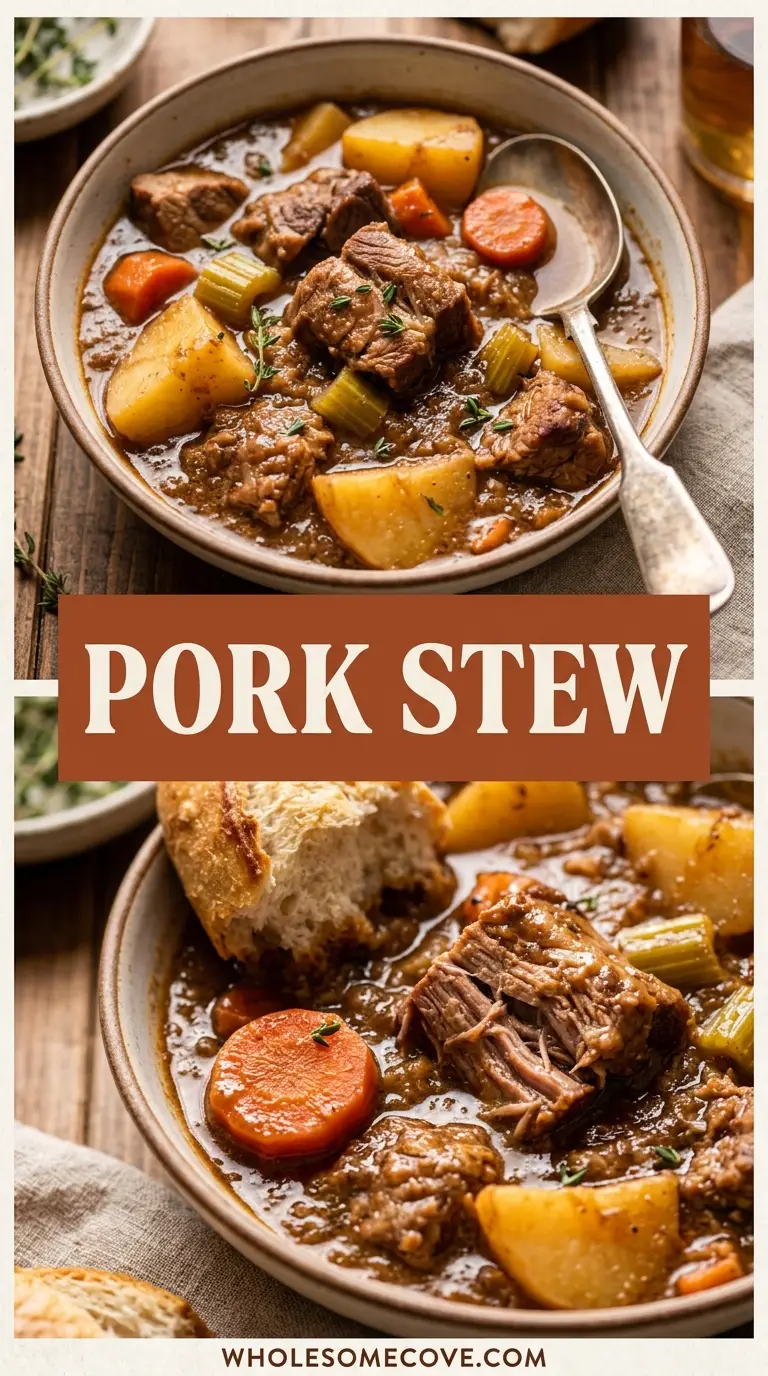
The difference between a pork stew that falls apart on the fork and one that turns dry and stringy comes down to a single choice at the meat counter. Reach for well-marbled pork shoulder, not lean loin, and the rest of this pork stew recipe practically takes care of itself.
Most rushed versions go wrong because they use lean cuts that dry out over a long simmer. Shoulder is the opposite, growing softer and richer the longer it cooks.
Two other moves do the heavy lifting here. Dredging the pork in seasoned flour before searing builds the body of the gravy from the very first step, and darkening the tomato paste in the pot for a couple of minutes adds a deep, savory backbone.
This is the classic braised style with carrots, celery, onion, and Yukon Gold potatoes in a thick beef-broth base. Expect about 2½ pounds (1.1 kg) of pork and roughly two hours from cutting board to bowl, most of it hands-off.
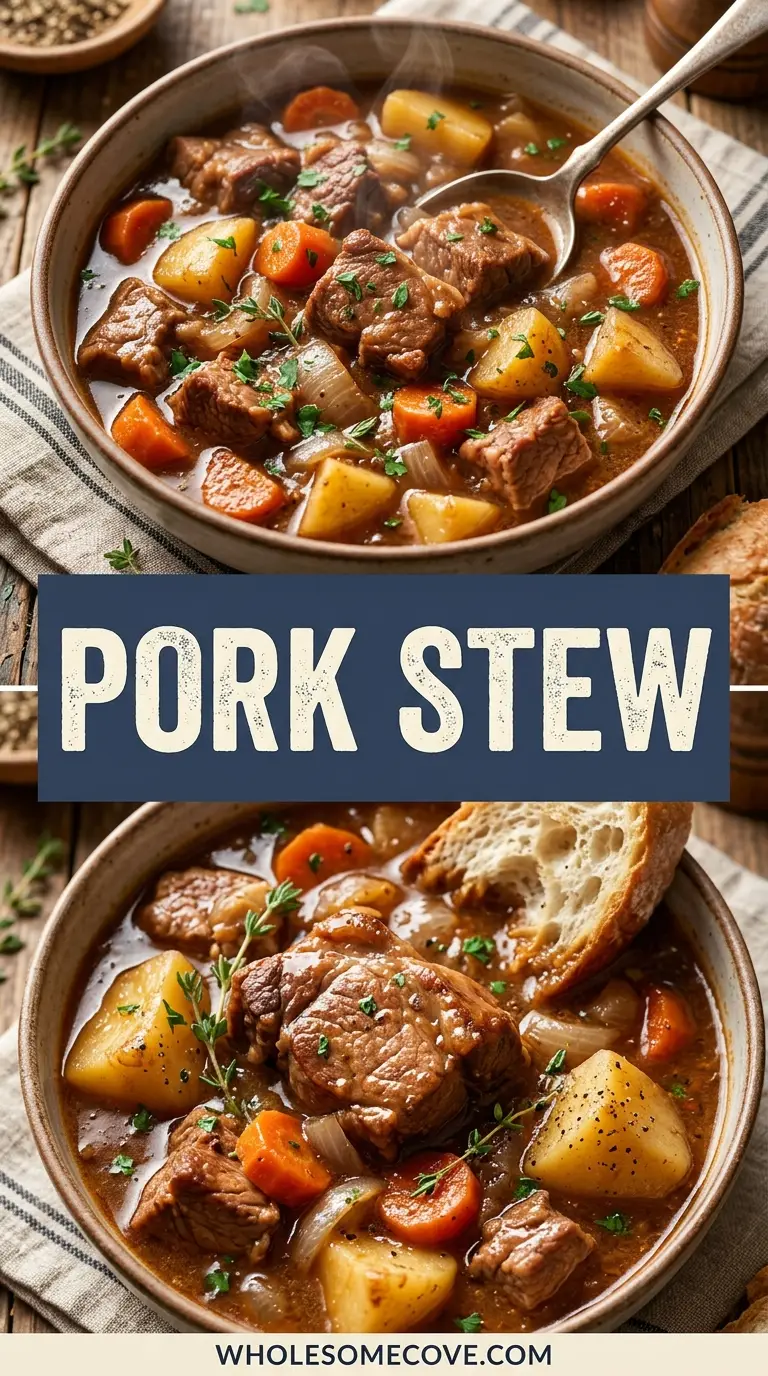
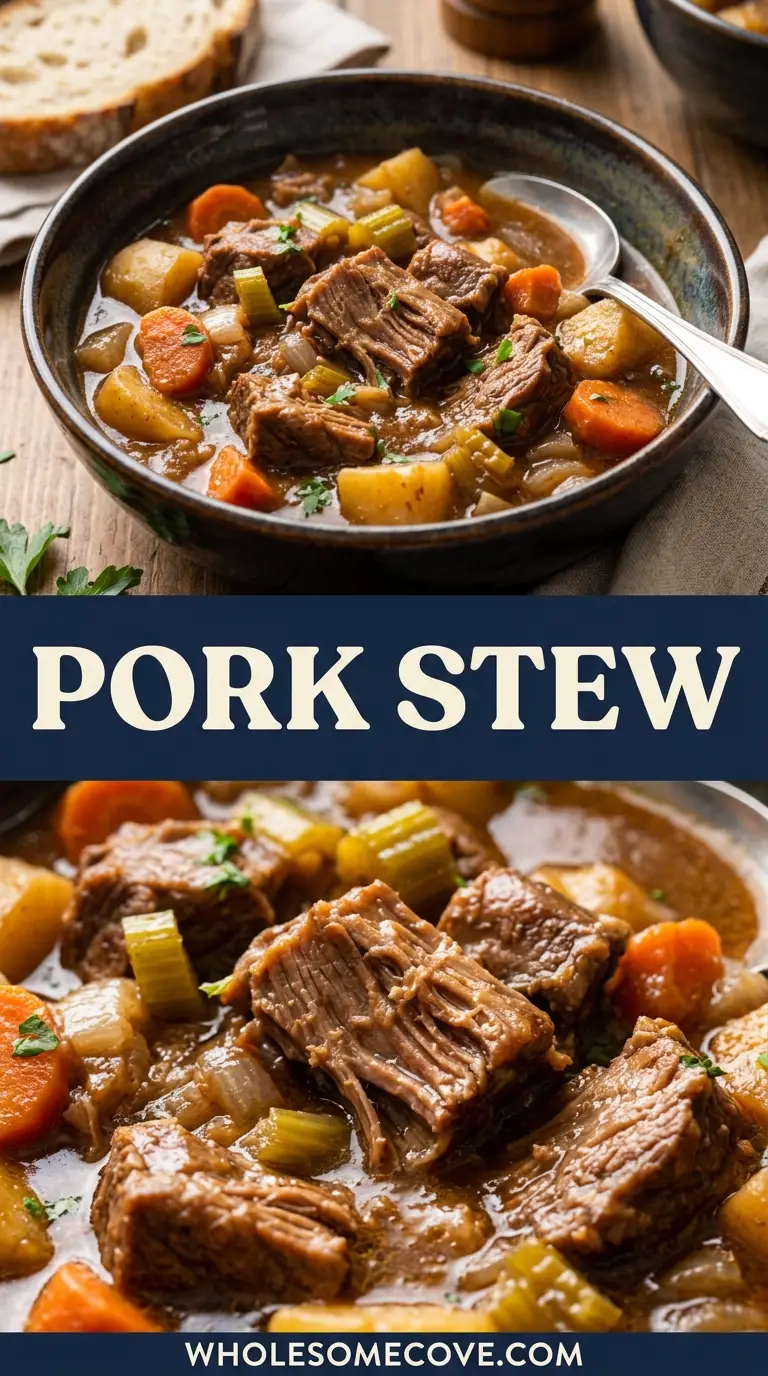
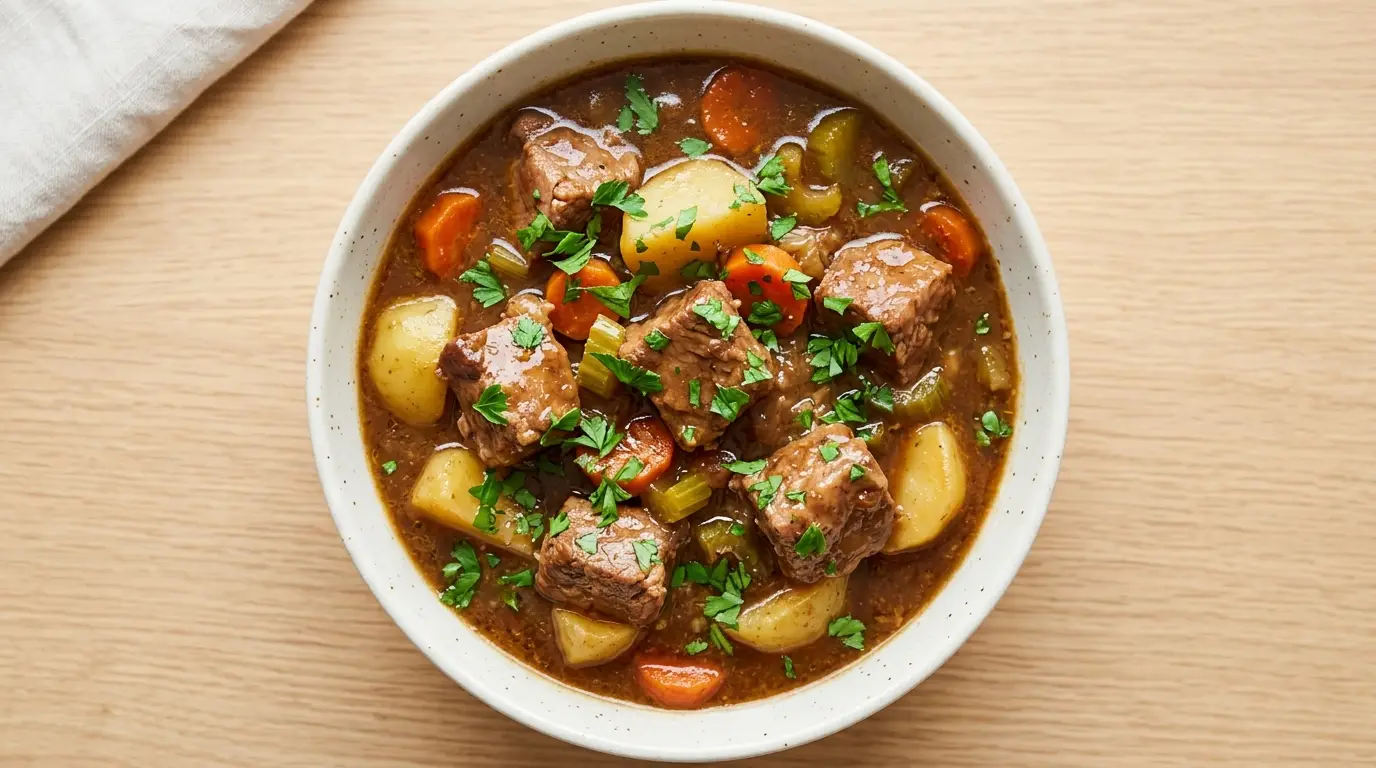
The result is glossy and spoon-coating, with fork-tender chunks of pork and vegetables that hold their shape. It reheats beautifully, which makes it a smart choice to cook once and eat twice.
| Quick Recipe Summary | |
|---|---|
| Prep Time | 25 minutes |
| Cook Time | 1 hour 35 minutes |
| Total Time | 2 hours |
| Servings | 6 servings |
| Difficulty Level | Easy |
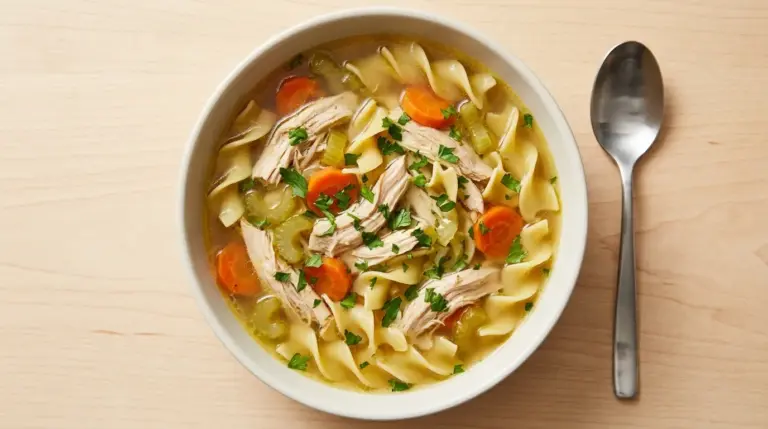
Read Also: Slow Cooker Pork Stew
Why You’ll Love This Pork Stew Recipe
This is the kind of one-pot dinner that feeds a crowd and gets better overnight. Here is what makes it worth adding to your rotation.
- It uses one forgiving cut. Pork shoulder is inexpensive and nearly impossible to overcook, so timing is relaxed.
- Everything happens in one pot. You brown, sauté, and simmer in the same Dutch oven, which means less cleanup.
- The gravy thickens itself. Flour-dredged pork and darkened tomato paste build a rich base with no cornstarch required.
- It scales and freezes well. A single batch serves six, and leftovers keep for months in the freezer.
- It is budget-friendly. Shoulder, root vegetables, and broth are among the cheapest ingredients in the store.
- It suits cold nights and busy weeks. Most of the cook time is hands-off simmering while you do other things.
For a faster route to the same tender result, see this Instant Pot Pork Stew.
Ingredients
Everything here is easy to find, and most of it is pantry or crisper-drawer basics. The short list of specialty items, like good broth and tomato paste, is what separates a flat stew from a deep, savory one.
- 2½ lbs (1.1 kg) boneless pork shoulder, trimmed and cut into 1-inch (2.5 cm) cubes
- ¼ cup (30 g) all-purpose flour
- 1½ tsp salt, divided, plus more to taste
- 1 tsp black pepper
- 4 slices bacon, chopped
- 2 tbsp (30 ml) extra virgin olive oil
- 1 large yellow onion, diced
- 3 medium carrots (about 8 oz / 225 g), cut into ¾-inch (2 cm) pieces
- 2 celery stalks, sliced
- 4 garlic cloves, minced
- 2 tbsp (32 g) tomato paste
- 1 tsp smoked paprika
- 1 tsp dried thyme
- ½ tsp dried rosemary
- 2 bay leaves
- 4 cups (950 ml) beef broth
- 1 tbsp (15 ml) Worcestershire sauce
- 1 lb (450 g) Yukon Gold potatoes, cut into 1-inch (2.5 cm) chunks
- ½ cup (75 g) frozen peas (optional)
- 2 tbsp chopped fresh parsley, for garnish
Yukon Golds hold their shape better than russets here, which tend to break down and cloud the broth. If you can only find russets, cut them slightly larger and add them a few minutes later.
You might also enjoy: Mexican Pork Stew
Kitchen Equipment Needed
You do not need anything fancy for this stew, but a heavy pot makes a real difference in how evenly the pork browns. Here is the full list.
- A large Dutch oven or heavy 5- to 6-quart pot with a lid
- A sharp chef’s knife for cubing the pork and vegetables
- A sturdy wood cutting board
- A wooden spoon for scraping up the browned bits
- A soup ladle for serving
- A large mixing bowl for dredging the pork in flour
- Measuring cups and spoons
A wide, heavy-bottomed pot lets you brown the pork in fewer batches without crowding. Crowding is the fastest way to steam the meat instead of searing it.
Read Also: Green Chile Pork Stew
Recommended Products for This Recipe
These are the specific tools and ingredients I reach for when I make this stew, chosen because each one solved a real problem in the pot. They are optional, but they make the process smoother and the flavor deeper.
1. Le Creuset Enameled Dutch Oven
Thinner pots scorch tomato paste and broth before the pork has a chance to brown properly. A heavy enameled Dutch oven holds steady heat, so the fond builds evenly and nothing sticks or burns while you simmer.
2. Better Than Bouillon Beef Base
I switched to a concentrated beef base after too many stews came out thin and under-seasoned from watery boxed broth. A spoonful stirred into hot water gives you a richer, more adjustable backbone, and the jar lasts for months in the fridge.
3. Instant-Read Meat Thermometer
Pork shoulder is forgiving, but a thermometer takes the guesswork out of knowing when the meat has passed the tough stage into fork-tender. It is also the tool that saves you from cutting into a chunk just to check.
4. John Boos Wood Cutting Board
Cubing more than two pounds of pork dulls a flimsy board fast and slides around the counter. A thick, grippy wood board gives you a stable surface for the whole prep, which matters when you are working with raw meat and a sharp knife.
This same browning and braising method carries over to Beef Stew.
Step-by-Step Instructions: How to Make Pork Stew
Follow these steps in order and you will have a rich, tender pork stew ready with very little fuss.
Step 1: Prep and Dredge the Pork
- Pat the pork cubes dry with paper towels. Dry meat browns far better than wet meat.
- In a large mixing bowl, whisk together the flour, ½ teaspoon of the salt, and the black pepper.
- Add the pork cubes and toss until each piece is lightly coated. Shake off any excess flour, since too much will make the gravy pasty.
Step 2: Cook the Bacon
- Set your Dutch oven over medium-high heat and add the chopped bacon.
- Cook, stirring occasionally, until the bacon is browned and has rendered its fat, about 5 to 6 minutes.
- Use a slotted spoon to lift the bacon out and set it aside, leaving the rendered fat in the pot.
Step 3: Brown the Pork
- Add the olive oil to the bacon fat and heat until it shimmers.
- Working in two or three batches, add the pork in a single layer without crowding.
- Sear each batch until deeply browned on at least two sides, about 3 to 4 minutes per batch, then transfer to a plate. The browned bits left in the pot are pure flavor.
Step 4: Sauté the Vegetables
- Lower the heat to medium and add the onion, carrots, and celery to the pot.
- Cook, stirring, until the onion softens and turns translucent, about 5 minutes.
- Stir in the minced garlic and cook for 1 minute more, until fragrant.
Step 5: Build the Base
- Push the vegetables to the side and add the tomato paste to the cleared spot.
- Cook the tomato paste, stirring, for 2 minutes until it darkens to a deep brick red. This step drives most of the savory depth.
- Sprinkle in the smoked paprika, thyme, and rosemary and stir to coat the vegetables.
Step 6: Deglaze and Simmer
- Pour in the beef broth and Worcestershire sauce, scraping the bottom of the pot with a wooden spoon to lift every browned bit.
- Return the pork, bacon, and any collected juices to the pot, then add the bay leaves and the remaining 1 teaspoon of salt.
- Bring to a gentle simmer, then cover and reduce the heat to low. Simmer for 1 hour, stirring occasionally.
Step 7: Add the Potatoes
- After the first hour, stir in the potato chunks.
- Cover and continue simmering for 25 to 30 minutes, until the potatoes are tender and the pork pulls apart easily with a fork.
- If you want a thicker stew, uncover for the last 10 minutes to let it reduce.
Step 8: Finish and Serve
- Stir in the frozen peas, if using, and let the residual heat warm them through for 2 to 3 minutes.
- Remove and discard the bay leaves, then taste and adjust the salt and pepper.
- Ladle into bowls and scatter fresh parsley over the top before serving.
For a lighter option, try: Chicken Stew
Tips for The Best Pork Stew
A few small habits make the difference between a good stew and one you will crave. These are the details worth paying attention to.
- Choose shoulder, not loin. I ruined my first batch by using pork loin, which turned dry and stringy after an hour on the stove. Shoulder has the fat and collagen that melt into a silky sauce.
- Dry the meat before searing. Moisture on the surface steams the pork and prevents a good crust from forming.
- Do not crowd the pot. Brown in batches so each piece touches the hot metal rather than stewing in its own juices.
- Darken the tomato paste. Cooking it until it deepens in color is one of the biggest flavor upgrades in the whole recipe.
- Keep the simmer gentle. A hard boil tightens the pork back up, so aim for a lazy bubble.
- Rest before serving. I’ve found that letting the stew sit off the heat for 10 minutes lets the gravy settle and thicken into a spoon-coating sauce.
- Taste at the end. Broth brands vary in saltiness, so always adjust seasoning right before serving.
A similar low and slow approach works in Irish Stew.
What to Serve with Pork Stew
Pork stew is a full meal on its own, but the right side turns it into something special. The best partners are simple starches and vegetables that soak up the rich gravy. Here are the pairings I come back to most.
- Crusty bread or dinner rolls for mopping up every last drop of sauce
- Warm homemade biscuits split and buttered on the side
- Creamy mashed potatoes if you want the stew served over a bed rather than with potatoes inside
- A wedge of cornbread for a slightly sweet contrast
- Fluffy basmati rice to stretch the stew into extra servings
- Roasted potatoes for a crisp-edged side
- Maple glazed carrots to echo the sweetness of the root vegetables in the pot
- Roasted Brussels sprouts with bacon for a savory green side
- A crisp coleslaw to cut through the richness
- A simple green salad dressed in a light vinaigrette
Another dish worth bookmarking: Crockpot Beef Stew
Variations of Pork Stew
Once you have the base method down, this stew bends easily to whatever you have on hand or are in the mood for. Try one of these directions.
- Slow cooker version: Brown the pork and sauté the aromatics first, then transfer everything to a slow cooker and cook on low for 7 to 8 hours.
- Instant Pot version: Use the sauté function to brown, then pressure cook on high for 30 minutes with a natural release.
- Green chile pork stew: Swap in roasted green chiles and use chicken broth for a Southwestern spin.
- Mexican-style: Add cumin, oregano, and a can of fire-roasted tomatoes, then finish with lime and cilantro.
- Sweet potato swap: Replace the Yukon Golds with sweet potatoes for a naturally sweeter, more velvety stew.
- Wine-braised: Deglaze with ½ cup (120 ml) of dry white or red wine before adding the broth for extra depth.
- Extra vegetables: Stir in mushrooms, parsnips, or green beans along with the aromatics.
- Gluten-free: Skip the flour dredge and thicken at the end with a cornstarch slurry instead.
A naturally sweeter version built on root vegetables is Pork and Sweet Potato Stew.
Storage and Reheating
This stew is a meal-prep dream because the flavor deepens after a night in the fridge. Here is how to keep it at its best.
- Refrigerate: Cool the stew, then store it in an airtight container in the fridge for up to 4 days.
- Freeze: Ladle cooled stew into freezer-safe containers, leaving headspace, and freeze for up to 3 months.
- Thaw: Move frozen stew to the fridge overnight before reheating for the most even results.
- Reheat on the stove: Warm gently over medium-low heat, stirring occasionally, until heated through. Add a splash of broth if it has thickened too much.
- Reheat in the microwave: Heat single portions in 1-minute bursts, stirring between each, until hot.
- Freezing note: Potatoes can soften slightly after freezing, so if you plan to freeze the whole batch, cook the potatoes just until tender.
Read Also: Lamb Stew
Nutritional Facts
Values are estimates per serving, based on six servings, and will vary with the exact cuts and brands you use.
| Nutrient | Amount per Serving |
|---|---|
| Calories | 425 kcal |
| Protein | 33 g |
| Carbohydrates | 22 g |
| Fat | 23 g |
| Saturated Fat | 7 g |
| Fiber | 3 g |
| Sugar | 4 g |
| Sodium | 790 mg |
Another hearty option worth trying is Venison Stew
Health Benefits of Key Ingredients
Beyond being comfort food, this stew is built on ingredients that bring real nutritional value to the bowl. Here is what the main components contribute.
- Pork shoulder is a strong source of complete protein, along with B vitamins like thiamine, niacin, and B12 that support energy metabolism.
- Carrots deliver beta-carotene, which the body converts to vitamin A for eye and immune health.
- Onions and garlic provide sulfur compounds and antioxidants that have been linked to heart health.
- Potatoes supply potassium and vitamin C, plus resistant starch that feeds beneficial gut bacteria when cooled.
- Celery adds fiber and a range of micronutrients for very few calories.
- Tomato paste is concentrated in lycopene, an antioxidant that becomes more available to the body when cooked.
- Peas contribute plant protein, fiber, and a boost of vitamin K.
In the same comforting spirit, there is Brunswick Stew.
FAQs About Pork Stew
1. What is the best cut of pork for stew?
Pork shoulder, also sold as pork butt or Boston butt, is the top choice. Its fat and connective tissue break down over a long simmer into tender, silky meat.
Avoid lean cuts like pork loin or tenderloin, which dry out and toughen with extended cooking. If you can only find pre-cut stew meat, check that it looks well-marbled rather than lean.
2. Why is my pork stew tough or chewy?
The most common cause is not cooking it long enough, since the collagen in the meat needs time to melt. Pork shoulder often passes through a tough stage before it becomes tender, so keep simmering.
A hard, rolling boil can also tighten the meat back up. Keep the heat at a gentle bubble and give it the full cook time.
3. How do I thicken pork stew?
Dredging the pork in flour before searing builds thickness into the base as it simmers. Cooking the stew uncovered for the last 10 minutes also reduces and concentrates the liquid.
If it is still too thin, whisk together 1 tablespoon of cornstarch with 3 tablespoons of cold water and stir it into the simmering stew. Let it bubble for a minute or two to thicken.
4. Can I make pork stew in a slow cooker or Instant Pot?
Yes, and both work well with a small tweak. Brown the pork and sauté the aromatics first, since that step is where most of the flavor comes from.
For a slow cooker, cook on low for 7 to 8 hours. For an Instant Pot, pressure cook on high for about 30 minutes with a natural release.
5. Can I freeze pork stew?
Pork stew freezes very well for up to 3 months in airtight containers. The flavor often deepens after freezing and thawing.
Potatoes can turn slightly grainy once frozen, so cook them just to tender if you know you will freeze the batch. Thaw overnight in the fridge for the smoothest reheating.
6. What can I use instead of wine in pork stew?
This recipe does not require wine, so you can simply use extra broth. If you want the acidity that wine brings, add a splash of balsamic or red wine vinegar near the end.
A spoonful of Worcestershire sauce, which is already in the recipe, adds a similar savory depth. Taste as you go and adjust to your preference.
For more cold-weather cooking, try: Cowboy Stew
Pork Stew
Ingredients
- 2½ lbs boneless pork shoulder - 1.1 kg, trimmed and cut into 1-inch (2.5 cm) cubes
- ¼ cup all-purpose flour - 30 g
- 1½ tsp salt - divided, plus more to taste
- 1 tsp black pepper
- 4 slices bacon - chopped
- 2 tbsp extra virgin olive oil - 30 ml
- 1 large yellow onion - diced
- 3 medium carrots - about 8 oz / 225 g, cut into ¾-inch (2 cm) pieces
- 2 stalks celery - sliced
- 4 cloves garlic - minced
- 2 tbsp tomato paste - 32 g
- 1 tsp smoked paprika
- 1 tsp dried thyme
- ½ tsp dried rosemary
- 2 bay leaves
- 4 cups beef broth - 950 ml
- 1 tbsp Worcestershire sauce - 15 ml
- 1 lb Yukon Gold potatoes - 450 g, cut into 1-inch (2.5 cm) chunks
- ½ cup frozen peas - 75 g, optional
- 2 tbsp fresh parsley - chopped, for garnish
Equipment
- Large Dutch oven - or heavy 5- to 6-quart pot with a lid
- Sharp chef’s knife - for cubing the pork and vegetables
- Sturdy wood cutting board
- Wooden spoon - for scraping up the browned bits
- Soup Ladle - for serving
- Large mixing bowl - for dredging the pork in flour
Method
- Pat the pork cubes dry with paper towels. In a large mixing bowl, whisk together the flour, ½ teaspoon of the salt, and the black pepper. Add the pork cubes and toss until each piece is lightly coated, shaking off any excess flour.
- Set your Dutch oven over medium-high heat and add the chopped bacon. Cook, stirring occasionally, until browned and rendered, about 5 to 6 minutes. Use a slotted spoon to lift the bacon out and set it aside, leaving the fat in the pot.
- Add the olive oil to the bacon fat and heat until it shimmers. Working in two or three batches, add the pork in a single layer without crowding. Sear each batch until deeply browned on at least two sides, about 3 to 4 minutes per batch, then transfer to a plate.
- Lower the heat to medium and add the onion, carrots, and celery to the pot. Cook, stirring, until the onion softens and turns translucent, about 5 minutes. Stir in the minced garlic and cook for 1 minute more, until fragrant.
- Push the vegetables to the side and add the tomato paste to the cleared spot. Cook, stirring, for 2 minutes until it darkens to a deep brick red. Sprinkle in the smoked paprika, thyme, and rosemary and stir to coat the vegetables.
- Pour in the beef broth and Worcestershire sauce, scraping the bottom of the pot with a wooden spoon to lift every browned bit. Return the pork, bacon, and any collected juices to the pot, then add the bay leaves and the remaining 1 teaspoon of salt. Bring to a gentle simmer, then cover and reduce the heat to low. Simmer for 1 hour, stirring occasionally.
- After the first hour, stir in the potato chunks. Cover and continue simmering for 25 to 30 minutes, until the potatoes are tender and the pork pulls apart easily with a fork. If you want a thicker stew, uncover for the last 10 minutes to let it reduce.
- Stir in the frozen peas, if using, and let the residual heat warm them through for 2 to 3 minutes. Remove and discard the bay leaves, then taste and adjust the salt and pepper. Ladle into bowls and scatter fresh parsley over the top before serving.
Nutrition
Notes
- Choose pork shoulder, not loin. Pork loin turns dry and stringy after a long simmer; shoulder has the fat and collagen that melt into a silky sauce.
- Dry the meat before searing. Moisture on the surface steams the pork and prevents a good crust from forming.
- Do not crowd the pot. Brown in batches so each piece touches the hot metal rather than stewing in its own juices.
- Darken the tomato paste. Cooking it until it deepens in color is one of the biggest flavor upgrades in the whole recipe.
- Keep the simmer gentle. A hard boil tightens the pork back up, so aim for a lazy bubble.
- Rest before serving. Letting the stew sit off the heat for 10 minutes lets the gravy settle and thicken into a spoon-coating sauce.
- Yukon Golds hold their shape better than russets. If you can only find russets, cut them slightly larger and add them a few minutes later.
- Storage: Refrigerate in an airtight container for up to 4 days, or freeze for up to 3 months. Thaw overnight in the fridge before reheating.
- Freezing note: Potatoes can soften slightly after freezing, so if you plan to freeze the whole batch, cook the potatoes just until tender.
- Gluten-free variation: Skip the flour dredge and thicken at the end with a cornstarch slurry instead.
- Slow cooker version: Brown the pork and sauté the aromatics first, then transfer everything to a slow cooker and cook on low for 7 to 8 hours.
- Instant Pot version: Use the sauté function to brown, then pressure cook on high for 30 minutes with a natural release.
Private Notes
Tried this recipe?
Let us know how it was!Final Thoughts
Pork stew proves that a handful of humble ingredients and a little patience can turn into one of the coziest meals on the table. The tender shoulder, rich gravy, and soft vegetables come together into something far greater than the sum of their parts.
Once you make it your way, it tends to become a standby for cold evenings and lazy weekends. It is forgiving enough for a first-time cook and satisfying enough to serve to anyone.
Give this one a try the next time you want a warm, filling dinner with almost no fuss. If you do, come back and leave a comment to tell me how it turned out, and share it with a friend who could use a good stew in their week.
Recommended:
- French Onion Beef Stew
- Seafood Stew
- Kimchi Stew
- Oyster Stew
- Apple Cider Glazed Pork Chops
- Pork Tenderloin with Roasted Root Vegetables
- Beef Barley Soup
- Slow Cooker Pot Roast
- Loaded Baked Potato Soup
- Potato Soup