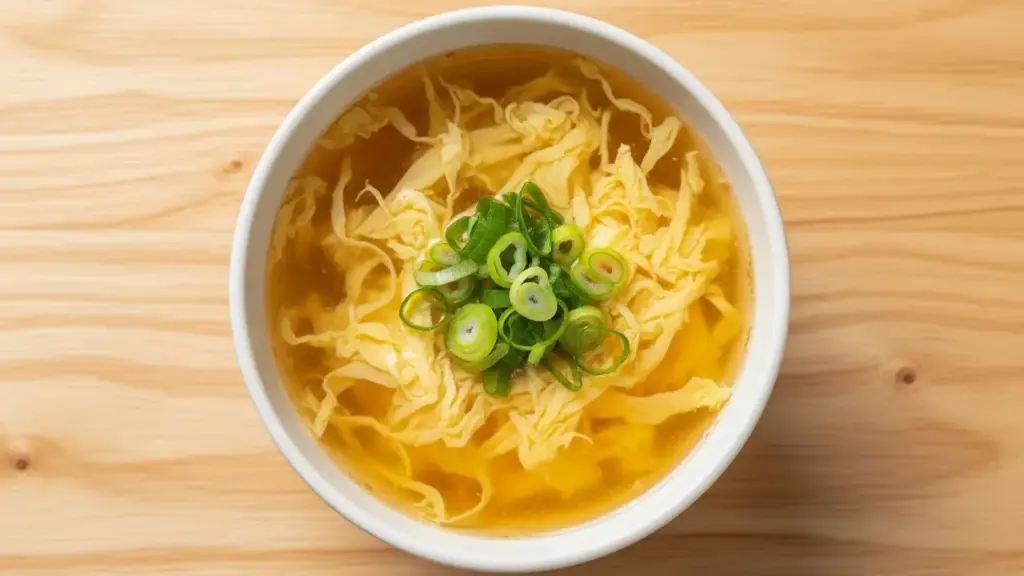
I stumbled upon egg drop soup years ago during a particularly nasty cold when nothing else sounded appealing. My neighbor brought over a thermos of this golden, silky broth with delicate egg ribbons swirling through it, and I was hooked from the first spoonful.
Since then, I’ve made countless batches, tweaking and perfecting my technique until I landed on this foolproof version. The beauty of this Egg Drop Soup Recipe is its simplicity: with just a handful of pantry staples and about 15 minutes, you can create something that tastes like it came from your favorite Chinese restaurant.
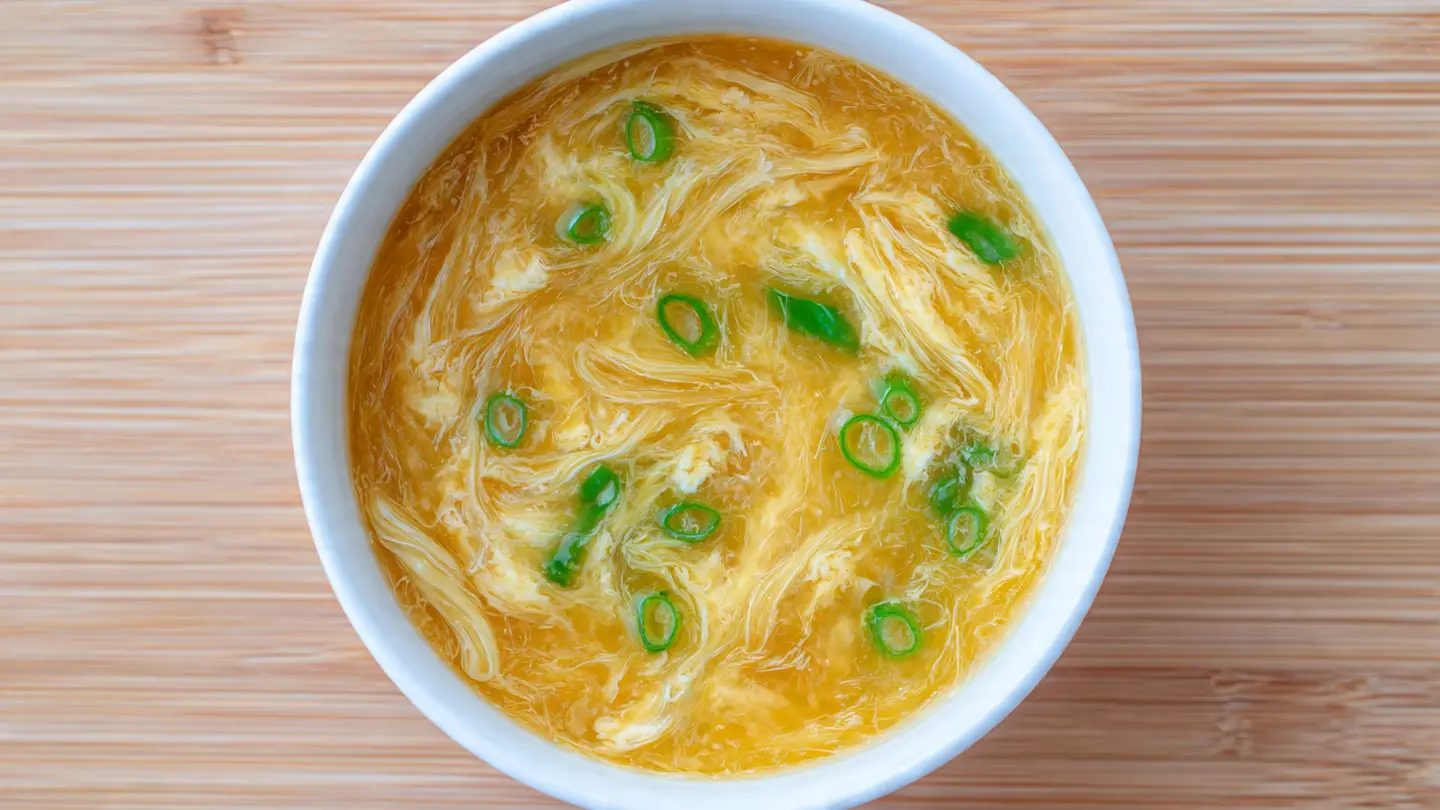
What I love most is watching those whisper-thin egg ribbons form as you drizzle beaten eggs into the simmering broth. It’s almost meditative, and the end result is a bowl of pure comfort that works equally well as a light lunch, a starter for dinner, or a soothing remedy when you’re under the weather.
| Quick Recipe Summary | |
|---|---|
| Prep Time | 5 minutes |
| Cook Time | 10 minutes |
| Total Time | 15 minutes |
| Servings | 4 servings |
| Difficulty Level | Easy |
If you’re craving more comforting soups, my Creamy Tomato Basil Soup is another weeknight favorite that comes together just as quickly.

Why You’ll Love This Egg Drop Soup Recipe
This soup has become my go-to for busy weeknights because it requires minimal ingredients and comes together faster than ordering takeout. The silky texture and savory depth make it feel special, even though it’s incredibly simple to prepare.
I’ve made this for skeptical friends who claimed they didn’t like egg drop soup, only to watch them go back for seconds. The secret is in the technique: creating those delicate egg ribbons requires nothing more than a gentle hand and a little patience.
Here’s why this recipe consistently wins over everyone who tries it:
- Lightning-fast preparation: From start to finish, you’re looking at 15 minutes tops, making this perfect for those nights when you need dinner on the table immediately.
- Budget-friendly ingredients: Eggs, broth, and a few seasonings are all you need, and chances are you already have most of them in your kitchen.
- Incredibly versatile: This soup works as an appetizer, a light meal, or a base that you can customize with vegetables, proteins, or noodles.
- Restaurant-quality at home: The silky texture and delicate egg ribbons rival anything you’d get from your favorite Chinese restaurant.
- Gentle on the stomach: When you’re feeling under the weather, this warm, easily digestible soup is exactly what you need.
- Impressive yet effortless: Guests always think you’ve fussed over this soup when in reality, it took less time than brewing a pot of coffee.
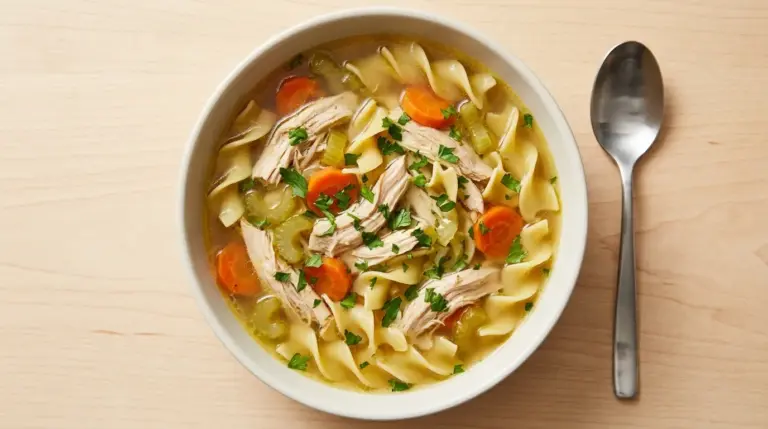
Another comforting favorite in my rotation is my Easy Chicken Noodle Soup, which offers similar comfort with a heartier twist.
Ingredients
Getting the ingredients right makes all the difference in achieving that restaurant-quality silky texture and savory depth. I’ve tested this recipe with various broths and seasonings, and these specific choices create the most authentic flavor profile.
- 4 cups (960 ml) chicken broth (use low-sodium to control the salt level)
- 2 tablespoons (30 ml) soy sauce (adds depth and umami)
- 1 teaspoon (5 ml) sesame oil (for that subtle nutty aroma)
- 1/2 teaspoon (2 g) ground ginger (or 1 teaspoon fresh grated ginger)
- 1/4 teaspoon (1 g) white pepper (black pepper works but white gives a more authentic flavor)
- 2 tablespoons (16 g) cornstarch
- 3 tablespoons (45 ml) cold water
- 3 large eggs (at room temperature for better ribbon formation)
- 2 green onions (sliced thin for garnish)
- Salt to taste
Read Also: Zuppa Toscana Recipe
Kitchen Equipment Needed
Having the right tools makes creating those signature silky egg ribbons much easier. I learned this the hard way after a few batches with clumpy eggs before I refined my technique and equipment choices.
- Large saucepan or pot (at least 4-quart capacity for proper simmering)
- Whisk (for beating eggs until completely smooth)
- Small bowl (for mixing the cornstarch slurry)
- Measuring cups and spoons
- Ladle or large spoon (for stirring while adding eggs)
- Fine-mesh strainer (optional but helpful for perfectly smooth eggs)
You might also enjoy my Chicken Gnocchi Soup, which uses similar equipment and techniques.
Recommended Products for This Recipe
Over the years of making this soup, I’ve discovered a few products that genuinely elevate the final result and make the cooking process smoother.
1. Pacific Foods Organic Chicken Broth
The foundation of any great egg drop soup is quality broth, and this organic option delivers deep, savory flavor without any artificial additives. I’ve compared countless brands, and this one consistently produces the richest, most restaurant-quality results. The low-sodium version gives you complete control over the seasoning.
2. Kikkoman Naturally Brewed Soy Sauce
Not all soy sauces are created equal, and Kikkoman’s naturally brewed version adds authentic umami depth without overwhelming the delicate egg flavor. I’ve tried cheaper alternatives, and they simply don’t provide the same complexity and balanced saltiness that makes this soup taste like it came from a professional kitchen.
3. La Tourangelle Toasted Sesame Oil
Just a teaspoon of quality toasted sesame oil transforms this soup from good to extraordinary. This brand offers an intensely aromatic, nutty flavor that permeates every spoonful. Regular sesame oil won’t give you the same toasted depth that makes people ask, “What’s that amazing smell?”
4. All-Clad Stainless Steel Saucepan
This might seem like a splurge, but even heat distribution is crucial for creating those perfect egg ribbons without scrambling. All-Clad’s tri-ply construction ensures the broth maintains a consistent temperature throughout, preventing hot spots that can ruin the texture. After years of using various pots, this is the one that delivers consistent, foolproof results every time.
For more warming soup inspiration, check out my Matzo Ball Soup, another comfort classic.

Step-by-Step Instructions: How to Make Egg Drop Soup
Creating restaurant-quality egg drop soup at home is all about technique, particularly when forming those delicate egg ribbons. I’ve broken down each step in detail so even first-time soup makers can nail it.
1. Prepare the Broth Base
- Pour the chicken broth into your large saucepan and place it over medium-high heat.
- Add the soy sauce, sesame oil, ground ginger, and white pepper to the broth.
- Stir everything together with a whisk to ensure the seasonings distribute evenly throughout the liquid.
- Bring the mixture to a gentle boil, then reduce the heat to maintain a steady simmer (you should see small bubbles breaking the surface, but not a rolling boil).
- Let the broth simmer for 2-3 minutes to allow the flavors to meld together and develop depth.
2. Create the Cornstarch Slurry
- In a small bowl, combine the cornstarch and cold water.
- Whisk vigorously until the mixture is completely smooth with no lumps remaining (the consistency should resemble thin cream).
- Make sure to mix this right before adding it to the soup, as cornstarch settles quickly when sitting.
- Having this ready before you need it ensures you can add it at the perfect moment without rushing.
3. Thicken the Soup
- While stirring the simmering broth in a circular motion with your whisk or spoon, slowly pour in the cornstarch slurry.
- Continue stirring constantly for 1-2 minutes as the soup thickens (it should develop a silky, slightly viscous texture that coats the back of a spoon).
- The broth should look glossy and translucent, not cloudy or paste-like.
- If the soup seems too thick, you can thin it with a tablespoon or two of additional broth or water.
- Once thickened properly, reduce the heat to low to prepare for adding the eggs.
4. Beat the Eggs
- Crack the eggs into a medium bowl, making sure no shell pieces fall in.
- Use a fork or whisk to beat the eggs thoroughly until the yolks and whites are completely combined and the mixture is uniform in color (no streaks of white should be visible).
- For even silkier ribbons, you can strain the beaten eggs through a fine-mesh strainer to remove any chalazae (the white stringy bits).
- Have the beaten eggs ready right next to the stove so you can add them immediately when the broth is ready.
5. Create the Egg Ribbons
- Make sure your soup is at a gentle simmer, not a rolling boil (too vigorous and you’ll get scrambled eggs instead of ribbons).
- Using your whisk or a large spoon, create a gentle whirlpool by stirring the soup in one direction in a circular motion.
- While the soup is still swirling, slowly drizzle the beaten eggs in a thin, steady stream (hold your bowl about 6 inches above the pot).
- As you pour, move the stream in a circular pattern around the pot rather than dumping it all in one spot.
- The eggs will cook instantly on contact with the hot broth, forming those characteristic delicate ribbons.
- Immediately turn off the heat after all the eggs are added (residual heat will finish cooking them).
- Let the soup sit undisturbed for 30 seconds to 1 minute, allowing the egg ribbons to set fully before stirring.
6. Final Seasoning and Serving
- Gently stir the soup once or twice to distribute the egg ribbons throughout.
- Taste the broth and adjust the seasoning with additional soy sauce or salt if needed (remember, the saltiness can intensify as it sits).
- Ladle the hot soup into individual serving bowls.
- Garnish each bowl generously with sliced green onions for a fresh, sharp contrast to the rich broth.
- Serve immediately while the soup is steaming hot and the egg ribbons are at their silkiest.
If you enjoy simple yet elegant soups, try my Avgolemono Soup, which features a similar egg-based technique.

Tips for The Best Egg Drop Soup
After making this soup hundreds of times, I’ve learned a few tricks that separate okay egg drop soup from truly exceptional batches. These details might seem small, but they make all the difference.
- Temperature is everything: The broth needs to be at a gentle simmer, not a rolling boil, when you add the eggs. Too hot and you’ll get scrambled egg clumps instead of delicate ribbons. I learned this the hard way during my first few attempts.
- Create a whirlpool: Stirring the broth in a circular motion before adding the eggs helps create those beautiful, wispy ribbons rather than flat sheets of cooked egg. The swirling motion distributes the eggs evenly throughout the soup.
- Drizzle slowly and steadily: Pour the beaten eggs in the thinnest stream you can manage. I like to hold the bowl higher (about 6 inches above the pot) and pour very gradually while moving in a circle.
- Room temperature eggs work best: Cold eggs from the fridge can cool down your broth too much and affect ribbon formation. Let them sit out for 15-20 minutes before beating.
- Don’t over-stir after adding eggs: Once the eggs hit the broth, resist the urge to stir immediately. Let them cook undisturbed for 30-60 seconds, then give just one or two gentle stirs. Over-stirring breaks up those lovely ribbons into tiny pieces.
- Use quality broth: Since this soup has so few ingredients, the broth quality really shines through. I always reach for organic, low-sodium chicken broth that I can season to my taste.
- Fresh is best: This soup tastes incredible right after making it. The egg ribbons maintain their silky texture best when served immediately, though the soup will keep in the fridge for 2-3 days.
- Strain your eggs for perfection: Running the beaten eggs through a fine-mesh strainer removes the chalazae and any bits that might create irregular ribbons. This extra 30 seconds creates noticeably smoother results.
Another favorite that benefits from careful technique is my Italian Wedding Soup, which also features delicate components that require a gentle touch.
What to Serve with Egg Drop Soup
This soup shines as a light starter, but I often serve it alongside other dishes for a complete meal. The mild, savory broth pairs beautifully with both Asian-inspired dishes and more neutral sides.
Here are my favorite pairings:
- Spring rolls or pot stickers: The crispy, savory bites provide a nice textural contrast to the silky soup. I love serving Deviled Eggs as an alternative appetizer that plays on the egg theme.
- Fried rice or lo mein: For a more substantial meal, serve the soup as a starter before a main course of Healthy Fried Rice or noodles.
- Steamed dumplings: Whether pork, vegetable, or shrimp, dumplings and egg drop soup are a match made in heaven.
- Simple stir-fry: A quick vegetable or protein stir-fry with my Stir Fry Sauce creates a balanced meal.
- Crispy wontons: These add a satisfying crunch that contrasts perfectly with the smooth soup.
- Asian cucumber salad: The cool, refreshing crunch of marinated cucumbers provides a palate-cleansing counterpoint to the warm, rich broth.
- Sesame noodles: Cold sesame noodles work surprisingly well alongside hot soup, especially during warmer months.
- Lettuce wraps: My Asian Chicken Lettuce Cups make an excellent light pairing.
For more warming comfort options, explore my Chicken Chowder.
Variations of Egg Drop Soup
One of the things I love most about this recipe is how easily you can customize it to your preferences or what you have on hand. I’ve experimented with dozens of variations over the years, and these are my favorites.
- Vegetable-loaded version: Stir in thinly sliced mushrooms, baby spinach, or shredded carrots during the last few minutes of cooking. The vegetables add nutrition and make this more of a complete meal.
- Protein boost: Add shredded rotisserie chicken, cooked shrimp, or cubed tofu when you add the cornstarch slurry. This transforms the soup from a starter into a satisfying main course.
- Spicy kick: Swirl in a teaspoon of chili oil or add red pepper flakes along with the other seasonings. Some days I crave that extra heat, especially when I’m fighting off a cold.
- Corn egg drop soup: Stir in a cup of fresh or frozen corn kernels after thickening the broth. The sweetness of the corn pairs beautifully with the savory base.
- Seafood version: Use seafood stock instead of chicken broth and add small cooked shrimp or crab meat. This creates an entirely different flavor profile that feels more luxurious.
- Hot and sour twist: Add a tablespoon of rice vinegar and a pinch of white pepper to give it those hot and sour soup vibes while maintaining the egg ribbon texture.
- Ginger-forward version: Triple the ginger and add thinly sliced fresh ginger pieces to the broth for a more pronounced, warming flavor that’s perfect for cold winter nights.
- Noodle addition: Drop in some cooked rice noodles or ramen noodles to make it heartier and more filling.
For another versatile soup base you can customize endlessly, try my Lentil and Vegetable Soup.
Storage and Reheating
While egg drop soup is best enjoyed fresh, I’ve developed reliable methods for storing and reheating leftovers that maintain as much of that original texture as possible.
- Refrigerator storage: Let the soup cool to room temperature, then transfer it to an airtight container. It will keep in the refrigerator for 3-4 days maximum.
- Freezing: I don’t recommend freezing this soup, as the egg ribbons become rubbery and lose their delicate texture when thawed. If you must freeze it, the broth base (before adding eggs) freezes beautifully for up to 3 months.
- Stovetop reheating: This is my preferred method. Pour the soup into a saucepan and heat over medium-low heat, stirring occasionally. Don’t bring it to a full boil, as this can toughen the egg ribbons.
- Microwave reheating: Place the soup in a microwave-safe bowl and heat in 1-minute intervals, stirring between each interval, until warmed through. Use 50% power to prevent overheating.
- Texture restoration tip: If the soup thickens too much during storage, thin it with a bit of fresh chicken broth when reheating. The cornstarch can continue to absorb liquid as it sits.
- Garnish fresh: Always add fresh green onions right before serving, even when reheating leftovers. They brighten up the flavor significantly.
- Make components ahead: You can prepare the broth base up to 2 days ahead and store it in the fridge, then add the eggs right before serving for the freshest possible texture.
My Tomato Soup is another recipe that reheats beautifully and keeps well for meal prep.
Nutritional Facts
Per serving (1 cup, based on 4 servings):
- Calories: 95
- Total Fat: 4.5g
- Saturated Fat: 1.2g
- Cholesterol: 140mg
- Sodium: 820mg
- Total Carbohydrates: 6g
- Dietary Fiber: 0g
- Sugars: 1g
- Protein: 8g
- Vitamin A: 6% DV
- Vitamin C: 2% DV
- Calcium: 3% DV
- Iron: 6% DV
Note: Nutritional values are approximate and will vary based on specific brands and ingredients used.
For another nutrient-dense soup option, check out my Carrot Ginger Soup.
Health Benefits of Key Ingredients
Beyond its comforting taste, egg drop soup offers several nutritional benefits that make it a smart choice when you’re looking for something both satisfying and nourishing.
Eggs: The star ingredient provides high-quality protein with all nine essential amino acids your body needs. They’re also rich in choline, which supports brain health and development. The vitamin B12 and selenium in eggs help maintain a healthy metabolism.
Chicken Broth: Good-quality chicken broth contains collagen and gelatin, which support joint health and may improve gut integrity. The amino acids in bone broth can have anti-inflammatory properties. When you’re feeling under the weather, the warmth and minerals in broth help with hydration and recovery.
Ginger: This powerful root has been used medicinally for thousands of years. It contains gingerol, a compound with potent anti-inflammatory and antioxidant effects. Ginger can help settle an upset stomach, reduce nausea, and may even help fight infections.
Sesame Oil: Rich in antioxidants and healthy fats, sesame oil contains sesamol and sesaminol, compounds that may help lower blood pressure and protect against oxidative stress. The polyunsaturated fats support heart health when consumed in moderation.
Green Onions: These add more than just flavor. They’re packed with vitamin K for bone health, vitamin C for immune support, and compounds that may help regulate blood sugar levels. The sulfur compounds in green onions also have antimicrobial properties.
For more health-conscious comfort food, explore my Healthy Orange Chicken.
FAQs About Egg Drop Soup
1. Why did my eggs turn out clumpy instead of forming ribbons?
This happens when the broth is too hot or you pour the eggs too quickly. The key is maintaining a gentle simmer (not a rolling boil) and drizzling the beaten eggs in a very thin, slow stream while stirring the broth in a circular motion. If your broth is boiling vigorously, it will scramble the eggs instantly instead of creating those delicate ribbons.
2. Can I make egg drop soup without cornstarch?
Yes, though the texture will be different. Cornstarch creates that signature silky, slightly thickened consistency you find in restaurant versions. Without it, you’ll have a thinner broth that’s still delicious but less authentic. If you need a substitute, arrowroot powder works similarly using the same measurements.
3. How do I make this soup vegetarian?
Simply swap the chicken broth for vegetable broth and you’re all set. The eggs and other ingredients are already vegetarian-friendly. I recommend using a rich, flavorful vegetable broth since it’s the base of the soup. Some mushroom-based broths work particularly well, adding an umami depth that mimics chicken broth.
4. Can I use egg whites only for a lower-cholesterol version?
Absolutely, though you’ll lose some of the rich color and flavor that yolks provide. Use about 5-6 egg whites to replace 3 whole eggs. The ribbons will be paler and slightly less flavorful, but the texture will still work. For the best of both worlds, try using 2 whole eggs plus 2 egg whites.
5. Why is my soup cloudy instead of clear?
A cloudy appearance usually means the broth was boiling too vigorously when you added the cornstarch or eggs, or you stirred too much after adding the eggs. For a clearer soup, maintain a gentle simmer and be patient, allowing the egg ribbons to set before stirring. Using a quality, clear broth to start with also helps maintain that beautiful translucent appearance.
You might also enjoy my Pasta Fagioli, another classic soup with simple ingredients and big flavor.
Egg Drop Soup
Ingredients
- 4 cups chicken broth - 960ml; use low-sodium to control salt level
- 2 tbsp soy sauce - 30ml; adds depth and umami
- 1 tsp sesame oil - 5ml; toasted sesame oil preferred for best flavor
- 1/2 tsp ground ginger - 2g; or 1 teaspoon fresh grated ginger
- 1/4 tsp white pepper - 1g; black pepper works but white gives more authentic flavor
- 2 tbsp cornstarch - 16g
- 3 tbsp cold water - 45ml; for the cornstarch slurry
- 3 large eggs - At room temperature for better ribbon formation
- 2 green onions - Sliced thin, for garnish
- salt - To taste
Equipment
- Large saucepan or pot - At least 4-quart capacity
- Whisk - For beating eggs and mixing slurry
- Small bowl - For mixing the cornstarch slurry
- Ladle or large spoon - For stirring while adding eggs
- Fine-mesh strainer - (optional) For perfectly smooth beaten eggs
Method
- Pour the chicken broth into a large saucepan over medium-high heat and whisk in the soy sauce, sesame oil, ground ginger, and white pepper. Bring to a gentle boil, then reduce to a steady simmer and cook for 2–3 minutes to meld the flavors.
- In a small bowl, whisk together the cornstarch and cold water until completely smooth with no lumps. Mix just before adding to the soup, as cornstarch settles quickly.
- While stirring the simmering broth in a circular motion, slowly pour in the cornstarch slurry and stir constantly for 1–2 minutes until the soup is glossy, silky, and slightly thickened. Reduce heat to low.
- Crack the eggs into a bowl and beat thoroughly until completely uniform in color with no white streaks. For silkier ribbons, strain through a fine-mesh strainer to remove any chalazae.
- Stir the simmering broth in a circular motion to create a gentle whirlpool, then slowly drizzle in the beaten eggs in a thin stream from about 6 inches above the pot. Turn off the heat once all the eggs are added, and let sit undisturbed for 30–60 seconds.
- Gently stir the soup once or twice to distribute the egg ribbons, then taste and adjust seasoning with salt or soy sauce. Ladle into bowls and garnish generously with sliced green onions; serve immediately.
Nutrition
Notes
- Temperature is key: Keep the broth at a gentle simmer — not a rolling boil — when adding the eggs to form delicate ribbons instead of scrambled egg clumps.
- Drizzle slowly: Pour the beaten eggs in the thinnest stream possible while moving in a circular pattern for the best ribbon formation.
- Create a whirlpool: Stirring the broth in a circular motion before adding the eggs helps distribute them evenly and creates wispy, elegant ribbons.
- Room temperature eggs: Let eggs sit out 15–20 minutes before using — cold eggs can cool the broth too quickly and affect ribbon formation.
- Don’t over-stir: After adding the eggs, wait 30–60 seconds before giving just one or two gentle stirs to preserve the ribbon texture.
- Strain for perfection: Running beaten eggs through a fine-mesh strainer removes chalazae and produces noticeably smoother ribbons.
- Make it vegetarian: Substitute vegetable broth (mushroom-based works especially well) for the chicken broth.
- Storage: Refrigerate in an airtight container for up to 3–4 days. Do not freeze — egg ribbons become rubbery when thawed. The broth base (before adding eggs) can be frozen for up to 3 months.
- Reheating: Reheat gently over medium-low heat or in the microwave at 50% power in 1-minute intervals. Thin with extra broth if it thickens too much.
- Customize it: Add corn, mushrooms, shredded chicken, tofu, or a splash of rice vinegar for a hot-and-sour twist.
Private Notes
Tried this recipe?
Let us know how it was!Final Thoughts
Egg drop soup has earned its place in my regular dinner rotation, and I hope this recipe inspires you to make it part of yours too.
The simplicity of this soup is its greatest strength. With just a few basic ingredients and about 15 minutes, you can create something genuinely special that rivals your favorite Chinese restaurant. I love how it works equally well as a light lunch, an elegant starter, or a comforting meal when you’re feeling under the weather.
Don’t be intimidated by the egg ribbon technique. Like anything in cooking, it gets easier each time you make it. My first few attempts weren’t perfect, but even imperfect egg drop soup still tastes delicious. Now I can make this with my eyes closed, and you’ll get there too.
I’d love to hear how your egg drop soup turns out! Drop a comment below with any questions, variations you tried, or how you served it. And if you loved this recipe as much as I do, please share it with friends who appreciate simple, comforting food.
Recommended:
- Chicken Corn Chowder Recipe
- Beef Barley Soup Recipe
- Potato Leek Soup Recipe
- Taco Soup Recipe
- French Onion Beef Short Rib Soup Recipe
- Cheeseburger Soup Recipe
- Instant Pot Chicken Noodle Soup Recipe
- Roasted Butternut Squash Soup Recipe
- Kale and Sweet Potato Soup Recipe
- Seafood Chowder Recipe