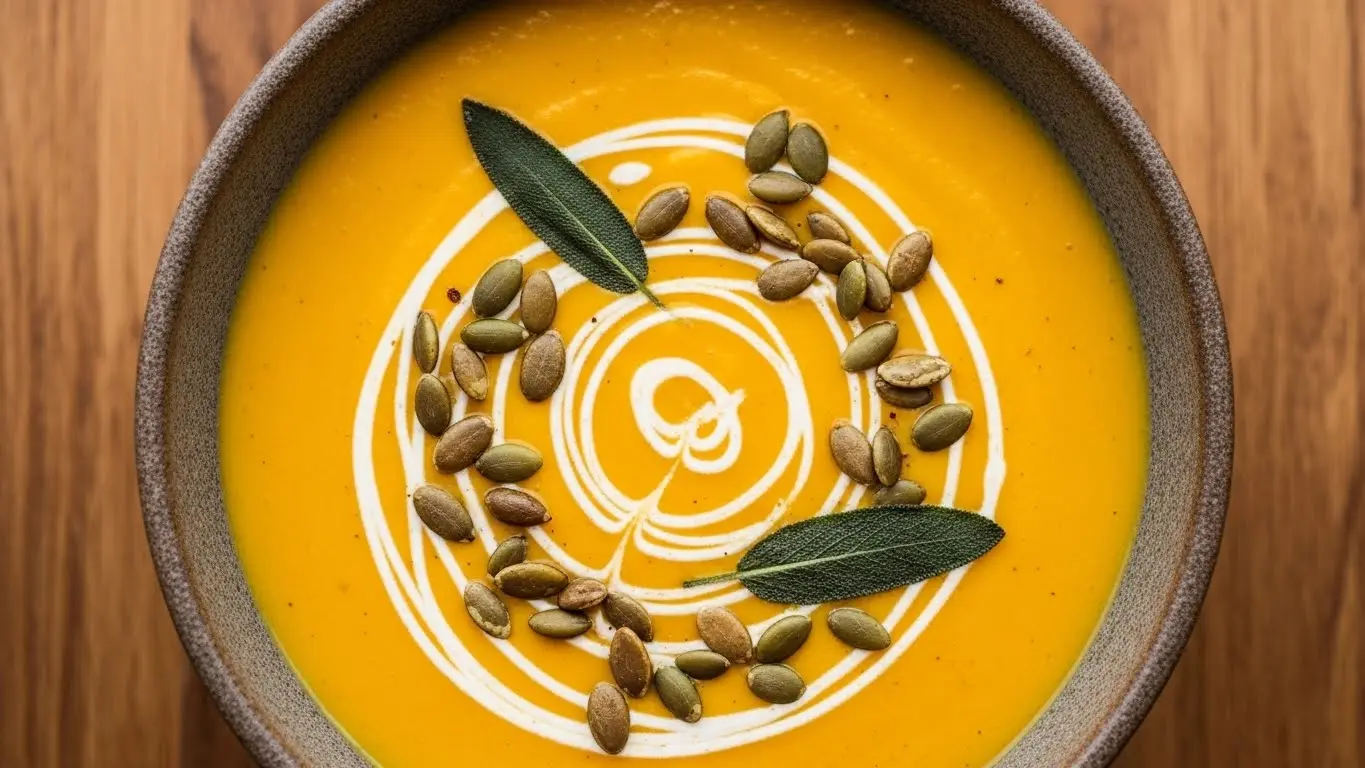
Last fall, I roasted a butternut squash purely because it was sitting on my counter looking gorgeous, and I had no concrete plan for it. Once it came out of the oven, caramelized and fragrant, I tossed it into a pot with some stock and a few aromatics.

That impromptu decision turned into this Roasted Butternut Squash Soup Recipe, which has become my absolute go-to when I need something warming and comforting.
The roasting step makes all the difference. It deepens the natural sweetness of the squash and adds a subtle smokiness that you just can’t get from boiling or steaming. I’ve made this soup at least two dozen times now, tweaking the spices here and there, but the core method remains the same.
| Quick Recipe Summary | |
|---|---|
| Prep Time | 20 minutes |
| Cook Time | 50 minutes |
| Total Time | 1 hour 10 minutes |
| Servings | 6 servings |
| Difficulty Level | Easy |
Why You’ll Love This Roasted Butternut Squash Soup Recipe
This soup strikes that perfect balance between elegant enough for guests and simple enough for a Tuesday night dinner. The roasting process caramelizes the squash’s natural sugars, creating layers of flavor that feel restaurant-quality but require minimal effort.
It’s also incredibly versatile. I’ve served it as a starter for Thanksgiving dinner, packed it in thermoses for fall picnics, and even frozen individual portions for quick lunches. The texture is velvety smooth without needing heavy cream, though a splash at the end certainly doesn’t hurt.
Here’s what makes this recipe special:
- Deep, caramelized flavor from roasting the squash instead of just boiling it
- Naturally creamy texture that doesn’t rely on dairy (though you can add some)
- Make-ahead friendly and freezes beautifully for up to 3 months
- Nutrient-dense with vitamins A and C, plus fiber
- Customizable spice level to suit your taste preferences
- Budget-friendly using seasonal produce when butternut squash is most affordable
This pairs beautifully with my homemade biscuit recipe for a complete comfort food meal.
Ingredients
I’ve learned through trial and error that the quality of your butternut squash matters more than you’d think. Look for one that feels heavy for its size with a matte, tan skin. Shiny skin often means it was picked too early and won’t be as sweet.
For the soup base:
- 1 large butternut squash (about 3-4 lbs / 1.4-1.8 kg), halved and seeds removed
- 3 tablespoons olive oil, divided
- 1 large yellow onion (about 1½ cups / 240g), diced
- 3 cloves garlic, minced
- 1 medium carrot (about ½ cup / 60g), peeled and diced
- 1 stalk celery (about ½ cup / 50g), diced
- 4 cups (960ml) vegetable broth or chicken broth
- 1 teaspoon ground cinnamon
- ½ teaspoon ground nutmeg
- ½ teaspoon smoked paprika
- ¼ teaspoon cayenne pepper (optional, for heat)
- 1 teaspoon salt, plus more to taste
- ½ teaspoon black pepper
- ½ cup (120ml) heavy cream or coconut milk (optional, for richness)
- 1 tablespoon maple syrup or honey (optional, to enhance sweetness)
For garnish (optional):
- Toasted pepitas (pumpkin seeds)
- Fresh sage leaves, fried in butter
- A drizzle of cream or coconut milk
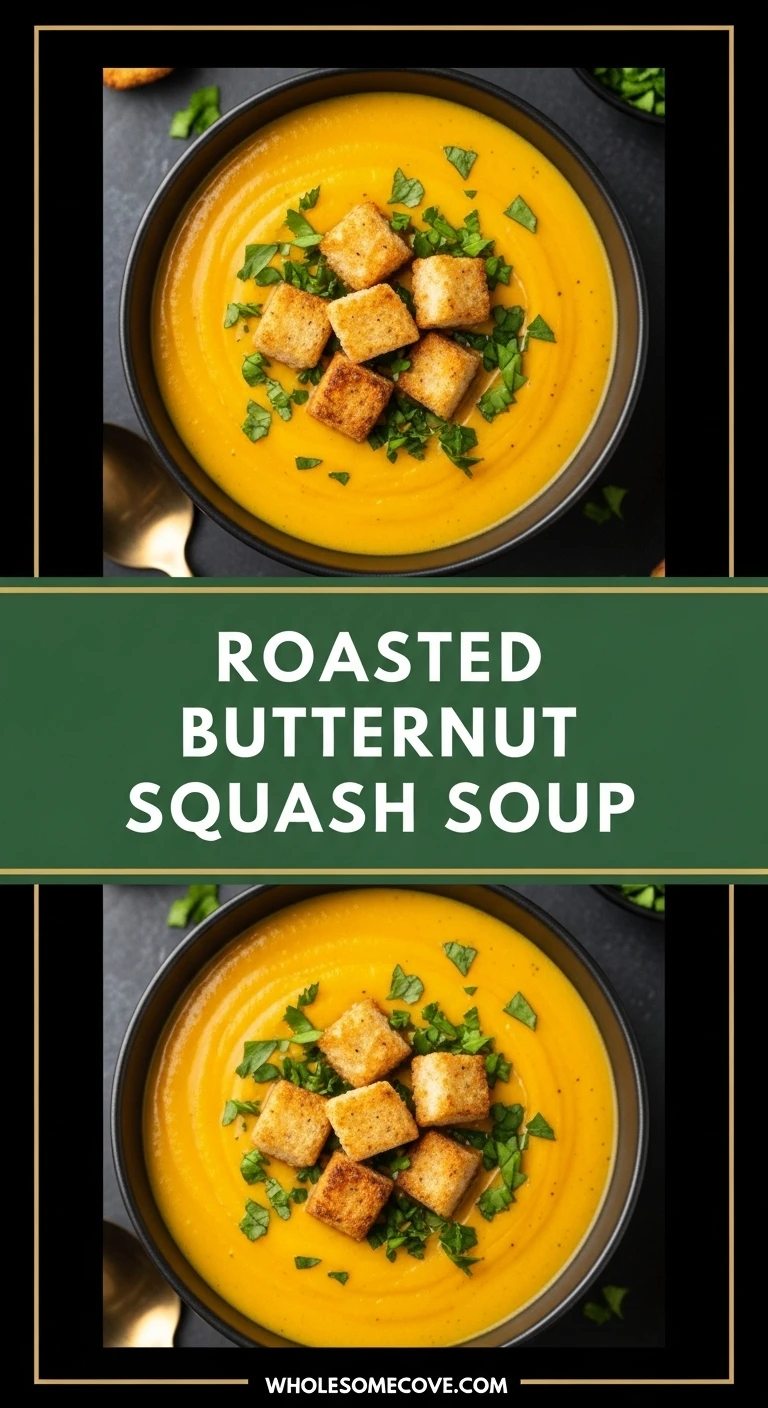
- Croutons
- Crispy bacon bits
Kitchen Equipment Needed
Having the right tools makes this recipe significantly easier, especially when dealing with that notoriously tough butternut squash skin. I highly recommend a good vegetable peeler or a sharp chef’s knife.
Here’s what you’ll need:
- Sharp chef’s knife for cutting the squash
- Large rimmed baking sheet
- Parchment paper or aluminum foil for easy cleanup
- Large Dutch oven or heavy-bottomed soup pot (at least 5-quart capacity)
- Immersion blender or regular blender
- Wooden spoon for stirring
- Measuring cups and spoons
- Ladle for serving
- Cutting board
Recommended Products for This Recipe
After making this soup countless times, I’ve found a few products that genuinely make the process easier and the results better. These aren’t necessary, but they’re worth considering if you make soup regularly.
1. KitchenAid Immersion Blender
I used to transfer hot soup to my countertop blender in batches, which was messy and honestly a bit dangerous. This immersion blender changed everything. You can blend directly in the pot, it’s easy to clean, and it gives you perfect control over texture.
2. Le Creuset Enameled Cast Iron Dutch Oven
The even heat distribution in this Dutch oven means your aromatics never scorch, and the heavy lid traps moisture perfectly while the soup simmers. Mine is 15 years old and looks almost new. It’s pricey, but it’s the kind of pot you’ll use multiple times a week.
3. Nordic Ware Natural Aluminum Commercial Baker’s Half Sheet
This rimmed baking sheet has never warped, even with years of roasting vegetables at high heat. The raised edges prevent squash juices from dripping into your oven, and cleanup is effortless with parchment paper.
4. Organic Butternut Squash (Fresh)
When butternut squash isn’t in season locally, I order organic ones online. They arrive perfectly ripe and ready to roast. The organic varieties tend to be sweeter and have a richer flavor than conventional options.
Step-by-Step Instructions: How to Make Roasted Butternut Squash Soup
I’ll walk you through each step in detail so you can’t possibly go wrong. The key is roasting the squash properly in the first step—that’s where all the magic happens.
1. Prepare and Roast the Butternut Squash
- Preheat your oven to 400°F (200°C).
- Line a large rimmed baking sheet with parchment paper for easy cleanup.
- Cut the butternut squash in half lengthwise using a sharp chef’s knife. Be careful here—the squash can be tough. I usually use a mallet to tap the back of my knife gently if it gets stuck.
- Scoop out the seeds and stringy pulp with a spoon. Save the seeds if you want to roast them separately as a snack.
- Drizzle the cut sides of the squash with 2 tablespoons of olive oil, making sure to coat the entire surface.
- Sprinkle with a pinch of salt and pepper.
- Place the squash halves cut-side down on the prepared baking sheet.
- Roast for 45-50 minutes, until the flesh is completely tender and you can easily pierce it with a fork. The edges should be slightly caramelized and golden brown.
- Remove from the oven and let cool for about 10 minutes until you can handle them comfortably.
- Once cooled, scoop the roasted flesh out with a large spoon and set it aside in a bowl. Discard the skins.
Another favorite: pumpkin waffle recipe
2. Sauté the Aromatics
- While the squash is roasting (or after it’s done), heat the remaining 1 tablespoon of olive oil in a large Dutch oven or heavy-bottomed soup pot over medium heat.
- Add the diced onion and cook for about 5-6 minutes, stirring occasionally, until it becomes soft and translucent. You’ll see the edges starting to turn golden.
- Add the minced garlic, diced carrot, and diced celery to the pot.
- Cook for another 3-4 minutes, stirring frequently, until the vegetables soften and the garlic becomes fragrant. Don’t let the garlic burn or it will taste bitter.
- The aromatics should be tender but not browned at this point.
3. Add the Roasted Squash and Broth
- Add all of the roasted butternut squash flesh to the pot with the sautéed vegetables.
- Stir everything together briefly to combine.
- Pour in the 4 cups of vegetable broth or chicken broth. The liquid should just about cover the vegetables.
- Add the ground cinnamon, ground nutmeg, smoked paprika, cayenne pepper (if using), salt, and black pepper.
- Stir well to distribute all the spices evenly throughout the soup.
- Bring the mixture to a boil over medium-high heat.
- Once boiling, reduce the heat to low and let it simmer uncovered for 15-20 minutes. This allows the flavors to meld together and the vegetables to become completely tender.
You might also enjoy: potato leek soup recipe
4. Blend the Soup Until Smooth
- Remove the pot from the heat and let it cool for about 5 minutes before blending. This prevents any dangerous splattering of hot liquid.
- If using an immersion blender, insert it directly into the pot and blend until the soup is completely smooth and creamy. Move the blender around to make sure you get every bit. This usually takes 2-3 minutes.
- If using a regular blender, work in batches. Fill the blender only about halfway full, hold the lid down with a kitchen towel (hot soup can blow the lid off), and blend on high until smooth. Pour the blended soup into a clean pot and repeat with the remaining soup.
- Once all the soup is blended and back in the pot, return it to low heat.
5. Finish and Season the Soup
- Stir in the heavy cream or coconut milk if you’re using it. This adds richness and a silky texture, but the soup is delicious without it too.
- Add the maple syrup or honey if you want to enhance the natural sweetness of the squash. Start with 1 tablespoon and taste before adding more.
- Taste the soup and adjust the seasoning. I usually add a bit more salt at this stage—squash can handle quite a bit of seasoning. Add more pepper, nutmeg, or cayenne if desired.
- Let the soup heat through for another 2-3 minutes, stirring occasionally.
- If the soup is too thick for your liking, thin it out with a bit more broth or water until you reach your desired consistency. If it’s too thin, let it simmer uncovered for a few more minutes to reduce and thicken.
Read Also: Taco Soup Recipe
6. Serve and Garnish
- Ladle the hot soup into bowls.
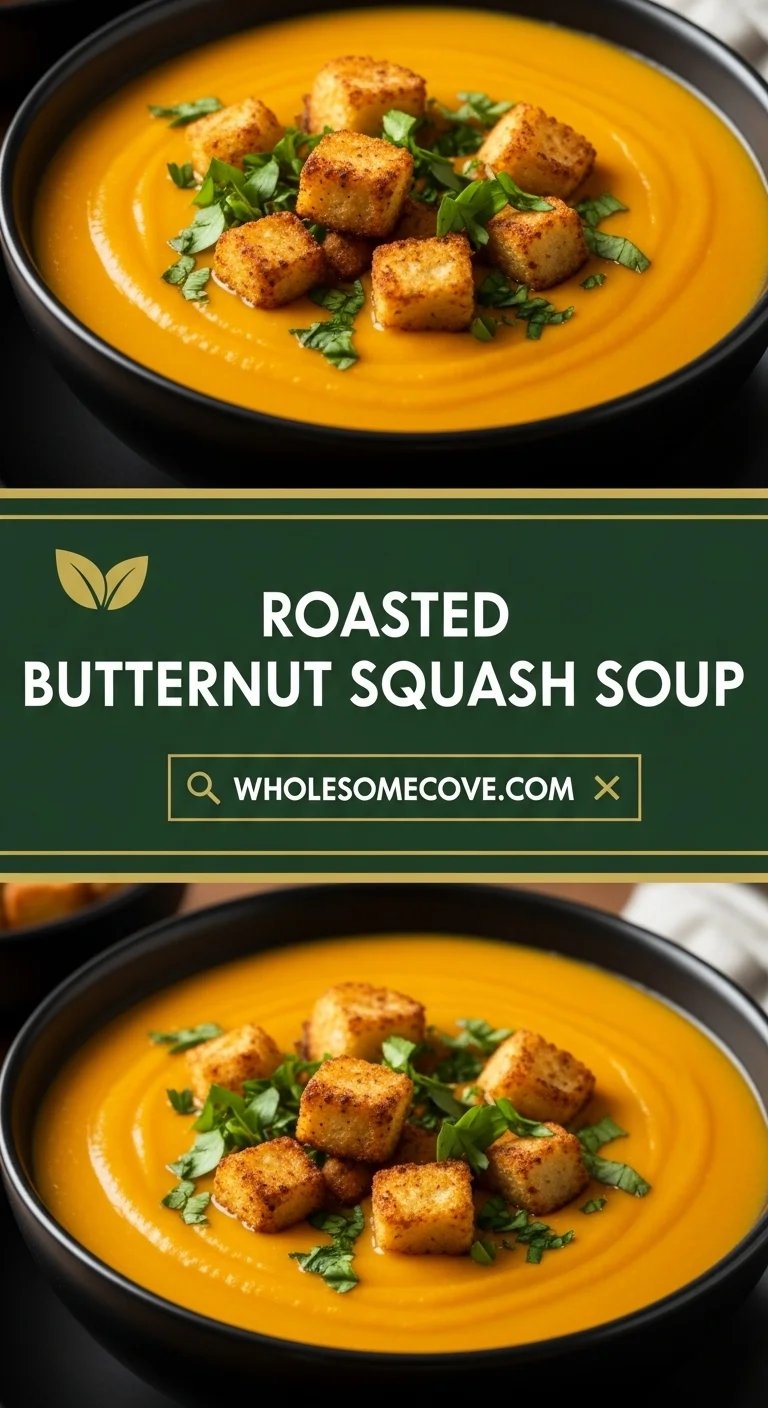
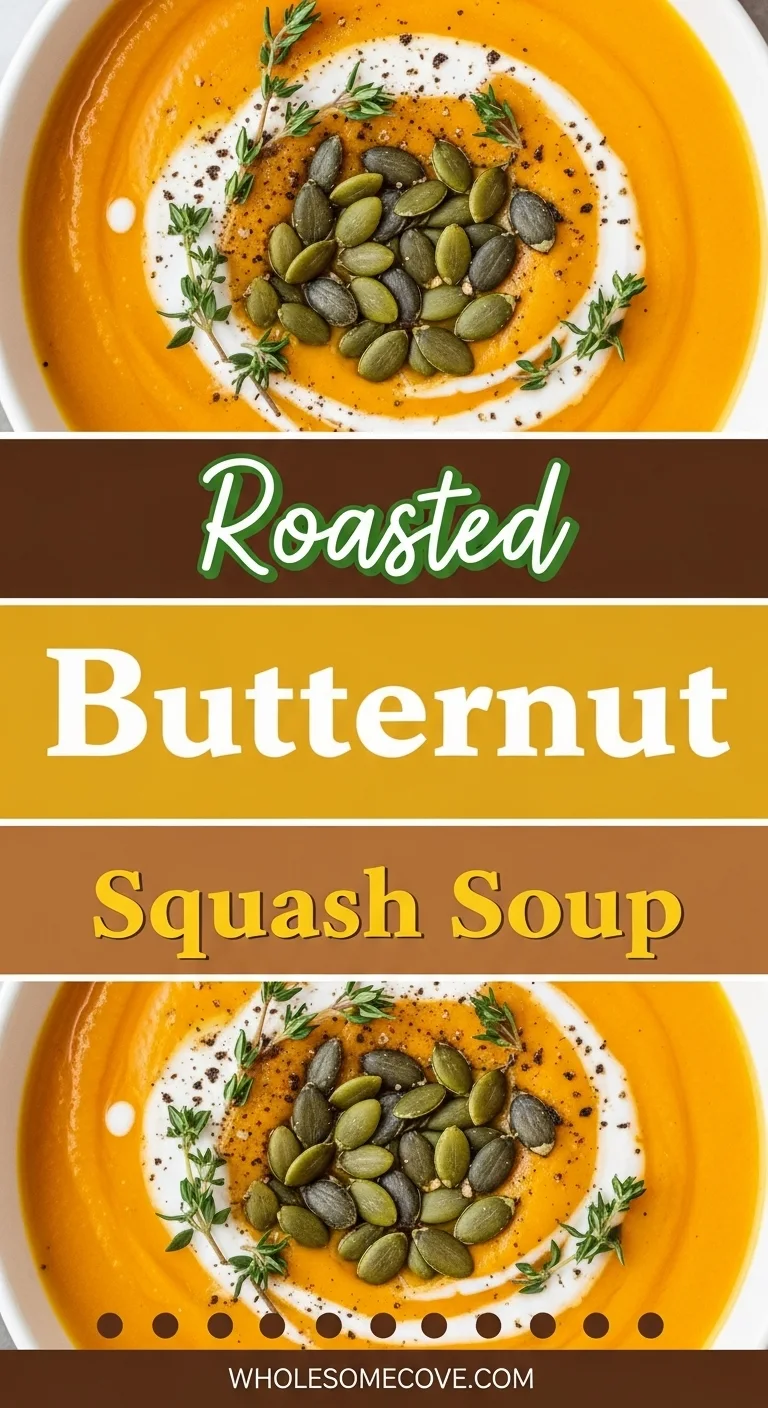
- Add your desired garnishes. I love toasted pepitas for crunch, a drizzle of cream for visual appeal, and crispy fried sage leaves when I’m feeling fancy.
- Serve immediately while hot.
- This soup stays warm for quite a while, making it perfect for a dinner party where guests might arrive at different times.
Tips for The Best Roasted Butternut Squash Soup
After making this soup so many times, I’ve picked up some tricks that really elevate the final result. These small adjustments can make the difference between good soup and exceptional soup.
- Roast the squash cut-side down so the sugars caramelize directly on the flesh, not the pan. This creates deeper flavor than roasting cut-side up.
- Don’t rush the roasting time. If your squash isn’t fork-tender and slightly browned at the edges, give it another 10-15 minutes. Under-roasted squash makes a watery, bland soup.
- Save your squash seeds and roast them with salt and oil for a crunchy topping. They add great texture and don’t go to waste.
- Use homemade stock if you have it. The flavor difference is noticeable, especially since this is a simple soup without tons of ingredients.
- Blend longer than you think you need to. An extra minute of blending takes the soup from good to restaurant-quality silky.
- Toast your spices before adding them. Heat the cinnamon, nutmeg, and paprika in the dry pot for 30 seconds before adding the broth. This blooms their essential oils and intensifies their flavor.
- Add a splash of acid at the end. A teaspoon of apple cider vinegar or lemon juice brightens all the flavors without making the soup taste sour.
- Let the soup rest for at least 10 minutes before serving. The flavors continue to develop and the texture improves as it sits.
- Adjust consistency to your preference. Some people love thick, almost puree-like soup, while others prefer it more brothy. Add liquid gradually until it’s exactly how you like it.
- Taste and season again just before serving. Soups often need more salt than you’d expect, especially if you used low-sodium broth.
This pairs wonderfully with dinner rolls recipe for soaking up every last drop.
What to Serve with Roasted Butternut Squash Soup
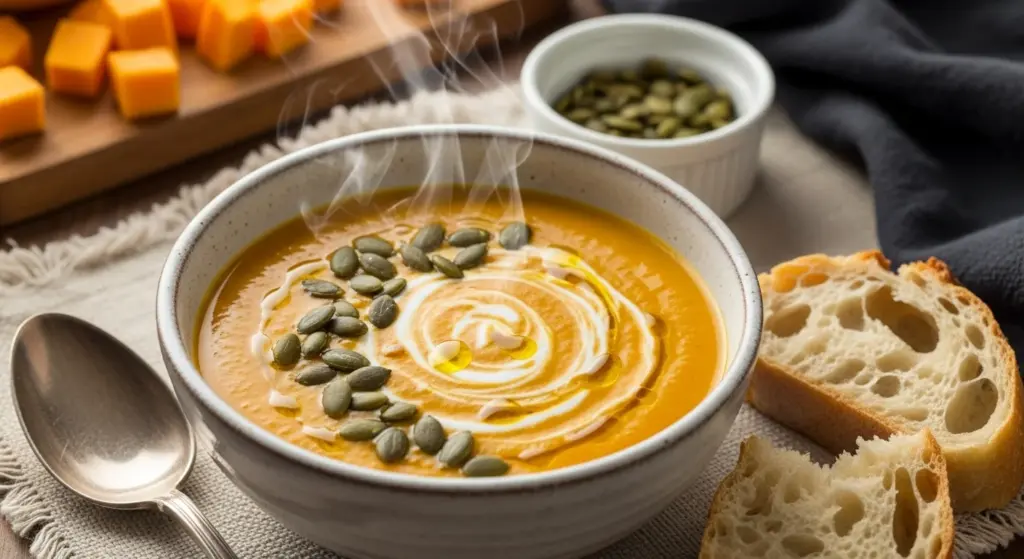
This soup is substantial enough to be a meal on its own, but I usually serve it with something to round out the plate. The right accompaniments turn this from a simple soup into a complete, satisfying dinner.
Here are my favorite pairings:
- Crusty bread or rolls: Sourdough focaccia is perfect for dipping. The crispy crust and chewy interior soak up the soup beautifully.
- Simple salad: A crisp green salad with a tangy vinaigrette cuts through the richness of the soup. I often make broccoli salad for a heartier option.
- Grilled cheese sandwich: Nothing beats the classic pairing of soup and grilled cheese. Use good quality cheese and butter for the best results.
- Roasted vegetables: Grilled vegetable skewers add extra nutrition and color to the plate.
- Protein addition: Top the soup with crumbled bacon, shredded rotisserie chicken, or sausage balls to make it more filling.
- Cheese board: Set out a simple cheese board with crackers, nuts, and dried fruit for an elegant appetizer before the soup.
- Apple slices: Fresh, crisp apple slices on the side provide a refreshing contrast to the warm, creamy soup.
Variations of Roasted Butternut Squash Soup
I’ve played around with this recipe quite a bit over the years, and these variations have all been winners. Feel free to mix and match based on what you have on hand or what sounds good to you.
- Curried butternut squash soup: Add 2 tablespoons of curry powder and 1 can of full-fat coconut milk instead of cream. Finish with fresh cilantro and a squeeze of lime juice.
- Apple butternut squash soup: Add 2 peeled and diced apples (Granny Smith works great) when you add the squash. The tartness balances the sweetness perfectly.
- Ginger butternut squash soup: Add 2 tablespoons of fresh grated ginger with the garlic. It adds a warming, spicy kick that’s especially nice in cold weather.
- Smoky butternut squash soup: Double the smoked paprika and add 1 teaspoon of chipotle powder. Top with crispy bacon and sharp cheddar cheese.
- Thai-inspired version: Use coconut milk, add 1 tablespoon of red curry paste, and finish with fresh basil and lime juice.
- Harvest butternut squash soup: Add 1 peeled and diced sweet potato with the squash for an extra-creamy, naturally sweet version.
- Herb-forward version: Skip the sweet spices and use fresh thyme, rosemary, and sage instead. This makes it more savory and less dessert-like.
- Vegan butternut squash soup: Use vegetable broth and coconut milk instead of cream. Add nutritional yeast for a cheesy flavor without dairy.
- Protein-packed version: Stir in 1 can of white beans or chickpeas after blending for added protein and fiber.
Another favorite: zuppa toscana recipe
Storage and Reheating
This soup is one of those rare dishes that actually tastes better the next day after the flavors have had time to fully meld together. I almost always make a double batch because it stores so well.
- Refrigerator storage: Let the soup cool completely, then transfer it to an airtight container. It will keep in the fridge for 4-5 days. The soup may thicken as it sits—just thin it with a bit of broth or water when reheating.
- Freezer storage: This soup freezes beautifully for up to 3 months. Cool it completely, then portion it into freezer-safe containers or heavy-duty freezer bags. Leave about an inch of headspace for expansion. Label with the date so you remember when you made it.
- Reheating from refrigerator: Pour the soup into a pot over medium-low heat. Stir occasionally and heat until warmed through, about 10 minutes. You can also microwave individual portions in 1-minute intervals, stirring between each.
- Reheating from frozen: For best results, thaw overnight in the refrigerator, then reheat in a pot on the stove. If you’re in a hurry, you can reheat from frozen—just use low heat and stir frequently, breaking up the frozen block as it thaws. This will take 20-25 minutes.
- Don’t freeze with garnishes: Add any cream, toppings, or garnishes after reheating, not before freezing. The texture of cream can separate when frozen, and crunchy toppings will get soggy.
- Make-ahead tip: You can roast the squash up to 2 days ahead and store the flesh in the fridge. When you’re ready to make soup, just start at step 2 with the aromatics.
Read Also: Cheeseburger Soup Recipe
Nutritional Facts
Here’s the approximate nutritional information per serving (based on 6 servings, with heavy cream):
- Calories: 185
- Total Fat: 9g
- Saturated Fat: 3g
- Cholesterol: 15mg
- Sodium: 620mg
- Total Carbohydrates: 26g
- Dietary Fiber: 4g
- Sugars: 7g (naturally occurring from the squash)
- Protein: 3g
- Vitamin A: 380% DV
- Vitamin C: 40% DV
- Calcium: 10% DV
- Iron: 8% DV
Note: These values are approximate and will vary based on the specific ingredients you use and whether you include optional ingredients like cream or maple syrup. To make this soup lighter, skip the cream and reduce the olive oil. The soup will still be delicious and creamy from the squash itself.
Health Benefits of Key Ingredients
Beyond just tasting incredible, this soup is genuinely nutritious. I love that I can serve something this comforting to my family and know they’re getting a serious dose of vitamins and minerals.
Butternut squash is the nutritional powerhouse here:
- Extremely high in vitamin A: Just one serving provides more than 300% of your daily needs, which supports eye health, immune function, and skin health.
- Rich in fiber: Helps with digestion and keeps you feeling full longer.
- Good source of potassium: Supports heart health and helps regulate blood pressure.
- Contains antioxidants: Including beta-carotene and vitamin C, which fight inflammation and may reduce the risk of chronic diseases.
- Low in calories: Despite being sweet and satisfying, butternut squash is naturally low in calories and fat.
- Supports immune system: The combination of vitamins A and C helps your body fight off infections, especially important during cold and flu season.
Another favorite: pasta fagioli recipe
FAQs About Roasted Butternut Squash Soup
1. Can I use pre-cut butternut squash to save time?
Absolutely! Pre-cut butternut squash cubes work perfectly and save significant prep time. You’ll need about 5-6 cups (about 700-850g) of cubed squash.
Toss the cubes with olive oil, salt, and pepper, then roast them on a baking sheet at 400°F (200°C) for 25-30 minutes until tender and caramelized. The rest of the recipe stays exactly the same.
2. How do I make this soup vegan?
Making this soup vegan is incredibly easy. Use vegetable broth instead of chicken broth, and replace the heavy cream with full-fat coconut milk or cashew cream.
You can also skip the cream entirely—the soup will still be creamy from the blended squash. Top with toasted pepitas and coconut milk drizzle instead of dairy-based toppings.
3. Why is my soup watery?
A watery soup usually means the squash wasn’t roasted long enough or you added too much broth. The squash should be very soft and slightly caramelized at the edges before you add it to the soup.
If your soup is already made and too watery, simmer it uncovered for 10-15 minutes to reduce and thicken. You can also add a peeled, diced potato and simmer until tender, then blend—this will thicken the soup naturally.
4. Can I make this in a slow cooker?
Yes, though you’ll miss out on the deep caramelized flavor from roasting. If you want to use a slow cooker, cut the squash into cubes (peeled), add all ingredients except the cream to the slow cooker, and cook on low for 6-8 hours or high for 3-4 hours.
Blend with an immersion blender, then stir in the cream. For better flavor, I still recommend roasting the squash first, then transferring it to the slow cooker with the other ingredients.
5. What can I do if I don’t have an immersion blender?
A regular countertop blender works great, though you’ll need to blend in batches. Let the soup cool slightly, then fill the blender only halfway to prevent dangerous splattering.
Hold the lid down firmly with a kitchen towel and start on low speed, gradually increasing to high. A food processor also works, though it may not get the soup quite as silky-smooth as a blender.
You might also enjoy: chicken gnocchi soup recipe
Final Thoughts
This Roasted Butternut Squash Soup has earned its place in my regular dinner rotation, and I think it’ll do the same in yours. The combination of caramelized squash, warming spices, and velvety texture makes it one of those recipes you’ll crave as soon as the weather turns cool.
I hope you enjoy making this soup as much as my family enjoys eating it. If you try it, I’d love to hear how it turns out for you or what variations you come up with!
Recommended:
- Lasagna Soup Recipe
- Italian Wedding Soup Recipe
- Easy Chicken Noodle Soup Recipe
- Instant Pot Chicken Noodle Soup Recipe
- Matzo Ball Soup Recipe
- Avgolemono Soup Recipe
- Panera Broccoli Cheddar Soup Recipe
- French Onion Beef Short Rib Soup Recipe
- Crockpot Beef Stew Recipe
- Seafood Stew Recipe