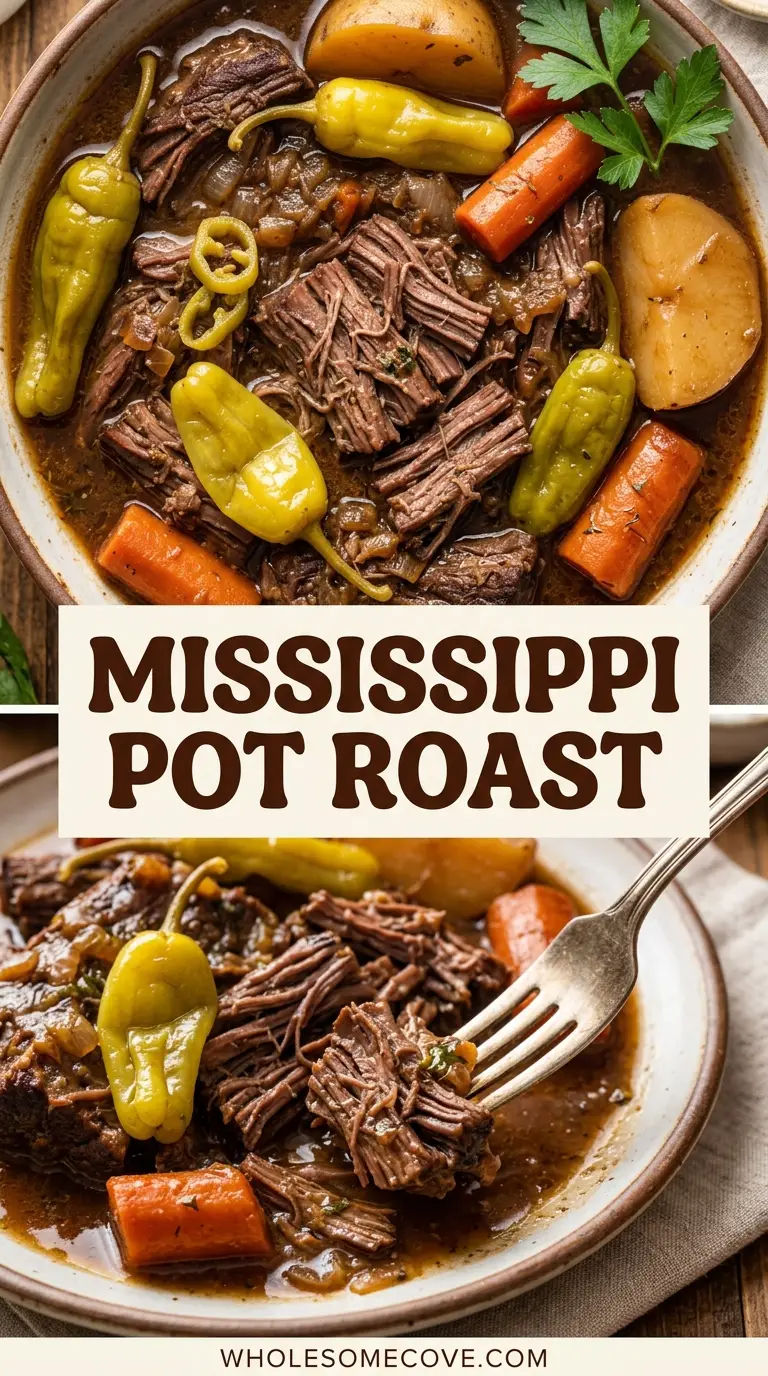
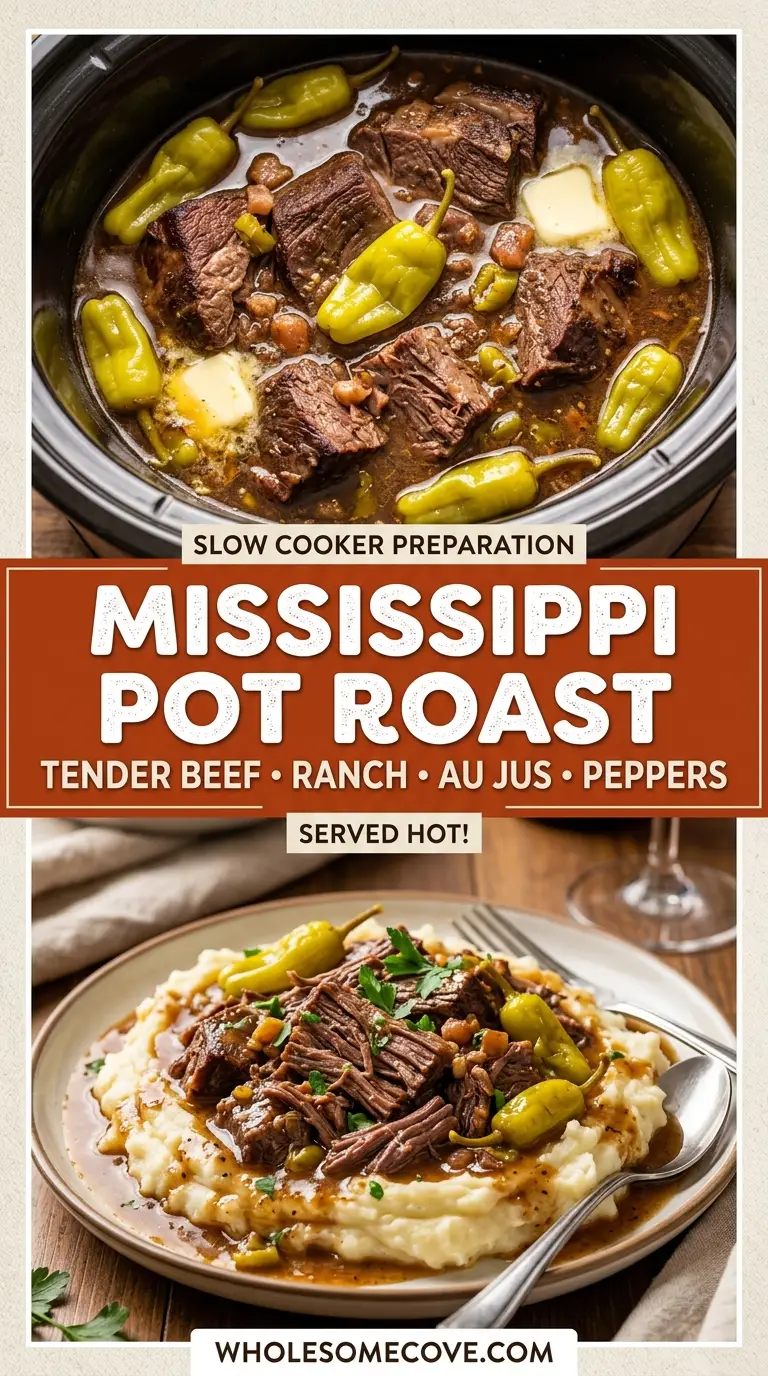
This Mississippi Pot Roast Recipe turns a plain chuck roast into fork-tender beef sitting in a glossy, buttery gravy with a gentle tang.
It uses five main ingredients plus a couple of pantry staples. The slow cooker does almost all of the work.
The real secret is that you add no water and no broth. A stick of butter, a few pepperoncini, and the juices from the beef become the sauce on their own.
That is the step most cooks miss. Adding liquid thins the gravy out instead of leaving it rich and clingy.
Ranch seasoning and au jus mix flavor the beef from the outside in as it cooks. The pepperoncini soften and lose their bite, leaving a savory tang rather than real heat.
You get about ten minutes of hands-on prep, then roughly eight hours of hands-off cooking. By dinner the roast pulls apart with a fork.
| Quick Recipe Summary | |
|---|---|
| Prep Time | 10 minutes |
| Cook Time | 8 hours |
| Total Time | 8 hours 10 minutes |
| Servings | 8 servings |
| Difficulty Level | Easy |
For a plainer, veggie-loaded version of this same comfort dish, take a look at this Slow Cooker Pot Roast.
Why You’ll Love This Mississippi Pot Roast Recipe
This roast has earned its place at Sunday dinners and busy weeknights alike, and a few specific things make it worth keeping in your rotation.
- It is genuinely dump-and-go. You layer the beef, seasonings, butter, and peppers in the pot, then walk away for the day.
- No searing required. Searing adds a little depth, but the recipe works beautifully even if you skip that step entirely.
- The gravy makes itself. Butter and pepperoncini brine combine with the beef juices, so there is no whisking a roux or thickening a sauce.
- It feeds a crowd cheaply. A single chuck roast stretches to eight servings, and the leftovers reheat well for lunches.
- The flavor is layered, not one-note. You get savory, buttery, and tangy all at once, with a whisper of warmth from the peppers.
- It is naturally low carb. With only a few grams of carbohydrate per serving, it fits keto and grain-free plans without any changes.
If you like this style of cozy braise, you might also enjoy: French Onion Pot Roast
Ingredients
Everything here is easy to find, and most of it comes from the seasoning aisle and the pickle section. Grab the specific items below for the most authentic result.
- 3 to 4 lb (1.4 to 1.8 kg) beef chuck roast: A well-marbled boneless chuck roast is the classic choice because the fat and connective tissue melt down into the beef during the long cook.
- 1 stick (8 tbsp / 113 g) unsalted butter: Real butter, not margarine, is what gives the gravy its richness, and a quality Irish butter makes it even silkier.
- 1 packet (1 oz / 28 g) ranch dressing mix: A single packet brings the buttermilk, garlic, and herb notes that define this roast.
- 1 packet (1 oz / 28 g) au jus gravy mix: The original recipe uses au jus for a deep, beefy backbone, and brown gravy mix or onion soup mix can stand in, as covered in the Variations section.
- 6 to 8 whole pepperoncini peppers, plus 2 tbsp (30 ml) brine: These tangy peppers are the signature ingredient, and the splash of brine from the jar matters just as much as the peppers themselves.
- 1/2 tsp black pepper: A little freshly ground pepper rounds out the seasoning. Hold off on adding salt until the end, since the packets and brine are already salty.
- 1 tbsp (15 ml) olive oil, optional: Only needed if you choose to sear the roast first.
I’ve found a well-marbled chuck roast shreds far more tenderly than a leaner rump or sirloin tip in this dish, so I reach for chuck every time.
Read Also: Brown Gravy
Kitchen Equipment Needed
You do not need anything fancy, but having the right tools on hand makes the process smoother from start to finish. Here is what I use.
- Slow cooker: A 6-quart (5.7 L) model comfortably fits a 3 to 4 lb roast with room for the butter and peppers.
- Cast iron skillet: Handy if you want to sear the roast before it goes into the slow cooker.
- Digital meat thermometer: The surest way to confirm the beef has reached the fall-apart stage.
- Meat shredding claws: These make quick work of pulling the roast apart once it is cooked.
- Kitchen tongs: Useful for turning the roast and lifting it out cleanly.
- Soup ladle: For spooning that buttery gravy over the finished beef and any sides.
For a heartier one-pot meal using similar cuts, you’ll find more inspiration in Crockpot Beef Stew.
Recommended Products for This Recipe
These are the items I reach for whenever I make this roast, chosen because each one solves a problem I actually ran into while testing. They are worth the small upgrade if you make pot roast often.
1. Crock-Pot 7-Quart Slow Cooker
A cramped slow cooker leaves the roast crowding the sides and cooking unevenly, which is why a larger insert helps. This roomy model gives a 4 lb roast space to sit flat, and the programmable timer switches to warm on its own so nothing overcooks while you are out.
2. Mezzetta Golden Greek Pepperoncini
Some jarred peppers are mushy and one-note, which drags down the whole dish. These stay firm and bring a bright, clean tang, and the brine is well-balanced enough that a couple of spoonfuls season the gravy without overwhelming it.
3. Bear Paws Meat Shredder Claws
Shredding a hot roast with two forks is slow and clumsy. These sturdy claws grip the beef and pull it into clean strands in seconds, which keeps the meat from cooling down while you work.
4. Lodge Cast Iron Skillet
If you decide to sear, a thin pan will not hold enough heat to build a real crust. This heavy cast iron skillet gets screaming hot and gives the roast a deep brown sear that adds flavor before the slow cook even begins.
5. Fat Separator
The gravy can come out greasier than you want, especially with a fattier roast. A simple fat separator lets you pour off the excess butterfat so the sauce stays rich without turning oily on the plate.
You might also enjoy: Beef Tips and Gravy

Step-by-Step Instructions: How to Make Mississippi Pot Roast
Follow these simple steps and you will have a tender, buttery Mississippi Pot Roast ready by dinnertime.
1. Prep the Roast
- Pat the 3 to 4 lb (1.4 to 1.8 kg) chuck roast dry all over with paper towels. A dry surface browns better and helps the seasonings stick.
- If the roast is tied or has a very thick fat cap, leave it as is. The fat renders down and enriches the gravy.
- Season the beef lightly with the 1/2 tsp black pepper on both sides. Skip the salt for now.
2. Sear for Extra Flavor (Optional)
- Heat 1 tbsp (15 ml) olive oil in a cast iron skillet over medium-high heat until it shimmers.
- Lay the roast in the pan and sear for 3 to 4 minutes per side, until a deep brown crust forms.
- Transfer the roast to your slow cooker. If you would rather keep things simple, you can place the raw roast straight into the pot instead.
3. Add the Seasonings
- Sprinkle the entire packet of ranch dressing mix evenly over the top of the roast.
- Follow with the full packet of au jus gravy mix, covering the surface as evenly as you can.
- There is no need to rub the seasonings in. They will dissolve into the juices as the beef cooks.
4. Top with Butter and Peppers
- Place the whole stick of butter (8 tbsp / 113 g) right on top of the roast.
- Scatter the 6 to 8 pepperoncini peppers around and over the beef.
- Pour in 2 tbsp (30 ml) of the pepperoncini brine from the jar. Do not add any water or broth.
5. Slow Cook Low and Slow
- Cover the slow cooker and cook on low for 8 hours. Low and slow is what breaks down the connective tissue and gives you that melt-in-your-mouth texture.
- If you are short on time, cook on high for 4 to 5 hours instead, though low delivers the most tender result.
- Resist the urge to lift the lid. Each peek releases heat and adds cooking time.
6. Check for Doneness
- The roast is ready when it shreds with almost no resistance. An internal temperature around 200 to 205°F (93 to 96°C) is the sweet spot for shredding.
- If the beef still feels firm, cover it and give it another 30 to 60 minutes.
7. Shred and Serve
- Lift the roast onto a cutting board or large plate and shred it with two forks or a set of meat claws.
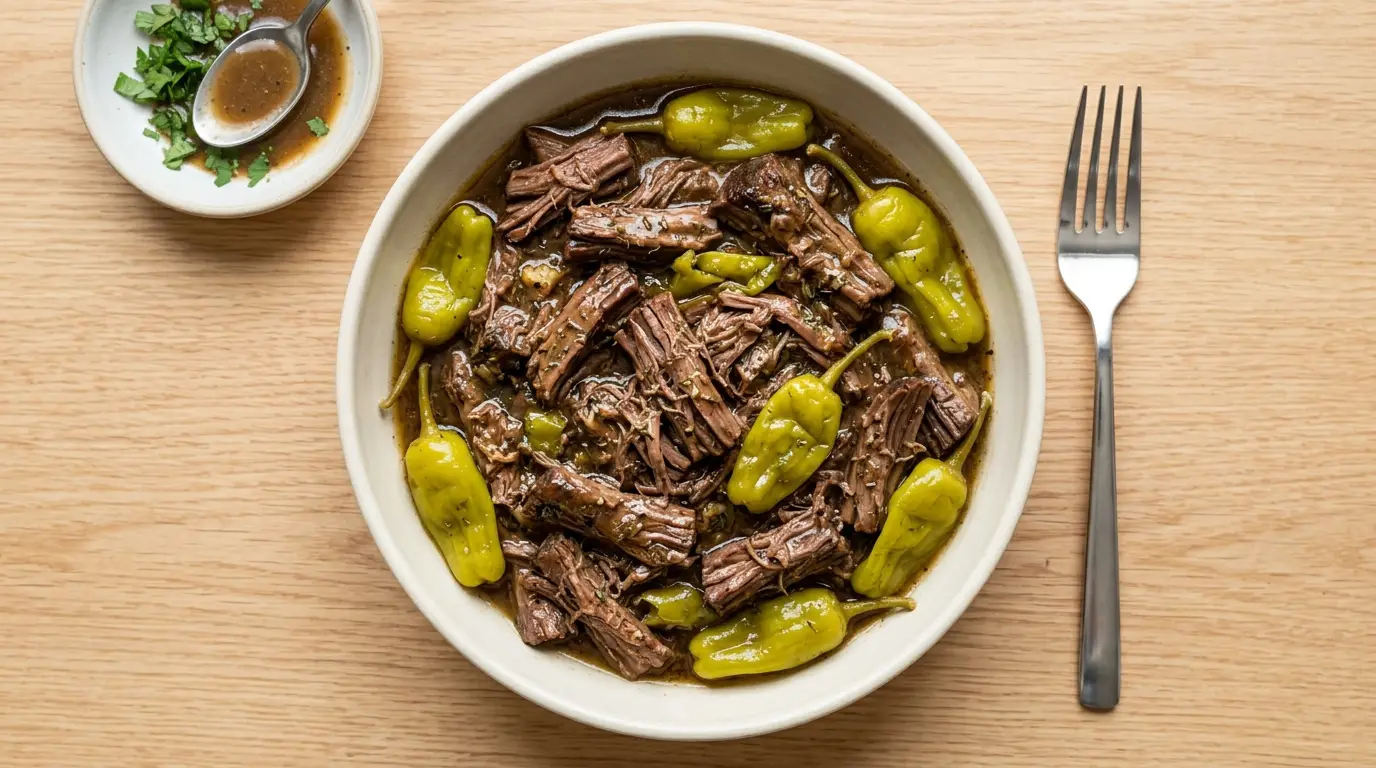
- Return the shredded beef to the pot and stir it through the buttery gravy so every strand soaks up the sauce.
- Taste, then add a pinch of salt only if it needs it. Serve warm with your favorite sides.
For another slow-simmered beef dinner in the same spirit, see Beef Stew.
Tips for The Best Mississippi Pot Roast
Small choices make a big difference with a recipe this simple. Keep these pointers in mind for the most tender, balanced roast.
- Skip the added liquid. The butter, brine, and beef juices are all the moisture this roast needs, so pouring in broth or water only dilutes the gravy.
- Choose chuck over leaner cuts. The marbling in a chuck roast is what turns tender, while leaner cuts can end up dry and stringy.
- Use unsalted butter. Both packets and the brine bring plenty of sodium, so unsalted butter gives you control over the final saltiness.
- Do not skip the brine. That splash of pepperoncini juice adds a tang you cannot get from the peppers alone.
- Cook on low when you can. High heat works in a pinch, but low heat gives the collagen time to melt for a silkier texture.
- Adjust the heat level. For a milder roast use fewer peppers, and for more kick add a couple extra or a few sliced ones.
- Let it rest in the gravy. Stirring the shredded beef back into the sauce for 10 minutes lets it drink up the flavor.
I ruined an early batch by adding a cup of beef broth out of habit, and the gravy came out thin and bland. Leaving the liquid out entirely was the fix, and it has been foolproof since.
Read Also: Meatloaf
What to Serve with Mississippi Pot Roast
This roast produces a generous amount of buttery, savory gravy, so the best partners are sides that can soak it all up. Here are the pairings I come back to again and again.
- Mashed Potatoes: The classic match, perfect for catching every drop of that gravy.
- Buttermilk Biscuits: Split and pile the shredded beef on top for an easy open-faced sandwich.
- Egg noodles: A bed of buttered noodles turns the roast into a comforting, saucy bowl.
- Steamed white rice or Basmati Rice: A plain, fluffy grain balances the richness of the beef.
- Roasted Potatoes: Crispy edges and soft centers stand up well to the buttery sauce.
- Maple Glazed Carrots: A touch of sweetness plays nicely against the savory, tangy beef.
- Green Bean Casserole: A cozy, crowd-pleasing vegetable side for holiday tables.
- Creamed Spinach: Rich and velvety, it rounds out a hearty plate.
- Coleslaw: A crunchy, cool side that cuts through the richness of the roast.
- Dinner Rolls: Soft rolls are perfect for making sliders out of the leftovers.
A similar approach works well in French Onion Beef and Noodles.
Variations of Mississippi Pot Roast
The base recipe is endlessly adaptable, and a few easy swaps let you tailor it to your taste or what you have on hand. Try one of these spins.
- Brown gravy version: Swap the au jus packet for brown gravy mix for a milder, less salty sauce that still tastes beefy.
- Onion soup version: Use onion soup mix in place of au jus for a deeper, more savory-sweet onion flavor.
- Mississippi chicken: Use the same seasonings on boneless chicken breasts or thighs, cooking on low for about 4 to 5 hours.
- Pork shoulder swap: A boneless pork shoulder takes on these flavors just as well as beef for a change of pace.
- Add vegetables: Nestle carrots, celery, or quartered onions around the roast so they soften in the gravy.
- Bacon boost: Replace a couple tablespoons of butter with bacon grease for a smoky undertone.
- Extra spicy: Toss in a few sliced jalapeños or a dash of hot sauce along with the pepperoncini.
- Pressure cooker method: Cook it in an electric pressure cooker on high pressure for about 60 minutes with a natural release for a faster dinner.
For a special-occasion beef centerpiece instead, try: Prime Rib
Storage and Reheating
Leftover Mississippi pot roast keeps beautifully, and many people think it tastes even better the next day. Store and reheat it with these guidelines.
- Refrigerate: Cool the beef and gravy, then store together in an airtight container for up to 4 days.
- Freeze: Pack the shredded beef with its gravy in a freezer-safe container for up to 3 months.
- Thaw: Move frozen roast to the fridge overnight before reheating for the best texture.
- Reheat on the stovetop: Warm the beef and gravy gently in a covered pan over low heat, stirring now and then.
- Reheat in the microwave: Heat individual portions in 60-second bursts, stirring between each, until hot throughout.
- Keep it moist: Always reheat the beef in its gravy so it does not dry out.
- Repurpose leftovers: Pile the shredded beef onto rolls for sliders, fold it into tacos, or spoon it over baked potatoes.
For another make-ahead comfort meal that freezes well, a related recipe is Shepherd’s Pie.
Nutritional Facts
The values below are estimates for one of eight servings, based on a 3.5 lb chuck roast with a full stick of butter. Actual numbers will vary with the exact cut and brands you use.
| Nutrient | Amount per Serving |
|---|---|
| Calories | 445 kcal |
| Protein | 38 g |
| Total Fat | 32 g |
| Saturated Fat | 15 g |
| Carbohydrates | 3 g |
| Fiber | 0 g |
| Sugar | 1 g |
| Sodium | 920 mg |
| Cholesterol | 145 mg |
Read Also: Swedish Meatballs
Health Benefits of Key Ingredients
While this is comfort food at heart, several of its core ingredients bring real nutritional value to the table. Here is what the main components contribute.
- Beef chuck roast: A rich source of complete protein that supports muscle repair, along with iron, zinc, and vitamin B12 for energy and immune health.
- Pepperoncini peppers: Low in calories and a source of vitamin C, and their tangy brine adds big flavor without adding fat.
- Butter: Provides fat-soluble vitamins A and D, and its fat helps the body absorb nutrients from the beef, best enjoyed in moderation.
- Ranch and herb seasonings: The garlic and onion notes in the ranch mix contribute small amounts of the same plant compounds valued in fresh alliums.
- Collagen from the chuck: As the connective tissue breaks down during the long cook, it releases gelatin that many people find supportive for joints and gut health.
For a lighter, veggie-forward beef bowl, you’ll find more ideas in French Onion Beef Stew.
FAQs About Mississippi Pot Roast
1. Do you need to add water or broth to Mississippi pot roast?
No, and adding it is the most common mistake with this recipe. The butter, pepperoncini brine, and juices released by the beef create plenty of rich gravy on their own.
If you add extra liquid, the sauce turns thin and loses its concentrated flavor. Trust the process and leave the broth in the cupboard.
2. Why is my Mississippi pot roast tough?
Toughness almost always comes from not cooking the roast long enough. Chuck roast needs several hours of low, slow heat to break down its connective tissue and turn tender.
If your roast is chewy, it likely just needs more time. Cover it and keep cooking until it shreds easily with a fork.
3. Is Mississippi pot roast spicy?
Not really, even though pepperoncini can taste sharp straight from the jar. During the long cook the peppers mellow out, leaving a savory tang rather than noticeable heat.
If you are sensitive to spice, use fewer peppers and skip the sliced ones. For more kick, add extra peppers or a splash of hot sauce.
4. Can I make Mississippi pot roast without the seasoning packets?
Yes, you can build the same flavors from your own pantry. A homemade blend of dried herbs, garlic powder, onion powder, and a little dried buttermilk stands in for the ranch, while a savory beef base replaces the au jus.
Going packet-free also lets you control the sodium. Just season to taste at the end, since homemade blends vary in saltiness.
5. What is the best cut of beef for Mississippi pot roast?
A boneless chuck roast is the gold standard because its marbling and connective tissue turn silky over a long cook. It shreds easily and stays juicy.
Rump roast and sirloin tip can work in a pinch. They are leaner, though, so they tend to come out a bit drier and less tender.
6. Can I make Mississippi pot roast in an Instant Pot?
Yes, the pressure cooker is a great shortcut when you are short on time. Add the same ingredients, plus a small splash of broth to reach pressure, and cook on high for about 60 minutes.
Let the pressure release naturally for the most tender beef. Shred it right in the pot and stir it through the gravy before serving.
7. How do I make Mississippi pot roast less salty?
Start with unsalted butter and hold off on adding any salt until the very end. Choosing a reduced-sodium au jus or gravy packet also makes a noticeable difference.
Serving the beef over plain rice, noodles, or potatoes helps balance the seasoning. Those neutral sides soak up the gravy and soften its saltiness.
For another cozy braise with a rich, tangy gravy, see Crockpot Beef Stew.
For a Southern-style simmered beef classic, another option worth trying is Brunswick Stew.
Mississippi Pot Roast
Ingredients
- 3 lb beef chuck roast - 1.4 to 1.8 kg; boneless, well-marbled
- 1 stick unsalted butter - 8 tbsp / 113 g; real butter, not margarine
- 1 packet ranch dressing mix - 1 oz / 28 g
- 1 packet au jus gravy mix - 1 oz / 28 g; brown gravy mix or onion soup mix can stand in
- 6 whole pepperoncini peppers - 6 to 8 whole, plus 2 tbsp (30 ml) brine from the jar
- 1/2 tsp black pepper - freshly ground
- 1 tbsp olive oil - 15 ml; optional, only needed if searing the roast
Equipment
- Slow cooker - 6-quart (5.7 L) model
- Cast iron skillet - (optional) for searing the roast
- Digital meat thermometer - to confirm the beef reaches 200-205°F
- Meat shredding claws - or two forks
- Kitchen tongs - for turning and lifting the roast
- Soup Ladle - for spooning gravy over the beef
Method
- Pat the chuck roast dry all over with paper towels and season lightly with black pepper on both sides. Skip the salt for now.
- Heat olive oil in a cast iron skillet over medium-high heat and sear the roast 3 to 4 minutes per side until deeply browned. Transfer to the slow cooker, or skip searing and place the raw roast straight into the pot.
- Sprinkle the entire packet of ranch dressing mix evenly over the roast, followed by the full packet of au jus gravy mix. No need to rub them in.
- Place the whole stick of butter on top of the roast, scatter the pepperoncini around and over the beef, and pour in 2 tbsp of the pepperoncini brine. Do not add any water or broth.
- Cover and cook on low for 8 hours, or on high for 4 to 5 hours if short on time. Resist lifting the lid.
- The roast is ready when it shreds with almost no resistance and reaches an internal temperature of 200 to 205°F (93 to 96°C). If still firm, cook another 30 to 60 minutes.
- Lift the roast onto a cutting board and shred with two forks or meat claws. Return the shredded beef to the pot, stir through the gravy, taste, and add salt only if needed.
Nutrition
Notes
- Skip the added liquid. The butter, brine, and beef juices are all the moisture this roast needs, so pouring in broth or water only dilutes the gravy.
- Choose chuck over leaner cuts. The marbling in a chuck roast is what turns tender, while leaner cuts like rump or sirloin tip can end up dry and stringy.
- Use unsalted butter. Both seasoning packets and the brine bring plenty of sodium, so unsalted butter gives you control over the final saltiness.
- Do not skip the brine. That splash of pepperoncini juice adds a tang you cannot get from the peppers alone.
- Cook on low when you can. High heat works in a pinch, but low heat gives the collagen time to melt for a silkier texture.
- Adjust the heat level. For a milder roast use fewer peppers, and for more kick add a couple extra or a few sliced ones.
- Let it rest in the gravy. Stirring the shredded beef back into the sauce for 10 minutes lets it drink up the flavor.
- Storage: Cool the beef and gravy, then store together in an airtight container in the refrigerator for up to 4 days, or freeze for up to 3 months.
- Reheating: Warm gently in a covered pan over low heat or in the microwave in 60-second bursts, always with the gravy to keep the beef moist.
- Repurpose leftovers: Pile the shredded beef onto rolls for sliders, fold it into tacos, or spoon it over baked potatoes.
Private Notes
Tried this recipe?
Let us know how it was!Final Thoughts
This Mississippi pot roast proves that a handful of simple ingredients can turn out something truly memorable. The tender beef and buttery, tangy gravy taste like they took all day, even though the work took ten minutes.
Once you make it, do not be surprised when it becomes a regular request at your table. It is the kind of low-effort, high-reward dinner that never gets old.
Give it a try this week and let the slow cooker do the heavy lifting. If you make it, I would love to hear how it turned out, so drop a comment below and share it with a friend who needs an easy dinner win.
Recommended:
- Baked Mac and Cheese
- Scalloped Potatoes
- Au Gratin Potatoes
- Roasted Brussels Sprouts with Bacon
- Twice Baked Potatoes
- Cowboy Stew
- French Onion Beef Casserole
- Mississippi Mud Potatoes
- Filet Mignon
- Healthy Cornbread