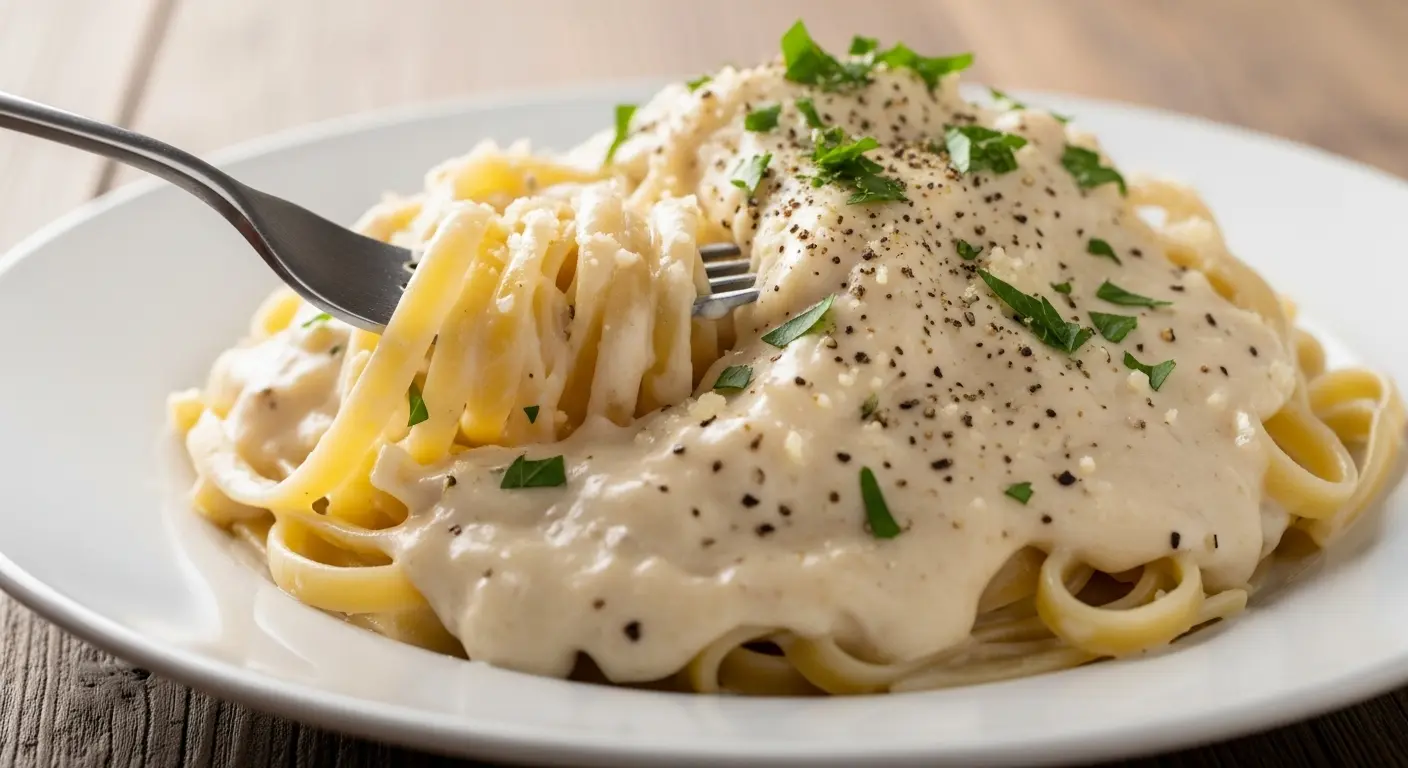
I used to think rich, velvety Alfredo sauce was off-limits for anyone trying to eat healthier. You know the traditional version: butter, heavy cream, and mountains of Parmesan that taste incredible but leave you feeling sluggish afterward.
Then one night, while trying to satisfy a pasta craving without derailing my healthy eating goals, I experimented with some lighter ingredients I had in my fridge. What emerged was this Healthy Alfredo Sauce Recipe that’s become my go-to for weeknight dinners.
The best part? Nobody at my table could tell the difference. My kids still licked their plates clean, and my husband asked for seconds. This sauce has all the creamy, garlicky goodness of the original but with a fraction of the calories and fat.
I’ve made this sauce at least thirty times now, tweaking and perfecting it along the way. I’ve learned exactly which milk works best (spoiler: it’s not skim), how to prevent the sauce from separating, and the secret ingredient that gives it that authentic Alfredo tang without all the cream.
| Quick Recipe Summary | |
|---|---|
| Prep Time | 5 minutes |
| Cook Time | 10 minutes |
| Total Time | 15 minutes |
| Servings | 4 servings (about 2 cups) |
| Difficulty Level | Easy |
Why You’ll Love This Healthy Alfredo Sauce Recipe
This isn’t one of those “healthy” recipes that sacrifices flavor for fewer calories. I’ve tested this sauce on everyone from picky toddlers to my Italian mother-in-law, and it passes every time.
The texture is silky smooth, clinging to pasta perfectly without being gummy or watery. You get that classic Alfredo flavor profile with the garlic, cheese, and creaminess, but you won’t feel weighed down after eating it.
I love that I can make this on a Tuesday night without any special planning. All the ingredients are pantry staples, and it comes together faster than ordering takeout.
- Significantly lower in calories and fat than traditional Alfredo (about 120 calories per serving versus 400+)
- Ready in just 15 minutes from start to finish
- Uses simple, wholesome ingredients you probably already have
- Tastes just as indulgent as the restaurant version
- Versatile enough to use with pasta, vegetables, chicken, or seafood
- No heavy cream required but still incredibly creamy
- Customizable to your dietary needs (easily made gluten-free)
This pairs beautifully with my healthy orange chicken for a complete weeknight meal.
Ingredients
This sauce comes together with just a handful of simple ingredients that create magic when combined properly. I’ve tested various substitutions, and I’ll share what works best below.
- 2 tablespoons (28g) butter (I use unsalted so I can control the salt level)
- 3 cloves garlic, minced (fresh makes a huge difference here)
- 2 tablespoons (16g) all-purpose flour (or use cornstarch for gluten-free)
- 1½ cups (360ml) low-fat milk (2% works perfectly; don’t use skim)
- ½ cup (120ml) low-sodium chicken broth (or vegetable broth for vegetarian)
- ¾ cup (75g) freshly grated Parmesan cheese (the pre-grated stuff doesn’t melt as smoothly)
- 2 tablespoons (30g) Greek yogurt (this is my secret ingredient!)
- ½ teaspoon salt (adjust to taste)
- ¼ teaspoon black pepper
- ¼ teaspoon nutmeg (optional but traditional)
- 1 tablespoon fresh parsley, chopped (for garnish)
Kitchen Equipment Needed
You don’t need any fancy equipment for this sauce, just the basics you probably already own. I’ve made this in everything from a non-stick pan to a heavy-bottomed saucepan, and both work fine.
- Medium saucepan (I prefer a heavy-bottomed stainless steel pan for even heat distribution)
- Whisk (essential for preventing lumps)
- Microplane grater or box grater (for the Parmesan)
- Measuring cups and spoons
- Wooden spoon (for stirring)
- Garlic press or sharp knife (for mincing garlic)
Recommended Products for This Recipe
After making this sauce dozens of times, I’ve found a few products that genuinely make the process easier and the results better. These aren’t necessities, but they’ve become staples in my kitchen.
1. Parmigiano-Reggiano Authentic Italian Cheese
The quality of your Parmesan makes or breaks this sauce. I started buying authentic Parmigiano-Reggiano, and the difference is night and day compared to the pre-grated stuff. It melts smoother, tastes richer, and you need less of it to get that deep, nutty flavor.
2. Microplane Premium Zester Grater
This tool changed how I grate cheese for sauces. It creates these fine, fluffy shreds that melt instantly into the sauce with no clumps. I use mine constantly, not just for cheese but for garlic, ginger, and lemon zest too.
3. All-Clad Stainless Steel Saucepan
I invested in this pan two years ago, and it’s been perfect for making sauces. The heavy bottom prevents hot spots that can cause your sauce to separate or burn. The heat distribution is so even that I can make this Alfredo sauce on medium-low without any issues.
4. Fage Total 2% Greek Yogurt
Not all Greek yogurts work the same in this recipe. Fage has the perfect tanginess and thick consistency that adds creaminess without making the sauce watery. It’s my secret weapon for healthy Alfredo that still tastes indulgent.
Step-by-Step Instructions: How to Make Healthy Alfredo Sauce
I’ve broken down every step to make this foolproof, even if you’ve never made a sauce from scratch before. The key is patience and not rushing the process.
1. Prep Your Ingredients
- Mince your garlic cloves finely and set aside
- Grate the Parmesan cheese fresh if possible (pre-grated doesn’t melt as smoothly)
- Measure out all your ingredients and have them within reach
- Make sure your milk and broth are at room temperature (this prevents the sauce from breaking)
2. Create the Roux Base
- Melt the butter in your saucepan over medium heat until it’s fully liquified and starting to foam slightly
- Add the minced garlic and sauté for about 30-45 seconds, stirring constantly with a wooden spoon
- Watch carefully so the garlic becomes fragrant but doesn’t brown or burn (burned garlic tastes bitter)
- Sprinkle the flour over the butter and garlic mixture
- Whisk continuously for 1-2 minutes until the mixture forms a paste and starts to turn a very light golden color
- This cooking step removes the raw flour taste that would otherwise make your sauce taste starchy
3. Add the Liquids Gradually
- Pour in about ¼ cup of the milk while whisking vigorously to prevent lumps from forming
- Once that’s fully incorporated and smooth, add another ¼ cup of milk, still whisking
- Continue adding the milk in small additions, whisking constantly between each pour
- After all the milk is incorporated, add the chicken broth in the same gradual manner
- This slow addition is crucial for a smooth, lump-free sauce (I learned this the hard way after making grainy Alfredo on my first attempt)
Read Also: Easy Alfredo Sauce Recipe
4. Thicken the Sauce
- Continue cooking the sauce over medium heat, stirring frequently with your whisk
- The sauce will start thin but will gradually thicken as it heats
- Let it come to a gentle simmer (small bubbles around the edges, not a rolling boil)
- Simmer for 3-4 minutes, whisking occasionally, until the sauce coats the back of a spoon
- If you draw your finger across the spoon, the line should hold without the sauce running back together immediately
5. Incorporate the Cheese and Yogurt
- Reduce the heat to low (this is important because high heat can cause the cheese to separate and become grainy)
- Add the grated Parmesan cheese a handful at a time, whisking until each addition is completely melted before adding more
- Once all the cheese is melted and the sauce is smooth, remove the pan from heat
- Stir in the Greek yogurt until it’s fully incorporated (adding it off-heat prevents it from curdling)
- The yogurt adds tanginess and extra creaminess while keeping the calorie count reasonable
6. Season and Finish
- Taste the sauce and add salt, black pepper, and nutmeg if using
- Start with the amounts listed and adjust to your preference (I usually add a bit more pepper than the recipe calls for)
- If the sauce seems too thick, whisk in a tablespoon or two of milk or pasta water to reach your desired consistency
- If it’s too thin, let it simmer on low for another minute or two
- Garnish with fresh chopped parsley before serving
Another favorite: Olive Garden Alfredo Sauce Recipe
Tips for The Best Healthy Alfredo Sauce
After making this sauce more times than I can count, I’ve learned some tricks that ensure perfect results every single time. These tips come from real mistakes I’ve made and figured out how to fix.
- Use 2% milk, not skim: I tried making this with skim milk once to save even more calories, and it turned out watery and flavorless. The small amount of fat in 2% milk is necessary for that creamy texture.
- Grate your own Parmesan: Pre-grated cheese contains cellulose to prevent clumping, which makes it harder to melt smoothly. Fresh-grated cheese melts into the sauce like butter.
- Don’t skip the Greek yogurt: This is what makes the sauce taste rich without heavy cream. Make sure you use plain, not vanilla, and full-fat or 2% works better than fat-free.
- Keep the heat low when adding cheese: High heat will cause the cheese to separate and become stringy or grainy. Low and slow is the way to go.
- Reserve pasta water if using with pasta: The starchy pasta water is perfect for thinning the sauce and helps it cling to noodles better than regular water or milk.
- Make the roux properly: That minute or two of cooking the flour and butter is crucial. It needs to cook long enough to remove the raw flour taste but not so long that it browns.
- Whisk constantly when adding liquids: This prevents lumps from forming. If you do get lumps, strain the sauce through a fine-mesh sieve.
- Season at the end: The Parmesan adds a lot of saltiness, so always taste before adding extra salt.
- Use fresh garlic: Jarred minced garlic or garlic powder won’t give you the same fresh, vibrant flavor.
- Warm your serving dish: Alfredo sauce can thicken as it cools. Serving it in a warmed bowl keeps it fluid longer.
You might also enjoy: Healthy Pizza Dough Recipe
Serving Suggestions
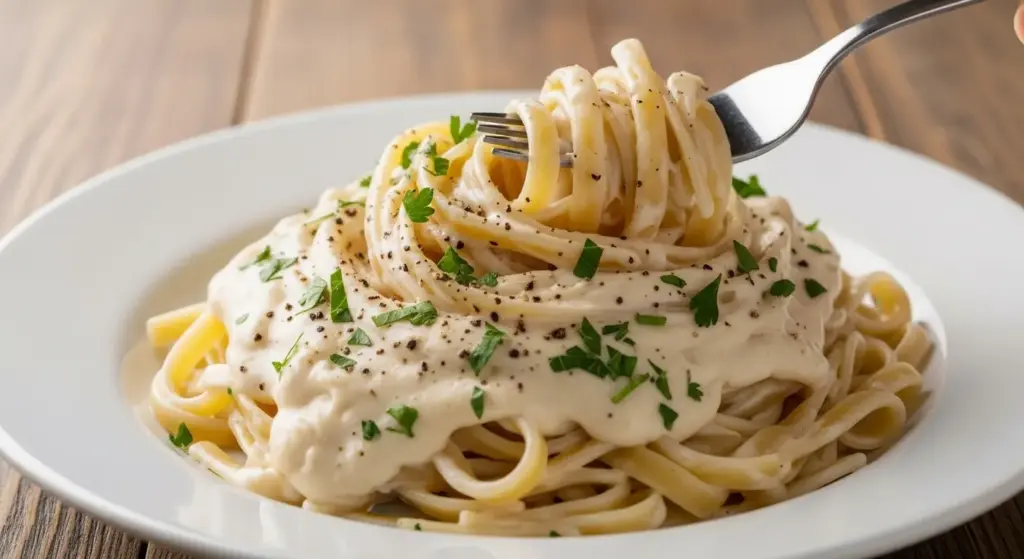
This healthy Alfredo sauce is incredibly versatile and works with so much more than just fettuccine. I’ve used it in countless ways, and each application is delicious.
- Toss with your favorite pasta (fettuccine is traditional, but I love it with penne or rigatoni)
- Pour over grilled chicken breasts for a restaurant-quality dinner
- Use as a dipping sauce for breadsticks or garlic bread
- Mix with steamed broccoli and serve over rice
- Drizzle over baked potatoes instead of sour cream
- Use as a pizza sauce base for white pizza
- Stir into cooked shrimp and serve over zucchini noodles
- Mix with cooked vegetables for a creamy vegetable medley
- Use as a sauce for chicken or vegetable lasagna
- Pour over spaghetti squash for a low-carb option
This sauce pairs wonderfully with grilled chicken and veggie skewers for a complete healthy meal.
Variations of Healthy Alfredo Sauce
One of the reasons I make this sauce so often is how easily it adapts to different flavors and dietary needs. Here are my favorite variations that I rotate through regularly.
- Garlic Herb Alfredo: Add 1 teaspoon each of dried basil, oregano, and thyme along with an extra clove of garlic for a more herbaceous sauce.
- Lemon Alfredo: Stir in 1 tablespoon of fresh lemon juice and 1 teaspoon of lemon zest at the end for a bright, fresh twist that’s perfect with seafood.
- Spicy Alfredo: Add ½ teaspoon of red pepper flakes when you sauté the garlic, or stir in a tablespoon of sriracha at the end.
- Mushroom Alfredo: Sauté 8 ounces of sliced mushrooms in the butter before adding the garlic, then proceed with the recipe.
- Sun-Dried Tomato Alfredo: Stir in ⅓ cup of chopped sun-dried tomatoes at the end for a pop of color and tangy sweetness.
- Vegan Alfredo: Replace butter with olive oil, use almond milk instead of dairy milk, substitute nutritional yeast for Parmesan, and use cashew cream instead of Greek yogurt.
- Dairy-Free: Use dairy-free butter, unsweetened coconut milk (the carton kind, not canned), and dairy-free yogurt.
- Pesto Alfredo: Stir in 2-3 tablespoons of basil pesto at the end for a beautiful green sauce with extra flavor.
- Chicken Alfredo Sauce: Add ½ cup of shredded cooked chicken directly to the finished sauce.
- Cajun Alfredo: Add 1-2 tablespoons of Cajun seasoning for a spicy, Southern-inspired version.
- Roasted Garlic Alfredo: Replace raw garlic with 6-8 cloves of roasted garlic for a sweeter, mellower garlic flavor.
For a lighter option, try: Healthy Fried Rice Recipe
Storage and Reheating
I often make a double batch of this sauce because it stores so well and saves me time on busy weeknights. Here’s everything you need to know about keeping it fresh.
- Refrigerator Storage: Transfer cooled sauce to an airtight container and refrigerate for up to 4 days. The sauce will thicken considerably when cold, which is completely normal.
- Freezer Storage: Pour the sauce into freezer-safe containers or zip-top bags (I like to freeze it in 1-cup portions) and freeze for up to 3 months. Label with the date so you remember when you made it.
- Thawing: Move frozen sauce to the refrigerator the night before you plan to use it. It will take about 8-12 hours to thaw completely.
- Reheating on the Stovetop: This is my preferred method. Place the sauce in a saucepan over low heat and warm slowly, stirring frequently. Add 2-4 tablespoons of milk or broth to help restore the creamy consistency as it warms.
- Reheating in the Microwave: Put the sauce in a microwave-safe bowl and heat in 30-second intervals, stirring between each interval. Add a splash of milk if needed to thin it out.
- Preventing Separation: Reheat gently over low heat. High heat can cause the sauce to separate and become grainy. If it does separate, whisk in a tablespoon of cold milk off the heat.
- Using Leftover Sauce: Leftover sauce makes an excellent base for casseroles, a topping for baked potatoes, or even a creamy soup base when thinned with extra broth.
- Make-Ahead Tip: This sauce can be made up to 2 days in advance. Just reheat gently with a splash of milk before serving.
Read Also: Lasagna Recipe
Nutritional Facts
Per serving (approximately ½ cup):
- Calories: 145
- Total Fat: 8g
- Saturated Fat: 5g
- Cholesterol: 25mg
- Sodium: 420mg
- Total Carbohydrates: 9g
- Dietary Fiber: 0g
- Sugars: 4g
- Protein: 9g
- Calcium: 280mg
- Vitamin D: 1mcg
Note: Nutritional information is approximate and may vary based on specific ingredients used and portion sizes.
Health Benefits of Key Ingredients
Every ingredient in this healthy Alfredo sauce brings something beneficial to the table beyond just great taste. I chose each component carefully with both flavor and nutrition in mind.
Greek Yogurt: Packed with probiotics for gut health, high in protein (about 10g per serving), and provides calcium for strong bones. It adds creaminess with significantly fewer calories than heavy cream.
Parmesan Cheese: Rich in calcium and protein, contains conjugated linoleic acid which may support heart health, and provides vitamin A for immune function. A little goes a long way for flavor.
Garlic: Contains allicin, a compound with antibacterial and antifungal properties, supports heart health by helping to lower blood pressure, and boosts immune function. Fresh garlic also adds incredible depth of flavor.
Low-Fat Milk: Provides calcium, vitamin D, and protein without excessive saturated fat. The 2% fat content gives you creaminess while keeping calories in check.
Chicken Broth: Adds depth of flavor with minimal calories, provides some protein and collagen, and helps thin the sauce without adding heaviness.
For another healthy comfort food option, check out: Healthy Chicken Pot Pie Recipe
FAQs About Healthy Alfredo Sauce
1. Can I use skim milk instead of 2% milk?
Technically yes, but I don’t recommend it. I tried making this sauce with skim milk to cut even more calories, and the result was disappointingly thin and lacking in flavor. The small amount of fat in 2% milk is crucial for achieving that creamy, luxurious texture we associate with Alfredo sauce.
If you want to reduce calories further, try using a 50/50 mix of skim and 2% milk instead of going entirely fat-free.
2. How can I make this sauce thicker?
If your sauce turns out thinner than you’d like, there are several easy fixes. The simplest method is to let it simmer for an extra minute or two uncovered, which allows more liquid to evaporate and naturally thickens the sauce.
You can also whisk together 1 teaspoon of cornstarch with 1 tablespoon of cold milk, then stir this slurry into the sauce and cook for another minute. Alternatively, add another tablespoon or two of grated Parmesan, which will both thicken and enhance the flavor.
3. Can I make this sauce ahead of time?
Absolutely, and I do this frequently for meal prep. Make the sauce up to 2 days ahead and store it in an airtight container in the refrigerator. It will thicken quite a bit as it cools, which is completely normal.
When you’re ready to use it, reheat it gently over low heat on the stovetop, whisking in a few tablespoons of milk or chicken broth to restore the creamy consistency. Never reheat on high heat, as this can cause the cheese to separate.
4. What can I substitute for Greek yogurt?
If you don’t have Greek yogurt on hand, regular full-fat sour cream works well as a substitute in the same amount. The flavor will be slightly different but still delicious.
For a dairy-free option, you can use cashew cream (blend soaked cashews with a little water until smooth) or a thick coconut cream. Keep in mind that these substitutions will alter the flavor profile slightly and may change the nutritional content.
5. Why did my sauce turn out grainy?
Graininess usually happens when the cheese is added to sauce that’s too hot, causing the proteins to tighten and separate. Always reduce the heat to low before adding Parmesan, and add it gradually while whisking constantly.
If you’re using pre-grated Parmesan, switch to freshly grated cheese, as the anti-caking agents in pre-grated cheese can prevent smooth melting. If your sauce has already turned grainy, try blending it with an immersion blender, which can sometimes rescue the texture.
Another favorite: Baked Chicken with Alfredo Sauce Recipe
Final Thoughts
This Healthy Alfredo Sauce Recipe has become one of my most-made recipes for good reason. It proves that eating healthier doesn’t mean sacrificing the comfort foods you love.
I make this at least twice a month, and it never gets old. Sometimes I toss it with whole wheat pasta and broccoli for a quick weeknight dinner, other times I pour it over grilled chicken for something more elegant. The versatility alone makes it worth keeping in your regular rotation.
Give this recipe a try tonight and see for yourself how delicious healthy eating can be. I’d love to hear how it turns out for you and what variations you try. Drop a comment below with your experience, and don’t forget to share this recipe with anyone who loves creamy pasta but wants to keep things light!
Recommended:
- Velveeta Mac and Cheese Recipe
- Best Bacon Mac and Cheese Recipe
- Best Lobster Mac and Cheese Recipe
- Chicken Alfredo Recipe with Jar Sauce
- Healthy Waffle Recipe
- Healthy Egg Salad Recipe
- Healthy Crepe Recipe
- Creamy Avocado Pasta Recipe
- Butternut Squash Gnocchi Recipe
- Marry Me Chicken Pasta Recipe