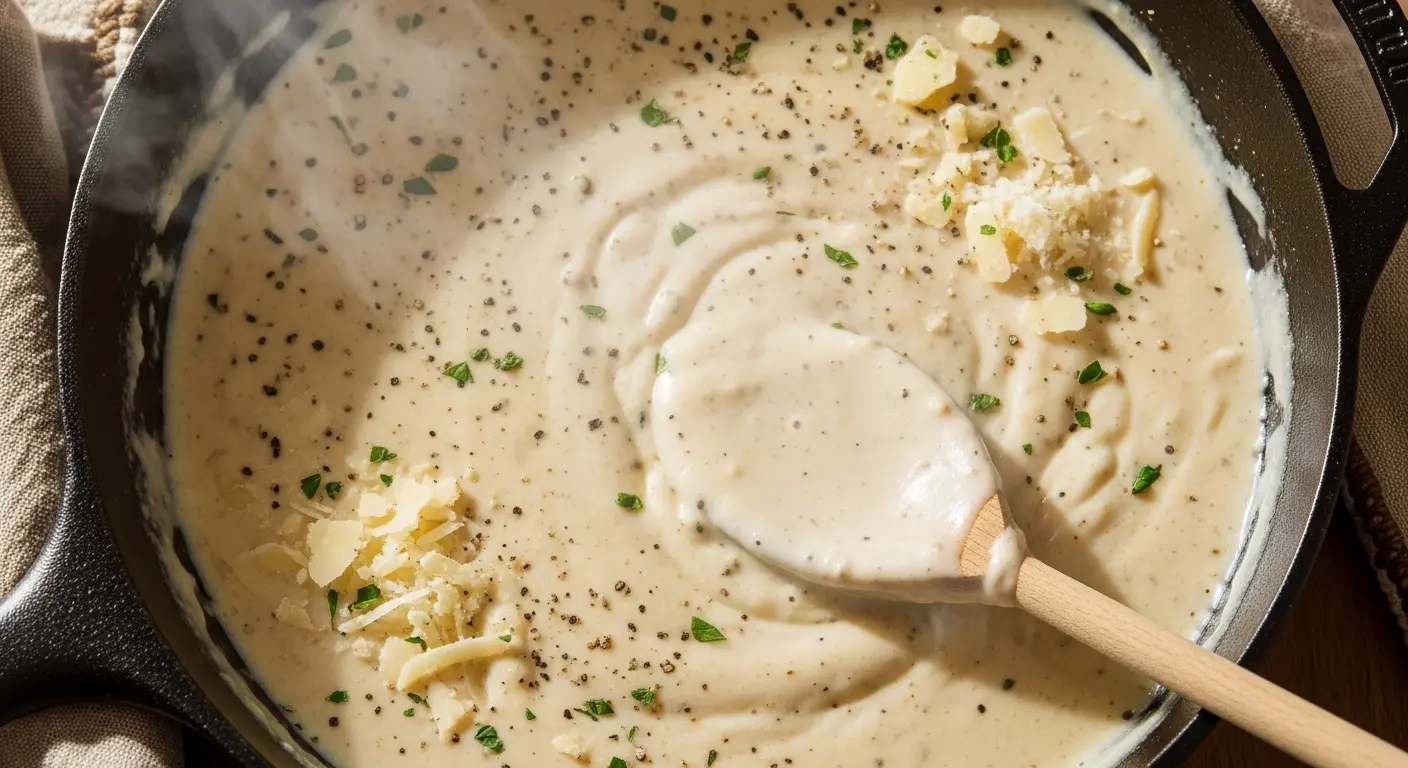
I’ll never forget the first time I made Alfredo sauce from scratch. I was hosting a dinner party and decided to impress my guests with something more elevated than jarred sauce.
Armed with just butter, cream, and Parmesan, I was skeptical that something so simple could deliver restaurant-quality results. But as the ingredients melted together into a silky, luxurious sauce, I realized I’d been missing out for years.
That evening, my Easy Alfredo Sauce Recipe became the star of the show, and I’ve been making it weekly ever since. The secret isn’t fancy techniques or hard-to-find ingredients—it’s about understanding how fat and cheese work together to create that signature velvety texture.
I’ve tweaked this recipe countless times, learning the hard way that high heat will break the sauce and that freshly grated Parmesan makes all the difference. Now, I can whip up a batch in less time than it takes to boil pasta.
This sauce is my go-to for busy weeknights when I want something comforting but don’t have hours to spend in the kitchen. It transforms simple fettuccine into an elegant meal that my whole family loves.
| Quick Recipe Summary | |
|---|---|
| Prep Time | 5 minutes |
| Cook Time | 10 minutes |
| Total Time | 15 minutes |
| Servings | 4-6 servings |
| Difficulty Level | Easy |

Why You’ll Love This Easy Alfredo Sauce Recipe
This Alfredo sauce has become my most-requested recipe because it delivers authentic Italian flavors without the intimidation factor. You don’t need culinary school training or exotic ingredients—just a few pantry staples and about fifteen minutes.
The sauce comes together so quickly that you can make it on a Tuesday night after work. Unlike jarred versions that taste artificial and leave a weird coating in your mouth, homemade Alfredo is clean, rich, and genuinely satisfying.
Here’s what makes this recipe special:
- Incredibly quick: From start to finish, you’ll have restaurant-quality sauce in 15 minutes
- Simple ingredients: Just butter, heavy cream, garlic, and Parmesan cheese—nothing complicated or hard to find
- Versatile: Works beautifully with pasta, chicken, shrimp, vegetables, or as a pizza sauce
- Cost-effective: Making it at home costs a fraction of ordering Alfredo at restaurants
- Customizable: You can easily adjust the thickness, add herbs, or incorporate other flavors
- Impressive: Guests always think you spent hours making it when it actually took minutes
- No preservatives: You know exactly what’s going into your sauce, making it healthier than store-bought options
You might also enjoy: Healthy Alfredo Sauce Recipe
Ingredients
The beauty of Alfredo sauce lies in its simplicity—just a handful of high-quality ingredients that work together to create magic. I’ve learned that using the best ingredients you can afford makes a noticeable difference in the final result.
- ½ cup (115g) unsalted butter: I prefer unsalted so I can control the saltiness; European-style butter adds extra richness
- 2 cups (480ml) heavy cream: This is what gives the sauce its luxurious texture; don’t substitute with milk or half-and-half
- 3-4 cloves garlic, minced: Fresh garlic is essential here; jarred minced garlic doesn’t have the same flavor
- 2 cups (200g) freshly grated Parmesan cheese: Buy a block and grate it yourself; pre-grated cheese contains anti-caking agents that prevent smooth melting
- ½ teaspoon salt: Adjust to taste depending on how salty your Parmesan is
- ¼ teaspoon black pepper: Freshly ground makes a difference
- ¼ teaspoon nutmeg (optional): This secret ingredient adds depth without being detectable
- Fresh parsley for garnish (optional): Adds a pop of color and freshness
Read Also: Marinara Sauce Recipe
Kitchen Equipment Needed
Having the right tools makes the process smoother and helps you achieve that perfect silky texture. I’ve made Alfredo in various kitchens with different equipment, and these are the essentials.
- Heavy-bottomed saucepan or skillet: A 3-4 quart pan works perfectly; heavy bottoms distribute heat evenly and prevent scorching
- Whisk: Essential for incorporating the cheese smoothly without lumps
- Box grater or microplane: For grating fresh Parmesan; a microplane creates finer shreds that melt more easily
- Wooden spoon: For stirring and scraping the bottom of the pan
- Measuring cups and spoons: Accuracy matters, especially with the butter-to-cream ratio
- Garlic press or sharp knife: For mincing garlic finely
- Large pot: For cooking pasta simultaneously
- Colander: For draining pasta
- Ladle: Makes serving easier and cleaner
Another favorite: Olive Garden Alfredo Sauce Recipe
Recommended Products for This Recipe
After making Alfredo sauce hundreds of times, I’ve discovered a few products that genuinely make a difference in the final result. These aren’t just random recommendations—they’re tools and ingredients I actually use in my own kitchen.
1. Parmigiano Reggiano DOP Cheese
The quality of your Parmesan directly impacts your sauce’s flavor and texture. I switched to authentic Parmigiano Reggiano a few years ago, and there’s no going back. The nutty, complex flavor and smooth melting properties make it worth every penny.
2. All-Clad Stainless Steel Saucepan
I burned more than a few batches of Alfredo in cheap pans before investing in a quality heavy-bottomed saucepan. Even heat distribution is crucial for preventing the cream from breaking, and this pan has never let me down.
3. Microplane Premium Zester Grater
This grater changed my Alfredo game completely. It creates ultra-fine shreds of Parmesan that melt instantly into the sauce without any graininess. It’s also perfect for zesting lemons and grating fresh nutmeg.
4. Nielsen-Massey Madagascar Bourbon Pure Vanilla Extract
Wait, vanilla in Alfredo? Trust me on this one. Just a tiny drop (literally ⅛ teaspoon) of high-quality vanilla extract enhances the cream’s natural sweetness without making the sauce taste sweet. It’s a trick I learned from an Italian chef.
Step-by-Step Instructions: How to Make Alfredo Sauce
Making Alfredo sauce is straightforward, but timing and technique matter. I’ll walk you through each step with the details that took me years to figure out.
1. Prep Your Ingredients
- Grate your Parmesan cheese using a box grater or microplane; you’ll need about 2 cups of loosely packed cheese
- Mince the garlic cloves finely; I like to smash them first with the flat side of my knife to release the oils
- Measure out your butter and cream so they’re ready to go; Alfredo comes together quickly, so you don’t want to be measuring mid-cooking
- Have all your equipment within reach, including your whisk and wooden spoon
- If you’re serving this with pasta, start your pasta water boiling now so everything finishes at the same time
2. Melt the Butter and Cook the Garlic
- Place your heavy-bottomed saucepan over medium heat; never use high heat for Alfredo or you’ll risk breaking the sauce
- Add the butter and let it melt completely, swirling the pan occasionally to coat the bottom evenly
- Once the butter is fully melted and just starting to bubble, add the minced garlic
- Sauté the garlic for 30-60 seconds, stirring constantly with a wooden spoon; you want it fragrant but not browned
- If the garlic starts to turn golden, immediately move to the next step; burned garlic will make the entire sauce bitter
3. Add the Heavy Cream
- Pour in the heavy cream all at once, stirring immediately to combine with the butter and garlic
- Bring the mixture to a gentle simmer over medium heat; you should see small bubbles around the edges, not a rolling boil
- Let it simmer for 3-4 minutes, stirring occasionally with your whisk; this helps the cream reduce slightly and concentrate the flavors
- The mixture should look smooth and slightly thickened, coating the back of your spoon lightly
- If the cream starts boiling rapidly, reduce the heat immediately; high heat will cause the cream to break and separate
4. Incorporate the Parmesan Cheese
- Reduce the heat to medium-low before adding any cheese; this is crucial for a smooth sauce
- Add the grated Parmesan about ½ cup at a time, whisking constantly as you add each portion
- Wait until each addition is fully melted and incorporated before adding more cheese; rushing this step creates lumps
- Keep whisking in a circular motion, making sure to reach all corners of the pan
- The sauce will thicken noticeably as the cheese melts; if it seems too thick, you can add a splash of pasta water or cream
- Continue whisking until the sauce is completely smooth and creamy with no visible cheese granules
5. Season and Finish
- Add the salt, black pepper, and nutmeg (if using), whisking to incorporate evenly
- Taste the sauce and adjust seasonings as needed; remember that Parmesan is salty, so start conservatively
- Let the sauce simmer for another 1-2 minutes, stirring frequently; this helps all the flavors meld together
- The final consistency should coat the back of a spoon but still pour easily; it will thicken slightly as it cools
- If the sauce seems too thick, whisk in pasta water one tablespoon at a time until you reach desired consistency
- Remove from heat once you’re happy with the consistency; the sauce will continue to thicken off the heat
6. Serve Immediately
- Alfredo sauce is best served right away while it’s hot and at its silkiest texture
- If tossing with pasta, add the drained pasta directly to the sauce pan and toss to coat evenly
- Reserve about ½ cup of pasta cooking water to loosen the sauce if needed; the starchy water helps the sauce cling to the pasta
- Garnish with additional grated Parmesan and fresh parsley if desired
- Serve in warmed bowls for the best presentation and to keep the sauce from cooling too quickly
Read Also: Chicken Alfredo Recipe With Jar Sauce
.jpg "Easy Alfredo Sauce Recipe")
Tips for The Best Alfredo Sauce
I’ve learned these tips through trial and error, and they’ve helped me achieve consistently perfect Alfredo sauce every single time.
- Use freshly grated Parmesan cheese: Pre-grated cheese contains cellulose powder to prevent clumping, which results in a grainy, less smooth sauce
- Don’t rush the cheese addition: Add it gradually and whisk constantly; dumping all the cheese in at once guarantees lumps
- Keep the heat low to medium: High heat will cause the cheese and cream to separate, resulting in an oily, broken sauce
- Reserve pasta water: The starchy water is perfect for adjusting sauce consistency and helps it cling to pasta better
- Grate cheese at room temperature: Cold cheese doesn’t melt as smoothly; let it sit out for 20-30 minutes before using
- Use a whisk, not a spoon: Whisking incorporates the cheese more thoroughly and creates a silkier texture
- Add a pinch of nutmeg: This secret ingredient adds subtle depth; you won’t taste it directly, but you’ll notice something special
- Don’t let the sauce boil: A gentle simmer is fine, but boiling will cause the dairy to break and the sauce to become grainy
- Warm your serving bowl: This prevents the sauce from cooling and thickening too quickly when you plate it
- Make it fresh: Alfredo sauce is best within 20 minutes of making it; reheating never quite captures the same texture
- Add cream cheese for extra stability: A couple tablespoons of cream cheese helps the sauce stay smooth and prevents separation
- Use European-style butter: The higher fat content creates an even richer, more luxurious sauce
You might also enjoy: Baked Chicken With Alfredo Sauce Recipe
Serving Suggestions
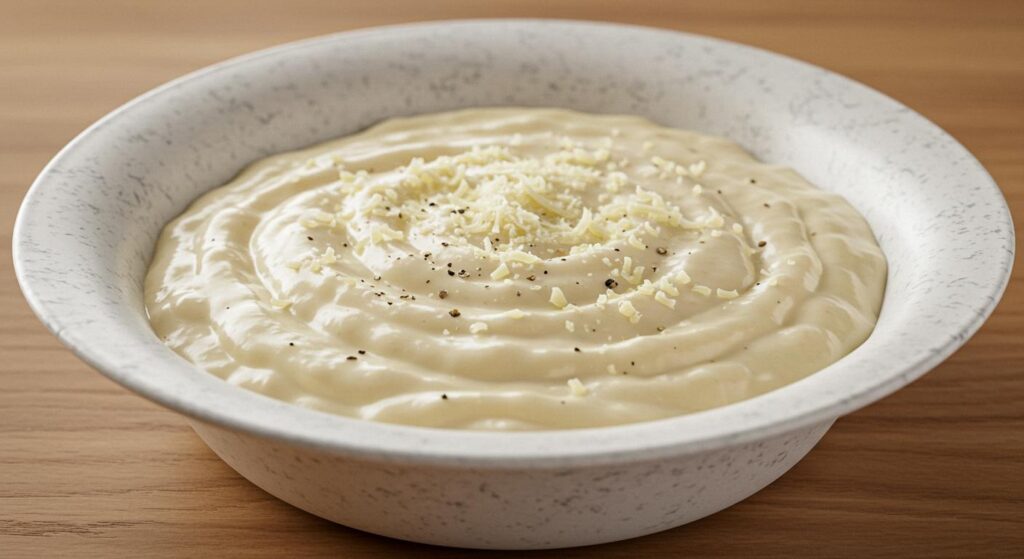
Alfredo sauce is incredibly versatile and pairs beautifully with so many dishes. I’ve served it dozens of different ways, and here are my favorite combinations.
Beyond the classic fettuccine Alfredo, this sauce transforms simple ingredients into restaurant-quality meals. I love how it can be the star of the show or play a supporting role to other flavors.
- Classic fettuccine Alfredo: Toss with perfectly cooked fettuccine pasta and garnish with extra Parmesan and fresh parsley
- Chicken Alfredo: Top the sauce with grilled, blackened, or pan-seared chicken breast slices
- Shrimp Alfredo: Sauté shrimp with garlic and add to the sauce for a luxurious seafood dinner
- Vegetable Alfredo: Mix in roasted broccoli, mushrooms, spinach, or sun-dried tomatoes for added nutrition and flavor
- Alfredo pizza: Use as a white pizza sauce base instead of traditional tomato sauce
- Baked pasta: Combine with penne or rigatoni, top with mozzarella, and bake until bubbly for a comforting casserole
- Alfredo dip: Serve warm as a dip with garlic bread, breadsticks, or fresh vegetables
- Salmon Alfredo: Pair with flaked or grilled salmon for an elegant omega-3 rich meal
- Alfredo lasagna: Use between lasagna layers instead of traditional red sauce for a decadent twist
- Stuffed shells: Fill jumbo pasta shells with ricotta mixture and cover with Alfredo sauce before baking
Another favorite: Best Bacon Mac and Cheese Recipe
Variations of Alfredo Sauce
Once you’ve mastered the basic recipe, experimenting with variations keeps things interesting. These are my favorite ways to customize Alfredo sauce for different occasions and preferences.
- Garlic lovers’ Alfredo: Double or triple the garlic for a more pronounced garlic flavor; roast the garlic first for a sweeter, milder taste
- Cajun Alfredo: Add 1-2 tablespoons of Cajun seasoning for a spicy kick that pairs perfectly with blackened chicken or shrimp
- Lemon Alfredo: Stir in the zest and juice of one lemon for a bright, fresh flavor that cuts through the richness
- Mushroom Alfredo: Sauté sliced mushrooms until golden and stir them into the finished sauce for earthy depth
- Pesto Alfredo: Swirl in 2-3 tablespoons of basil pesto for a herbaceous twist
- Sun-dried tomato Alfredo: Add chopped sun-dried tomatoes packed in oil for sweet-tart flavor and beautiful color
- Bacon Alfredo: Crumble crispy bacon into the sauce for smoky richness
- Spinach and artichoke Alfredo: Stir in chopped spinach and quartered artichoke hearts for a restaurant-inspired variation
- Roasted red pepper Alfredo: Blend roasted red peppers into the sauce for subtle sweetness and gorgeous color
- Truffle Alfredo: Add a few drops of truffle oil at the end for an ultra-luxurious finish
- Lighter Alfredo: Replace half the heavy cream with half-and-half or whole milk, though the texture won’t be quite as rich
- Vegan Alfredo: Use cashew cream, nutritional yeast, and vegan butter for a plant-based version
Read Also: Pumpkin Sage Pasta Recipe
Storage and Reheating
While Alfredo sauce is best enjoyed fresh, sometimes you need to store leftovers. Here’s how to maintain the best possible quality when storing and reheating.
- Refrigerator storage: Transfer cooled sauce to an airtight container and refrigerate for up to 3-4 days; press plastic wrap directly onto the surface to prevent a skin from forming
- Freezer storage: Freeze in portion-sized containers or freezer bags for up to 2 months; label with the date and contents
- Thawing: Move frozen sauce to the refrigerator 24 hours before using; never thaw at room temperature
- Stovetop reheating: This is the best method; place sauce in a saucepan over low heat, stirring frequently and adding splashes of cream or milk to restore creaminess
- Microwave reheating: Heat in 30-second intervals, stirring between each, and add liquid as needed; be careful not to overheat or the sauce will separate
- Don’t boil when reheating: Keep the temperature low and gentle; high heat will cause the sauce to break
- Add fresh Parmesan: Stir in a bit of freshly grated Parmesan when reheating to refresh the flavor
- Use pasta water: Reserved pasta water works wonderfully to thin out refrigerated sauce
- Expect texture changes: Reheated Alfredo won’t be quite as silky as fresh, but these techniques minimize the difference
- Single servings: Freeze in individual portions so you only thaw what you’ll use
You might also enjoy: Best Lobster Mac and Cheese Recipe
Nutritional Facts
Here’s the approximate nutritional breakdown per serving (based on 6 servings). Keep in mind that Alfredo sauce is a rich indulgence meant to be enjoyed in moderation.
- Calories: 380
- Total Fat: 38g
- Saturated Fat: 24g
- Cholesterol: 115mg
- Sodium: 520mg
- Total Carbohydrates: 4g
- Dietary Fiber: 0g
- Sugars: 1g
- Protein: 10g
- Calcium: 35% DV
- Vitamin A: 28% DV
Note: These values are estimates and will vary based on specific ingredients used and portion sizes.
Read Also: Velveeta Mac and Cheese Recipe
Health Benefits of Key Ingredients
While Alfredo sauce is undeniably rich and indulgent, its ingredients do offer some nutritional benefits. Moderation is key, but you can feel a bit better knowing what goodness you’re getting.
Parmesan Cheese: This aged cheese is packed with calcium for strong bones and teeth, providing about 35% of your daily calcium needs per serving. It’s also a complete protein source containing all essential amino acids, and it’s naturally low in lactose, making it easier to digest for those with mild lactose sensitivity.
- Rich in calcium: Supports bone density and dental health
- High in protein: Contains about 10g per serving, helping with muscle maintenance and satiety
- Vitamin A content: Supports vision, immune function, and skin health
- Phosphorus: Works with calcium to strengthen bones and teeth
- Probiotics: Aged Parmesan contains beneficial bacteria that support gut health
Heavy Cream: While high in fat, cream provides fat-soluble vitamins and energy. The fat content helps your body absorb vitamins A, D, E, and K from other foods in your meal.
- Vitamin A: Essential for eye health and immune function
- Calcium: Contributes to bone health
- Provides satiety: The fat content helps you feel full and satisfied longer
Garlic: This aromatic ingredient brings more than just flavor to the sauce. Fresh garlic contains compounds with anti-inflammatory and immune-boosting properties.
- Allicin: A compound with potential cardiovascular benefits
- Antioxidants: Help protect cells from damage
- Immune support: May help strengthen the immune system
- Anti-inflammatory properties: May help reduce inflammation in the body
Another favorite: Best Sausage Tortellini Soup Recipe
FAQs About Alfredo Sauce
1. Why is my Alfredo sauce grainy or lumpy?
This usually happens when the cheese is added too quickly or when the heat is too high. The key is adding freshly grated Parmesan gradually while whisking constantly over low to medium-low heat.
Pre-grated cheese contains anti-caking agents that prevent smooth melting, so always grate your own from a block. If your sauce is already grainy, try whisking in a bit of warm cream or using an immersion blender to smooth it out.
2. Can I make Alfredo sauce ahead of time?
You can, but it’s best made fresh since the texture changes when stored and reheated. If you must make it ahead, prepare it up to 2 hours before serving and keep it warm in a double boiler or slow cooker on the lowest setting, stirring occasionally.
When reheating refrigerated sauce, do so gently over low heat while whisking in splashes of cream or pasta water to restore the creamy texture. The sauce will never be quite as perfect as when freshly made, but these methods help.
3. How can I make my Alfredo sauce thicker or thinner?
For thicker sauce, let it simmer a bit longer to reduce, or add more Parmesan cheese gradually. You can also make a slurry with 1 tablespoon cornstarch mixed with 2 tablespoons cold cream and whisk it in.
For thinner sauce, whisk in heavy cream, whole milk, or reserved pasta water one tablespoon at a time until you reach desired consistency. Remember that the sauce will thicken as it cools, so make it slightly thinner than your target consistency.
4. Can I use milk instead of heavy cream in Alfredo sauce?
While you can technically use milk, the result won’t be authentic Alfredo sauce—it will be much thinner and less rich. If you want to lighten the sauce, try half heavy cream and half whole milk, but avoid going below that ratio.
Adding a tablespoon of cream cheese or a bit of flour-butter roux can help thicken milk-based sauce, but the flavor and mouthfeel will still differ from the original. For the best results, stick with heavy cream.
5. Why did my Alfredo sauce separate or become oily?
Sauce separation typically occurs when the heat is too high, causing the fat to separate from the proteins. This can also happen if you add cold cheese to hot cream or if you let the sauce boil.
To fix separated sauce, remove it from heat and vigorously whisk in a tablespoon of cold cream. You can also try blending it with an immersion blender or transferring it to a regular blender and processing until smooth.
Read Also: Creamy Tomato Basil Soup Recipe
Final Thoughts
Making Easy Alfredo Sauce from scratch is one of those skills that seems fancy but is actually remarkably simple once you know the technique. The first time you taste your own homemade version, with its silky texture and genuine Parmesan flavor, you’ll understand why jarred sauce just doesn’t compare.
I hope this recipe becomes a staple in your kitchen like it has in mine. The beauty of mastering this basic sauce is that once you’ve got it down, you can customize it endlessly to suit your mood, dietary needs, or what’s in your refrigerator.
Give this Easy Alfredo Sauce Recipe a try this week and experience the magic of real, homemade Alfredo. I’d love to hear how it turns out for you—drop a comment below with your results, favorite variations, or any questions you have.
Happy cooking, and enjoy every creamy, delicious bite!
Recommended:
- Marry Me Chicken Soup Recipe
- Marry Me Chicken Casserole Recipe
- Easy Marry Me Chicken Recipe
- Marry Me Chicken Pasta Recipe
- Marry Me Chicken Pasta Bake Recipe
- Easy Crockpot Marry Me Chicken Recipe
- Air Fryer Lasagna Recipe
- Lasagna Soup Recipe
- Butternut Squash Gnocchi Recipe
- Healthy Fried Rice Recipe